分类: society

  • UAE weather tomorrow: Cloudy day ahead as temperatures rise

    UAE weather tomorrow: Cloudy day ahead as temperatures rise

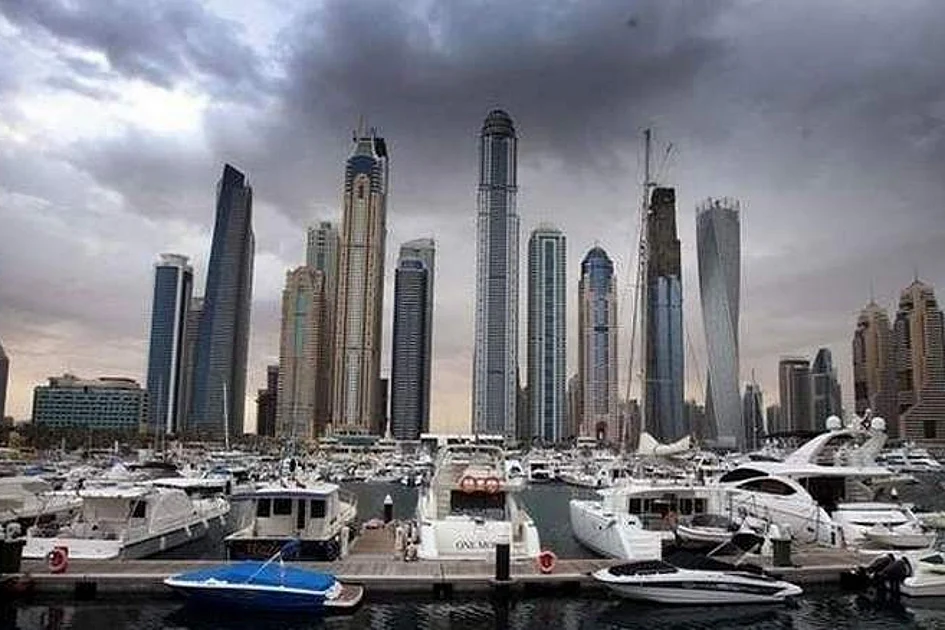
    Meteorological authorities project a shift in weather patterns across the United Arab Emirates this week, with residents preparing for warmer conditions and increased humidity along western coastal regions. The National Centre of Meteorology (NCM) forecasts predominantly fair to partially overcast skies for Monday, December 8, 2025, with low cloud formations expected particularly around offshore islands and western territories.

    Temperature readings indicate a noticeable upward trend, with Abu Dhabi anticipated to reach daytime highs of 30°C while Dubai and Sharjah may experience slightly warmer conditions at 31°C. Nighttime temperatures will provide some relief, dropping to 19°C, 21°C and 18°C in the respective emirates.

    Weather patterns will feature light to moderate winds shifting between southeasterly and northeasterly directions throughout the day. Maritime conditions remain generally calm, with slight to moderate waves in the Arabian Gulf and tranquil waters prevailing in the Oman Sea.

    Of particular note is the humidity forecast, with western coastal areas expected to experience noticeably humid conditions during nighttime hours extending into Tuesday morning. This meteorological development may affect residents in these regions, though no severe weather advisories have been issued at this time.

    The comprehensive weather briefing comes from the UAE’s official meteorological authority, providing residents with accurate forecasting to facilitate daily planning and preparedness.
  • Women protest gender-based violence across Brazil following shocking cases

    Women protest gender-based violence across Brazil following shocking cases

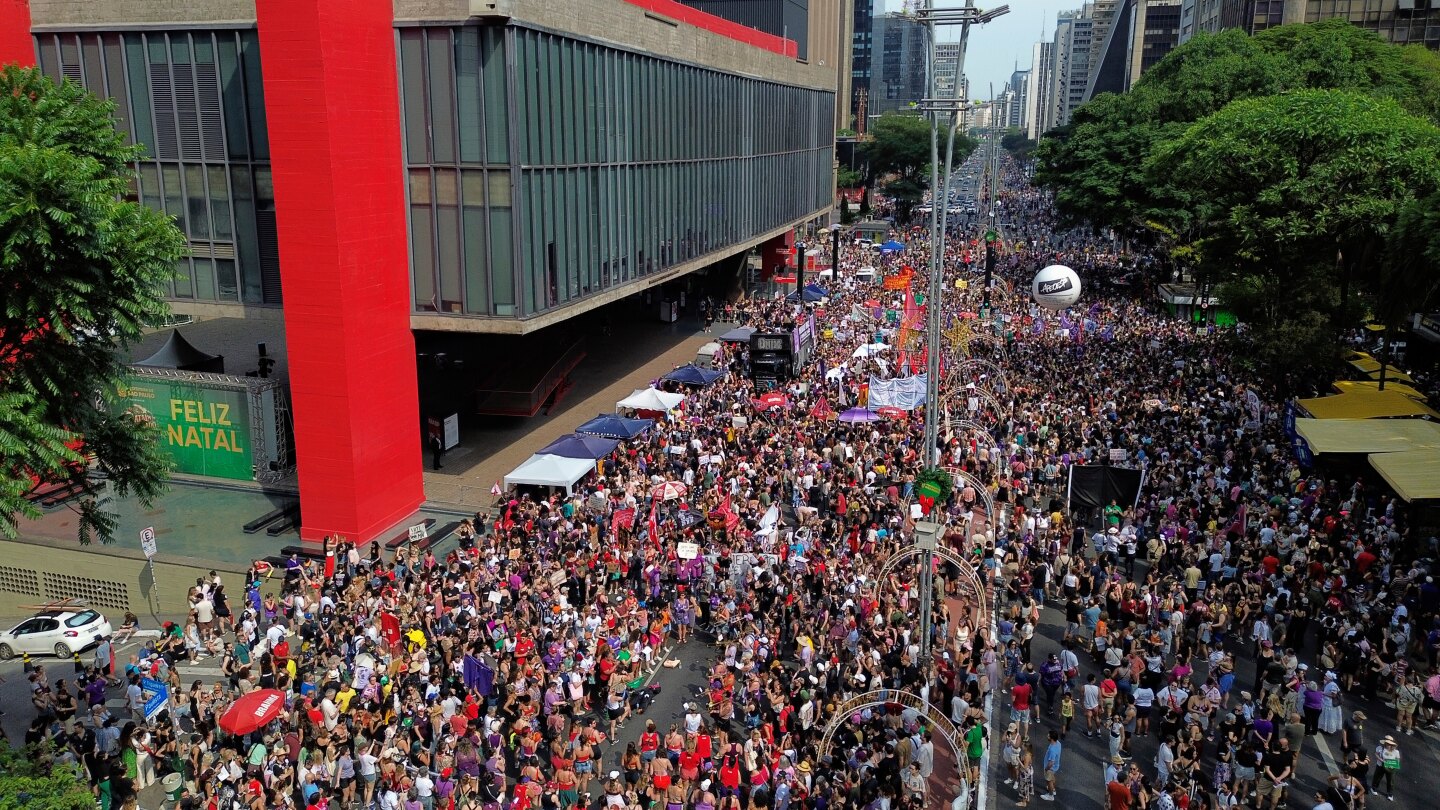
    RIO DE JANEIRO — A massive wave of civil unrest swept across Brazil on Sunday as tens of thousands of demonstrators flooded urban centers to denounce an escalating epidemic of gender-based violence. The nationwide mobilization, marked by unprecedented participation, represents a watershed moment in Brazil’s feminist movement following a series of brutal femicides that have shocked the nation.

    In a powerful display of solidarity, women across generations alongside male allies occupied the iconic boardwalks of Copacabana and São Paulo’s Paulista Avenue, demanding immediate legislative action against femicide, sexual violence, and systemic misogyny. The protests gained momentum from recent high-profile cases that have exposed the alarming normalization of gender-based brutality.

    Among the victims remembered was Alline de Souza Pedrotti’s sister, an educational administrator murdered on November 28th by a male colleague who reportedly resented female authority. “I’m devastated but fighting through the pain,” Pedrotti stated from the Copacabana demonstration. “I demand legal reforms and preventive protocols to stop these tragedies.”

    The movement gained further urgency from two additional atrocities that captured national attention. Taynara Souza Santos, 31, suffered traumatic amputations after being deliberately run over and dragged nearly a kilometer by her former partner in São Paulo. English instructor Catarina Kasten was sexually assaulted and strangled near a Florianopolis beach trail on November 21st while en route to a swimming lesson.

    These cases exemplify a disturbing national trend documented by the Brazilian Forum on Public Safety. Their 2025 report reveals over one-third of Brazilian women endured gender violence within the past year—the highest rate since monitoring began in 2017. Last year recorded 1,492 femicides, the most since the 2015 legislation that recognized femicide as a distinct crime category.

    Juliana Martins, institutional relations manager at the Brazilian Forum, noted the dual crisis of increasing frequency and intensifying brutality: “Social transformations toward gender equality have triggered violent backlash aimed at reaffirming female subordination.”

    Protest symbolism included black crosses representing victims and green scarves symbolizing reproductive rights. Evelyn Lucy da Luz, a 44-year-old educator who survived an attempted femicide decade ago, declared: “I almost died, but I didn’t—and now I fight.”

    Historical context emerged from 79-year-old Lizete de Paula, who connected rising violence to the erosion of protective policies during former President Bolsonaro’s administration. “Women are entering new spaces, and macho men can’t tolerate this,” she observed.

    The demonstrations notably included male participants like João Pedro Cordão, father of three daughters, who emphasized: “Our duty is to challenge misogyny daily—not just at protests—if we hope to reduce this violence.”

  • Little sleep, no pay: India’s poll workers flag harsh conditions amid uproar over deaths

    Little sleep, no pay: India’s poll workers flag harsh conditions amid uproar over deaths

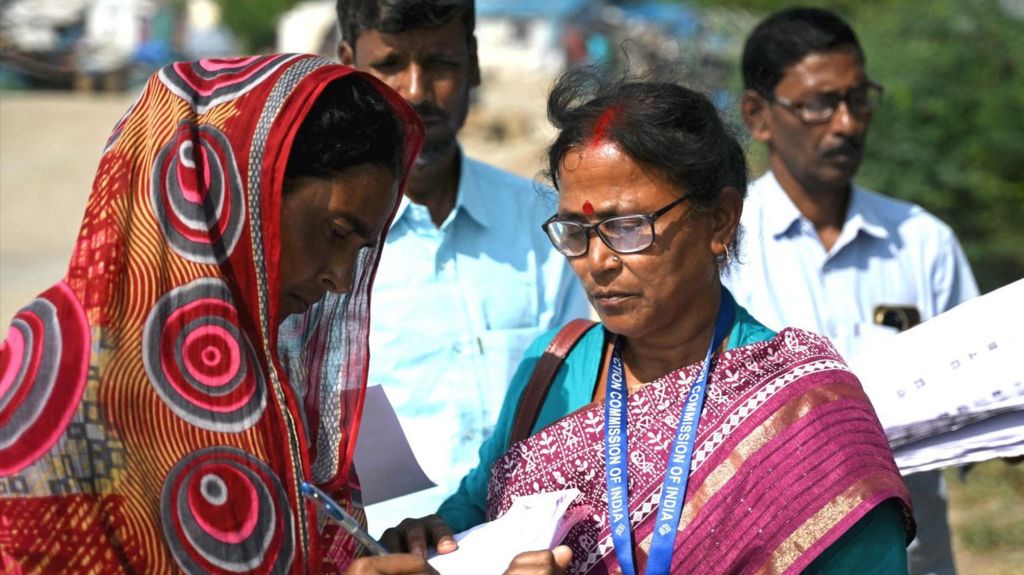
    India’s ambitious electoral roll revision drive has triggered a human crisis among the frontline workers implementing it, with multiple fatalities raising serious concerns about working conditions. The Special Intensive Revision (SIR) program, designed to update records for over 500 million voters across 12 states and union territories, has placed immense pressure on Booth-Level Officers (BLOs) who form the backbone of this massive democratic exercise.

    Typically government teachers, junior staff, and contract workers, these BLOs have reported working 14-15 hour days with minimal rest and inadequate compensation. The human cost has become tragically apparent through several deaths linked to the overwhelming workload. Sarvesh Kumar, a school teacher in Uttar Pradesh, was found dead after recording a video describing his inability to sleep for 20 days due to election work pressures. In Gujarat, primary school teacher Arvindbhai Vadher allegedly died by suicide, with his family attributing the tragedy to the ‘torturous nature of BLO work.’

    The Election Commission has extended the deadline by one week and doubled compensation for BLOs to 12,000 rupees ($66), while the Supreme Court has directed states to deploy additional staff. However, workers report persistent issues including malfunctioning government apps, unpaid wages, and threats of legal action for taking leave. Many are spending personal funds and device data to complete their duties while their regular jobs and students suffer from their extended absence.

    Despite these interventions, the fundamental tension between India’s democratic processes and the welfare of those implementing them remains unresolved, highlighting systemic challenges in managing large-scale government initiatives.

  • A feast for martial art lovers in Sri Lanka

    A feast for martial art lovers in Sri Lanka

    Colombo’s Elphinstone Theatre became a vibrant hub for cultural exchange on December 3, 2025, as Sri Lanka hosted the “China Culture Day – Wushu 2025” event. The gathering brought together martial arts enthusiasts and dignitaries for an immersive celebration of Chinese martial traditions amidst challenging circumstances.

    The spectacle featured a diverse array of wushu demonstrations spanning over sixty minutes. Audiences witnessed the meditative grace of tai chi, the dynamic precision of broadsword and staff techniques, and the theatrical flair of Drunken Fist and Drunken Sword performances. The program also included thrilling Sanda combat demonstrations and charming presentations by children’s wushu groups, collectively showcasing the philosophical and physical depth of Chinese martial arts.

    Chinese Ambassador to Sri Lanka Qi Zhenhong emphasized the event’s significance during difficult times, noting that wushu embodies the Chinese philosophy of balancing strength with softness while promoting harmony and coexistence. He expressed heartfelt condolences for Sri Lanka’s recent natural disasters and highlighted the assistance provided by Chinese society to help the island nation recover from devastating floods.

    Sunil Kumara Gamage, Sri Lanka’s Minister of Youth Affairs and Sports, acknowledged China’s generous support during the crisis and expressed hope for strengthened sports cooperation between the nations. The event attracted over 500 guests and served as a powerful demonstration of mutual support and cultural solidarity between China and Sri Lanka.

  • Discover Xiamen with beauty of ecological governance

    Discover Xiamen with beauty of ecological governance

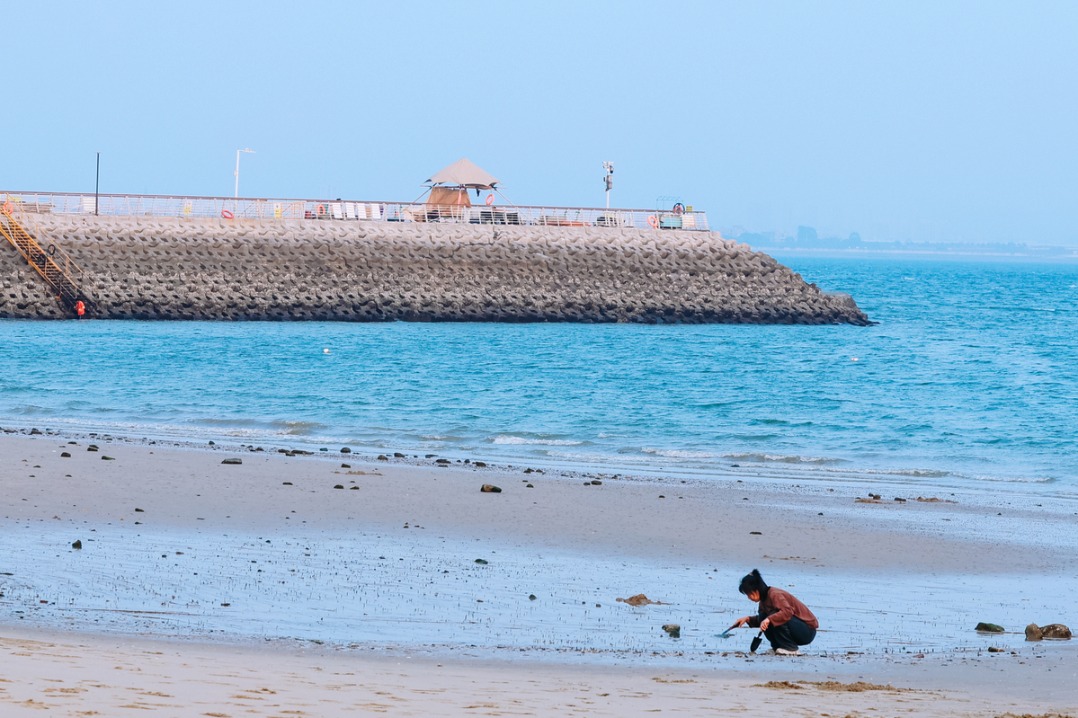
    Xiamen has emerged as a paradigm of ecological restoration through its innovative coastal governance initiatives, as demonstrated during the recent 2025 Xiamen Internet All-Media Tour held December 3-4. Media representatives witnessed firsthand the remarkable transformation of the city’s coastline, particularly at two flagship conservation sites: the picturesque Huandong Romantic Coast and the ecologically significant Xiatanwei Mangrove Park.

    The Huandong Romantic Coast now showcases pristine blue skies, expansive sandy beaches, and lush greenery where degraded landscapes once existed. This scenic coastline represents just one facet of Xiamen’s comprehensive ecological modernization program. Meanwhile, Xiatanwei Mangrove Park demonstrates how coastal wetlands can simultaneously function as natural barriers against erosion while providing critical habitat for diverse wildlife species.

    Located in Fujian province on China’s eastern coast, Xiamen has achieved remarkable progress in ecological civilization construction—a holistic approach that integrates environmental protection with sustainable development. The city’s methodology combines advanced environmental science with community engagement, creating recreational spaces that also serve vital ecological functions.

    The successful rehabilitation of these coastal areas illustrates how urban centers can effectively balance development with environmental stewardship. Xiamen’s model offers valuable insights for other cities seeking to address coastal degradation while enhancing biodiversity and creating public amenities that benefit both residents and visitors alike. This transformation positions Xiamen as a leading example of how determined environmental policy can revitalize urban coastal ecosystems within a relatively short timeframe.

  • In China’s ‘ice city,’ ice harvest sets stage for winter tourism season

    In China’s ‘ice city,’ ice harvest sets stage for winter tourism season

    HARBIN—The annual ice harvesting ceremony commenced on the frozen expanse of the Songhua River this Sunday, heralding the beginning of Harbin’s vibrant winter tourism season. Dozens of workers, clad in traditional red cotton coats, meticulously carved and extracted glistening ice slabs from the river’s surface using metal chisels and iron poles. These blocks, prized for their remarkable clarity and uniform density, measure approximately 1.6 meters in length and 0.8 meters in width.

    The harvested ice will serve as the foundational material for the Harbin Ice-Snow World, the planet’s largest ice and snow theme park. This year’s edition promises unprecedented scale, spanning 1.2 million square meters and utilizing 400,000 cubic meters of ice and snow. According to Sun Zemin, deputy director of marketing at Harbin Ice-Snow World Park Co., Ltd., the park will introduce innovative attractions including hot spring camps, cross-country skiing tracks, and themed parades.

    The timing of the harvest coincides with Daxue, or Major Snow, a traditional Chinese solar term indicating the arrival of deep winter. Meteorological experts confirm that river ice typically reaches optimal harvesting thickness of over 30 centimeters during this period.

    The event attracted substantial crowds of local residents and international tourists, including Russian student Alina Dorokhina, who described the ceremony as “stunning” and noted the warmth and vitality of Harbin’s folk traditions despite the cold environment.

    Harbin’s winter tourism strategy has generated remarkable economic returns. Last winter, the city welcomed 90.35 million visitors, generating 137.22 billion yuan (approximately $19.4 billion) in revenue—a 16.6% year-on-year increase. Wang Hongxin, director of Harbin’s culture, radio, television, and tourism department, emphasized plans to integrate ice and snow with educational tours, sports, and technology to enhance the city’s appeal as a premier winter destination.

    This development aligns with China’s national strategy to expand its ice-and-snow economy, targeting 1.2 trillion yuan by 2027 and 1.5 trillion yuan by 2030. The northeastern region, historically known as China’s rustbelt, is experiencing revitalization through winter tourism. Heilongjiang province alone reported a 266.17 billion yuan ice-and-snow market in 2024, with tourism contributing 182.33 billion yuan.

  • Working group dispatched to Xinjiang after fatal traffic accidents

    Working group dispatched to Xinjiang after fatal traffic accidents

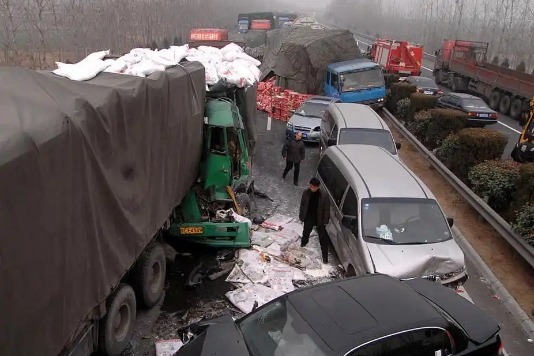
    Chinese authorities have mobilized an emergency response team to northwest China’s Xinjiang region following a series of devastating highway collisions that resulted in multiple casualties. The incident occurred Saturday evening around 10 p.m. local time along an expressway in Usu City, located within Tacheng Prefecture, where rapidly deteriorating weather conditions triggered a chain-reaction accident involving twelve vehicles.

    The catastrophic event unfolded as sudden, dense fog combined with sub-zero temperatures created dangerously icy road surfaces within minutes. The resulting low visibility and slippery conditions led to sequential impacts involving five large commercial vehicles and seven passenger cars traveling along the affected highway segments.

    China’s Ministry of Emergency Management confirmed the dispatch of a specialized working group to coordinate rescue operations and provide on-site support. Official reports indicate the collisions resulted in nine fatalities and seven individuals sustaining injuries of varying severity.

    Emergency management officials have emphasized the implementation of scientifically organized rescue protocols to prevent secondary accidents while prioritizing medical treatment for the injured. The ministry has additionally called for a comprehensive investigation to determine the exact sequence of events and identify contributing factors to prevent similar tragedies in the future.

    Local authorities continue to manage the aftermath of the incident while examining regional highway safety protocols, particularly regarding rapid weather changes in the area’s challenging winter conditions.

  • Central Government’s professional equipment boosts efficiency in Tai Po fire rescue: Hong Kong police

    Central Government’s professional equipment boosts efficiency in Tai Po fire rescue: Hong Kong police

    HONG KONG – Sophisticated emergency equipment supplied by China’s Central Government has dramatically enhanced operational capabilities during the extensive recovery efforts following the devastating Tai Po fire, according to Hong Kong police authorities.

    The substantial logistical support, coordinated through the State Council’s Hong Kong and Macao Affairs Office, delivered multiple consignments of specialized rescue gear and medical resources to assist local emergency teams. This intervention provided critical technical reinforcement during one of Hong Kong’s most challenging rescue operations in recent history.

    Police Operations Director Lui Kam-ho expressed profound gratitude for the central authorities’ swift response, revealing that mainland agencies had supplied over 30,000 essential items. The shipment included advanced tactical equipment such as professional-grade illumination systems, protective goggles, emergency shelters, and state-of-the-art exoskeleton mechanical suits designed for demanding physical tasks.

    Frontline responders faced exceptionally hazardous conditions within the fire-affected structures, where complete power failure had plunged the interior into absolute darkness while significant flooding complicated movement through the debris. Rescue personnel specifically highlighted the exoskeleton technology and high-intensity lighting systems as particularly transformative, enabling extended operational periods in otherwise prohibitive environments.

    Beyond the tangible operational benefits, Director Lui emphasized the profound psychological impact of the support, noting that the equipment shipment simultaneously boosted morale among exhausted rescue teams while demonstrating the mainland population’s solidarity with Hong Kong citizens during the crisis.

    The Hong Kong Police Force continues to lead ongoing recovery and investigative operations at the Tai Po site, where systematic evidence collection and structural assessments remain underway following the tragic incident.

  • What do teens think about Australia’s social media ban?

    What do teens think about Australia’s social media ban?

    Australia is poised to implement a groundbreaking social media prohibition targeting users under 16 years old, effective December 10th. The pioneering policy has sparked intense dialogue among its most affected demographic—teenagers themselves. The BBC conducted exclusive interviews with Australian minors who will be directly impacted by this digital restriction, gathering their candid perspectives on the government’s unprecedented approach to online safety.

    This radical measure represents the world’s first comprehensive ban of its kind, positioning Australia at the forefront of regulatory efforts to protect youth from potential social media harms. While authorities frame the initiative as a protective measure against cyberbullying, mental health risks, and online predation, the young respondents expressed nuanced viewpoints that challenge simplistic narratives.

    Teen participants revealed complex reactions ranging from frustration over perceived paternalism to acknowledgment of potential benefits. Many emphasized the social importance of digital platforms for maintaining friendships and accessing community support networks, particularly for isolated or marginalized youth. Several interviewees questioned the effectiveness of age-based restrictions, citing easy circumvention methods and the potential for such bans to simply drive online activity underground without proper safeguards.

    The policy has ignited broader debates about digital rights, age-appropriate access, and the balance between protection and autonomy. Digital literacy advocates suggest alternative approaches focusing on education and graduated access rather than outright prohibition. Meanwhile, mental health professionals remain divided on whether social media represents a primary cause of psychological distress or merely amplifies existing vulnerabilities.

    As implementation date approaches, the Australian experiment is being closely monitored by international observers, policymakers, and technology companies worldwide, with many considering similar measures in their respective countries.

  • Star UK chef redesigns menu for dieters on skinny jabs

    Star UK chef redesigns menu for dieters on skinny jabs

    In a groundbreaking response to the growing popularity of appetite-suppressing medications, celebrated UK chef Heston Blumenthal has pioneered a revolutionary dining concept at his three-Michelin-starred restaurant, The Fat Duck. The culinary innovator, having personally experienced the effects of GLP-1 agonist medications, has launched a ‘Mindful Experience’ menu that fundamentally reimagines fine dining for the pharmaceutical era.

    Blumenthal’s transformation began when medication for his bipolar disorder led to significant weight gain, prompting his doctor to prescribe weight-loss injections. ‘When I first started taking it, I was not hungry at all,’ Blumenthal revealed. ‘It was bizarre—I was full without feeling full.’ This personal experience with medications like Ozempic and Wegovy, which have been adopted by an estimated 3.5 million Britons, alerted him to an impending culinary revolution.

    The chef recognized that these pharmaceuticals—now readily available through UK pharmacies and prescriptions—would dramatically alter dining behaviors. ‘I realized that there’s a danger for restaurants,’ Blumenthal noted. ‘This is going to have a huge impact on how we eat, on eating out in general.’ Rather than resisting this change, he embraced it as ‘a big challenge but a thrilling one—an opportunity to rethink, re-examine, reinvent.’

    His solution: a £275 per person tasting menu featuring scaled-back versions of his iconic dishes from the £350 ‘Journey’ menu. The culinary experience begins with a ‘Nitro-poached aperitif’—a lime and green tea mousse flash-frozen with liquid nitrogen that dissolves instantly on the tongue. The celebrated ‘Beside the Sea’ creation transports diners to the coastline through multi-sensory immersion, complete with edible sand, crab ice cream, and accompanying seabird soundscapes delivered through headphones.

    This culinary innovation arrives amid a national health crisis where nearly two-thirds of UK adults are classified as overweight or obese, creating overwhelming demand for weight-loss treatments. With the National Health Service struggling to meet demand, private providers now charge upwards of £175 monthly for these medications.

    Blumenthal’s approach emphasizes mindful consumption over quantity. ‘When there’s less food you can value it more,’ he explained, describing his new practice of spending ten minutes analyzing a single raisin. ‘There’s something about taking a mouthful and really concentrating on it which changes the way your body is receiving it.’

    The concept has proven remarkably successful, with only one out of the first eighty customers reporting insufficient satisfaction. Blumenthal’s innovation has sparked industry-wide adaptation, with fellow Michelin-starred chef Atul Kochhar introducing similar miniature plates in response to customer concerns about food waste and portion sizes.