分类: society

  • Bookstore in sinkhole deepens readers’ interest

    Bookstore in sinkhole deepens readers’ interest

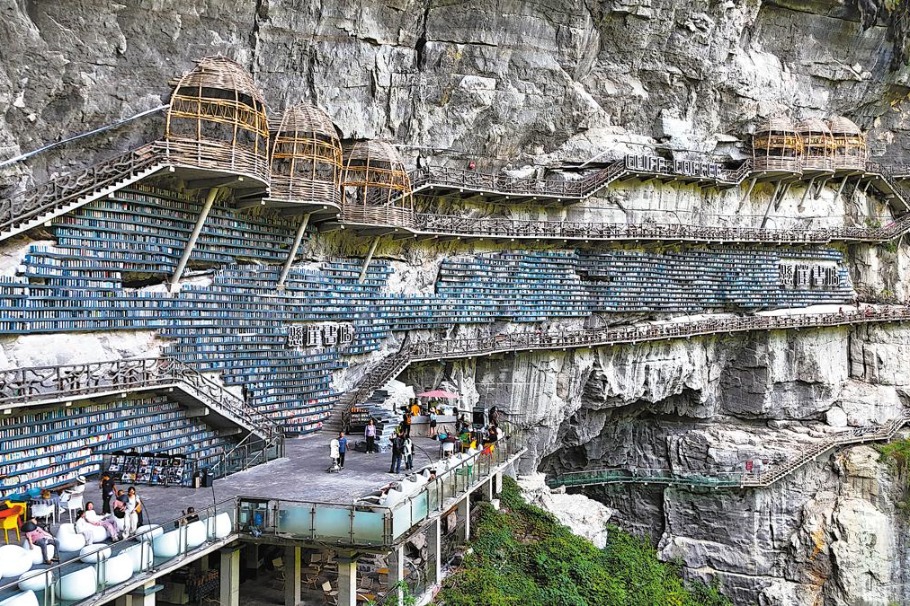
    Deep within the spectacular 326-meter Mianhua Sinkhole in China’s Guangxi Zhuang Autonomous Region, an architectural marvel has emerged that seamlessly blends literature with geological wonder. The cliffside bookstore, carved into the karst rock formations of Hechi city, has rapidly evolved into an international cultural destination since its inauguration in May 2025.

    Perched precariously along the sinkhole’s vertical walls, the open-air literary sanctuary boasts an impressive collection of over 10,000 volumes arranged across 150 meters of cliff face, creating what visitors describe as a ‘floating canyon of knowledge.’ Accessing this unique cultural space requires navigating an exhilarating 1,000-step plank pathway etched into the limestone cliffs—a journey that transforms into a metaphorical pilgrimage for literature enthusiasts.

    The bookstore’s creation presented extraordinary engineering challenges due to the unstable karst topography. He Zhijian, the visionary founder, revealed that specialized anchoring technology was essential for ensuring structural safety, comparing the construction process to ‘performing acrobatics on a cliff.’ His inspiration stemmed from innovative bookstore concepts in Japan and Hangzhou, though the sinkhole adaptation represents an entirely unprecedented approach to literary architecture.

    Remarkably, the natural geological formation provides perfect protection from the elements, allowing books to remain completely dry regardless of weather conditions. This natural sheltering effect enables visitors to enjoy reading experiences surrounded by breathtaking panoramic views of the sinkhole’s dramatic interior.

    Beyond its cultural significance, the project has catalyzed substantial regional economic development. Wu Taichang, General Manager of Guangxi Luocheng Mianhua Tiankeng Tourism Development Company, emphasized how the attraction encourages extended visitor engagement through additional facilities including a cliffside café, hotel accommodations, and pathways leading to the sinkhole’s base. The surrounding area now features a 600-square-meter sinkhole theater and recently hosted its inaugural Music Festival, further enhancing the site’s cultural offerings.

    The development has transformed the fortunes of previously isolated Mianhua village, where geographical constraints once limited agricultural possibilities. Today, the project has generated over 90 local employment opportunities from 108 total staff members, while attracting collective investments from seven neighboring villages. Dividend distributions have surpassed 4 million yuan ($570,000), significantly boosting regional economic prosperity while preserving local communities.

    This innovative fusion of cultural space and natural wonder demonstrates how strategic tourism development can simultaneously preserve geological heritage, promote literary culture, and generate sustainable economic benefits for remote communities.

  • Paired assistance provides aid to remote plateau settlements

    Paired assistance provides aid to remote plateau settlements

    For fifteen consecutive years, the Huangnan Tibetan Autonomous Prefecture in China’s northwestern Qinghai province has witnessed remarkable transformation through a comprehensive regional assistance initiative. This program, mandated by China’s central government, pairs economically advanced eastern regions with less developed areas to foster balanced national development.

    Tianjin municipality has emerged as a key partner for Huangnan, channeling substantial resources into infrastructure, healthcare, and education since 2010. The collaboration represents one of China’s most enduring regional pairing programs, designed to bridge development gaps between coastal and inland regions.

    Infrastructure development has been a cornerstone achievement. In Hornasha township, situated approximately 3,000 meters above sea level, Tianjin allocated 15 million yuan ($2.1 million) to construct a 41.7-kilometer road network connecting four administrative villages. Completed in 2022, this transportation infrastructure has replaced previously treacherous paths that became impassable during rainy seasons and dangerously icy in winter.

    The road infrastructure has dramatically improved mobility and economic opportunities for local residents. Nyangga, a 76-year-old village shopkeeper, reported that travel time to Tongren city has reduced from a three-hour trek by mule or foot to a 40-minute drive.

    Complementing transportation upgrades, Tianjin engineers completed a critical water-supply project in October 2019, delivering potable water to both residents and livestock. The system features pipelines buried 2.6 meters underground to prevent freezing during harsh plateau winters, replacing dependence on collected rainwater.

    Healthcare transformation has been equally significant in Zekog county, where 95% of the 80,000 residents are Tibetan. A specialized medical team from Tianjin, led by Dr. Fan Hongguang, has strengthened local medical services through regular outreach across eight townships and 64 villages. The team focuses on treating and raising awareness about prevalent conditions including hypertension, diabetes, and respiratory infections.

    The medical mission has established 34 mentor-student partnerships, cultivated 15 core local medical professionals, conducted over 500 training sessions, and facilitated medical licensing for nine staff members. Dr. Li Peng, a Tianjin radiologist working at Zekog’s People’s Hospital, emphasized his commitment to enhancing local diagnostic capabilities.

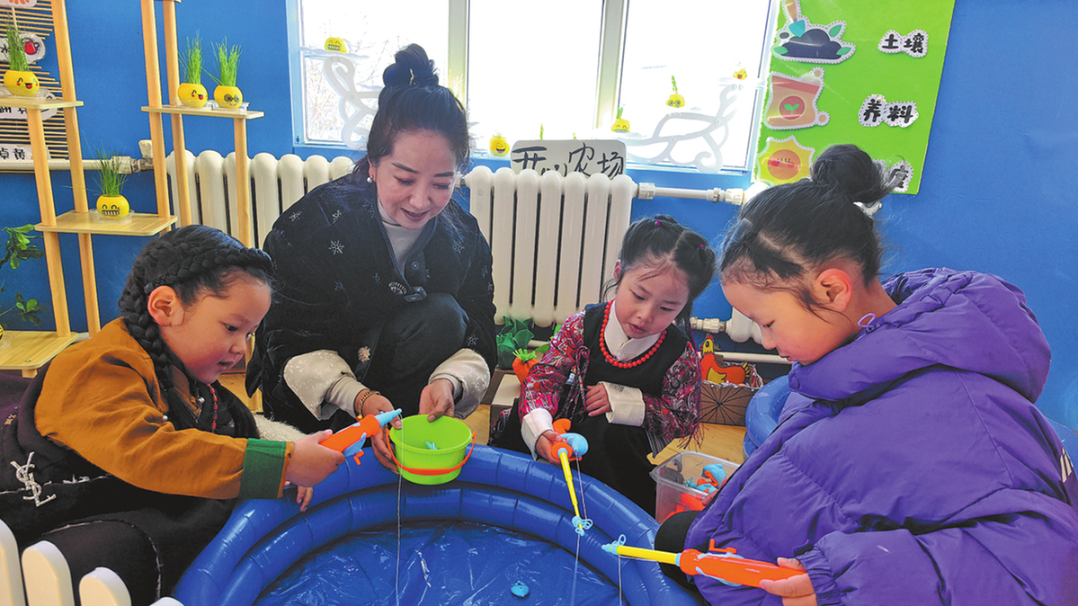
    Educational advancement has manifested through the construction of the Central Kindergarten in Quze town, a 4,320-square-meter facility built with 15 million yuan in Tianjin funding between 2017-2022. The institution now serves 252 children across seven classes with 27 staff members, equipped with digital screens, playhouses, science learning spaces, and comprehensive outdoor facilities.

    According to Yamma Tso, the kindergarten principal, the facility has eliminated the previous practice of preschool children studying alongside primary school students. The principal noted that Tianjin’s support has significantly broadened educational horizons for plateau children.

    Overall, Tianjin has invested approximately 2 billion yuan in Huangnan, supporting 661 distinct projects aimed at comprehensive economic and social development. Pei Zhi, Chief Commander of the Tianjin Aid Qinghai Command Post, emphasized the program’s commitment to directing resources where they are most needed while ensuring residents tangibly experience the benefits of development assistance.

  • Woman who blackmailed Son Heung-min gets four years in jail

    Woman who blackmailed Son Heung-min gets four years in jail

    A Seoul district court has delivered a decisive verdict in a high-profile blackmail case targeting international football sensation Son Heung-min. The court sentenced a woman in her twenties to a four-year prison term for orchestrating an elaborate extortion scheme against the athlete. Her male accomplice, in his forties, received a two-year sentence for attempted blackmail.

    The criminal operation unfolded when the woman falsely claimed to be pregnant with Son’s child, despite having no factual basis for this assertion. The defendants subsequently demanded 300 million won (approximately $200,000) from the footballer, threatening to publicize the fabricated pregnancy claim unless their financial demands were met.

    According to court proceedings and AFP reports, the woman utilized the extorted funds to purchase luxury designer goods. Prosecutors revealed that the defendant attempted to position herself as a victim receiving compensation, but the court found her claims inconsistent with evidence demonstrating thorough premeditation.

    The scheme escalated when the perpetrators attempted to extract additional payments earlier this year, prompting Son to involve law enforcement authorities. The presiding judge noted that the defendants deliberately exploited Son’s celebrity status for financial gain, causing the athlete significant mental distress particularly after media coverage of the case.

    This verdict comes during a notable period in Son’s professional career. The 33-year-old forward recently concluded a decade-long tenure with Tottenham Hotspur to join Los Angeles Football Club in August, marking the most expensive transfer in Major League Soccer history. In October, he was recognized as the second-highest paid footballer in MLS.

    Son’s accomplishments include becoming the first Asian player to win the Premier League Golden Boot in 2022 while with Tottenham, solidifying his status as one of Asia’s most celebrated football exports. The blackmail case has drawn significant attention across South Korea and the Asian region where Son maintains substantial popularity.

  • Man found guilty of Australian beach murder after hiding in India for years

    Man found guilty of Australian beach murder after hiding in India for years

    In a landmark verdict that concludes a seven-year pursuit of justice, Rajwinder Singh, a 41-year-old former nurse, has been found guilty of the brutal 2018 murder of Toyah Cordingley. The conviction was delivered by a jury in the Cairns Supreme Court on Monday, sparking an emotional outpouring from the public gallery.

    The case dates back to October 2018, when Ms. Cordingley, a 24-year-old health store worker and dedicated animal shelter volunteer, was killed during a routine Sunday afternoon walk with her dog on Wangetti Beach, a scenic coastal stretch between the tourist centers of Cairns and Port Douglas. The court heard harrowing details that she was stabbed at least 26 times with a sharp object before being partially buried in sand dunes, where she was later discovered by her father.

    Singh, originally from Punjab, India, was residing in the town of Innisfail at the time, approximately two hours from the crime scene. In a move prosecutors argued demonstrated consciousness of guilt, he fled to India the day after the victim’s body was found, abandoning his wife, three children, and parents. This initiated an extensive four-year international manhunt.

    The prosecution’s case, though largely circumstantial, presented compelling scientific evidence. A critical DNA sample recovered from a stick at the murder scene was statistically analyzed to be 3.8 billion times more likely to have originated from Singh than from an unrelated individual. Furthermore, digital evidence indicated that the movements of Ms. Cordingley’s mobile phone precisely matched the trajectory of Singh’s vehicle immediately following the attack.

    This trial marked the second judicial proceeding against Singh, following a previous trial in March that concluded with a hung jury, unable to reach a unanimous decision. The conviction brings a measure of closure to a case that horrified and united the local community, where Ms. Cordingley was remembered as a well-loved and respected individual. Singh is scheduled to return to court for a sentencing hearing.

  • India actor Dileep cleared in 2017 rape and abduction case of actress

    India actor Dileep cleared in 2017 rape and abduction case of actress

    In a landmark judicial ruling that has captured national attention, a trial court in Kerala’s Ernakulam district has exonerated renowned Malayalam actor Dileep of all charges related to the 2017 abduction and sexual assault of a prominent South Indian actress. The verdict, delivered by Principal District and Sessions Court Judge Honey M Varghese, concluded the lengthy legal proceedings that have unfolded over nearly six years.

    While the court cleared Dileep of criminal conspiracy allegations, it found six other defendants guilty for their direct involvement in the assault. The convicted individuals now face sentencing proceedings scheduled for December 12th, where they could receive substantial prison terms for crimes including gang rape, abduction, and criminal conspiracy.

    The case originated in February 2017 when the victim—an accomplished performer with over 80 film credits and multiple awards—was violently abducted while traveling from Thrissur to Kochi for a film dubbing session. Her assailants captured the assault on video, allegedly for blackmail purposes. The incident triggered widespread outrage and prompted intense scrutiny of gender-based violence within India’s entertainment industries.

    Despite legal protections that typically shield sexual assault survivors’ identities, the victim voluntarily waived her anonymity in 2022, granting a courageous interview to the BBC where she detailed her traumatic experience. She described how the attack ‘turned my life upside down’ and acknowledged her ‘difficult journey from being a victim to a survivor.’

    The judicial proceedings occurred under tight security, with barricades and significant police presence surrounding the courtroom. Dileep, who maintained his innocence throughout, had previously endured three months of incarceration before securing bail in 2017.

    This case catalyzed broader reforms within the Malayalam film industry. Following public outcry, the Kerala government established a special committee chaired by former High Court Justice Hema to investigate systemic issues affecting women in the industry. The committee’s damning report, published last year, exposed rampant sexual harassment and described an industry dominated by ‘a mafia of powerful men’ that routinely enabled exploitation.

    The victim retains the legal right to appeal Monday’s verdict in the Kerala High Court, potentially extending this already protracted legal battle. The case has highlighted both the persistent challenges facing sexual assault survivors in India’s judicial system and the courageous resilience of those who come forward despite institutional and social barriers.

  • White South Africans divided on US refugee offer

    White South Africans divided on US refugee offer

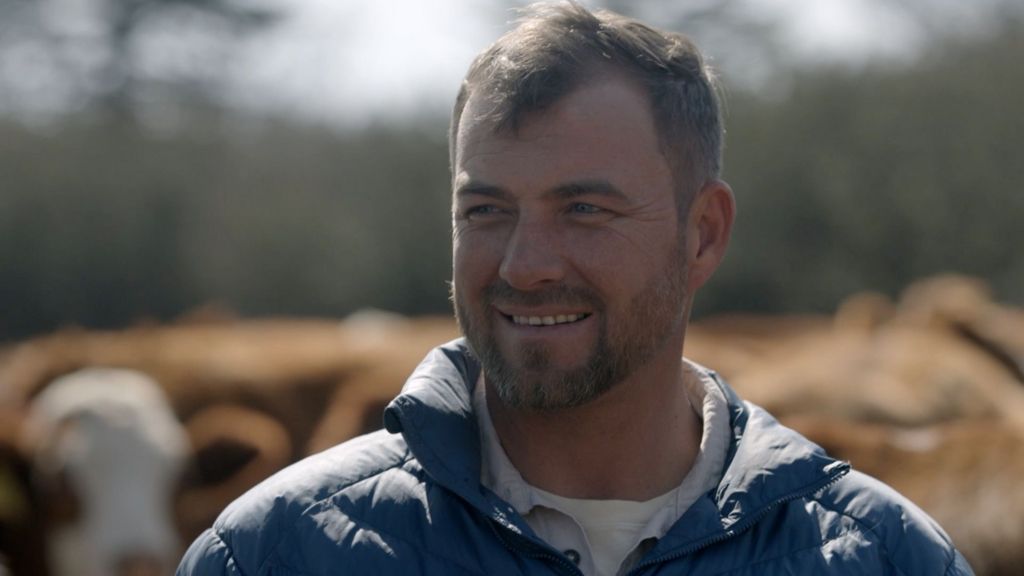
    In South Africa’s rural Free State province, a white Afrikaner farmer identified only as Marthinus navigates daily life behind 4-meter electric steel gates topped with spikes, surrounded by barbed wire and surveillance cameras. This fortress-like environment reflects the pervasive fear driving his family’s decision to seek refugee status in the United States.

    Marthinus’s personal history fuels his anxiety: both his grandfather and his wife’s grandfather were murdered in farm attacks. He lives just two hours from where 21-year-old farm manager Brendan Horner was found dead five years ago, tied to a pole with a rope around his neck. “I will give my whole life just so that my wife and my kids can be safe,” Marthinus states, expressing a sentiment shared by thousands of Afrikaners applying for US refugee status since President Donald Trump signed an executive order prioritizing their resettlement.

    Contrary to claims of targeted racial persecution, the reality of farm violence appears more complex. The latest crime statistics reveal South Africa’s enduring security crisis, with an average of 63 daily murders in the first quarter of 2025. While showing improvement from 2024, this maintains the country’s position among the world’s highest homicide rates.

    Black farmer Thabo Makopo, tending 237 acres on the outskirts of Ficksburg, shares similar security concerns. “It’s all of us. I could be attacked today – it could happen to any of us,” he acknowledges, emphasizing the universal vulnerability of farmers regardless of race. This perspective is reinforced by official data: between October 2024 and March 2025, Police Minister Senzo Mchunu reported 18 farm murders nationwide, with 16 black victims and only 2 white.

    The term ‘white genocide’ promoted by some international figures faces strong rejection from within the farming community. White farmer Morgan Barrett, protecting his six-generation family farm with nightly patrols, challenges this narrative: “I don’t buy that narrative that in this area the attacks are against whites only. If they thought that the black guy had 20,000 rand sitting in his safe, they’d attack him just as quickly.”

    South Africa’s historical context adds complexity to current tensions. Despite apartheid ending in 1994, racial inequalities persist, with white farmers still controlling 72% of private farmland despite constituting just 7.3% of the population. The government’s land reform programs have shown limited progress, while new expropriation powers remain constrained to rare circumstances according to legal experts.

    Beyond farms, violence affects all communities. In Meqheleng township, Nthabiseng Nthathakana mourns her husband Thembani Ncgango, murdered during a robbery at their small store. With no arrests made, she now solely provides for their four children, representing the broader human cost of South Africa’s security challenges.

    As Marthinus prepares for relocation following his successful refugee application, he maintains his belief in targeted persecution: “A lot of people believe that it’s a political thing to get rid of us as white farmers.” Yet the evidence suggests a more nuanced reality—a nation grappling with widespread criminal violence that transcends racial boundaries, compounded by historical inequalities and inadequate police response that has driven millions to rely on private security forces now outnumbering the national police and army combined.

  • Somalia’s poets keep hope alive for storytelling and for peace

    Somalia’s poets keep hope alive for storytelling and for peace

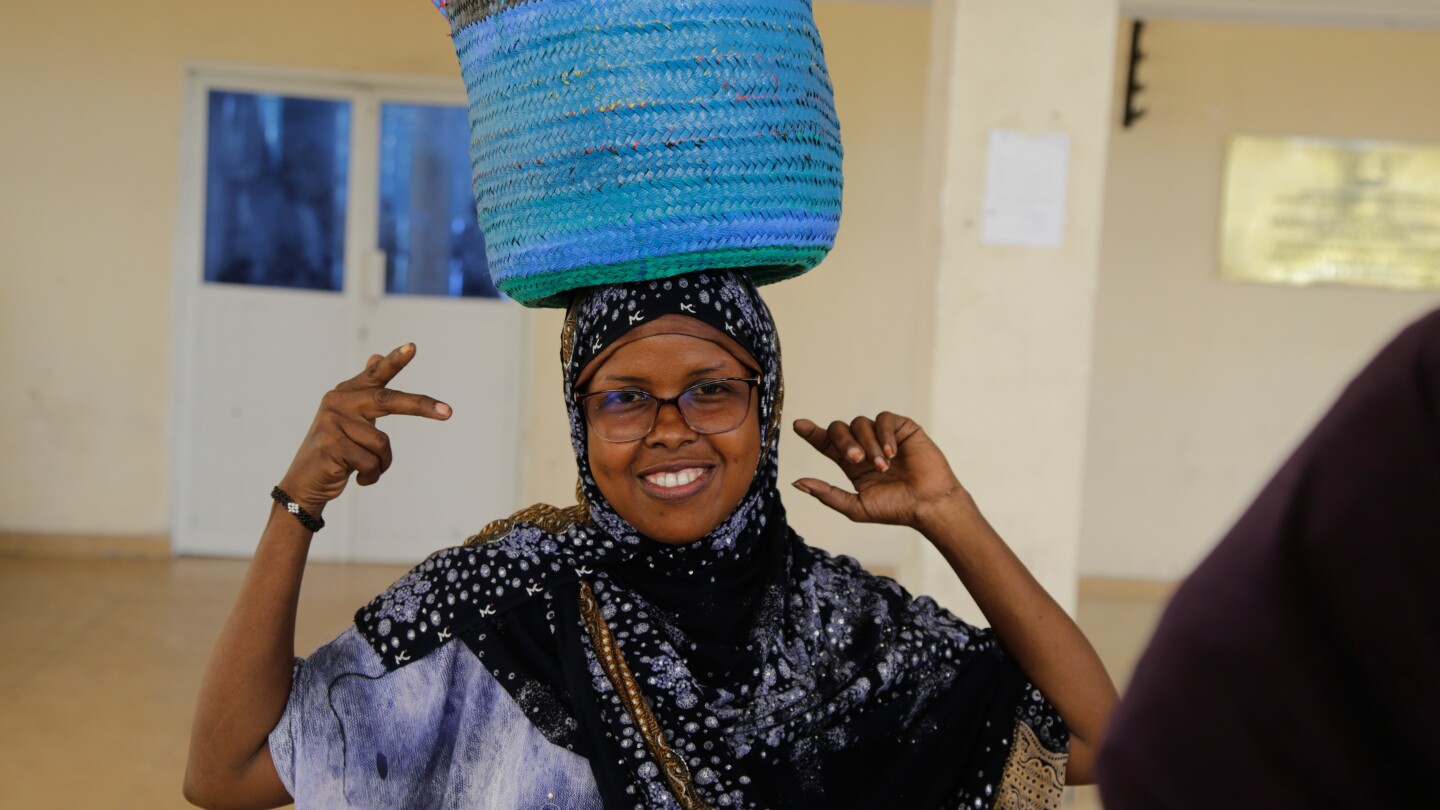
    MOGADISHU, Somalia — In the shadow of past violence at Somalia’s National Theater, where a suicide bomber once detonated, elderly poets now gather to preserve the nation’s rich oral tradition. Among them is 70-year-old Hassan Barre, who recently stepped to the podium in the largely empty hall to recite verses emphasizing civic responsibility and national unity.

    These aging wordsmiths, some with henna-dyed beards and clouded eyes, represent a fading cultural beacon in one of the world’s most volatile nations. Their presence underscores a profound contrast: Somalia, often described as “a nation of poets,” has become better known for bombings than verse after decades of conflict stripped away its cultural wealth.

    Oral poetry remains Somalia’s highest art form, recited in remote outposts and even among militants in the bush. Legendary figures like Hadraawi—the “Shakespeare of Somalia” who died in 2022—achieved universal recognition for works spanning love songs to war laments.

    The current fragile federal government allocates most resources to national security, leaving cultural institutions like the National Theater and adjacent museum largely inactive. Access requires notifying intelligence agencies in advance with detailed vehicle information—a testament to security concerns that constrain artistic expression.

    Poets recall flourishing during Siad Barre’s iron-fisted rule (1969-1991), when some received free housing and were “treated like kings.” His ouster triggered civil war and the rise of al-Shabab militants, devastating cultural infrastructure.

    Despite challenges, traditional poets still perform at weddings, and verses air daily on radio stations. The Somali Council of Poets claims 400 members, including diaspora Somalis, all advocating for peace while avoiding direct politics.

    Culture Minister Daud Aweis acknowledges poets’ “vital role” as “a foundational pillar for cultural vitality” but offers limited funding. The ministry’s long-term goal is expanded support.

    The National Theater itself symbolizes resilience: inaugurated in 1967, closed in 1991, reopened in 2012 after AU peacekeepers pushed al-Shabab from Mogadishu, then attacked months later by a suicide bomber during a prime ministerial speech.

    Yet poets persist. Maki Haji Banaadir, the theater’s deputy director and popular cultural figure, exemplifies this determination. He helped lead a 2003 cross-country reconciliation tour now impossible due to limited government control outside the capital and secessionist movements.

    As these guardians of tradition work “day and night” to groom new generations, their verses continue echoing through a sandbagged city ringed by checkpoints—a testament to culture’s endurance amid conflict.

  • Water leak in Louvre damages hundreds of books

    Water leak in Louvre damages hundreds of books

    The Louvre Museum in Paris has encountered its third significant operational challenge within recent months following a water leakage incident that compromised hundreds of historical volumes. According to Deputy Administrator Francis Steinbock, approximately 300-400 books, primarily comprising specialized Egyptology journals and scientific documentation from the late 19th and early 20th centuries, sustained water damage in the museum’s Egyptian department.

    The leakage, detected in late November, originated from infrastructure issues that museum management had acknowledged for several years. Repairs are formally scheduled for implementation in the upcoming year. Mr. Steinbock emphasized that no precious heritage artifacts or invaluable books were impacted by the incident. The affected materials, described as reference volumes frequently consulted by academic Egyptologists, will undergo a meticulous restoration process involving drying, professional bookbinding, and conservation treatments before returning to library shelves.

    This incident follows two other major disruptions at the world’s most visited museum. In November, structural vulnerabilities necessitated the partial closure of galleries exhibiting Greek vases and administrative offices. More dramatically, on October 19th, thieves executed a daring daylight heist, stealing crown jewels valued at €88 million ($102 million) while exposing critical security deficiencies. These jewels remain unrecovered, prompting the museum to relocate its most valuable gems to the secure vaults of the Bank of France.

    These recurrent problems align with concerns raised in an October report from France’s Cour des Comptes, the national audit authority. The report criticized the Louvre’s financial prioritization, noting excessive expenditure on artwork acquisitions had occurred “to the detriment of the maintenance and renovation of buildings,” potentially contributing to the current infrastructure challenges.

  • Wildfires destroy 40 homes and kill a firefighter in Australia

    Wildfires destroy 40 homes and kill a firefighter in Australia

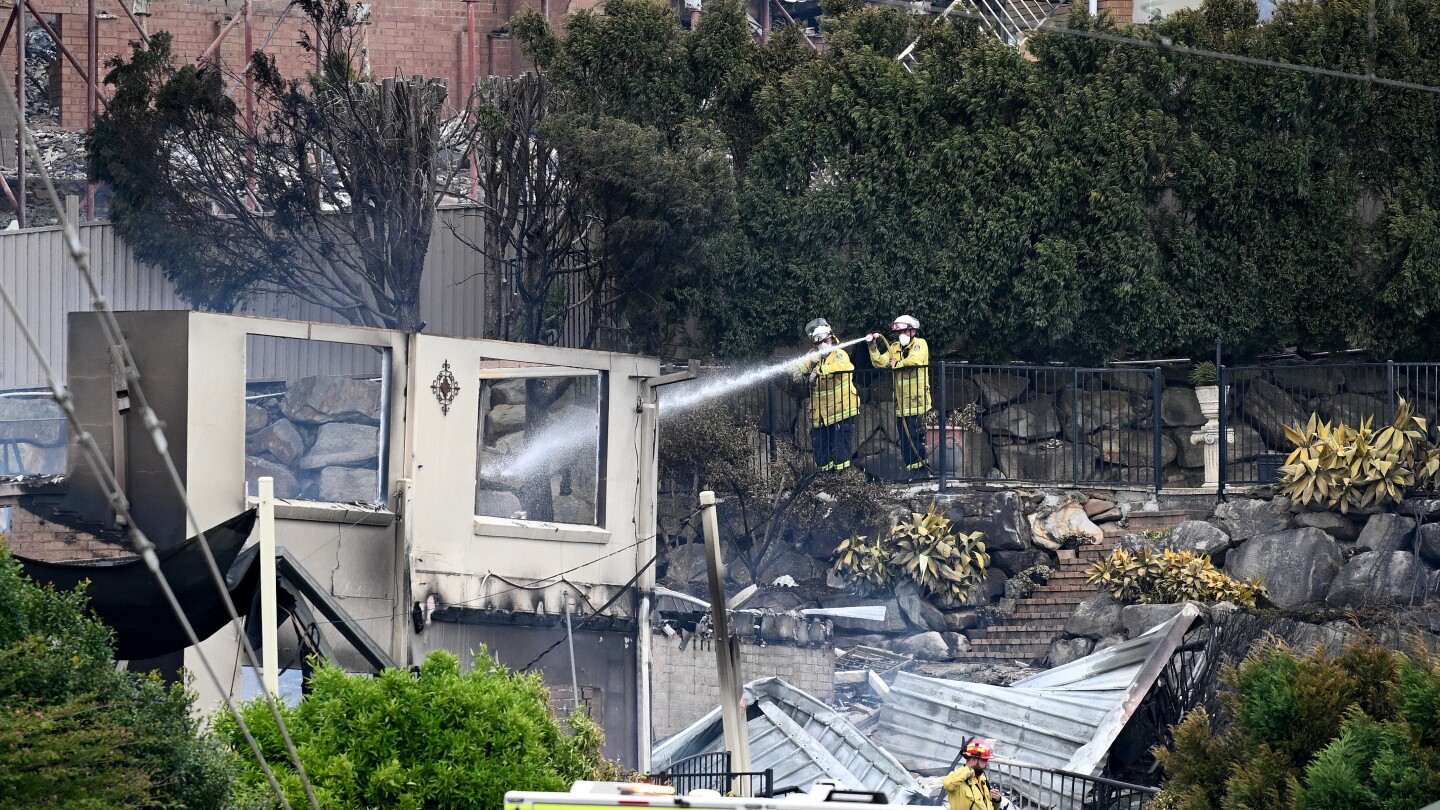
    A veteran firefighter has tragically lost his life while combating devastating wildfires that have swept through Australia’s New South Wales and Tasmania, resulting in the destruction of approximately 40 residential properties. The 59-year-old emergency responder was fatally injured on Sunday evening when a falling tree struck him during fire suppression operations near the town of Bulahdelah, approximately 115 kilometers north of Sydney.

    According to Rural Fire Service Commissioner Trent Curtin, the experienced firefighter could not be resuscitated following the accident. The Bulahdelah blaze has already consumed approximately 3,500 hectares (8,650 acres) of woodland and destroyed four homes over the weekend, with officials anticipating the firefighting efforts would require several more days to contain the inferno completely.

    The crisis extends far beyond this single incident, with 52 separate wildfires actively burning across New South Wales as of Monday. Among these, nine fires remain classified as uncontrolled, posing continued danger to communities. Commissioner Curtin confirmed that wildfires in New South Wales alone had destroyed 20 homes during the weekend.

    Meanwhile, on the island state of Tasmania, emergency officials reported another 19 homes were lost to wildfires in the coastal community of Dolphin Sands. Local government representative Dick Shaw informed the Australian Broadcasting Corporation that while firefighters had successfully contained the Tasmanian blaze by Monday, critical access roads remained closed due to safety concerns. Authorities have advised residents that returning to their properties is not yet safe despite the improved fire conditions.

    The tragic death of the firefighter underscores the extreme dangers emergency personnel face during Australia’s increasingly intense wildfire seasons, which have been exacerbated by climate change and drought conditions across the continent.

  • Can Japan get more female business leaders?

    Can Japan get more female business leaders?

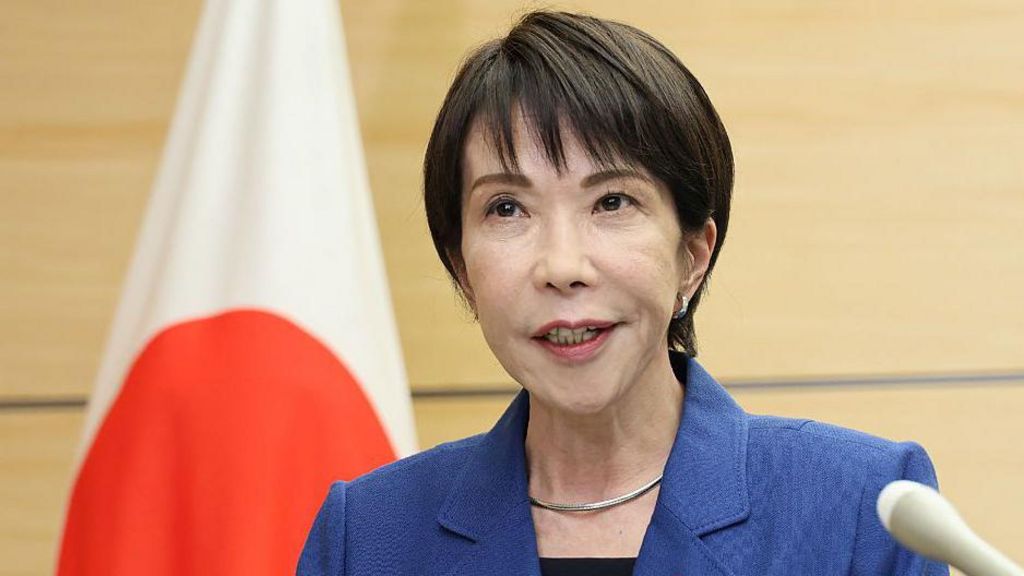
    Japan’s political landscape witnessed a historic milestone in October with the election of Sanae Takaichi as the nation’s first female prime minister. While this achievement symbolizes a shattered glass ceiling, it unfolds against a backdrop of deep-rooted gender disparities that continue to challenge Japanese society.

    The nation presents a perplexing contradiction: despite boasting one of the highest female labor participation rates among developed economies—surpassing 77% for women aged 15-64, exceeding even the United States—Japan simultaneously ranks a dismal 118th on the World Economic Forum’s Gender Gap Index. This positioning makes it the worst performer among all 38 OECD countries, highlighting a significant disparity between women’s workforce presence and their advancement into leadership roles.

    Corporate leadership reveals particularly stark inequalities. Although the government initially set an ambitious target of 30% female representation in leadership positions by 2020, this goal was quietly postponed by a decade when the deadline proved unattainable. Current figures show merely 11.1% of business leadership roles are held by women, underscoring the immense gap between policy aspirations and reality.

    Yumiko Murakami, co-founder of Japan’s first female-led venture capital firm MPower Partners, acknowledges the progress in female labor participation while highlighting persistent challenges. ‘Japan has done a really good job increasing female labor market participation,’ she notes, attributing this growth to both economic necessities—driven by an aging population and labor shortages—and policy interventions such as reducing nursery waiting lists to facilitate mothers’ return to work.

    However, significant obstacles remain. A 2024 government survey revealed that Japanese women earn only 70-80% of their male counterparts’ wages, a disparity that extends into the entrepreneurial ecosystem. Murakami’s WPower fund, half-funded by the Tokyo Metropolitan Government, focuses exclusively on supporting female founders and women-empowerment businesses to address the capital access gap.

    The venture capital environment itself presents barriers. Murakami describes Japan’s VC community as a ‘clubby male environment’ where insiders enjoy privileged access to information and networks. This exclusivity disproportionately affects female entrepreneurs, who struggle to secure funding and face alarming rates of sexual harassment—more than half reported such experiences in a 2024 survey.

    In response to these challenges, support organizations like Startup Lady have emerged to create safe spaces for female entrepreneurs. Co-founder Moeko Suzuki explains their mission: ‘We wanted to create somewhere very, very safe for female entrepreneurs in Japan, even if they’re not Japanese.’ Their programs now include lectures, workshops, and mentoring sessions in collaboration with Tokyo local government.

    Educational institutions also reflect persistent gender gaps. Japan has one of the lowest percentages of female students in STEM fields among OECD nations, and at prestigious Tokyo University, only 20% of undergraduates are women. The university has launched the UTokyo Gender Equity #WeChange initiative, aiming to increase female faculty members from 16% to 25% by 2027 through subsidies and outreach programs that counter early-stage gender bias.

    Professor Kaori Hayashi, executive vice president leading the initiative, acknowledges progress while noting the limited candidate pool. The university now sends female students back to their high schools as role models to counteract cultural discouragement of girls pursuing STEM fields or elite education.

    Amid these complex challenges, Prime Minister Takaichi’s election represents both a symbolic breakthrough and a point of contention. While some celebrate her achievement as evidence of progress, others note her conservative viewpoints—including opposition to separate surnames after marriage—and question whether her leadership will advance gender equality policies.

    Youth activist Momoko Nojo expresses cautious skepticism: ‘I understand that some people are encouraged by the idea that a woman can become prime minister, but I don’t think it will lead to the realization of gender equality policies.’

    Nevertheless, Takaichi’s precedent-setting election underscores Japan’s gradual, complex journey toward gender parity—a transformation occurring across multiple sectors despite persistent cultural and structural barriers. As Japan continues to navigate this path, the significance of having a woman in the highest office remains undeniable, even as the nation confronts the substantial work still required to achieve true gender equality.