
A Colombian national, Didier Reyes, has been sentenced to 13 years and six months in prison for his pivotal role in one of the UK’s most significant drug seizures. The National Crime Agency (NCA) intercepted over half a tonne of cocaine, valued at more than £42 million, in May 2024. The drugs were smuggled into the UK via a boat landing in Easington, East Yorkshire. Reyes, 40, pleaded guilty to importing cocaine at Hull Crown Court, acknowledging his involvement in the operation. The court revealed that Reyes traveled from Colombia to the UK under the guise of seeking employment in London, using a false identity to book a hotel in Hull. The drug gang utilized vans and an inflatable boat to retrieve waterproofed bales of cocaine dropped by a larger ship in the North Sea. Upon landing near Easington, the gang was apprehended by NCA officers as they checked into a local pub. Judge Mark Bury emphasized Reyes’ significant role in the operation, citing text messages on his phone that indicated direct communication with higher-ranking cartel members in Mexico. Reyes was described as a key intermediary ensuring the safe transport of the cocaine. The judge commended the NCA for their efforts, stating that the seizure had significantly disrupted the UK’s cocaine supply chain. Earlier, two Scottish men, Mark Moran and Daniel Livingstone, were sentenced to 15 years and seven years and nine months, respectively, for their involvement in the plot. NCA Senior Investigating Officer Alan French highlighted Reyes’ crucial role in facilitating the smuggling attempt, noting that without his coordination, the cocaine would not have reached Moran and Livingstone.
分类: society
-

Anger in Australia after telecom outage linked to deaths
Australian telecommunications giant Optus is under intense scrutiny following a catastrophic systems outage that left hundreds unable to contact emergency services for 13 hours, resulting in multiple deaths. The incident, which occurred last week, affected more than half of the country, with over 600 emergency calls failing to connect, primarily in South Australia, Western Australia, and the Northern Territory. Optus CEO Stephen Rue has publicly apologized for the ‘completely unacceptable’ failure, acknowledging that at least three lives were lost due to the outage, including a baby boy. However, police have indicated that the network failure was ‘unlikely’ to be the cause in the infant’s case. Authorities in Western Australia also suspect a fourth death linked to the incident. The Australian Communications and Media Authority (Acma) has launched an investigation, criticizing Optus for its delayed response. The company waited 40 hours to inform the public and regulators, contrary to standard practice. Rue attributed the outage to a technical fault during a network upgrade but admitted the company was unaware of the issue for 13 hours. Despite multiple customer complaints, the problem was not escalated promptly. Acma expressed deep concern, emphasizing that access to emergency services is a fundamental responsibility of telecom providers. This is the second major outage for Optus in two years, following a 2023 incident that resulted in A$12 million in penalties. Communications Minister Anika Wells has condemned the failure, stating that Optus will face ‘significant consequences.’ Prime Minister Anthony Albanese has suggested Rue consider resigning. Investigations are ongoing, with Rue promising daily public updates.
-
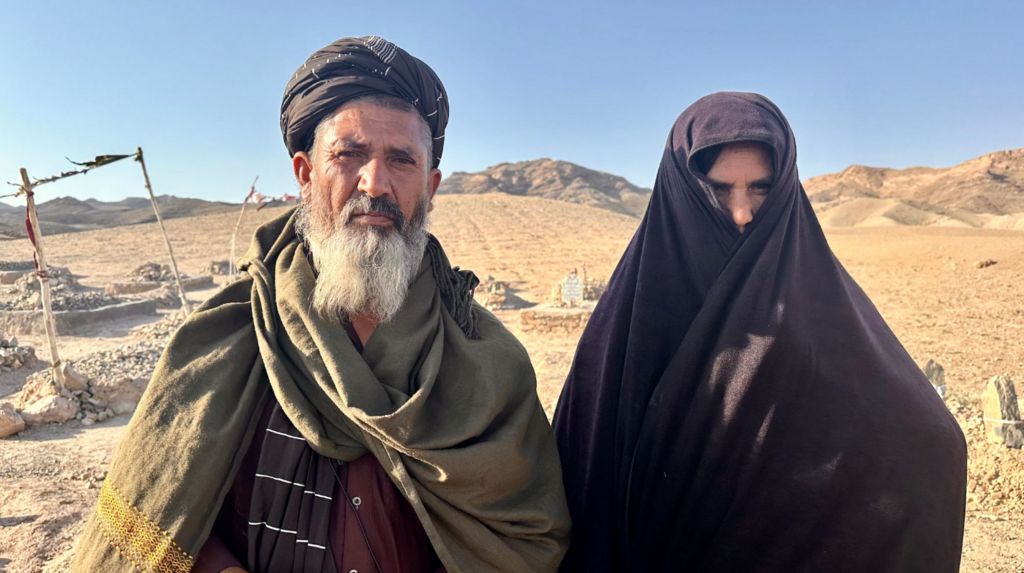
My three boys starved to death. I hope angels bring them home, says Afghan mother
In the desolate graveyard of Sheidaee, outside Herat in western Afghanistan, Ghulam Mohiddin and his wife Nazo mourn the loss of their three young sons—Rahmat, Koatan, and Faisal Ahmad—all victims of malnutrition. Their story is a harrowing testament to the silent wave of child mortality sweeping across Afghanistan, a crisis exacerbated by severe food shortages, economic collapse, and dwindling international aid. The couple, who survive by breaking walnut shells, have received no assistance from the Taliban government or NGOs, leaving them helpless in the face of unimaginable grief. ‘One minute there’s a baby in your arms, the next minute they are empty,’ Nazo lamented. The graveyard, filled with hundreds of small graves, starkly illustrates the scale of the tragedy, with two-thirds of the burials being children. The UN has labeled the situation an ‘unprecedented crisis of hunger,’ with nearly half of Afghanistan’s children under five suffering from stunted growth. The World Food Programme (WFP) warns that over three million children are at risk of severe malnutrition, as aid funding dries up and winter approaches. The Taliban’s policies, including restrictions on women’s rights and bans on NGO operations, have further complicated efforts to deliver life-saving assistance. With WFP’s funding set to run out in November, the situation is dire. ‘We are starting to turn away malnourished women and children because we simply cannot afford to feed them,’ said John Aylieff, WFP’s country director. As Afghanistan teeters on the brink of catastrophe, the world watches, seemingly powerless to stop the unfolding disaster.
-
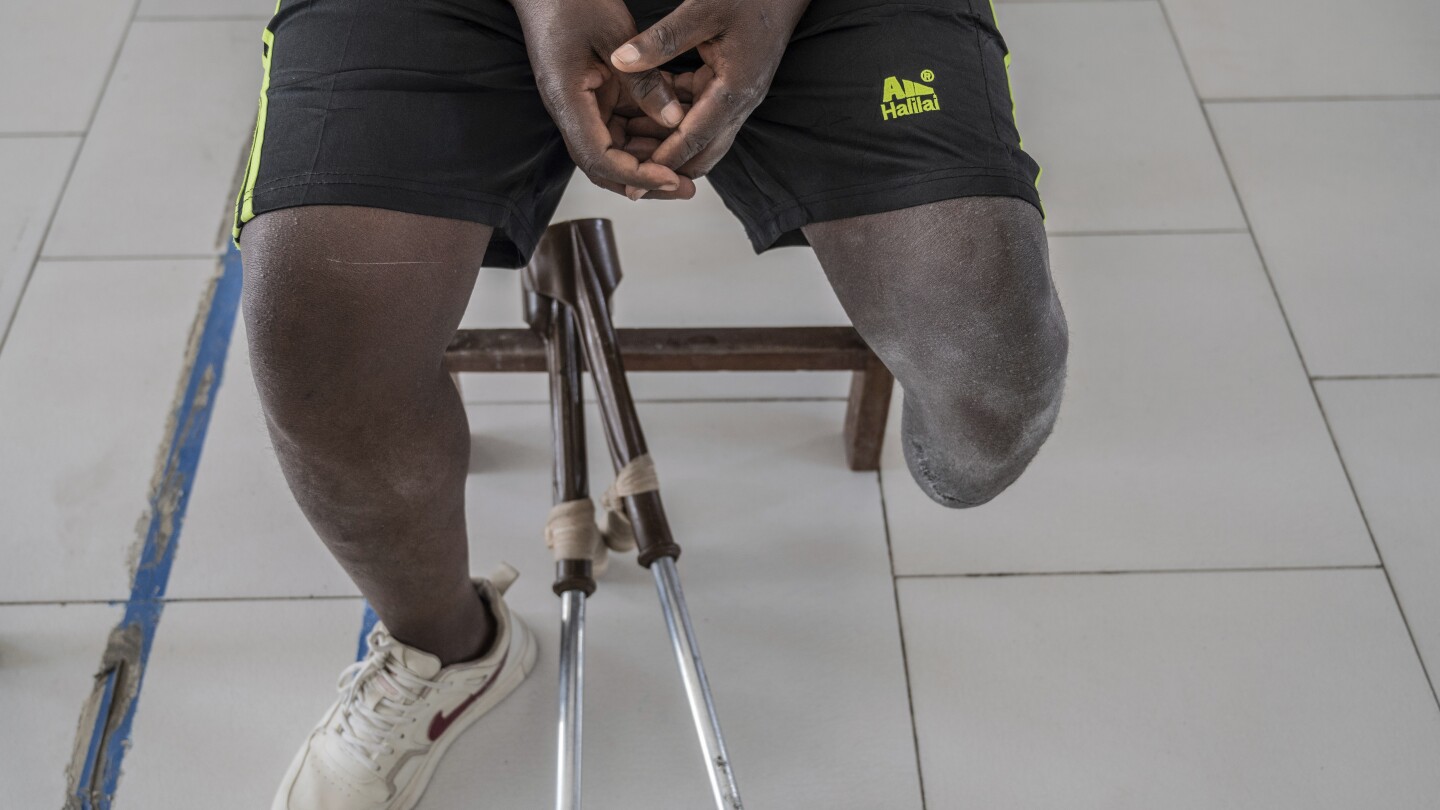
On the front line of Congo’s conflict, a trauma center tells a story of horror and survival
In the heart of Goma, eastern Congo, a sunlit rehabilitation room at Shirika la Umoja orthopedic center becomes a sanctuary for survivors of the region’s relentless conflict. Among them is Jerome Jean Claude Amani, 35, who, after losing his wife and four children in a rebel attack earlier this year, is now learning to walk again with a prosthetic leg. ‘I feel at peace,’ Amani reflects. ‘This leg is not just plastic; it’s a second chance.’ His story is one of resilience in the face of unimaginable loss. The center, supported by the International Committee of the Red Cross since 2005, has seen a surge in demand for prosthetics due to escalating violence. In the first half of 2025 alone, it provided 326 artificial limbs, a stark increase from 422 in all of 2024. The conflict, involving over 100 armed groups, has displaced 7 million people and deepened one of the world’s largest humanitarian crises. Despite peace efforts, sporadic clashes continue to claim lives and limbs. For patients like Melisa Amuli, 30, who survived a bombardment but lost her mobility, the center offers hope. With a custom orthotic brace, she dreams of returning to work. Similarly, Violetta Nyirarukundo, 27, a mother of four, faces the dual trauma of losing a leg and being abandoned by her husband. Yet, she remains determined to rebuild her life. Faustin Amani, 20, a former street vendor, grapples with the emotional toll of losing both legs in a tragic accident. ‘I wonder if I’ll ever have a normal life,’ he says. The center’s workshop, where prosthetics are meticulously crafted by hand, symbolizes a collective effort to restore mobility and dignity. Julienne Paypay, a prosthetic technician and amputee herself, embodies this mission: ‘I know what it means to walk again.’ Despite challenges like material shortages and limited technicians, the center persists, offering a lifeline to those who have lost so much. For Amani, the prosthetic leg is not a reminder of weakness but a testament to survival and hope. ‘I will fight for my children,’ he vows. ‘This is my victory.’
-

Three dead in Australia after Optus glitch disrupts emergency calls
A critical technical failure during a network upgrade at Optus, Australia’s second-largest telecommunications provider, has resulted in the tragic deaths of three individuals. The incident, which occurred on Thursday, disrupted emergency call services, leaving hundreds of customers in South Australia, Western Australia, and the Northern Territory unable to connect with emergency services. During welfare checks, authorities discovered three fatalities in households where attempts to make emergency triple zero (“000”) calls had failed. Optus CEO Stephen Rue expressed profound regret and offered heartfelt condolences to the affected families during a press conference on Friday. Rue emphasized that the company is conducting a thorough investigation into the failure and will publicly disclose the findings once completed. This incident follows a series of setbacks for Optus, including a $12 million fine for a nationwide outage in 2023 and a significant cyberattack in 2022 that compromised the data of nearly 9.5 million Australians. Rue, who assumed leadership in November 2024, vowed to address the systemic issues and restore public trust in the company.
-

Police find remains they think are US man accused of killing his daughters
In a grim development in a high-profile case, human remains presumed to be those of Travis Decker, a man accused of murdering his three young daughters, have been discovered in a remote wooded area near Leavenworth, Washington. The Chelan County Sheriff’s Office announced on Thursday that preliminary findings suggest the remains belong to Decker, though official identification is still pending. Decker, a 32-year-old former soldier, had been on the run since June 2, when the bodies of his daughters—Paityn, Evelyn, and Olivia, aged nine, eight, and five—were found in a secluded campground. His truck and phone were also located nearby. Authorities believe Decker, who was wanted on kidnapping and first-degree murder charges, had been hiding in the rugged, forested terrain of Washington state. The girls’ mother reported them missing on May 30 after Decker failed to return them to her home in Wenatchee following a visit. Investigators revealed that the children died from apparent suffocation, with their wrists bound by zip ties. Decker’s military background, including possible mountain survival training, may have aided his evasion efforts. The remains were found on Grindstone Mountain, just miles from the site where his daughters’ bodies were discovered. A $20,000 reward had been offered for information leading to his capture, and the extensive search led to closures of popular hiking areas in national forests. The case has shocked the community and raised questions about public safety and the challenges of tracking fugitives in remote regions.
-
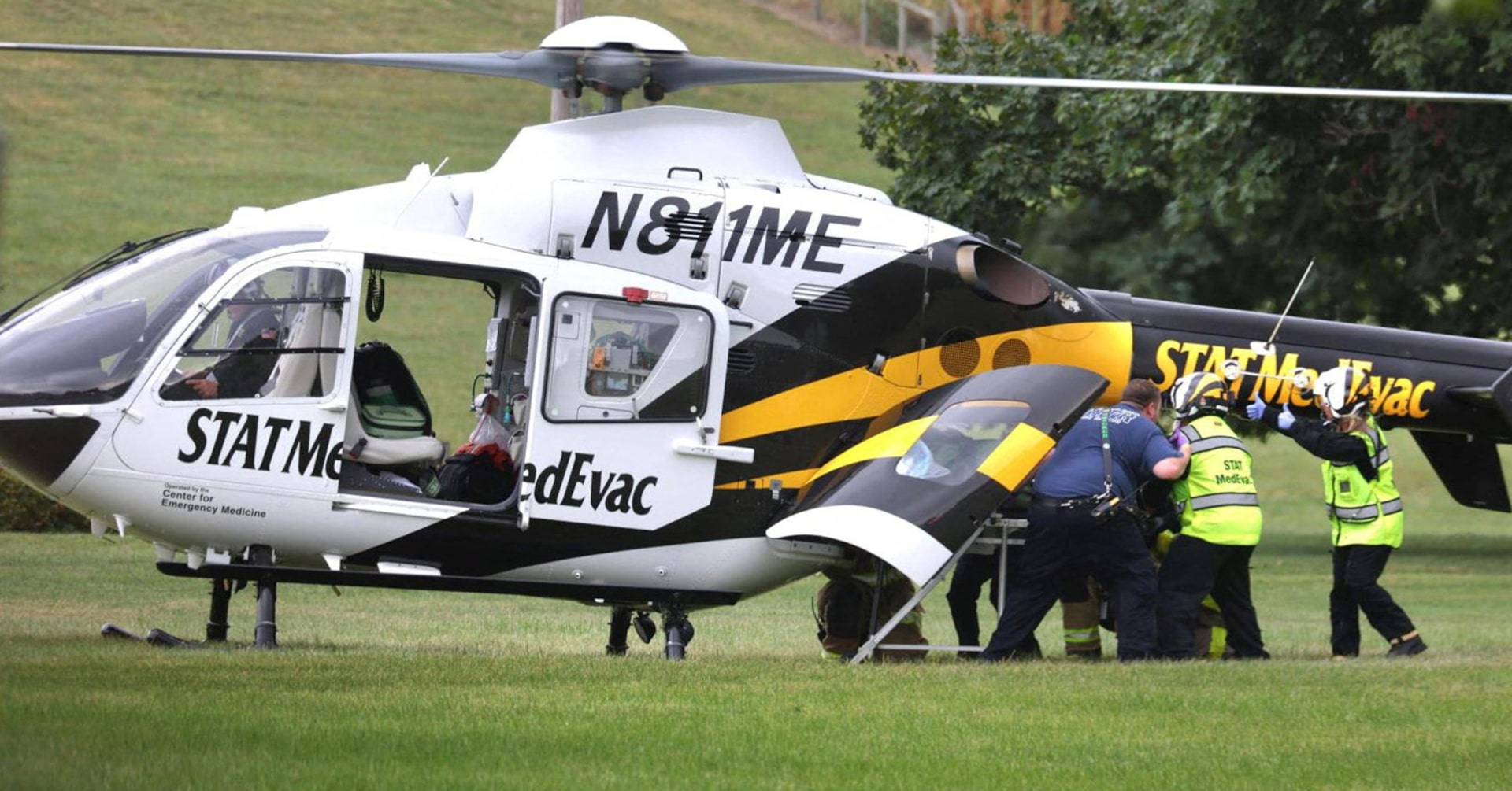
Five Pennsylvania cops shot, three fatally, were ambushed by accused stalker
A tragic shooting incident in North Codorus Township, Pennsylvania, has left three police officers dead and two others critically injured. The ambush occurred on September 17, 2025, when officers attempted to serve an arrest warrant on Matthew Ruth, a 24-year-old suspected stalker. Armed with an AR-15-style rifle, Ruth opened fire on the officers as they entered a farmhouse belonging to his ex-girlfriend and her mother. The confrontation resulted in a deadly gunfight that claimed the lives of three detectives and the suspect. The incident has drawn national attention, with Pennsylvania Governor Josh Shapiro addressing the issue of gun violence in the wake of the tragedy. This marks the second fatal shooting involving law enforcement in York County within seven months, following a hostage siege at a local hospital earlier this year.
-

Borussia Dortmund sorry for TikTok ‘mocking’ woman’s stammer
German football powerhouse Borussia Dortmund and triathlon organizer Ironman have issued public apologies after facing backlash for posting TikTok videos that appeared to mock Jessie Yendle, a Welsh influencer with a stammer. The controversial clips, which featured Jessie struggling to pronounce a sound before transitioning into a popular TikTok dance track, were widely criticized for their insensitivity. Both organizations have since removed the videos and expressed remorse for their actions. Borussia Dortmund has extended an invitation to Jessie to attend a UEFA Champions League match as a gesture of goodwill, while Ironman acknowledged their oversight and pledged to improve their content vetting process. Jessie, known online as Mimidarlingbeauty to her 3.5 million TikTok followers, has been a vocal advocate for raising awareness about speech impediments. Her spokesperson stated that the videos were deeply hurtful and highlighted the ongoing need for a more inclusive society. Jessie has also campaigned for the introduction of a universal symbol to assist the estimated 450,000 people in the UK with speech impediments.
-
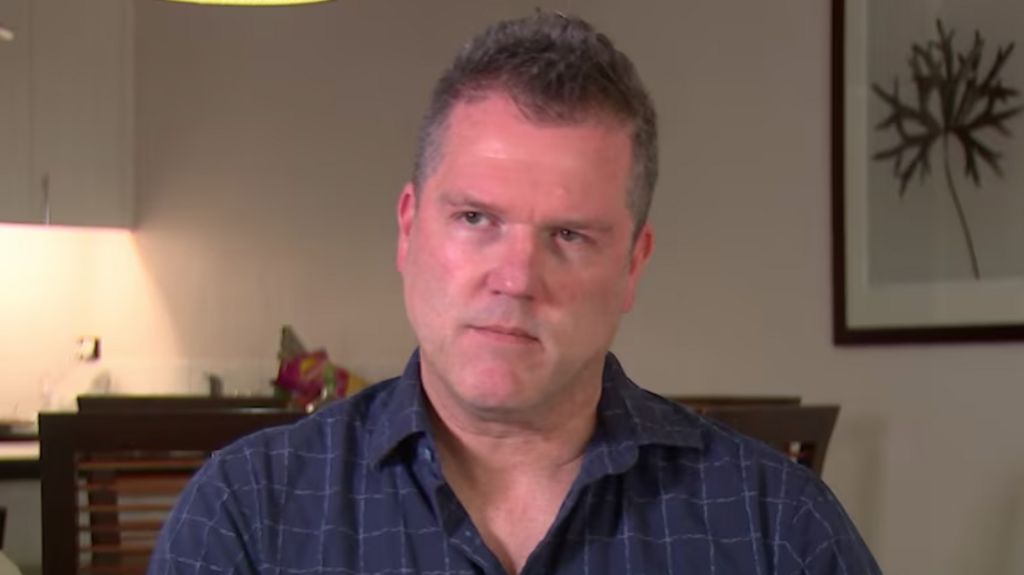
Doctor penalised for calling mushroom murderer ‘disturbed sociopath’
A prominent Australian doctor, Chris Webster, who played a pivotal role in the trial of Erin Patterson—a woman convicted of murdering three relatives with a toxic mushroom meal—has faced disciplinary action from the Medical Board of Australia. Dr. Webster, a key witness in the trial, made disparaging remarks about Patterson in media interviews, calling her a ‘heinous individual’ and a ‘disturbed sociopathic nut-bag.’ The board deemed his comments unprofessional and ordered him to undergo ethics, privacy, and social media training. Additionally, he must receive mentorship from another doctor for one year. The Australian Health Practitioner Regulation Agency (Ahpra) launched an investigation following numerous complaints about Dr. Webster’s explicit language and media conduct. Despite the sanctions, Dr. Webster stands by his comments, asserting that they were based on publicly discussed trial details and did not breach patient confidentiality. He acknowledged the board’s decision but expressed disappointment, stating that the community might suffer due to his reduced availability. Patterson, 50, was sentenced to life imprisonment with no possibility of parole for at least 33 years for the 2023 murders of her in-laws and the attempted murder of another relative. Dr. Webster, who treated the victims before their transfer to a major hospital, remains a practicing GP in Leongatha, Victoria, with strong local support.
-
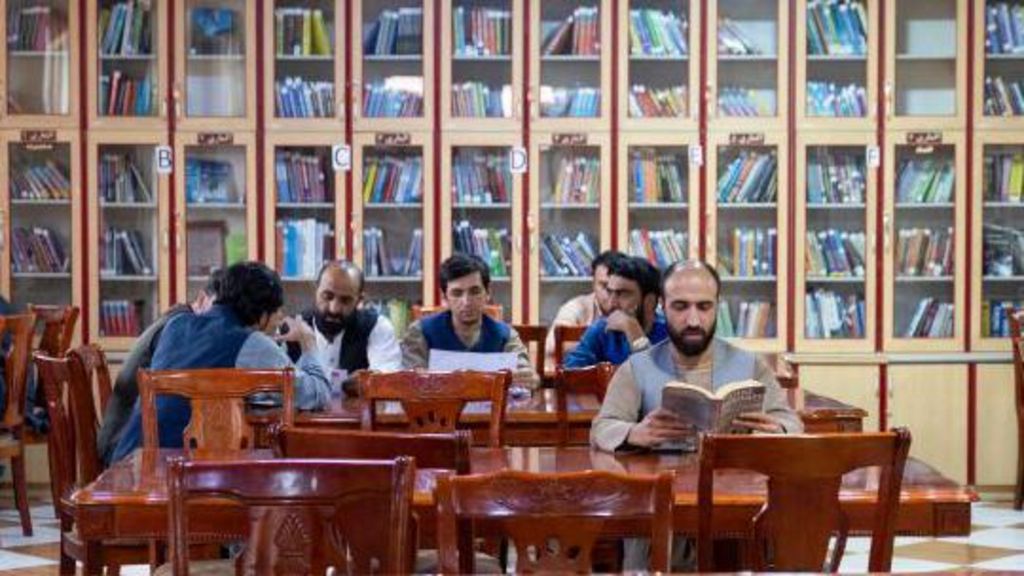
Taliban ban books written by women from Afghan universities
In a significant move, the Taliban government has mandated the removal of books authored by women from university curricula across Afghanistan. This decision is part of a broader ban that also prohibits the teaching of human rights and sexual harassment. A total of 680 books, including 140 written by women, have been flagged as ‘problematic’ due to their perceived opposition to Sharia law and Taliban policies. Additionally, universities have been instructed to cease teaching 18 specific subjects, which the Taliban claims conflict with Islamic principles and their governance policies. Among the banned subjects are Gender and Development, The Role of Women in Communication, and Women’s Sociology. This decree is the latest in a series of restrictive measures implemented by the Taliban since their return to power four years ago. Women and girls have been disproportionately affected, with access to education beyond the sixth grade already barred. The recent closure of midwifery courses in late 2024 further limited their educational opportunities. The Taliban asserts that their policies align with Afghan culture and Islamic law, but critics argue these measures are deeply misogynistic. Zakia Adeli, a former deputy minister of justice and one of the authors whose books were banned, expressed little surprise, stating that the Taliban’s actions over the past four years made such decisions predictable. The new guidelines, issued in late August, were reportedly formulated by a panel of religious scholars and experts. The ban also targets books by Iranian authors and publishers, with officials citing concerns over the ‘infiltration of Iranian content’ into Afghan education. A professor at Kabul University revealed that faculty members are now forced to create their own textbook chapters, raising questions about the quality and global standards of these materials. The BBC has reached out to the Taliban’s Ministry of Education for further comment.