分类: society

  • Workers build giant snowman in Heilongjiang

    Workers build giant snowman in Heilongjiang

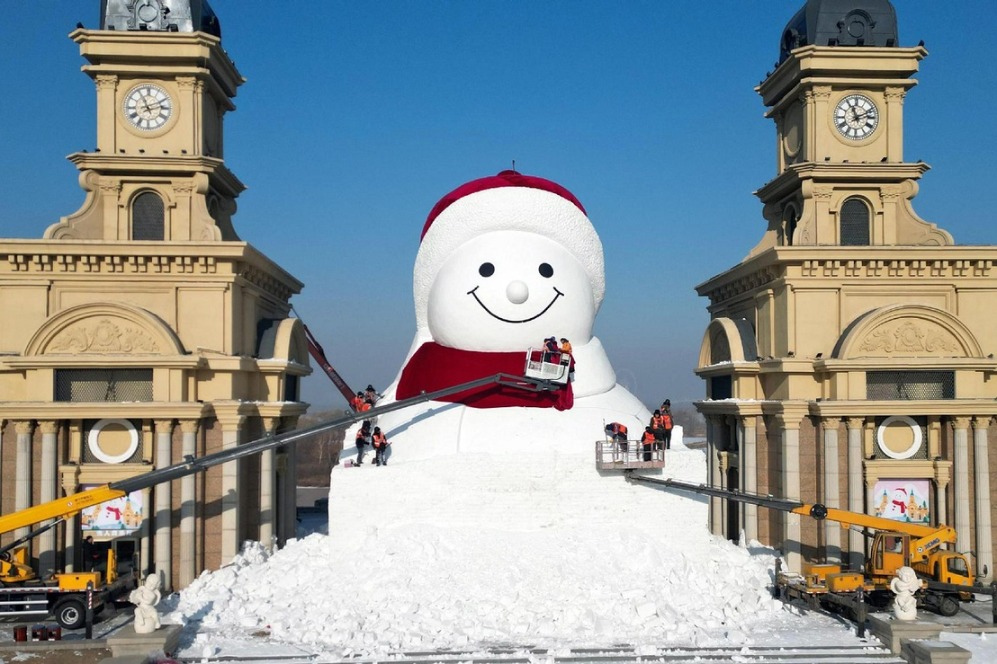
    In a spectacular display of winter craftsmanship, construction teams in Harbin have erected a monumental snow sculpture reaching unprecedented dimensions. The massive snowman, standing at 19 meters (approximately 62 feet), now dominates the landscape at Qunli Music Park in Northeast China’s Heilongjiang province.

    Documented through aerial drone photography on December 14, 2025, this frosty giant represents a significant engineering achievement in seasonal art. Construction crews utilized approximately 3,000 cubic meters of meticulously compacted snow to create this seasonal marvel, demonstrating remarkable precision in both design and execution.

    The 2025 installation surpasses previous records set by the city’s winter attractions, specifically exceeding last year’s creation by a full meter in height. This incremental but symbolically important improvement continues Harbin’s tradition of pushing the boundaries of winter construction and ice sculpture artistry.

    The project forms part of Harbin’s broader winter tourism strategy, which has established the city as an international destination for cold-weather attractions and architectural innovations using natural frozen materials. Such installations typically serve as centerpieces for the city’s famous winter festival, drawing visitors from across China and beyond.

    Local authorities and tourism boards have increasingly leveraged these seasonal constructions to showcase human ingenuity in harmonizing with extreme weather conditions while promoting cultural exchange through public art installations.

  • Heard of ‘chief dog officer’? Dubai sees rise in pet-friendly communities

    Heard of ‘chief dog officer’? Dubai sees rise in pet-friendly communities

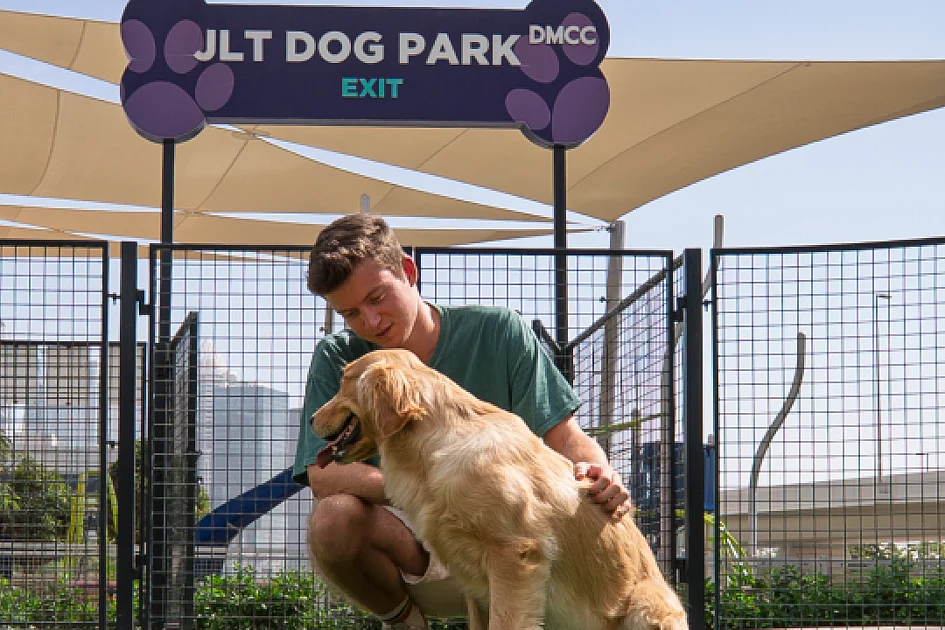
    Dubai is witnessing a significant transformation in urban community planning, with pet-friendly initiatives becoming a central feature of residential life. The trend is exemplified by the innovative ‘Chief Dog Officer’ (CDO) program recently launched in Jumeirah Lake Towers (JLT), where a community competition selected a canine ambassador to represent the neighborhood for a one-year term.

    This initiative reflects a broader cultural shift in the United Arab Emirates, where accommodating pets is increasingly prioritized in urban development. The selected CDO’s responsibilities include welcoming new four-legged residents and their owners, promoting responsible pet etiquette in communal spaces, and highlighting local pet-centric businesses and amenities.

    Beyond JLT, Dubai’s landscape is evolving to accommodate pet owners with specialized infrastructure. Palm Jumeirah’s Golden Mile Galleria shopping center and the W Hotel now welcome pets, while The Greens community features multiple pet-accessible areas. The Zabeel House hotel has broken new ground by incorporating two dog-friendly restaurants, complete with a dedicated elevator for canine patrons.

    Recreational options have expanded considerably with Dubai Islands Beach introducing the emirate’s first dedicated dog beach park in 2023. The 460-square-meter facility features agility equipment, obstacle courses, and designated off-leash swimming areas, complemented by pet showers and drinking fountains. The venue recently hosted the Woofstock festival, further cementing Dubai’s commitment to pet-inclusive community events.

    Digital platforms like Doggie Adventures and Flopster have emerged to support this growing demographic, providing directories of pet-friendly establishments and organizing social gatherings. These developments respond to increasing demand from residents like Sadia Ahmed, who relocated to Emirates Hills specifically for its pet-welcoming environment after struggling to find accommodating housing in older neighborhoods.

    The comprehensive approach—encompassing housing, commerce, recreation, and digital infrastructure—signals Dubai’s maturation into a truly pet-inclusive metropolis, setting new standards for urban living in the region.

  • UK chief rabbi says cousin hid for 15 ‘terrifying’ minutes in Bondi attack

    UK chief rabbi says cousin hid for 15 ‘terrifying’ minutes in Bondi attack

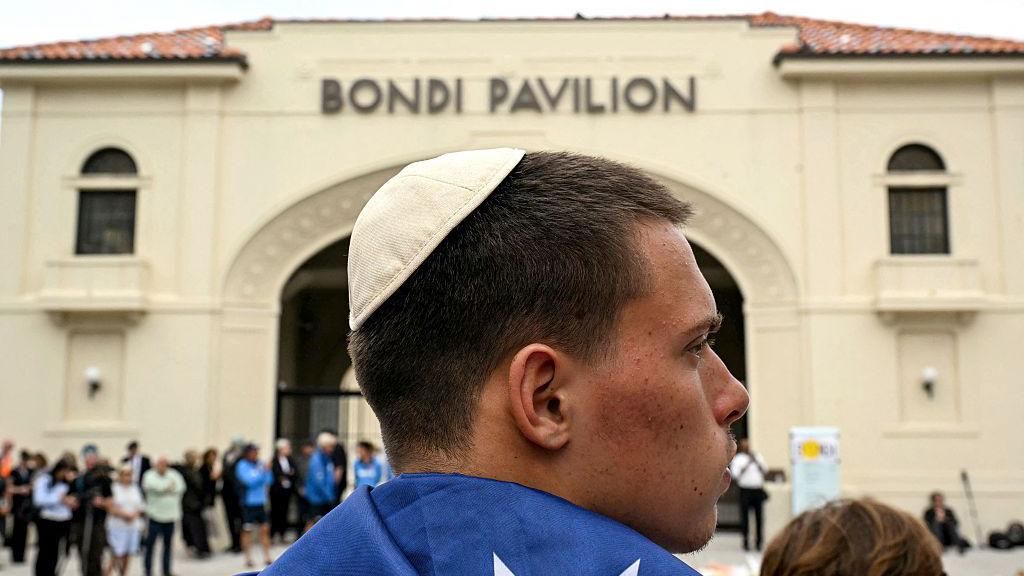
    In a horrific attack that has sent shockwaves through global Jewish communities, two gunmen opened fire on a Hanukkah celebration at Sydney’s Bondi Beach, killing fifteen people including a 10-year-old girl and an 87-year-old Holocaust survivor. The assault occurred Sunday evening as approximately 1,000 attendees gathered for the public event organized by Chabad of Bondi.

    UK Chief Rabbi Sir Ephraim Mirvis revealed his cousin and cousin’s wife survived by hiding beneath a doughnut stand during fifteen minutes of terror as people around them were shot dead. Rabbi Mirvis, who will travel to Sydney in response to the tragedy, emphasized that the victims were targeted solely for gathering publicly as Jewish people.

    The attackers have been identified by Australian media as 50-year-old Sajid Akram, who died at the scene, and his 24-year-old son Naveed Akram, currently hospitalized in critical condition. Verified footage shows hundreds of panicked attendees fleeing the beach as volleys of gunshots rang out.

    Rabbi Mirvis connected the violence to what he termed ‘toxic antisemitism,’ specifically criticizing the normalization of rhetoric that demonizes Jewish people and the only Jewish state. He pointed to chants like ‘globalize the intifada’ as directly inciting hatred that manifests in violent actions.

    The Community Security Trust (CST), which arranges security for UK Jewish communities, reported record levels of anti-Jewish hate crimes following the October 7th Hamas attack on Israel. CST’s head of policy Dave Rich noted the Bondi attack represents ‘the extreme end of this political spectrum,’ drawing connections between violent rhetoric and physical violence.

    In a show of solidarity, UK Justice Minister Alex Davies-Jones traveled to Manchester to celebrate Hanukkah with survivors of September’s Heaton Park synagogue attack that left two Jewish victims dead. She emphasized the government’s commitment to ensuring Jewish communities can safely observe their traditions.

    The tragedy occurred during Hanukkah, which commemorates Jewish defiance against religious persecution over 2,150 years ago. Rabbi Mirvis noted the bitter irony that the festival’s message of refusing to be intimidated or erased was met with ‘murderous hatred’ in Sydney.

  • Suspect arrested after deadly Brown shooting

    Suspect arrested after deadly Brown shooting

    Law enforcement authorities have apprehended 24-year-old Wisconsin resident Benjamin Erickson as the primary suspect in Saturday’s deadly shooting at Brown University. The arrest occurred at a hotel approximately 32 kilometers from the Ivy League campus, where Erickson was found in possession of two firearms.

    The tragic incident resulted in two confirmed fatalities and nine individuals sustaining injuries, all presumed to be students attending the university. Official identification of victims remains pending proper notification of family members.

    Providence Police Chief Oscar Perez confirmed ongoing investigative efforts, stating, “We’re actively collecting evidence and seizing relevant items while conducting necessary searches at multiple locations.” The shooting occurred around 4 pm Saturday in the Barus and Holley building, which contains engineering and physics department facilities. According to law enforcement sources, the assailant discharged over 40 rounds from a 9mm handgun within a classroom setting.

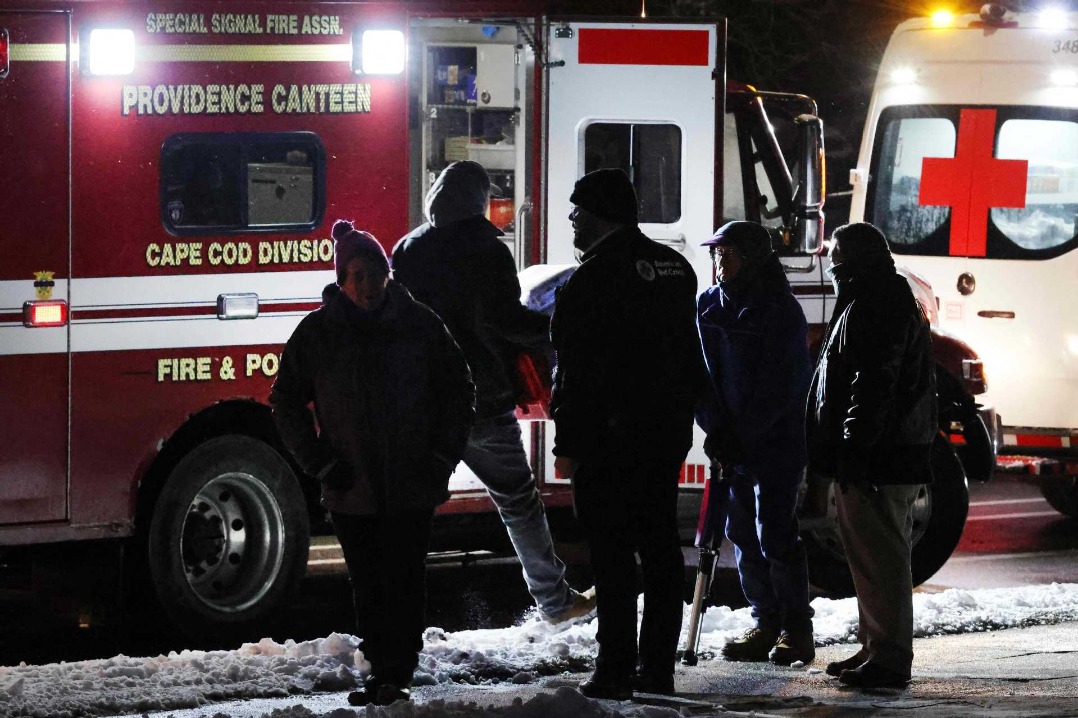
    The university administration has canceled all remaining academic activities for the semester, including final examinations and project submissions, as the community grapples with the tragedy. On Sunday evening, city officials and residents transformed a scheduled holiday celebration into a vigil honoring the victims.

    Providence Mayor Brett Smiley addressed the gathering, noting the symbolic significance of coming together during the Hanukkah season to “shine a little bit of light” in response to darkness. Federal authorities, including the FBI, provided critical assistance in locating and apprehending the suspect. FBI Director Kash Patel acknowledged the collaborative effort while requesting continued prayers for affected individuals and families.

    Investigators have not yet established Erickson’s connection to the university or determined a potential motive for the attack. The case continues to develop as law enforcement pursues multiple investigative avenues.

  • ‘This felt inevitable’: Australian Jews react to Bondi attack with grief and anger

    ‘This felt inevitable’: Australian Jews react to Bondi attack with grief and anger

    The iconic Bondi Beach has been transformed into a somber crime scene following Australia’s deadliest terrorist attack. Two gunmen opened fire during a Hanukkah celebration on Sunday afternoon, killing at least 15 people and injuring over 40 others in what authorities describe as an antisemitic-motivated assault.

    Under clear skies, the normally vibrant shoreline sits eerily quiet. Forensic teams in bright blue protective gear meticulously examine the area where chaos erupted just days prior. Personal belongings—beach chairs, crumpled towels, children’s sandals—lie abandoned in neat piles, silent witnesses to the panic that ensued.

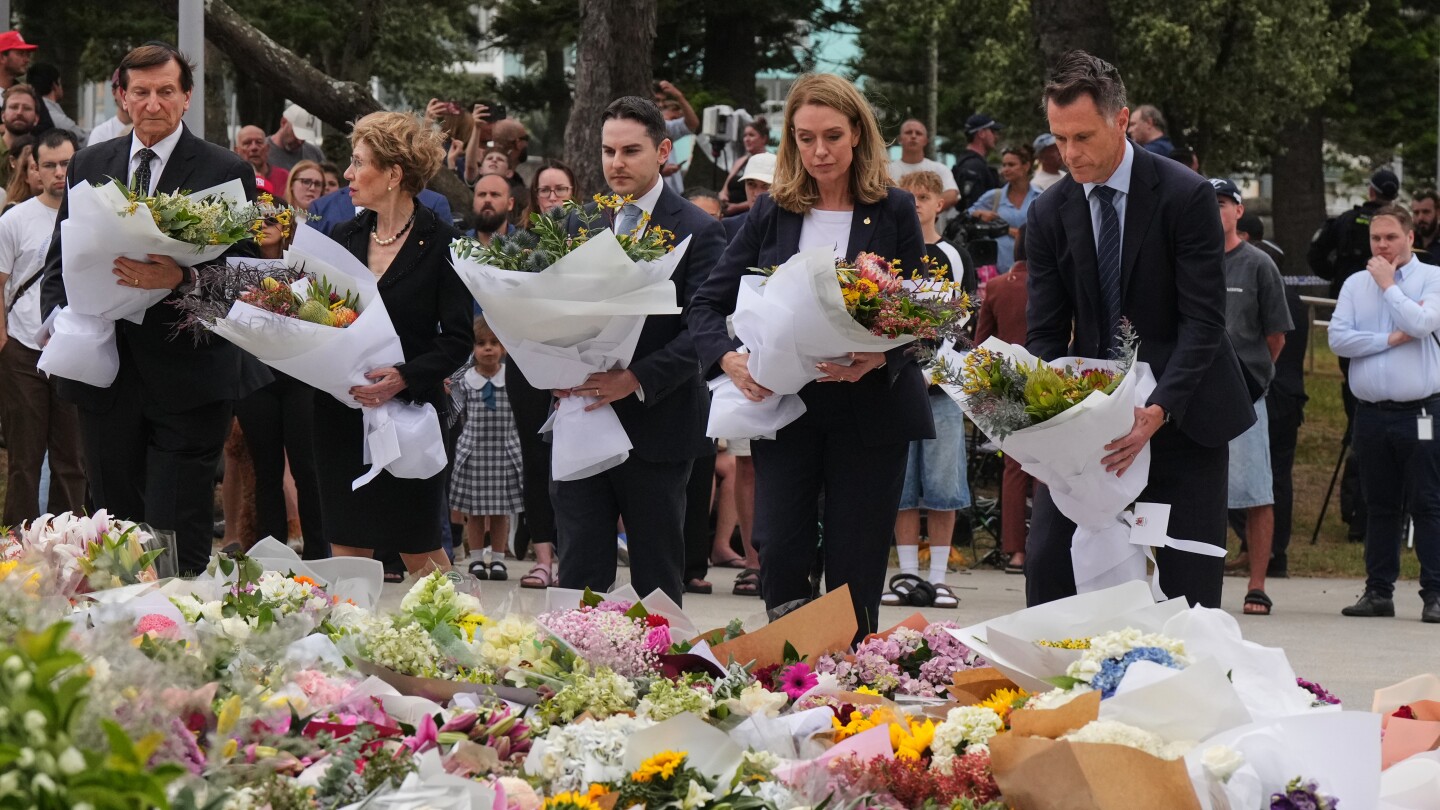
    A growing memorial of floral tributes now lines the footpath as shocked locals gather in disbelief. Twenty-two-year-old Jess, who identifies as Jewish, expressed the community’s grim resignation: ‘I’ve grown up in fear my whole life. This felt inevitable.’

    The attack has sparked urgent questions about national security and rising antisemitism. Prime Minister Anthony Albanese condemned the ‘act of pure evil’ while detailing government measures to combat hate crimes, including enhanced police task forces and stricter penalties for antisemitic offenses.

    Among the victims was prominent local Rabbi Eli Schlanger, who recently welcomed his fifth child, and 10-year-old Matilda, whose ‘only crime was being Jewish,’ according to Alex Ryvchin of the Executive Council of Australian Jewry. The community continues to locate missing persons and identify the deceased, including a Holocaust survivor who narrowly escaped persecution decades ago only to perish in this tragedy.

    The attackers, identified as 50-year-old Sajid Akram and his 24-year-old son Naveed, were reportedly planning their assault at a rental property. Police are investigating potential connections and concerns about retaliatory violence.

    In response to the tragedy, Australians have demonstrated remarkable solidarity. Blood donation centers reported overwhelming demand, with queues stretching for hours after supplies dwindled dangerously low. ‘Australia has your back,’ remarked 21-year-old Alex Gilders, echoing the national sentiment.

    The incident has drawn comparisons to the 1996 Port Arthur massacre, which prompted sweeping gun reforms. Government officials are now considering similar measures amid calls for stronger leadership and prevention strategies.

  • UAE’s rainy days mean resort stays: How bad weather drives wellness getaways

    UAE’s rainy days mean resort stays: How bad weather drives wellness getaways

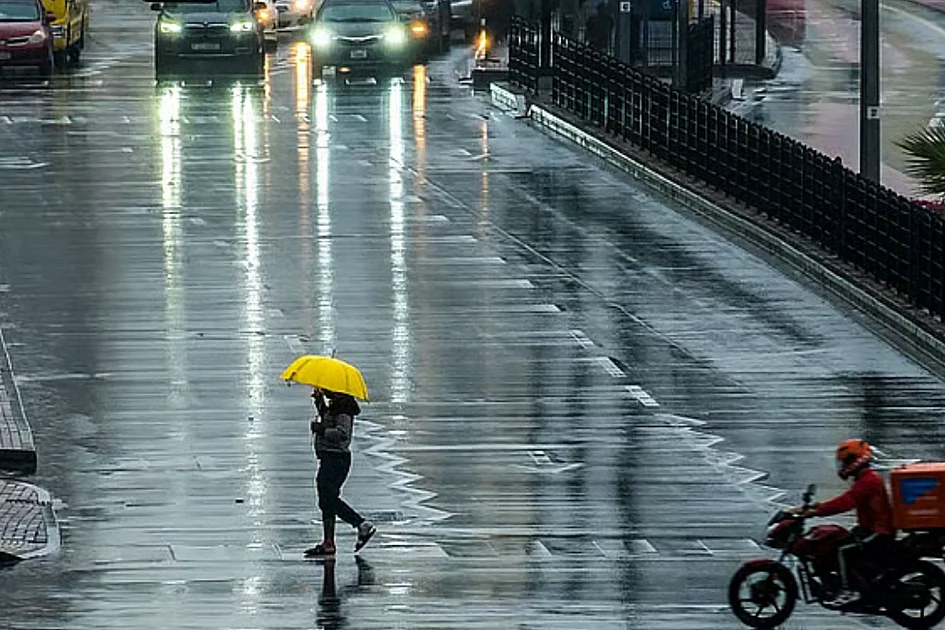
    In the arid climate of the United Arab Emirates, where rainfall remains a rare meteorological phenomenon, an unexpected behavioral pattern has emerged among residents. Rather than viewing impending precipitation as merely a logistical challenge, a growing segment of the population now actively seeks refuge in wellness-oriented getaways when rain appears in forecasts.

    This psychological shift represents a fundamental reimagining of weather-related behavior. Dubai-based entrepreneur Abdullah S. exemplifies this trend, explaining how rain predictions now trigger his planning for retreats to destinations like Sir Bani Yas Island or Fujairah resorts. ‘Rain there feels like a gift in the UAE,’ he noted. ‘I use that time to think clearly, plan new ventures and reflect on business decisions without distractions.’

    The hospitality industry has documented corresponding booking patterns. According to Shilpa Mahtani, co-founder of bnbme holiday homes, ‘We usually see a spike in last-minute staycation bookings when rain is forecasted. Larger apartments and villas with comfortable indoor spaces tend to perform best.’ These bookings frequently include premium add-ons such as in-house chefs, masseuse services, and extended check-out times.

    Clinical psychologist Dr. Laxmi Saranya of Mediclinic provides scientific context for this phenomenon, noting that weather forecasts function as ‘cognitive primes’ that trigger emotional associations and behavioral adjustments even before physical weather changes occur. ‘Rain acts as a socially acceptable justification for slowing down,’ she explained. ‘It provides an external reason to withdraw, cancel plans or reflect without guilt.’

    This behavioral adaptation highlights how urban populations in high-performance environments increasingly value and seek validated opportunities for mental respite, using rare weather events as culturally approved moments for psychological renewal.

  • What to know about the attack on the Jewish festival in Australia that killed 15 people

    What to know about the attack on the Jewish festival in Australia that killed 15 people

    SYDNEY — Australian authorities are confronting a rare episode of mass gun violence that has shaken the nation’s sense of security. A father and son are suspected of carrying out a deadly shooting at a Hanukkah celebration on Sydney’s iconic Bondi Beach, leaving 15 people dead and dozens injured in what Prime Minister Anthony Albanese has labeled an act of antisemitic terrorism.

    The attack targeted a Jewish community gathering marking the first day of the eight-day holiday festival. Among the victims were a 10-year-old girl, a rabbi, and a Holocaust survivor, highlighting the particularly tragic nature of the assault.

    Authorities revealed that the 50-year-old father, who arrived in Australia in 1998 on a student visa and held resident status, was killed during the incident. His 24-year-old Australian-born son sustained injuries and remains hospitalized under police guard. Investigators are examining suspicious items recovered from the scene, including improvised explosive devices found in one suspect’s vehicle.

    Dramatic footage circulating on Australian media showed a bystander courageously tackling and disarming one gunman before securing the weapon. The father held a legitimate firearms license obtained through membership at a gun club, as target shooting qualifies as a ‘genuine reason’ for firearm ownership under current Australian law, while self-defense does not.

    The tragedy has prompted immediate government action, with Prime Minister Albanese announcing proposed tougher gun laws just one day after the shootings. This response comes amid criticism that authorities had underestimated the severity of rising antisemitic violence across the country.

    Government reports indicate antisemitic incidents have surged more than threefold since Hamas attacked Israel in October 2023 and Israel responded with military action in Gaza. Recent months have seen synagogues and vehicles burned, businesses vandalized with antisemitic graffiti, and physical assaults targeting Jewish communities in Sydney and Melbourne, where most of Australia’s 117,000 Jewish residents live.

    The Bondi Beach shooting represents Australia’s deadliest firearm incident in three decades, reviving memories of the 1996 Port Arthur massacre that claimed 35 lives and prompted sweeping gun law reforms. While Australia maintains strict firearm regulations compared to many nations, this event has exposed vulnerabilities in the system and highlighted growing religious tensions within Australian society.

  • Jiangxi valley goes viral, wrongly tagged Japan

    Jiangxi valley goes viral, wrongly tagged Japan

    A breathtaking video showcasing mist-shrouded cliffs that went viral on international social media platforms has been correctly identified as featuring Wangxian Valley in China’s Jiangxi province, not Japanese locations as originally mislabeled. The viral clip, which amassed over 1.3 million likes on TikTok, had been erroneously tagged as depicting scenery from Tokyo and Hokkaido, Japan.

    Operators of the Jiangxi tourist attraction confirmed the video’s actual origin after noticing the significant international attention it generated. Xiong Hui, a representative of Wangxian Valley, expressed surprise at the unexpected global exposure. “We observed substantial interest emerging on overseas social platforms Wednesday morning,” Xiong stated. “Wangxian Valley is unequivocally situated in Shangrao, Jiangxi. Its distinctive deep gorges and dynamic mist create an immediately recognizable landscape. We’re delighted that viewers appreciated the footage and extend an invitation for international visitors to experience Jiangxi’s authentic mountainous splendor firsthand.”

    The site represents a remarkable transformation story, having been converted from a discontinued mining area into a comprehensive cultural resort destination that harmoniously blends natural scenery with folk traditions and performance activities. Official statistics indicate the area welcomed 3.1 million visitors in 2024, including over 150,000 international tourists, demonstrating its expanding global appeal.

    The misidentification prompted diplomatic clarification from Yu Jing, spokeswoman for the Chinese embassy in India, who utilized social media platform X to correct the record on December 8. “Chinese landscapes are being mislabeled as ‘#Tokyo’ and ‘#Hokkaido’ in this viral video that’s already hit 1.3M likes,” Yu wrote. “In reality, this is Wangxian Valley in Jiangxi province, China.” Her post attracted numerous engaged responses, with one user noting the importance of proper geographical attribution while acknowledging that all countries possess beautiful landscapes.

    This incident marks neither an isolated case nor a novel phenomenon. Earlier this year, footage purportedly demonstrating “Japanese subway discipline” was subsequently identified as having been filmed at Beijing’s Xi’erqi station—a similar misattribution that had previously circulated in 2020. Commentary from China.com suggests these recurrent misidentifications reflect persistent perceptual filters within Western media and popular culture, which have historically portrayed East Asia through narrow, one-dimensional frameworks. The analysis contends that China’s rapidly evolving realities—from futuristic urban skylines to scenic sites like Wangxian Valley that merge traditional aesthetics with contemporary tourism design—often transcend these outdated conceptual boundaries, resulting in frequent misinterpretations and misplaced assumptions.

  • Breathing new life into lakes

    Breathing new life into lakes

    Across China’s diverse landscapes, ambitious ecological restoration projects are transforming degraded water bodies into thriving ecosystems while generating substantial socioeconomic benefits. In Yunnan and Hubei provinces, multi-year conservation initiatives demonstrate how coordinated environmental policies can reverse ecological damage while supporting sustainable development.

    At Erhai Lake in Yunnan, the transformation has been particularly remarkable. Yan Bingqi, a 59-year-old environmental worker, has witnessed firsthand the lake’s dramatic recovery since 2015. Previously required to remove approximately one metric ton of debris daily from the polluted waters, Yan and his team now collect merely 50 kilograms—a 95% reduction in waste extraction that signals profound ecological improvement.

    The restoration breakthrough followed President Xi Jinping’s 2015 visit and subsequent policy changes that addressed pollution sources from agriculture, urbanization, and tourism. The comprehensive program implemented centralized sewage treatment for all households near the lake and established strict ecological fishing schedules. These measures aligned with Xi’s ‘lucid waters and lush mountains are invaluable assets’ concept, which celebrates its 20th anniversary this year.

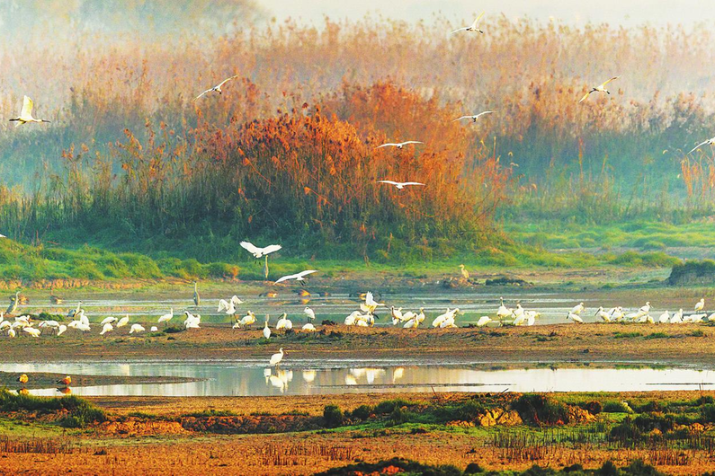
    Parallel successes emerged at Wuhan’s Chenhu Wetland Nature Reserve in Hubei province, where morning mists now reveal gathering birds in revitalized habitats. These conservation achievements represent broader national efforts to transform ecological resources into sustainable assets through scientific management and community engagement.

    The restoration initiatives have generated multiple benefits beyond environmental improvement, including enhanced tourism potential, protected drinking water sources, and increased biodiversity. These projects demonstrate China’s growing expertise in balancing economic development with ecological preservation, offering valuable models for other regions facing similar environmental challenges.

  • Aurora museum opens in Heilongjiang

    Aurora museum opens in Heilongjiang

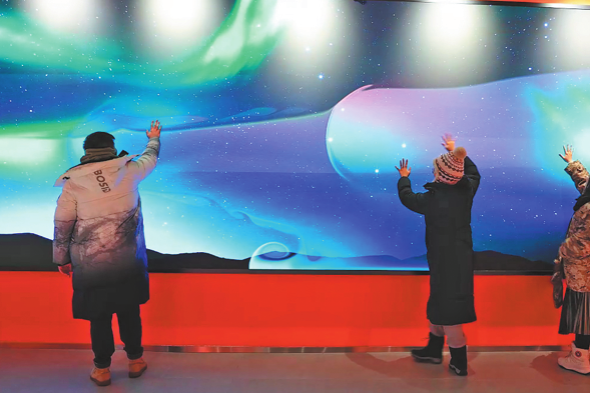
    BEIJING – China’s northernmost Arctic village has become home to the nation’s pioneering aurora museum, blending cutting-edge technology with natural wonder in an unprecedented cultural attraction. The Shenlu Aurora Museum, named after the mythical deer god, opened its doors on November 19 in Mohe’s Beiji village, Heilongjiang province, marking a significant milestone in China’s scientific tourism infrastructure.

    The 1,000-square-meter facility represents a remarkable engineering achievement, having been constructed in just five months. Since its inauguration, the museum has already welcomed over 5,000 visitors during its inaugural week, demonstrating immediate public appeal. The project combines immersive digital experiences with practical scientific forecasting, creating a comprehensive destination for both education and entertainment.

    Visitors are greeted by an impressive LED welcome screen that cycles through educational content and curated aurora footage, immediately immersing guests in the phenomenon’s mystical allure. The museum’s centerpiece features an innovative interactive radar screen where visitors can manipulate aurora visualizations through hand gestures without physical contact. This system supports simultaneous interaction for up to five participants, creating collaborative digital experiences.

    The facility extends beyond visual spectacles with multiple specialized zones. A multimedia photo wall enables tactile exploration of Mohe’s cultural and natural heritage through enlargeable images and accompanying text. The polar weather forecast station provides real-time aurora prediction data, assisting visitors in planning optimal viewing times for natural displays. Additionally, the museum houses eight virtual reality digital realms, an augmented reality object recognition table, and a fully-equipped VR classroom with sixteen headsets offering interdisciplinary educational modules.

    Manager Yu Heng emphasized the institution’s innovative approach to learning: “We’ve designed a paperless educational environment that transcends traditional curriculum structures through immersive technological experiences. Our goal is to make complex scientific concepts accessible and engaging for all age groups.”

    The museum’s opening coincided with spectacular natural aurora displays throughout November, with particularly vivid pink and purple illuminations observed on November 24. These celestial events attracted photographers and tourists to the frozen banks of the Heilongjiang River, creating perfect synergy between natural phenomena and their technological interpretation.

    Tourist Xu Qingyue from Shandong province expressed her amazement: “The technological sophistication exceeded all expectations. Witnessing actual auroras after experiencing their digital representation created a profoundly complete understanding of this natural wonder.”

    Mohe’s geographical position at China’s highest latitude makes it uniquely suited for aurora observation, with multiple displays occurring since winter’s onset. The museum now provides both context for these occurrences and tools for predicting future events, establishing Beiji village as China’s premier destination for aurora enthusiasts and scientific tourism.