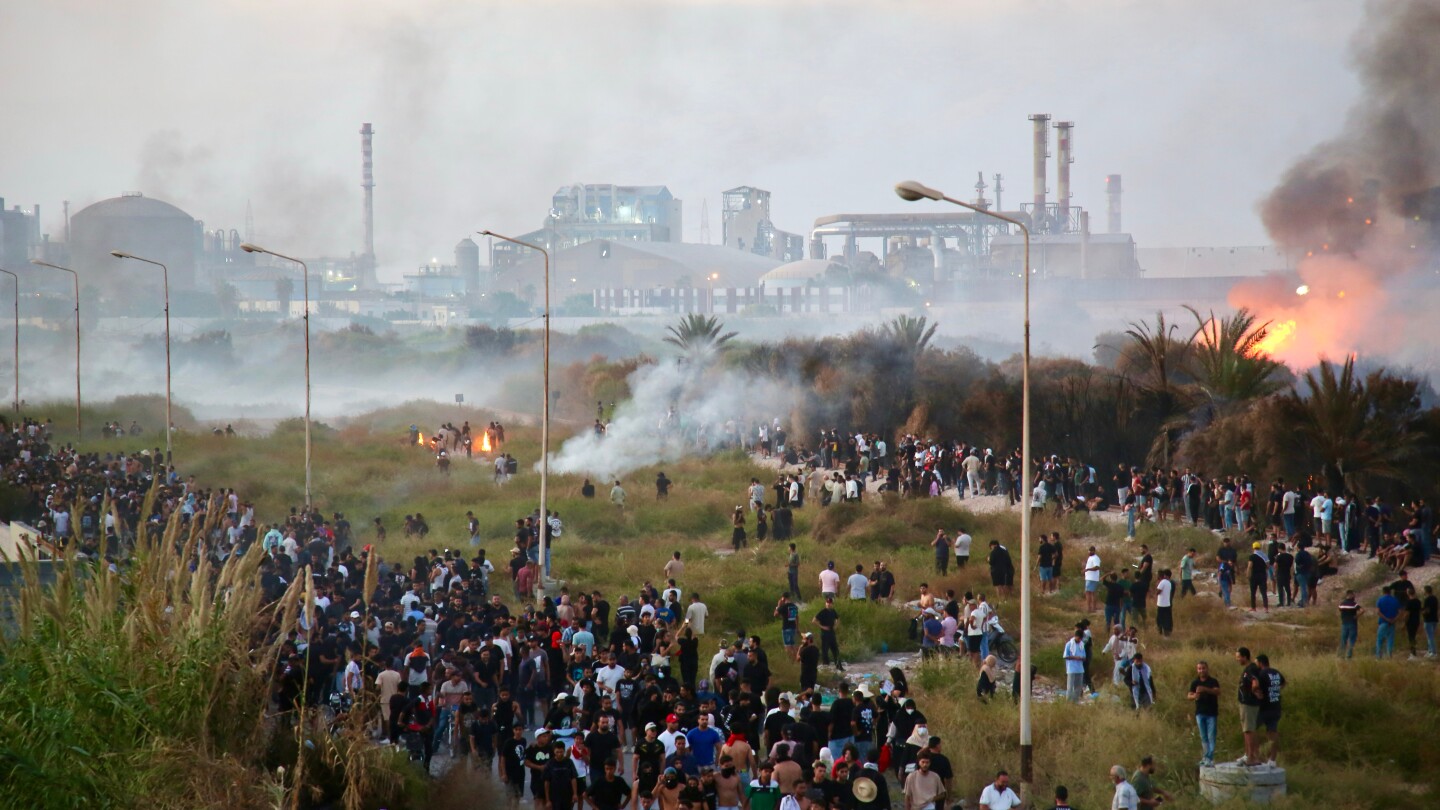
The southern Tunisian city of Gabes witnessed violent clashes on Wednesday as thousands of protesters took to the streets to demand action against worsening air pollution caused by a phosphate-processing plant. Riot police deployed tear gas to disperse the crowds, resulting in injuries to both demonstrators and officers. The protest, which escalated into chaos, was sparked by a recent gas leak near the state-owned Chemical Group of Tunisia (GCT) industrial complex, a facility that has long been a source of environmental and health concerns for the city’s 400,000 residents. Gabes, a hub of Tunisia’s phosphate industry, has suffered from decades of industrial activity that residents blame for rising cancer rates, respiratory illnesses, and the destruction of the region’s once-thriving ecosystem. The latest gas leak, which sent dozens of people, including children, to hospitals, reignited public outrage. Protesters blocked major roads, burned tires, and chanted against what they called “environmental crimes,” demanding the closure of the GCT’s phosphate units. The plant, which processes raw phosphate into fertilizer, has been discharging toxic waste directly into the Gulf of Gabes, devastating marine life and forcing generations of fishermen out of work. Despite repeated government promises to modernize or relocate the facility, activists say no meaningful action has been taken. Tunisian President Kais Saied recently announced the formation of a joint commission to address protesters’ demands, but residents remain skeptical, citing years of unfulfilled pledges. The GCT admitted to “major non-conformities” in a 2025 environmental audit, acknowledging excessive ammonia and other emissions that fall short of global standards. However, locals say no visible improvements have been made, leaving the community to endure the ongoing environmental and health crisis.
分类: society
-
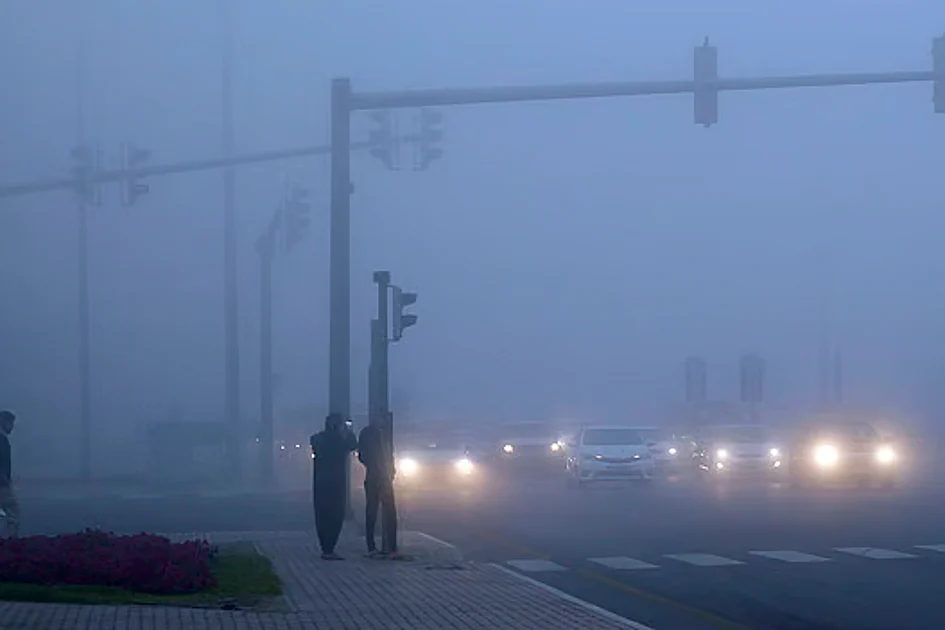
UAE weather: Red alert issued for thick fog; temperatures to dip to 18ºC in some areas
The National Centre of Meteorology (NCM) has issued red and yellow alerts across various regions in the UAE due to thick fog, significantly reducing visibility. Motorists are advised to exercise extreme caution, particularly in areas where fog is prevalent. The Abu Dhabi Police has temporarily lowered speed limits on certain roads and urged drivers to adhere to the updated limits displayed on electronic boards. The weather forecast predicts fair to partly cloudy conditions, with convective clouds expected in the east and south by the afternoon. Humidity is likely to increase by night and early Friday morning, particularly in coastal and internal areas, potentially leading to fog or mist formation. Temperatures are set to vary widely, with mountainous regions experiencing lows of 18ºC, while internal areas could see highs of 39ºC. In Dubai, temperatures will range between 28ºC and 35ºC, Sharjah between 25ºC and 37ºC, and Abu Dhabi between 27ºC and 36ºC. Light to moderate winds are expected, occasionally freshening throughout the day.
-
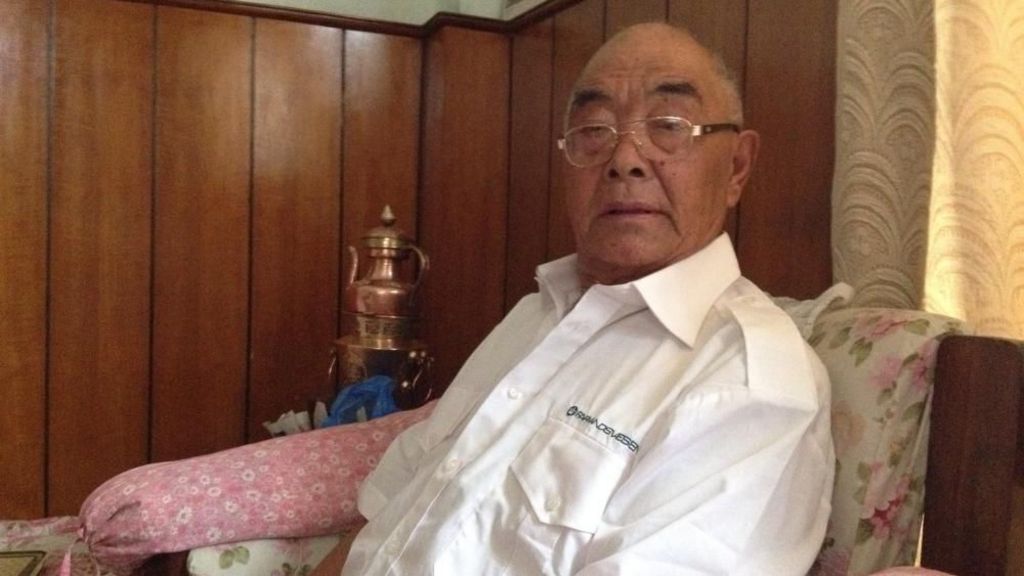
Last surviving member of first team to scale Everest dies aged 92
Kanchha Sherpa, the final surviving member of the pioneering 1953 Mount Everest expedition, has passed away at the age of 92 in Kathmandu, Nepal. His family confirmed that he had been unwell in recent times. Sherpa was just 19 years old when he joined the legendary team led by Sir Edmund Hillary and Tenzing Norgay, which achieved the first successful ascent of the world’s highest peak. Despite having no prior mountaineering experience, Sherpa served as a porter on the 35-member expedition, carrying essential supplies such as food, tents, and equipment to the base camp during the grueling two-week journey. Remarkably, he was one of only three Sherpas to surpass the 8,000-meter mark (26,247 feet) during the climb. Sherpa’s contributions to mountaineering earned him widespread admiration, with fellow Nepali guides hailing him as a legend and a source of inspiration. After the historic expedition, he continued working as a high-altitude porter in the Himalayas for two more decades before retiring at the request of his wife, who urged him to cease the perilous climbs. His legacy remains an enduring testament to the courage and resilience of the Sherpa community in the world of mountaineering.
-
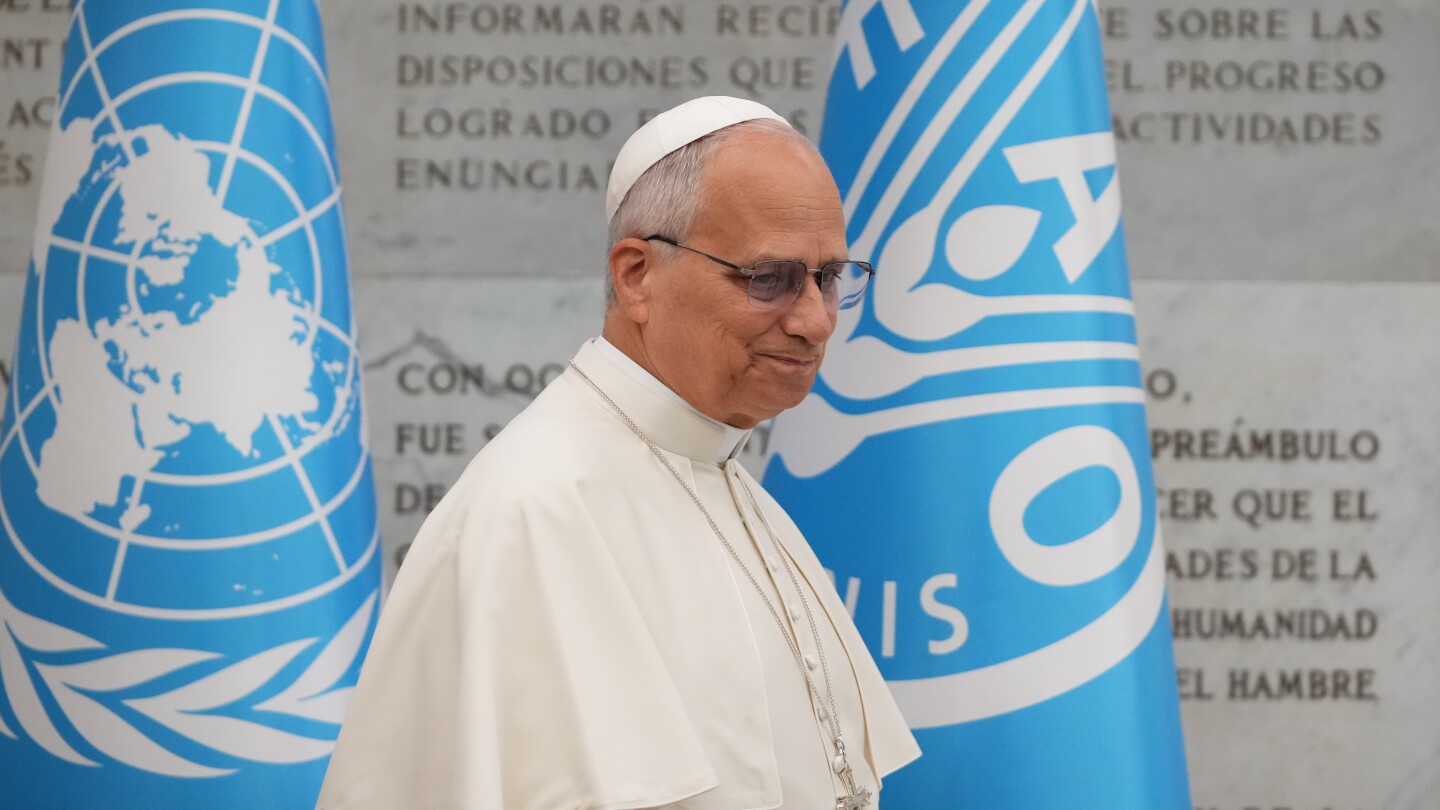
Pope Leo urges world leaders ‘not to look the other way’ in fighting global hunger
In a powerful address during the World Food Day global ceremony at the U.N. Food and Agriculture Organization’s headquarters in Rome, Pope Leo XIV urged world leaders to take responsibility for addressing the escalating crises of hunger, war, and suffering worldwide. The event also commemorated the 80th anniversary of the FAO. The pontiff emphasized the need for the international community to confront global food emergencies head-on, rather than turning a blind eye. He specifically highlighted the ongoing conflicts in Ukraine, Gaza, Haiti, Afghanistan, Mali, the Central African Republic, Yemen, and South Sudan, underscoring the dire consequences of inaction. Citing U.N. statistics, Pope Leo revealed that approximately 673 million people globally suffer from insufficient daily food intake. He challenged the global community to reevaluate their lifestyles and priorities, stating, ‘The hungry faces of so many who still suffer challenge us and invite us to reexamine our lifestyles, our priorities, and our overall way of living in today’s world.’ The pope concluded his speech by urging collective empathy, declaring, ‘We must make their suffering our own.’ Pope Leo also condemned the use of hunger as a weapon of war, labeling it a ‘collective failure, an ethical derailment, and a historic offence.’ His warning comes as U.N. food aid agencies face significant funding cuts, particularly from the U.S. and other Western donors, threatening operations in critical regions and potentially pushing millions into emergency hunger levels. The World Food Program reported that 13.7 million recipients of its aid could face severe food insecurity due to these cuts, with Afghanistan, Congo, Haiti, Somalia, South Sudan, and Sudan at the greatest risk.
-
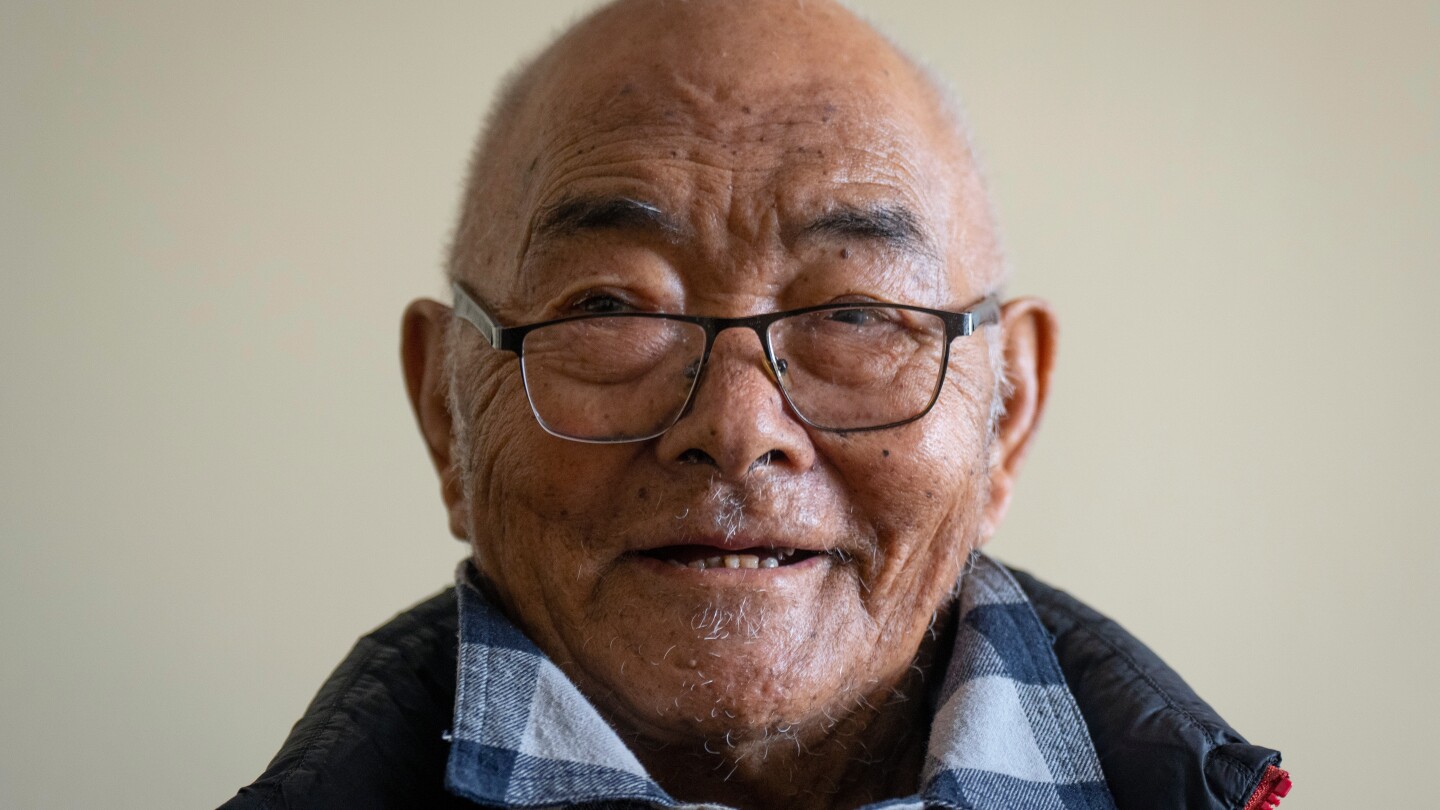
Kanchha Sherpa, last surviving member of 1953 Mount Everest expedition, dies at 92
Kanchha Sherpa, the sole surviving member of the historic 1953 expedition that first summited Mount Everest, passed away peacefully at his home in Kapan, Kathmandu, on Thursday. He was 92 years old. The Nepal Mountaineering Association confirmed his death, with President Phur Gelje Sherpa describing it as the end of a significant chapter in mountaineering history. Kanchha had been unwell for some time before his passing. His last rites are scheduled for Monday. Born in 1933 in Namche Bazar, the gateway to Everest, Kanchha began his mountaineering career at 19 and remained active in the field until he was 50. He was one of three Sherpas who reached the final camp before Edmund Hillary and Tenzing Norgay made their historic ascent to the 8,849-meter peak on May 29, 1953. In a March 2024 interview with The Associated Press, Kanchha expressed concerns about overcrowding and environmental degradation on Everest, urging climbers to respect the mountain, which Sherpas revere as Qomolangma, or the goddess mother of the world. He is survived by his wife, four sons, two daughters, and grandchildren.
-
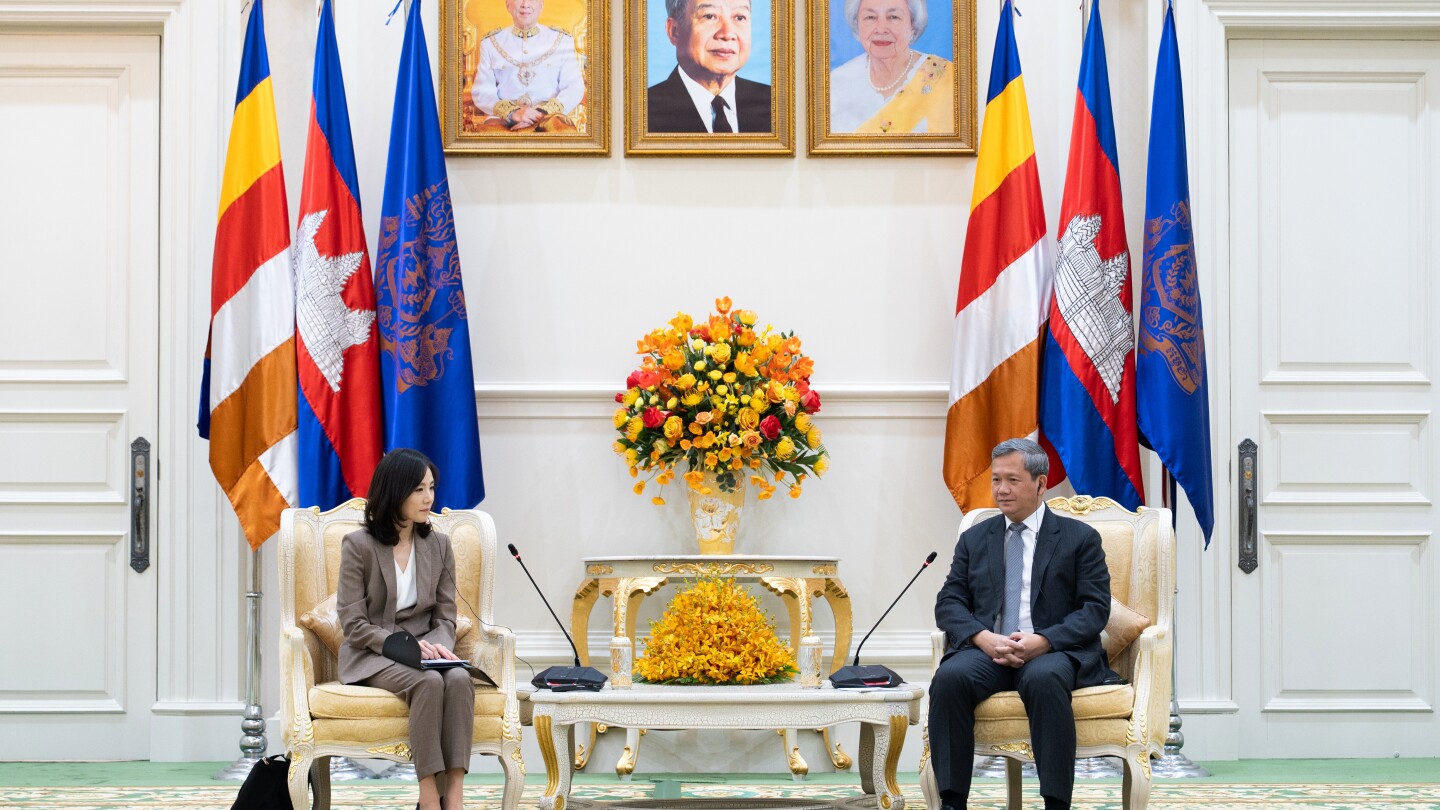
Death of kidnapped South Korean student spurs talks with Cambodia to tackle online scams
In a significant move to address the growing issue of online scams, South Korean and Cambodian officials convened in Phnom Penh on Thursday to discuss coordinated measures. This meeting follows the tragic death of Park Min-ho, a 22-year-old South Korean student who was reportedly trafficked and forced to work in a scam center in Cambodia. Park’s body was discovered in August in Cambodia’s Kampot province, with authorities attributing his death to cardiac arrest after enduring torture and beatings.
The South Korean delegation, led by National Security Director Wi Sung-lac, met with Cambodian Prime Minister Hun Manet to address the repatriation of South Korean nationals involved in online scams and the return of Park’s remains. Wi emphasized the urgency of resolving these issues, noting that disputes over autopsy procedures had delayed the repatriation process. However, an agreement was reached, and the results of the talks were expected to be announced later on Thursday.
Cambodia’s online scam industry has drawn international attention, with an estimated 200,000 people, including around 1,000 South Koreans, working in scam centers across the country. Many victims are lured with promises of high-paying jobs, only to be forced into illegal activities. In the first eight months of 2023 alone, 330 South Koreans were reported detained in Cambodia, with 80% of these cases resolved.
During the talks, both nations pledged to strengthen collaboration in combating transnational crimes, particularly online scams. Hun Manet emphasized that Cambodia and South Korea would work bilaterally to address the issue without third-party involvement. South Korea, meanwhile, is seeking the early repatriation of 60 nationals recently arrested in Cambodia on suspicion of scam involvement. Once repatriated, they will face investigations and potential legal consequences.
In response to the crisis, South Korea has implemented a travel ban for specific areas in Cambodia, including Bokor Mountain in Kampot province, where Park was found dead, as well as border towns Bavet and Poipet. The United Nations has highlighted Southeast Asia, particularly the Mekong Region, as a global hub for scams and illegal online gaming, with criminal gangs earning billions annually through fraudulent schemes.
Jeremy Douglas, Chief of Staff for the United Nations Office on Drugs and Crime, stressed the need for regional cooperation to tackle the issue, stating that the situation cannot be ignored. As both nations work towards a solution, the tragic case of Park Min-ho underscores the urgent need for international collaboration to combat human trafficking and online scams.
-

Dubai’s new trackless tram to be connected to Metro, will ease road congestion
Dubai is poised to introduce a groundbreaking trackless tram system, designed to alleviate road congestion and enhance the city’s public transportation network. The project, spearheaded by Dubai’s Roads and Transport Authority (RTA), is expected to be fully operational by the first quarter of 2026. This innovative system will integrate seamlessly with the existing Dubai Metro, marking a significant step towards Dubai’s ambitious goal of making 25% of its transportation smart and driverless by 2030. Dawood Alrais, Director of Rail Maintenance at RTA’s Rail Agency, emphasized the system’s potential to support the city’s growing population and reduce environmental impact. Unlike traditional trams, the trackless variant operates on rubber tires and utilizes advanced navigation technologies such as optical sensors, GPS, and LiDAR to follow virtual tracks. This eliminates the need for fixed rails, reducing both construction costs and environmental footprint. Each tram, capable of carrying up to 300 passengers across three carriages, will operate on dedicated lanes to ensure safety and efficiency. With a top speed of 70 km/h and a range of 100 km per charge, the trackless trams promise faster and more flexible travel compared to conventional trams. Initially planned for eight locations, the project may expand to additional areas, further enhancing Dubai’s public transport infrastructure.
-

Uruguay legalises euthanasia after 10-hour debate
Uruguay has taken a groundbreaking step by legalizing euthanasia, marking a historic moment as the first Latin American nation to enact such legislation. The ‘Dignified Death’ bill was approved by the Senate on Wednesday, with 20 out of 31 present legislators voting in favor. This law permits mentally competent adults suffering from terminal and irreversible illnesses to opt for assisted suicide, administered by healthcare professionals. Uruguay, known for its progressive stance on social issues, has previously legalized marijuana, same-sex marriage, and abortion, setting a precedent for liberal reforms. The 10-hour Senate debate, though largely respectful, saw emotional outbursts from opponents, with some labeling the decision as ‘murder.’ Senator Patricia Kramer of the ruling leftist coalition emphasized that public opinion strongly supports the law, with 62% of Uruguayans favoring euthanasia legalization, according to a Cifra poll. The Catholic Church, a vocal opponent, criticized the bill, with Archbishop Daniel Sturla of Montevideo stating it devalues life. Under the law, individuals must personally and formally request euthanasia, ensuring the process is painless and dignified. Beatriz Gelós, a 71-year-old ALS patient, hailed the law as ‘compassionate and humane,’ highlighting the struggles of those living with debilitating conditions. While Uruguay leads in legislative approval, Colombia and Ecuador have decriminalized euthanasia through judicial rulings.
-
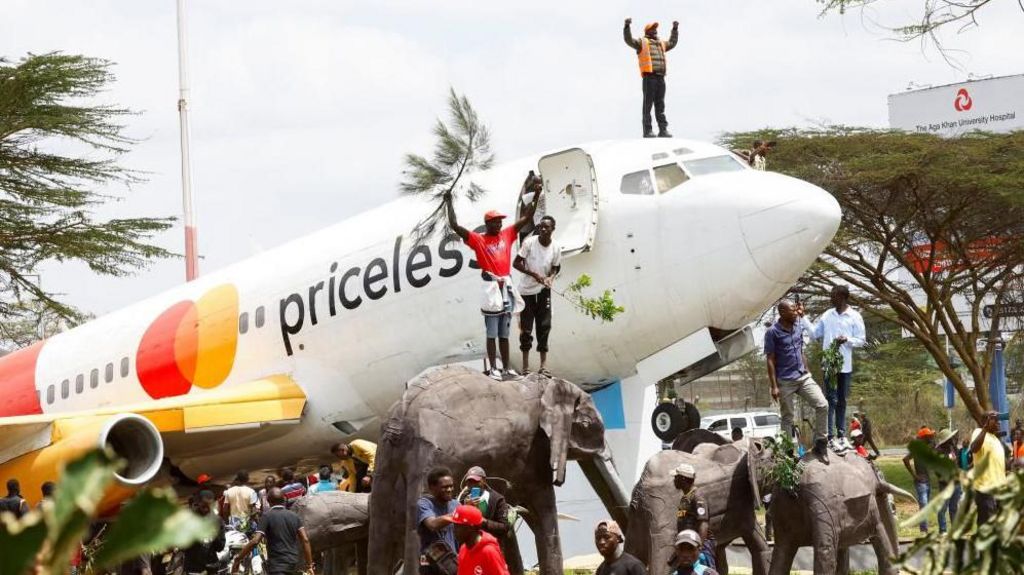
Flights halted at Kenyan airport as thousands turn out to receive Odinga’s body
Kenya’s Jomo Kenyatta International Airport (JKIA) temporarily halted operations on Thursday following a massive influx of mourners who breached security to pay their respects to the late former Prime Minister Raila Odinga. Odinga, a pivotal figure in Kenya’s multi-party democracy, passed away in India on Wednesday after suffering a cardiac arrest. His body was flown back to Kenya, where thousands of grieving citizens, carrying twigs and palm branches, overwhelmed airport security, gaining access to restricted areas. Authorities declared a ‘precautionary closure’ to restore order and ensure safety, advising the public to avoid the airport until further notice. The unexpected turnout has also led to the relocation of the public viewing ceremony from Parliament to Nairobi’s Moi International Sports Centre. Kenyan President William Ruto announced a seven-day mourning period and a state funeral with full military honors, honoring Odinga as a ‘beacon of courage’ and ‘father of our democracy.’ Tributes poured in from global leaders, including Indian Prime Minister Narendra Modi, who hailed Odinga as a ‘towering statesman.’ Odinga, who contested five presidential elections, leaves behind a legacy of resilience and democratic advocacy.
-
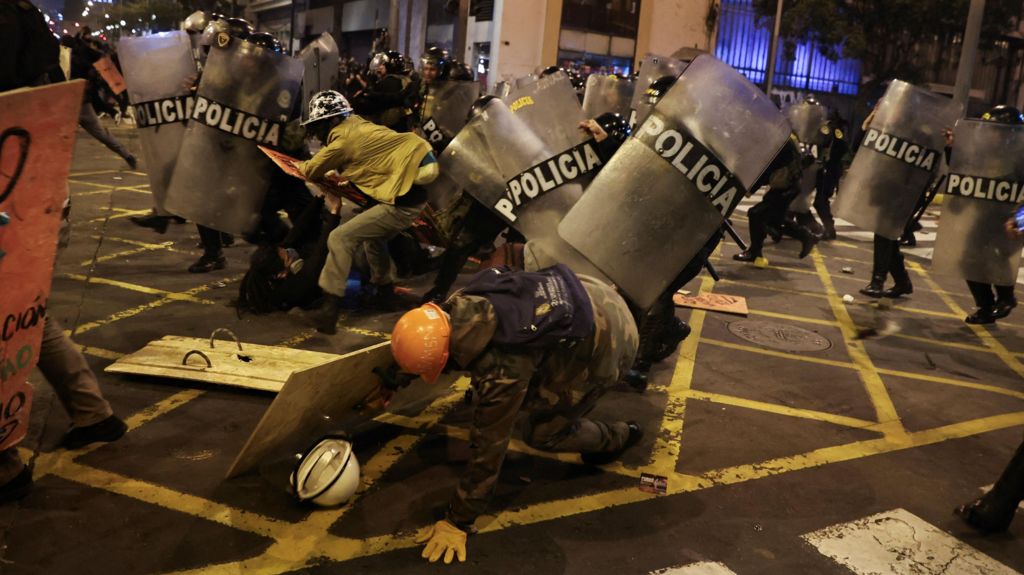
Watch: Police fire tear gas at protesters in Peru
In a tense confrontation on the streets of Peru, law enforcement officers resorted to the use of tear gas to disperse a gathering of protesters. The demonstrators, seeking refuge in nearby doorways, were met with clouds of the irritant as tensions escalated. This incident underscores the growing unrest in the region, as citizens voice their grievances against perceived injustices. The deployment of tear gas, a common crowd-control measure, highlights the challenges faced by authorities in maintaining order while balancing the right to peaceful assembly. The scene, captured on video, has sparked widespread debate on the appropriate use of force in such situations.