分类: society

  • Indian state investigates killings of hundreds of stray dogs

    Indian state investigates killings of hundreds of stray dogs

    A widespread and systematic culling of stray dogs across multiple villages in India’s southern state of Telangana has triggered criminal investigations and national debate about animal welfare practices. Police authorities have confirmed at least 354 canine deaths through poisoning or lethal injections since late December, resulting in nine arrests including village council officials.

    The killings, which occurred across six villages in three districts, appear connected to political promises made during recent local elections to remove stray animals. While villagers cite legitimate concerns about rabies, traffic accidents, and crop damage from stray animals, the scale and methods of these killings have drawn condemnation from animal rights groups and government officials alike.

    Telangana State Minister Danasari Anasuya Seethakka characterized the actions as ‘illegal and inhumane,’ vowing strict consequences for those responsible. The controversy emerges amid ongoing Supreme Court deliberations regarding India’s stray animal management, particularly in urban areas like Delhi where removal programs have faced legal challenges and public protests.

    Forensic analysis remains ongoing to determine exact causes of death, with activists alleging the actual death toll significantly exceeds official numbers. The incident highlights India’s complex relationship with stray animals—seen both as community companions and public nuisances—while exposing deficiencies in sterilization programs, waste management, and animal protection laws.

    Simultaneously, reports of similar treatment toward monkeys in Kamareddy district suggest broader patterns of unauthorized animal control measures, despite Telangana recording no rabies deaths among its 122,000 documented dog bite cases in 2024.

  • UAE initiative offers job opportunities for new, retired professionals

    UAE initiative offers job opportunities for new, retired professionals

    The United Arab Emirates has unveiled a groundbreaking workforce development program targeting both aspiring professionals and retired individuals seeking opportunities in the private security sector. Spearheaded by the Security Industry Regulatory Agency (SIRA), this comprehensive initiative provides specialized training courses and career pathway development aligned with national strategic vision for sectoral growth.

    SIRA officials confirmed the program offers dual-track preparation: foundational courses for newcomers entering security professions and refresher programs specifically designed for retirees transitioning into new career phases. The initiative particularly welcomes former military personnel, providing structured support to help them adapt their skills to civilian security frameworks.

    Beyond training, SIRA facilitates direct employment connections through organized open-door events where certified candidates meet with security companies and institutional security departments. These networking platforms enable employers to identify qualified talent while allowing job seekers to explore diverse opportunities ranging from entry-level positions to leadership roles based on individual qualifications and experience.

    The program maintains inclusive nationality policies while emphasizing Emiratisation objectives. UAE nationals receive full financial support for course fees, though the initiative remains accessible to all nationalities. Interested candidates, including retirees, are encouraged to visit SIRA’s headquarters opposite Etisalat Academy for document review and opportunity exploration.

    This workforce development strategy represents a significant advancement in professionalizing the security industry while addressing employment needs across generational divides, ultimately strengthening the nation’s private security infrastructure through skilled human capital development.

  • How Dubai’s vanished landmarks still live on in directions

    How Dubai’s vanished landmarks still live on in directions

    In the ever-evolving urban landscape of Dubai, a fascinating cultural phenomenon persists: the enduring legacy of vanished landmarks in everyday navigation. Long before digital mapping systems and Makani codes defined wayfinding, residents relied on physical structures—cinemas, roundabouts, and distinctive buildings—as directional anchors.

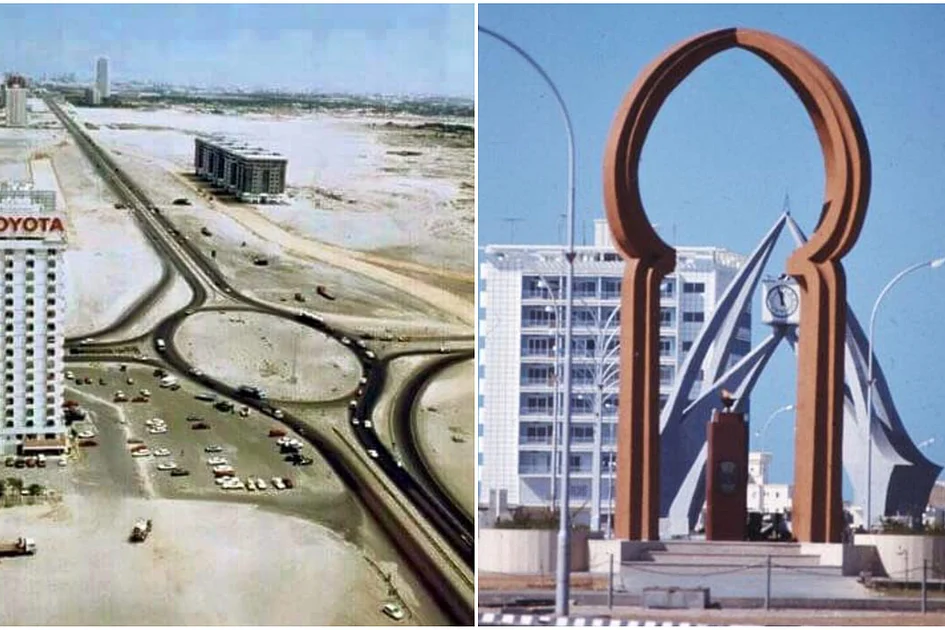
    This persistence of historical reference points reveals much about urban memory and adaptation. The ongoing reconfiguration of Trade Centre Roundabout exemplifies this trend. Despite the Roads and Transport Authority’s conversion of this junction into a surface intersection to alleviate congestion, many residents and taxi drivers continue referring to it as ‘Defence Roundabout,’ preserving a name that predates the current layout.

    Emirati cultural consultant Mohammad Kazim explains this phenomenon through Dubai’s transient population dynamics: ‘Landmarks mattered. They were how you explained the city to someone who didn’t know it yet.’ This oral tradition has created a parallel navigation system where demolished structures maintain their directional utility.

    Examples abound throughout the city: Strand Cinema, demolished in the 1990s, still surfaces in Bur Dubai directions; Deira’s ‘Clock Roundabout’ remains a common reference despite traffic lights replacing the circular junction; and Garhoud’s Falcon Roundabout persists verbally long after the sculpture’s relocation to Mirdif Park.

    British expat Josephine Finzi recalls pre-digital navigation: ‘We got around by visual clues—past Spinneys on the beach road, left at the zoo, right at the clock tower.’ These references created a shared geographical language that transcended physical changes.

    The pattern extends beyond roundabouts. Peter Halliday, resident since 1982, remembers when the World Trade Centre served as a visible beacon: ‘You could see it from tens of kilometres away.’ Len Chapman, who arrived in 1971, traces roundabout culture to British architect John Harris’s 1959 town plan, which introduced these ‘punctuation marks’ to Dubai’s urban grammar.

    Even commercial establishments like the Sana Signal clothing store, closed since 2018, continue as directional markers in Bur Dubai and Karama. Online communities like ‘Dubai — The Good Old Days’ actively preserve this collective memory through photographs and discussions, creating digital archives of the city’s changing physical identity.

    This navigation-by-memory system demonstrates how urban consciousness adapts to rapid development, maintaining continuity through language even as physical landscapes transform beyond recognition.

  • High-speed train hub eases journeys

    High-speed train hub eases journeys

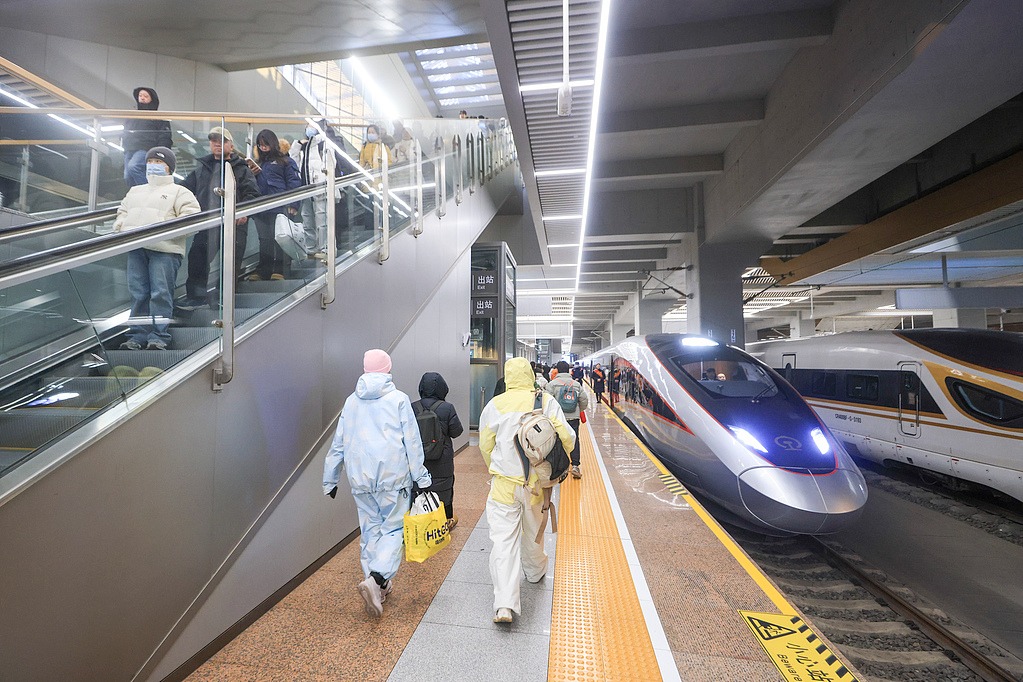
    Beijing Chaoyang Railway Station has emerged as a transformative transportation nexus since its inauguration five years ago, fundamentally reshaping travel patterns across northern China. As the primary high-speed rail gateway connecting the capital with Northeast China and the Beijing-Tianjin-Hebei region, the station has witnessed remarkable growth in both passenger volume and service capabilities.

    Statistical data reveals a dramatic surge in daily passenger traffic, escalating from approximately 12,000 to 30,000 commuters, culminating in nearly 44 million total passenger journeys handled since commencement. This infrastructure marvel has drastically compressed travel durations, exemplified by the Chengde-Beijing route reduction from four hours to a mere 49 minutes—a temporal compression revolutionizing regional mobility.

    The station’s significance extends beyond conventional transportation services, evolving into a critical lifeline for medical emergencies. Station authorities report approximately 200 daily special assistance cases, with nearly one-quarter involving patients seeking urgent medical care in Beijing’s advanced healthcare facilities. In one particularly notable incident, station personnel facilitated emergency egress for a finger-severation victim from Inner Mongolia, enabling critical reattachment surgery within the narrow three-hour therapeutic window.

    Technological integration enhances passenger experience through seamless multimodal connectivity. The 2024 inauguration of Subway Line 3’s initial phase established direct underground access, effectively resolving ‘last-mile’ challenges. Digital innovation through the 12306 ticketing platform enables pre-arrival special assistance requests, ensuring coordinated support between train crews and station staff.

    Station official Wang Qiang emphasizes their strategic positioning as both regional integrator and specialized service provider: ‘Our continuous service optimization reflects dual commitments to macroeconomic regional development and micro-level passenger needs.’ Deputy Manager Cao Yan underscores the human dimension, noting the specialized assistance team has doubled to twelve members over five years to accommodate growing demand from travelers with serious medical conditions.

    As passenger volumes continue their upward trajectory, Beijing Chaoyang Railway Station stands as testament to how modern transportation infrastructure can simultaneously drive regional economic integration and provide vital social support functions, fundamentally redefining the relationship between mobility, healthcare access, and regional development in contemporary China.

  • Winter camp solidifies cross-Strait youth ties

    Winter camp solidifies cross-Strait youth ties

    HANGZHOU – More than 1,000 Taiwanese youth converged in Zhejiang province this week for the commencement of the 32nd Taiwan Compatriot Youth Winter Camp, marking a significant milestone in cross-Strait cultural diplomacy. The event, orchestrated by the All-China Federation of Taiwan Compatriots, unfolded at Zhejiang University’s Zijingang campus with an elaborate opening ceremony and cross-Strait youth gala.

    Ji Bin, leading official of the federation, characterized the organization as a ‘home for Taiwan compatriots’ during his keynote address. He emphasized the profound familial connections binding communities across the Strait, asserting that sustained youth exchanges substantially enhance mutual comprehension and emotional bonds. Ji encouraged attendees to immerse themselves in mainland China’s developmental landscape while forging enduring friendships that could inject youthful vitality into peaceful cross-Strait relations.

    Zhejiang University’s Deputy Party Secretary Fu Qiang outlined the institution’s longstanding commitment to educational collaboration with Taiwan, noting established partnerships with multiple Taiwanese universities and research institutes. The university has facilitated frequent faculty-student exchanges and expanding academic cooperation, with pledges to develop more diversified and sustainable platforms for cross-Strait engagement.

    Student representatives from both sides echoed these sentiments. A Taiwanese participant surnamed Yang highlighted shared linguistic heritage and cultural roots, while Zhejiang University volunteer Tang Kun emphasized common historical memories cultivated within the same cultural soil.

    The program features immersive experiences including campus tours, artificial intelligence lectures, and visits to innovation bases showcasing robotics and intelligent equipment. Participants will further explore Hangzhou’s Liangzhu Museum and Archaeological Ruins to examine Chinese civilization origins, alongside technological showcases at Hangzhou Future Sci-Tech City and Alibaba’s headquarters.

    Established in 1989, the winter camp has attracted over 9,000 Taiwanese youth throughout its history. This year’s edition expands across 24 mainland provincial regions, reinforcing its role as a crucial mechanism for fostering interpersonal connections and mutual learning among younger generations across the Strait.

  • ‘He kept fighting’: Brave friend of shark attack survivor Nico Antic reveals moment he leapt into water to save his mate

    ‘He kept fighting’: Brave friend of shark attack survivor Nico Antic reveals moment he leapt into water to save his mate

    A harrowing tale of adolescent bravery has emerged from Sydney’s coastline, where a young companion risked his own safety to rescue a friend during a traumatic shark encounter. The incident, involving 12-year-old Nico Antic, occurred last Sunday afternoon while he was rock jumping with peers at Hermitage Foreshore Walk near Shark Beach in Vaucluse.

    According to eyewitness accounts, one of Nico’s friends demonstrated extraordinary courage by entering the water despite the visible presence of the predator to drag the injured boy to safety. “He kept fighting and breathing in my arms and he never gave up for a second,” the rescuer told 7News, describing Nico as “the most stubborn person I know.”

    The attack formed part of a concerning pattern along New South Wales coastline, with three additional shark incidents reported within the same week. These included an 11-year-old surfer whose board was damaged at Dee Why Point, 27-year-old surfer Andre de Ruyter encountering a shark at Manly Beach, and 39-year-old Paul Zvirzdinas being knocked from his board near Port Macquarie.

    Emergency response teams provided critical first aid before transporting Nico via boat to Rose Bay and subsequently to the Children’s Hospital in Randwick. NSW Police Superintendent Joseph McNulty publicly commended the “brave” actions of the young rescuers, noting the “very confronting injuries” they faced during the rescue.

    Community support has surged through a GoFundMe campaign organized by family friend Victor Piñeiro, which has raised over $224,000 of its $250,000 target to assist with medical expenses and related costs. The fundraiser description noted Nico had sustained “devastating injuries” from the encounter.

    In response to the incidents, Northern Beaches Council implemented temporary beach closures but has since reopened facilities ahead of the Australia Day long weekend with enhanced safety measures. These include increased aerial surveillance, jet ski patrols, additional drum lines, and reactivated lifeguard services. Mayor Sue Heins emphasized the importance of swimming between flags and heeding lifeguard instructions during this period of heightened shark activity.

  • Police seek man wanted in fatal shootings of 3 in small Australian town

    Police seek man wanted in fatal shootings of 3 in small Australian town

    A massive police operation involving over 100 officers and military personnel continues in the remote Australian town of Lake Cargelligo as authorities search for 37-year-old Julian Ingram, the prime suspect in Thursday’s domestic violence-related shooting that left three dead and one critically injured. The victims included 25-year-old pregnant woman Sophie Quinn, who had obtained a restraining order against Ingram in December, along with her friend John Harris, 32, and aunt Nerida Quinn, 50. A 19-year-old male victim remains hospitalized in serious but stable condition. New South Wales Police Assistant Commissioner Andrew Holland confirmed that Ingram had been out on bail for previous domestic violence charges and had complied with all bail conditions despite his extensive criminal history. The town’s 1,100 residents have been instructed to remain indoors with streets deserted and businesses closed as the manhunt intensifies. Authorities are investigating how Ingram, who also uses the alias Julian Pierpoint, obtained a firearm without a state license. The tragedy occurred on Australia’s National Day of Mourning commemorating the Bondi Beach shooting victims, prompting renewed scrutiny of the country’s bail system and domestic violence protections.

  • China’s sacred revolutionary sites Zunyi, Yan’an to be connected by high-speed rail

    China’s sacred revolutionary sites Zunyi, Yan’an to be connected by high-speed rail

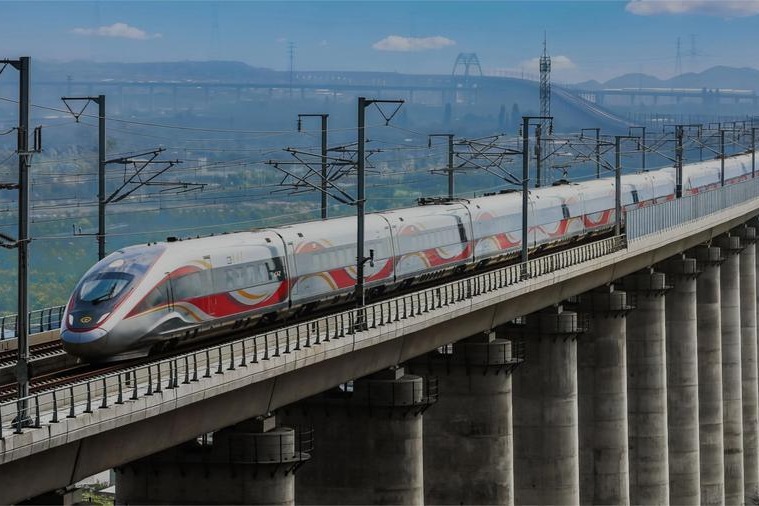
    China’s national railway network achieves another milestone as two historically significant revolutionary sites become directly connected through high-speed rail service. Beginning January 26, 2026, travelers can journey between Zunyi in Guizhou Province and Yan’an in Shaanxi Province with unprecedented efficiency.

    The new connection, implemented under China Railway Chengdu Group’s first-quarter schedule for 2026, represents a strategic enhancement to the country’s transportation infrastructure. This development effectively bridges the previous service gap between southwestern regions including Sichuan, Guizhou, and Chongqing with the historically important northern city of Yan’an.

    Travel time between these symbolic locations has been dramatically reduced. The southbound journey from Yan’an to Zunyi now requires merely 8 hours and 7 minutes, while the northbound route takes 8 hours and 49 minutes. This constitutes a remarkable improvement over the conventional rail service, which previously demanded more than 16 hours for the same journey.

    The railway authority confirmed that starting January 27, two round-trip high-speed services will operate daily between these destinations. This connectivity milestone follows earlier railway developments: the Chongqing-Guiyang Railway inaugurated Zunyi’s high-speed era in January 2018, while the new 299-kilometer Xi’an-Yan’an line commenced operations in December 2025.

    This expansion contributes to China’s position as operator of the world’s most extensive high-speed network, which recently surpassed 50,000 kilometers in total operational mileage. The connection reinforces the integration of historically significant regions into China’s modern transportation framework, facilitating both cultural exchange and economic development.

  • Power of education shines in Xizang

    Power of education shines in Xizang

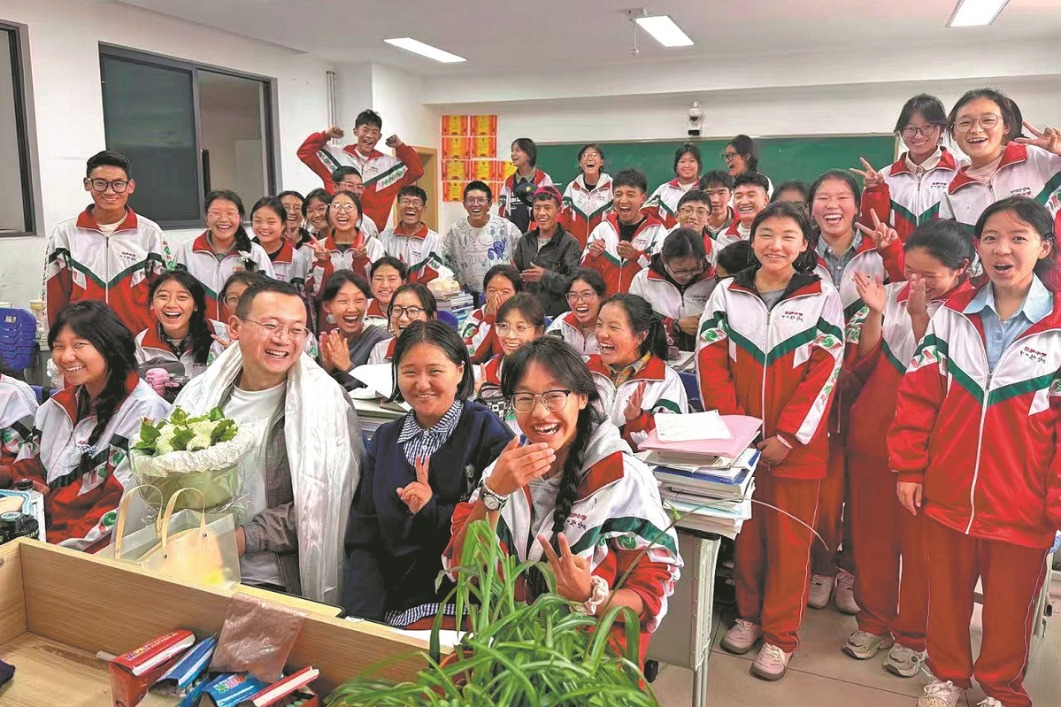
    On the morning of his departure to Lhasa, English instructor Shi Lei discovered his five-year-old son secretly curled inside his suitcase—a poignant symbol of the personal sacrifices made by educators serving Tibet’s remote communities. The young boy had concealed himself hoping to accompany his father, whispering fearfully, “I’m afraid you’ll leave me behind.

    This emotional moment encapsulates the challenging reality faced by hundreds of educators from Shaanxi Normal University who have dedicated their careers to teaching on the ‘roof of the world.’ Since 2007, SNNU has enrolled 1,196 students either originating from Tibet or committed to working in the region post-graduation. Between 2011 and 2025, the institution dispatched 884 graduates to classrooms across the autonomous region, with over 80% of teaching interns choosing to remain long-term.

    Shi Lei’s journey began during his formative years at SNNU, where he served as class monitor, joined the Communist Party of China, and met his future wife Wang Baohua. The university’s rigorous teacher training program equipped him with both pedagogical skills and philosophical foundations that would prove essential for high-altitude education.

    His commitment was solidified during a 2011 teaching internship at Gonggar Middle School in Lhokha, where he initially faced classrooms with only quarter of students possessing English textbooks. Through innovative methods incorporating English songs and poetry, Shi witnessed a remarkable transformation—within three weeks, nearly all students not only acquired textbooks but had carefully covered them in protective wrapping.

    Despite receiving attractive job offers from prestigious schools in Guangzhou, Chongqing, and his hometown Xi’an, Shi honored his commitment to teach at Lhasa Middle School. What began as a five-year plan has extended into nearly 14 years of service, despite significant physical tolls from the high-altitude environment. The region’s oxygen levels—approximately 60% of sea level—have contributed to serious health conditions including hyperthyroidism, hypothyroidism, pulmonary edema, immune system damage, and cardiac issues. Shi has collapsed twice during classes and experienced nine-hour blackouts from exhaustion.

    The personal costs extend beyond health concerns. Shi carries profound guilt for being unable to adequately care for his mother during cancer treatment, for his wife who abandoned a stable career in Fujian to restart in Xi’an, and for the son who desperately misses his absent father.

    Yet these sacrifices are balanced by exceptional professional fulfillment. Shi employs full English immersion techniques, brain science-based memorization methods, and focuses on holistic student development beyond academic scores. His dedication has earned him the affectionate title ‘big brother’ from students and the ultimate professional validation: two former pupils now study at his alma mater, continuing the educational legacy he helped establish.

  • Ancient pressure cooker making a stir

    Ancient pressure cooker making a stir

    A remarkable archaeological artifact from China’s Western Han Dynasty (206 BC-AD 24) has captured widespread public attention, demonstrating that pressure cooking technology existed more than two millennia before its official invention in the West. The Tripod with Bear-Shaped Feet, currently displayed at Hebei Museum in Shijiazhuang, represents an extraordinary fusion of culinary innovation, artistic craftsmanship, and ancient scientific understanding.

    Discovered in 1968 within the tomb of Prince Liu Sheng, this 18.1-centimeter bronze vessel features three distinctive bear-shaped feet that serve both decorative and symbolic purposes. During the Han Dynasty, bears were considered auspicious symbols representing good fortune and protection. Beyond its charming aesthetic, the tripod’s true technological marvel lies in its sophisticated sealing mechanism.

    The vessel incorporates an ingenious locking system consisting of flip-down animal-shaped latches attached to dual handles. When the lid is positioned and the latches are engaged with a slight twist, they secure beneath four standing animal figures on the lid’s surface, creating an exceptionally tight seal. This design, enhanced by raised patterns on both the rim and lid, effectively contains steam and increases internal pressure, significantly reducing cooking times while tenderizing ingredients.

    Archaeological experts from Peking University’s School of Archaeology and Museology have confirmed the functionality of this ancient pressure cooking system through replica testing. Professor Chen Jianli noted that chicken pieces placed inside a reconstructed model became perfectly tender after merely thirty minutes of cooking—a remarkable efficiency for the period.

    The technological sophistication evident in this artifact predates French physicist Denis Papin’s 17th-century “steam digester” by approximately 1,700 years. Museum researcher Chen Jing emphasized that the tripod’s manufacturing required exceptional bronze-casting skills, reflecting the advanced metallurgical capabilities of Han Dynasty craftspeople.

    The artifact has generated substantial interest on Chinese social media platforms, with many commentators expressing admiration for their ancestors’ ingenuity. The piece serves as a powerful reminder that innovative thinking transcends historical periods, connecting ancient culinary technology with modern kitchen practices through timeless scientific principles.