分类: society

  • China to boost social assistance for vulnerable groups during Spring Festival holiday

    China to boost social assistance for vulnerable groups during Spring Festival holiday

    In a significant move to safeguard welfare during the nation’s most important traditional holiday, China has implemented comprehensive social assistance measures targeting vulnerable demographics. The Ministry of Civil Affairs unveiled this enhanced support framework on Thursday, emphasizing timely and adequate aid distribution throughout the Spring Festival period.

    Zhang Wei, Deputy Director of the Ministry’s Social Assistance Department, detailed the multifaceted initiative during a press briefing. The strategy encompasses accelerated subsistence allowance payments, expanded heating subsidies, and simplified application procedures for those seeking assistance during the holiday season. “Our priority is ensuring complete and punctual disbursement of assistance funds to all eligible recipients,” Zhang stated.

    The financial backbone of this effort includes over 141 billion yuan ($20 billion) in pre-allocated central funds dedicated to social assistance programs. Major metropolitan areas including Beijing and Shanghai have already commenced distributing aid through various channels—direct cash transfers, consumption vouchers, and essential goods provision.

    To identify those in need more effectively, authorities are employing advanced data analytics platforms complemented by physical verification through field visits. This dual approach enables real-time monitoring of vulnerable groups, particularly isolated seniors, individuals with severe disabilities, and those battling serious medical conditions.

    Beyond financial support, the program features operational hotlines throughout the holiday period and personalized visits by civil affairs personnel to assess specific needs. Several provinces have additionally broadened heating assistance eligibility to include households marginally above subsistence allowance thresholds but facing financial strain due to fixed expenditures.

    This comprehensive social protection initiative reflects China’s commitment to ensuring no citizen is left behind during traditional family reunions and celebrations.

  • Iranian press review: High bail and legal hurdles keep protesters in detention

    Iranian press review: High bail and legal hurdles keep protesters in detention

    Iranian families seeking the release of relatives detained during recent nationwide protests confront an increasingly impossible bail system, compounding the nation’s ongoing sociopolitical crisis. Administrative obstructions, exorbitant financial requirements, and deliberate judicial delays have created insurmountable barriers for detainees awaiting trial.

    Legal expert Mustafa Nili revealed to Shargh daily that bail amounts have skyrocketed due to hyperinflation and currency devaluation, now requiring 10 billion rials ($9,000) per year of potential imprisonment—a tenfold increase from 2022 levels. Even families capable of meeting these astronomical sums face arbitrary rejections by security forces at courthouses, effectively denying due process.

    The human dimension emerges through firsthand accounts: one mother described mortgaging her brother’s home to meet a 50 billion rial bail for her daughter, while noting many fellow prisoners lack any recourse to freedom. Demographic data from the Qom Seminary study of 11,252 arrestees reveals disturbing patterns—17% are high-school students, 77% under age 30, and 65% from low-income backgrounds, directly contradicting government narratives blaming foreign agitators.

    Simultaneously, Iran’s economic collapse accelerates as the rial plummets to historic lows against the dollar (1:1.57 million), triggering catastrophic price surges in essentials. Dairy products have risen 40-85%, forcing nutritionally devastating dietary cuts among vulnerable populations. Government price controls threaten to exacerbate shortages, creating a self-perpetuating crisis cycle.

    The National Sociological Association of Iran issued a grave warning against the normalization of state violence, stating that civilian killings risk irreversible social fragmentation. Their declaration emphasized that ‘no political or military justification can excuse this level of human suffering,’ highlighting the erosion of public trust and potential for total societal collapse if demands for reform continue to be met with suppression.

  • Is your child tired? What UAE experts say about co-curricular activities

    Is your child tired? What UAE experts say about co-curricular activities

    Across the United Arab Emirates, a growing educational concern is emerging as children transition directly from classroom instruction to a relentless cycle of co-curricular engagements. This phenomenon sees students rushing to tennis practices, music lessons, swimming sessions, and language classes with minimal downtime in between.

    Educational institutions frequently promote these supplemental activities, whether included in standard tuition fees or offered as premium additions, while many parents independently arrange external programs. The central debate has evolved beyond questioning the value of such engagements to examining whether contemporary schedules adequately preserve essential childhood experiences—including unstructured rest, creative imagination, and spontaneous play.

    Parental perspectives vary significantly regarding activity management. Dubai resident Arijit Nandi advocates for his 9-year-old son’s intensive regimen—featuring pre-dawn tennis, midweek swimming, weekend guitar, and additional academic coaching—as a purposeful strategy for energy channeling and digital detoxification. He emphasizes his child’s genuine enjoyment and regular fatigue assessments.

    Conversely, Japanese expatriate Kenji Takahashi adopts a more measured approach for his 10-year-old daughter, balancing piano, karate, and art with protected downtime for bicycle riding and social play. His philosophy centers on energy guidance rather than control, ensuring activities serve developmental purpose rather than mere scheduling saturation.

    Educational specialists identify concerning trends beneath these well-intentioned arrangements. Girish Hemnani, a Dubai-based life coach, observes that families and institutions are unconsciously perpetuating a productivity race that creates an ‘illusion of productivity’ while depriving children of neurological development opportunities. He explains that boredom activates the brain’s Default Mode Network, which facilitates imagination and self-reflection—processes compromised by constant scheduling.

    Research indicates that free play fundamentally develops executive functioning, including planning capabilities, self-regulation, and initiative-taking. Hemnani further warns that overscheduled children risk losing spontaneity and personal agency, particularly when parents normalize ‘hustle culture’ due to their own professional pressures and digital consumption habits.

    School leadership is responding to these concerns with revised approaches. Natalia Svetenok, Principal of Woodlem British School in Ajman, states unequivocally that ‘a tired child cannot thrive,’ advocating for activities that generate joy rather than pressure. Similarly, The Aquila School’s Principal Wayne Howsen emphasizes that co-curricular activities must stem from genuine student interest rather than functioning as extended childcare, noting that choice-driven participation builds teamwork, problem-solving, and multilingual skills more effectively.

    The emerging consensus among UAE educators and parents suggests a paradigm shift toward balanced scheduling that honors both structured development and essential childhood experiences.

  • Africa has the worst road safety record in the world. Here’s what to know

    Africa has the worst road safety record in the world. Here’s what to know

    Africa continues to grapple with the world’s most severe road safety crisis, as highlighted by recent tragic incidents including a collision involving former heavyweight boxing champion Anthony Joshua in Nigeria and multiple minibus accidents in South Africa that claimed at least 25 lives. These events underscore a systemic problem across the continent, where road fatality rates dramatically outpace global averages despite Africa accounting for merely 3% of the world’s vehicles.

    According to the United Nations Economic Commission for Africa, the continent experiences 26 road deaths per 100,000 people—significantly higher than the global average of approximately 18 and more than double Europe’s rate of fewer than 10 fatalities. This translates to over 300,000 annual road crash fatalities, with the World Health Organization reporting increasing numbers despite global improvements.

    The unique dynamics of African road usage contribute substantially to this crisis. With limited personal vehicle ownership due to economic constraints, roads become chaotic landscapes where pedestrians, bicycles, motorcycles, cars, buses, and trucks compete for space without adequate infrastructure. Approximately 40% of African road deaths involve pedestrians—twice the global average—reaching nearly 50% in some nations.

    A 2024 WHO analysis reveals that few African countries have developed transportation systems accommodating these diverse travel modes. Inadequate public transit forces millions to rely on overloaded minibuses and motorcycle taxis, often operating without proper safety standards. South Africa exemplifies this challenge, where minibus taxis transport over 10 million daily commuters despite ongoing regulatory struggles regarding driver licensing, vehicle roadworthiness, and traffic law enforcement.

    Compounding these issues are generally weak traffic law enforcement and substandard road infrastructure safety ratings, with only a minimal percentage of Africa’s road network meeting acceptable quality standards. The December-January holiday period proves particularly lethal, as demonstrated by South Africa’s reported 1,427 road deaths during a recent 42-day span, averaging over 30 daily fatalities despite having one of the continent’s more developed road systems.

  • France moves to abolish concept of marital duty to have sex

    France moves to abolish concept of marital duty to have sex

    France has taken a definitive legislative step to abolish the archaic concept of ‘conjugal rights’ within marriage through a landmark bill approved by the National Assembly on Wednesday. The legislation explicitly clarifies that marriage does not create any obligation for sexual relations between spouses.

    The new provision amends France’s civil code to state unequivocally that ‘community of living’—a fundamental principle of French marriage law—does not establish any requirement for sexual intimacy. Additionally, the law prohibits using lack of sexual relations as grounds for fault-based divorce proceedings.

    While the practical impact on court proceedings may be limited due to previous European Court of Human Rights rulings, the legislation carries significant symbolic weight. Green MP Marie-Charlotte Garin, who sponsored the bill, argued that preserving any notion of conjugal duty “collectively gives our approval to a system of domination and predation by husband on wife.”

    The reform addresses a legal ambiguity that has persisted despite the absence of explicit ‘conjugal duty’ language in French statutes. Historically rooted in medieval church law, the concept has occasionally resurfaced in modern divorce cases where judges broadly interpreted ‘community of living’ to include sexual relations.

    This legislative action follows a pivotal 2019 case where the European Court of Human Rights condemned France for permitting refusal of sex as justification for fault-based divorce. The new law aligns French domestic legislation with this international human rights standard.

    The reform represents the latest evolution in France’s legal framework regarding sexual consent and marital relations. Since 1990, France has recognized marital rape as a crime, and recent legal enhancements have expanded the definition of rape to emphasize the necessity of clear, ongoing consent—specifically requiring ‘informed, specific, anterior and revocable’ agreement to sexual activity.

  • Veteran Indian politician Ajit Pawar laid to rest with state honours

    Veteran Indian politician Ajit Pawar laid to rest with state honours

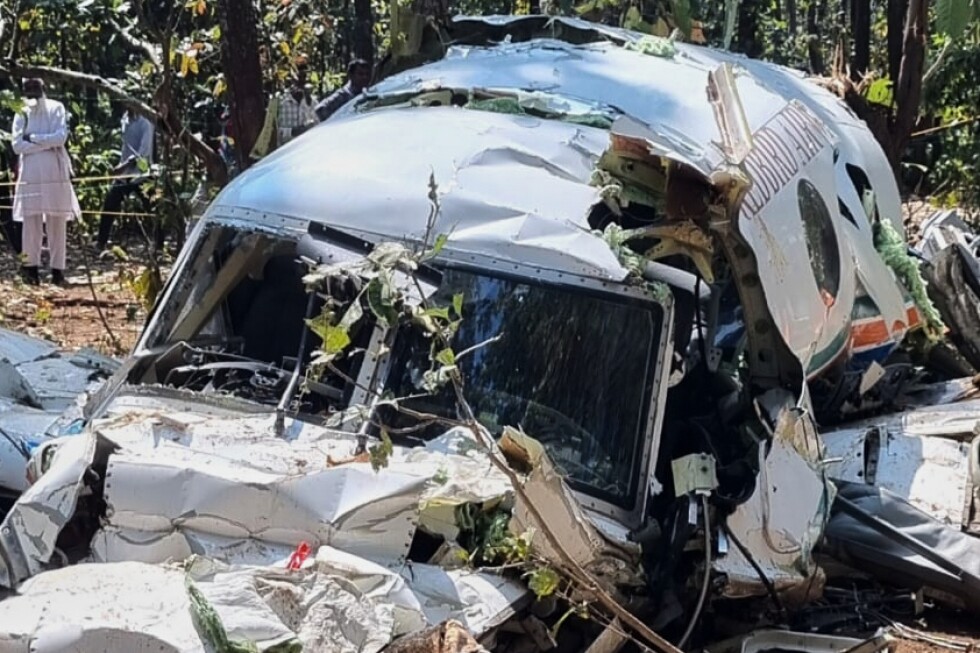
    The Indian state of Maharashtra conducted a solemn state funeral on Thursday for Deputy Chief Minister Ajit Pawar, whose distinguished political career ended tragically in a plane crash. The final rites were performed with full state honors at Vidya Pratishthan ground in Baramati, where his sons lit the ceremonial pyre amid emotional scenes of public mourning.

    Prominent national figures including Union Home Minister Amit Shah, Maharashtra Chief Minister Devendra Fadnavis, and NCP leader Sharad Pawar joined thousands of citizens in paying their final respects. The atmosphere was charged with emotion as supporters chanted “Ajit Dada Amar Rahe” (Long Live Ajit Dada) while the leader’s mortal remains arrived at the ceremony grounds.

    Simultaneously, investigative teams from the Directorate General of Civil Aviation and forensic experts commenced their examination of the crash site where the aircraft went down on Wednesday morning. The Pune Rural Police have registered an Accidental Death Report and launched a comprehensive investigation into the circumstances surrounding the tragic incident.

    Ajit Pawar’s political legacy spans decades, marked by his unprecedented six non-consecutive terms as Deputy Chief Minister across various administrations. Born in 1959 in Ahmednagar district, he earned the affectionate title “Dada” (elder brother) through his grassroots connectivity and substantial contributions to Maharashtra’s development through cooperative movements, milk unions, and sugar factories.

    His complex political journey included engineering an NCP split in 2019 to join the BJP-led government, yet maintaining close ties with his uncle and political mentor Sharad Pawar. Known for his straightforward approach, Pawar’s career demonstrated remarkable resilience and adaptability within Maharashtra’s dynamic political landscape.

    The veteran leader is survived by his wife Sunetra Pawar and their two sons, who participated in the traditional funeral ceremonies alongside other family members and political associates.

  • Silent danger: Generators can be risky if used indoors, Ajman Police warn

    Silent danger: Generators can be risky if used indoors, Ajman Police warn

    Amidst recent cold and rainy conditions across the UAE, Ajman Police have escalated public warnings regarding the lethal risks associated with improper generator usage. Authorities emphasize that while generators serve as essential backup power sources, they transform into ‘silent dangers’ when operated indoors or in inadequately ventilated spaces.

    The primary hazard identified is carbon monoxide (CO) poisoning. This toxic gas is particularly perilous due to its colorless, odorless nature, making detection impossible without specialized equipment. Police officials advise residents to position generators a safe distance from living quarters and windows to prevent toxic fume infiltration.

    Health implications of exposure range from headaches, dizziness, and nausea to more severe consequences including confusion, loss of consciousness, and potentially fatal outcomes. Historical incidents underscore this threat: in 2023, two domestic helpers in Dubai succumbed to CO inhalation, while three Pakistani men in Sharjah died from similar circumstances involving an operational generator indoors.

    Ajman Police mandate regular maintenance checks and immediate emergency protocols. Suspected exposure requires shutting down the generator, evacuating the area, and contacting emergency services at 997 without delay. These measures aim to prevent further tragedies and enhance public awareness about covert hazards associated with generator operation during inclement weather.

  • Over 666,000 counterfeit items worth Dh31 million seized in Ras Al Khaimah

    Over 666,000 counterfeit items worth Dh31 million seized in Ras Al Khaimah

    Ras Al Khaimah’s commercial regulatory body has executed a major crackdown on counterfeit merchandise, confiscating over 666,000 imitation products with an estimated market value exceeding Dh31 million. The Ras Al Khaimah Department of Economic Development (RAK DED) disclosed that these operations targeted 71 retail establishments and commercial outlets across the emirate following consumer reports of trademark violations.

    According to official statistics from 2025, authorities successfully addressed 937 consumer complaints with a remarkable 95% resolution rate. Among these cases, 28 specifically concerned counterfeit products bearing registered trademarks in local markets. The department’s Commercial Protection Section mobilized specialized inspection teams immediately upon receiving these reports to conduct targeted campaigns.

    RAK DED emphasized that these anti-counterfeiting initiatives represent ongoing efforts to strengthen market safety protocols, safeguard consumer rights, and ensure strict adherence to trademark regulations. Department officials highlighted that counterfeit merchandise not only jeopardizes consumer safety but also damages the reputation and competitive standing of legitimate businesses operating within the emirate.

    The regulatory body has reinforced its commitment to maintaining a transparent and well-regulated commercial environment, urging residents and consumers to report any suspected violations or counterfeit products through official channels. This comprehensive approach demonstrates the emirate’s dedication to protecting both consumers and legitimate businesses from the detrimental effects of counterfeit trade.

  • Henan to build comprehensive cultural heritage database

    Henan to build comprehensive cultural heritage database

    In a significant move to safeguard its rich historical legacy, Henan province has unveiled plans to create a comprehensive provincial database cataloging its vast cultural heritage resources. The initiative was formally announced during the government work report presented this Monday at the opening ceremony of the fourth session of the 14th Henan Provincial People’s Congress.

    The ambitious project aims to systematically digitize and consolidate information on the region’s archaeological treasures and cultural relics. Beyond establishing the central database, the provincial strategy also includes supporting several cities within Henan in their quest to become national exemplars of cultural relic preservation and management.

    The government report highlighted notable cultural achievements from 2025 that underscore the province’s commitment to its historical legacy. These included the successful public opening of major new institutions such as the Yinxu Museum in Anyang and the Dahecun Site Museum in Zhengzhou, the provincial capital. The Dahecun Archaeological Site itself, located in Zhengzhou, represents a profoundly significant historical timeline, with artifacts dating from approximately 4800 BC to 1500 BC.

    Further demonstrating the economic power of cultural investment, the report celebrated the remarkable success of Henan’s culture-tourism integration initiative. This program proved to be a substantial driver for the local economy, attracting an unprecedented tally of over 1.1 billion tourist visits throughout the year. This massive influx of visitors translated into a staggering tourism revenue exceeding 1 trillion yuan (approximately $144 billion), solidifying the vital link between cultural preservation and economic prosperity.

  • Discovery through dialogue: Chinese and US students exchange ideas for the future

    Discovery through dialogue: Chinese and US students exchange ideas for the future

    In a groundbreaking cross-cultural exchange, Generation Z scholars from premier academic institutions in China and the United States recently convened for an unprecedented dialogue session. The event, documented on January 29, 2026, revealed remarkable insights into how young leaders from the world’s two largest economies perceive one another and envision collaborative futures.

    The gathering brought together students representing elite universities from both nations, creating a dynamic forum for cultural and intellectual exchange. What began as casual conversations about daily life rapidly evolved into profound discussions about global challenges and opportunities. Participants demonstrated exceptional ability to transcend cultural barriers, finding common ground in their aspirations for technological advancement, environmental sustainability, and global cooperation.

    Surprising commonalities emerged throughout the hours-long dialogue, particularly regarding digital innovation and climate action. The students identified parallel concerns about artificial intelligence ethics, renewable energy transition, and inclusive economic development. Their discussions revealed a shared commitment to building bridges rather than barriers, with many participants expressing frustration with geopolitical tensions that don’t reflect their generation’s desire for collaboration.

    The exchange demonstrated that despite different cultural backgrounds and educational systems, these future leaders maintain remarkably aligned visions for international cooperation. Their conversations progressed from initial cultural observations to substantive policy discussions, ultimately culminating in a collective blueprint for US-China collaboration on youth-led initiatives. The dialogue proved particularly significant given ongoing diplomatic challenges between the two nations, showing that next-generation leaders are already developing the relational foundations for future cooperation.