分类: society

  • Watch: Toddler flings new iPhone into water feature at Louvre Abu Dhabi in viral video

    Watch: Toddler flings new iPhone into water feature at Louvre Abu Dhabi in viral video

    A moment of parental composure amidst toddler-induced chaos has captivated the internet, originating from the iconic Louvre Abu Dhabi. A widely circulated video, amassing over 30 million views, documents a young child’s swift action that sent a brand-new iPhone plunging into the museum’s water feature.

    The incident involved Kazakh influencer K. Beklan and his family during a leisurely stroll down the museum’s renowned ramp. Surveillance footage captures the precise moment the toddler, being carried by his father, unexpectedly hurls the device belonging to his sister into the aquatic installation below.

    Contrary to the anticipated panic, the parents’ reaction was notably placid, a detail that drew significant praise from online spectators. The museum’s response team demonstrated equal poise, promptly arriving on the scene. Utilizing standard pool cleaning apparatus, staff members successfully retrieved the submerged smartphone, turning a potential disaster into a resolved incident.

    Social media commentary overwhelmingly commended the adults’ unflappable demeanor. One observer noted the admirable calmness, while another employed dry wit, quipping about the replaceability of the child compared to the moment itself. Although the phone’s operational fate post-immersion remains uncertain, the event concluded without further incident, highlighting effective public venue management and a viral example of serene parenting.

  • Police identify Ajit Pawar’s body with wristwatch, special seat after deadly crash

    Police identify Ajit Pawar’s body with wristwatch, special seat after deadly crash

    In a tragic aviation incident that has shocked the Indian political establishment, Maharashtra Deputy Chief Minister Ajit Pawar and four companions perished when their chartered Learjet crashed during landing attempts at Pune’s Baramati airport on Wednesday, January 28. The aircraft, originating from Mumbai’s Chhatrapati Shivaji Maharaj International Airport, erupted into flames upon impact, completely incinerating the craft and rendering all victims unrecognizable. Aviation authorities have launched a comprehensive investigation into the circumstances surrounding the fatal crash. Initial reports suggest challenging weather conditions may have contributed to the disaster, though official findings remain pending. The severity of the impact necessitated extraordinary identification measures, with forensic teams relying on personal artifacts and seating arrangements to establish identities. Pawar’s remains were specifically identified through his distinctive wristwatch and his preferred seating configuration aboard the aircraft, according to Pune Rural Police Superintendent Sandeep Singh Gill. The victims included Pawar’s personal security officer, an attendant, and both pilots, none of whom survived the catastrophic incident. Multiple agencies including the Directorate General of Civil Aviation, forensic specialists, and National Disaster Response Force personnel have converged on the crash site to determine the exact cause of the tragedy. The state government has declared three days of official mourning following the passing of its longest-serving deputy chief minister, whose funeral proceedings were conducted with full state honors on Thursday.

  • Octogenarian honored in Chongqing for five decades of relic preservation

    Octogenarian honored in Chongqing for five decades of relic preservation

    In a remarkable celebration of cultural dedication, octogenarian Guo Xiangying has been formally recognized as one of Chongqing’s Top 10 Inspirational Figures for her extraordinary five-decade commitment to preserving and promoting the Dazu Rock Carvings. This prestigious honor highlights a lifetime of unwavering devotion to one of China’s most significant cultural treasures.

    The Dazu Rock Carvings, designated a UNESCO World Heritage Site in 1999, represent one of humanity’s most remarkable artistic achievements. The site encompasses an astonishing collection of 144 grottoes containing approximately 50,000 statues and 100,000 inscriptions that visually document the philosophical and religious evolution of Chinese civilization. These magnificent carvings chronicle the harmonious integration of Confucian, Buddhist, and Taoist influences that flourished from the early Tang Dynasty (618-907) through the Song Dynasty (960-1279), forming an essential chapter in the history of Chinese cave art.

    Guo Xiangying’s recognition comes as cultural preservation efforts gain increasing importance worldwide. Her half-century of service demonstrates the critical role that individual dedication plays in maintaining cultural heritage for future generations. The award not only honors Guo’s personal commitment but also draws attention to the ongoing preservation needs of ancient sites amid modern development pressures.

    The Chongqing government’s recognition of Guo’s efforts underscores China’s growing emphasis on cultural conservation and the value placed on citizens who dedicate their lives to protecting national treasures. This honor serves as both acknowledgment of past achievements and inspiration for continued stewardship of China’s rich cultural legacy.

  • Yunnan’s white plum blossoms create a cozy counter to the seasonal chill

    Yunnan’s white plum blossoms create a cozy counter to the seasonal chill

    In the mountainous region of Shidian county, Yunnan province, an extraordinary natural spectacle unfolds each winter as countless white plum blossoms burst into full bloom, creating a stunning visual contrast to the seasonal cold. The Jiutiaogou village has become the epicenter of this floral phenomenon, with delicate petals shimmering under sunlight and soft yellow stamens creating a mesmerizing display against the winter landscape.

    The meticulously arranged village cottages provide a perfect architectural backdrop to the natural beauty, seamlessly blending with the blossoming trees against crystal-clear azure skies. This harmonious integration of human settlement and natural wonder has transformed the area into an unexpected winter destination for nature enthusiasts and photographers alike.

    Tourists visiting the site have expressed awe at the breathtaking scenery. “I had heard about the legendary beauty of Jiutiaogou’s plum blossoms, but witnessing them personally exceeds all expectations,” remarked Yang Yingxin, one of the visitors. “Each individual bloom appears as if carefully crafted by nature’s most skilled artist—a true masterpiece of botanical perfection.”

    The annual blossoming has gained significant attention through coverage by Shidian County’s Integrated Media Center, which has documented the phenomenon’s ability to create warmth and comfort despite the winter chill. The white plum blossoms not only serve as a visual delight but also symbolize resilience and natural beauty thriving in adverse conditions, offering both aesthetic pleasure and metaphorical inspiration to those who witness them.

  • Sichuan prefecture launches lifetime scenic spot passes to attract tourists

    Sichuan prefecture launches lifetime scenic spot passes to attract tourists

    In an unprecedented move within China’s tourism sector, Ganzi Tibetan Autonomous Prefecture in Sichuan Province has unveiled a groundbreaking lifetime access program for its scenic attractions. The initiative, launched January 28, 2026, in Chengdu, introduces two distinctive pass options: single-attraction lifetime access and a comprehensive pass covering 14 premier destinations.

    The comprehensive lifetime pass, priced strategically at either 317 or 318 yuan (approximately $46), represents exceptional value compared to the standard cumulative entry fee of 1,091 yuan for individual visits to all included sites. Among the participating attractions are world-renowned natural wonders including Hailuogou Glacier and the spectacular Daocheng Yading nature reserve.

    Prefecture Governor Feng Fagui characterized the program as a transformative approach to tourism accessibility. Immediately following the official launch ceremony, sales commenced through digital platforms including a dedicated WeChat mini-program and Douyin (China’s version of TikTok). The market response proved overwhelming, with travel agencies securing 600,000 lifetime passes in initial bulk purchases.

    Complementing the access program, Ganzi has appointed 150 professional photographers as official tourism ambassadors, granting them complimentary entry to all scenic areas. These visual artists will document the region’s stunning landscapes and cultural heritage, sharing their work globally to enhance international awareness.

    According to Liu Hong, Director of Ganzi’s Culture, Radio, Television, and Tourism Bureau, the multifaceted strategy aims to position the prefecture as a premier international eco-cultural tourism destination. The initiative builds upon the region’s growing tourism momentum, which saw 260,000 visitor arrivals in the previous year.

  • India’s Andhra Pradesh mulls social media ban for children

    India’s Andhra Pradesh mulls social media ban for children

    The southern Indian state of Andhra Pradesh is advancing toward potentially implementing a groundbreaking prohibition on social media usage for children, marking one of the most significant digital welfare initiatives in the country’s history. State Information Technology Minister Nara Lokesh announced Thursday that government authorities are conducting comprehensive studies to establish legal mechanisms for enforcing “age-appropriate access” to digital platforms.

    This development emerges against the backdrop of escalating global apprehension regarding online addiction and digital harm affecting younger demographics. Minister Lokesh emphasized that societal trust in social media ecosystems is progressively deteriorating, with children increasingly succumbing to compulsive usage patterns that demand urgent intervention.

    The state administration has formally extended invitations to major technology corporations including Meta, Google, X, and ShareChat to participate in crucial discussions evaluating international best practices in youth digital protection. This collaborative approach seeks to balance technological innovation with responsible digital citizenship.

    Andhra Pradesh’s initiative mirrors parallel considerations in Goa, where western Indian authorities are simultaneously examining the legal viability of comparable restrictions for minors. The movement gains additional momentum from the federal government’s annual economic survey, released concurrently, which recommends establishing nationwide guidelines concerning children’s screen time exposure.

    The survey explicitly suggests that “policies on age-based access limits may be considered, as younger users are more vulnerable to compulsive use and harmful content,” indicating potential nationwide policy alignment.

    Minister Lokesh further highlighted concerning trends in online safety for women, noting that many face persistent digital harassment that cannot be overlooked. This comprehensive approach addresses multiple vulnerable demographics within the digital landscape.

    India’s position as the world’s most populous nation, with approximately one billion internet users and connectivity reaching 95% of villages, underscores the monumental significance of these potential regulatory changes. This development places India within an expanding international movement, following Australia’s implementation of social media restrictions for users under 16 in December and France’s recent legislative approval blocking platform access for children under 15. The European Union and numerous other nations are contemplating similar protective measures.

  • Chips, anyone? German farm gives away millions of potatoes after bumper harvest

    Chips, anyone? German farm gives away millions of potatoes after bumper harvest

    Berlin has become the unexpected beneficiary of a massive potato surplus, with millions of kilograms of free spuds being distributed across the German capital since mid-January. The initiative, dubbed “the great potato rescue,” emerged after agricultural firm Osterland Agrar found itself with approximately 4 million kilograms of excess potatoes following a bumper harvest in Saxony.

    Rather than allowing the potatoes to rot in fields, the company partnered with Berliner Morgenpost newspaper and eco-friendly search engine Ecosia to coordinate a large-scale distribution effort. Food banks, schools, and churches have served as primary distribution points, with 174 designated “spud-hubs” established throughout the Berlin metropolitan area.

    Hans-Joachim von Massow, Managing Director of Osterland Agrar, explained that while the company could technically store the potatoes until mid-year, the market saturation made distribution necessary. “We’re not wishing to discard our magnificent tubers back into the fields,” von Massow stated, noting that approximately 500,000kg had already been transported to Berlin, with additional shipments sent to other German regions and Ukraine.

    The initiative has drawn sharp criticism from agricultural associations. The Brandenburg Farmers’ Association condemned the effort as a “disgusting PR stunt,” with representative Timo Scheib arguing that “food is and will remain valuable, even if thoughtless do-gooders throw around free potatoes at schools and churches.”

    Peter Schink, a Berliner Morgenpost editor who helped spearhead the plan, countered that the project ultimately aims to “put the potato in the spotlight as a valuable food” in a country known for its gastronomic passion for potatoes. Despite extensive media coverage, actual distribution has faced practical challenges, with some distribution points temporarily lacking supplies amid icy winter conditions.

    The program is now winding down in Berlin as funding diminishes, though organizers anticipate one final shipment once weather conditions improve.

  • China to boost social assistance for vulnerable groups during Spring Festival holiday

    China to boost social assistance for vulnerable groups during Spring Festival holiday

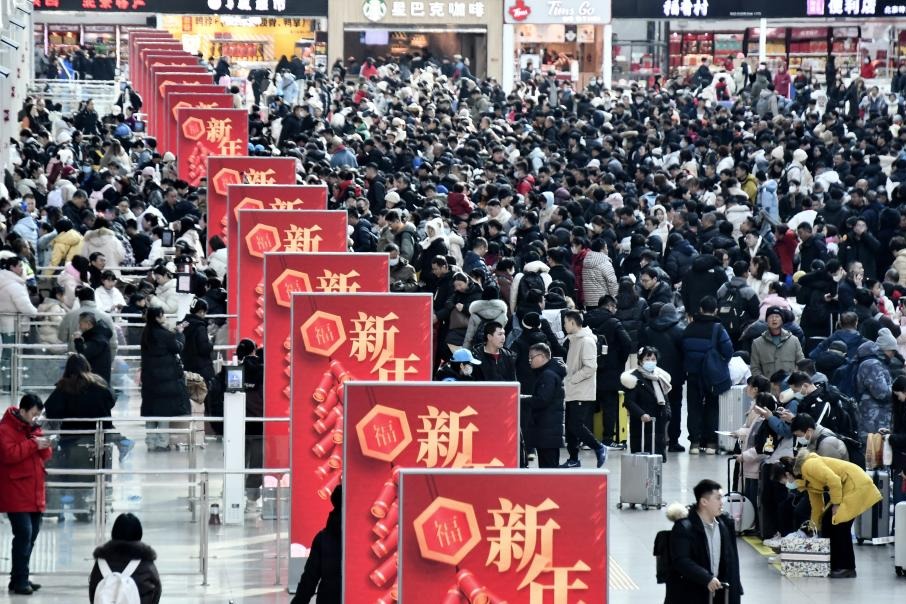
    In a significant move to safeguard welfare during the nation’s most important traditional holiday, China has implemented comprehensive social assistance measures targeting vulnerable demographics. The Ministry of Civil Affairs unveiled this enhanced support framework on Thursday, emphasizing timely and adequate aid distribution throughout the Spring Festival period.

    Zhang Wei, Deputy Director of the Ministry’s Social Assistance Department, detailed the multifaceted initiative during a press briefing. The strategy encompasses accelerated subsistence allowance payments, expanded heating subsidies, and simplified application procedures for those seeking assistance during the holiday season. “Our priority is ensuring complete and punctual disbursement of assistance funds to all eligible recipients,” Zhang stated.

    The financial backbone of this effort includes over 141 billion yuan ($20 billion) in pre-allocated central funds dedicated to social assistance programs. Major metropolitan areas including Beijing and Shanghai have already commenced distributing aid through various channels—direct cash transfers, consumption vouchers, and essential goods provision.

    To identify those in need more effectively, authorities are employing advanced data analytics platforms complemented by physical verification through field visits. This dual approach enables real-time monitoring of vulnerable groups, particularly isolated seniors, individuals with severe disabilities, and those battling serious medical conditions.

    Beyond financial support, the program features operational hotlines throughout the holiday period and personalized visits by civil affairs personnel to assess specific needs. Several provinces have additionally broadened heating assistance eligibility to include households marginally above subsistence allowance thresholds but facing financial strain due to fixed expenditures.

    This comprehensive social protection initiative reflects China’s commitment to ensuring no citizen is left behind during traditional family reunions and celebrations.

  • Iranian press review: High bail and legal hurdles keep protesters in detention

    Iranian press review: High bail and legal hurdles keep protesters in detention

    Iranian families seeking the release of relatives detained during recent nationwide protests confront an increasingly impossible bail system, compounding the nation’s ongoing sociopolitical crisis. Administrative obstructions, exorbitant financial requirements, and deliberate judicial delays have created insurmountable barriers for detainees awaiting trial.

    Legal expert Mustafa Nili revealed to Shargh daily that bail amounts have skyrocketed due to hyperinflation and currency devaluation, now requiring 10 billion rials ($9,000) per year of potential imprisonment—a tenfold increase from 2022 levels. Even families capable of meeting these astronomical sums face arbitrary rejections by security forces at courthouses, effectively denying due process.

    The human dimension emerges through firsthand accounts: one mother described mortgaging her brother’s home to meet a 50 billion rial bail for her daughter, while noting many fellow prisoners lack any recourse to freedom. Demographic data from the Qom Seminary study of 11,252 arrestees reveals disturbing patterns—17% are high-school students, 77% under age 30, and 65% from low-income backgrounds, directly contradicting government narratives blaming foreign agitators.

    Simultaneously, Iran’s economic collapse accelerates as the rial plummets to historic lows against the dollar (1:1.57 million), triggering catastrophic price surges in essentials. Dairy products have risen 40-85%, forcing nutritionally devastating dietary cuts among vulnerable populations. Government price controls threaten to exacerbate shortages, creating a self-perpetuating crisis cycle.

    The National Sociological Association of Iran issued a grave warning against the normalization of state violence, stating that civilian killings risk irreversible social fragmentation. Their declaration emphasized that ‘no political or military justification can excuse this level of human suffering,’ highlighting the erosion of public trust and potential for total societal collapse if demands for reform continue to be met with suppression.

  • Is your child tired? What UAE experts say about co-curricular activities

    Is your child tired? What UAE experts say about co-curricular activities

    Across the United Arab Emirates, a growing educational concern is emerging as children transition directly from classroom instruction to a relentless cycle of co-curricular engagements. This phenomenon sees students rushing to tennis practices, music lessons, swimming sessions, and language classes with minimal downtime in between.

    Educational institutions frequently promote these supplemental activities, whether included in standard tuition fees or offered as premium additions, while many parents independently arrange external programs. The central debate has evolved beyond questioning the value of such engagements to examining whether contemporary schedules adequately preserve essential childhood experiences—including unstructured rest, creative imagination, and spontaneous play.

    Parental perspectives vary significantly regarding activity management. Dubai resident Arijit Nandi advocates for his 9-year-old son’s intensive regimen—featuring pre-dawn tennis, midweek swimming, weekend guitar, and additional academic coaching—as a purposeful strategy for energy channeling and digital detoxification. He emphasizes his child’s genuine enjoyment and regular fatigue assessments.

    Conversely, Japanese expatriate Kenji Takahashi adopts a more measured approach for his 10-year-old daughter, balancing piano, karate, and art with protected downtime for bicycle riding and social play. His philosophy centers on energy guidance rather than control, ensuring activities serve developmental purpose rather than mere scheduling saturation.

    Educational specialists identify concerning trends beneath these well-intentioned arrangements. Girish Hemnani, a Dubai-based life coach, observes that families and institutions are unconsciously perpetuating a productivity race that creates an ‘illusion of productivity’ while depriving children of neurological development opportunities. He explains that boredom activates the brain’s Default Mode Network, which facilitates imagination and self-reflection—processes compromised by constant scheduling.

    Research indicates that free play fundamentally develops executive functioning, including planning capabilities, self-regulation, and initiative-taking. Hemnani further warns that overscheduled children risk losing spontaneity and personal agency, particularly when parents normalize ‘hustle culture’ due to their own professional pressures and digital consumption habits.

    School leadership is responding to these concerns with revised approaches. Natalia Svetenok, Principal of Woodlem British School in Ajman, states unequivocally that ‘a tired child cannot thrive,’ advocating for activities that generate joy rather than pressure. Similarly, The Aquila School’s Principal Wayne Howsen emphasizes that co-curricular activities must stem from genuine student interest rather than functioning as extended childcare, noting that choice-driven participation builds teamwork, problem-solving, and multilingual skills more effectively.

    The emerging consensus among UAE educators and parents suggests a paradigm shift toward balanced scheduling that honors both structured development and essential childhood experiences.