
The U.S. Department of Transportation has rescinded its emergency order mandating flight reductions across the nation, citing improved staffing levels of air traffic controllers. The decision comes after a 43-day government shutdown, the longest in U.S. history, which saw a surge in absences among air traffic controllers. These essential workers were required to work without pay, leading to widespread flight delays and cancellations. To mitigate safety concerns, the Federal Aviation Administration (FAA) had ordered airlines to reduce scheduled takeoffs starting November 7. With the shutdown now resolved, staffing levels have rebounded just in time for the busy Thanksgiving travel period. According to AAA, over 6 million Americans are expected to fly during the holiday, marking a 2% increase from last year. Transportation Secretary Sean Duffy announced the lifting of the emergency order, emphasizing the return of controllers to their posts and the resumption of normal operations. He also highlighted plans to accelerate controller hiring and modernize the air traffic control system. The shutdown had forced many controllers to seek secondary employment to compensate for lost wages, while those who remained on duty reported heightened stress and exhaustion. Airports struggled to maintain schedules, often relying on distant control towers to manage flights. The emergency order had called for a 10% reduction in domestic flights, resulting in thousands of cancellations and delays in early November. The FAA is now reviewing reports of non-compliance by airlines during the order and considering enforcement actions. Over the past weekend, flight disruptions due to staffing shortages dropped significantly, with only nine alerts issued compared to a record 81 on November 8. With the shutdown over, controllers are set to receive back pay, and the threat of termination for absences has been lifted.
分类: society
-

Dozens die in DR Congo mine after makeshift bridge collapses
A devastating bridge collapse at a cobalt mine in the Democratic Republic of Congo (DR Congo) has resulted in the deaths of at least 32 people, with rescuers still searching for survivors. The incident occurred at the Kalando mine in the southern Lualaba province on Saturday, where unauthorized miners had forcibly entered the site despite a ban. According to local official Roy Kaumba Mayonde, military personnel guarding the mine reportedly fired shots, causing panic among the miners. In their haste to flee, the miners overloaded a makeshift bridge, leading to its collapse. The military has yet to comment on these allegations. DR Congo, the world’s largest supplier of cobalt—a critical component for electric vehicle batteries—has long struggled with safety and regulation in its artisanal mining sector. Approximately 1.5 to 2 million people work in this unregulated industry, which supplies copper, cobalt, and other minerals to global markets. Mayonde described the incident as “tragic” and highlighted the recurring issue of illegal miners invading mining concessions. The miners had constructed the unstable bridge themselves, which could not withstand the sudden rush of people. Unverified images on social media show the aftermath, with locals witnessing the grim scene. Congolese authorities have urged artisanal miners to consider government-sponsored training in agribusiness to prevent such tragedies. The cobalt extraction process in DR Congo has been marred by allegations of child labor, human rights abuses, and corruption, further complicating the industry’s challenges.
-

Gunmen abduct 25 girls from a high school in northwestern Nigeria
In a brazen pre-dawn attack on Monday, armed assailants stormed a boarding school in Nigeria’s northwestern Kebbi state, abducting 25 schoolgirls and killing at least one staff member. The incident, which occurred in the Maga area of Danko-Wasagu, underscores the persistent security challenges plaguing the region. Police spokesperson Nafi’u Abubakar Kotarkoshi confirmed the attackers, armed with sophisticated weapons, engaged in a firefight with guards before seizing the students from their dormitories at 4 a.m. No group has yet claimed responsibility for the abduction, and the motives remain unclear. A coordinated search and rescue operation is underway, with security forces combing suspected escape routes and surrounding forests. One fatality and one injury were officially reported, though a local resident claimed two deaths occurred during the raid. Nigeria has faced escalating violence from armed bandits, who frequently kidnap for ransom, particularly in the mineral-rich but poorly policed northern regions. While not linked to militant groups like Boko Haram, these bandits have terrorized communities, targeting schools since the infamous 2014 Chibok abduction, which saw 276 students taken. Despite some progress in reducing school raids through enhanced security measures, the latest incident highlights the ongoing vulnerability of educational institutions in the region.
-

Arxan’s six-month winter tourism season kicks off in Inner Mongolia
The 2025-2026 winter tourism season officially commenced on Saturday in Arxan, located in the Hinggan League of Inner Mongolia Autonomous Region. This event marks the beginning of a six-month celebration, highlighted by the 20th Arxan Ice and Snow Festival. The festival’s launch followed a winter tourism news conference held in the city on Friday, where five key winter activities were unveiled. The centerpiece of these activities is a ‘1+6’ model of winter routes, which combines snow-based activities with the city’s renowned hot springs. Despite its small population of just 30,000 residents, Arxan has emerged as a remarkable tourism success. Official statistics reveal that from January to October, the city welcomed over 6.14 million tourists, generating a revenue of 7.68 billion yuan ($1 billion). This figure equates to hosting more than 200 times its population, underscoring the city’s growing appeal as a winter destination.
-

Red-billed gulls gather at Yitong River in Changchun
In the crisp early winter days of Changchun, Jilin province, the Yitong River has become a temporary haven for a flock of red-billed gulls. These migratory birds, en route to warmer southern regions, have gathered near the river, creating a stunning natural spectacle. Their presence has drawn a diverse crowd of tourists, avid photographers, and birdwatching enthusiasts, all eager to witness this seasonal phenomenon. The sight of the gulls, with their distinctive red bills and graceful flight, has added a vibrant touch to the serene winter landscape. This event not only highlights the ecological significance of the Yitong River as a stopover for migratory birds but also underscores the growing interest in wildlife conservation and eco-tourism in the region.
-

China’s people are on a grueling treadmill
China’s economic and social landscape is undergoing a profound transformation, marked by a growing sense of disillusionment among its youth. While the country projects an image of strength and technological prowess on the global stage, the domestic reality paints a starkly different picture. Influencers like Hasan Piker have lauded China’s blend of consumer abundance and state-controlled economy, but for ordinary citizens, the narrative is one of quiet desperation. Concerns over unemployment, stagnant wages, and rising living costs dominate conversations, both online and offline. The phrase ‘wai qiang, zhong gan’—outwardly strong, inwardly brittle—has emerged as a poignant descriptor of the nation’s current state. Young people, in particular, bear the brunt of these challenges. Despite their relentless pursuit of education and grueling work hours, many find themselves trapped in a stagnant job market, unable to secure white-collar positions or achieve financial stability. The real estate market, once a cornerstone of household wealth, has been in freefall since 2021, eroding savings and exacerbating economic anxiety. Meanwhile, government policies aimed at bolstering global influence and industrial dominance have led to ‘involution’—a phenomenon of excessive competition that drives down profits and productivity. This has further strained the mental health of young people, with rising rates of anxiety and depression. The government’s crackdown on ‘excessively pessimistic’ social media content underscores its awareness of public discontent. As China grapples with these internal challenges, the once-promising ‘Chinese Dream’ has morphed into a Sisyphean struggle for survival.
-

At 60, ECNU program continues to be a magnet for international students
For six decades, East China Normal University (ECNU) in Shanghai has been a cornerstone of international education, attracting students from across the globe. This year, the university celebrated the 60th anniversary of its international education program, a milestone that underscores its enduring commitment to fostering global academic exchange and cultural understanding.
The story of ECNU’s international education began in 1965, when China recognized the importance of international student education as a key component of its global outreach. As the first normal university established in New China in 1951, ECNU took on this mission by founding its foreign student affairs office and Chinese language teaching department. Initially welcoming 210 Vietnamese students, the program has since expanded to include over 3,100 students from 114 countries, with more than 100,000 alumni worldwide.
One such alumnus is Hoang Tra, who arrived at ECNU in 1965 at the age of 18. Reflecting on his time at the university, Tra noted, ‘The 1960s were a period of frequent exchanges between Vietnam and China. I believed learning Chinese would be beneficial.’ After completing his studies, Tra returned to Vietnam, where he spent four decades teaching Chinese at Vietnam National University, Hanoi, inspiring many of his students to pursue their education in China.
The impact of ECNU’s program is also evident in the story of Vietnamese student Doan Bao Tran and her mother, Vu Thanh Xuan. Xuan, who earned both her master’s and doctoral degrees at ECNU, left her 17-month-old daughter in Vietnam in 2003 to pursue her academic dreams in Shanghai. After returning to Vietnam, Xuan shared her experiences with her students and her daughter, sparking Tran’s interest in ECNU. ‘Since I was very young, I had always wondered about life in Shanghai and at ECNU through my mother’s stories,’ said Tran, who is now studying international business at the university. ‘Now, I can finally experience it myself.’
In 1985, ECNU became one of the first four universities in China to offer an undergraduate program in Teaching Chinese as a Foreign Language, marking a significant shift in Chinese language education from basic language training to a comprehensive academic discipline. This evolution has further solidified ECNU’s reputation as a leader in international education.
As ECNU continues to attract students from around the world, its legacy as a hub for academic excellence and cultural exchange remains as strong as ever. The university’s 60th anniversary celebrations in October were a testament to its enduring impact on the lives of its students and the broader global community.
-
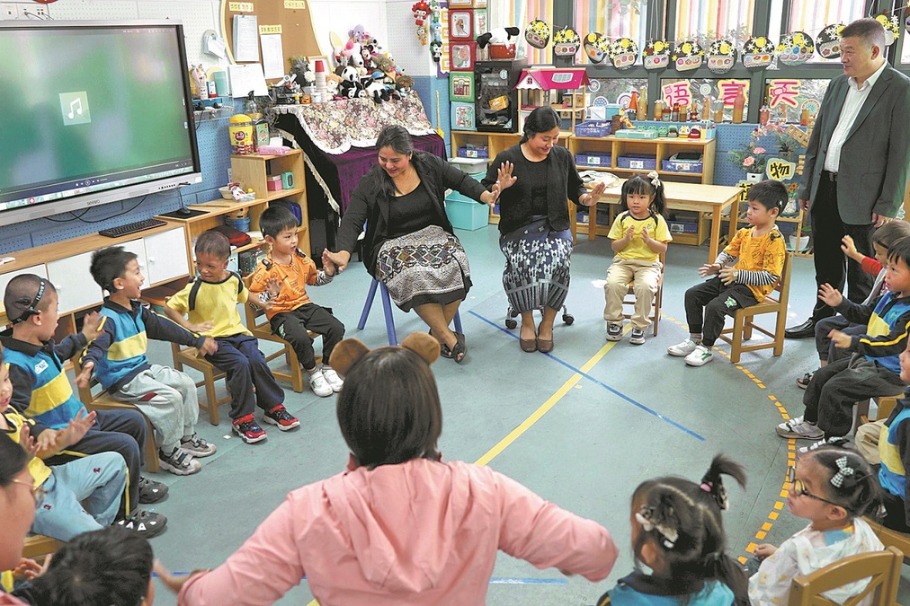
Laotian teacher gains Chinese education insights
Sophaphone Heuanglith, a dedicated special education teacher from Laos, recently embarked on a transformative journey to China, where she gained profound insights into the country’s advanced approaches to educating hearing-impaired children. During her visit to Guangzhou, Heuanglith was deeply moved by the inclusive education practices she observed, where children with cochlear implants studied alongside their hearing peers, supported by innovative teaching methods and resources.
-

Yi lacquerware gets a new lease of life
In the heart of Zhaojue County, Sichuan Province, Qumu Shiwu, a 29-year-old inheritor of the ancient Yi lacquerware craft, is breathing new life into a centuries-old tradition. With a paintbrush in hand, she meticulously creates vibrant patterns on wooden cores, a skill passed down through 14 generations of her ethnic Yi family. Her captivating short videos, showcasing the intricate process of lacquerware decoration, have amassed over 200 million views on social media, transforming this traditional art form into a modern sensation. Born into a family of artisans, Qumu defied gender norms to become the first female inheritor of the craft. Despite challenges, including a severe allergic reaction to raw lacquer, she persevered, completing her first independent work in 2017. Leveraging platforms like Douyin, Kuaishou, and Xiaohongshu, Qumu has expanded the reach of Yi lacquerware, attracting customers from across China and overseas. By integrating traditional designs into contemporary products like phone cases and tea sets, she has revitalized her father’s workshop, increasing its annual revenue from 400,000 yuan to over 3 million yuan. Qumu’s efforts also include nurturing the next generation of artisans through university partnerships and exploring cross-sector collaborations. Her ultimate goal is to introduce Yi lacquerware to a global audience, showcasing the rich cultural heritage of Liangshan.
-
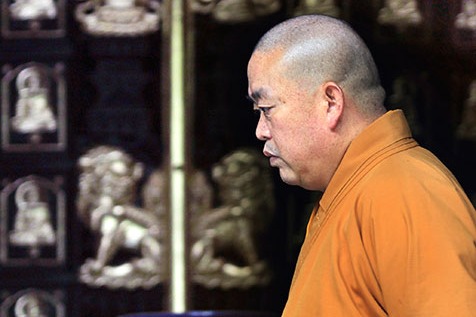
Prosecutors approve ex-abbot’s arrest
The Supreme People’s Procuratorate has officially sanctioned the arrest of Shi Yongxin, the former abbot of the renowned Shaolin Temple in Henan Province. Shi is accused of embezzlement, misappropriation of funds, and bribery. The case, initially investigated by the Xinxiang public security authorities under the directive of the Henan Provincial Public Security Department, has now progressed to the arrest phase following approval from the Xinxiang People’s Procuratorate. The allegations against Shi surfaced on July 27, when the Shaolin Temple disclosed that he was under investigation for embezzling funds, misusing project and temple assets, maintaining inappropriate relationships with multiple women, and fathering an illegitimate child. The following day, the Buddhist Association of China revoked Shi’s ordination certificate, effectively expelling him from the monastic community. Shi, who became a monk in 1981 and served as the 30th abbot of the 1,500-year-old Shaolin Temple since 1999, has been a prominent figure in Zen Buddhism and the temple’s celebrated kung fu tradition. The case has drawn significant attention due to the temple’s cultural and spiritual significance.