分类: society

  • Young technicians tackle ice in railway tunnels for safe train services

    Young technicians tackle ice in railway tunnels for safe train services

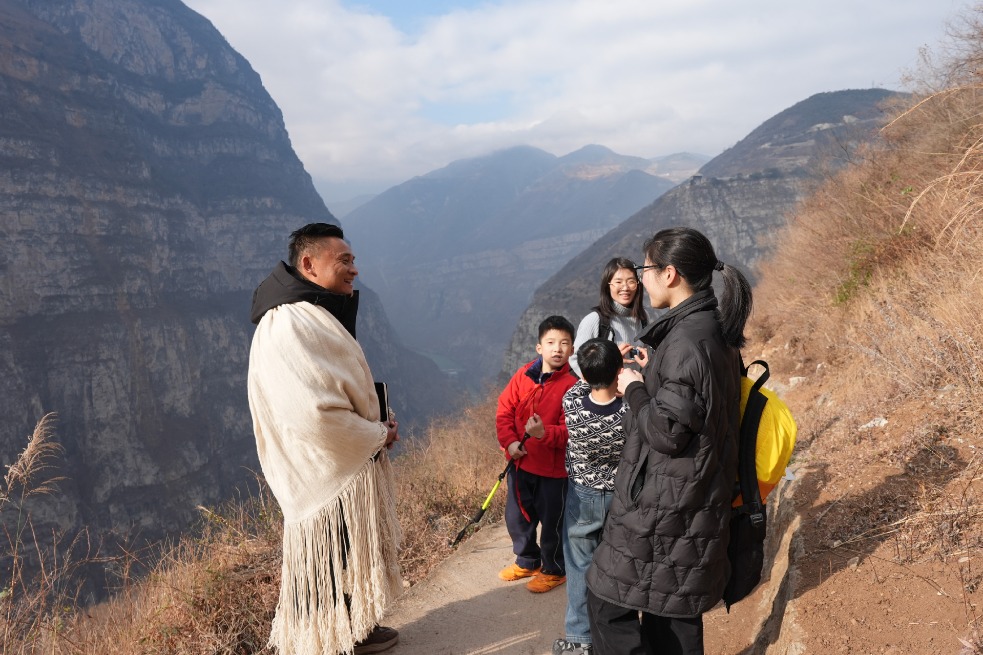
    In the rugged mountainous terrain of China’s Shanxi province, a specialized team of maintenance technicians—predominantly born in the 2000s—has been engaged in a critical winter mission: eliminating hazardous ice formations within railway tunnels to guarantee passenger safety during the peak travel season.

    Each day at dawn, these young professionals embark on an extensive patrol covering over nine kilometers of railway infrastructure. Their primary objective involves meticulous ice removal operations across seven separate tunnels, requiring strenuous physical labor including chipping, shoveling, and transporting substantial ice chunks. The demanding nature of this work leaves crew members physically exhausted upon completing their daily shifts.

    The team’s commitment becomes particularly significant during the Chinese New Year period, when they voluntarily remain on duty instead of returning to their own families. Their dedication ensures the uninterrupted operation of vital rail services, enabling thousands of migrant workers who have spent the year far from their hometowns to travel safely and reunite with their loved ones for the holiday celebrations.

    This maintenance squad operates within a challenging environment where temperatures frequently drop well below freezing, creating persistent ice accumulation that threatens rail operations. The technicians employ specialized tools and techniques developed specifically for tunnel ice removal, balancing efficiency with safety considerations in their demanding work environment.

    Their efforts represent a crucial component of China’s extensive railway safety system, particularly during winter months when natural elements pose significant challenges to transportation infrastructure. The team’s work has contributed to maintaining an unblemished safety record for this critical transportation corridor throughout the current winter season.

  • China’s urban-rural income gap narrows

    China’s urban-rural income gap narrows

    BEIJING – China has achieved significant progress in narrowing its longstanding urban-rural income disparity, according to official data released Wednesday. The income ratio between urban and rural residents has decreased substantially from 2.56:1 in 2020 to 2.31:1 in 2025, marking a notable improvement in economic equality across the nation.

    Han Wenxiu, head of the Office of the Central Rural Work Leading Group, disclosed at a press conference that Chinese farmers recorded a per capita disposable income of 24,456 yuan (approximately $3,517) in 2025, representing a solid 6 percent year-on-year increase. This growth trajectory has been accompanied by consistent enhancements in basic living conditions throughout rural communities.

    The announcement follows the release of China’s annual “No. 1 central document” on Tuesday, which established key priorities for advancing agricultural modernization and comprehensive rural revitalization throughout 2026. The policy directive underscores the government’s continued commitment to addressing regional development disparities.

    Zhu Weidong, deputy head of the office, emphasized that maintaining steady income growth for agricultural workers remains a paramount objective. China’s multifaceted approach includes promoting county-level industries, stabilizing employment opportunities for migrant workers, and revitalizing rural resources to create diversified income streams for farming communities.

    The narrowing gap reflects China’s sustained policy focus on rural development, which has accelerated since the nation declared victory in eliminating extreme poverty in 2021. These efforts align with broader initiatives to achieve balanced regional development and common prosperity across the country.

  • 62,000 people charged for telecom fraud from Jan-Nov in 2025

    62,000 people charged for telecom fraud from Jan-Nov in 2025

    Chinese judicial authorities have launched an unprecedented offensive against transnational telecommunications fraud, with prosecutors bringing charges against more than 62,000 individuals during the first eleven months of 2025. The Supreme People’s Procuratorate disclosed these substantial figures on Wednesday, highlighting the nation’s intensified campaign to combat sophisticated cybercrime networks operating across international borders.

    The crackdown has particularly focused on criminal syndicates based in northern Myanmar, with Chinese law enforcement agencies approving the arrest of over 4,300 fraud suspects repatriated from the region. Additionally, prosecutors have pursued legal action against more than 11,000 repatriated individuals, creating a powerful deterrent effect against cross-border fraudulent activities. This represents a significant demonstration of China’s judicial jurisdiction over serious transnational crimes, including the prosecution of foreign ringleaders orchestrating these operations.

    According to Du Xueyi, head of the SPP’s economic crime prosecution department, the systematic handling of these complex cases has reinforced China’s rule-of-law authority while generating positive legal, social, and international outcomes. Provincial procuratorates in Zhejiang, Guangdong, and Fujian have taken the lead in addressing major cases involving several large cross-border criminal organizations, with the Supreme People’s Procuratorate providing comprehensive supervision and guidance throughout the judicial process.

    The judicial outcomes have been notably severe, with courts successfully concluding trials for two major criminal syndicates. Sixteen defendants received death sentences with immediate execution, seven were sentenced to death with a two-year reprieve, and sixteen others received life imprisonment terms, reflecting the gravity of these offenses under Chinese law.

    Beyond direct fraud perpetrators, authorities have targeted the supporting infrastructure of these criminal operations. Prosecutors charged more than 29,000 individuals for facilitating information network criminal activities between January and November 2025, addressing the entire ecosystem that enables telecom fraud to flourish.

    Recognizing the global nature of cybercrime, China has actively pursued international cooperation through bilateral and multilateral mechanisms. The country participated in negotiations for the United Nations Convention against Cybercrime, which China formally signed in October 2025, demonstrating its commitment to collaborative solutions against this transnational challenge.

  • Heriot-Watt University Dubai convenes global and regional leaders at the second edition of the Sustainability Symposium

    Heriot-Watt University Dubai convenes global and regional leaders at the second edition of the Sustainability Symposium

    Heriot-Watt University Dubai has successfully concluded its second annual Sustainability Symposium, creating a pivotal platform for addressing one of the most pressing environmental challenges of our time. The February 2026 gathering united academics, industry pioneers, policy architects, humanitarian organizations, and students under the thematic focus “The Essential Role of Strategic Partnerships in Achieving Sustainable Packaging Solutions.”

    The symposium built upon the foundational work initiated in 2024, emphasizing that sustainable packaging transformation cannot occur through isolated efforts. Through expert keynote presentations, real-world business case studies, and dynamic panel dialogues, participants explored practical methodologies for post-consumption waste management, emerging sustainable materials, and scalable solutions applicable to both commercial and humanitarian supply chains.

    Dr. Matthew Sukumaran, Chief Operating Officer of Heriot-Watt University Dubai, emphasized the institution’s dedication to converting theoretical concepts into actionable environmental solutions. “This platform actively bridges the gap between academia and implementation by bringing together diverse stakeholders,” Sukumaran noted. “Strategic partnerships form the cornerstone of meaningful progress in sustainable packaging, demonstrating how collective action generates measurable, scalable impact.”

    Maher Al Kaabi, Advisor to the Group Chairman of Al Serkal Group and UAE Circular Economy Council member, delivered a keynote address highlighting the multidimensional nature of packaging sustainability. “Addressing sustainable packaging demands synergistic alliances that integrate scientific innovation, industrial capability, regulatory frameworks, and humanitarian considerations,” Al Kaabi stated. “Academic institutions like Heriot-Watt play crucial roles in translating research into circular solutions that support national sustainability objectives while delivering economic and environmental value.”

    The symposium featured deep-dive examinations of critical packaging challenges, including the complexities of collection systems, segregation technologies, and recycling infrastructure. Discussions also covered advancements in biodegradable and compostable materials alongside adaptations of international best practices for regional implementation.

    A standout feature was the presentation of the II Design Competition outcomes, where Heriot-Watt students developed applied solutions for Expo City Dubai’s post-consumption waste management and sustainable packaging for humanitarian supply chains. These student projects, created in collaboration with Dubai Humanitarian and Othalo, demonstrated how innovative design thinking combined with strategic partnerships can produce tangible environmental benefits.

    The event reinforced Heriot-Watt University’s position as a convening force in sustainability discourse, actively supporting the UAE’s circular economy objectives through knowledge exchange, partnership facilitation, and practical innovation.

  • Former Xinjiang herder discovers prosperity and passion on the ski run

    Former Xinjiang herder discovers prosperity and passion on the ski run

    URUMQI, China – At a premier ski resort near China’s northwestern city of Urumqi, 19-year-old Huzar Tohtarhan navigates a demanding schedule between coaching sessions and an unexpected second career as an action sports videographer. The former herder from Miao’ergou village has transformed his childhood passion into a thriving profession, emblematic of Xinjiang’s growing winter tourism economy.

    Huzar’s days are structured around tight intervals between day and night skiing sessions, often allowing less than an hour for meals and preparation. His expertise extends beyond instruction to capturing follow-cam footage for clients seeking professional-grade skiing videos. This specialized service has gained significant popularity through social media platforms like Douyin, with approximately 30 skiers booking purely for filming services this winter alone.

    The transition from rural herding to ski professionalism represents a remarkable journey. Huzar first encountered snowboarding at age six through his parents, who worked at a local ski area. Despite initial injuries and without formal training, he developed his skills through middle school teams and relentless practice. As China’s skiing popularity surged and Xinjiang developed its winter sports infrastructure, what began as hobby evolved into viable career opportunity.

    Local government and village support enabled Huzar to obtain professional instructor certification, marking his official departure from traditional herding life. “Herding meant being under the sun and wind all day, often alone,” he reflected. “Now I’m doing what I truly love.”

    His technical proficiency now includes backward skiing for frontal shots—a skill acquired through persistent practice that initially resulted in numerous bruises. Beyond athletic mastery, Huzar emphasizes the human connections forged through his work: “Before, my companions were horses and sheep. Sometimes I didn’t speak all day. Now I meet people from all over.”

    The economic impact extends beyond individual success. Nearby villages have developed complementary businesses including guesthouses, restaurants, and extended-hour strawberry-picking gardens, transforming seasonal summer tourism into year-round industry. During Xinjiang’s inaugural “snow holiday” in December 2025, the resort attracted over 20,000 skiers, with Huzar personally instructing more than 500 students this season.

    Through social media, Huzar shares technical advice, behind-the-scenes content, and scenic landscapes, hoping to inspire others to discover unconventional career paths. His story reflects broader regional development where traditional livelihoods are evolving alongside emerging economic opportunities in China’s northwestern frontier.

  • Young railway staff on track for Spring Festival travel rush

    Young railway staff on track for Spring Festival travel rush

    As China’s monumental Spring Festival travel period commences, a dedicated team of young technicians at Chongqing West EMU Depot stands at the forefront of transportation safety. These skilled mechanics, including 26-year-old Shi Gaohua, have intensified their maintenance protocols to ensure the seamless operation of China’s high-speed rail network during the world’s largest annual human migration.

    The 2026 Spring Festival travel rush, spanning from February 1st to March 13th (a 40-day period), anticipates transporting hundreds of millions of passengers returning to their hometowns for family reunions. At the heart of this operation, the maintenance crew works meticulously through night shifts, conducting comprehensive inspections on bullet trains’ critical systems including braking mechanisms, electrical components, and structural integrity.

    Shi Gaohua, representing the new generation of railway professionals, exemplifies the technical expertise required for maintaining China’s advanced rail infrastructure. ‘Every bolt, every circuit matters when millions of families are counting on us for safe journeys,’ Shi remarked during a recent overnight shift. His team employs specialized diagnostic equipment and follows rigorous checklists to identify potential issues before they escalate.

    The Chongqing West Depot, serving as a crucial maintenance hub in southwestern China, has implemented extended work schedules and enhanced quality control measures to handle the increased operational demands. These young technicians, many fresh from specialized railway academies, combine digital monitoring systems with hands-on mechanical expertise to maintain the world’s largest high-speed rail network operating at peak efficiency during this critical travel period.

    China’s railway system expects to handle approximately 480 million passenger trips during this year’s Spring Festival migration, with high-speed trains accounting for over 70% of total railway transportation. The work of these maintenance crews remains largely unseen by travelers but forms the essential foundation enabling the massive seasonal migration that defines Chinese cultural traditions.

  • UAE ranks highest globally for public satisfaction, says survey

    UAE ranks highest globally for public satisfaction, says survey

    The United Arab Emirates has achieved the world’s highest level of public satisfaction according to a comprehensive global survey released during the 2026 World Government Summit. The Gallup study, which gathered responses from adults across 107 nations, reveals that nearly one-third of UAE residents report no significant concerns regarding economic stability, employment opportunities, government performance, or safety and security.

    The groundbreaking research, titled ‘The World’s Most Important Problem: What People Need Leaders to Hear in 2026’, demonstrates that Gulf nations dominate the satisfaction rankings, with Kuwait and Bahrain following the UAE in global standings. The survey identifies four primary thematic concerns worldwide: economic stability, employment conditions, political governance, and security matters.

    Jon Clifton, CEO of Gallup, emphasized the human dimension of progress assessment: “People don’t feel progress through GDP charts. They experience it through safety, dignity and opportunity in their daily lives. Leaders who ignore this fundamental truth risk addressing the wrong priorities entirely.”

    Within the UAE specifically, environmental concerns (19%) emerged as the most pressing issue among residents, followed by employment considerations (12%), infrastructure development (12%), and economic matters (7%). This distribution indicates a society where basic needs are largely met, allowing attention to shift toward quality-of-life and sustainability issues.

    The findings align with the recently released 2026 Edelman Trust Barometer, which positions the UAE at the global forefront for governmental trust. Notably, 63% of UAE respondents believe future generations will experience improved living conditions—nearly double the global average of 32%.

    The study further reveals that personal experiences and perceptions shape national concerns more significantly than external indicators alone. Globally, economic anxiety represents the predominant concern across 71 nations, particularly among young adults aged 15-34 and female respondents.

    Wealthier nations demonstrate greater concern regarding political governance, especially where institutional trust is weak. Conversely, countries experiencing conflict or instability prioritize physical safety above all other considerations, including economic and governance issues.

  • An angel resembling Italy’s Meloni is painted over after an outcry from church and state

    An angel resembling Italy’s Meloni is painted over after an outcry from church and state

    ROME — A controversial artistic depiction that transformed a celestial cherub into the visage of Italian Premier Giorgia Meloni has been abruptly removed from Rome’s historic Basilica of San Lorenzo in Lucina, concluding a week of intense public scrutiny and institutional investigations.

    The altered fresco, created during chapel renovations in 2000, suddenly gained notoriety when La Repubblica newspaper featured the Meloni-esque angel on its front page last Saturday. The image showed a traditionally rendered cherub body supporting a face unmistakably resembling Italy’s conservative leader, kneeling before a bust of Italy’s last king, Umberto II.

    Church authorities intervened decisively on Tuesday night, instructing the original restorer Bruno Valentinetti to obscure the political portrait. By Wednesday morning, visitors discovered the angel’s face had been crudely covered with a layer of paint or plaster, leaving the cherub’s body intact but faceless.

    The Diocese of Rome and Italy’s Culture Ministry had simultaneously launched formal inquiries into the matter. While the work itself didn’t constitute damage to historic patrimony—dating only from 2000—Cardinal Baldassare Reina, the pope’s vicar for Rome, emphasized that political figures have no place in sacred art.

    The temporary alteration transformed the ancient basilica into an unlikely tourist attraction, with crowds sometimes disrupting religious services to photograph the unusual artwork. Premier Meloni herself responded with humor on social media, posting the image with a laughing/crying emoji and the caption: “No, I definitely don’t look like an angel.”

    Investigations continue to determine the cherub’s original appearance for proper restoration, ensuring the sacred space maintains its artistic integrity free from political associations.

  • Irish government to impose total ban on scramblers in public places

    Irish government to impose total ban on scramblers in public places

    The Irish government is implementing sweeping legislative measures to completely prohibit scrambler bikes in public spaces, following the tragic death of 16-year-old Grace Lynch in Dublin last month. The new regulations, designated as “Grace’s Law” by Taoiseach Micheál Martin, received cabinet approval Wednesday, signaling one of Europe’s most comprehensive crackdowns on off-road vehicle misuse.

    While existing statutes already restrict mechanically propelled vehicles from public roads without proper registration and insurance, Transport Minister Darragh O’Brien is introducing “additional legal clarity” that explicitly bans scramblers in nearly all roadway circumstances. Most scramblers, designed exclusively for off-road use, lack registration capabilities, rendering them inherently illegal for public thoroughfares under current frameworks.

    The enhanced legislation empowers Gardaí with expanded authority to confiscate and destroy non-compliant vehicles rather than returning them to owners. This strategic shift aims to permanently reduce recirculation of improperly used scramblers. Minister O’Brien emphasized the urgency of these measures, stating: “We owe it to Grace Lynch, her family and her friends to introduce regulations to further restrict the inappropriate use of scramblers in public places.”

    Statistical evidence underscores the necessity for intervention. Garda records indicate 167 scramblers were seized nationally in 2025, while Northern Ireland’s PSNI reported nearly 10,000 scrambler-related incidents over six years. The government anticipates enacting these provisions within weeks, with junior ministers Sean Canney and Jerry Buttimer collaborating on implementation strategies.

  • Details of Jeffrey Epstein post-mortem released in latest files

    Details of Jeffrey Epstein post-mortem released in latest files

    The U.S. Department of Justice has released previously undisclosed photographs depicting Jeffrey Epstein’s body being attended to by medical personnel immediately following his death in custody. These twenty images, many deemed too graphic for public dissemination, form part of a declassified FBI investigation into the financier’s controversial demise.

    The documents, published Friday among millions of Epstein-related files, include timestamps indicating the photos were taken at approximately 06:49 on August 10, 2019—roughly 16 minutes after guards found him unresponsive in his Metropolitan Correctional Center cell. The images show medical teams performing resuscitation efforts on Epstein while he lay on a stretcher, with visible neck injuries clearly documented in close-up shots.

    BBC Verify conducted extensive forensic analysis of the released materials, confirming these particular images had not previously appeared online prior to January 30. The verification process included reverse image searches and cross-referencing with accompanying documents such as an 89-page post-mortem report filed by New York’s Office of Chief Medical Examiner.

    The comprehensive FBI report spans 23 pages and contains a detailed six-week timeline of Epstein’s incarceration from his July 6, 2019 arrest on sex trafficking charges until his death. Notably, the documents reveal Epstein was placed on suicide watch after an earlier July 23 incident where he allegedly accused his cellmate—Nicholas Tartaglione, a former police officer facing murder charges—of attempting to kill him.

    Contradicting his documented mental state, psychological evaluations from July 24 show Epstein stating he had “no interest in killing myself” and that suicide “would be crazy.” The following day, he reportedly told psychologists he was “too vested in my case to fight it” and wanted to return to living his life.

    Critical security failures emerge in the documentation: prison guards failed to conduct scheduled checks at 03:00 and 05:00 on the night of Epstein’s death, the camera system in his unit was nonfunctional, and his cellmate had been transferred the previous day—contrary to the warden’s specific recommendations against housing Epstein alone.

    The release includes both redacted and unredacted versions of the FBI report, though the Justice Department has not clarified why both versions were included. Both the FBI and DoJ declined to provide additional commentary regarding the newly public documents.