分类: society

  • 2 buildings collapse in Moroccan city of Fez, killing 22 people

    2 buildings collapse in Moroccan city of Fez, killing 22 people

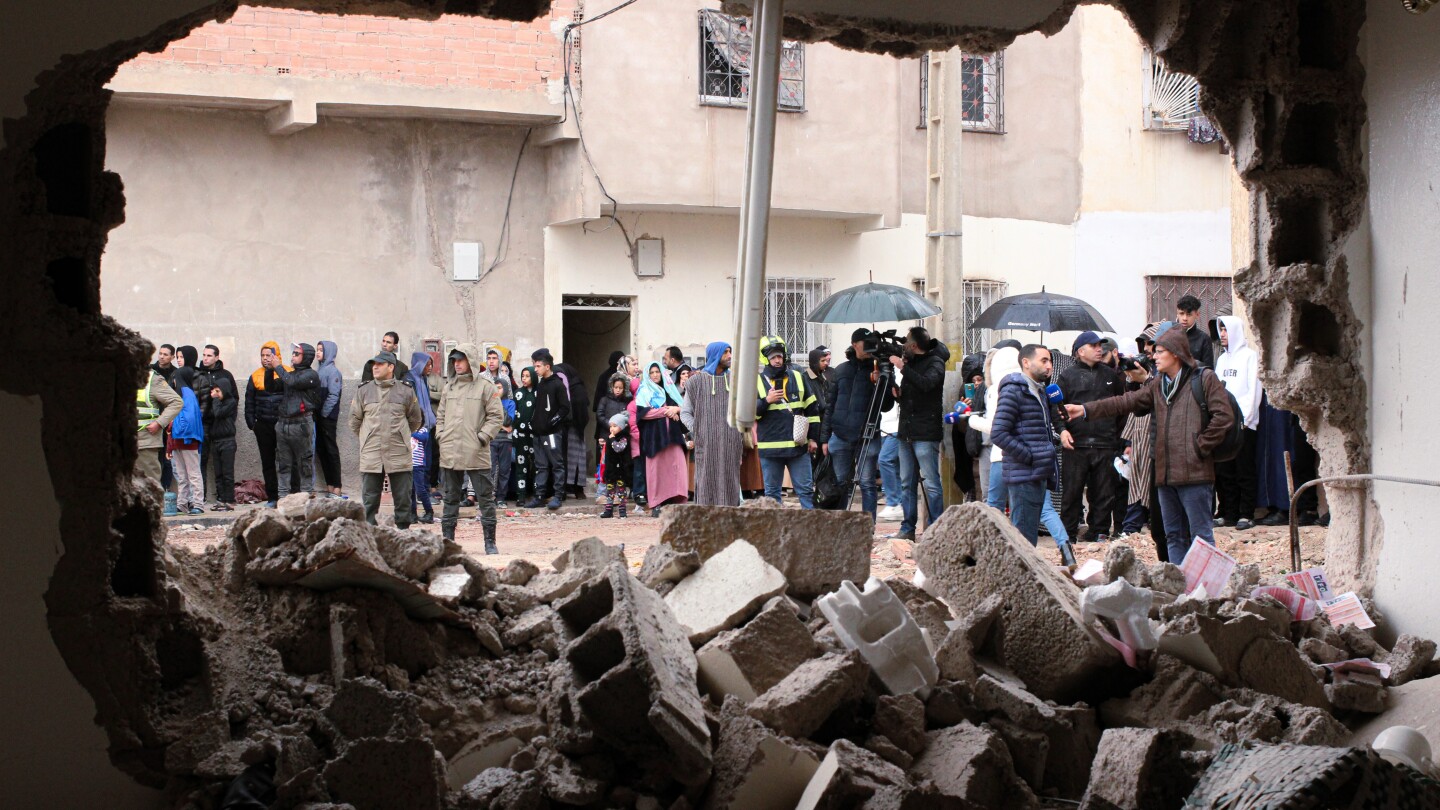
    FEZ, Morocco — A devastating structural failure occurred overnight in the historic city of Fez when two adjacent four-story buildings completely collapsed, resulting in 22 fatalities and 16 injuries according to official reports. The tragedy marks the second major building collapse in this Moroccan urban center within a single year, raising urgent questions about urban infrastructure safety.

    The collapsed residential structures, constructed in 2006 under Morocco’s ‘City Without Slums’ initiative, housed eight families according to the state news agency MAP. Emergency responders evacuated the surrounding neighborhood while continuing search and rescue operations amid uncertainty about how many residents might remain trapped beneath the rubble.

    While initial reports indicate the buildings were originally constructed to code, local news outlet Hespress revealed that unauthorized additional floors had been added to both structures. This modification potentially contributed to the catastrophic failure, though authorities have opened a formal investigation to determine the exact cause.

    The incident highlights the persistent challenge of infrastructure inequality in Morocco’s rapidly growing urban centers. Fez, while renowned for its medieval walled city and selection as a host city for both the upcoming Africa Cup of Nations and 2030 FIFA World Cup, simultaneously struggles with aging buildings and inadequate enforcement of construction regulations.

    This tragedy echoes a similar collapse in May that killed 10 people in Fez, despite that building having been marked for evacuation. The recurring nature of such incidents has intensified public criticism of infrastructure investment priorities, particularly after nationwide protests earlier this year highlighted concerns about stadium investments taking precedence over essential services including healthcare, education, and building safety.

  • ‘Trend’ voted word of 2025 across Taiwan Strait

    ‘Trend’ voted word of 2025 across Taiwan Strait

    The Chinese character ‘shi’ (势), embodying concepts of ‘trend’ and ‘momentum,’ has been overwhelmingly selected as the 2025 Word of the Year in a significant cross-strait cultural initiative. Announced Tuesday in Taipei, the results revealed that ‘shi’ captured 1.28 million votes out of a substantial total of 15.82 million votes cast in the extensive online poll.

    The annual event, jointly organized by Taiwan’s Want Want China Times Media Group and mainland China’s Xiamen Daily, presented 36 candidate characters during its November 24 to December 7 voting period. These candidates were initially nominated by various celebrities and netizens from both sides of the Taiwan Strait, reflecting diverse perspectives from Chinese communities.

    Professor Xie Qingguo from Xiamen University’s School of Journalism and Communication, who originally proposed the character, offered profound insight into its selection. In a ceremonial video message, he described ‘shi’ as representing ‘a formless yet irresistible force,’ particularly emphasizing that ‘promoting peaceful cross-Strait development constitutes an unstoppable trend and the prevailing momentum.’

    Adding cultural context, Professor Huang Kuang-nan of Taiwan University of Arts highlighted the character’s significance in cross-strait relations. He noted that ‘shi’ reflects the deep emotional connections between people across the Strait while expressing hope for ‘further cultivating the shared momentum and vitality of our nation.’

    This linguistic and cultural exchange event has maintained its annual tradition since 2008, serving as a barometer of cross-strait sentiments. The previous year’s selection of ‘zheng’ (争), meaning both ‘conflict’ and ‘competition,’ provides striking contrast to this year’s focus on unity and forward movement through the concept of ‘trend.’

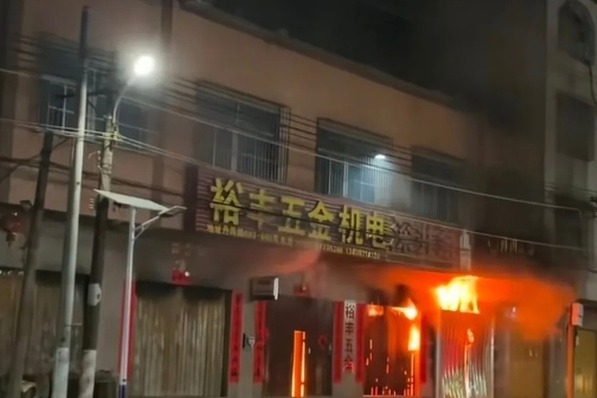
  • Deadly fire engulfs building killing 8, injuring 4 in Shantou

    Deadly fire engulfs building killing 8, injuring 4 in Shantou

    A devastating fire tore through a residential building in Shantou, Guangdong province on Tuesday evening, resulting in eight fatalities and four injuries. The tragedy unfolded in the Chaonan district along Danfeng Road, where flames engulfed a four-story structure spanning approximately 150 square meters.

    According to local fire and rescue authorities, the blaze ignited at 9:20 PM and was successfully contained by 10:03 PM through coordinated emergency response efforts. First responders promptly transported the injured individuals to nearby medical facilities for urgent treatment, though the condition of the survivors remains undisclosed.

    The incident has triggered an immediate investigation by fire safety experts and local authorities to determine the exact cause of the deadly conflagration. Preliminary assessments suggest the rapid spread of fire through the residential building posed significant challenges for both occupants and rescue teams.

    This tragedy highlights ongoing concerns about fire safety protocols in urban residential structures across China’s rapidly developing cities. The Shantou municipal government has announced plans for enhanced fire safety inspections throughout the district while expressing condolences to the victims’ families.

    The comprehensive investigation will examine building compliance with fire codes, emergency exit accessibility, and potential electrical or structural factors that may have contributed to the disaster’s severity and rapid escalation.

  • Crackdown urged on graft that affects ordinary people

    Crackdown urged on graft that affects ordinary people

    China’s Supreme People’s Court and Supreme People’s Procuratorate have launched a renewed offensive against corruption that directly impacts citizens’ daily lives, emphasizing the need to eliminate systemic conditions that enable graft at its source. The judicial authorities have spotlighted five emblematic cases demonstrating how corruption infiltrates essential public service sectors including housing, elderly care, medical insurance, school nutrition programs, and disability rights protection.

    Unlike high-profile ‘tiger’ corruption cases involving senior officials, these cases target ‘flies’—lower-ranking functionaries whose proximity to ordinary citizens enables them to cause disproportionate harm. The initiative underscores how positions of modest authority can be exploited to undermine public trust and divert resources from critical social programs.

    One particularly egregious case involved a former housing official in Hunan province sentenced to 11.5 years imprisonment for embezzling nearly 10 million yuan ($1.41 million) from property maintenance funds over a decade-long scheme. The official, surnamed Zhou, manipulated his oversight of county maintenance funds by directing payments through personal QR codes, issuing fraudulent receipts, and withholding legitimate payments—affecting approximately 3,000 households and nearly 10,000 residents. Zhou additionally misappropriated 1.72 million yuan to settle personal loans, with investigations revealing he orchestrated a sham divorce to conceal assets and evade recovery of illicit gains.

    Beyond individual punishment, judicial authorities have implemented systemic reforms through targeted rectification recommendations to address management loopholes in fund supervision, property service systems, and oversight mechanisms. The Supreme People’s Court emphasized that housing represents a fundamental livelihood issue, with property maintenance funds serving as crucial financial safeguards for homeowners. Their illegal misappropriation constitutes a severe violation of citizens’ legitimate rights and interests.

    The judicial authorities are promoting the strategic use of judicial recommendations to identify regulatory blind spots and supervision gaps across government agencies and industries, signaling a comprehensive approach to corruption prevention that combines punitive measures with institutional reform.

  • HK fire death toll rises to 160, six still missing

    HK fire death toll rises to 160, six still missing

    Hong Kong authorities confirmed Tuesday that the death toll from November’s catastrophic Tai Po residential fire has reached 160 victims following advanced DNA analysis of recovered remains. The devastating blaze at Wang Fuk Court continues to haunt the community as six individuals remain unaccounted for nearly two weeks after the tragedy.

    Police Commissioner Joe Chow Yat-ming disclosed during an afternoon press briefing that forensic experts had positively identified previously discovered remains as belonging to two additional victims—an elderly female resident and a domestic worker. Both victims’ families, currently residing in Hong Kong, provided genetic material that enabled the conclusive identifications.

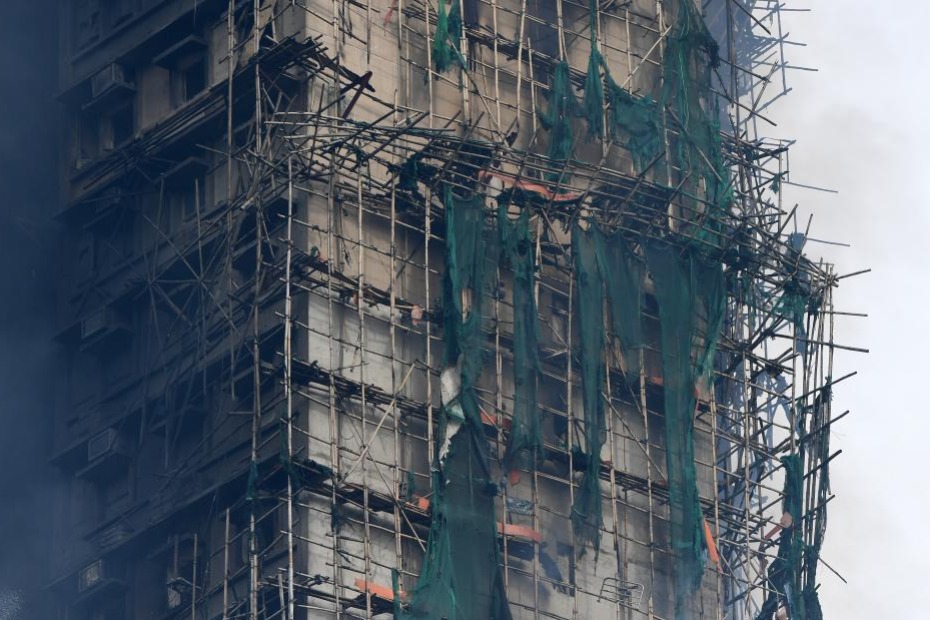
    The painstaking recovery operation has entered a new phase as authorities collaborate with the Housing Department to remove all compromised bamboo scaffolding that collapsed during the inferno. Commissioner Chow noted that during this delicate process, workers discovered skeletal fragments requiring further laboratory examination to determine their origin—whether human, animal, or previously cataloged remains.

    Meanwhile, the Fire Services Department completed draining water from all seven affected structures, revealing no additional human remains. Chief Superintendent Tsang Shuk-yin, overseeing casualty investigations, provided updated statistics: twelve individuals initially reported missing have been confirmed safe, four had deceased prior to the fire incident, and six were determined to be non-residents of the complex.

    The forensic identification effort has intensified with police collecting DNA samples from 162 family members of potential victims. The Government Laboratory and forensic departments have prioritized these analyses to accelerate identifications and provide closure to grieving families.

    In a disturbing development, authorities revealed they have uncovered 21 fraud cases exploiting the tragedy, resulting in two arrests. Additionally, building safety regulators are investigating six suspected cases involving falsified documentation for safety scaffolding nets used during building renovations. The Buildings Department is expected to announce stringent new regulations within days requiring on-site sampling and certification of all scaffold netting before installation.

    Multiple residential estates across Hong Kong—including Baguio Villa in Pok Fu Lam, Fung Wah Estate in Chai Wan, and several others—are under investigation for potential safety violations. The Housing Bureau’s Independent Checking Unit continues extracting concrete core samples from the seven fire-damaged buildings in Wang Fuk Court to assess structural integrity.

    As of Tuesday evening, compliance with the Buildings Department’s safety order has resulted in the removal of scaffold nets from 230 private buildings, with two cases completed by government contractors. Concurrently, the Labour Department has intensified inspections of fire protection facilities and emergency preparedness at maintenance sites with extensive scaffolding, issuing 189 written warnings, 101 improvement notices, and initiating 25 prosecutions following inspections of 371 construction sites.

  • 8 dead in residential building fire in South China

    8 dead in residential building fire in South China

    A devastating residential fire in Shantou City, Guangdong province has resulted in eight fatalities and four injuries, according to local authorities. The blaze erupted at approximately 9:21 PM on Tuesday evening in Chaonan District and was successfully contained by firefighters around 10:00 PM.

    Emergency responders immediately transported all injured individuals to nearby medical facilities for treatment. Preliminary investigations indicate the affected structure was a four-story self-built concrete building with approximately 150 square meters of area damaged by the fire.

    The Chaonan District fire department confirmed the casualty figures in an early Wednesday statement while noting that the specific cause of the incident remains under active investigation. The tragedy has prompted local officials to establish an independent judge-chaired commission to conduct a comprehensive fire investigation.

    This incident represents one of the deadliest residential fires in the region in recent memory, raising concerns about fire safety standards in self-built structures throughout southern China. The community has begun mourning the victims while authorities work to determine the factors that contributed to the catastrophic outcome.

  • Courts target child abuse done under guise of ‘strict parenting’

    Courts target child abuse done under guise of ‘strict parenting’

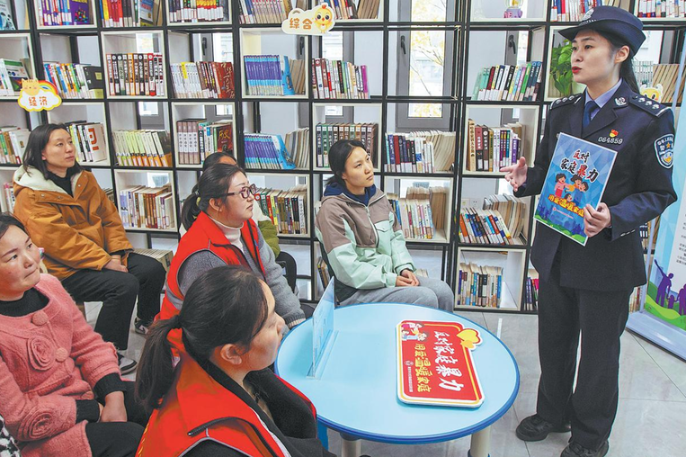
    China’s Supreme People’s Court has issued groundbreaking judicial guidance redefining physical discipline of children as potential domestic violence, marking a significant shift in the country’s approach to child protection. The national top court recently highlighted eight landmark cases demonstrating its zero-tolerance position toward family violence, particularly emphasizing protection for minors.

    Legal experts confirm that Chinese courts will now prioritize children’s wellbeing in case deliberations, with parents or guardians who employ violent disciplinary methods facing potential domestic violence charges. The judiciary has further clarified that courts will support custody modifications when violence causes minors to develop distorted understanding of family relationships, psychological issues, or imitative behavioral patterns.

    Tong Lihua, director of the Beijing Children’s Legal Aid and Research Center, emphasized that ‘parents do not possess any extralegal privilege to commit domestic violence against their children.’ He urged judges to evaluate whether severe abuse was intentional, considering methodology and frequency, while fully utilizing legal measures to penalize perpetrators and ensure societal safety.

    This judicial development challenges persistent traditional beliefs that physical discipline produces obedient children, despite research demonstrating such methods frequently cause psychological trauma, behavioral issues, and physical injuries. The guidance represents a substantial advancement in China’s ongoing efforts to combat domestic violence and protect children’s rights within family environments.

  • ‘It’s insulting they think we can’t handle it’: The Australian teens banned from social media

    ‘It’s insulting they think we can’t handle it’: The Australian teens banned from social media

    Australia’s groundbreaking social media prohibition for minors under 16 has taken effect, creating profound implications for teenage connectivity across the vast continent. The controversial legislation, implemented after year-long deliberations, represents one of the world’s most restrictive digital age barriers.

    In remote Queensland, 15-year-old Breanna Easton exemplifies the practical consequences of this policy shift. While mustering cattle on her family’s sprawling outback station, she previously maintained digital connections through Snapchat and TikTok despite geographical isolation. “Taking away our socials is just taking away how we talk to each other,” she laments, highlighting how visual communication platforms provided vital social lifelines when physical distances exceeded 100 kilometers between friends.

    The legislative measure has ignited polarized responses nationwide. Proponents, including educators and child safety advocates, argue that unchecked social media exposure subjects young people to unregulated pressures, cyberbullying, and predatory behavior. Iris Nastasi, principal at Rosebank College in Sydney, expresses strong support: “We should preserve the innocence that comes through childhood” rather than exposing children to overnight digital risks that damage real-world relationships.

    Conversely, critics question both the technological enforcement mechanisms and the policy’s potential to drive youth toward darker digital corners. Parental autonomy concerns emerge prominently, with Megan Easton (Breanna’s mother) noting that “government overstepping” undermines family-based digital education strategies. She emphasizes the importance of guided social media exposure during early adolescence, allowing supervised mistakes and corrective learning.

    The political impetus for this radical intervention came unexpectedly. South Australian Premier Peter Malinauskas pursued state-level legislation after his wife’s reaction to Jonathan Haidt’s book “The Anxious Generation,” which details smartphones’ neurological impacts on developing brains. The subsequent federal ban progressed with remarkable speed from conceptualization to implementation within eight months.

    However, significant concerns emerge regarding the ban’s impact on vulnerable communities. LGBTQ+ youth report 96% dependency on social platforms for connection and support according to Minus18 surveys. Autistic advocates similarly note that online spaces provide alternative socialization formats inaccessible in physical environments. For 13-year-old Sadie Angus, recently expelled from Instagram, anonymous sharing provided crucial emotional safety unavailable in her offline world.

    Tragic narratives underscore the policy’s moral foundation. Campaigner Emma Mason, whose 15-year-old daughter Tilly died by suicide after intense cyberbullying and image-based abuse, maintains that “agents of harm that are unregulated” necessitated government intervention. While acknowledging current teenagers might not be “clear winners,” she believes younger children will benefit from protected digital development.

    The Australian experiment continues amid pending High Court challenges, potential tech company resistance, and international scrutiny. As the nation navigates this unprecedented digital boundary, it balances protectionism against developmental autonomy, creating global precedent for how societies might reshape youth engagement with evolving technologies.

  • Kids locked out of social media apps after Australia’s world-first ban

    Kids locked out of social media apps after Australia’s world-first ban

    Australia has implemented a groundbreaking prohibition on social media access for minors under 16, becoming the first nation to enforce such comprehensive restrictions without parental consent exemptions. The landmark legislation, which took effect this week, requires major platforms including Meta, TikTok and YouTube to implement “reasonable steps” in preventing underage account creation and usage.

    Prime Minister Anthony Albanese hailed the policy as a transformative measure that could set global precedents for child protection online. “This is Australia showing enough is enough,” he declared during a press conference surrounded by advocates. “I believe this has the power to change lives around the world.”

    The regulatory framework empowers Australia’s eSafety Commissioner to monitor compliance across ten designated platforms, with corporations facing penalties up to A$49.5 million for serious violations. Julie Inman Grant, the online safety regulator, confirmed compliance checks would commence immediately, with preliminary assessments to be published before Christmas.

    Supporters argue the ban addresses critical concerns about harmful content algorithms and psychological impacts on developing brains. Twelve-year-old activist Florence ‘Flossie’ Brodribb articulated this perspective: “Our brains are going through one of the biggest rewiring periods of our lives… Social media is designed to take advantage of that.”

    However, significant opposition emerges from both youth and experts questioning the ban’s practicality and potential unintended consequences. Teenagers report already circumventing restrictions, while critics warn of isolation risks for vulnerable communities including LGBTQ+ and rural youth. Fifteen-year-old Breanna highlighted connectivity concerns: “When our Snapchat is taken away, so is our communication.”

    Technology companies have resisted the measures, emphasizing enhanced parental controls as preferable solutions. Meanwhile, international observers from Denmark to Brazil are monitoring Australia’s experiment as potential test case for their own regulatory considerations.

    The government acknowledges implementation challenges while framing the policy as part of a longer-term strategy. “Success is the fact that we’re having this discussion,” Albanese noted, recognizing the ban won’t be perfect but represents a necessary starting point for digital safety reform.

  • Two teenagers went to seek gold. They were buried alive in a mine collapse

    Two teenagers went to seek gold. They were buried alive in a mine collapse

    A profound sense of grief permeates the village of Nyimbadu in Sierra Leone’s Eastern Province, where two teenage boys—16-year-old Mohamed Bangura and 17-year-old Yayah Jenneh—were laid to rest after perishing in a collapsed gold mine. The makeshift excavation pit they were digging crumbled upon them, cutting short their lives in a tragic incident that underscores a growing humanitarian crisis.

    This marks the third fatal mining accident in the region within four years, claiming at least five young lives. The phenomenon reflects a disturbing trend where increasing numbers of children are abandoning education to engage in perilous artisanal mining operations. As diamond reserves diminish throughout Eastern Province, informal gold mining has expanded dramatically, creating hazardous pits reaching depths of 4 meters (13 feet) with minimal structural support.

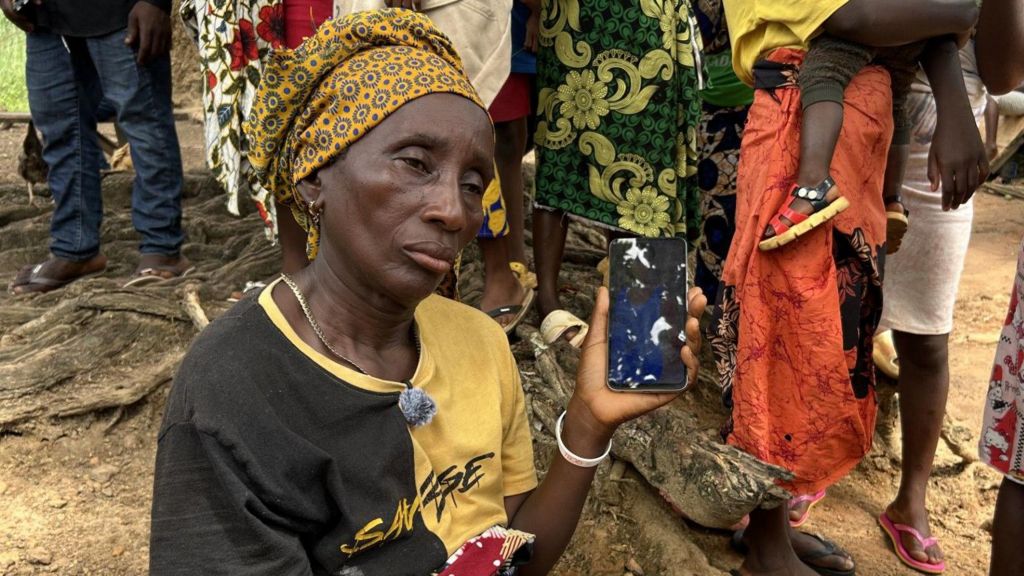
    Namina Jenneh, Yayah’s widowed mother, now faces the impossible task of providing for her five remaining children alone. Though she herself worked in the mines and introduced her son to the practice, she never anticipated his final journey to the fatal site. “He didn’t tell me he was going to that site—if I had known I would have stopped him,” she lamented, scrolling through photographs of her bright-eyed son on her damaged mobile phone.

    The economic desperation fueling this crisis is palpable. Most families in Nyimbadu survive through small-scale farming and petty trading, with few alternative income sources. Seventeen-year-old Komba Sesay, who dreams of becoming a lawyer, now spends his days sifting river sediment for gold to afford his high school examinations. His typical weekly earnings of $3.50 fall significantly below Sierra Leone’s minimum wage, yet rare discoveries yielding $35 keep hope alive amidst the danger.

    The educational system suffers doubly as teachers likewise abandon classrooms for mining sites, their government salaries proving insufficient compared to potential mining windfalls. Roosevelt Bundo, headteacher at Gbogboafeh Aladura Junior Secondary School, confirms this troubling exodus affects both students and educators.

    While Information Minister Chernor Bah emphasizes the government’s commitment to education—citing 8.9% of GDP allocated to educational initiatives including teacher support and school-feeding programs—implementation struggles against harsh economic realities. Charities and activists work to extract children from mines and reintegrate them into schools, but without viable economic alternatives, the gravitational pull of potential mining income remains overwhelming.

    As mining camps evolve into full-fledged towns, the human cost continues to mount. Local child protection activist Sahr Ansumana summarizes the desperate plea of communities: “We need help. Not prayers. Not promises. Help.”