分类: society

  • Two sides of Luoyang: From tractors to hanfu dreams

    Two sides of Luoyang: From tractors to hanfu dreams

    The ancient city of Luoyang in Henan province reveals a fascinating dichotomy of modern industrial legacy and cultural renaissance. China Daily’s Xia Ji, accompanied by Italian friend Martina, recently embarked on an extraordinary journey showcasing the city’s contrasting identities within a single day.

    The exploration began with an unexpected agricultural experience as the visitors operated tractors, symbolizing Luoyang’s industrial significance in China’s manufacturing landscape. This hands-on encounter demonstrated the city’s contribution to modern agricultural machinery production and technological advancement.

    Transitioning dramatically from industrial to historical, the travelers then immersed themselves in Luoyang’s rich cultural heritage by donning traditional hanfu garments. Wearing these elegant historical costumes, they wandered through the city’s ancient streets, experiencing what life might have been like during Luoyang’s golden era as the ‘divine capital’ over a millennium ago.

    This remarkable day-trip illustrates how Chinese cities like Luoyang successfully preserve and celebrate their historical legacy while simultaneously embracing modern development. The hanfu movement, particularly strong in historically significant cities, represents a growing cultural phenomenon among Chinese youth who seek to reconnect with their traditional heritage through fashion and experiential tourism.

    The seamless transition between these two worlds demonstrates urban China’s unique ability to harmonize industrial progress with cultural preservation, offering both residents and visitors multifaceted experiences that span centuries of development within a single city’s boundaries.

  • Prison phone call recordings raise questions over ex-Abercrombie boss’ fitness for trial

    Prison phone call recordings raise questions over ex-Abercrombie boss’ fitness for trial

    A high-stakes legal drama unfolds in a New York federal court as former Abercrombie & Fitch CEO Mike Jeffries fights to prove mental incompetency ahead of his sex trafficking trial. The 81-year-old fashion executive, charged alongside his British partner Matthew Smith and alleged middleman James Jacobson, faces life imprisonment if convicted of operating a global sex trafficking operation.

    The courtroom has become a battleground for medical experts offering diametrically opposed assessments of Jeffries’ mental capacity. Defense experts Dr. Jacqueline Valdes, Dr. Alexander Bardey, and Dr. Miranda Rosenberg testified that Jeffries suffers from dementia, Alzheimer’s disease, and residual effects of a traumatic brain injury sustained in a 2018 fall in South Africa. They presented evidence of cognitive decline dating to 2013, with MRI scans showing mild brain atrophy.

    Prosecutors counter with prison medical experts Dr. Tracy O’Connor Pennuto and Dr. Cassondra Morris, who after four months of evaluation at the Federal Medical Center in Butner, declared Jeffries competent for trial. They argue his cognitive abilities remain superior to 95% of patients they assess and attribute improved test scores to alcohol abstinence and better medication management.

    The case took a dramatic turn with the introduction of 109 prison phone calls totaling over 22 hours of recordings. In these conversations, Jeffries is heard telling Smith ‘we’re screwed’ if found competent, explicitly stating ‘you better find me incompetent’ to doctors, and discussing defense strategies including witness discreditation techniques.

    Despite defense claims of severe cognitive impairment, recordings reveal Jeffries discussing sophisticated literary content, analyzing LGBTQ+ representation in media, and emotionally recounting his 22-year career at Abercrombie & Fitch, including detailed memories of store openings. Prosecutors highlighted the contradiction between remembering professional achievements while allegedly forgetting the ’50 to 60 wild orgies’ central to the charges.

    Judge Nusrat J. Choudhury must reconcile these conflicting medical opinions to determine if Jeffries understands the charges against him and can assist in his own defense. The decision, expected in May, will determine whether the October trial proceeds against all three defendants or continues without Jeffries if ruled incompetent.

    The case originated from a 2023 BBC investigation that exposed an alleged sophisticated operation recruiting young men for sex events worldwide during Jeffries’ tenure as CEO. Despite the serious charges, Abercrombie & Fitch remains financially responsible for Jeffries’ defense under an indemnification agreement signed upon his 2014 departure, with legal costs anticipated to reach millions.

  • 1 dead, 25 injured in building fire in Taiyuan

    1 dead, 25 injured in building fire in Taiyuan

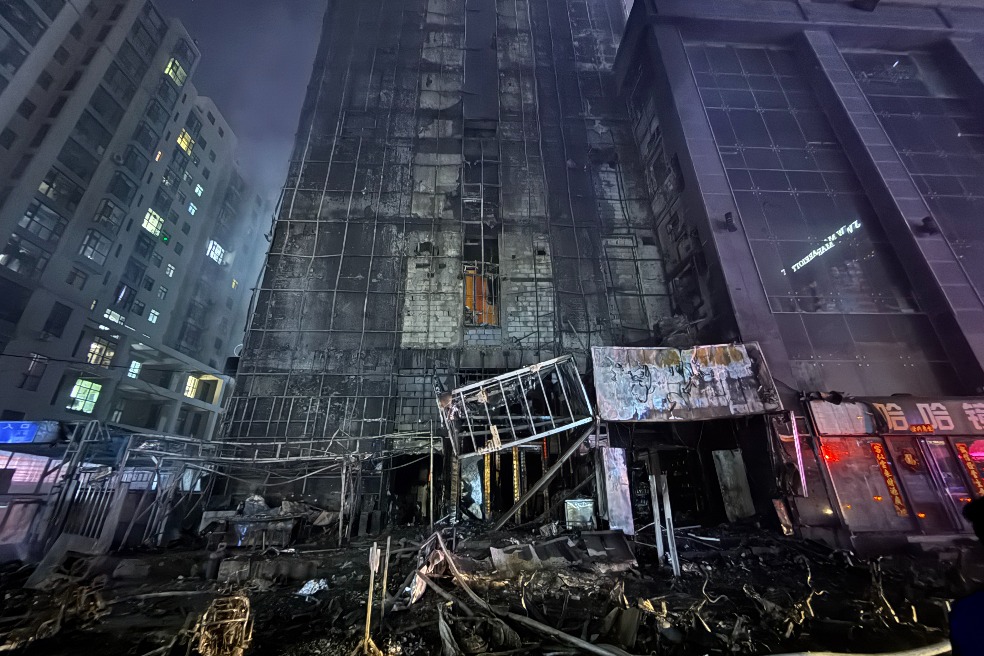
    A devastating fire erupted on the exterior facade of a commercial-residential building along Qinxian Street in Taiyuan, Shanxi province, on the evening of March 28, resulting in one fatality and 25 injuries. According to official reports from Xinhua News Agency, emergency response teams including firefighters, police, and medical personnel were immediately dispatched to the scene following the outbreak of the blaze.

    The inferno, which has since been fully extinguished, caused significant damage to the building’s external structure. Among the injured, seven individuals sustained severe burns and trauma, requiring immediate critical care. All casualties have been transported to nearby medical facilities where they are receiving comprehensive treatment.

    Rescue operations continued through the night as emergency crews worked to secure the building and ensure no additional individuals remained trapped within the affected structure. The rapid response by local authorities helped prevent further casualties despite the challenging nature of the facade fire, which can spread rapidly across building exteriors.

    An investigation into the cause of the fire has been initiated, with preliminary assessments focusing on potential electrical faults or external ignition sources. The incident has raised concerns about building safety standards and fire prevention measures in urban structures, particularly regarding exterior insulation and facade materials that may contribute to fire spread.

    The municipal government of Taiyuan has announced it will conduct a comprehensive review of fire safety protocols for high-rise buildings throughout the city to prevent similar tragedies in the future.

  • How deepfake porn scandal surrounding TV star rocked Germany

    How deepfake porn scandal surrounding TV star rocked Germany

    A high-profile scandal involving allegations of non-consensual deepfake pornography has captivated Germany, triggering widespread protests and prompting calls for urgent legal reforms. Television personality Collien Fernandes, 44, has become the focal point of this national conversation after publicly accusing her ex-husband, Christian Ulmen, of distributing manipulated pornographic content featuring her likeness.

    The controversy erupted when Fernandes detailed her allegations in Der Spiegel, claiming Ulmen confessed to disseminating the fabricated sexual images during Christmas 2024. The emotional impact was profound, with Fernandes describing the revelation as ‘like receiving news of a death.’ Her subsequent public appearances, including a Hamburg rally where she appeared in a bulletproof vest citing death threats, have galvanized public opinion.

    Ulmen, through his legal representatives Christian Schertz and Simon Bergmann, has categorically denied all allegations, stating he never ‘produced and/or distributed deepfake videos of Ms Fernandes or any other individuals.’ His legal team has initiated proceedings against Der Spiegel, asserting that reported details are ‘demonstrably incomplete and incorrect.’

    The case has exposed significant gaps in German legislation regarding digital sexual violence. Currently, German law only addresses the dissemination of such materials when they violate personal image rights, leaving creation largely unregulated. In response, Federal Justice Minister Stefanie Hubig has announced draft legislation that would explicitly criminalize both production and distribution of pornographic deepfakes, with proposed penalties of up to two years imprisonment.

    A coalition of 250 prominent women from politics, business, and culture has issued ten demands for legal reform, including clear criminalization of non-consensual sexualized deepfakes. The group includes Labour Minister Bärbel Bas, rapper Ikkimel, and climate activist Luisa Neubauer.

    The scandal has also entered the political arena, with Chancellor Friedrich Merz facing criticism for his response to questions about violence against women. His remarks attributing a ‘considerable portion’ of violence to immigrant groups drew mixed reactions, applauded by conservative and far-right lawmakers but criticized by others as misjudged and dismissive of structural issues.

    Meanwhile, police statistics reveal that reports of violence against women reached record levels in Germany during 2024, adding urgency to the ongoing debate about legal protections in both physical and digital spaces.

  • India restoring a centuries-old royal kitchen that never stopped serving food

    India restoring a centuries-old royal kitchen that never stopped serving food

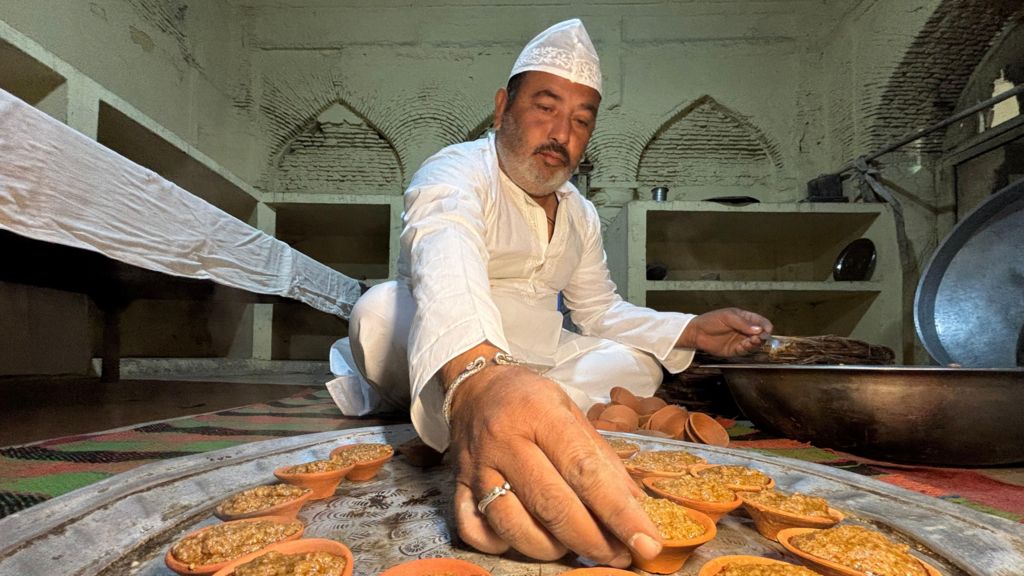
    In the heart of Lucknow, Uttar Pradesh, a remarkable preservation project is breathing new life into a nearly two-century-old royal kitchen that continues to serve thousands despite its historical significance. Originally constructed in 1837 by Muhammad Ali Shah, the last ruler of the Awadh kingdom, this culinary landmark represents an enduring legacy of communal generosity that has outlived the monarchy itself.

    The kitchen, nestled within the Chota Imambara complex, stands as a testament to architectural ingenuity and cultural continuity. What makes this restoration extraordinary is the Archaeological Survey of India’s commitment to historical accuracy, employing traditional Mughal-era construction methods. Artisans are recreating authentic lime-based mortar—soaked for a month and mixed with wood apple pulp, black gram, natural gum (gond), jaggery, and red brick dust—while using period-appropriate ‘lakhauri’ bricks to maintain structural authenticity.

    Beyond architectural preservation, the kitchen maintains its original purpose of serving meals to the community. During Ramadan and Muharram, it feeds approximately 700 people daily through a coupon system, with meals distributed to 16 local mosques. The menus, meticulously detailed in Muhammad Ali Shah’s will nearly two centuries ago, continue to dictate portion sizes and dish specifications—from meat curries and kebabs during Ramadan to vegetarian offerings during Muharram’s initial mourning days.

    The restoration, scheduled for completion by March, addresses concerning structural decay while preserving intricate wall carvings and iconic brickwork. Funded through a unique historical endowment—originally 3.6 million rupees given to the East India Company in 1839 with the stipulation that interest would maintain Awadh monuments—the kitchen now operates under the Hussainabad Trust using the same financial mechanism.

    For descendants of the Awadh royalty and longtime community members like 80-year-old Syed Haider Raza, the kitchen represents living history. ‘The spirit of the place is still the same,’ Raza observes, ‘It feels as if the food is still being sent by Muhammad Ali Shah.’ This project demonstrates how functional preservation can maintain both physical structures and the cultural traditions they embody.

  • Travel blogger: Shopping in China is more than just buying

    Travel blogger: Shopping in China is more than just buying

    Australian travel influencer Jack Torr has unveiled a refreshing perspective on China’s retail landscape, positioning shopping as far more than mere commercial transactions. The content creator emphasizes that China’s markets offer profound cultural immersion opportunities for international visitors willing to engage authentically with local experiences.

    Torr identifies three distinctive elements that transform Chinese shopping into memorable encounters: the dynamic art of price negotiation, meaningful interactions with store proprietors, and the excitement of uncovering unique items. These components collectively create what he describes as a multidimensional experience that transcends conventional retail therapy.

    ‘The genuine magic occurs when travelers approach these interactions with open-minded curiosity,’ Torr explains. ‘The process becomes less about acquisition and more about connection – you’re not just purchasing products, you’re participating in cultural exchange.’

    His observations highlight a growing trend among international travelers seeking authentic engagement beyond typical tourist activities. The blogger’s account suggests China’s retail environments function as informal cultural classrooms where visitors can develop deeper understanding of local customs and social dynamics.

    This perspective emerges as China continues to enhance its tourism infrastructure and international accessibility. Torr’s experiences demonstrate how everyday activities like shopping can bridge cultural divides when approached with respect and genuine interest in local practices.

    The narrative challenges conventional Western perceptions of Chinese commerce, presenting it as a vibrant ecosystem of human interaction rather than purely transactional space. Torr concludes that visitors who embrace this approach depart with not merely souvenirs, but enriched perspectives and memorable human connections.

  • Blogger: Walk, see, feel China to understand its story

    Blogger: Walk, see, feel China to understand its story

    Anayat Ali, an Indian travel blogger, has transformed from a visitor who couldn’t decipher local menus to an adventurer who has bungee jumped off a 335-meter cliff during his remarkable three-year exploration of China. His extensive travels have revealed a nation where ancient traditions seamlessly integrate with technological advancement, creating a unique social fabric where historical legacy isn’t discarded but serves as foundation for progressive development.

    Ali’s immersive journey across China’s diverse regions has provided him with profound insights that challenge superficial perceptions. He emphasizes that authentic understanding of China requires firsthand experience—walking its streets, witnessing its transformations, and engaging with its people with genuine openness. His account reveals a country of surprising contrasts where centuries-old customs coexist with cutting-edge innovation.

    This perspective comes as China continues to attract international visitors seeking to comprehend its complex narrative. The blogger’s experience aligns with a growing trend of foreign content creators discovering China’s multifaceted reality beyond mainstream media portrayals. His adventures demonstrate how personal exploration can bridge cultural divides and foster deeper cross-cultural appreciation.

    Ali’s testimony underscores the importance of experiential learning in international understanding, suggesting that China’s true story emerges not from abstract concepts but from direct engagement with its landscapes, people, and evolving social dynamics.

  • Frosting, sprinkles and layers of fun: Giant cake picnic hits Sydney

    Frosting, sprinkles and layers of fun: Giant cake picnic hits Sydney

    The viral Cake Picnic movement has expanded its sugary reach to Australian shores, with Sydney’s Botanic Gardens serving as the latest backdrop for this international baking phenomenon. Founded by Elisa Sunga, a Google AI specialist and part-time hobby baker, the event has rapidly evolved from a small San Francisco gathering into a global sensation with sold-out events across four continents.

    What began as a simple online invitation two years ago—requesting attendees bring cakes to a casual gathering—has transformed into a major culinary movement. The Sydney edition attracted over 500 participants who displayed more than 1,600 homemade creations under the iconic Harbour Bridge. The non-competitive event requires cakes to meet specific dimensions (minimum 20cm wide and 7.5cm tall) but imposes no restrictions on creativity.

    The diversity of offerings reflected both international influences and local Australian themes. From a life-sized swan sculpture cake to Filipino-inspired ube creations and Swedish princess cakes, the display showcased remarkable culinary artistry. Notably, the event featured both sweet and savory innovations, including a focaccia cake with pesto and feta icing that particularly delighted founder Sunga.

    Participants ranged from professional bakers to complete novices, with many working through the night to prepare their contributions. Hilary Lindgren, 54, who attended with her daughter, captured the prevailing sentiment: ‘There’s just so many negative things happening in the world that it’s nice to do something like this.’

    Food technology expert Associate Professor Lindsay Kelley notes the event’s appeal lies in its design for sharing: ‘Cakes are designed to be sliced and shared. When we see a whole cake at parties, we understand that everyone gets a slice and shares that experience.’

    For Sunga, who balances her tech career with baking passions, the events represent a tangible counterpoint to digital life. ‘AI every day can do an increasingly terrifying amount of things,’ she observes, ‘but to this day it can’t bake a cake—yet. Cake Picnic forces people to not only come outside but spend a day on the grass.’

    The movement continues to expand, with future events planned across multiple international cities, demonstrating that in an increasingly digital world, the simple joy of sharing homemade cake maintains powerful appeal.

  • New generation of international visitors follows in Edgar Snow’s footsteps

    New generation of international visitors follows in Edgar Snow’s footsteps

    ZHENGZHOU – More than six decades after American journalist Edgar Snow documented China’s transformative era, a new wave of international visitors is discovering the same fundamental truth he championed: genuine understanding of China emerges only through firsthand experience.

    The revelation became the central theme at the ‘Telling Story Well: From Empathetic Communication to Cultural Identity’ forum, held March 28th in Zhengzhou, Henan province, as part of the 2026 China Internet Media Forum. The gathering brought together over 200 participants—including content creators, academics, business leaders, and descendants of Snow himself—to explore the power of immersive cultural exchange.

    Edgar Snow’s groundbreaking 1937 work ‘Red Star Over China’ first introduced Western audiences to the Chinese revolution. His subsequent 1960 journey through Henan province captured the essence of a ‘newly born’ People’s Republic, creating a historical benchmark for cross-cultural understanding.

    The forum honored this legacy through field tours retracing Snow’s path through Zhengzhou and Luoyang. Participants shared personal experiences of cultural immersion, unanimously affirming that authentic connection transcends headlines and abstract narratives.

    The event featured compelling cross-cultural performances, including a collaboration between American wushu practitioner Jake Pinnick and Chinese guzheng performer Peng Jingxuan, symbolizing the bridge-building potential of cultural dialogue.

    Contemporary content creators emphasized how digital platforms have revolutionized cultural storytelling, enabling deeper empathetic communication while preserving cultural identity in an increasingly interconnected world. The consensus emerged that Snow’s methodology—prioritizing direct engagement and personal observation—remains as relevant today as it was six decades ago.

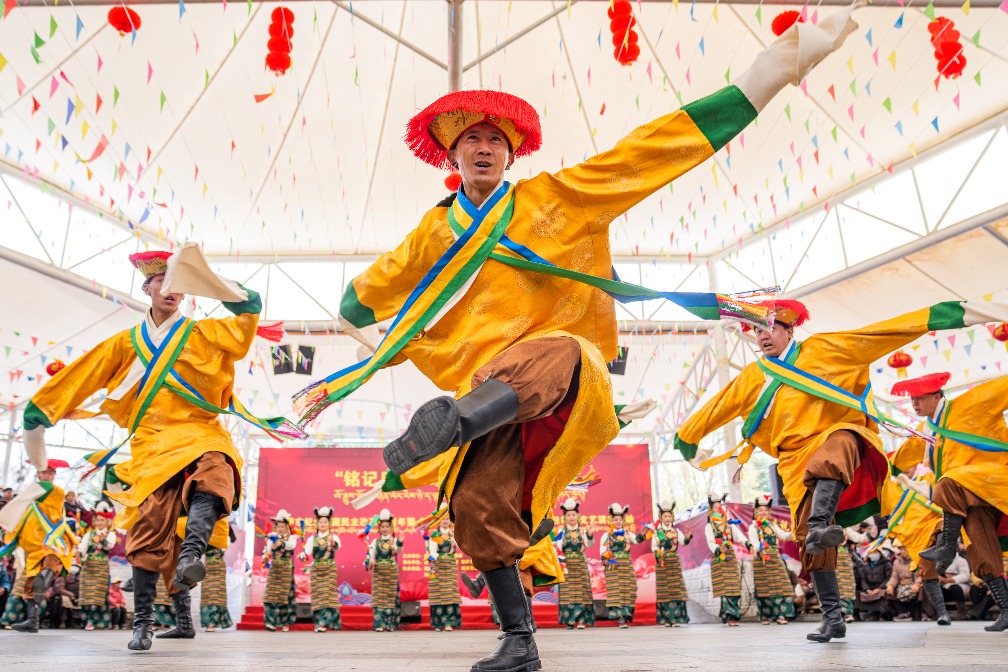
  • Flag-raising ceremony at Potala Palace Square in Lhasa marks 18th Serfs Emancipation Day

    Flag-raising ceremony at Potala Palace Square in Lhasa marks 18th Serfs Emancipation Day

    Lhasa witnessed a solemn flag-raising ceremony at Potala Palace Square on Saturday as the Xizang Autonomous Region commemorated its 18th official Serfs Emancipation Day. The March 28 observance, established in 2009, recognizes the historic democratic reforms implemented in 1959 that abolished feudal serfdom throughout the region.

    The ceremony attracted participants from diverse social backgrounds who gathered to reflect on Xizang’s transformative journey. Regional government chairman Karma Tsetan delivered a televised address on Friday evening, emphasizing the significance of the 67th anniversary of emancipation for approximately one million former serfs.

    Karma Tsetan characterized the 1959 reforms as a watershed moment that eradicated what he described as ‘dark, cruel, barbaric, and backward theocratic feudal serfdom.’ He contrasted contemporary conditions with historical circumstances, noting that current life expectancy has dramatically increased from 35.5 years prior to 1959 to 72.5 years today. The chairman also highlighted that childhood mortality rates have substantially decreased from approximately 40% during the pre-reform era.

    ‘Present-day Xizang residents experience comprehensive human rights protections that stand in stark opposition to the historical reality of serfs living in perpetual fear and dignity deprivation,’ Karma Tsetan stated during his address.

    Seventy-one-year-old Lhasa resident Tsewang, who learned about pre-reform conditions through elder accounts, acknowledged the region’s developmental progress. ‘Although I never personally endured the sufferings of old Xizang,’ he remarked, ‘the continuous improvement of living standards demonstrates how contemporary happiness emerges from hard-won achievements.’

    Various commemorative activities have been organized across Xizang to mark the anniversary, fostering public reflection on the region’s socioeconomic evolution and current prosperity.