分类: society

  • Should the US impose a teen social media ban like the UK?

    Should the US impose a teen social media ban like the UK?

    A new policy restricting minors’ access to social media rolled out in the United Kingdom, which bars all users under the age of 16 from major platforms, has crossed the Atlantic to ignite a fiery public conversation in the United States. As policymakers and parents across the country grapple with growing concerns over underage digital wellness, the British Broadcasting Corporation set out to capture a cross-generational snapshot of American opinion, asking respondents from multiple age groups whether the U.S. should follow the UK’s lead and implement an identical ban.\n\nThe question could not be more timely: for years, public health researchers, child advocacy groups, and lawmakers have raised urgent alarms about the impacts of endless social media scrolling on adolescent mental health, including rising rates of anxiety, body image disorders, and sleep disruption. The UK’s bold policy move represents one of the most aggressive regulatory actions to date to address these harms, making it a natural test case for other nations weighing similar restrictions.\n\nInterviews with American respondents revealed deep divides along both generational and ideological lines. Many parents and older Americans voiced strong support for the ban, arguing that persistent exposure to algorithm-driven social media content poses irreversible damage to developing brains and that regulatory intervention is long overdue. They point to growing bodies of research linking heavy adolescent social media use to poor mental health outcomes as irrefutable evidence that drastic action is needed.\n\nOn the other side of the debate, many younger respondents and digital rights advocates argue that an outright age ban is both unenforceable and an overreach of government authority. Young people themselves note that social media has become a core space for social connection, education, and organizing, particularly for marginalized teens who may not find accepting communities offline. Critics also point out that a ban does not address the root causes of adolescent mental health struggles, and would push underage users onto unregulated, less safe platforms that lack even the basic content protections major social media companies currently offer.\n\nAs the debate unfolds, the UK’s policy will be closely watched in the U.S. and across the globe, offering critical data on how such a ban works in practice and what its actual impacts on adolescent well-being and digital access turn out to be.

  • Church of England apologizes for role in forced adoptions as recent as the mid-1970s

    Church of England apologizes for role in forced adoptions as recent as the mid-1970s

    LONDON – In a landmark moment of accountability for decades of systemic harm, the Church of England has issued a formal public apology this week for its complicity in forced adoption practices that devastated thousands of unmarried mothers and their children across the mid-20th century, with abuses documented as recently as the mid-1970s.

    The apology came from Archbishop of Canterbury Justin Welby? No, it came from **Sarah Mullally**, the first woman to serve in the role of Archbishop and the global spiritual leader of the worldwide Anglican Communion. The statement accompanied the release of an independent investigative report detailing abusive conditions at church-affiliated “mother and baby homes” operating across the United Kingdom between 1949 and 1976.

    The inquiry’s findings paint a grim picture of institutional cruelty rooted in cultural stigma around out-of-wedlock pregnancy. According to the report, many young women and girls confined to these facilities were forced to carry out grueling, unpaid menial labor, framed as a form of moral “correction” for their pregnancy outside marriage. Most shockingly, investigators found that newborns were frequently framed as commodities to meet the high public demand for adoptive infants, with little regard for the biological mother’s wishes.

    In her official apology, Mullally acknowledged the intergenerational harm inflicted by these practices. “We are profoundly sorry for the pain, trauma and stigma experienced — and still carried — by many people because of historical adoption practices in homes affiliated to the Church of England,” she said. “We have heard firsthand the accounts of mothers who were separated from their babies in circumstances where they had very few meaningful choices.”

    Between 1949 and 1976, the report estimates that roughly 185,000 children born to unmarried mothers in England and Wales were placed for adoption. This era was defined by a pervasive “culture of shame, stigma and secrecy” that targeted unwed parents and their children, even as broader societal attitudes toward sex and marriage began to shift gradually across the United Kingdom.

    Investigators also uncovered a gaping disconnect between official church policy and on-the-ground practice. While formal church guidance explicitly stated that unmarried women retained the right to keep their children, and that children had a fundamental right to stay with their biological mothers, facility staff routinely ignored this framework. Staff instead worked hand-in-hand with private adoption agencies to separate infants from their mothers.

    The report notes that even official guidance was tainted by dehumanizing rhetoric: it “sat alongside language which expressed dehumanizing and dismissive attitudes, falling short of what would be expected towards anyone in the church’s care, not least people who were rendered especially vulnerable by their circumstances.”

  • The pressure to have baby boys can harm African mothers’ health

    The pressure to have baby boys can harm African mothers’ health

    In the bustling open-air bars of Kinshasa, the capital of the Democratic Republic of Congo, Prosper Mbumba and his wife Régine Ntumba sit together reflecting on a years-long journey shaped by centuries-old cultural tradition. When the pair married, they planned for just two children — but unyielding custom demanded one of those children be a son. Four daughters later, they continued trying, only breathing a sigh of relief when their first son finally entered the world. For Mbumba, a human rights activist from the Luba ethnic group, raising only daughters once carried the weight of social shame. “In my tribe, in my culture, that was like an insult,” he explained. “I should do my best to get more children, expecting to have a boy.” Today, after welcoming two sons, Mbumba says he finally feels a quiet sense of completion.

    This personal story is far from unique across sub-Saharan Africa, a region grappling with the world’s highest rate of maternal mortality. Home to the planet’s fastest growing population, sub-Saharan Africa accounts for 70% of all global maternal deaths, with roughly 180,000 preventable pregnancy-related deaths recorded across the continent each year, according to World Health Organization data. While global maternal mortality rates have declined gradually over recent decades, multiple interconnected forces keep the death toll stubbornly high in this region — from underfunded healthcare systems and widespread shortages of skilled medical personnel, to limited access to contraception, and deep-seated cultural pressure that forces women into repeated, dangerous pregnancies in pursuit of male heirs.

    Across much of sub-Saharan Africa, entrenched social norms frame sons as the only acceptable heirs to preserve clan lineage and family legacy, since daughters typically join their husband’s clan after marriage. This belief is so deeply woven into the social fabric that many women themselves internalize it, accepting repeated risky pregnancies as an unavoidable part of married life. Congo exemplifies this crisis: UN data puts the country’s total fertility rate at 5.9 children per woman, one of the highest in the world, driven both by cultural preference for large families, early marriage, and systemic barriers to contraception access.

    Patrick Djemo, a medical doctor who leads MSI Reproductive Choices in Congo, says the pressure to produce sons disproportionately harms women. “A lot of pressure is exerted on couples, and, as you know, mostly it is the woman who is blamed for giving birth to a girl,” Djemo explained. He added that men often use their traditional decision-making power to block their partners from accessing contraception, even when women want to stop having children. MSI Reproductive Choices operates in seven of Congo’s 26 provinces, providing contraception, reproductive counseling, and legal safe abortion to women across rural and urban areas.

    Current data from the UN Population Fund shows that roughly 29% of Congolese women of reproductive age have an unmet need for family planning — meaning they want to stop having children or space out their pregnancies but lack access to effective contraception. Congolese authorities have recognized the scope of the crisis and launched a five-year strategic plan aimed at guaranteeing universal access to affordable, high-quality family planning services for all women of childbearing age by 2026. But delivering on that promise remains an enormous, uphill challenge: Congo covers an area roughly the size of Western Europe, with cripplingly poor infrastructure and ongoing armed conflict in its eastern regions that disrupts access to healthcare for millions.

    Annie Tshiamala, head of Congo’s national association of midwives, has witnessed the human cost of this pressure first hand for more than 30 years. She still recalls one particularly harrowing case: a 40-something woman, bloodied after a difficult ninth delivery, who immediately asked if the newborn was a boy. The woman already had eight daughters, and her marriage hung in the balance over her failure to produce a male heir. When a colleague revealed the baby was another girl, Tshiamala says the woman broke down in despair: “Oh, my Lord. Why?” Tshiamala herself has faced similar pressure from her own mother-in-law, who demanded she have more children after she gave birth to four sons. Refusing the demand, she says, was only possible because her husband supported her choice.

    Even educated, professional women in urban Kinshasa are not spared this social coercion. Gloria Masanka, a radio presenter for the country’s national broadcaster, is mother to two young daughters after a decade of marriage. She has already suffered two miscarriages and develops dangerous high blood pressure during pregnancies, but her in-laws still demand she keep trying for a son. “When you don’t have boys, you are not worth respect,” Masanka said, explaining that without a male heir, the family name is seen as lost. The pressure has sparked repeated family conflict: her husband has even openly threatened to take a girlfriend to father a son if she cannot.

    This investigation into maternal mortality in Africa is supported by the Gates Foundation, with The Associated Press retaining full editorial control over all content.

  • Teenager dies in horse-drawn carriage accident in New York

    Teenager dies in horse-drawn carriage accident in New York

    A devastating accident in New York’s iconic Central Park has claimed the life of an 18-year-old Indian tourist, who died after being thrown from a spooked horse-drawn carriage this week, NYPD officials have confirmed.

    The young man was traveling on the carriage with three other companions when the licensed driver left his post to snap a photo of the group, law enforcement sources told national media outlets. Surveillance footage captured by witnesses shows the unattended horse bolted suddenly, collided with a second stationary carriage, and toppled the vehicle the tourist was riding in.

    Emergency crews rushed the critically injured teenager to a nearby hospital, where he was pronounced dead shortly after arrival. The three other passengers escaped the incident without physical injury and did not need medical intervention, first responder reports confirm.

    The tragedy comes exactly one week after a separate incident in the same popular tourist destination: a carriage horse named Deniz died after ingesting a toxic plant, according to preliminary autopsy results. The string of major incidents has thrown the decades-old debate over Central Park’s horse-drawn carriage industry back into the center of New York City politics.

    Central Park’s horse-drawn carriage rides have long been a top draw for out-of-town visitors, but animal welfare and public safety advocates have fought for years to shut down the industry, warning that crowded urban conditions put both humans and horses at unnecessary risk. Newly elected Mayor Zohran Mamdani has repeatedly stated his support for removing the carriages from the park entirely.

    In the wake of the fatal crash, local elected officials have doubled down on their push for legislative action to phase out the industry. City Council member Shahana Hanif called the two back-to-back incidents “heartbreaking reminders that horse-drawn carriages are unsafe for both horses and people” in a post on X, formerly Twitter.

    Hanif emphasized that these tragedies are not one-off events, urging colleagues to advance Ryder’s Law, legislation that would end the tourist attraction over a two-year transition period and provide support for workers moving to new roles. “These incidents are not isolated. We must pass Ryder’s Law, end this outdated industry, and ensure a just transition for workers. New York can and must do better,” Hanif wrote.

    Fellow Council member Harvey Epstein echoed that call, saying he was “horrified” by the “tragic accident.” “Time and again, we are seeing both horses and people suffer the consequences of an industry that poses serious risks to public safety and animal welfare,” Epstein said in a statement. “New York City can’t continue to ignore these tragedies.”

    Union leaders representing carriage drivers also condemned the driver’s choice to leave the carriage unattended. Alexander Kemp, vice president of Transport Workers Union Local 100, told local media that “It appears the driver was at least at arm’s length from his horse. This is unacceptable. A driver is not supposed to leave the carriage to take photos – ever. We support a full investigation.”

    Ryder’s Law, if passed, would see the city halt the issuance of new carriage licenses and wind down existing operating permissions over a two-year period, bringing the industry to a permanent close.

  • Climate-driven heat in India’s textile factories stifles workers but coolers and ventilation help

    Climate-driven heat in India’s textile factories stifles workers but coolers and ventilation help

    SURAT, India — Tucked in the industrial outskirts of the western Indian city of Surat, dozens of textile workers navigate low-ceilinged factory floors crammed full of heat-generating industrial machinery, where the already record-breaking regional heat is amplified by steam, radiating metal, and acrid chemical fumes. On a recent sweltering spring afternoon, the air hung thick with humidity, the constant roar of stenters (large textile processing machines) filled every corner, boilers hissed continuously, and rolling plumes of steam billowed from drum washers, creating an oppressive work environment that tests even the most resilient laborers.

    Soni Pande, a 27-year-old migrant single mother who relocated from eastern India’s Bihar state to work in the factory, explained that existing cooling tools including mist-spraying coolers and standing fans are barely enough to take the edge off the worst heat. “The heat leaves us completely drained. We sweat through our shifts constantly, and many coworkers suffer dizziness and illness,” she said. “Even with the fans and coolers, it remains unbearably hot inside.” Pande’s experience is shared by more than 1.4 million workers across Surat, a global hub for synthetic polyester fabric production that supplies affordable textiles for garments sold worldwide.

    Like most regions across India, Surat has seen steadily rising average daily and overnight temperatures, paired with extended summer heat seasons, a shift driven largely by human-caused climate change. For textile factories that rely on high-temperature processes to dry, dye, print and finish fabric, this warming trend has turned routine work into a potentially dangerous health hazard. While many facilities have installed basic cooling equipment, these systems are rarely powerful enough to counteract the constant heat output of processing machinery, and most factory owners have little ability or incentive to invest in more robust infrastructure.

    The industry is already grappling with significant economic pressure: supply chain disruptions and energy price volatility stemming from the Iran war, paired with steep punitive tariffs imposed by the United States on Indian goods, have squeezed profit margins across the sector. Most factories have opted for low-cost cooling solutions that avoid the need for sealed production spaces, such as evaporation-based air coolers and exhaust fans, but these measures only deliver marginal temperature relief. During an on-site visit to two Surat-area factories, The Associated Press found that even facilities with cooling systems only deliver temporary relief during 10 to 15 minute rest breaks, with the majority of the production floor still dominated by the heat of running machinery.

    Kundan Kumar, another Bihari migrant who operates a dyeing machine at Palsana industrial area’s Vinit Fabrics, echoed Pande’s account of daily hardship. “Even with the coolers, working conditions remain extremely tough,” he said. “Dyeing is physically demanding work, but we have no other option. We need income to support our families back home, so we have to keep going regardless of the heat.”

    India, the world’s most populous nation, is ranked among the countries most vulnerable to the impacts of climate change. Every year, extreme weather events including catastrophic storms, widespread flooding, and prolonged heat waves kill thousands of people and cause billions of dollars in economic damage. A 2022 World Bank analysis estimates that 75% of India’s workforce — roughly 380 million people ranging from construction laborers to factory employees — are exposed to unsafe levels of occupational heat that can trigger life-threatening heat-related illness.

    While India has existing labor regulations and guidelines designed to protect workers from extreme heat, labor unions submitted a formal letter to the national government earlier this year calling for stricter legislation and stronger on-the-ground enforcement. A core gap in current protections is that over 550 million Indian workers — nearly 90% of the total national workforce — are classified as informal labor, a group that includes most Surat textile workers, and are not covered by existing labor safety laws.

    Pooja Yadav, a climate and labor researcher at the New Delhi-based think tank WRI India, who conducted on-site temperature testing at Surat factories, explains that the combination of high outdoor humidity and internal factory heat creates uniquely dangerous working conditions. “In textile processing units that use steam and hot water for production, indoor temperatures and humidity are often far more dangerous than outdoor conditions during a heat wave,” Yadav said. She added that during 12-hour shifts, workers are exposed to a toxic mix of hot air and chemical fumes that causes immediate health effects including dehydration, headaches, and fainting, as well as long-term chronic damage to lung and kidney function. Extreme heat also cuts worker productivity, creating a secondary economic hit for factory owners.

    Yadav notes that simple, low-cost interventions — including targeted insulation for heat-emitting machinery, expanded ventilation systems, and structured cooling distribution — can meaningfully improve working conditions. Vinit Fabrics, for example, invested roughly $5,300 in upgrading its cooling systems, added jute insulation to hot machinery, and sealed floor gutters that carry heated wastewater, steps that have delivered modest improvements. But Yadav stressed that the vast majority of Surat’s textile factories still rely solely on basic fans, and widespread adoption of effective cooling infrastructure remains rare. She added that national and state heat action plans rarely account for the unique risks faced by industrial workers, a gap that urgently needs to be addressed by policymakers.

    For the workers themselves, there is no alternative to showing up for shifts that pay roughly $7 for 10 to 12 hours of work. “We don’t have a choice,” Pande said. “I have three children to support. Whether it’s dangerously hot or not, we have to keep working.” Factory managers confirm that the extreme heat is worsening existing labor shortages: after production cuts in recent years, many workers returned to their home states and have refused to come back to Surat’s factories due to unsafe heat conditions. Subhash Sharma, production manager at Vinit Fabrics, said the facility normally employs 700 workers but is currently operating at just 60% capacity, due to a combination of economic pressure and labor shortages driven in part by rising heat. “Over the past few years, we have seen the number of available workers decline because of the increasing extreme heat,” Sharma said.

  • An ultra-rare Star Wars Lego collection went missing – it’s sparked viral conspiracies

    An ultra-rare Star Wars Lego collection went missing – it’s sparked viral conspiracies

    What was meant to be a comfortable retirement nest egg and a college fund for future generations has exploded into a nationwide dispute that captivated social media, spawned multiple lawsuits, and sparked wild conspiracy theories across the internet. The story centers on 83-year-old Ed Mansell, whose decades-long curated collection of rare Star Wars Lego sets—headlined by the ultra-rare vintage Cloud City set valued alone at up to $10,000—has vanished without a clear resolution.

    The tangled saga first began in 2023, when Mansell’s son Bryan approached Chrystal Law, the then-franchise owner of a Bricks & Minifigs used Lego store in Salem, Oregon, to sell the collection on consignment. Under the terms of that agreement, Ed Mansell retained full legal ownership of the entire collection until individual sets were sold to buyers. Law’s store quickly promoted the acquisition on social media, billing it as one of the largest and most valuable privately held Star Wars Lego collections in existence.

    Over the 12 months that followed, the store moved more than $52,000 worth of Mansell’s sets, according to Bricks & Minifigs’ corporate parent. But by late 2024, Law was ousted from the franchise over hundreds of thousands of dollars in unpaid debt, and the location was transferred to new ownership. When monthly commission checks stopped arriving for the Mansells, Bryan visited the store in person to investigate—only to be told the new owners had no record of the consignment agreement and no knowledge of the missing collection.

    Convinced the remaining sets were stolen, Ed Mansell filed a police report, and a year of finger-pointing ensued between Law, the Mansells, and Bricks & Minifigs corporate, with no party taking responsibility and no resolution in sight. The local dispute went global in March this year, when popular YouTuber Ben Schneider—known online as Reckless Ben, who boasts 1.4 million subscribers—was contacted by the Mansells for help.

    Schneider launched a high-profile public campaign against Bricks & Minifigs and the new franchise owners, pulling off attention-grabbing stunts that included launching a domain named “We Steal from Old People” branded with the company’s logo, erecting a provocative sign reading “we stole a family’s life savings” across from a new owner’s home, and traveling to Bricks & Minifigs’ corporate headquarters in Utah to stage protests. By late March, Schneider had been charged by American Fork City police with four offenses: stalking, targeted residential picketing, disorderly conduct, and criminal trespass linked to his protest tactics.

    The story blew up on May 21, when Schneider dropped a feature-length YouTube video titled “I tracked down the thief who stole $200,000 of LEGO”. As of mid-June, the video has racked up more than 5 million views, turning the small-claims dispute into a viral cultural moment and rallying widespread online public support for the Mansells. The viral attention also spawned rampant conspiracy theories, with some online commentators accusing American Fork City police of covering up the alleged theft on Bricks & Minifigs’ behalf.

    Police issued a public statement on May 29 pushing back on the claims, saying their involvement was limited only to upholding Utah state law and meeting legal obligations—but the denial did little to quiet rumors. Protesters even interrupted a May city council meeting in American Fork to call out alleged police misconduct. Since the video went viral, Bricks & Minifigs corporate says its locations across the country have been flooded with threatening calls and emails.

    The Oregon store at the center of the dispute was ultimately permanently closed by corporate, a move the company blames directly on the viral social media campaign. In an official statement, Bricks & Minifigs noted it did not hold the new owners responsible for the conflict, but said the location had to shut down because staff—including local teenage workers—faced severe direct safety threats, targeted in-person stalking, and explicit bomb threats stoked by the viral online content.

    In a lawsuit filed at the end of May, Bricks & Minifigs corporate laid out its side of the story: the company says it seized control of Law’s franchise after she accumulated hundreds of thousands in unpaid debt, and notes that Law violated internal corporate policy by accepting the Mansell collection on consignment in the first place. The company disputes the $200,000 valuation of the missing collection cited by Schneider, putting the actual worth at roughly $80,000. It also alleges Schneider, Law, the Mansells and other allies conspired to orchestrate a campaign of harassment and extortion against corporate leadership and the new Oregon franchisee. The framing the company uses: the dispute is fundamentally a private conflict between Law and Mansell, though corporate says it has repeatedly offered to negotiate a fair resolution to compensate Ed Mansell for his loss.

    “We are completely willing to sit down and figure out a fair, reality-based way to ensure this grandfather is made whole,” the company said in a May 28 statement.

    Law has pushed back with her own lawsuit against Bricks & Minifigs, arguing the company illegally seized her business and changed the store locks within hours of ousting her. She claims the entire Lego collection was part of the store inventory transferred to the new ownership, meaning she does not have the missing sets. Neither Law nor Bryan Mansell responded to BBC requests for comment on the ongoing dispute.

    For the Mansell family, the collection was never just a collection of toys: in a statement to the Salem Business Journal, Bryan Mansell explained his father began collecting unopened, mint-condition Lego sets decades ago as an intentional investment to fund his grandchildren’s college educations. “Lego was a toy we shared when I was a kid, and he wanted to share it with his grandchildren,” he wrote. “He chose Lego as an investment and began purchasing sets and figures to be kept new and in box, so that one day they could be sold to help pay for the grandkid’s college education.”

    Public support for the family has translated into substantial tangible funding: a GoFundMe launched to cover the Mansells’ legal costs and help them recover the collection or its value has raised more than $465,000 to date. But the wave of public attention hit a sudden halt on June 10, when a Utah judge issued a temporary injunction barring Schneider from posting any new content about the dispute. In an email to the BBC the following day, Schneider said he had been legally barred from speaking publicly about the case.

    “I would love to speak, but unfortunately a bunch of lies have been said about me, and a court has ordered for me to stay silent,” he said.

  • Canada should ‘indefinitely exclude’ people with mental illness from assisted dying, report says

    Canada should ‘indefinitely exclude’ people with mental illness from assisted dying, report says

    A decade after Canada first legalized medical assistance in dying (MAID), one of the most divisive policy debates in the country has reached a pivotal turning point, with a joint parliamentary committee calling for the permanent exclusion of people whose only underlying medical condition is mental illness from accessing MAID eligibility.

  • In Belfast, ancient grudges and new furies leave a city burned

    In Belfast, ancient grudges and new furies leave a city burned

    In the residential streets branching off east Belfast’s Newtownards Road, the aftermath of last week’s brutal sectarian-tinged riots hangs heavy. Charred, boarded-up house facades line the road, burned-out car shells sit abandoned at curbsides, and the acrid scent of ash still lingers in the air. What began with the stabbing of local man Stephen Ogilvie quickly exploded into coordinated violence targeting migrant and immigrant communities, leaving dozens of families displaced and a city already grappling with historic divisions confronting a fresh wave of racial hatred.

    The violence unfolded almost exclusively in loyalist Protestant working-class areas, where pro-British paramilitary groups that first formed during Northern Ireland’s 30-year Troubles have maintained a persistent, though altered, presence decades after the 1998 Good Friday Agreement ended large-scale conflict. Investigations and local testimonies reveal the riot was not a spontaneous outburst, but a coordinated action: rioters were instructed to wear black, cover their faces, disable doorbell surveillance, and avoid carrying personal phones that could identify them. Migrants’ home addresses were circulated across social media platforms and encrypted WhatsApp groups, forcing many minority families to send their children to stay with white neighbors for safety.

    Among those who lost their homes to arson were a Ukrainian woman who fled Russia’s full-scale invasion of her country, a Polish family, and a Romanian family. The Sudanese man charged with the attempted murder of Ogilvie has been identified as Hadi Alodid, but a subsequent Belfast Telegraph investigation has exposed a stark hypocrisy at the heart of the rioters’ justification: Ogilvie himself was a longtime target of loyalist paramilitaries linked to the Ulster Volunteer Force (UVF) and the notorious Shankill Butchers unit, who had tortured him repeatedly and forced him out of Northern Ireland years before the stabbing. Ogilvie’s family has publicly expressed disgust that his attack was exploited to justify racist violence.

    While the stabbing served as the immediate trigger, campaigners, academics and local residents who spoke to Middle East Eye say this wave of violence was the predictable outcome of years of growing far-right extremism, anti-immigrant disinformation, and the merging of historic paramilitary networks with modern far-right ideology. Unlike the Troubles, when intercommunal violence targeted Catholic communities, this new wave of violence has reoriented old sectarian hatred toward foreign-born residents.

    Multiple actors have been linked to enabling and emboldening the unrest, mirroring a pattern seen in recent racist riots across mainland Britain from Southampton to Southport. Far-right agitator Tommy Robinson, whose legal bills are currently covered by X owner Elon Musk, shared details of planned demonstrations within days of the stabbing, framing the incident as “yet another invader attack on our people.” Musk, the world’s first trillionaire, reposted the call to action on his own platform with the caption: “Only by protesting REPEATEDLY and LOUDLY will there be any change!” The post came just weeks after Robinson met Musk’s father in a luxury Moscow hotel.

    Mainstream far-right political figures have also amplified rhetoric that local activists say laid the groundwork for violence. Traditional Unionist Voice MP Jim Allister decried what he called “an importation of an alien culture that thinks it is appropriate to behead someone within the United Kingdom,” while Reform UK leader Nigel Farage warned that “if there is no urgent action taken to remove discriminatory and dangerous anti-White policies, we will see another Belfast.” Critics point out that this rhetoric of collective blame stands in stark contrast to the silence from these same figures when 30 women were violently killed across Northern Ireland over four years ending in 2024 – a case where the vast majority of attackers were white.

    Data underscores how unfounded many of the anti-immigrant claims circulating in Belfast are. Northern Ireland is over 96 percent white, a higher proportion than England, Wales or Scotland, and hosts just one percent of all asylum seekers housed in UK hotels. Still, systemic failures have created a vacuum that disinformation has rushed to fill. Luqman Saeed, a Pakistan-born lecturer at Ulster University, notes that most working-class loyalist residents have little daily interaction with immigrants, so their perceptions are shaped almost entirely by skewed media coverage that only highlights immigrants in the context of crime or asylum claims. Few are aware that temporary migrants pay a mandatory health surcharge to access the NHS, or that many work in critical frontline health and social care roles across the region.

    For Saeed, who has lived in Belfast since 2022 and raises children born there who attend local schools, the rise in racism has been tangible and worrying. “Things are definitely worse now,” he says. “That sense of security has faded away. It’s hard to know how to re-establish it. There is a co-ordinated, systematic campaign in the media to demonise immigrants.”

    Official bodies have previously warned of the link between persistent paramilitary structures and rising racist violence. In December 2025, the Independent Reporting Commission – a joint UK-Irish body created to monitor post-Good Friday Agreement disarmament – found that “the intimidation, coercive control, and threats linked to paramilitary groups persist, and the structures of paramilitary groups that continue intact can be used to facilitate organised crime and other forms of violence.” The commission specifically noted that “a particularly serious manifestation of that reality over the last two years has been the link between paramilitarism and racist violence connected to the issue of immigration.”

    Amnesty UK’s head of nations and regions Patrick Corrigan says paramilitary involvement is the unique factor that distinguishes Belfast’s current unrest from far-right violence elsewhere in the UK. “Paramilitaries are the element that exists here but nowhere else. It is clear they have been involved in racist violence,” Corrigan says. Local residents also note that paramilitary-linked organised crime groups stand to profit from the unrest, exploiting social division for their own gain.

    Not all local loyalist leaders agree that paramilitary groups centrally controlled the riots. Mervyn Gibson, grand secretary of the Protestant Orange Order and a Presbyterian minister who has negotiated with paramilitaries for decades, acknowledges that individual members took part, but argues the violence was not formally directed by paramilitary leadership. He describes much of the unrest as “recreational rioting” where teenagers and young men were drawn to the chaos for an adrenaline rush, directed by older men with ties to fringe fascist groups as much as traditional paramilitarism.

    Gibson also points to long-simmering grievances in working-class loyalist communities that have created fertile ground for division. He notes that the UK government often places migrant and asylum-seeking families in working-class neighbourhoods without any advance consultation or explanation to existing residents, leaving a information gap that disinformation fills. Systemic housing failures also exacerbate tension: Northern Ireland has more than 20,000 vacant homes, but more than 50,000 people remain on social housing waiting lists. Local residents report that private landlords routinely rent properties to migrant families because the government pays a premium rate, feeding a perception that existing residents’ housing needs are being sidelined.

    Community organiser Conol Matthews says these economic and social grievances are deliberately diverted toward immigrants instead of the political leadership that created the housing crisis. His approach when working with local residents is to redirect anger toward “the boys in suits” in government who have failed working-class communities on all sides of the historic divide. Still, he acknowledges the weight of Belfast’s violent history, noting: “Realistically, what this place is always teetering on the edge of is war.”

    Kashif Akram, an executive committee member at the Belfast Islamic Centre, echoes calls for systemic change to reverse rising hatred. “The government needs to educate them. The importance of migrants needs to be understood. Why are people not being educated about this?” he asks. He notes that for paramilitaries, little has changed except the target of their violence: “it looks like the same individuals and same leaders. The target has changed but the ideology is the same. The violence is directed not at Catholics but people of colour.”

    Despite the wave of violence, many Belfast residents remain optimistic that unity can push back against hatred. Over the weekend following the riots, thousands of people from across all communities took to the streets of central Belfast for an anti-racism march. Akram, a lifelong Belfast resident, puts it simply: “There’s more decent people than racists. We can stop it, but all communities need to come together.”

  • Nigerian man jailed for storing human faeces outside his home

    Nigerian man jailed for storing human faeces outside his home

    A sanitation worker in northern Nigeria has received a 14-day prison sentence after persistent public complaints over unregulated waste storage upended daily life for nearby residents, in a case that highlights unaddressed public health risks tied to widespread informal waste reuse practices. Mohammed Saidu, who works professionally emptying septic tanks in Kano, was brought before a local magistrate after frustrated neighborhood residents escalated their concerns about an overwhelming foul stench to state environmental officials.

    Local community leader Musa Abdullahi told the BBC that when the first complaint reached him, Saidu was holding almost 50 sealed bags of human faeces in the outdoor space adjacent to his home. While Saidu’s line of work frequently brings him into contact with human waste, the root of the conflict lies in his unreported practice of stockpiling the waste to sell to local agricultural producers as organic fertilizer. This informal waste-to-fertilizer trade is a common, though rarely publicly discussed, practice across many rural and peri-urban areas of Nigeria, where smallholder farmers often rely on low-cost nutrient sources for their crops.

    Neighbors told reporters that the stench emanating from Saidu’s property grew so severe that it made even staying inside their own homes unbearable. In initial attempts to resolve the issue privately, residents approached Saidu directly and raised their concerns, but he failed to relocate or remove the stockpiled waste, they said. Abdullahi also confirmed he intervened early when the storage first began, saying: “When he first started it, I spoke to him about it and he packed them out and stopped. I did not know when he resumed.” The community leader added that this time around, affected neighbors chose to go directly to state environmental authorities rather than working through local leadership, and noted his home is located far enough from the site that he did not experience the odor himself, but he fully understood why residents were so frustrated.

    When the case reached Kano’s local court, Saidu entered a guilty plea to the charge of endangering community public health. Before issuing her ruling, Magistrate Halima Wali made an on-site visit to the property to inspect the stored waste for herself. Wali ultimately ruled that Saidu’s actions were extremely inconsiderate to surrounding households and posed a direct preventable risk to neighbors’ physical health. In addition to the 14-day prison term, the magistrate ordered Saidu to pay a 100,000 naira fine, equivalent to approximately $74 or £55, and mandated that he remove all stored waste from the property immediately and sign a pledge never to repeat the offense.

    Following the court ruling, one of the original complainants, Samaila Inuwa, confirmed that neighborhood conditions had already improved dramatically after the waste was removed. “Finally, our neighbourhood is enjoyable once more without any bad smell,” Inuwa said. Abdullahi noted that once Saidu completes his prison sentence, local leaders will facilitate a conversation between the worker and affected neighbors to find a long-term, mutually acceptable solution that allows Saidu to continue his fertilizer trade without disrupting community quality of life. “My mission is for everybody in this area to live in peace,” Abdullahi said.

  • ‘You have done horrendous things’: Gilgo Beach killer to be sentenced in New York

    ‘You have done horrendous things’: Gilgo Beach killer to be sentenced in New York

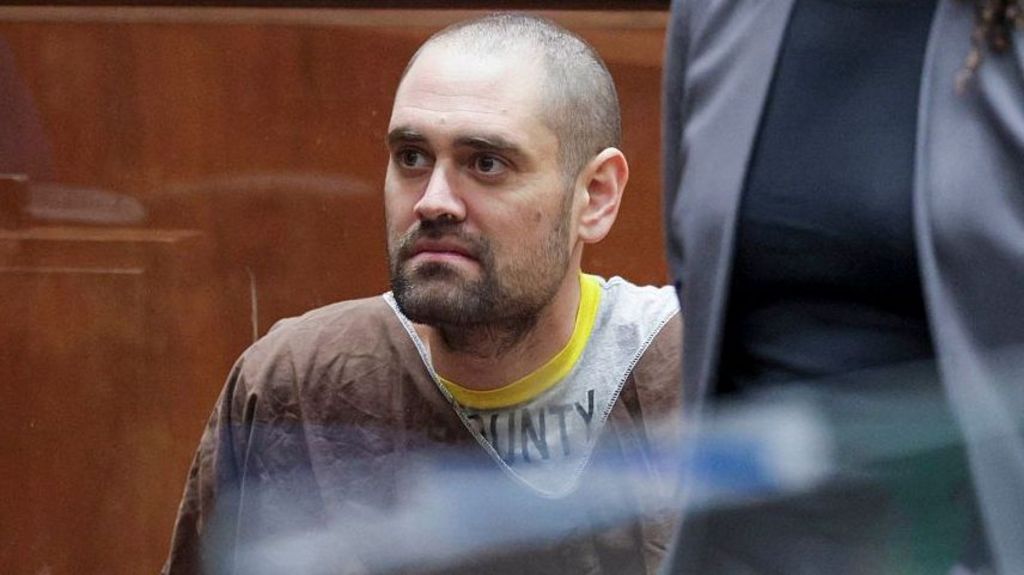
    More than three decades after his first documented murder and three years after his arrest, Rex Heuermann, the Long Island architect behind one of New York’s most chilling serial killing cases, entered a Riverhead courtroom on Wednesday for sentencing, where grieving family members of his eight victims confronted him with raw, unflinching statements about their decades of pain.

    Known infamously as the Gilgo Beach serial killer, the 62-year-old Heuermann appeared composed in a dark business suit, light blue shirt and muted grey tie, sitting with hands folded and his gaze fixed to the table before him as relatives of the women he killed recounted their decades-long wait for accountability.

    The case stretches back to a sprawling stretch of remote Atlantic coastline on Long Island, where Heuermann scattered the remains of all eight of his confirmed victims between 1993 and 2010. It was only in 2010 that a routine search for a missing person led investigators to stumble on four sets of remains clustered within a quarter-mile of each other along Gilgo Beach, unraveling one of the most high-profile cold cases in American history.

    After evading detection for 13 years, Heuermann — a married father of two living in the quiet Long Island suburb of Massapequa Park — was finally taken into custody in 2023. Suffolk County law enforcement officers swarmed his Midtown Manhattan office to arrest him, after investigators matched DNA recovered from a discarded pizza box Heuermann had thrown away to crime scene DNA collected from the victim sites. Initially charged with the murders of seven women, Heuermann entered a guilty plea to an eighth 1996 killing in a court hearing earlier this year, confirming he had used the same brutal method to strangle and bind each of his victims before disposing of their bodies along the shoreline.

    All eight victims worked as sex workers at the time of their deaths, with many contacted by Heuermann through online advertisements posted to Craigslist. For years, progress on the case stalled amid a series of scandals that plagued the early investigation: former Suffolk County Police Chief James Burke, who originally oversaw the case, was arrested in 2015 and convicted of obstruction of justice, and the corruption scandal also brought down longtime Suffolk District Attorney Thomas Spota, who had led the probe alongside Burke.

    It was not until 2022, when new county leadership launched a joint task force combining federal and local law enforcement resources, that the case broke open. Acting on a 12-year-old tip from the roommate of victim Amber Costello — who described Heuermann as a large, imposing client who drove a rare first-generation Chevrolet Avalanche — investigators identified Heuermann as a prime suspect and arrested him within six weeks.

    On Wednesday, relatives of the victims laid bare the trauma they have carried for decades, pushing back against claims that the slow progress of justice stemmed from law enforcement’s dismissive attitude toward the victims’ line of work. “Mr Heuermann, you have done horrendous things to Valerie’s earthly body, but you have not touched the real Valerie,” said the father of 24-year-old victim Valerie Mack. “I can only imagine when my day comes and I stand before Jesus, Valerie will be at his side.”

    The cousin of 20-year-old victim Jessica Taylor described the lifelong shock of learning her cousin’s partial remains had been found on the beach, telling the court she still cannot shake the horror of the words “headless and handless” that investigators used to describe what was recovered. Calling Heuermann “sick, twisted, heartless,” she added, “23 years we waited. For a while it felt like this day would never come.”

    Victims’ families and Long Island residents have long argued that the investigation was deliberately slowed because all of Heuermann’s targets were sex workers, a claim widely echoed by community members who have expressed horror at the 13-year gap between the discovery of the remains and the killer’s arrest. Wednesday’s hearing marks the final step in the long process of delivering justice to the victims’ families, closing a dark chapter in Long Island’s criminal history that captivated national attention for more than 15 years.