
The Sydney community stood in solemn solidarity on Thursday as family, friends, and countless mourners gathered to honor the life of Matilda, a vibrant 10-year-old girl whose life was tragically cut short during the devastating Bondi Junction attack last Sunday. The funeral service, imbued with profound sorrow and heartfelt tributes, became a powerful symbol of collective grief and resilience in the wake of the inexplicable violence that shook the nation. Attendees, many dressed in the young girl’s favorite color, shared poignant memories of her kindness and spirited personality, transforming the ceremony into a celebration of a life cherished, albeit far too brief. The overwhelming public response, including floral tributes and messages of support extending blocks from the service, underscores a city’s attempt to grapple with an unimaginable loss and the indiscriminate nature of the tragedy that claimed six lives. This gathering not only provided a space for communal mourning but also highlighted the deep scars left on the fabric of the local community, prompting a renewed dialogue on public safety and support for victims of violent crime.
分类: society
-

Museum knows ‘little to nothing’ about new display
In an unprecedented move confronting Britain’s colonial history, Manchester Museum has launched a groundbreaking exhibition featuring thousands of African artifacts with largely unknown origins—many acquired through questionable means during the Empire’s peak. The institution has deliberately placed these culturally significant objects in its newly established Africa Hub to openly address the substantial gaps in its historical records.
The collection, comprising over 40,000 items from across Africa, reveals troubling acquisition methods including trade, anthropological collection, confiscation, and outright looting during colonial expansion. One particularly telling example is a carved figure depicting a horse with an ibis on its back, whose entire documented history consists only of its 1976 donation by a Mrs M A Bellhouse, with no information regarding its cultural context, place of origin, or traditional significance.
Curator Lucy Edematie describes this exhibition as fundamentally different from traditional museum displays, characterizing it as “the beginning” rather than the culmination of research. “It is a chance to do our thinking in public, with honesty and transparency, and to involve people in that process from the start,” Edematie explained, highlighting the institution’s commitment to ethical reconsideration of colonial collections.
The museum, part of the University of Manchester, acknowledges that this transparent approach may ultimately lead to repatriation decisions or collaborative partnerships with diaspora communities to develop culturally appropriate ways of preserving and celebrating heritage. In a significant co-curation effort, the Africa Hub features displays developed with Igbo Community Greater Manchester (ICM), representing one of West Africa’s largest ethnic groups.
ICM Vice-Chairwoman Sylvia Mgbeahurike emphasized the exhibition’s profound significance: “Some of these objects were given, some were stolen, some were taken forcefully out of conquest. Bringing them together shows inclusiveness, demonstrates strength in diversity, and reaffirms that we are one people regardless of color or origin.”
This bold institutional initiative represents a growing movement among museums to address colonial-era acquisitions honestly while developing new ethical frameworks for handling contested cultural property.
-
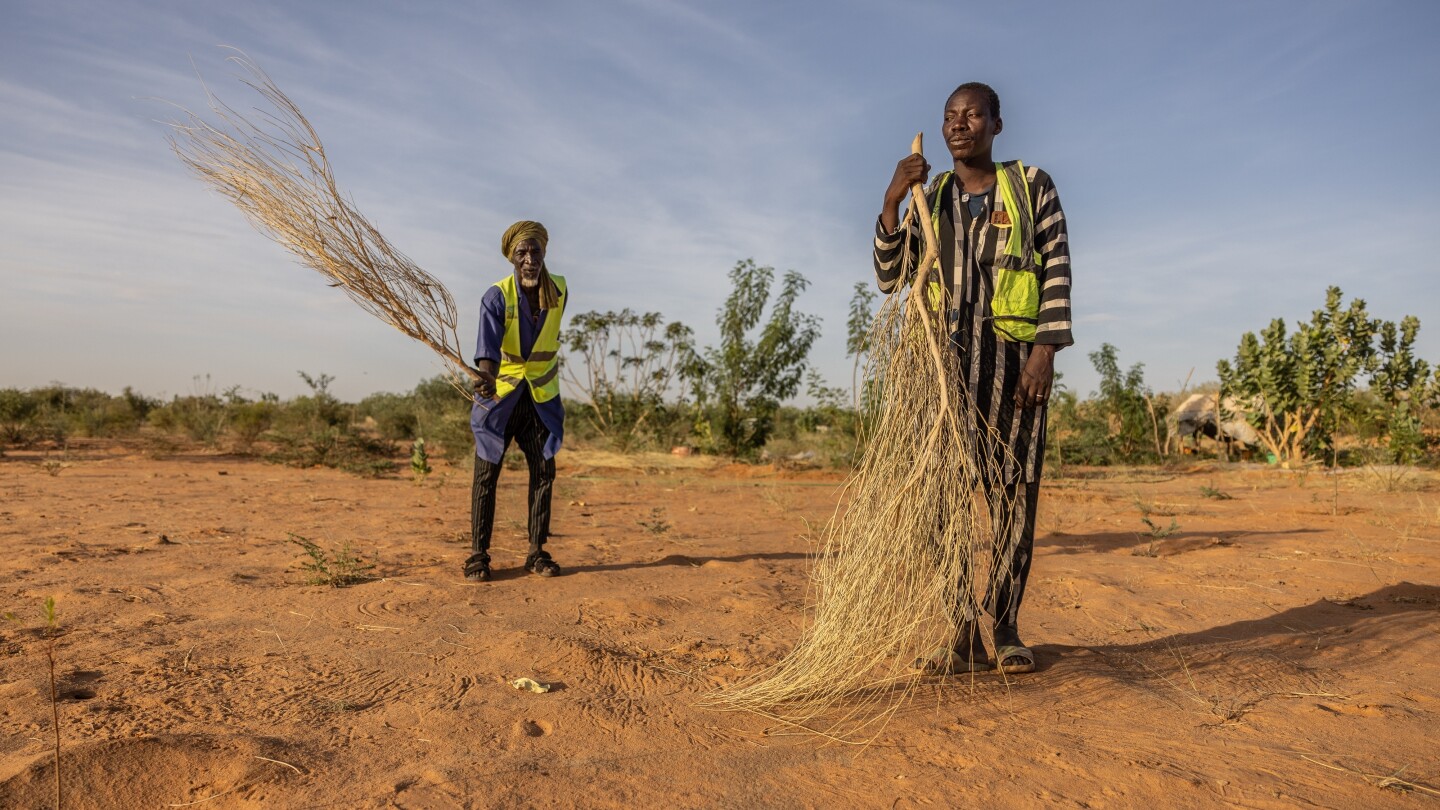
Refugee firefighters in Mauritania battle bushfires to give back to the community that took them in
In the harsh expanse of Mauritania’s desert landscape, a unique partnership has emerged between Malian refugees and their host community through the shared battle against destructive bushfires. At sunset in Mbera, synchronized movements of volunteer firefighters create a rhythmic cadence as they practice with acacia branches—a specialized technique perfected over years of combating desert blazes.
These 360 refugees, operating under UNHCR patronage with EU funding, have transformed environmental protection into a reciprocal gesture of gratitude toward the Mauritanian communities that sheltered them from Mali’s violence since 2012. The region houses approximately 300,000 Malian refugees, with half residing in formal camps and others integrated into local villages.
Hantam Ag Ahmedou, who arrived as a child refugee, explains the critical methodology: “Water proves futile against fires that ignite hundreds of kilometers from sources. Our branches smother flames effectively—this knowledge became our contribution.” The volunteer brigade responds urgently to alerts, deploying in coordinated teams with heat-resistant acacia branches to contain infernos that threaten both refugee settlements and local villages.
The environmental context heightens the urgency: Mauritania, with 90% Sahara coverage, faces accelerated desertification from climate change. Tayyar Sukru Cansizoglu of UNHCR notes that single fires now carry life-threatening consequences for all residents amid strained natural resources. Tensions over grazing areas and water access underscore the fragility of this coexistence.
Beyond firefighting, the initiative has expanded into ecological restoration with tree nurseries cultivating acacias, citrus, and mango trees to counteract vegetation loss. For veterans like 52-year-old Abderrahmane Maiga, this work represents necessary reciprocity: “After people welcomed us, standing to help them is only right.”
The refugees acknowledge the permanence of their situation—with returning to Mali increasingly implausible amid ongoing violence. Ag Ahmedou articulates their resolve: “We cannot abandon our home for Europe. We must resist. We must fight—for survival is our only option.”
-
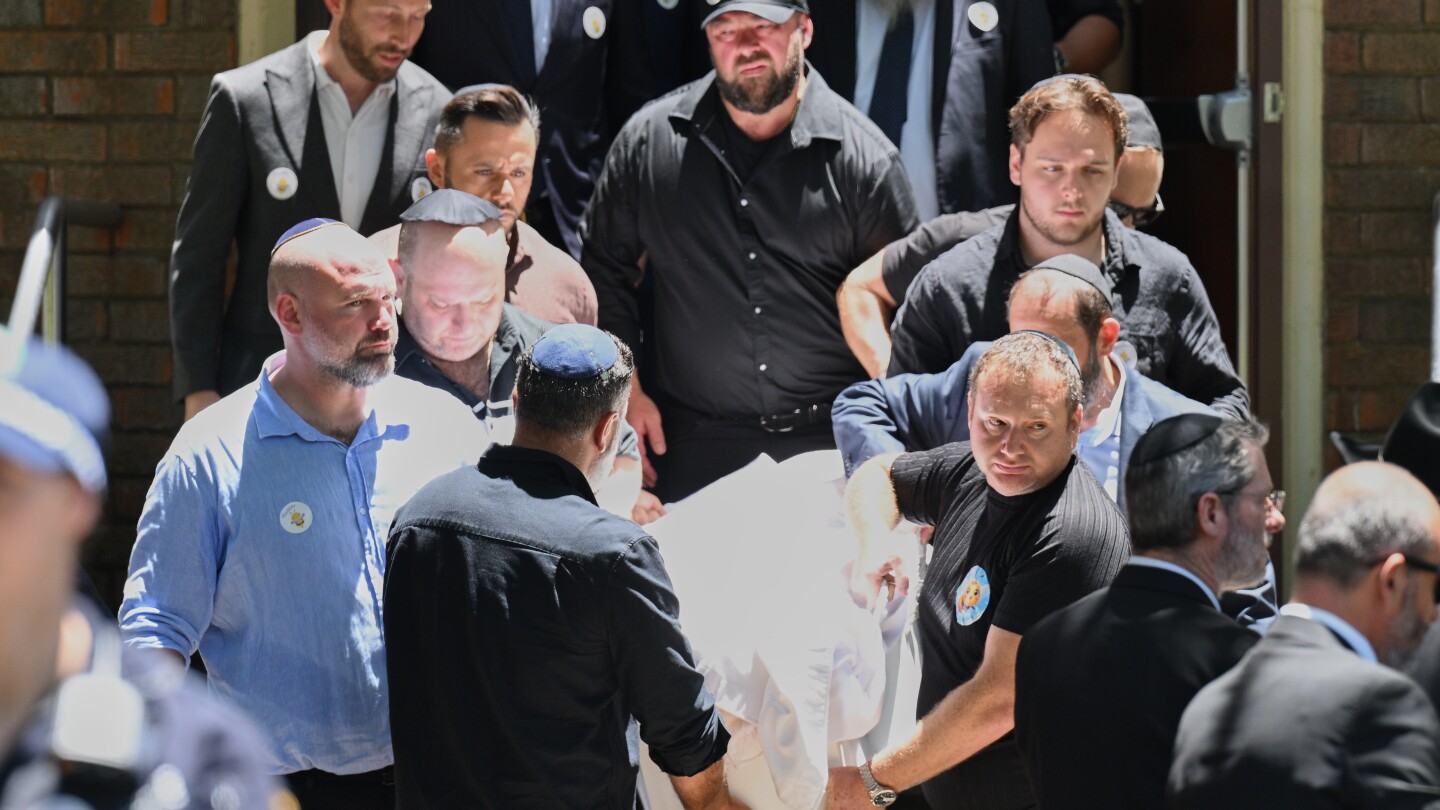
Mourners grieve 10-year-old slain in Bondi mass shooting as Australia’s leader pledges new hate laws
SYDNEY — Australia’s collective grief found focus on Thursday as hundreds gathered to mourn 10-year-old Matilda, the youngest victim of Sunday’s antisemitic massacre at a Hanukkah celebration in Bondi Beach. The funeral service became a national moment of reflection following one of the country’s most devastating hate-fueled attacks that claimed 15 lives.
Matilda, whose family migrated from Ukraine seeking safety, was among those killed when attackers inspired by Islamic State ideology opened fire at the community gathering. Her beaming photographs have become symbolic of the tragedy, prompting nationwide examination of antisemitism and security failures.
Prime Minister Anthony Albanese simultaneously announced sweeping legislative reforms from Canberra, acknowledging collective responsibility for the protection of all citizens. “They did something that a parent is OK to do, take their child to a family event at Bondi beach,” remarked Rabbi Dovid Slavin during the service. “If it ended this way, it’s something for collective responsibility for every adult in this country.”
The proposed security overhaul includes broadening definitions of hate speech offenses, enhancing penalties for inciting violence, designating extremist groups, and empowering judges to consider hate as an aggravating factor in online harassment cases. Immigration authorities would gain expanded powers to deny or revoke visas for those promoting division.
Home Affairs Minister Tony Burke acknowledged systemic challenges: “For a generation, no government has been able to successfully take action against them because they have fallen just below the legal threshold.”
Meanwhile, investigation details emerged about the perpetrators—father and son Sajid and Naveed Akram. The older shooter legally amassed firearms despite his son’s prior investigation by security services in 2019. Philippine authorities confirmed the pair’s November visit to Davao city but found no evidence of attack training during their stay.
Naveed Akram faces 59 charges including murder and committing a terrorist act, while sixteen survivors remain hospitalized with two in critical condition.
The Jewish community continues mourning with multiple funerals, including for 87-year-old Holocaust survivor Alex Kleytman who died protecting his wife. As bumblebee balloons bobbed in tribute to Matilda’s family nickname, Rabbi Slavin captured the communal anxiety: “I and many others are thinking, this could have been my child.”
-
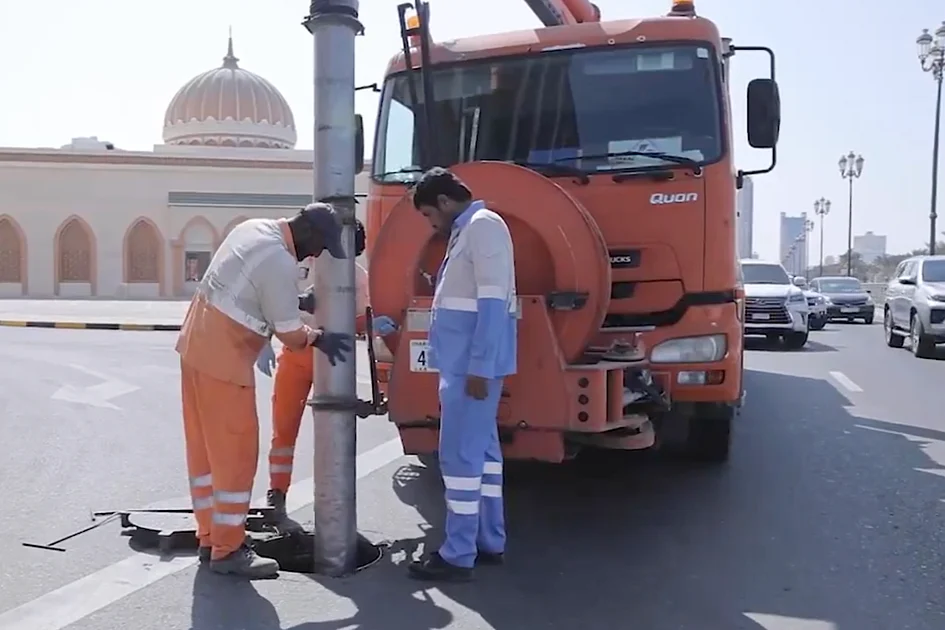
Unstable weather in UAE: Sharjah ready to deal with rainfall, authority says
Sharjah City Municipality has activated full-scale emergency protocols as the United Arab Emirates braces for intensified rainfall and unstable weather patterns expected through December 19th, 2025. The authority has mobilized specialized response teams equipped with advanced machinery and a diversified vehicle fleet to address potential flooding and weather-related incidents.
The comprehensive preparedness strategy forms part of operational plans designed to ensure public safety during extreme weather conditions. Municipal crews have conducted preemptive drainage cleaning operations to prevent water accumulation and implemented emergency measures to maintain infrastructure functionality.
Meteorological reports indicate the UAE will experience heavy precipitation, thunderstorms, and potent winds reaching velocities of 60 km/h from southeastern to northwestern directions on Thursday, with turbulent conditions persisting through Friday. The weather system—a low-pressure area that has delivered substantial rainfall across the region throughout the past week—may cause reduced visibility and challenging travel conditions.
The municipality’s proactive approach emphasizes community protection and individual safety as weather intensities increase. This response aligns with broader national preparations, including Dubai’s announcement of remote work arrangements for government employees on December 19th to minimize mobility during peak weather activity.
-
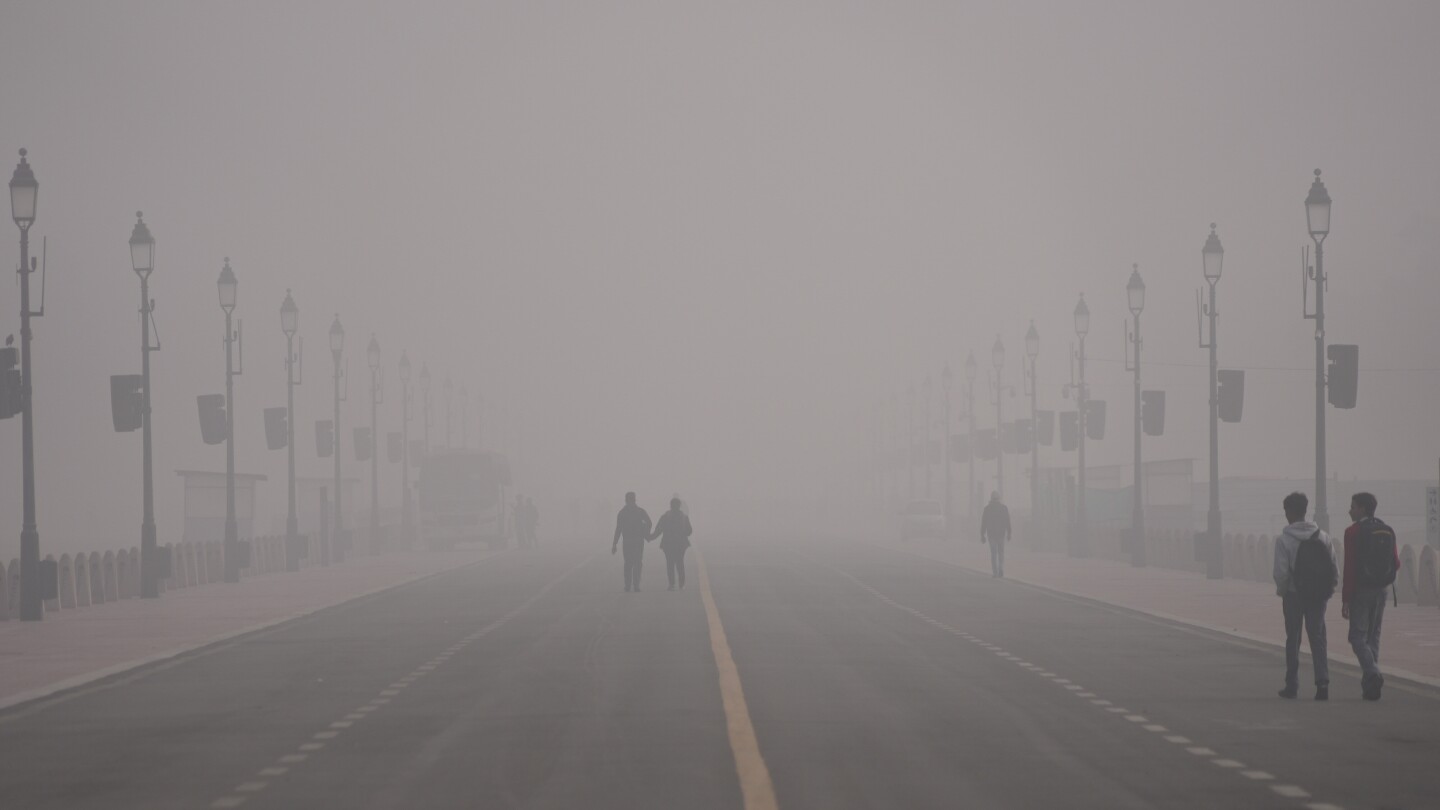
Unreliable data mask just how bad the air quality crisis is in India
New Delhi faces mounting public frustration as senior Indian officials make controversial statements about the capital’s severe air pollution crisis, with residents accusing policymakers of downplaying the environmental emergency.
Environment Minister Bhupender Yadav recently told Parliament that New Delhi had experienced 200 days of good air quality this year—a claim immediately challenged by pollution experts and opposition leaders who noted the minister excluded the city’s worst pollution months from his calculation.
The controversy intensified when Delhi Chief Minister Rekha Gupta compared the Air Quality Index to temperature readings, suggesting water spraying could effectively address pollution. Her remarks drew public ridicule, with crowds at subsequent events chanting AQI in protest of the city’s hazardous air conditions.
Gupta had previously endorsed a controversial cloud seeding program despite lacking scientific evidence for its effectiveness, further eroding public confidence in governmental responses to the pollution crisis.
Environmental analysts highlight that India employs less stringent air quality measurement standards than countries like the United States and the World Health Organization, resulting in moderate readings that often mask dangerously high pollution levels. This discrepancy undermines public trust while most residents remain unaware of pollution’s full health implications.
Although India’s National Clean Air Program has allocated millions toward pollution reduction since 2019, with particular focus on dust control measures, critics note inadequate addressing of primary pollution sources including industrial emissions, vehicle exhaust, agricultural burning, and household fuel use. A 2024 Centre for Science and Environment report revealed that 64% of program funds targeted dust reduction, while less than 1% addressed industrial air pollution.
The human cost remains staggering: a Lancet medical journal study linked long-term exposure to India’s polluted air with 1.5 million additional annual deaths. Despite this, junior health minister Prataprao Jadhav recently claimed no conclusive data establishes direct correlation between air pollution and mortality.
Public health advocates note the absence of systematic mechanisms to count pollution-related deaths, while medical experts emphasize particularly severe impacts on vulnerable populations including pregnant women, elderly citizens, and children, with exposure linked to preterm births, miscarriages, and lifelong health consequences.
Recent street protests in New Delhi signal growing public anger, with residents demanding immediate government action. Environmental activist Vimlendu Jha accused authorities of prioritizing image management over pollution control, noting that political leaders have normalized dangerously high pollution levels.
As auto rickshaw driver Satish Sharma reported reducing work hours due to deteriorating health from pollution, he joined countless residents calling for genuine governmental action before more people abandon India’s increasingly unbreathable capital.
-
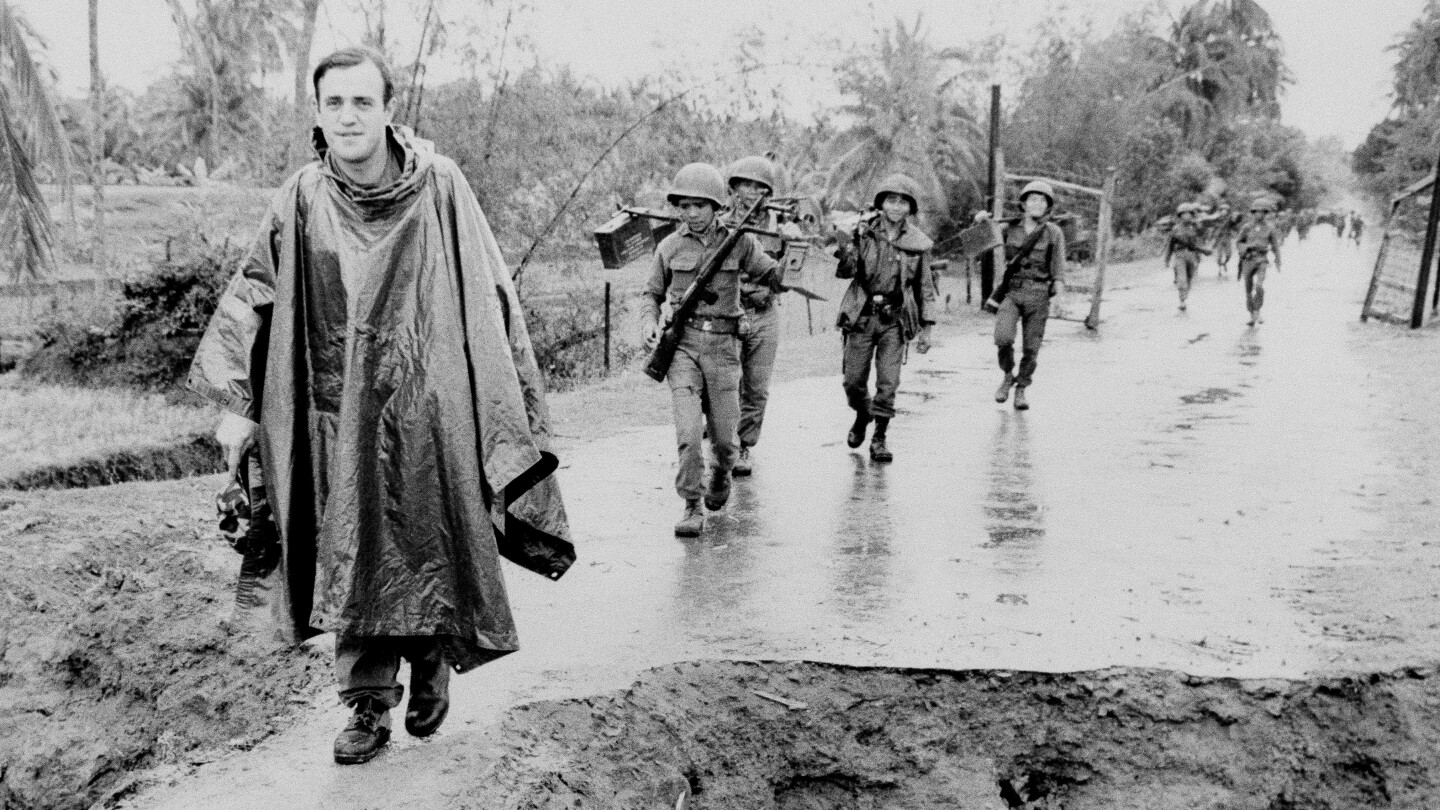
Pulitzer Prize-winning correspondent Peter Arnett, who reported from Vietnam and Gulf War, has died
Pioneering war correspondent Peter Arnett, whose fearless frontline reporting shaped global understanding of modern conflicts from Vietnam to Iraq, has passed away at age 91. The Pulitzer Prize-winning journalist died Wednesday in Newport Beach, California, surrounded by family and friends after recently entering hospice care for prostate cancer.
Arnett’s extraordinary career spanned five decades of conflict journalism, earning him international recognition for his uncompromising battlefield coverage. He first gained prominence during the Vietnam War while reporting for The Associated Press, where his courageous reporting from the front lines earned him the 1966 Pulitzer Prize for International Reporting.
The New Zealand-born correspondent achieved household recognition during the 1991 Gulf War when he delivered historic live broadcasts from Baghdad as Coalition missiles struck the Iraqi capital. While most Western journalists had evacuated, Arnett remained at his hotel, providing calm, real-time descriptions of the bombardment through cellular phone connections to CNN’s global audience.
His proximity to danger became legendary. During Vietnam combat operations in 1966, Arnett narrowly escaped death when a North Vietnamese sniper’s bullets tore through a map held by a battalion commander standing inches from him. These experiences informed his survival philosophy, learning never to stand near medics or radio operators who represented prime enemy targets.
Beyond Vietnam and Iraq, Arnett secured exclusive interviews with both Saddam Hussein and Osama bin Laden while maintaining controversial relationships with various conflict parties. His 1995 memoir, ‘Live From the Battlefield,’ documented his 35 years reporting from global war zones.
Despite professional controversies that included dismissals from major networks, Arnett’s commitment to frontline journalism never wavered. Following his retirement from active reporting in 2014, he settled in Southern California with his wife Nina Nguyen after teaching journalism at China’s Shantou University.
Arnett’s legacy extends beyond his groundbreaking reporting to the preservation of historical records. Defying orders to destroy documents during Saigon’s fall in 1975, he preserved the Associated Press bureau’s papers, which now reside in the organization’s official archives.
-
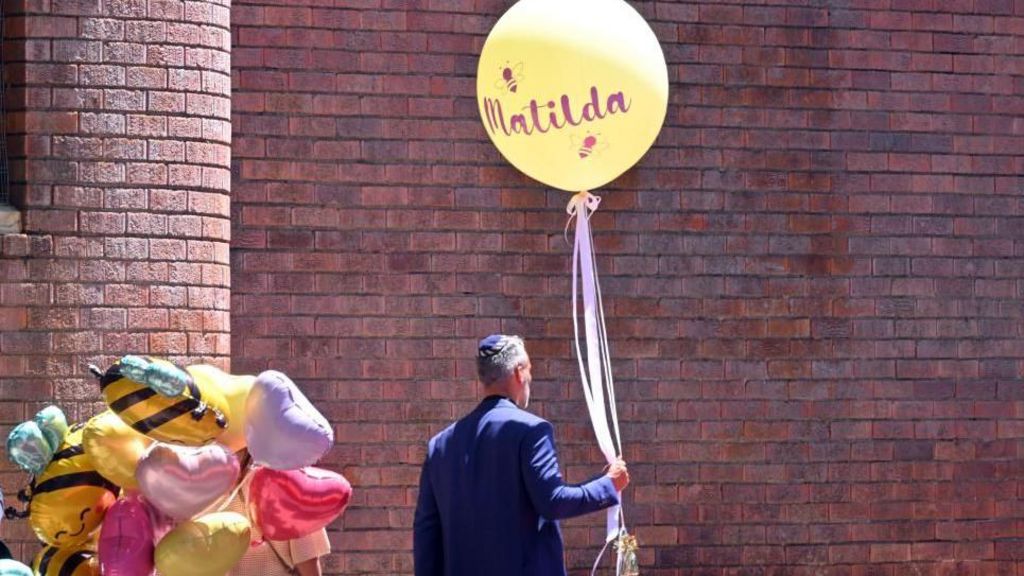
‘Maybe she’s an angel now’ says aunt of 10-year-old Bondi victim
The family of Matilda, the youngest victim of the Bondi Beach shooting, has made a heartfelt plea for compassion and unity during her emotional funeral service on Thursday. The 10-year-old was among 15 individuals fatally shot when two assailants opened fire at a Hanukkah celebration in Sydney on Sunday.
Lina Chernykh, Matilda’s aunt, shared with the BBC that her niece embodied joy and consistently spread love wherever she went. While acknowledging the Jewish community’s legitimate demands for stronger action against antisemitism, Chernykh emphasized that the most appropriate tribute to Matilda would be to channel grief into positive energy rather than anger.
“Transform your anger into spreading happiness, love, and preserving the memory of my dear niece,” Chernykh urged mourners. “Perhaps she has become an angel who might transmit positive energy to our world.”
The tragedy has sparked intense scrutiny regarding Australia’s approach to addressing rising antisemitism, with community leaders suggesting the incident resulted from inadequate measures against hate crimes. This attack represents Australia’s deadliest mass shooting since the 1996 Port Arthur massacre that claimed 35 lives.
Chernykh described the profound devastation experienced by Matilda’s immediate family, noting that her parents’ faces show little hope of future happiness. The victim’s younger sister, who was inseparable from Matilda, remains shattered and confused by the loss, having “no more tears to cry.”
At a floral memorial service earlier this week, Matilda’s mother Valentyna revealed the family had immigrated from Ukraine over a decade ago seeking safety. “I never imagined I would lose my daughter here… This is truly a nightmare,” she told attendees.
Chernykh recounted receiving the tragic news while gardening at her Gold Coast home, initially assuming the call concerned her elderly father’s health. The concept of a child being shot in Australia seemed so incomprehensible that she questioned whether she had misheard due to poor reception.
Australian authorities have classified the incident as terrorism, with Prime Minister Anthony Albanese indicating connections to Islamic State ideology. The alleged perpetrators—50-year-old Sajid Akram, who was killed at the scene, and his 24-year-old son Naveed—face 59 combined charges including 15 counts of murder and terrorist acts.
In response to the tragedy, the Australian government announced on Thursday enhanced legislative measures to combat hate crimes, including provisions to deny or revoke visas based on antisemitic behavior.
-

Ecuadorian police say soccer player Mario Pineida has been shot dead in an apparent attack
Ecuador faces a deepening security crisis as professional footballer Mario Pineida, a 33-year-old defender for Barcelona de Guayaquil, was fatally shot in a violent attack in Guayaquil. The incident, confirmed by Ecuadorian police on Wednesday, resulted in two fatalities and one additional injury, marking another tragic episode in the nation’s escalating violence crisis.
According to official reports from the Interior Ministry, the attack occurred in the Samanes region of northern Guayaquil, approximately 265 kilometers southwest of the capital Quito. While authorities have not released details about the second victim or the circumstances surrounding the shooting, local media indicates the violence reflects the deteriorating security situation affecting all levels of Ecuadorian society.
The football community has been profoundly impacted by Pineida’s death. Barcelona de Guayaquil released an official statement expressing profound sadness among players, staff, and supporters. Pineida, who began his professional career with Independiente del Valle from 2010-2015, joined Barcelona de Guayaquil in 2016 where he achieved significant success, including two league championships. His career also included a brief tenure with Brazil’s Fluminense in 2022.
This tragedy occurs against the backdrop of Ecuador’s most violent period in recent history. The Ecuadorian Observatory of Organized Crime projects the nation will exceed 9,000 homicides this year, surpassing previous records of 7,063 violent deaths in 2022 and 8,248 in 2023. President Daniel Noboa has committed to combating criminal organizations that have expanded operations within Ecuador, often linked to international drug cartels.
Pineida’s death follows other football-related tragedies, including the November killing of a 16-year-old Independiente del Valle player by a stray bullet in Guayaquil, and the September deaths of three players from different clubs—Maicol Valencia, Leandro Yépez, and Jonathan González—all victims of gun violence.
-

Watch: Moment Nick Reiner is arrested after being seen in convenience store
Newly released surveillance footage has revealed the critical moments leading to the arrest of Nick Reiner, a 32-year-old individual now at the center of a devastating family tragedy investigation. The visual evidence depicts Reiner moving aimlessly through a convenience store shortly before law enforcement officials took him into custody regarding the deaths of his parents, Rob and Michele Reiner.
The footage, which has become pivotal to the ongoing investigation, shows Reiner exhibiting unusual behavior while browsing store aisles, providing investigators with crucial pre-arrest behavioral evidence. Law enforcement agencies have confirmed this arrest connects directly to the suspicious deaths of the suspect’s parents, though specific details regarding motives or circumstances remain undisclosed as the investigation continues.
Authorities have emphasized the importance of this visual evidence in establishing timeline continuity while refusing to comment on whether Reiner was making purchases or merely occupying the commercial space before his apprehension. The arrest occurred without incident according to police reports, though the emotional weight of the situation has deeply affected the local community where the Reiner family was known.
Criminal psychologists examining the case suggest that such public footage often provides invaluable insights into suspect behavior patterns prior to formal charges being filed. The judicial process continues to unfold as prosecutors prepare their case based on accumulating evidence beyond the surveillance material.