分类: society

  • Snowscapes, vineyards, and beyond: the rural vitalization in China’s villages

    Snowscapes, vineyards, and beyond: the rural vitalization in China’s villages

    In the frostbitten landscapes of Northeast China, where winter temperatures frequently plunge below -20°C, a remarkable transformation is underway. The village of Xuexiang (Snow Town) in Heilongjiang Province, once a quiet forestry community, now bustles with tourists drawn to its spectacular winter scenery despite the bitter cold.

    This dramatic change represents a tangible success story within China’s comprehensive Rural Vitalization Strategy, initiated at the 19th National Congress of the Communist Party of China in 2017. The national policy aims to achieve fundamental modernization of agriculture and rural regions by 2035.

    Wang Xindan, the village’s publicity official, attributes this renaissance to strategic government support. “The rural vitalization strategy has transformed our community into a year-round tourism destination,” Wang noted. The village’s recognition as one of “China’s top 10 most beautiful villages” underscores its successful metamorphosis from a commercial forestry settlement to a thriving tourist attraction.

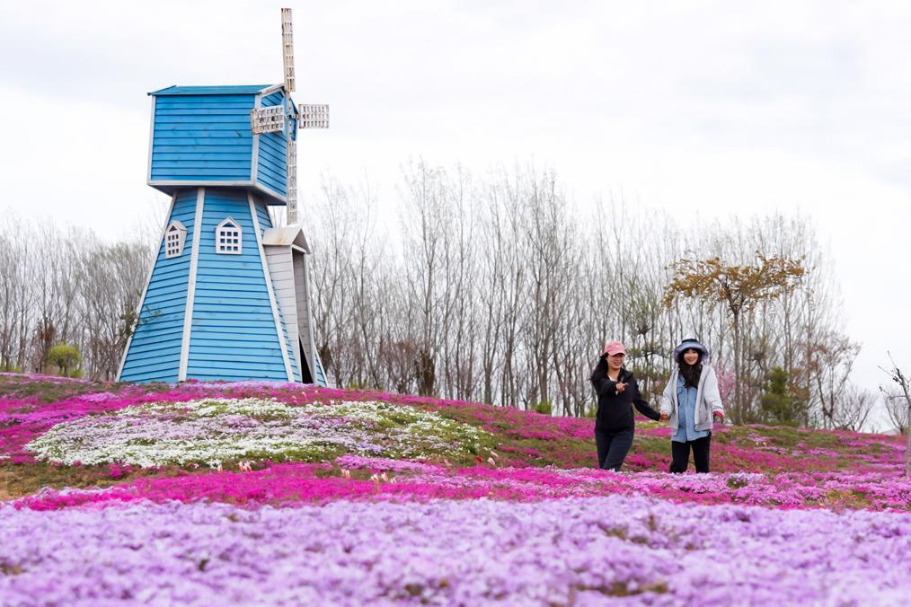
    The initiative extends beyond winter destinations to encompass diverse agricultural regions. In various Chinese provinces, vineyards and other specialty agricultural sites have similarly experienced revitalization through targeted development programs. These efforts collectively represent a national movement to bridge urban-rural development gaps, create sustainable economic opportunities in countryside regions, and preserve cultural heritage while embracing modernization.

  • Book highlighting shared history across Taiwan Strait launched in Taipei

    Book highlighting shared history across Taiwan Strait launched in Taipei

    A significant literary event in Taipei has brought renewed attention to the historical connections between Taiwan and mainland China. The newly released book, “Taiwan’s Restoration: Revisited Moments of Awakening and Renewal Around 1945,” edited by media professional Chang Chun-kai, offers a detailed examination of Taiwan’s post-war landscape following the victory in the Chinese People’s War of Resistance Against Japanese Aggression.

    The publication emerges during a period of heightened importance for historical education, coinciding with the 80th anniversary commemorations of both the World Anti-Fascist War victory and Taiwan’s return to Chinese sovereignty. The book adapts and expands upon documentary materials to present a comprehensive view of this pivotal historical moment.

    Approximately fifty representatives from Taiwan’s education and media sectors attended the launch event, where discussions emphasized the critical need for preserving historical accuracy. Participants expressed concern over contemporary trends that distort historical narratives and potentially weaken national identity within Taiwanese society.

    Prominent voices at the event included Kuan Chung-ming, former president of Taiwan University, who advocated for increased efforts to present historical events faithfully. Kuan expressed confidence that the history of the resistance victory and Taiwan’s restoration would ultimately be preserved and transmitted to future generations.

    Lin Kuang-hui, descendant of a family renowned for their resistance against Japanese aggression, highlighted how the 1945 restoration ended five decades of Japanese colonial rule. Lin called for compatriots in Taiwan to uphold patriotic traditions and collectively work toward national rejuvenation.

    Taiwan scholar Chen Chao-ying provided cultural context, noting that many families in 1945 named their children “Guangfu” (meaning restoration), reflecting the genuine public sentiment of the era. Chen expressed hope for enhanced cross-strait cooperation in research concerning Taiwan’s restoration history.

    The book launch follows last year’s legislative action by China’s national legislature designating October 25 as the official commemorative day of Taiwan’s restoration. This date marks the 1945 ceremony in Taipei where Japanese surrender was accepted, formally returning Taiwan and the Penghu Islands to Chinese sovereign jurisdiction after half a century of separation.

  • The third man who links Andrew with Jeffrey Epstein

    The third man who links Andrew with Jeffrey Epstein

    Newly unsealed U.S. Department of Justice documents have illuminated the shadowy role of German businessman David Stern as the critical liaison connecting Prince Andrew and convicted sex offender Jeffrey Epstein in their China-focused business ventures. The millions of pages of evidence reveal Stern’s decade-long involvement as an intermediary who facilitated connections, managed financial arrangements, and enabled access to Chinese networks for both men.

    The documents depict Stern’s emergence into royal circles beginning in 2008 when Epstein introduced him to Sarah Ferguson and Prince Andrew. Stern subsequently became deeply embedded in the York family’s affairs, particularly assisting with the Duchess’s significant financial difficulties while simultaneously maintaining his primary allegiance to Epstein, whom he frequently addressed as “boss” or “my mentor.

    Throughout the correspondence spanning 2008-2018, Stern appears as the eager junior partner to Epstein, constantly proposing business ventures while demonstrating concerning attitudes toward women. His emails contain numerous derogatory references to women using coded language and abbreviations, alongside detailed discussions of potential investments and Chinese business opportunities.

    Stern’s value to both men largely stemmed from his claimed expertise and connections in China, where he had studied Mandarin and established business ventures. He portrayed himself as exceptionally well-connected with Chinese elites, though the veracity of these claims remains unclear. This perceived access proved particularly valuable to Epstein, whose criminal record limited his ability to travel to China directly.

    The German businessman eventually gained formal positions within royal-affiliated organizations, joining the board of Andrew’s Pitch@Palace initiative in 2016 and later being appointed to St George’s House, a charity founded by Prince Philip. His involvement with Pitch@Palace continued through its final Chinese event in Shenzhen in 2019, which also included Yang Tengbo, who was later banned from the UK over espionage allegations.

    Despite Stern’s extensive correspondence and apparent closeness to both Epstein and the royal family, many of his ambitious business proposals—including ventures in private equity, healthcare technology, and even a fanciful scheme to acquire Deutsche Bank—never materialized. His current whereabouts are unknown, having changed his registered residence to the United Arab Emirates in 2023.

  • Blind refugee found dead in New York after being released by immigration authorities

    Blind refugee found dead in New York after being released by immigration authorities

    A systemic failure in US immigration procedures has come under intense scrutiny following the death of Nurul Amin Shah Alam, a nearly-blind, non-English-speaking Rohingya refugee from Myanmar. The 56-year-old was discovered deceased in Buffalo, New York, on February 24th, days after US Customs and Border Protection (CBP) released him at a coffee shop miles from his family’s residence during freezing temperatures.

    According to the Department of Homeland Security, which oversees CBP, Shah Alam had accepted a courtesy ride to the coffee shop and displayed ‘no signs of distress, mobility issues, or disabilities requiring special assistance’ upon release. Officials claimed the location was selected as ‘a warm, safe location’ closer to his home than the Border Patrol station.

    Contradicting this account, surveillance footage obtained by The Washington Post from the Tim Horton’s coffee shop on February 19th appears to show Shah Alam walking past the establishment without entering after operating hours. Weather records indicate temperatures hovered around 36°F (2.2°C) that evening.

    Buffalo Mayor Sean Ryan characterized the incident as ‘deeply disturbing,’ delivering a blistering critique of federal agencies during a news conference. ‘Border Patrol, DHS and Immigrations and Customs Enforcement don’t know what they’re doing,’ Ryan stated. ‘The Border Patrol officers had no protocol for what to do with a disabled man who doesn’t speak English, who is confused and lost. And you know what they did? They dropped him at a closed coffee shop.’

    The tragedy concludes a complex year-long ordeal for Shah Alam, who had previously been in local police custody on assault and weapons charges related to an incident where two officers were injured. According to his son Mohamad Faisal, the arrest resulted from a misunderstanding when his father, using a curtain rod as a walking stick during a walk, wandered onto private property. Body camera footage released by Buffalo police shows Shah Alam holding two black rods while repeatedly saying ‘sorry’ before officers deployed tasers and wrestled him to the ground.

    After reaching a plea deal and being released on bail, immigration authorities placed a detainer on Shah Alam. Reuters reported that CBP ultimately released him after determining he had entered the US as a refugee and could not be legally deported.

    The family, who were not notified of Shah Alam’s release according to multiple accounts, reported him missing on February 22nd. He was found nearly six miles from the coffee shop days later, with a passerby noting he had been moving three hours prior to being discovered unresponsive.

    New York Attorney General Letitia James announced her office is ‘reviewing our legal options,’ emphasizing that Shah Alam ‘fled genocide and came to this country in search of safety and opportunity. Instead, his life was tragically cut short. No one who comes here seeking refuge should be left in harm’s way.’

    The Buffalo Police Department continues to investigate the circumstances surrounding Shah Alam’s death, which has not been publicly disclosed.

  • Flight logs and hot tub photo among key moments from Bill Clinton’s deposition

    Flight logs and hot tub photo among key moments from Bill Clinton’s deposition

    Previously sealed legal documents from a 2016 lawsuit have brought renewed attention to former President Bill Clinton’s connections with the late financier Jeffrey Epstein. The deposition, which resurfaced amid recent court file releases, contains several pivotal evidentiary points that have captured public interest.

    Among the most discussed elements are private flight manifests placing Clinton aboard Epstein’s aircraft, dubbed the ‘Lolita Express,’ on multiple occasions. While travel records indicate several trips, the former president emphatically stated under oath that he had zero awareness of Epstein’s criminal sexual activities during their association.

    Another significant piece of evidence presented during the questioning was a photograph depicting Clinton at a social gathering with Epstein, though the specific context and location remain subjects of interpretation. The former commander-in-chief characterized their relationship as primarily philanthropic, centered around Clinton Foundation initiatives and Epstein’s financial contributions to charitable causes.

    Legal experts note that the deposition largely focused on establishing whether Clinton possessed any information that could have assisted victims in their civil case against Epstein’s associate, Ghislaine Maxwell. Clinton uniformly denied any knowledge of illicit activities, maintaining his interactions were within appropriate social and charitable boundaries.

    The reexamination of these documents provides deeper insight into the networks surrounding Epstein rather than revealing new allegations against the former president himself, highlighting the complex intersection of power, privilege, and justice in high-profile cases.

  • DOJ charges 30 more people in Minnesota anti-ICE church protest

    DOJ charges 30 more people in Minnesota anti-ICE church protest

    Federal authorities have significantly escalated their response to a disruptive anti-ICE demonstration at a Minnesota church, unsealing indictments against 30 additional individuals. The U.S. Department of Justice announced these charges on Friday, revealing that federal agents have already apprehended 25 of the newly named defendants, with Attorney General Pam Bondi promising further arrests.

    This case stems from a January 18th incident at Cities Church in St. Paul, where protesters stormed a worship service chanting “ICE out” and demanding “Justice for Renee Good” – a mother of three fatally shot by a U.S. Immigration and Customs Enforcement officer in Minneapolis. The demonstration created chaotic scenes within the Southern Baptist Convention-affiliated church as congregants and protesters confronted each other.

    Among those initially charged was former CNN anchor Don Lemon, who along with nine others pleaded not guilty to civil rights violations. Lemon maintained he was performing his journalistic duties by live-streaming the event as an independent reporter covering the protest.

    The newly unsealed indictment alleges all 39 defendants conspired against religious freedom at a place of worship through “acts of oppression, intimidation, threats, interference, and physical obstruction.” Federal prosecutors characterize the event as a “coordinated takeover-style attack” that disrupted religious services.

    Attorney General Bondi emphasized the government’s stance in a social media statement: “YOU CANNOT ATTACK A HOUSE OF WORSHIP. If you do so, you cannot hide from us — we will find you, arrest you, and prosecute you. This Department of Justice STANDS for Christians and all Americans of faith.”

    Doug Wardlow, legal representative for Cities Church, welcomed the additional charges, stating they “send a clear message: houses of worship are off limits for those who would use chaos and intimidation to advance a political agenda.” He noted the protest had left congregants, including children, fearing for their safety.

    The demonstration occurred within a tense three-week period that saw two protest-related fatalities – both individuals opposing the Trump administration’s since-concluded immigration enforcement operations in Minnesota.

  • Court orders Greenpeace to pay $345 mn to US oil pipeline company

    Court orders Greenpeace to pay $345 mn to US oil pipeline company

    A North Dakota court has issued a final ruling ordering Greenpeace to pay $345 million in damages to Energy Transfer, operator of the Dakota Access Pipeline, culminating a years-long legal battle that began with massive protests against the pipeline’s construction. The judgment, delivered by Judge James Gion on Friday, substantially reduced the original $660 million damages award determined by a jury last year, which found Greenpeace entities liable for trespass, nuisance, conspiracy and deprivation of property access during the 2016-2017 demonstrations.

    The case stems from the Standing Rock Sioux Tribe’s historic protest movement against the pipeline, which became one of the largest anti-fossil fuel demonstrations in U.S. history. Energy Transfer, a Dallas-based energy conglomerate, accused Greenpeace of orchestrating violence and defamation campaigns during the pipeline’s controversial construction nearly a decade ago.

    Greenpeace has vehemently denied all allegations, characterizing the proceedings as an abusive tactic designed to silence environmental dissent. The organization maintains it played only a minor, peaceful role in the predominantly Native American-led movement. Legal experts have expressed grave concerns about the ruling’s implications, with Columbia Law School’s climate change law center director Michael Gerrard describing the judgment as ‘devastating’ for the global environmental movement.

    The case has drawn international attention due to its potential chilling effect on protest mobilization and advocacy movements worldwide. Environmental defenders have rallied behind Greenpeace, denouncing the verdict as an attack on climate activism. The United Nations previously raised concerns about potential violations of Indigenous sovereignty during the original protests.

    Despite the reduction in damages, Greenpeace has indicated it cannot pay the staggering sum and will pursue an appeals process. The organization has also announced plans to countersue Energy Transfer in the Netherlands, where its international headquarters are located, accusing the company of using strategic lawsuits to suppress legitimate dissent.

    Energy Transfer, led by billionaire CEO Kelcy Warren—a major donor to former President Donald Trump—has objected to the halving of its award. Warren has been openly vocal about his motivations, stating in interviews that his ‘primary objective’ was to ‘send a message’ rather than seek financial compensation.

  • Supervisors blamed for blast at a steel plant that killed 10 and injured 84

    Supervisors blamed for blast at a steel plant that killed 10 and injured 84

    A catastrophic explosion at a Baotou steel facility in China’s Inner Mongolia Autonomous Region, which resulted in 10 fatalities and 84 injuries this past January, has been officially attributed to severe supervisory negligence. According to Li Haowen, Director of Investigation and Statistics at the Ministry of Emergency Management, the disaster was entirely preventable.

    The incident originated from a significant leak in a steam sphere tank. Despite the clear danger, production was deliberately not halted. Li revealed at a Beijing press briefing that the tank had been leaking heavily for approximately 90 minutes prior to the explosion. Shockingly, two on-site supervisors, under pressure to maintain output, explicitly ordered work to continue. This decision proved fatal for everyone in the immediate vicinity, including the supervisors themselves.

    Li condemned the lapse in safety protocols, stating, “The supervision was not done properly. It harmed others and also harmed the supervisors.” While presenting an annual safety report, he noted that China’s overall workplace safety situation remained “generally stable” in 2025, with major accidents kept to single digits. However, he emphasized that the lessons from this and other incidents were “extremely painful.

    The official further criticized a broader pattern of corporate misconduct, citing companies that “failed to do basic work well, rushed schedules blindly, and engaged in corner-cutting, falsification, and other misconduct.” He illustrated this with another case involving the collapse of a highway bridge section in Maerkang, Sichuan, where a surveying company had falsified borehole data, planting major hidden risks. Li concluded that these tragedies underscore the fundamental principle that high-quality development must be built upon a foundation of high-level safety.

  • Joe Biden takes selfies with passengers as he takes commercial flight

    Joe Biden takes selfies with passengers as he takes commercial flight

    Former U.S. President Joe Biden demonstrated a rare moment of accessibility and camaraderie with fellow travelers when adverse weather conditions disrupted air travel operations. The incident occurred at Ronald Reagan Washington National Airport, where Biden found himself among hundreds of passengers affected by an unexpected ground stop that halted all departures for approximately sixty minutes.

    Rather than retreating to private facilities, the former commander-in-chief utilized the delay to connect with citizens, engaging in spontaneous conversations and willingly participating in the modern ritual of smartphone photography. Multiple travelers documented these interactions, capturing Biden’s approachable demeanor as he moved through the terminal area.

    This occurrence highlights the continuing integration of former presidents into civilian life while simultaneously underscoring the vulnerabilities of the national air transportation network. Aviation experts note that such ground stops, typically implemented during severe weather events or security concerns, create cascading delays throughout the entire flight system.

    The episode provided a glimpse into the post-presidential travel arrangements of senior political figures, who occasionally opt for commercial aviation despite typically having access to government and private transportation options. Biden’s decision to fly commercially and his subsequent conduct during the interruption resonated with many observers as a demonstration of democratic principles and civilian connectivity.

  • Moviegoing becomes a popular new tradition during Spring Festival holiday in Xinjiang prefecture

    Moviegoing becomes a popular new tradition during Spring Festival holiday in Xinjiang prefecture

    The Changji Hui Autonomous Prefecture in Xinjiang Uygur Autonomous Region witnessed a cultural shift during the recent Spring Festival holiday as moviegoing emerged as a prominent new tradition among local communities. Theatres across the prefecture experienced unprecedented footfall, signaling evolving entertainment preferences during China’s most important annual celebration.

    Yang Zhengzhe, duty manager at a prominent Changji cinema, reported remarkable attendance figures with over 10,000 visitors during the holiday period. The theatre predominantly attracted family groups and friend gatherings, indicating that cinematic experiences have become integrated into traditional New Year celebrations. “Watching movies has transformed into a new customary practice for residents during the festive season,” Yang confirmed.

    The cinematic offerings during the holiday featured six new film releases spanning multiple genres including comedy, action, suspense, and animation, catering to diverse audience preferences. This cultural phenomenon was further bolstered by substantial government support through the distribution of consumption vouchers valued at over 3 million yuan (approximately $437,000) for travel and dining purposes. These initiatives significantly enhanced cultural consumption patterns throughout the region, demonstrating successful integration of entertainment with traditional holiday activities.

    The emergence of cinema culture as a Spring Festival tradition reflects broader societal changes in entertainment consumption and holiday practices in northwestern China. This development represents how modern leisure activities are being incorporated into traditional cultural celebrations, creating new forms of family and social bonding during important cultural periods.