分类: society

  • Watch: Trapped boy dangles from moving bus in Australia

    Watch: Trapped boy dangles from moving bus in Australia

    A terrifying incident has stunned communities across Australia after a young boy escaped with no injuries despite being trapped between the rear doors of a moving school bus and dangling outside the vehicle for hundreds of meters.

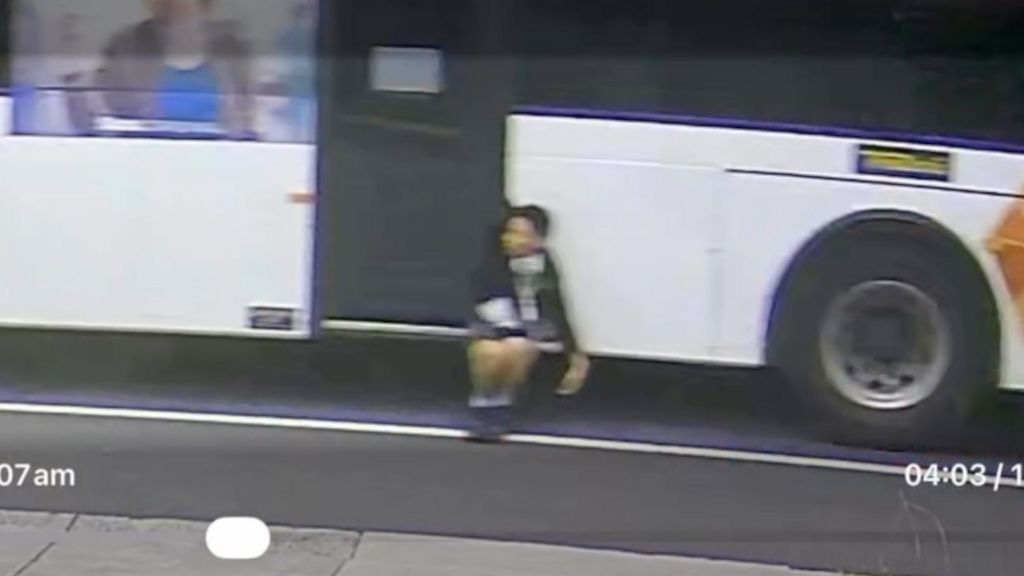
    Emergency services and eyewitnesses have confirmed that the child’s arm and school backpack became caught in the closing mechanism of the bus’s back doors as the vehicle pulled away after a routine stop. Instead of stopping immediately, the bus continued along its route, dragging the boy along for a total distance of 350 meters while he hung exposed outside the moving vehicle.

    Footage of the incident, which has circulated widely in local media, shows the child dangling precariously beside the bus as it traveled, prompting shock and concern from onlookers who watched the scene unfold. Miraculously, once the bus finally came to a stop and the doors were opened to free the boy, emergency responders confirmed he had not suffered any physical harm from the terrifying ordeal.

    Local education and transport authorities have launched an immediate investigation into the incident, focusing on how the safety failure occurred and what steps can be taken to prevent similar near-tragedies from happening in the future. The incident has also sparked renewed conversation about school bus safety protocols, including pre-departure checks and door maintenance, to protect student passengers across the country.

  • At least 25 killed in firecracker factory blast in India

    At least 25 killed in firecracker factory blast in India

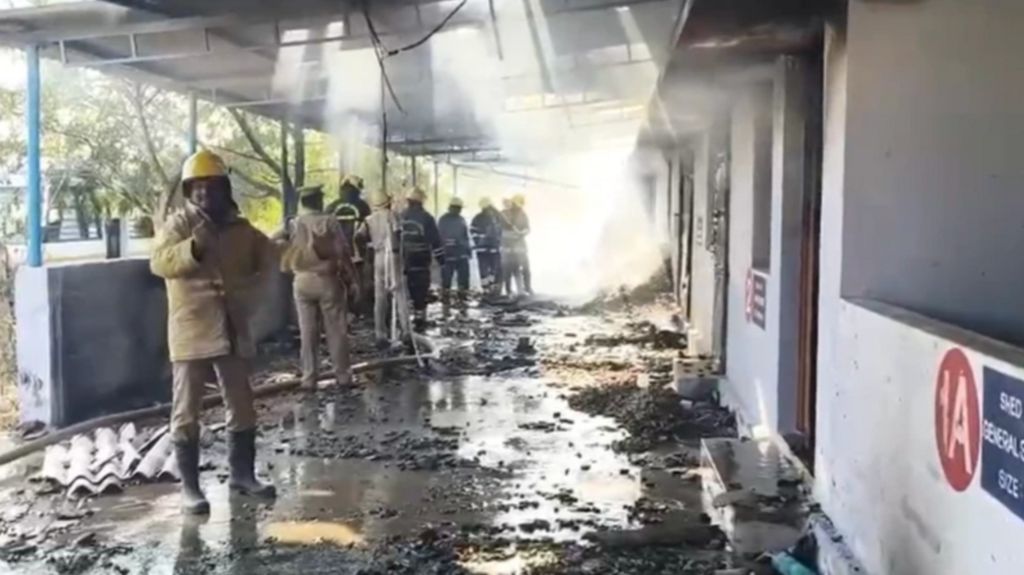
    A devastating explosion at an unauthorised operating firecracker factory in Virudhunagar district, Tamil Nadu, southern India, has claimed at least 25 lives and left 17 others injured, local authorities confirmed. The incident unfolded on Sunday evening at Vanaja Fireworks Industry, a licensed facility that was supposed to be closed for the day, but found roughly 50 workers on site when the first blast hit.

    Rescue teams had barely arrived at the scene when a secondary explosion struck, wounding 13 first responders and civilian rescuers. District Collector NO Sukhaputra told ANI, India’s national news agency, that none of those hurt in the follow-up blast suffered serious burns. Even after the secondary explosion, stray firecrackers continued to detonate inside the damaged factory complex for hours, drastically slowing recovery efforts. Rescue operations have since been wrapped up, authorities confirmed Monday.

    An injured eyewitness, currently receiving medical treatment, told BBC Tamil that around 25 workers were gathered on the veranda outside the main production building when the fire broke out. The blast destroyed at least three rooms and reduced large sections of the factory structure to piles of rubble. Many bodies were left charred beyond recognition by the intense heat from the explosion and subsequent fire, local reports say. As of Monday morning, district officials had successfully identified 22 of the 25 deceased, noting that a majority of the victims are women from nearby rural communities.

    Police have filed formal criminal charges against the factory’s owner and foreman, both of whom have fled the area since the tragedy. Four special investigation teams have been deployed to track down and arrest the two fugitives, law enforcement representatives confirmed. The root cause of the initial explosion remains undetermined, with a full official investigation ongoing.

    Factory safety violations have already emerged as a key focus of the probe. District Collector Sukhaputra told reporters that operating on Sunday was the first confirmed infraction, noting that the factory did hold a valid operating licence at the time of the blast. Inspections into other potential safety breaches, including unapproved working conditions and overcrowding, are still underway.

    Industrial accidents at firecracker production facilities are a recurring issue across India. The sector, which supplies pyrotechnics for weddings, religious festivals and major cultural events across the country, has faced repeated public and regulatory scrutiny for decades over persistent lax safety standards. This latest tragedy has reignited public debate about the enforcement of safety rules in the industry.

    Political leaders across India have responded quickly to the disaster, offering condolences to grieving families. Prime Minister Narendra Modi called the incident deeply distressing in a public statement, extending his sympathies to all those affected. Tamil Nadu Chief Minister MK Stalin said the loss of life had caused immense sorrow across the state, and confirmed he had instructed local administration officials to provide full financial and logistical support to the families of the victims and injured workers.

  • Fire destroys 1,000 homes in a Malaysian coastal village on Borneo Island

    Fire destroys 1,000 homes in a Malaysian coastal village on Borneo Island

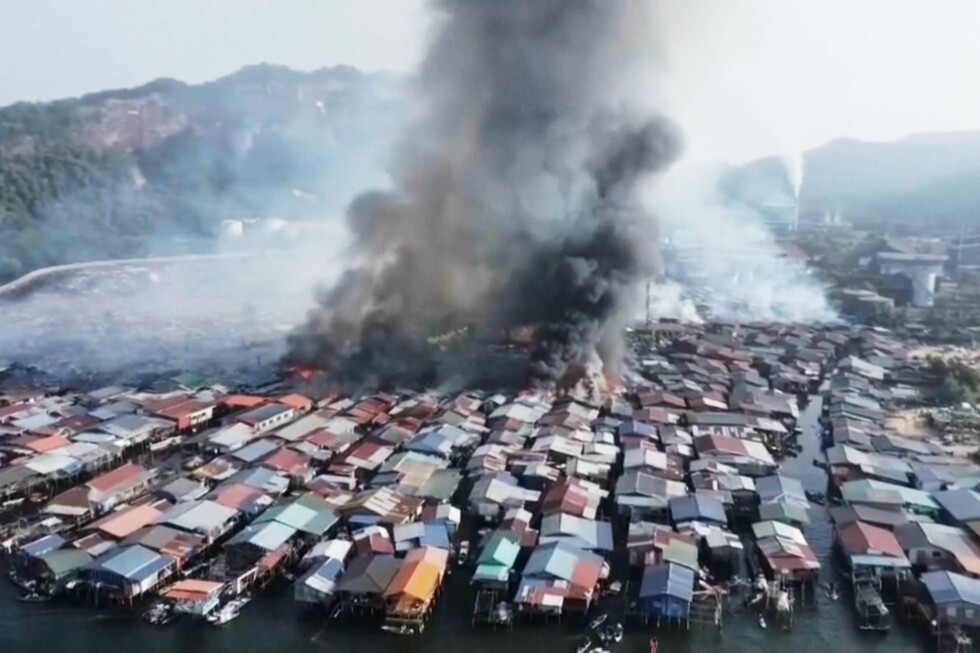
    On early Sunday, a devastating blaze ripped through a stilted coastal settlement in Malaysia’s Sandakan district on Borneo Island, leaving a trail of destruction that has upended the lives of thousands of vulnerable residents, local emergency authorities confirmed. According to the Malaysian Fire and Rescue Department, the inferno spread with alarming speed across tightly clustered wooden homes built over the sea, fanned by strong gusts of wind and the close proximity of the combustible structures.

    Compounding challenges for first responders, narrow access pathways to the overwater settlement and low tide conditions delayed access to burning areas, making it far more difficult to contain the spreading flames before it could destroy most of the neighborhood. As of the latest official updates, no fatalities have been recorded from the incident, but more than 9,000 people have been forced to evacuate their destroyed homes and seek refuge in temporary emergency shelters set up by local officials.

    This type of overwater settlement, commonly called water villages, are a widespread informal housing model along the coast of Sabah, the Malaysian state that includes the Sandakan district and ranks among the country’s poorest. These settlements are overwhelmingly constructed from wood and other flammable materials, packed tightly together, and frequently lack basic public infrastructure including formal fire safety access. Most residents belong to low-income or marginalized groups, including Indigenous communities and people without formal Malaysian citizenship.

    Local newspaper Daily Express cited village head Sharif Hashim Sharif Iting as saying the blaze began when an accidental cooking fire grew out of control. However, Malaysian officials have not formally confirmed this origin, noting the cause remains an active line of investigation.

    Malaysian Prime Minister Anwar Ibrahim announced that federal and state government agencies are currently coordinating relief operations for the affected community, with immediate efforts centered on delivering essential aid and support to displaced families.

    Regrettably, large fires in Sabah’s water villages are not a new crisis: repeated destructive blazes have been recorded in these settlements over the past decades. While Sabah authorities have long recognized that these informal overwater communities face extreme fire risk, systemic safety upgrades and infrastructure overhauls remain a persistent, unresolved challenge for the region.

  • India has splurged billions on metro trains. But where are the commuters?

    India has splurged billions on metro trains. But where are the commuters?

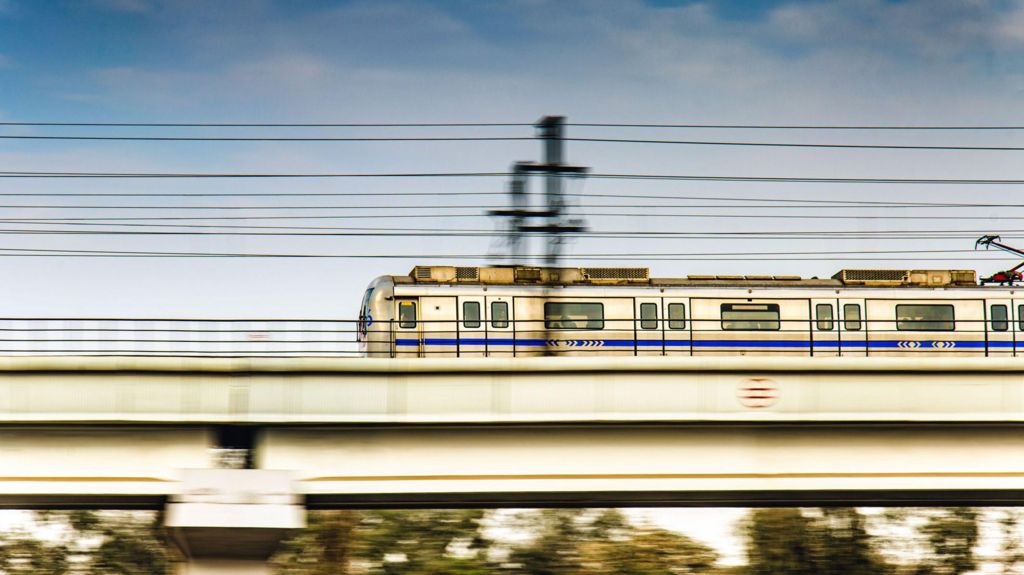
    Over the past decade, India has embarked on one of the world’s most ambitious urban transit expansion programs, pouring more than $26 billion into building metro networks across 22 major and mid-sized cities under the national government led by Prime Minister Narendra Modi. From 2014 to 2025, the total length of operational metro lines across the country surged fourfold, climbing from less than 300 kilometers to over 1,000 kilometers, with average daily ridership also jumping from 3 million to more than 11 million. But these impressive national aggregate figures hide a persistent, troubling trend: the vast majority of new metro corridors are failing to come even close to hitting the ridership projections that were used to justify their construction, according to multiple independent studies and transport experts.

    Take Mumbai’s new fully underground Aqua Line, for example. Opened in 2024, the 33.5-kilometer line connects the historic Cuffe Parade business district to the commercial hub of Bandra-Kurla Complex and the northern suburb’s airport terminals. Planners projected the corridor would ease chronic road congestion in India’s financial capital and carry roughly 1.5 million passengers every single day. But current estimates put actual daily ridership at just 10% of that target. On a recent weekday evening, the train nearly emptied out before its final stop, leaving the terminal looking more like a deserted, outdated Soviet-era infrastructure site than a bustling transit hub in one of the world’s most densely populated cities. “Not a lot of people are using the line. It’s too expensive,” a ticketing agent at the Cuffe Parade terminal told the BBC, summing up a common complaint across the country.

    A 2023 study from the Indian Institute of Technology (IIT) Delhi found that across all new Indian metro corridors, actual ridership hits only 25% to 35% of the original projected numbers. One of the study’s lead authors confirmed that these figures have not improved meaningfully in 2024 and 2025. Independent research from other organizations backs up these findings. The Observer Research Foundation (ORF), a New Delhi-based think tank, reports that ridership in the tier-3 city of Kanpur is just 2% of the original projection, while Chennai’s first phase of metro hit only 37% of its target. Data shared with the BBC by the Institute for Transportation and Development Policy (ITDP) shows actual ridership falls between 20% and 50 of projections in western Indian cities Pune and Nagpur. Only Delhi, home to India’s largest and oldest metro network, has reported ridership that slightly exceeds initial projections—but experts note this is a statistical quirk: Delhi now counts interchanges between lines as separate trips, inflating the official total.

    Transport analysts have identified a web of interconnected factors driving the persistent underperformance, starting with flawed demand forecasting. Ashish Verma, a transport expert at the Indian Institute of Science’s Sustainable Transportation Lab in Bengaluru, explains that projecting transit demand is a complex task, and consultants often inflate projected ridership numbers to make new projects appear economically viable to secure approval. Many forecasts also rely on assumptions about service capacity—such as train frequency and total number of coaches—that are never delivered in practice. For example, on Bengaluru’s busiest metro line, peak-hour trains run only every five minutes or more, while a newer line sees trains just once every 25 minutes. By comparison, the world’s busiest metro systems typically run nine-car trains every 90 seconds during peak periods.

    Affordability is a second major barrier to higher ridership, particularly for low-income workers who make up a large share of potential urban commuters. On Mumbai’s Aqua Line, a single trip costs between 10 and 70 rupees ($0.10 to $0.70), while a three-month unlimited pass on the city’s established, overcrowded suburban railway costs just 590 rupees total—far less than the equivalent metro pass. Aditya Rane, senior transport specialist at ITDP, notes that for the lowest-income Indian commuters, the total cost of an integrated metro journey can consume up to 20% of their monthly income, well above the global affordability benchmark of 10% to 15%. In recent years, many Indian metro systems have cut government subsidies to cover construction costs, a move that has hit ridership hard: when Bengaluru raised metro fares in 2024, daily ridership dropped 13% in the following months, according to data collated by Greenpeace. “Even the London Tube, one of the world’s most expensive urban transit systems, still receives heavy government subsidies, because the core goal is to provide sustainable mobility and decongest cities,” Verma points out.

    Poor network planning and a lack of usable last-mile connectivity also keep ridership low. Nandan Dawda, an urban studies fellow at ORF, explains that commuters will only switch from private vehicles or informal transit to metro if waiting and access times are kept to a minimum. A major missing piece across most Indian cities is affordable, reliable feeder bus service that connects residential and employment hubs to metro stations. Transfer times between different metro lines within the same network are also often unacceptably long: at Delhi’s busy Hauz Khas interchange, transferring between two lines can take 15 to 20 minutes. Compounding this is what Dawda calls “institutional disaggregation”: even within a single city, metro lines and local bus networks are often run by separate, siloed agencies that do not coordinate on scheduling, ticketing, or route planning to create a seamless experience for commuters.

    Additional barriers include poorly maintained pedestrian walkways leading to stations and widespread safety concerns, particularly for women commuting after dark. For many residents, the end of a metro journey is only the start of a difficult, unsafe trip home. “If I am coming home after sunset, I cannot rely on the metro,” said Chetna Yadav, a 40-year-old resident of north Delhi. “The station is 15 kilometers from my house, and when I get off at night, it’s almost impossible to get a cab. I’ve been stuck there multiple times.” Even casual tourists struggle: “If I’m a tourist even in Delhi, I can’t drag my suitcase half a kilometer from the station to my hotel because the walkways are in such bad shape,” Verma says.

    Despite these systemic challenges, most transport experts expect Indian metro ridership to continue climbing incrementally in coming years. Chronic traffic gridlock, worsening air pollution, and soaring parking costs have already reached a breaking point in most major Indian cities, and pressure is growing to introduce congestion pricing for private vehicles, which would push more commuters to consider public transit. But experts agree that a dramatic, rapid increase in adoption is unlikely without major systemic reforms. “Metro systems will only see strong ridership growth if cities get three things right: integrated bus connectivity, safe, accessible station access, and unified, affordable ticketing,” Rane says. “Without those changes, India will keep building gleaming new metro lines that look impressive on paper, but continue to fall far short of their original goals.”
  • Hong Kong fire victims to return to burned homes, grieving losses and grappling with trauma

    Hong Kong fire victims to return to burned homes, grieving losses and grappling with trauma

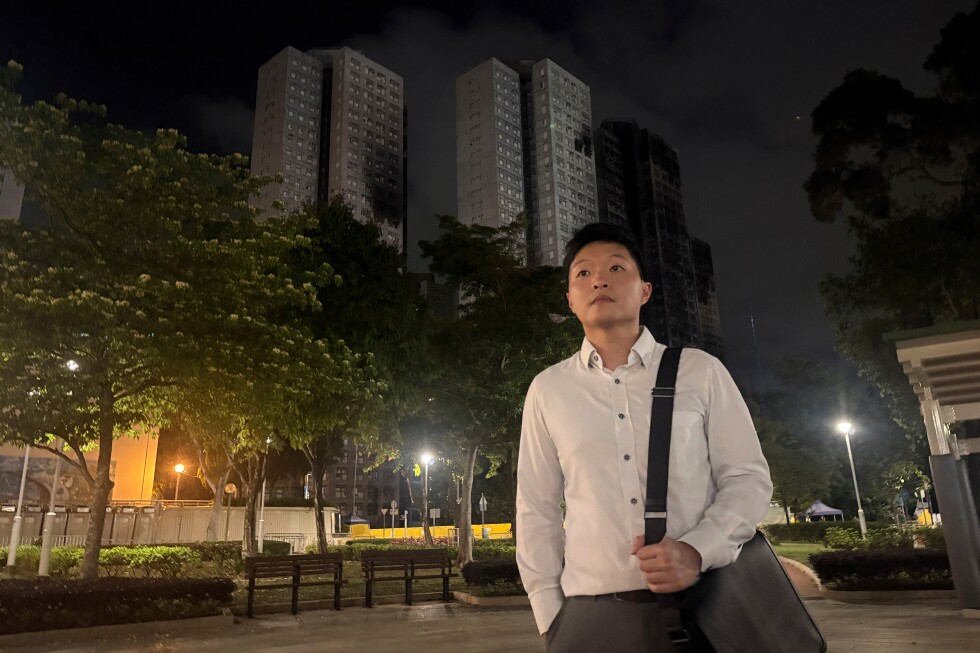
    Five months after Hong Kong’s deadliest residential fire in decades tore through the Tai Po suburban district’s Wang Fuk Court apartment complex, killing 168 people and displacing thousands, the first wave of surviving residents is preparing to step back into what is left of their fire-scorched homes starting Monday.

    For 78-year-old Keung Mak, the impending visit to the first-floor apartment he shared with his wife Kit Chan for more than 40 years, where they raised their children, brings nothing but heavy grief. Images shared by his social worker already laid bare the full scope of the destruction: the apartment’s ceiling burned through to expose exposed steel rebar, floors heaped with shattered charred tiles, and portions of the structure compromised enough to require temporary reinforcement to avoid collapse. Mak says he never imagined his home of four decades would be reduced to such ruin, and he expects almost none of the family’s cherished personal items to survive. Fishing rods gifted to him by his son, 50-year-old wedding photos, and decades of handwritten letters from their child – all items irreplaceable for their sentimental value – are almost certainly gone, Chan, 74, says. “Not even a single piece of paper will be left,” she added. Under current access rules, only two people can enter the severely damaged unit, so only Mak and their son will visit Monday – a restriction Chan hopes officials will relax to let her see her former home one last time.

    The re-entry process, which will allow residents to retrieve any salvageable belongings, is expected to stretch into early May, with strict limits on group size and time spent inside: most households get up to three hours, with up to four people allowed in, while only one person can enter the most unstable units. The visit will be a uniquely grueling test for elderly residents, who made up more than a third of the 4,600 people who lived in the complex before the blaze. With all elevators knocked out of service by the fire, hundreds of seniors aged 65 and older – more than 1,400 in total have registered to return, according to public broadcaster Radio Television Hong Kong – have even undertaken targeted fitness training to prepare to climb stairs up to the 31st story of the damaged towers. Blackened, soot-stained building exteriors still stand as a constant, stark reminder of the November tragedy, and few residents hold out hope of recovering any meaningful mementos from their destroyed units.

    Nearly five months on, residents are still waiting for official conclusions from the ongoing public inquiry into the fire’s cause, while they themselves have been scattered across Hong Kong, most housed in temporary government accommodation as they weigh resettlement options. Early findings from the independent inquiry have already revealed damning details: an attorney for the committee confirmed that nearly all fire safety systems in the seven affected buildings failed on the day of the blaze due to preventable human error. Authorities have also confirmed three men were arrested in March on suspicion of looting abandoned units in the weeks after the fire, leaving many residents wary of what they will find when they return.

    For many survivors, the re-entry brings tangled, conflicting emotions. Thirty-nine-year-old Cyrus Ng, whose parents lived in a 10th-floor unit at Wang Fuk Court for more than a decade before he moved out, says he struggled with insomnia, anger and grief in the immediate aftermath of the disaster. While he has found a measure of emotional stability in the months since, he has not come to terms with the tragedy, and remains firm in his demand for full accountability. “We know there are suspicious issues behind this,” Ng said. “I hope we can really find the truth.” Ng’s parents’ unit escaped the worst of the fire damage, so he is both anxious about the emotional toll the visit will take on his elderly parents, and hopeful they will be able to retrieve critical documents, old photos and clothing that hold deep personal meaning. He also shares the widespread concern over potential theft, and plans to document the unit’s condition with photos during his visit to push back against the government’s proposed demolition plan.

    Hong Kong officials have already stated that cost-effective repairs to the seven fire-damaged buildings are unfeasible, and have proposed demolishing the structures and buying back homeownership rights from displaced residents, a plan based on survey data collected from residents. But many survivors have pushed back on the proposal, pointing to inquiry data showing only half of the 1,700 units in the seven buildings suffered any level of damage. Ng believes that at least some of the less damaged structures could be repaired to allow residents to return if they wish, even as his own parents consider accepting the government’s offer of replacement housing elsewhere.

    Even residents of the only complex building that escaped the fire face unresolvable trauma, and hold mixed views on the government’s plan. Stephanie Leung, who lives in the unscathed block, says her family cannot imagine staying in the apartment permanently. Every time they look out at the seven blackened towers where former neighbors and schoolmates lost their lives, the nightmare of the fire comes rushing back. “Whenever I go back, I want to cry,” she said. Leung hopes the government will extend the buyback and demolition option to her block as well, while allowing residents who wish to stay to remain. For all residents, Monday’s first visits back to the ruins are not just a chance to recover belongings – they are another painful step forward in a long, uncertain journey toward recovery that remains far from over.

  • Xinjiang tour guide whose video went viral wishes to visit Taiwan

    Xinjiang tour guide whose video went viral wishes to visit Taiwan

    A 26-year-old tour guide from China’s Xinjiang Uygur autonomous region has captured the hearts of millions of online users, after a spontaneous, heartfelt video of her introducing a landmark infrastructure project went viral across Chinese social media. Now, Dilinur Tursunjan says her biggest personal wish after the viral fame is to cross the Taiwan Strait and visit the Taiwanese family that became her close friends during their Xinjiang trip.

    Dilinur first connected with the family from Taiwan last October, when the group began their cross-regional tour of Xinjiang, starting in the northern part of the autonomous region and extending to southern Xinjiang this past March. Over the course of nearly a month traveling together, a deep, warm bond formed between Dilinur and the family. She describes their connection as something even closer than ordinary friendship, built on shared experiences and mutual respect during their journey across Xinjiang’s stunning landscapes.

    It was during this trip that Dilinur filmed the viral clip, as she brought the Taiwanese family to visit the newly opened Tianshan Shengli Tunnel. The video, which captured her genuine pride in the mega-engineering project, quickly spread across major social platforms, racking up millions of views and likes and sparking widespread discussion among netizens that lasted for days.

    In the video, Dilinur shared a powerful reflection on the tunnel’s construction: “Because our people need this open, accessible road, our great motherland can move mountains and redirect rivers. Drilling through the Tianshan Mountains was never an easy task, but we got it done because the wellbeing of our people waits on the other side of the range.” Her unscripted, sincere words resonated deeply with viewers across the country.

    Stretching 2,500 kilometers across northwest China, the Tianshan Mountains have long formed a natural divide between northern and southern Xinjiang, creating long, slow travel routes between the two regions. Completed after just over four years of construction, the 22.13-kilometer Tianshan Shengli Tunnel holds the title of the world’s longest expressway tunnel, and opened to public traffic in December 2025. The project cut what was once a three-hour mountain crossing down to a smooth 20-minute drive, transforming connectivity for local residents and travelers alike.

    While guiding the Taiwanese family through the site, Dilinur explained the immense challenges construction crews overcame to complete the project. Workers labored at altitudes above 4,000 meters, where they faced constant exposure to freezing temperatures, low oxygen levels, and extremely complex geological conditions rife with sudden hazards including landslides, rock bursts, and unexpected water inrushes. Leveraging a suite of cutting-edge, world-class innovative construction technologies, Chinese engineering teams successfully completed the tunnel in an impressive 52 months, beating expectations for such a complex high-altitude project.

    Dilinur emphasized that her viral comments were completely unscripted and came straight from her heart. She told reporters that when she was researching background information to prepare for the tour, the story of the tunnel’s construction left a deep impression on her, and her overwhelming pride in this extraordinary national project made her words flow naturally on camera.

    Now, after forming such a close bond with her Taiwanese guests, Dilinur says she is eager to make the trip to Taiwan to see them, and to experience the island’s natural scenery and culture in person, turning the cross-Strait friendship built on a Xinjiang road trip into a new shared memory.

  • Sanyuesan Festival brings technology and culture together in Nanning

    Sanyuesan Festival brings technology and culture together in Nanning

    Southwest China’s Nanning, the capital of the Guangxi Zhuang Autonomous Region, played host to the grand opening of the 2026 Guangxi Sanyuesan Festival this Saturday, marking a fresh reimagining of one of China’s most beloved ethnic cultural celebrations through a dynamic fusion of traditional heritage and modern digital innovation.

    Observed on the third day of the third month in the traditional Chinese lunar calendar, Sanyuesan has been a core cultural observance for the Zhuang ethnic group for centuries, serving as a time for communal gathering, folk performances, and honoring ancestral traditions. For this year’s iteration, event organizers have pushed creative boundaries to reintroduce the centuries-old holiday to new generations, building a immersive folk celebration that marries long-held cultural customs with 21st-century technological advances.

    Three core themes anchor the 2026 festival: cutting-edge interactive technology experiences, cross-cultural exchange between China and the Association of Southeast Asian Nations (ASEAN), and a showcase of the one-of-a-kind natural and cultural charm that defines Guangxi. Unlike traditional iterations of the holiday that centered almost exclusively on folk performances and ritual gatherings, this year’s event integrates augmented reality installations, digital cultural exhibitions, and live-streamed interactive experiences that allow attendees both on-site and online to engage with Zhuang culture in entirely new ways. It also spotlights shared cultural ties between Guangxi and ASEAN member states, turning the regional ethnic festival into a platform for transnational cultural connection.

    The event has drawn widespread attention for its approach to cultural preservation, proving that centuries-old traditions can be refreshed for modern audiences without losing their core meaning. As the festival kicks off, attendees and cultural observers alike are eager to see how this blend of old and new will shape the future of ethnic cultural celebrations across China.

  • Eight children dead in US domestic violence shooting

    Eight children dead in US domestic violence shooting

    A devastating early-morning shooting rooted in domestic violence has left eight children dead in the southern U.S. city of Shreveport, Louisiana, marking one of the deadliest mass shooting incidents in the country in recent years, local law enforcement confirmed Sunday.

    The violence unfolded just after 6 a.m. local time, or 1100 GMT, across three connected residential properties, leaving a sprawling crime scene that investigators have been processing systematically since the incident. All eight fatal victims were children between the ages of 1 and 14, according to Police Corporal Chris Bordelon, who spoke to reporters at an official press conference. Some of the slain children were biological descendants of the gunman, Bordelon added.

    Three additional people were hurt in the attack: two adult women suffered gunshot wounds to the head, and a young boy sustained injuries after jumping from a residential roof to escape the violence, according to local ABC affiliate KTBS. Two other adults were hit by gunfire, though their conditions were not disclosed to the public immediately after the incident.

    Following the shooting, the unidentified adult male suspect carjacked a civilian vehicle and fled the scene, triggering a high-speed pursuit by law enforcement. Officers ultimately opened fire on the suspect, killing him at the end of the chase. No law enforcement personnel were injured during the operation, Louisiana State Police confirmed. Investigators have concluded the suspect acted alone, with no other co-conspirators involved in the attack.

    Data from the Gun Violence Archive classifies the incident as the deadliest mass shooting in the United States in more than two years, a grim statistic that underscores the persistent crisis of gun violence plaguing the country. Where widespread access to firearms remains a contentious policy issue, thousands of people die from gun-related incidents across the U.S. every year.

    Local and state political leaders have expressed shock and grief over the tragedy. Shreveport Mayor Tom Arceneaux called it a terrible day for the community, telling reporters “we all mourn with the victims.” Louisiana Governor Jeff Landry said he was heartbroken by the loss of life, while U.S. Senator Bill Cassidy, a Republican representing the state, described the attack as horrific violence and extended well wishes for a full recovery to all survivors.

    Law enforcement officials have said they will not release additional details about the identities of the victims and the suspect until all next of kin have been notified, a standard process following mass casualty events.

  • Widespread damage as storm spreads through midwestern US

    Widespread damage as storm spreads through midwestern US

    A destructive storm system carrying intense, high-velocity winds has swept across a broad swathe of the American Midwest this week, leaving a trail of structural damage and transportation disruption in its wake. Meteorologists confirm that the fast-moving weather front brought gusts strong enough to tear full roof assemblies from multiple residential properties across several affected states, leaving homeowners facing costly, unexpected repairs and potential temporary displacement. Beyond damage to buildings, fallen tree branches, debris, and other storm-related obstacles have blocked countless local highways, arterial roads, and neighborhood streets, forcing temporary closures, slowing emergency response efforts, and complicating travel for residents in impacted communities. Local emergency management agencies have already deployed assessment teams to survey the full scope of damage, clear blocked routes, and provide support to residents who have lost their homes or suffered major property damage. As cleanup operations get underway, officials are urging residents to avoid travel through affected areas where possible to keep roads clear for first responders and cleanup crews.

  • Chinese people at home and abroad bond together in ritual ceremony

    Chinese people at home and abroad bond together in ritual ceremony

    On Sunday, April 19, 2026, thousands of people of Chinese descent from across China and around the world gathered in Xinzheng, a city in central China’s Henan province that is widely recognized as the birthplace of the Yellow Emperor, the legendary common cultural ancestor of the Chinese nation, to take part in the annual traditional worship ceremony.

    Rooted in a historical tradition that stretches back more than 2,500 years to the Spring and Autumn Period (770–476 BC), this yearly ritual has been preserved and passed down through successive generations of Chinese communities, retaining its core cultural significance even as it adapts to modern times. Today, the ceremony stands as one of the most important shared cultural events for Chinese people worldwide, serving as a touchstone for collective cultural memory and identity.

    The 2026 iteration of the ceremony followed the nine standardized procedural steps that were officially formalized when the ritual was granted national intangible cultural heritage status by China’s cultural authorities. This standardization has helped protect the ritual’s traditional authenticity while making it accessible to participants from all backgrounds, whether they are long-time local residents or international visitors traveling to Xinzheng for the event.

    For attendees, the gathering is far more than a cultural observation: it is an opportunity to strengthen connections with shared heritage, reinforce a collective sense of cultural belonging, and foster bonds between Chinese communities across the globe. Many participants note that the annual ceremony creates a space for people with shared cultural roots to come together, regardless of their current place of residence, to honor the legacy of the Yellow Emperor and celebrate the shared cultural identity that unites all people of Chinese descent.