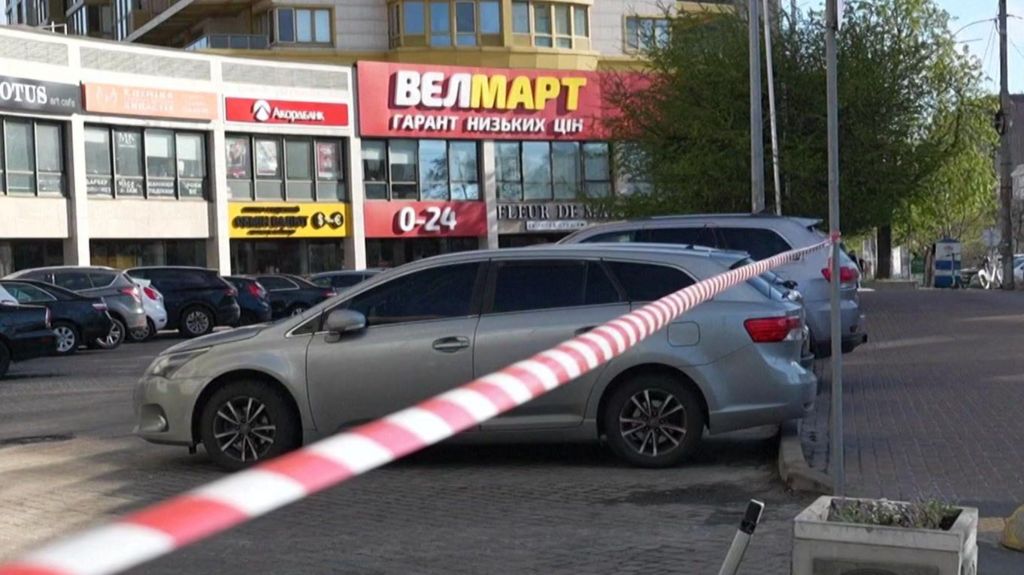
A shocking mass shooting in Ukraine’s capital Kyiv that left six civilians dead and 14 others injured has triggered a high-level political shakeup, with the head of the country’s patrol police stepping down after two of his officers faced widespread backlash for reportedly abandoning the scene. The violence unfolded Saturday in Kyiv’s southern Holosiivskyi District, where the attacker first set fire to his own apartment before opening fire on random civilians on a public street. After the initial rampage, the gunman barricaded himself inside a nearby supermarket and took multiple hostages, before he was ultimately killed in a subsequent shootout with law enforcement. In the immediate aftermath of the attack, video footage circulated widely across social media platforms that appeared to show the two responding patrol officers fleeing the scene, leaving vulnerable civilians without protection as the shooter was still active. Ukraine’s Interior Minister Igor Klymenko quickly announced that the two officers at the center of the controversy had been suspended pending a full official investigation into their conduct. In a public post on the Telegram messaging platform, Klymenko emphasized that the core police mission of “serve and protect” is more than empty rhetoric, stressing that it requires decisive, professional action especially in life-or-death moments where civilian survival hangs in the balance. He also urged the public not to condemn the entire national police force over the actions of just two individual officers. At a press conference held Sunday, Yevhen Zhukov, the former head of Ukraine’s patrol police, confirmed his resignation, saying the two officers had failed to correctly assess the dangerous situation and abandoned civilians to harm. He labeled their actions unprofessional and dishonorable, adding that as the commanding officer, he took formal responsibility for the incident and was stepping down. Ukrainian authorities have formally classified the mass shooting as a terrorist act, but have not yet publicly confirmed a clear motive for the attack. Klymenko noted that the attacker appeared to have an unstable mental state. As of Sunday, eight wounded victims remained hospitalized, with one in extremely critical condition and three others listed as serious. In a public address updating the nation on the incident, Ukrainian President Volodymyr Zelenskyy backed the investigation into the officers’ conduct, confirming that the two officers were present at the scene but fled rather than stopping the shooter. Zelenskyy said Ukraine’s National Bureau of Investigations had opened a full criminal probe that will also review the officers’ entire professional history. Zelenskyy called the attack particularly devastating, noting that Ukraine already faces daily civilian casualties from Russian military strikes, and losing innocent lives to a domestic mass shooting in an ordinary urban neighborhood is an especially painful blow. New details emerging about the victims confirm that one of the six people killed was the father of a wounded child, and another fatality was the child’s aunt. Law enforcement has identified the shooter as a 58-year-old man originally from Moscow, Russia, who had resided in Kyiv’s Holosiivskyi District in the years leading up to the attack. Prior to moving to Kyiv, he lived in Ukraine’s eastern Donetsk Region, most of which is currently under Russian military occupation and was the center of a pro-Russian separatist insurgency before Moscow’s full-scale 2022 invasion. Officials confirmed that the firearm used in the attack was legally registered to the shooter, and investigators are currently probing how he was able to secure the required documentation to renew his gun license. Mass casualty domestic shootings remain extremely rare in Kyiv, even amid the ongoing full-scale war with Russia, where the city faces regular Russian missile and drone strikes. In the wake of the attack, Klymenko ruled out implementing broad, universal checks of all licensed gun owners across the country. He argued that Ukrainian citizens should retain the right to own firearms for self-defense, pointing to the critical role of armed civilian resistance when Russia first launched its full-scale invasion in 2022. Under current Ukrainian law, citizens are allowed to own non-automatic firearms if they meet strict licensing requirements, including passing background checks that rule out felony criminal records and documented histories of mental illness. Since the start of the full-scale invasion in 2022, Ukrainians have been legally permitted to carry firearms to defend themselves and their country. Data from a 2023 independent small arms survey estimates that only roughly 3.4% of Ukrainian adult citizens personally own a registered firearm.
分类: society
-

Eight children killed in Louisiana shooting, police say
A devastating act of gun violence has shaken the Louisiana city of Shreveport, where eight children between the ages of 1 and 14 are dead following what law enforcement describes as a domestic disturbance-related shooting. One adult gunman carried out the attack early Monday local time, leaving an entire community grappling with unfathomable grief.
According to Shreveport Police Department officials, the first reports of trouble emerged just before 5 a.m. local time, when the gunman opened fire on 10 people across three separate residences: two family homes on the same city block and a third nearby dwelling. As the situation unfolded, one person injured in the initial shooting fled to a neighboring residence, while the gunman himself carjacked a civilian vehicle to escape the scene.
Local law enforcement immediately launched a pursuit, which ended when officers fatally shot the suspect in a different Shreveport neighborhood. When responding officers secured the first targeted home shortly before 6 a.m., they made the horrific discovery that all eight fatal victims were minors. “All of the deceased in this case are juveniles,” confirmed Shreveport Police Corporal Chris Bordelon, noting that preliminary investigations have confirmed the attack stemmed from a domestic dispute.
As of Tuesday, authorities have not released the identities of either the suspect or the victims, a decision made to allow time to notify all next of kin. Officials did confirm that many of the slain children were related to the dead gunman.
Local and state leaders have described the attack as one of the darkest moments in Shreveport’s history. “This is a tragic situation – maybe the worst tragic situation we’ve ever had in Shreveport,” said Shreveport Mayor Tom Arceneaux. “We have hurting families, we have hurting police officers, coroners’ personnel. This affects the entire community, so we all mourn with these families.” The mayor called on people across the country to hold the impacted families and the city of Shreveport in their prayers.
Shreveport Police Chief Wayne Smith echoed that sorrow, saying his department was struggling to process the scale of the violence. “I just cannot begin to imagine how such an event can occur,” Smith said. He confirmed that the ongoing investigation is being conducted in close partnership with Louisiana State Police, with additional support from multiple regional and federal law enforcement agencies. “We are going to be working diligently however long it takes to get some answers to what has taken place,” he added.
State and federal officials have also offered their condolences and praise for first responders. Louisiana Governor Jeff Landry said he and his wife were “heartbroken over this horrific situation, and we’re praying for everyone affected.” He added, “We’re deeply grateful to the law enforcement officers and first responders working tirelessly on the scene.”
House Speaker Mike Johnson, whose congressional district covers Shreveport, also released a statement calling the attack a “heartbreaking tragedy.” “We’re holding the victims, their families and loved ones, and our Shreveport community close in our thoughts and prayers during this incredibly difficult time,” Johnson said, noting his appreciation for local police’s rapid response to the violence.
-

Drone footage shows huge Malaysian coastal village fire
A devastating large-scale fire has swept through a coastal village in Malaysia’s Sabah state, leaving a trail of destruction that has upended the lives of thousands of local residents. Aerial drone footage captured the full scale of the disaster, showing raging flames tearing through tightly packed residential structures and leaving entire neighborhoods reduced to ash and charred debris. According to official early assessments, the blaze destroyed approximately 1,000 homes, leaving most of the village’s inhabitants with nowhere to go. Local emergency management agencies have mobilized response teams to the affected area, establishing temporary evacuation centers to host the displaced residents, who lost all of their personal belongings and housing in the fast-moving fire. Rescue teams are currently working to assess the full extent of the damage, check for any unaccounted-for residents, and deliver critical emergency supplies including food, clean water, medical care, and temporary shelter to those affected. The cause of the fire is still under investigation by local authorities, who are working to determine whether it was accidental or sparked by other factors. The disaster has drawn attention to the vulnerability of low-lying coastal settlements in Sabah, many of which have narrow access routes that can slow emergency response efforts during large-scale events.
-

Family left with unanswered questions after Suzanne Rees’ death on Lizard Island
A devastating cruise tragedy that claimed the life of an 81-year-old Australian grandmother has come under fresh scrutiny this week, as the victim’s family has broken their silence to demand accountability and expose critical safety failures that led to her unnecessary death.
Suzanne Rees, a retired accountant and grandmother from New South Wales, embarked on what was meant to be the dream luxury voyage around Australia’s northern coast, a $30,000 journey departing from Cairns bound for Perth, operated by small-ship cruise provider Coral Expeditions onboard the Coral Adventurer. On October 25 last year, the cruise docked at Lizard Island, a popular tourist spot on the Great Barrier Reef, and Rees – an experienced hiker – joined the vessel’s guided shore hiking excursion.
What began as a joyful excursion ended in unthinkable loss. Rees was separated from the group and left stranded on the island overnight, and search crews recovered her body the following morning, just 50 meters from the marked hiking path.
Nearly a year after the tragedy, Rees’ daughter Kate Rees and son-in-law Andrew Cowie have shared their story in a Sunday evening episode of the long-running Australian current affairs program *60 Minutes*, airing the final text message Rees sent to her daughter hours before her death to highlight the senseless nature of the loss.
“That morning she sent me a text with a photo of the ship’s deck, saying ‘Arrived at Lizard Island, going for a hike, and then afternoon swim’,” Kate Rees recalled in the program. “We had no reason to think that this wouldn’t be the most amazing experience. We had no reason to think anything bad would happen.”
To date, the family says they have received no clear explanation for how the cruise crew failed to notice Rees was missing for hours. Based on the limited information they have received, Rees told *60 Minutes* her mother had reported feeling unwell mid-hike, and a guide instructed her to return to the ship alone – a decision that former Coral Adventurer hiking guide Fern Trent called deeply alarming and out of line with standard safety protocol.
Trent explained that any time a guest needs to leave an excursion early, the standard practice is to radio the ship to arrange an escort, rather than leaving an unwell passenger to navigate an unfamiliar island alone. What shocked her most, she added, was that the crew missed Rees entirely during their mandatory headcount before the ship departed.
*60 Minutes*’ investigation confirmed that the entire hiking group returned to the Coral Adventurer, and the ship set sail for its next destination at 3:35 pm. It took five full hours before the crew realized Rees was not onboard and turned the vessel around. A preliminary search party was deployed at 10:30 pm, and a rescue helicopter was dispatched from Cairns, but the search was suspended when the Coral Adventurer arrived at the island just after 3:30 am. Rees’ body was located the next morning.
In an official statement provided to *60 Minutes*, Coral Expeditions acknowledged that catastrophic mistakes were made on the day of the tragedy. The company called Rees’ death devastating and offered a formal apology to the family for their loss and the pain the incident has caused.
“While Coral Expeditions had comprehensive safety systems and procedures in place, we acknowledge some of these were not adequately implemented on this tragic day,” the statement read. “Ms Rees’ death has shocked our people to the core and we will continue to co-operate fully with the ongoing investigations. Coral Expeditions has introduced additional systems and procedures to further strengthen protections for our guests.”
For Kate Rees, however, the policy changes come too late, and she argues that the excursion should never have run at all. She says extreme heat on the day should have led crew leaders to cancel the hike entirely, a decision that would have saved her mother’s life. “Somebody needed to make that decision and say, ‘too hot, we’re not doing a walk’,” she said. The family continues to push for full transparency as investigations into the tragedy move forward.
-

Shocking footage of shooting at The Men’s Gallery strip club shared online
Newly released dashcam footage has laid bare the terrifying moments of a recent drive-by shooting outside a popular Melbourne strip club, capturing the shooter’s actions and the rapid, life-saving reaction of an on-duty security guard.
The chilling clip circulated online Friday via gang-focused media outlet Outlaw Media, emerging just hours after the incident unfolded around 4:10 a.m. at Men’s Gallery, a long-standing adult entertainment venue located on Melbourne’s Lonsdale Street. In the footage, a hooded, gloved suspect positioned in the passenger seat of a moving vehicle can be seen firing a silver handgun just meters from the club’s front entrance. Spotting the incoming threat almost instantly, the security guard posted at the doorway sprints away to take cover, narrowly avoiding any harm.
Official statements from Victoria Police confirmed that no people suffered physical injuries in the attack. Authorities also confirmed that the shot originated from a dark-colored vehicle, fired directly toward the licensed premises. In the wake of the shooting, law enforcement has issued a public call for any witnesses or members of the public with relevant security footage or information to come forward and contact Crime Stoppers to assist with the investigation.
What makes this incident particularly alarming for investigators is its timing: the shooting comes only days after the same venue was targeted in a failed arson attack around 5:45 a.m. on April 14. Detectives from Victoria Police’s Arson and Explosive Squad are currently probing whether this shooting is connected to that attempted arson, as well as a recent spike in suspicious fires across licensed hospitality venues across Melbourne over the past week.
Speaking to reporters Friday, Detective Inspector Chris Murray noted that at least seven separate arson attacks have hit bars, restaurants, and clubs in recent days, and the underlying motive for the wave of violence remains unclear. While authorities are actively investigating potential connections between all the incidents, Murray confirmed that no concrete links have been confirmed to date. Venue owners have been fully cooperative with investigators, he added, and none have been able to explain why their properties have been targeted.
Murray told reporters that police suspect the attacks are being organized by third parties who hire inexperienced young people to carry out the violent acts. “What we suspect is these jobs are being tasked out to anyone … these young kids are being used as cannon fodder,” he said.
So far, police have made a small number of arrests connected to two of the suspicious fires. Investigations have revealed that the young males accused of carrying out those attacks were paid only a few hundred Australian dollars to commit the crimes, Murray said.
In a public appeal for community assistance, Murray urged residents and business owners to report any suspicious activity immediately to Crime Stoppers. Specifically, he called attention to out-of-character late-night activity: “Call Crime Stoppers if you see something unusual, and when I say ‘something unusual’ … we see young males get out of vehicles in possession of jerry cans at 3am in the morning, now if you see that; obviously that’s something we’re interested in.”
-
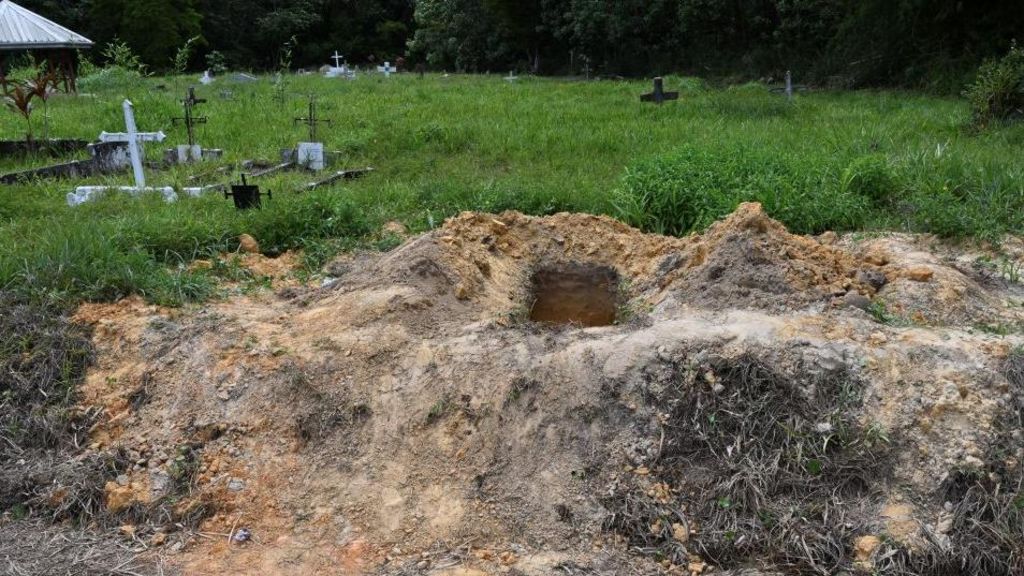
Bodies of 50 infants dumped at Trinidad graveyard
Authorities in Trinidad and Tobago have launched a full criminal investigation after a grim discovery at a rural graveyard: the remains of at least 50 infants and six adults were found dumped in an unmarked site, local police confirmed this week.
The mass grave was uncovered in Cumuto, a small town located roughly 40 kilometers southeast of Port of Spain, the capital of the Caribbean twin-island nation, according to an official statement from the Trinidad and Tobago Police Service (TTPS). Preliminary investigative work has pointed to potential unlawful disposal of unclaimed corpses as a leading line of inquiry, police added.
As of the latest update, investigators have not confirmed whether the discovery is connected to the country’s persistent gang violence crisis, which has left Trinidad and Tobago with one of the highest homicide rates across Latin America and the Caribbean. Of the six adult remains recovered, five bore identification tags, and two of the bodies showed clear evidence of prior post-mortem examinations, police detailed in their statement.
Allister Guevarro, the country’s police commissioner, described the find as deeply disturbing and pledged full accountability for any party found responsible. “Any individual or institution found to have violated that duty will be held fully accountable,” Guevarro said, referencing the legal and ethical obligation to handle human remains with proper dignity and protocol.
The discovery comes amid a prolonged state of emergency that was first enacted on March 2 this year and has since been renewed, granting expanded search and arrest powers to police to address the country’s ongoing security challenges. Since the state of emergency was implemented, the U.S. Department of State has issued multiple updated travel advisories for Trinidad and Tobago, warning U.S. travelers of elevated risks from both widespread crime and potential terrorism activity.
The advisory notes that while violent crime has fallen significantly across the country since 2024, driven by enhanced security operations launched during earlier states of emergency, criminal activity remains a pervasive national challenge that visitors and residents alike must navigate.
-
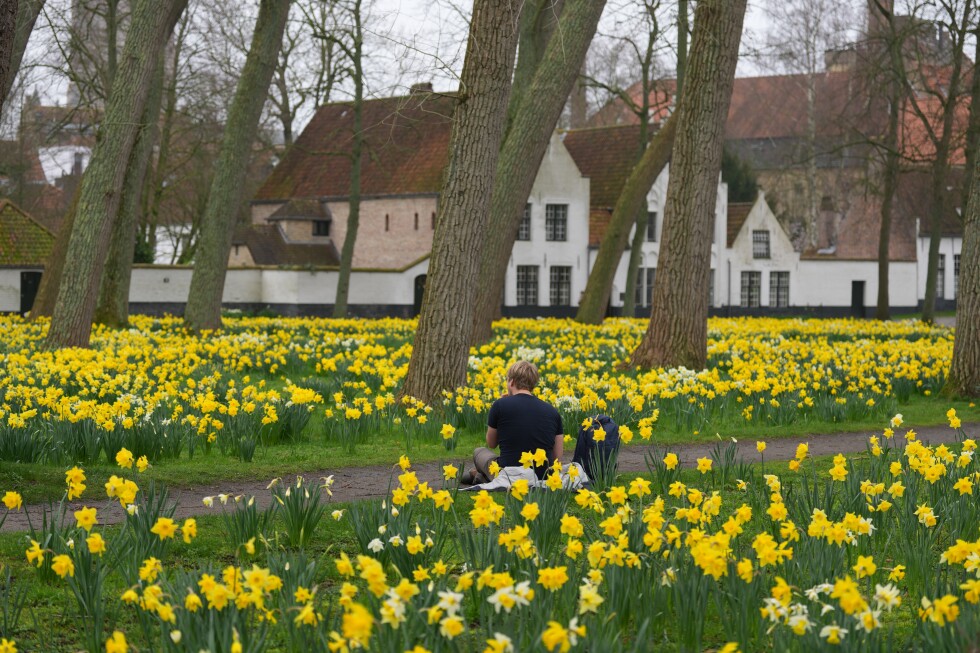
Belgium’s Beguinages: Tranquil oases in a world of noise and distraction
Bruges, Belgium’s most iconic tourist hub, hums with the constant energy of rolling suitcase wheels on cobblestones, chugging motorboats cutting through canal waters, and multilingual chatter from visitors that fills every historic street. Tucked away just across a small bridge, beneath an ornate stone arch carved with the Latin word “sauvegarde” — meaning “safe place” — a small group of 24 women have carved out a quiet sanctuary far from the city’s crowds: the Princely Beguinage Ten Wijngaerde, a serene oasis ringed with golden daffodils that dates all the way back to 1245.
For Trees Dewever, this enclosed community has been home for 22 years. In a world defined by chaos and constant stimulation, she says the beguinage wraps its residents in an overwhelming sense of peace that feels essential to modern life. Her neighbor Jo Verplaetsen, who has lived here for the same span of decades, echoes that sentiment: the medieval spirit of shelter that shaped the community remains just as soothing and socially connected today, leaving residents grateful for their home every single day.
The origins of beguinages stretch back to the 12th century, born as a response to widespread societal upheaval. Centuries of medieval conflict had decimated Europe’s male population, leaving a surge of widows and unmarried women without financial or social stability. Rather than committing to the strict, binding rules of traditional convents, many of these women chose the more flexible structure of beguinage life, explains Michel Vanholder, a volunteer at the Grand Beguinage Church of Mechelen. “They didn’t want to go become nuns but nevertheless they wanted to live together without men because there were not enough men to marry,” he notes.
Women who joined these communities were called beguines. Unlike nuns, they were never required to take formal vows of celibacy or poverty, could own personal property, and were free to leave the beguinage at any time if they chose to marry. This middle way between secular life and religious order filled a critical gap for women seeking independence in a male-dominated medieval world, says Brigitte Beernaert, who has called the Bruges beguinage home for more than 20 years. Historically, beguines supported their communities by caring for the sick and impoverished, selling skilled handwork like needlepoint and fine lace, and reinvesting earnings back into shared community resources.
For centuries, beguinages had a fraught relationship with the Vatican: at times embraced as legitimate religious communities, they were also targeted with waves of persecution. One of the most famous beguines, French Christian mystic Marguerite Porete, was burned at the stake as a heretic in 1310 for her unorthodox theological writings. Over the centuries, the beguine movement has captured the imagination of creative thinkers, with iconic novelists including Charlotte Brontë, Ken Follett, and Umberto Eco all featuring beguines and their male equivalent, the beghards, in their work.
Architecturally, beguinages were intentionally designed to prioritize comfort, quiet, and safety for like-minded women. Small private gardens are tucked along quiet alleys or clustered around a central courtyard, where homes face inward to foster community connection, and a chapel or church almost always sits at the heart of the site. Today, 13 historic beguinages across Flanders, Belgium’s Dutch-speaking northern region, are protected as UNESCO World Heritage Sites, recognizing their unique cultural and historical significance.
For visitors like German tourist Biata Weissbaeker, who explored the Bruges site with her husband, these all-women spaces remain just as vital today as they were 800 years ago. “Women need a place like this: a safe place that gives them the possibility to go inside themselves,” she says.
While the last traditional beguine in Belgium, Marcella Pattijn, passed away in 2013 at 92 years old, the core mission of the beguinage community has endured through eight centuries. “Once you are in here, you are safe — that was of course literal in the Middle Ages, once you lived here, the law couldn’t take you away,” Beernaert explains. “Today it’s more like a safe place for women alone.”
The Bruges beguinage still restricts residency to women exclusively, even as the city of Bruges now owns and maintains the grounds, with residents renting their homes from the municipal government. Across Belgium, beguinage communities host regular public events to nurture connection among residents through shared activities like community gardening, and open their doors to the public through open house events to share their history. Recently, residents of the Bruges beguinage planted raspberry bushes along the canal wall and keep beehives to produce their own honey. For Beernaert, the timeless peace of the site feels more important than ever amid global uncertainty. “The world is terrible for the moment, and this gives us the impression that it’s still safe here,” she says. “This gives Bruges already a little bit of a small paradise, if you want. And living inside that paradise feels unbelievable.”
-

The South Korean authors rising above a tide of hate to become bestsellers
Against a backdrop of rising anti-feminist pushback across South Korea, a growing cohort of female writers and storytellers are building a grassroots, community-centered movement to claim space for women’s unfiltered voices—a shift that author Eunyu describes as a “slow-but-sure revolution.”
When Seen Aromi’s 2024 memoir celebrating the joys of intentional singlehood hit bookstores, it quickly climbed to the top of bestseller lists. *So What if I Love My Single Life!* resonated across generations and relationship statuses: women from all walks of life drew comfort from Seen’s unapologetic rejection of unsolicited social pressure, and many found validation in choosing a life centered on their own priorities. But the book’s runaway success also sparked a tidal wave of online vitriol, largely from male readers who attacked Seen, predicted she would die alone, labeled her selfish, and even accused her of betraying the nation for rejecting traditional marital and maternal norms.
Gender-based discrimination, harassment, and sexual violence remain pervasive systemic challenges in South Korea, where the term “feminism” has become deeply polarizing, often wielded as a damning accusation that triggers online witch hunts and professional or social censure. As young men have led a widespread backlash against gender equality advocacy, openly embracing female independence has become increasingly risky. Yet even in this charged climate, women have carved out a growing, vibrant niche in the country’s literary landscape to share their lived experiences.
The movement reached a historic milestone this year, when women took home top honors in all six categories of South Korea’s most prestigious literary honor, the Yi Sang Awards—a first in the prize’s history. Beyond institutional recognition, community-focused spaces for women writers and readers, called guelbang, have sprung up across the country. These reading and writing rooms offer women dedicated time and space to gather, connect, and grow as a collective. Even beyond the 2024 Nobel Prize in Literature won by iconic South Korean author Han Kang, which cemented Korean women’s writing on the global stage, women’s voices were long sidelined in the country’s mainstream literary scene. The 2016 South Korean MeToo movement, Eunyu notes, was a critical turning point that encouraged ordinary women to speak up about their experiences. Eunyu, who launched her own writing space back in 2011, says that even as backlash against feminist-aligned work grew, more women stepped forward to lead writing workshops and reading sessions, making these community spaces accessible to women who had never before shared their stories. “Many of the women who joined as attendees have gone on to become writers in their own right,” Eunyu explains. “I’ve seen countless instances of attendees digesting their pain, restoring their sense of self and confidence through the act of writing. While these shifts are deeply personal, when they unfold in a community they can often inspire a chain of reaction. In that sense, what we’re witnessing here is a slow-but-sure revolution.”
Seen’s story of intentional singlehood represents a radical break from South Korea’s long-held social norms: at 39, she purchased a home in the countryside, bucking the national trend of concentrating population in the greater Seoul area, and chose to forgo marriage and children at a time when the government is scrambling to reverse one of the world’s lowest birth rates. She embraces the quiet joy of her self-designed life, from harvesting fresh vegetables for homemade salads to writing in a home decorated entirely to her taste. “I’m not claiming that everyone should abandon marriage or look down on married people in any way,” Seen clarifies. “I simply wrote about how making my own choices, prioritising my desires, has led me to truly enjoy my life. I felt that people were really waiting to hear stories like mine.” Readers have echoed that sentiment: “As someone who’s been questioning whether marriage is really right for me, this book made me tune into my inner voice,” one online reviewer wrote. Another commented, “My life might have been different if I’d read this book before I married. Back then, I never realised that marriage was optional.” The memoir’s success has earned Seen a six-figure international translation deal with Penguin Random House, placing her work in front of a global audience.
Seen is far from alone in this breakthrough. Buoyed by swelling global interest in Korean culture, sales of translated Korean books more than doubled in 2024 compared to the previous year, opening new international doors for South Korean women writers. The resulting body of work is richly varied, spanning genres from thriller to sci-fi to memoir to historical fantasy: Gu Byeong-mo’s *The Old Woman With the Knife* follows a legendary 60s-year-old assassin navigating retirement and loneliness; Kim Cho-yeop’s sci-fi anthology *If We Cannot Go at the Speed of Light* tells the story of a stranded scientist dedicating her life to reuniting with her family light-years away; singer and author Lang Lee unpacks intergenerational trauma from the Korean War to domestic violence that haunted the women of her family after her sister’s suicide; and Esther Park’s *The Legend of Lady Byeoksa* reimagines the story of a cross-dressing Joseon-era demon slayer and her doomed love, echoing the popularity of hit K-culture projects like *Demon Hunters*.
As South Korea’s public discourse around gender has grown increasingly hostile, the literary world has emerged as a critical outlet for conversations that can no longer safely happen in mainstream public spaces. In recent years, high-profile anti-feminist campaigns have targeted public figures ranging from A-list actors Gong Yoo and Bae Suzy to K-pop idols. Male fans have even burned merchandise from female artists after discovering they read feminist books or carried phone cases with pro-women messaging. In response, many South Koreans, both women and men, have embraced what they call “stealthy feminism” to avoid professional and social retaliation. For countless women, guelbang and other women-centered literary gatherings offer a much-needed escape from the suffocating pressure to self-censor.
On a recent Saturday afternoon, 50 women lined up outside a repurposed old church on a quiet street in Daejeon, 160 kilometers south of Seoul, to attend a talk by feminist author Ha Mina. Attendees traveled from across the country, and one even brought her toddler daughter along. Ha, who leads the community writing workshops, explains that in a country defined by cutthroat competition and relentless social pressure, these gatherings offer something transformative: “We listen to each other’s stories here — and that experience can be transformative, especially amid Korea’s cut-throat competition and the immense pressure to succeed. But these workshops are a safe space for women to make mistakes and grow, perhaps for the first time in their lives.” Ha, an aspiring writer early in her career, recalls that toxic, predatory behavior was rampant in writing workshops led by male writers and poets. It was only when she joined a class led by a female mentor that she found her voice. Her first critically acclaimed book, *Crazy, Freaky, Arrogant and Brilliant Women*, draws on interviews with 30 young South Korean women to explore the link between widespread female depression and restrictive social expectations and gendered violence. Making these stories public, Ha says, was a deeply healing act: “I stopped having suicidal thoughts after publishing this book. Isn’t that incredible?”
Beyond the push for systemic change, what unites most of the women drawn to this movement is a simple desire: a room of their own, a space where they can speak freely without fear of judgment or retaliation. “I don’t need to censor myself, whether we are talking about our experience of sexual violence, discrimination, or our desires and sexuality,” says 28-year-old Kim Gahyun, who traveled to Daejeon for Ha Mina’s talk. Meeting other women from varied backgrounds has shifted her perspective: “Womanhood is not a singular experience and we can’t be boxed into the same category.”
That celebration of diversity resonates deeply with 36-year-old Choi Suwon: “It’s not just women, people of all sorts of minority backgrounds bring their unique stories to the table, and we listen to each other no matter how far they are from ‘the norm.’ Writing and sharing my stories in these spaces make me feel a deep sense of liberation.” For 29-year-old Lee Hae, who traveled two hours by bullet train from Daegu to attend author Lee Sulla’s “book concert” in Seoul, the gatherings are a much-needed personal joy. “I love reading Lee’s and other contemporary women writers’ works, because I can really empathise with these stories,” she says.
Lee Sulla, whose subversive debut novel *In The Age of Filiarchy* was named the most popular work by a contemporary Korean writer in a 2023 poll by one of the country’s largest booksellers, reimagines traditional family dynamics in her bestseller. The novel’s protagonist, a successful independent publisher, becomes the head of her family, reversing generations of patriarchal structure: she hires her mother, Bokhee, as a paid chef and assistant, and her father as a paid driver and housekeeper. For the first time, Bokhee receives fair compensation for her lifelong domestic labor, while her father, stripped of his traditional patriarchal authority, finds contentment in his quiet daily routine of cleaning, caring for the family cats, and driving his daughter around the city. Lee’s understated, warm, humorous writing has made the book a nationwide hit, and she notes that even older men attend her talks. But it is her gentle reimagining of gender and family that has captured the hearts of so many women. “What I depict are not grand, ground-shaking events, only small shifts in the dynamics of a family,” Lee says. “But these can be potent enough to create a completely new order.”
-

Hunan launches major recruitment drive to attract young talent
Central China’s Hunan province kicked off its 2026 large-scale talent recruitment initiative on Saturday, opening the campaign with a flagship job fair in its capital city Changsha that brings more than 12,900 open positions to young job seekers across the country.
Designed to draw recent college graduates and early-career professionals to build careers or launch new businesses within the province, the recruitment event combines both in-person and online channels to expand reach for participants and employers alike.
Organizers of the main Changsha job fair confirmed that 655 distinct employers from across the region’s key economic sectors took part in the opening event. Among the 12,900 available roles, more than 60 percent come with an annual salary package of 100,000 yuan (equivalent to roughly $13,700) or higher, addressing a top concern for young talent entering the workforce. Out of 12,000 enterprise-facing positions, 60 percent are technical roles, heavily concentrated in Hunan’s established competitive industries including engineering machinery and rail transit, as well as fast-growing emerging sectors such as digital economy, new energy, artificial intelligence, and quantum technology. This alignment of open positions reflects the province’s ongoing industrial upgrading and demand for skilled young workers to fuel long-term economic growth.
To streamline the recruitment process for applicants, the fair integrated on-site interview booths and dedicated instant signing zones, allowing eligible candidates to complete the full hiring workflow from application to offer acceptance in a single stop. Beyond direct recruitment opportunities, event organizers also added value-added services for attendees, including one-on-one professional career counseling and immersive practical experience sessions focused on cutting-edge emerging fields such as artificial intelligence development and drone operation. These supplementary offerings are designed to help young talent better understand local industry needs and explore career paths that match their skills and interests.
-

Kitten’s time-travel journey through Pudong’s 36-year transformation
Three and a half decades of explosive growth have reshaped Pudong, turning what was once a low-key, underdeveloped riverside district on the banks of the Huangpu River into one of the world’s most dynamic financial centers and global innovation hubs. To capture this extraordinary evolution in a refreshing, approachable way, a new creative video project frames Pudong’s 36-year journey through the whimsical perspective of an adventurous, curious kitten. This feline guide embarks on a magical time-travel trip, stepping across different eras of the district’s development to show audiences the dramatic shift from dusty early construction sites to the cutting-edge connected metropolis that stands today. Along the journey, the kitten visits landmark milestones that have become synonymous with Pudong’s rise: from the groundbreaking construction of the iconic Oriental Pearl Tower, the first major skyline-defining structure that signaled Pudong’s opening-up to the world, to the modern-day expansion of high-tech digital infrastructure that has turned the district into a leading model for smart and sustainable urban development. Seen through the playful, wide-eyed lens of this time-traveling kitten, Pudong’s decades-long transformation does not just tell a local success story — it mirrors the broader, rapid evolution of Shanghai across key sectors, including global finance, cutting-edge technological innovation, and forward-thinking sustainable urban planning. For viewers curious to trace the steps of this unique tour and see how Pudong continues to grow and adapt to new global challenges, the full video is available to watch online, offering a lighthearted yet compelling look at one of the most famous urban development success stories in modern history.