分类: society

  • High-speed passenger train kills 7 elephants crossing railway tracks in northeast India

    High-speed passenger train kills 7 elephants crossing railway tracks in northeast India

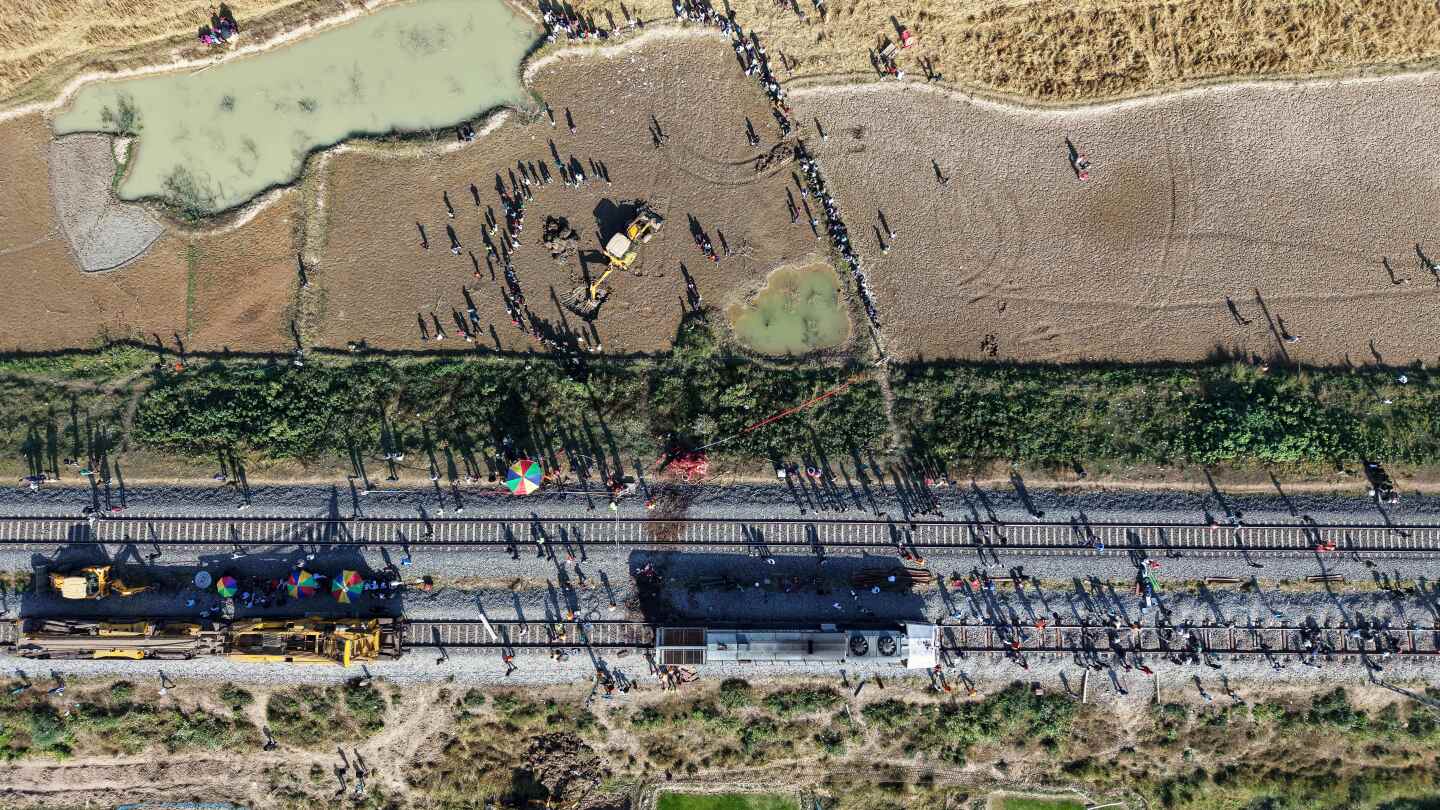
    A devastating railway collision claimed the lives of seven wild Asiatic elephants and injured a calf in northeastern India’s Assam state during the early hours of Saturday. The Rajdhani Express train, transporting 650 passengers from Sairang to New Delhi, struck the elephant herd while traversing through forested terrain approximately 78 miles southeast of Guwahati, Assam’s capital.

    According to Indian Railways spokesman Kapinjal Kishore Sharma, the locomotive operator detected the massive herd of approximately 100 elephants and immediately engaged emergency braking systems. Despite these preventive measures, the high-speed passenger train could not avoid impact with multiple animals. The collision resulted in the derailment of five coaches and the engine, though remarkably no human passengers sustained injuries.

    Veterinary specialists conducted postmortem examinations on the deceased elephants, with burial procedures scheduled for later the same day. Railway authorities confirmed that the accident occurred outside designated elephant crossing corridors, though the region is known for frequent elephant movements.

    Following the incident, railway personnel separated the unaffected coaches, allowing the main train to continue its journey to New Delhi. Approximately 200 passengers from the derailed compartments were transferred to Guwahati via alternative transportation.

    This tragedy highlights an ongoing conservation challenge in Assam, which hosts an estimated 7,000 wild Asiatic elephants—among India’s highest population densities for the species. Since 2020, train collisions have killed at least a dozen elephants statewide. The problem intensifies annually during harvest season, when elephants increasingly venture into human-occupied areas near railway tracks.

  • Watch: Images, cassettes and high-profile figures – What’s in the latest Epstein files?

    Watch: Images, cassettes and high-profile figures – What’s in the latest Epstein files?

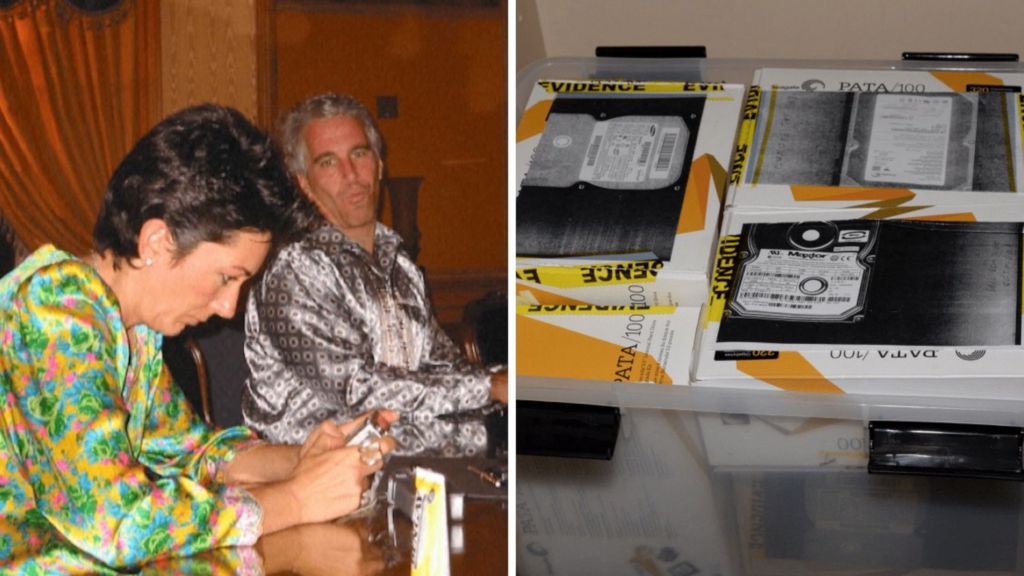
    A new tranche of documents from the Jeffrey Epstein case has been partially unsealed, offering fresh glimpses into the world of the convicted sex offender. The latest release includes previously unseen photographs of Epstein’s multiple properties, audio cassette recordings, and heavily redacted legal documents.

    The visual materials provide insight into the lavish environments where Epstein operated his criminal enterprise, spanning from his New York mansion to his private Caribbean island. While many documents remain censored to protect the identities of non-public figures, the release continues to draw attention due to Epstein’s connections with numerous high-profile individuals from business, politics, and academia.

    Legal experts note that the gradual document release represents an ongoing effort to balance transparency with privacy concerns, particularly for victims and innocent associates. The latest disclosures form part of a larger collection of evidence that continues to be processed through judicial channels, with additional documents expected to become public in the future as court-mandated redactions are carefully reviewed.

  • Artist’s battlefield collection captures the lived experience of Ukraine’s resistance to invasion

    Artist’s battlefield collection captures the lived experience of Ukraine’s resistance to invasion

    In a concealed basement near Kyiv’s Maidan Square, Ukrainian street artist Maxim Kilderov has created a profound testament to human resilience amid conflict. His unconventional exhibition, assembled from the visceral remnants of battle, serves as an organic archive of Russia’s ongoing invasion of Ukraine.

    The space contains a haunting array of artifacts: rocket launch tubes stand adjacent to a Russian intelligence officer’s personal diary; captured military uniforms drape darkened walls; thousands of vibrantly colored unit patches create a mosaic of military identity, defiance, and dark humor. For Kilderov, who survived 55 days under Russian occupation in Nova Kakhovka, these objects constitute crucial evidence that transcends official war narratives.

    What began as a personal collection in his home has evolved into a comprehensive repository featuring captured documents, passports, helmets, weapon fragments, and specialized military equipment. Among the most poignant items is a smartphone pierced by shrapnel that saved a soldier’s life, alongside personal effects like soldiers’ drawings and partially consumed cigarette packets.

    Kilderov’s distinctive artistic style—doodle-like calligraphy concealing symbols and resistance messages—permeates the exhibition. A centerpiece is his 5-meter painting titled “55,” an intricate maze of colored lines and symbols representing each day of his occupation experience, during which he organized underground aid networks and documented life under Russian control.

    Since fleeing westward, Kilderov has expanded his mission, creating military patch designs, transforming battlefield debris into art, and converting rocket tubes into Bluetooth speakers—donating most proceeds to Ukrainian military units. His Kyiv basement has become an organic gathering place where soldiers contribute new artifacts and stories, continually expanding this raw documentation of Ukraine’s lived reality.

    As Ukraine enters its fourth winter of conflict, Kilderov expresses concern about diminishing social unity despite the ongoing emergency. His deliberate wearing of a red MAGA hat during interviews serves as ironic commentary on Ukraine’s precarious dependence on foreign aid that could be withdrawn without warning.

    The artist ultimately plans to formalize the collection into a museum that concentrates emotional impact within a single immersive space, rejecting traditional museum formats in favor of immediate, powerful confrontation with war’s human cost.

  • Sri Lanka tea workers struggle in poverty. Flooding cost many their lives

    Sri Lanka tea workers struggle in poverty. Flooding cost many their lives

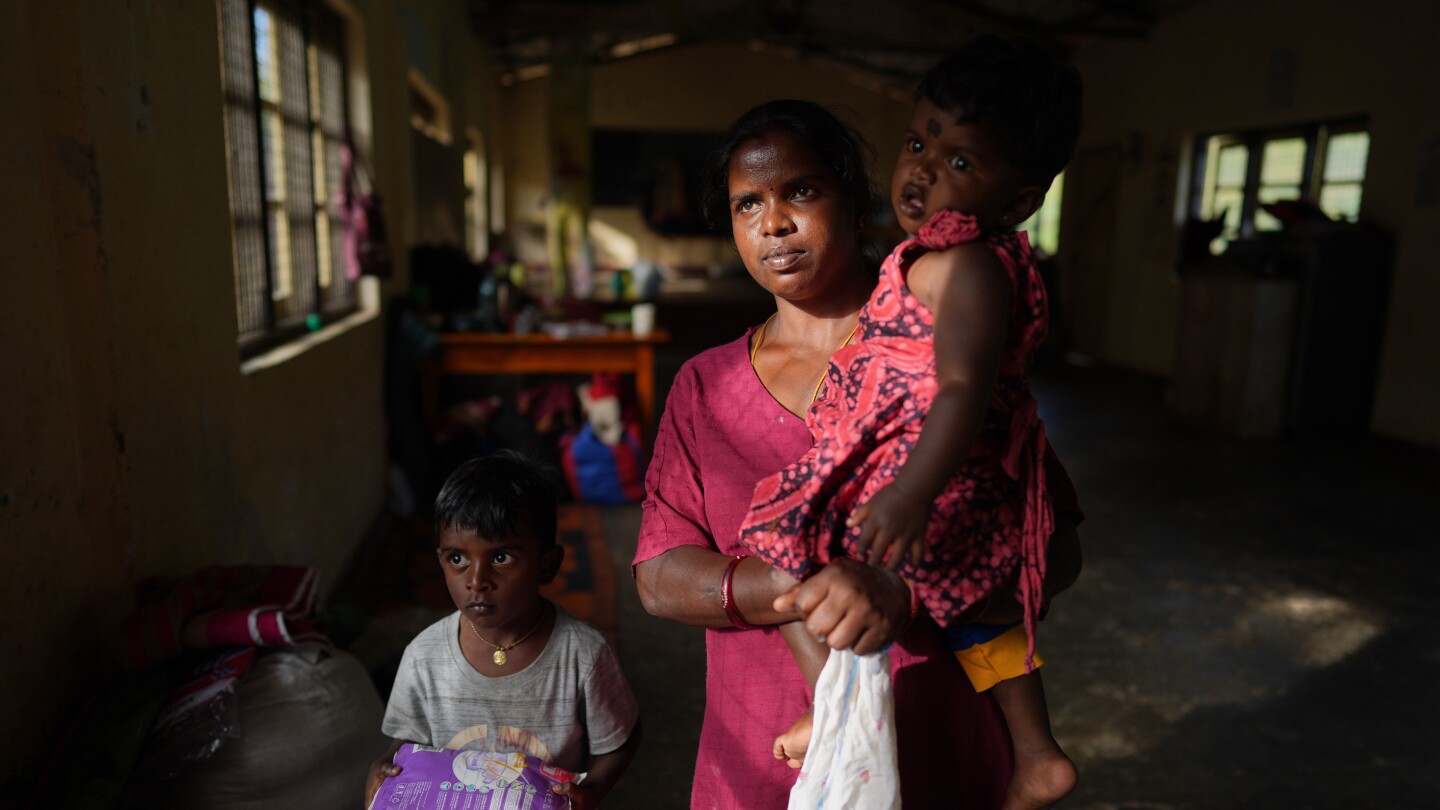
    The devastating impact of Cyclone Ditwah has laid bare the extreme vulnerabilities facing Sri Lanka’s tea plantation communities, where centuries-old systemic inequalities have amplified a natural disaster into human tragedy. In the hilly central regions, entire communities of Malaiyaha Tamil workers—descendants of indentured laborers brought from India during British colonial rule—have been virtually erased by catastrophic landslides and flooding.

    Survivors like Kumaran Elumugam returned from work to discover his home completely buried, claiming six family members including his wife, mother-in-law, and grandchildren. “The small one is still under the mud,” he lamented, encapsulating the horrifying human toll. Across the affected regions, over 640 lives were lost with hundreds more missing, while more than 100,000 homes were destroyed or damaged.

    The disaster disproportionately impacted tea workers who typically inhabit primitive 150-year-old colonial-era structures measuring barely 100 square feet, often housing eight family members with inadequate sanitation facilities. Climate researcher Melanie Gunathilaka noted that while tea plantations on flatter ground remained largely unaffected, worker settlements situated near dangerous mountain slopes were completely destroyed—a stark illustration of how little value has been placed on these communities’ safety.

    These communities, representing Sri Lanka’s fourth-largest ethnic group, survive on wages well below the minimum of 1,200 rupees ($4) per day with limited access to education, healthcare, or alternative employment. The catastrophe has exposed how climate vulnerability intersects with preexisting socioeconomic disparities.

    The government has promised compensation packages and new housing initiatives, including an Indian-assisted project to build 7,000 homes. Deputy Minister Sundaralingam Pradeep confirmed negotiations with tea companies to identify safer lands for reconstruction. However, survivors report continuing to work under dangerous conditions as companies provide no support without labor.

    Beyond immediate recovery, Sri Lanka faces profound climate adaptation challenges. The nation accounts for less than 1% of global emissions yet ranks among the most vulnerable to climate impacts. According to UN estimates, Sri Lanka loses over $300 million annually to climate-related disasters, with 19 million citizens living in disaster-prone areas.

    The country’s massive debt burden—owing billions to the IMF, multilateral banks, and national creditors—severely hampers climate resilience efforts. As analyst Sandun Thudugala observed, “Disasters don’t break the system. They expose the already broken systems.” Without debt relief and significant investment in climate-resilient infrastructure, early warning systems, and adaptive housing, Sri Lanka’s most marginalized communities remain trapped in a cycle of vulnerability despite contributing minimally to the global climate crisis.

  • Kebabs, biryani and much more: Indian city on Unesco culinary list

    Kebabs, biryani and much more: Indian city on Unesco culinary list

    The northern Indian city of Lucknow has received international recognition as UNESCO designated it a Creative City of Gastronomy, placing it among 408 cities worldwide committed to leveraging creativity for sustainable urban development. This prestigious accolade makes Lucknow only the second Indian city after Hyderabad to join this exclusive network.

    UNESCO’s Regional Director for South Asia, Tim Curtis, emphasized that this designation serves as a testament to Lucknow’s profound culinary heritage and dynamic food ecosystem, simultaneously honoring its cultural legacy while creating opportunities for global collaboration.

    The city’s gastronomic identity traces back to the 18th and 19th centuries when it served as the capital of the Awadh region under wealthy Muslim rulers known as Nawabs. Their royal kitchens became centers of culinary innovation, blending Persian and Indian techniques to create what is now known as Awadhi cuisine. Among their most significant contributions was the Dum pukht method—slow-cooking ingredients in a sealed pot with dough—developed during Nawab Asaf-ud-Daulah’s reign to address famine conditions through a work-for-food program.

    Lucknow’s culinary landscape features iconic dishes including melt-in-the-mouth kebabs like the galouti kebab, created for a toothless nawab using finely minced meat with papaya and spices. The city’s distinctive biryani, kormas, sheermal (saffron flatbread), and shahi tukda (bread pudding) further demonstrate its rich gastronomic diversity.

    Beyond meat-based specialties, Lucknow offers a vegetarian paradise with seasonal delights and street food like chaat. The city boasts generations-old establishments such as Sharmaji Tea Stall, operating since 1949 and famous for its masala chai served in clay glasses, and Netram, a 150-year-old institution renowned for kachoris and jalebis.

    Seasonal specialties include makkhan malai, a frothy winter dessert created through a scientific process of dew-exposed, hand-churned milk. However, concerns exist about the preservation of such traditional methods as younger generations show declining interest in these culinary arts.

    Local advocates including celebrity chef Ranveer Brar and Madhavi Kuckreja of the Sanatkada Trust emphasize that UNESCO recognition should spotlight lesser-known eateries and family recipes that constitute Lucknow’s living culinary history. They hope this international acknowledgment will encourage global visitors to explore the stories behind each dish and sustain the city’s food traditions for future generations.

  • UAE’s People of Determination craft 13,000-lanyard chain, breaking Guinness Record

    UAE’s People of Determination craft 13,000-lanyard chain, breaking Guinness Record

    The United Arab Emirates has secured another prestigious Guinness World Records title through a remarkable initiative highlighting inclusivity and determination. The Zayed Authority for People of Determination has been officially recognized for creating the world’s longest chain of lanyards, measuring an impressive 663.53 meters in length.

    This extraordinary achievement comprises 13,000 individually handcrafted sunflower lanyards, meticulously created by people of determination themselves. The project saw collaboration across 13 national entities that united to transform this visionary concept into tangible reality. The manufacturing and coordination process took place at the Authority’s Innovation Centre, where participants engaged in designing, assembling, and organizing the lanyards.

    The sunflower lanyard holds global significance as a recognized symbol for raising awareness about hidden disabilities. This initiative aims to foster greater community understanding and encourage institutions worldwide to develop more supportive environments for individuals with non-visible disabilities.

    Abdullah Abdulali Al Humaidan, Director General of Zayed Authority for People of Determination, emphasized the profound meaning behind this accomplishment. ‘This record transcends being merely another certificate in the UAE’s achievements register,’ he stated. ‘It represents a powerful message embodying the core values of empowerment, respect, and humanity. The project demonstrates that remarkable achievements become possible when collective efforts converge, proving that people of determination can accomplish the extraordinary when provided with supportive environments and dedicated partners.’

    Al Humaidan further reinforced the Authority’s ongoing commitment to developing high-impact initiatives that showcase the capabilities of people of determination. These efforts strengthen their vital role in the UAE’s developmental journey while contributing to global achievements that reflect national excellence and the enduring spirit of determination and perseverance.

  • Look: Stunning Dubai skyline shines after heavy overnight rains

    Look: Stunning Dubai skyline shines after heavy overnight rains

    An extraordinary meteorological phenomenon graced Dubai’s iconic skyline on December 19, 2025, as heavy overnight rainfall created breathtaking visual transformations across the urban landscape. The unexpected downpour, a rare occurrence in the arid Emirati climate, left the city’s architectural marvels glistening under clearing skies by Friday evening.

    The precipitation event began during the night hours and continued through early Friday, culminating in a remarkable visual spectacle as daylight emerged. Dubai’s towering skyscrapers, including the Burj Khalifa and numerous contemporary structures, reflected brilliantly in the temporary water accumulations that formed across the city’s thoroughfares and public spaces.

    Meteorological experts noted that while winter months occasionally bring precipitation to the region, the intensity and visual impact of this particular weather event were notably exceptional. The rainfall provided both practical benefits for water resources and an unexpected aesthetic dimension to the urban environment.

    Residents and visitors alike captured stunning photographs of the transformed cityscape, with many sharing images of mirror-like reflections showcasing architectural landmarks against clearing skies. The phenomenon created unique opportunities for photographic artistry, blending natural elements with human-engineered structures in unusual harmony.

    Urban infrastructure performed effectively throughout the precipitation event, with drainage systems managing the unusual water volume appropriately. The event concluded by late afternoon, leaving behind a refreshed atmosphere and visually enhanced cityscape that attracted widespread attention across social media platforms and local community discussions.

  • Watch: DOJ re-releases 2005 video showing Epstein’s Florida home

    Watch: DOJ re-releases 2005 video showing Epstein’s Florida home

    The U.S. Department of Justice has made public once again a trove of archival evidence, including previously circulated surveillance footage from a 2005 police search of Jeffrey Epstein’s Palm Beach residence. This visual documentation offers a renewed glimpse into the opulent surroundings where the convicted sex offender orchestrated his criminal activities. The video’s reemergence coincides with ongoing public and judicial scrutiny into the extensive network of Epstein’s associates, reigniting discussions about initial investigative procedures. Law enforcement experts note the footage provides contextual understanding of the environment in which federal agents operated during their early investigations. The release forms part of a broader transparency initiative surrounding cases that continue to capture national attention, serving both historical documentation and public interest purposes. Legal analysts emphasize that while the footage itself isn’t new evidence, its republication underscores the Justice Department’s commitment to maintaining public access to pivotal case materials.

  • Dubai rains: Police, emergency teams work overnight to clear flooded roads, manage traffic

    Dubai rains: Police, emergency teams work overnight to clear flooded roads, manage traffic

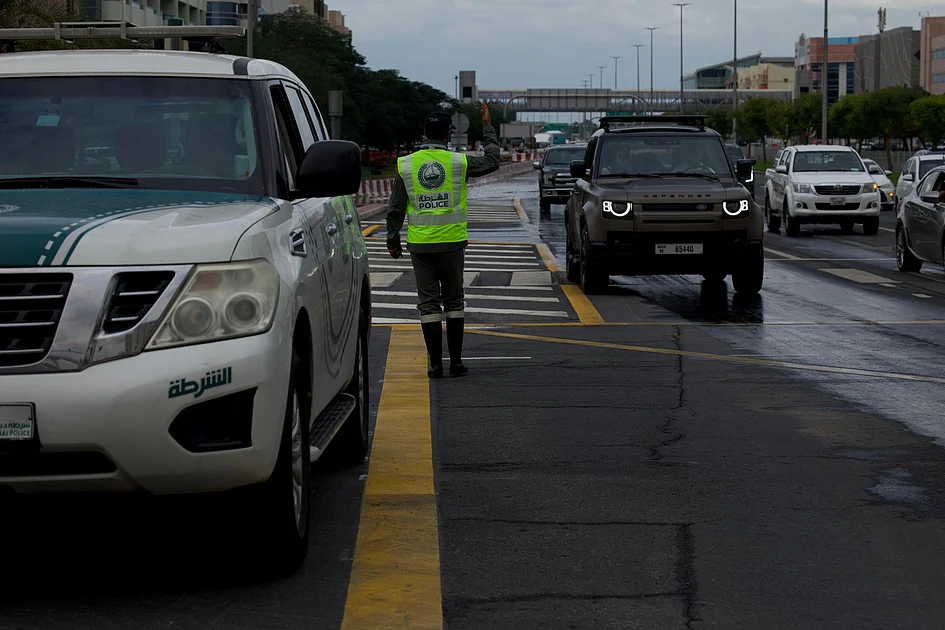
    Dubai’s emergency services executed a meticulously coordinated overnight operation to mitigate severe flooding caused by torrential rainfall, prioritizing public safety and infrastructure restoration. According to Brigadier Turki Abdulrahman bin Fares, Director of Operations at Dubai Police, advanced monitoring of regional weather patterns enabled proactive deployment of resources before conditions deteriorated locally.

    Approximately 70% of all patrol and rescue assets were activated across the emirate, including the mountainous Hatta region. Police units extended duty hours while specialized teams addressed multiple challenges: draining submerged roadways, managing traffic disruptions, assisting stranded motorists, and securing high-risk zones including valleys, elevated terrain, and coastal areas.

    The response leveraged a unified command structure integrating Dubai Police with Roads and Transport Authority, Dubai Municipality, Civil Defense, Ambulance Services, DEWA, and the Government of Dubai Media Office. This collaborative framework enabled real-time information sharing and coordinated field operations throughout the crisis.

    Twenty-two specialized rescue teams—13 land-based and nine marine units—were strategically positioned to handle emergencies. The public alert system disseminated critical safety information while community management teams regulated access to affected areas and addressed resident concerns.

    Brigadier bin Fares emphasized that pre-established contingency plans, joint exercises, and continuous coordination enabled dynamic adjustments based on live meteorological data and field reports. The operation successfully maintained safety across all districts, with normalcy largely restored by morning through these concerted efforts.

  • Suspect jumps to death after fatal Taipei attack

    Suspect jumps to death after fatal Taipei attack

    A violent rampage in central Taipei on Friday evening resulted in four fatalities and multiple injuries, culminating in the apparent suicide of the assailant. The incident, which sent shockwaves through the Taiwanese capital, began at approximately 5:30 PM local time near Taipei Main Station.

    According to law enforcement authorities and eyewitness accounts, an individual equipped with a gas mask initiated the attack by detonating smoke grenades at a key station exit. The deliberate creation of chaos and panic led to immediate casualties, with emergency services transporting two critically injured individuals to nearby medical facilities. Hospital officials later confirmed one victim, identified as a 57-year-old male, succumbed to his injuries. A second victim, aged 54, remains hospitalized under medical supervision.

    The perpetrator subsequently fled the initial crime scene, moving toward the Zhongshan MRT Station area where he continued his violent spree. Witnesses reported the assailant deployed additional smoke devices while indiscriminately attacking bystanders with a bladed weapon. This secondary assault resulted in seven additional casualties with varying degrees of injuries.

    The sequence of events reached its grim conclusion when the suspect entered an adjacent commercial complex. Security camera footage indicates the individual proceeded to ascend multiple levels before deliberately jumping from a height equivalent to six stories. Medical personnel pronounced the suspect dead at the scene despite attempted resuscitation efforts.

    Taipei Police Department has established a specialized task force to investigate the comprehensive circumstances surrounding the attack. Investigators are meticulously examining surveillance recordings, forensic evidence, and witness statements to establish the precise timeline of events. Additional investigative priorities include determining the origin of the explosive devices, reconstructing the suspect’s complete movement pattern, and identifying any potential specific targets or motivations behind the assault. Security personnel have maintained a perimeter around both crime scenes as the investigation continues to develop.