分类: society

  • Beijing prosecutors enhance legal education for international students

    Beijing prosecutors enhance legal education for international students

    In a proactive step to strengthen child protection and build understanding of China’s legal system among young foreign residents, Beijing’s procuratorial organs have launched a targeted, interactive legal education program for international minor students. The pilot event, held Monday at the New Start Center operated by the Xicheng District People’s Procuratorate, brought together 18 international students from the International Department of Beijing Yu Cai School, who traveled from diverse home countries including Egypt, Thailand, Mongolia, Indonesia and Kazakhstan to experience legal education first-hand.

    Designed specifically to educate youth on China’s laws and protections for minors, the New Start Center crafted a tailored agenda for this first-of-its-kind visit for international students. During the day’s activities, the participating students got a clear breakdown of the core responsibilities of Chinese public prosecutors, alongside practical guidance on personal safety for young people living and studying in China. In an open interactive session with Zhao Ying, a veteran prosecutor specializing in juvenile justice cases, students explored key provisions of Chinese law, ranging from the legal age of criminal responsibility to the country’s frameworks for addressing pervasive youth issues such as school bullying, child abuse and domestic violence.

    Beyond classroom-style discussion, the event included hands-on experience with the center’s innovative welfare resources. Students had the opportunity to test the center’s psychological testing system, which uses biometric sensor technology attached to the ear to analyze breathing patterns and real-time physiological data, generating a visual readout of the user’s current emotional state, from relaxation to acute stress.

    For many participants, the visit marked a transformative first insight into China’s legal system. Marwan Mazen, a 17-year-old Egyptian student who has studied in Beijing for several years, shared his enthusiasm after the event. “This activity was really meaningful for me. I learned about how China addresses bullying and got to understand the basics of Chinese law, and I realized just how closely legal education ties to our daily lives,” he said. “It protects us as students, helping us understand both our rights and our responsibilities. This is my first time having an experience like this at such an incredible facility, and it makes me feel really safe studying here knowing there is a strong legal system that protects everyone.”

    Shou Yan, a teacher at Beijing Yu Cai School and a deputy to the Beijing People’s Congress, Beijing’s top legislative body, emphasized that inclusive legal education is a non-negotiable resource for all students studying in China, regardless of nationality. “Both Chinese and international students need to understand and abide by the laws of the country they live in,” she noted. She added that the program demonstrates the openness of China’s legal system and plays a critical role in supporting the safety and well-being of international students residing in Beijing, calling for similar initiatives to become a regular, integrated part of international school curricula.

    Zhao Ying, the juvenile prosecutor leading the event, framed the visit as a meaningful innovation in public legal education for prosecutors. “By inviting international minor students to our youth center, we can give them a clear, tangible understanding of Chinese law, which helps them avoid accidental violations of the law and empowers them to leverage legal protections for their own safety,” she explained. “This initiative also highlights the strong collaborative partnership between educational institutions and legal authorities, and it gives foreign students a first-hand look at the fairness and compassion that are core to China’s juvenile justice system.”


  • Robot chases wild boars off the streets of Warsaw

    Robot chases wild boars off the streets of Warsaw

    The capital city of Poland, Warsaw, is facing an unprecedented urban wildlife challenge, as the number of wild boars wandering its public streets has skyrocketed over the past four years. Official estimates put the current urban wild boar population at more than 3,000 individuals, marking a dramatic twenty-fold increase compared to figures recorded in 2020. This rapid population growth has pushed local authorities to explore innovative, non-lethal methods to manage the conflict between humans and wildlife, and one of the most unique approaches currently being tested is the use of specialized robots to herd wild boars away from populated residential and commercial areas. Urban wild boars have become a growing nuisance for Warsaw residents in recent years: the animals often dig through garbage bins, damage public and private green spaces, and pose potential traffic safety risks when they wander onto busy roads. Traditional population control methods, such as culling, have faced widespread pushback from animal welfare advocates and city residents, prompting officials to test technological alternatives that can safely move the animals out of urban centers and into surrounding natural habitats. The robotic deterrent system is designed to gently harass and guide wild boars away from developed areas without causing harm to the animals, offering a middle ground between public safety concerns and animal protection principles. As urban wildlife populations continue to grow across many European capitals, Warsaw’s experiment with robotic wildlife management is being closely watched as a potential model for other cities grappling with similar human-wildlife coexistence challenges.

  • Ukraine family get cancer and bomb news on same day

    Ukraine family get cancer and bomb news on same day

    For a Ukrainian refugee family rebuilding their lives in Penrith, Cumbria, February 13 will forever stand as a day marked by unthinkable dual tragedy. On that same Friday, Stepan and Alina Kozariichuk received two shattering pieces of news: their 11-month-old infant son Bohdan was diagnosed with advanced bilateral retinoblastoma, a rare form of eye cancer, and Alina’s father’s home back in Ukraine’s Odesa region had been reduced to rubble by a Russian drone strike.

    The couple, who fled the ongoing war in Ukraine to build a safer life in northern England, first noticed troubling symptoms in their son when he was around six months old. Bohdan began squinting frequently and struggled to grasp the toys placed in front of him, prompting the pair to seek urgent medical assessment. After a series of tests, clinicians confirmed the devastating diagnosis: cancer had already affected both of the baby’s eyes, reaching an advanced stage that would demand months of intensive, complex care. The treatment plan includes multiple rounds of chemotherapy, alongside targeted cryotherapy and laser therapy, requiring the young family to travel regularly between Penrith, Newcastle for chemotherapy sessions, and Birmingham for specialized ongoing care.

    Compounding this already devastating health crisis was the second blow delivered the same day. Word reached the Kozariichuks from contacts back in Odesa that two Russian drones had directly struck Alina’s father’s property. While the grandfather and his wife escaped the attack without physical injury, their home and personal vehicle were completely destroyed, leaving them with little of what they had built over decades. Alina described the 13th of February as the worst single day of the couple’s lives, telling BBC Radio Cumbria through a translator that “it was very hard” to process overlapping losses on that scale.

    For the Kozariichuks, the journey to this point has already been marked by profound grief and longing for the child they now fight for. Alina shared that the couple endured two heartbreaking miscarriages before welcoming Bohdan, making their baby a deeply wanted and cherished member of the family. In the wake of their dual crisis, the couple says they have grieved together, but Bohdan’s unshakable joy has given them the strength to keep going. Despite the exhaustion of constant chemotherapy and endless hospital appointments, the 11-month-old still smiles freely, plays with his favorite toy drum, watches cartoons, and reaches for his toys just as any other baby his age would.

    Calling Bohdan their “little hero”, the couple said in a public statement that “his strength gives us strength.” Even when the weight of their challenges leaves them overwhelmed, a single smile from their son is enough to lift their spirits. “We have cried together, but when we see a smile on our baby’s face we smile and joke together, hoping there will be better times,” Alina said. Like many Ukrainian refugees who have built new lives abroad, the family holds onto one core hope: that when the war in Ukraine finally comes to an end, they will be able to return to their home country and rebuild together.

  • Woman gets death sentence with reprieve for abusing boyfriend’s 3-year-old son

    Woman gets death sentence with reprieve for abusing boyfriend’s 3-year-old son

    A local court in Shanghai announced Tuesday that a woman has received a death sentence with a two-year reprieve for the fatal abuse and intentional injury of her boyfriend’s three-year-old son. The Shanghai No. 1 Intermediate People’s Court found defendant Zhao Yudie guilty on two counts of abuse and intentional injury, additionally ordering that Zhao’s political rights be stripped for life.

    Court documents detail that the abuse began shortly after Zhao moved in with her boyfriend surnamed Huang and his young son in July 2024. Using the toddler’s occasional mischief as a flawed justification, Zhao subjected the child to repeated physical abuse over the course of weeks, including beatings to the boy’s back, buttocks and legs, as well as biting attacks on his limbs.

    The fatal incident unfolded on the evening of August 24, 2024, at a park in Shanghai’s Pudong New Area. Irritated by the child running around the park grounds, Zhao launched a brutal attack: she slapped the boy’s head and face repeatedly, beat him with a tree branch, and kicked his body multiple times. In the course of the attack, Zhao threw the toddler down a riverbank slope, causing him to fall and suffer a severe blunt force head injury on the ground.

    After returning home later that evening, the young boy lost consciousness. Zhao eventually brought him to a local hospital for emergency care, but medical teams were unable to reverse the damage. The victim passed away on September 4, 2024, from central nervous system failure triggered by the blunt force brain trauma he sustained in the attack. Post-mortem examinations also confirmed widespread injuries across the child’s body: multiple bruises covered his back, face and chest, with distinct bite marks found on his left calf.

    In its official ruling, the court clarified that while Zhao’s actions showed clear intent to cause bodily harm, there was no premeditation to kill the child. The court also moved to debunk widespread unsubstantiated rumors that circulated online following the boy’s death, including false claims that Zhao had stabbed the child with toothpicks, that he had been forced to scavenge for food due to starvation, and that only small stones were found in his stomach during the autopsy. The court confirmed all of these viral claims are completely unfounded.

    Officials also emphasized that no evidence has emerged to indicate that the boy’s father, Huang, participated in, concealed, or tolerated Zhao’s abuse of his son, ending widespread online speculation about his potential involvement.

  • Xinjiang guide forms deep bonds with Taiwan visitors

    Xinjiang guide forms deep bonds with Taiwan visitors

    In the vast, culturally rich landscapes of the Xinjiang Uygur autonomous region, 26-year-old local tour guide Dilinur Tursunjan has built far more than just professional relationships with her visitors — she has cultivated a deep, lasting emotional connection with a Taiwanese tourist family that transcends the narrow Taiwan Strait separating the two sides.

    Dilinur’s story catapulted her to national social media fame earlier this year, after a TikTok (Douyin) video of her talking about the groundbreaking Tianshan Shengli Tunnel went viral, racking up millions of views from viewers across China. The footage was captured by tourist Lin, who traveled with Dilinur on two separate trips: a tour of northern Xinjiang in October 2025, followed by a journey through southern Xinjiang this past March.

    In the heartfelt viral clip, Dilinur spoke from the heart about the engineering marvel that is the Tianshan Shengli Tunnel. “Because the people needed this accessible highway, our motherland could move mountains and redirect rivers,” she said. “It’s not that cutting through the Tianshan Mountains was ever easy — but on the other side of these peaks, there are people waiting for better lives.”

    Stretching across 2,500 kilometers, the Tianshan Mountains have historically separated northern and southern Xinjiang, creating long, dangerous travel routes between the two regions. The newly opened 22.13-kilometer Tianshan Shengli Tunnel, the longest expressway tunnel in the world, opened to traffic in December 2025. The mega project has cut a treacherous three-hour mountain crossing down to a smooth 20-minute drive, transforming regional connectivity and daily life for local residents.

    Work on the tunnel pushed the limits of engineering: construction teams lived and worked at altitudes above 4,000 meters, facing constant threats of oxygen deprivation, rock bursts, and sudden water inrushes. Even against these extreme challenges, Chinese engineering teams deployed cutting-edge innovative technologies to complete the full drilling process in just 52 months, finishing the project years ahead of early projections.

    For Dilinur, the tunnel’s story is not just a matter of national engineering pride — it is personal. Born and raised in Artux, she moved 1,500 kilometers to Urumqi to attend Xinjiang University of Finance and Economics. What once took an exhausting 18-hour drive by road now takes roughly 13 hours, a change that has made returning home to see her family far easier.

    “Now I can get home much faster, and tourists spend less time traveling on the road and more time enjoying all the beautiful attractions Xinjiang has to offer,” she explained. “That’s why I’m so deeply proud of this project — I’ve seen what it changed for people like me.”

    Lin, the Taiwanese tourist who filmed the viral video, first found Dilinur through the Douyin social media platform before booking their first trip. She said she was particularly moved when she realized the tunnel was built to lift up local communities, not just to claim a global engineering record. Over their two trips together, the group explored some of Xinjiang’s most iconic landmarks, from the stunning blue waters of Sayram Lake to the rugged heights of the Pamir Plateau and the centuries-old Kashgar Ancient City.

    The bond between Dilinur and Lin’s family deepened dramatically when Dilinur invited the group to her home for a traditional Uyghur meal featuring hand-pulled noodles, slow-cooked mutton, and homemade fig jam. The warm gathering stretched late into the night, leaving a lasting impression on the Taiwanese visitors.

    “It felt just like being with my own family at home,” Lin shared in a video of the gathering. “I’d only ever seen moments this warm and genuine on television before — I never got to experience it myself.”

    Today, the connection between the two sides is so strong that Dilinur has already invited the family to her future wedding, and Lin has already said she is eager to attend and even wear traditional Uyghur clothing for the celebration. Before the family departed on their second trip, the group even extended their stay to celebrate the Roza Festival (Eid al-Fitr) together at Urumqi’s bustling Grand Bazaar.

    Now boasting more than 500,000 followers on Douyin, Dilinur uses her growing platform to showcase the real, living culture and beauty of her home region to people across China and around the world. “I hope more people get to know the real Xinjiang, which is very different from the false narratives Western media often spreads,” she said.

    As Lin’s family prepared to leave Xinjiang, they already made plans for a third visit — sharing their hope that one day soon, they will be able to fly directly from Taipei to Urumqi, rather than transferring through Hong Kong as they must do today. For her part, Dilinur says her next big dream is to visit Taiwan in person, to taste the island’s fresh seafood and see its iconic mountain landscapes for herself.

  • Digital reading boom draws more Chinese into books

    Digital reading boom draws more Chinese into books

    NANCHANG — A sweeping surge in digital reading has unlocked new access to literary content across China, pushing more citizens to build consistent reading habits as national efforts to cultivate a book-loving society drive steady growth in overall reading engagement.

    New data released Monday during the fifth National Conference on Reading reveals that China’s overall adult reading rate climbed to 82.3 percent in 2025, with the average number of books consumed per capita across both print and digital formats rising to 8.39. The findings, pulled from a national reading survey and the 2025 China Digital Reading Report, confirm that digital formats have become a core driver expanding the country’s total reading population.

    The annual conference, hosted this year in Nanchang, the capital of East China’s Jiangxi province, opened alongside the inaugural launch of China’s first official National Reading Week, which will run through this coming Sunday. The week-long celebration is a key part of broader national initiatives designed to embed a strong reading culture in communities across the country.

    According to the national survey, 80.8 percent of Chinese adults now regularly interact with digital reading content, spanning e-books, serialized online literature, audiobooks, and short-form video book summaries. Researchers behind the data note that the flexibility of digital formats has been instrumental in growing participation: commuters can listen to audiobooks during daily travel, and mobile readers can access serialized fiction at any time, removing long-standing barriers to consistent reading.

    By the end of 2025, China’s total digital reading user base hit 689 million, marking a 2.95 percent year-over-year increase, while the total number of available digital reading works surpassed 70 million. Over the past five years alone, the overall market size of China’s digital reading industry has nearly doubled, expanding from 30.25 billion yuan (approximately 4.4 billion U.S. dollars) to 59.48 billion yuan, a clear indicator of robust growth on both the supply and demand sides of the market.

    Industry leaders attribute much of this market expansion to the evolution of online literature from a niche digital product into a pillar of the broader cultural economy. “The essence of reading is to allow stories to break through boundaries and enter everyday life,” explained Xie Lanfang, vice-president of Yuewen Group, China’s leading digital publishing platform. She added that digital reading content is increasingly expanding beyond online platforms to integrate with offline cultural consumption and interactive consumer experiences, creating new touchpoints for reader engagement.

    Chinese authorities have long prioritized reading as a core driver of national intellectual and ethical development, as well as a catalyst for broader innovation and creativity, spurring ongoing, coordinated efforts to build a nationwide book-loving society. To strengthen institutional support for these goals, a formal regulation on promoting nationwide reading entered into force this past February. The new policy outlines concrete measures to expand public reading facilities, improve public reading services, and strengthen long-term supporting mechanisms for reading promotion.

    Under the new regulation, the fourth week of April is officially designated as National Reading Week, marking 2026 as the first year the initiative has been observed nationwide. Over the course of the week, thousands of reading-focused events will be held across every region of China, including author lectures, book fairs, reading salons, and public book donation drives, all targeted at encouraging greater public participation in reading.

    “Reading service facilities have improved, and public awareness and satisfaction are relatively high,” noted Feng Shixin, president of the Chinese Academy of Press and Publication. He added that continued work is still needed to further improve accessibility for marginalized groups and upgrade the quality of public reading services nationwide.

    Even as digital formats continue their rapid growth, traditional print reading has remained resilient, with new data showing enduring public demand for immersive, long-form reading experiences. The national survey found that 45.9 percent of Chinese adults still prefer reading printed books, particularly full-length literary works, highlighting that digital growth has not displaced demand for traditional reading formats.

    Wu Shulin, chairman of the Publishers Association of China, emphasized that deep, focused reading remains the foundation for personal growth, professional advancement, and moral cultivation even in an increasingly digital age. He called for stronger public guidance to help readers navigate digital content and deepen a national culture of deep reading, encouraging audiences to move beyond superficial fragmented browsing to engage in more intentional, in-depth reading practices.

  • Hong Kong’s Wang Fuk Court residents return to fire-ravaged units in batches for belongings

    Hong Kong’s Wang Fuk Court residents return to fire-ravaged units in batches for belongings

    HONG KONG — Nearly a year after a devastating large-scale blaze tore through Wang Fuk Court in Hong Kong’s Tai Po district, affected residents have begun the long process of returning to their fire-ravaged homes in organized, staggered groups to collect remaining personal belongings, with the first phase of the operation launching on Monday, April 20, 2026.

    To guarantee the safety of every resident entering the damaged building and coordinate the smooth execution of the retrieval operation, the Hong Kong Special Administrative Region (HKSAR) government has mobilized a force of more than 1,000 personnel from multiple government departments and public service agencies. The carefully planned operation is scheduled to run through May 4, giving registered residents adequate time to collect items they left behind after the 2025 fire forced an emergency evacuation of the residential block.

    According to Cheuk Wing-hing, Deputy Chief Secretary for Administration of the HKSAR government, all residents participating in the retrieval process will receive full personal protective gear before entering the site, including safety helmets, disposable face masks, heavy-duty work gloves and other necessary equipment to guard against structural hazards and residual toxic smoke or debris. Every resident is escorted round-trip to their unit by trained personnel, either serving police officers or volunteers from the Civil Aid Service.

    Chris Tang Ping-keung, HKSAR Secretary for Security, further outlined the multi-layered safety arrangements put in place for the operation. To respond to any unexpected situation that may arise during the retrieval, dedicated police and Civil Aid Service personnel will be stationed on every floor of the residential block to provide on-demand, immediate assistance. Additionally, fully qualified medical teams and emergency response staff will remain on standby at the site throughout the operation, with multiple ambulances parked nearby to handle any medical emergencies quickly.

  • Australian organ donor remembered

    Australian organ donor remembered

    Eight years after their son Philip Hancock passed away in southwest China, his Australian family gathered in Sydney for a memorial symposium to celebrate the young man’s extraordinary act of humanitarian kindness that continues to connect communities across two nations.

    In May 2018, 27-year-old Hancock, an English teacher at Chongqing’s Southwest University who had built deep personal ties with China, died after failed medical intervention. In line with explicit wishes he had shared with his family years earlier, his parents made the decision to donate his liver, two kidneys, and pair of corneas. The selfless choice granted five Chinese recipients a second chance at life — restoring sight to two and saving the lives of three others. This act made Hancock the first Australian and seventh foreign national to complete an organ donation in China.

    Addressing attendees at the Sydney memorial, Peter Hancock, Philip’s father, reflected on the gravity of the choice his family made. “This was a very difficult decision for our family to make,” he said, noting that Philip’s clear long-stated intent softened the pain of their loss. “He said he would like his organs to be donated so that other people could benefit from them. He believed that this was a humanitarian thing to do and that everyone should have the same attitude toward organ donations.”

    Co-hosted by the Red Cross Society of China and the Chinese Consulate-General in Sydney, the symposium brought together diplomatic and community leaders from both China and Australia to honor Hancock’s legacy. Chinese Consul General in Sydney Wang Yu highlighted the profound meaning of the young teacher’s choice, noting that his story vividly embodies boundless humanitarian love, strengthens the deep-rooted friendship between the Chinese and Australian peoples, and illustrates the core value of a shared human future.

    He Wei, president of the Red Cross Society of China, emphasized that Hancock’s act of generosity transcends borders, race, and ideological difference, forging a living bridge of connection and friendship between the two nations. “The Australian’s name, his kindness and his invaluable spirit will always remain in the hearts of the Chinese people, standing as a most touching, precious and heartfelt testament to China-Australia friendship,” He said.

    Gary Cowan, CEO of the National Foundation for Australia-China Relations, echoed that sentiment, pointing to the dual impact of Hancock’s legacy. “It really reminds us of the very profound lifesaving ripple effect that organ donation has. And it also reminds us in a very tangible way of the very real value of people-to-people relationships between Australia and China and the long-term positive impact,” Cowan explained.

    For the five recipients who owe their renewed health and sight to Hancock, his legacy has become a deeply personal mission to carry forward his passion and kindness. After learning the young Australian was an avid music lover, the group came together to form “One-Man’s Band,” a musical ensemble named in his honor. The group performs at public events to raise awareness of organ donation, and donates 100% of proceeds from commercial shows to the Chongqing Red Cross Society to support public education campaigns.

    Over the eight years since Philip’s passing, the Red Cross Society of China has maintained consistent contact with the Hancock family in Australia, providing regular updates on the maintenance of Philip’s memorial site and the ongoing health of the five recipients. This steady connection has brought significant comfort to the grieving family, turning an act of tragic loss into a lasting bond between two nations.

  • Melbourne socialite Brynne Edelsten has bail conditions relaxed after police raid allegedly uncovered drugs

    Melbourne socialite Brynne Edelsten has bail conditions relaxed after police raid allegedly uncovered drugs

    A Melbourne-based former reality TV personality and socialite facing drug trafficking charges has received a modification to her bail terms, after a court-monitored support program issued a strongly positive assessment of her progress, a Melbourne court confirmed on Tuesday.

    Forty-three-year-old Brynne Edelsten, who previously gained public attention for her high-profile marriage to late Australian billionaire Geoffrey Edelsten and multiple reality television appearances, appeared alongside co-accused Simon Pienaar at the Melbourne Magistrates Court on Tuesday. During the hearing, the court scheduled a contested committal hearing for late July, which will determine whether the pair will proceed to a full criminal trial.

    The pair were first taken into custody in late December last year, following a police raid on Edelsten’s Fitzroy residence. Investigators allege they seized multiple controlled substances during the search, including methamphetamine, the anabolic steroid testosterone, and ketamine. Prosecutors further claim Pienaar’s fingerprints were recovered from drug packaging found at the property. Both Edelsten and Pienaar are currently facing charges including commercial quantity methamphetamine trafficking and drug possession; neither defendant has entered a plea at this stage of proceedings.

    Following the arrest, Edelsten was granted bail in late December, with a requirement that she participate in mandatory monitoring and support through Victoria’s Court Integrated Service Program (CISP). On Tuesday, Edelsten’s defense lawyer Veronika Drago requested an adjustment to these bail conditions to remove the CISP monitoring requirement. The court heard that the CISP, which has overseen Edelsten’s bail term since December, had itself recommended removing her from the program, citing her “excellent engagement” with all requirements, including consistent attendance at court-mandated counselling.

    Magistrate Donna Bakos, who approved the bail adjustment, noted that the CISP report described Edelsten’s progress and rehabilitation efforts in “very glowing terms.” “It’s important I acknowledge you have participated to the best you can, which is excellent,” Bakos told the defendant. “I strongly encourage you to continue on that path.” Edelsten thanked the magistrate following the ruling, and declined to comment on the case to reporters as she left the court building.

    Edelsten first became a household name in Australia following her 2009 marriage to Geoffrey Edelsten, a flamboyant billionaire medical entrepreneur and former owner of the Sydney Swans Australian Football League club. The pair had a 46-year age gap and held an extravagant, widely publicized wedding before separating in 2014. In the years following her divorce, Edelsten built a public profile as a media personality, appearing on high-rating reality series including *Dancing with the Stars*, *SAS Australia*, and her own reality docuseries *Brynne: My Bedazzled Life*.

    Both Edelsten and Pienaar are scheduled to return to the Melbourne Magistrates Court on July 27 for the upcoming committal hearing.

  • No cuddles, but lots of care: How a Paris-area wildlife hospital keeps rescued animals wild

    No cuddles, but lots of care: How a Paris-area wildlife hospital keeps rescued animals wild

    Nestled in Maisons-Alfort, a southeastern suburb of Paris, France, a one-of-a-kind wildlife hospital operates under a simple but strict rule: no affectionate cuddling, but unwavering, expert care for every wild patient that passes through its doors. Every year, the facility takes in thousands of injured, ill, and orphaned wild animals, most of whom have been harmed directly or indirectly by human activity and the relentless spread of urbanization. Its ultimate mission is to heal these creatures and return them to their natural wild habitats.

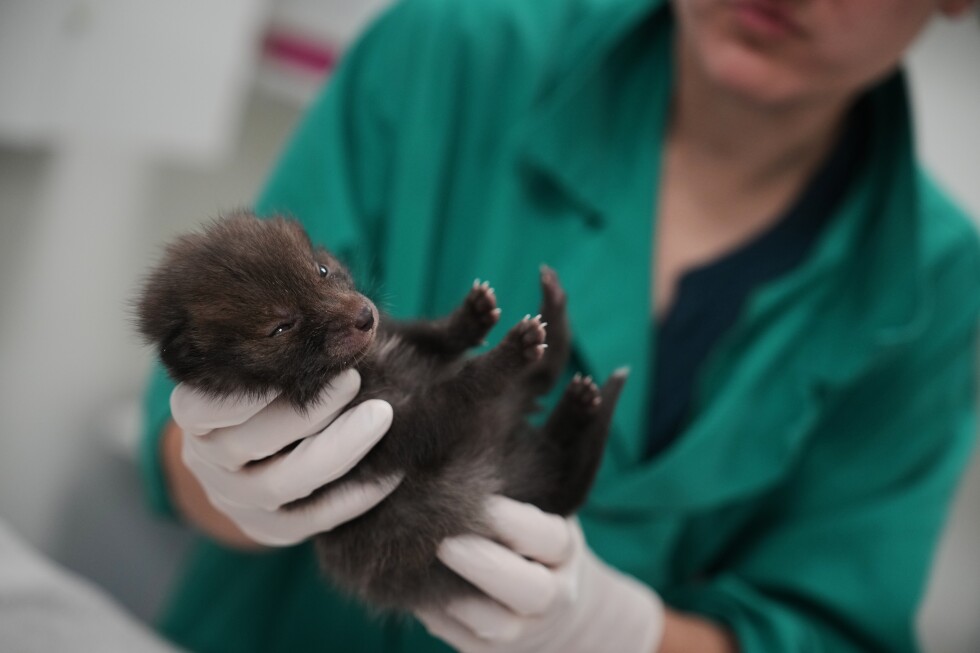
    Last week, local residents who keep hunting dogs discovered a tiny female fox cub alone in an outskirt garden, with no sign of her mother anywhere nearby. Estimated to be just two weeks old — far too young to fend for herself in the wild — the cub was quickly transported to the hospital for care. After a thorough examination by veterinarian Julie Piazza, the cub was found to be in generally good condition, with only a small wound likely caused by a bite from either another wild animal or one of the residents’ hunting dogs. Currently, a team of dedicated volunteers provides 24-hour care for the cub, feeding her specially formulated artificial milk that matches the nutrient composition of a wild fox mother’s milk. Piazza noted that the cub currently has a slightly swollen abdomen after adjusting to her new diet, a common condition for very young animals that have experienced a disruption to their regular feeding routine.

    Animal caretaker Valentin Delon explained that the facility’s no-cuddling policy is not a lack of compassion, but a critical measure to protect the animals’ future. “Any kind of imprinting that makes animals dependent on human caregivers long-term has to be completely avoided,” Delon said. “So we don’t hold them, we don’t interact with them more than necessary, and we maintain a careful distance for their own good. If they become attached to humans, they’ll never be able to survive once released back into the wild.”

    Once the cub gains enough weight and matures, she will not be released directly into the wild. Instead, she will first move to a specialized outdoor rehabilitation enclosure, where she will socialize with other young foxes. Staff will use a gradual release process: the enclosure door will be left open so the fox can come and go freely while still having access to food, before portions are slowly reduced to encourage her to hunt and forage on her own.

    Over the 12 months prior to this report, the Wildlife Veterinary Hospital of Maisons-Alfort admitted more than 10,400 wild animals, covering a huge range of native species: from songbirds and waterfowl to European mammals including foxes, roe deer, and hedgehogs. Run by the nonprofit organization Faune Alfort, it is the only facility in the greater Paris region that provides medical care and rehabilitation for a full spectrum of wild species, with approximately 86% of its patients being birds. From swans with broken wings and injured hedgehogs to orphaned ducklings often found abandoned on urban balconies and injured city pigeons, every animal receives the same level of skilled care, regardless of how common or rare it is.

    Elisa Mora, head of communications for Faune Alfort, told reporters that the facility saw a record 200 admissions in a single day last summer. Between April and September, wild animals enter their breeding season, bringing a surge of orphaned or injured juvenile animals to the hospital. “All wild animals face growing pressure from human activity, but juveniles are far more vulnerable than adults,” Mora explained. For animals whose injuries are too severe to heal, or who can never adapt to survival in the wild, humane euthanasia is the only option.

    Funded almost entirely by individual donations and charitable grants, the hospital depends heavily on its network of volunteers to handle daily feeding, cleaning, and basic care. The organization traces its roots back to 1987, when veterinarian Jean-François Courreau founded Faune Alfort after seeing veterinary students eager to develop better care protocols for wild animals. Six years later, the organization opened its dedicated hospital on the campus of the National Veterinary School of Alfort, an institution founded in the 18th century.

    “It’s impossible to stand by and watch an animal in distress when you have the training to help,” Courreau said. “Before this center existed, people who found an injured wild animal would think ‘there’s nothing I can do, this animal will die.’ When they know they can bring it here to get care, it’s a huge relief for them too.”

    Data from the hospital confirms that 60% to 80% of all admitted animals are harmed by human activity: common causes include vehicle collisions, entanglement in barbed wire fencing, and accidental injury from gardening or agricultural machinery. As urbanization continues to encroach on native wildlife habitats across France, the role of this unique wildlife hospital has grown more critical than ever.