分类: society

  • Various events held across China to mark Intl Women’s Day

    Various events held across China to mark Intl Women’s Day

    Communities across China have launched a series of vibrant events in anticipation of International Women’s Day, observed annually on March 8th. The celebrations, spanning multiple provinces, showcase the nation’s commitment to recognizing women’s social contributions and promoting gender equality.

    In Mengzi city, Yunnan province, women gathered for floral arrangement workshops on March 5th, combining artistic expression with community bonding. These activities represent just one facet of the nationwide initiatives that include cultural performances, professional development seminars, and awards ceremonies honoring outstanding women in various fields.

    The photographic documentation from Xinhua News Agency captures the colorful displays and engaged participants, highlighting how local governments and organizations have coordinated these events to acknowledge women’s evolving roles in contemporary Chinese society. These celebrations occur amid China’s ongoing efforts to enhance women’s rights and opportunities in workforce participation, education, and leadership positions.

    While primarily festive in nature, these gatherings also serve as platforms for discussing women’s issues and advocating for continued progress toward gender parity. The timing coincides with global observances, placing China’s activities within an international context of women’s empowerment movements and solidarity initiatives.

  • Culture minister emphasizes importance of high-quality cultural works

    Culture minister emphasizes importance of high-quality cultural works

    China’s Minister of Culture and Tourism Sun Yeli has articulated a comprehensive strategy to elevate the nation’s cultural landscape, emphasizing the creation of premium cultural works that meet evolving public expectations. Speaking at a press conference during the Fourth Session of the 14th National People’s Congress on March 7, 2026, Minister Sun outlined policies aimed at strengthening cultural industry systems and market mechanisms.

    The announcement comes against the backdrop of impressive sector performance, with official statistics revealing that cultural enterprises above designated size generated approximately 15 trillion yuan ($2.17 trillion) in business revenue during 2025, representing a 7.4% year-on-year increase. These enterprises simultaneously achieved total profits of about 1.4 trillion yuan, marking a 6.5% annual growth.

    Minister Sun highlighted the correlation between rising living standards and heightened public expectations for cultural products. “With improved living conditions and aesthetic appreciation, people naturally demand higher quality cultural offerings,” he stated, underscoring the need for cultural policies that respond to these evolving preferences.

    The minister detailed plans to implement new-era art creation initiatives and guide cultural workers toward producing refined works with enhanced original creativity. He emphasized the importance of developing cultural products that resonate with contemporary audiences through multiple sensory experiences—works “that the general public would love to read, watch and listen to.”

    Beyond content creation, Sun addressed infrastructure needs, advocating for improved quality and accessibility of public cultural services. His vision includes optimizing traditional cultural venues while developing innovative cultural spaces that bring premium resources directly to grassroots communities, ensuring equitable access for both urban and rural residents.

    Notably, the minister recognized the transformative impact of digital technologies, particularly artificial intelligence, which has dramatically lowered barriers to public participation in cultural creation. “The general public is no longer satisfied with passive consumption but increasingly eager to actively participate,” Sun observed, pledging to develop new literary and artistic forms that provide platforms for public creativity and talent expression.

  • Ian Huntley, one of UK’s most notorious child killers, has died, days after being attacked in prison

    Ian Huntley, one of UK’s most notorious child killers, has died, days after being attacked in prison

    LONDON — Ian Huntley, one of Britain’s most infamous child murderers, has died following a violent assault by a fellow inmate at Frankland maximum-security prison. The 52-year-old former school caretaker had been on life support since February 26th when he was brutally attacked with a metal bar in the prison workshop.

    Huntley was convicted in 2003 for the murders of 10-year-olds Holly Wells and Jessica Chapman, a case that profoundly shocked the British nation. The two best friends vanished from the village of Soham in eastern England on August 4, 2002, after leaving a family barbecue to purchase candy. Their disappearance triggered one of the largest manhunts in UK history, with thousands of volunteers joining police in the search effort.

    The investigation captivated the nation for 13 agonizing days, during which a photograph of the girls wearing matching red Manchester United football shirts became symbolic of the search. The massive public concern manifested in hundreds of bouquets left outside Soham’s local church by grieving visitors. The search concluded when hikers discovered the girls’ remains in a wooded area near the village.

    The UK Ministry of Justice acknowledged the case as “one of the most shocking and devastating in our nation’s history” and extended condolences to the families of the victims. Despite maintaining his innocence throughout trial proceedings at London’s Central Criminal Court, Huntley received a life sentence with a minimum term of 40 years.

    During his incarceration, Huntley survived multiple assassination attempts, including a 2010 incident where another inmate slashed his throat. These repeated threats necessitated his placement under close protection alongside other high-profile offenders.

    British media outlets have identified Anthony Russell, a 43-year-old convicted murderer and rapist, as the suspected perpetrator of the fatal assault. Durham Constabulary has launched a comprehensive investigation into the circumstances surrounding Huntley’s death, with evidence being prepared for the Crown Prosecution Service to consider potential charges.

    At the time of the 2002 murders, Huntley resided with Maxine Carr, a teaching assistant at the victims’ elementary school. Carr provided Huntley with a false alibi during the investigation and served 21 months in prison for perverting the course of justice. She currently lives under a new identity as part of her release conditions.

  • China to boost campus sports leagues under ‘Health First’ push

    China to boost campus sports leagues under ‘Health First’ push

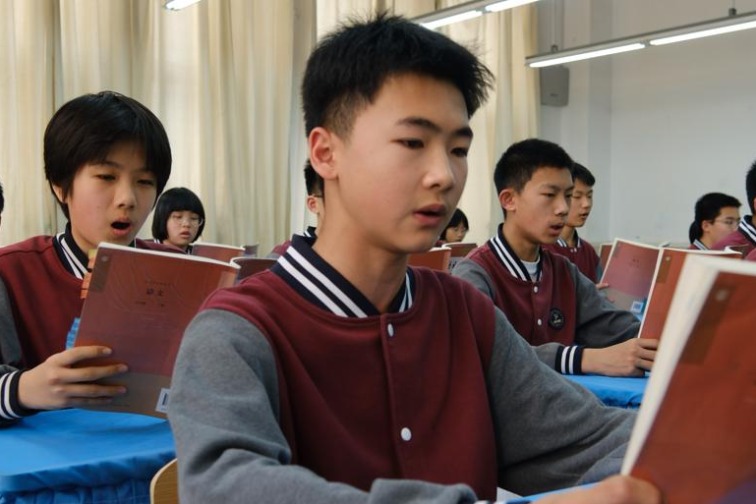
    China has unveiled a major educational reform prioritizing student health through the nationwide expansion of school sports leagues and enhanced psychological support systems. Education Minister Huai Jinpeng announced the sweeping measures during a press conference held alongside the National People’s Congress sessions, marking a significant shift toward implementing the “Health First” educational philosophy across the nation’s academic institutions.

    The comprehensive strategy will establish competitive leagues for soccer, basketball, and volleyball at both classroom and school levels, creating structured athletic frameworks within educational settings. This initiative forms part of a broader campaign to ensure every student develops at least one permanent sports proficiency while transforming school campuses into vibrant hubs of physical activity.

    Minister Huai confirmed the successful implementation of mandatory 15-minute classroom breaks and two-hour daily physical activity periods throughout China’s primary and secondary education systems. Early results from national monitoring indicate promising trends, with overall student fitness levels showing steady improvement across primary through university levels. Notably, the national student myopia rate has demonstrated a consistent decline over four consecutive years.

    The Education Ministry’s first post-Spring Festival meeting specifically addressed health prioritization, signaling institutional commitment to this paradigm shift. “Physical engagement takes precedence,” Minister Huai emphasized. “We consider athletic exercise the most effective method to motivate students to transition from classroom environments to playground settings.”

    Complementing the physical wellness components, authorities will launch a new action plan focusing on psychological health development. This multidimensional approach incorporates sports participation, artistic performances, labor experiences, outdoor expeditions, reading initiatives, and traditional games to foster positive mental attributes.

    Educational institutions will strengthen teacher-student relationships while ensuring adequate staffing of qualified mental health professionals. “We must administer education with genuine warmth,” Minister Huai stated, “creating campus atmospheres that feel secure, comfortable, and caring through professional guidance and counseling services.”

    The reform introduces accountability measures making student physical and mental wellness key evaluation metrics for schools, with these factors becoming central components of educational supervision frameworks nationwide.

  • China spent $14.5b to help families raise children last year: health minister

    China spent $14.5b to help families raise children last year: health minister

    In a significant demonstration of its commitment to family welfare, China allocated over 100 billion yuan ($14.5 billion) toward child rearing subsidies throughout the previous year, according to National Health Commission Minister Lei Haichao. The announcement was made during a press conference at the fourth session of the 14th National People’s Congress in Beijing on March 7, 2026.

    The substantial financial package saw the central government contributing approximately 90 billion yuan, complemented by 10 billion yuan from local government authorities. Minister Lei specified that the subsidy program applies to children born on or after January 1, 2022, providing eligible families with annual support totaling 10,800 yuan per infant.

    Minister Lei characterized the initiative using a popular public description, noting that “the moment a child is born, they bring their own ration, their own ‘salary’.” He emphasized that these financial measures represent a concrete governmental commitment to improving living standards and supporting family development.

    Beyond direct monetary assistance, China has made considerable advancements in childcare infrastructure. Minister Lei reported the addition of 890,000 affordable and reliable nursery placements during the previous year, elevating the national total to more than 6.6 million available positions. These comprehensive measures form part of China’s broader strategy to promote high-quality population development and address demographic challenges through targeted family support systems.

  • China to strengthen measures against misconduct in education, enhance equity: education minister

    China to strengthen measures against misconduct in education, enhance equity: education minister

    China’s Ministry of Education has announced a sweeping initiative to combat systemic issues within the nation’s education system, focusing on misconduct prevention and equity enhancement. Education Minister Huai Jinpeng revealed the multi-faceted strategy during a press conference at the ongoing fourth session of the 14th National People’s Congress in Beijing.

    The comprehensive plan addresses several critical areas including excessive tutoring practices, school bullying incidents, cafeteria operational irregularities, and textbook selection procedures. Minister Huai emphasized the government’s zero-tolerance approach, stating that violations would be addressed immediately upon detection with stringent measures to prevent recurrence.

    A significant component of the reform involves inter-departmental collaboration between education, public security, health, and market regulation authorities. This coordinated effort aims to create safer learning environments through enhanced monitoring and enforcement mechanisms.

    Demographic shifts have prompted the ministry to establish a national surveillance system for optimizing resource allocation. The strategy specifically targets urban centers experiencing population influx and regions with underdeveloped educational infrastructure for increased school placement opportunities.

    The initiative also includes adaptive resource distribution across various educational stages, supported by pilot programs for reduced-class-size teaching in qualified areas. Rural education will receive bolstered support through the expanded ‘silver age’ program recruiting retired educators and improvements to boarding facilities in township schools.

    Equity measures encompass increased public preschool availability, county high school revitalization projects, and guaranteed equal admission opportunities for migrant children, left-behind children, and students with disabilities.

  • Deadly storms and tornadoes strike US state of Michigan

    Deadly storms and tornadoes strike US state of Michigan

    The state of Michigan is confronting severe devastation and assessing the aftermath of a violent storm system that unleashed multiple tornadoes across several communities. The extreme weather event, characterized by powerful rotational winds, carved a path of destruction through urban and residential areas, resulting in significant structural damage and tragic loss of life.

    Initial reports from emergency management officials describe widespread impacts, including homes completely leveled, commercial buildings sustaining critical damage, and essential infrastructure being severely compromised. The force of the tornadoes was potent enough to tear mature trees from the ground and hurl debris across considerable distances, creating hazardous conditions for residents and complicating rescue operations.

    First responders, including police, fire departments, and paramedic teams, are conducting coordinated search-and-rescue missions in the hardest-hit zones. The primary objectives are to locate and evacuate any individuals trapped in damaged structures and to provide immediate medical assistance to the injured. Local hospitals have been placed on high alert to manage an influx of patients.

    State Governor Gretchen Whitmer has officially declared a state of emergency for the affected counties, a procedural move that mobilizes additional state resources and unlocks federal disaster assistance funding. In public statements, the Governor urged residents to prioritize their safety, heed all warnings from authorities, and avoid traveling through damaged areas to allow emergency crews unimpeded access.

    The National Weather Service (NWS) has dispatched survey teams to the region to analyze the damage and determine the exact intensity and number of tornadoes, which will be rated on the Enhanced Fujita (EF) scale. Meteorologists had issued advanced warnings for the potential of severe convective storms, but the rapid development and precise trajectory of the tornadoes highlighted the persistent challenges in predicting such volatile weather phenomena with pinpoint accuracy.

    This event is part of a broader pattern of intense spring and summer storm activity across the United States, particularly in the Midwest and Great Lakes regions, which are increasingly experiencing severe weather outbreaks. Recovery efforts are expected to be a prolonged process, involving not just rebuilding infrastructure but also providing long-term support for displaced families and communities grappling with the psychological and economic toll of the disaster.

  • Motorists stranded and military deployed after heavy rains pound Kenyan capital overnight

    Motorists stranded and military deployed after heavy rains pound Kenyan capital overnight

    NAIROBI, Kenya — Severe flooding triggered by relentless overnight rainfall has brought Kenya’s capital to a standstill, leaving motorists trapped for hours and prompting military deployment for emergency rescue operations. The crisis unfolded as torrential downpours that commenced Friday continued through the night, transforming major roadways into impassable waterways and submerging vehicles across the city.

    In response to the escalating situation, Kenyan military rescue units have been activated to support overwhelmed emergency services. The government’s intervention included the temporary suspension of toll fees on elevated highways to facilitate evacuation efforts. Kenya Red Cross response teams faced significant challenges reaching stranded residents due to severely compromised road infrastructure.

    Ahmed Idris, Secretary-General of Kenya Red Cross, confirmed via social media platform X that search and rescue operations were underway despite formidable obstacles. “Our teams are working tirelessly though severely constrained by the complete breakdown of road networks. We are prioritizing all efforts to reach those in critical need,” Idris stated.

    Social media platforms became flooded with visual evidence of the catastrophe, showing residential areas completely inundated and citizens wading through chest-high waters. The disaster has reignited public anger toward municipal authorities, with residents citing chronically inadequate drainage infrastructure as the primary cause of preventable flooding.

    Aisha Bajaber, a Nairobi resident, expressed the collective frustration on X: “Yet again our city drowns in floodwaters. When will officials address the complete absence of functional drainage systems?” This current emergency occurs within Kenya’s long-rains season, which traditionally begins in late February and has historically resulted in catastrophic consequences including lethal landslides, mudslides, and mass displacements affecting thousands of citizens.

  • Grabbing the bull by the tail: Venezuela’s cowboy sport

    Grabbing the bull by the tail: Venezuela’s cowboy sport

    In the tropical grasslands of Venezuela’s llanos, an adrenaline-fueled cowboy tradition known as coleo continues to thrive despite mounting criticism from animal welfare organizations. This distinctive sport, deeply embedded in the nation’s cultural fabric, showcases mounted cowboys pursuing bulls not by their horns but by their tails in a dramatic display of equestrian skill.

    The annual llanera fair in San Fernando de Apure serves as the premier venue for coleo competitions, where approximately 200 participants don protective gear including hockey helmets and limb padding. During four-minute matches, riders spur their horses alongside charging bulls, executing acrobatic maneuvers to grasp the animal’s tail and flip it to the ground. Scoring systems award points based on the bull’s tumbling technique, with additional marks for achieving all four legs in the air.

    Historical experts trace coleo’s origins to Spanish colonial cattle herding practices, with the tradition now extending beyond Venezuela to neighboring Colombia, Brazil, and Mexico. Most competitors learn the sport through family lineages, with participants ranging from children to seasoned veterans like 35-year-old Rafael Delgado, who began competing at age ten.

    Proponents defend coleo as an essential component of Venezuelan identity, with judge Neomar Sanoja even declaring it the nation’s true national sport despite baseball’s overwhelming popularity. Supporters like rider Luis García criticize opponents as hypocritical, noting that most critics consume meat from industrial farming operations without similar outrage.

    However, animal rights organizations including AnimaNaturalis and Venezuela’s Napda Foundation have launched vigorous campaigns against coleo, condemning it as ‘cruelty and abuse of power against defenseless animals.’ Their concerns intensified following viral videos showing spectators kicking and throwing objects at bulls to force them back to their feet during competitions.

    The cultural divide highlights the complex intersection of tradition, entertainment, and animal welfare in contemporary Venezuelan society, with no immediate resolution in sight for this deeply polarized issue.

  • Women in South Africa take up guns and martial arts for protection against gender violence

    Women in South Africa take up guns and martial arts for protection against gender violence

    In the agricultural town of Bronkhorstspruit, just outside Pretoria, a diverse group of South African women ranging from teenagers to senior citizens are learning firearm proficiency under female instruction. These training sessions at the Lone Operator shooting range represent a growing national movement as women seek protection against gender-based violence that reached such epidemic proportions that the government declared it a national disaster last November.

    Participants as young as 13 and as old as 65 practice with 9mm pistols, receiving guidance on proper grip and sight alignment from lead instructor Claire van der Westhuizen. The curriculum extends beyond basic marksmanship to include realistic scenarios such as firing from defensive positions on their stomachs and backs.

    This trend emerges against a harrowing statistical backdrop: United Nations data reveals South Africa’s femicide rates rank among the world’s highest, exceeding global averages by five to six times. A 2022 national study found over 35% of women aged 18 and older have experienced physical or sexual violence, predominantly from intimate partners. According to women’s rights organization Sonke Gender Justice, approximately 15 women are killed daily in gender-based attacks.

    The crisis has prompted varied responses across the nation. In Johannesburg, women are turning to martial arts like jiujitsu, learning practical techniques to escape chokeholds and break free from wall pinning. Many participants keep their training secret from partners, sometimes claiming shopping trips as cover.

    While President Cyril Ramaphosa’s disaster declaration enables redirected funding, activists point to a persistent implementation gap despite progressive policies. They cite socioeconomic inequality, patriarchal attitudes, and underresourced law enforcement as contributing factors, with rape conviction rates languishing at just 8% in 2021.

    For survivors like Sunette du Toit, a 51-year-old grandmother who endured a home invasion by five assailants, firearms training represents reclaimed agency. ‘I had to do this for myself to gain my confidence back,’ she explained, describing the community as ‘a family of support.’

    Yet women’s rights advocates caution that placing the burden of protection on potential victims rather than addressing perpetrators remains problematic. While self-defense training builds confidence, instructors acknowledge its limitations, emphasizing heightened awareness rather than guaranteed safety.