分类: society

  • Getting the most out of barrier-free tours for yourself or someone with a disability

    Getting the most out of barrier-free tours for yourself or someone with a disability

    For millions of people living with disabilities around the world, tourism has long been marked by preventable obstacles. These barriers range from highly visible infrastructure gaps — such as a broken elevator at a popular attraction — to invisible challenges that are often overlooked: an overly long walking itinerary that causes exhaustion, or a crowded, loud environment that triggers sensory overload.

    As the large baby boomer generation continues to age, the global travel industry has begun to shift toward catering to older adults, who typically have both disposable income and flexible time for international sightseeing, and many of whom require some form of travel assistance. But industry advocates note that true inclusive accessibility extends far beyond just aging travelers, needing to accommodate a far broader range of visitors: from people living with permanent physical disabilities, to neurodivergent travelers on the autism spectrum, to those living with dementia.

    To better serve both travelers with visible and invisible disabilities, museums, cultural institutions and tourism organizations across the globe are rolling out specialized programming and barrier-free tour options, many enabled by modern technological innovation. These customized offerings include sign-language guided tours for Deaf and hard-of-hearing visitors, tactile exhibit experiences for guests who are blind or have low vision, and structured outings designed specifically to meet the needs of neurodivergent travelers. Dedicated travel agencies focused exclusively on serving disabled travelers have also emerged in regions across the world to fill gaps in mainstream offerings.

    Ashley Grady, an accessibility program specialist at the Office of Visitor Accessibility at Washington D.C.’s Smithsonian Institution, explains that offering intentional barrier-free services sends a clear message that disabled travelers are valued guests in public cultural spaces. “These services are a way of saying, ‘we’ve thought of you,’” Grady said. “We want you to come to our museums. We want you to see yourselves reflected in our staff and our collections. And we want to make these programs as accessible as possible for you, your family, your loved ones, your friends.”

    Despite this progress, significant gaps in accessible tourism remain industry-wide. Ivor Ambrose, managing director of the nonprofit European Network for Accessible Tourism, points out that there is still a widespread lack of awareness about the wide spectrum of accessibility needs that different disabled travelers require. “This is actually a really big market and an opportunity, which is still not fulfilled by the operators in all these different areas of tourism,” Ambrose noted.

    To help disabled travelers navigate existing options and advocate for themselves, accessibility experts share three key pieces of advice for planning an enjoyable, accessible trip.

    First, prioritize detailed research and advance planning. Josh Grisdale, founder of Accessible Japan — a resource platform for disabled travelers visiting Japan — has cerebral palsy and uses a power wheelchair. When planning trips to new destinations, he cross-references information from multiple public sources: browsing travel discussions on Reddit, watching user-generated travel videos on YouTube, and using Google Street View to scout for potential barriers like stairs that would block wheelchair access. Grisdale also recommends contacting a destination’s concierge or visitor services ahead of time to confirm accessibility details, as most cultural institutions now publish their barrier-free offerings online. To address the global lack of centralized, lived-experience accessibility information, Grisdale launched *tabifolk*, a crowdsourced platform where disabled travelers can share on-the-ground knowledge about accessible destinations worldwide. “Even though I’m in a wheelchair and I’ve had a disability my whole life, there’s things that I don’t know about other disabilities,” he explained.

    In Africa, where iconic travel experiences like safaris and Mount Kilimanjaro climbs are often out of reach for disabled travelers without advance planning, advance preparation is equally critical, according to Joanne Ndirangu, founder and director of the Kenyan accessible tourism agency Scout Group Agency. Ndirangu, who advocates for expanding accessible tourism across the continent, urges disabled travelers to partner with local travel experts who have first-hand knowledge of the region’s existing accessible options. Many local experts have worked directly with hotels and restaurants to install accessibility features like ramps and train staff to support neurodivergent guests, and can steer travelers away from inaccessible spots while offering equally compelling alternatives. “Let’s say you want to see giraffes somewhere,” Ndirangu gave as an example. “I can now advise you, ‘That place is not viable if you’re on a wheelchair or on crutches because of the hills and the valleys.’ So I can give you an alternative — and you get to see the giraffes.”

    Second, seek out specialized accessible programming instead of defaulting to general public tours. Mass-market tours are often designed for able-bodied, neurotypical travelers, with features that create barriers — from exhibits placed too high for wheelchair users to view, to loud, crowded environments that trigger sensory distress. The Smithsonian Institution, the world’s largest museum complex, addresses this gap with its popular sensory-friendly “Morning at the Museum” program, which opens participating museums to neurodivergent travelers and their families one morning a month before general public entry. During these events, visitors can explore at their own pace or participate in structured multi-sensory activities, without overwhelming crowds or noise. “We can control the environment, we can reduce the crowds,” Grady said. “It’s a completely judgment-free environment and one that’s really meant to hopefully be that full bridge to inclusion, where they are able to come to a museum, have a great experience, and then maybe come back when we’re open to the public.”

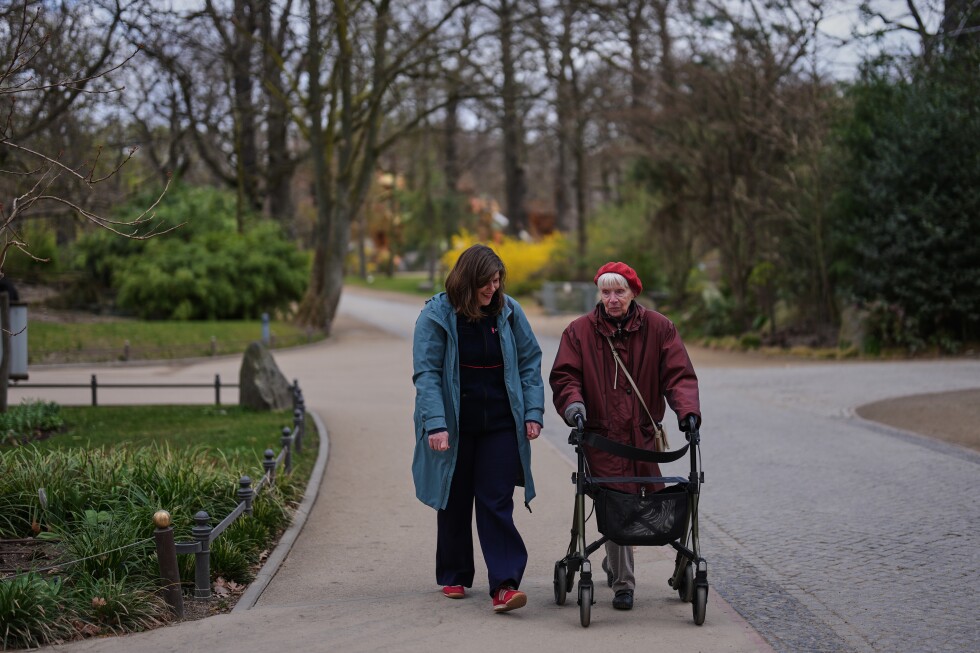
    In Berlin, the Catholic aid organization Malteser Deutschland has stepped in to address another overlooked gap: accessible programming for people living with dementia. The organization developed customized barrier-free tours for this population at top local destinations including Berlin Zoo, the Museum of Natural History, Britzer Garden, and Charlottenburg Palace, with plans to expand to more locations. The Berlin Zoo tour, for example, is limited to a small group of participants and capped at 90 minutes, focusing on just a small selection of animal habitats instead of trying to cover the zoo’s entire collection, to avoid tiring or overwhelming guests.

    Third, don’t hesitate to communicate your needs ahead of time, and share feedback after your visit to help improve options for future travelers. Ndirangu notes that her team proactively asks all guests about required accessibility accommodations upfront, but many travelers don’t disclose their needs, leaving agents unable to adjust plans. For example, most hotels in Kenya only offer one or two fully accessible rooms, which can be fully booked if a guest’s need isn’t communicated in advance. “Give us that opportunity to give you solutions,” Ndirangu said. “We’ve had guests who don’t mention anything.”

    The European Network for Accessible Tourism encourages travel providers to fold the cost of accessibility services into overall trip pricing, rather than charging extra only to disabled guests, a model that many major cultural institutions already follow. Most museums already offer discounted entry for disabled visitors, often with free or reduced admission for travel companions.

    Grady adds that the Smithsonian regularly updates its accessibility offerings based on feedback from visitors and a disabled advisory board, with changes ranging from adjusting app color contrasts for low-vision visitors to working with curators to design new exhibits to be fully accessible from the planning stage. At the end of the day, Grady says, disabled travelers aren’t asking for special treatment: “They’re not asking for anything out of the ordinary,” she said. “They’re literally just trying to experience a visit just like anyone else.”


  • Man subdued with Taser after attacking nurses at Sydney hospital

    Man subdued with Taser after attacking nurses at Sydney hospital

    A violent outburst by a patient at a major Sydney public hospital left multiple medical staff and a bystander injured Saturday night, prompting police to deploy a Taser to subdue the attacker before taking him into custody, New South Wales Police confirmed.

    Officers were already present on the grounds of Prince of Wales Hospital in Randwick when emergency alerts of an ongoing assault came in just after 8:30 p.m. local time. According to official statements from NSW Police, the aggressor — identified as a 51-year-old male patient at the facility — launched a sustained attack that left one nurse with severe leg wounds. The patient also assaulted two additional nurses and a hospital security guard in the incident.

    A 26-year-old woman who stepped in to protect another patient during the chaos was also attacked by the man, police added. After the situation escalated, responding officers used a Taser to disable the aggressor and took him into custody. He was subsequently moved to a secured unit within the Randwick hospital for holding.

    As of the latest update, the nurse who sustained serious leg injuries remains admitted to the hospital for ongoing treatment. The other four people hurt in the attack — the two additional nurses, the security guard, and the 26-year-old woman — received on-site medical care for their injuries and did not require admission.

    The Eastern Beaches Police Area Command has launched a formal investigation into the assault to determine the full circumstances of the incident and prepare potential criminal charges against the suspect. This attack comes amid growing national conversation in Australia about rising rates of violence against frontline hospital workers, who have repeatedly called for greater workplace protections to prevent similar harm.

  • Voice notes are massive in some countries but not the UK – here’s why

    Voice notes are massive in some countries but not the UK – here’s why

    It has been 13 years since Meta-owned WhatsApp first introduced the voice note feature to the world, a quiet launch that would go on to split global public opinion on digital communication. Lauded by the platform as a way to connect users beyond what text can capture—bringing the warmth of a loved one’s voice into everyday messaging—the tool has since become one of the most divisive functions in modern digital communication. Today, receiving a 10-minute rambling voice note detailing a workplace conflict or family dispute sparks joy for some and deep frustration for others.

    Usage data reveals a stark geographic divide in how the feature is received. In populous and high-usage regions including India, Mexico, Hong Kong, and the United Arab Emirates, voice notes have grown to nearly rival text messages as the preferred mode of casual digital communication. But one major market has stood out for its persistent resistance: the United Kingdom, which never embraced the voice note trend the way much of the world has.

    New survey data from YouGov, published this month based on responses from more than 2,300 British adults, quantifies this resistance. While voice note usage has ticked up slightly over the past year, just 15% of UK adults use the tool regularly (defined as multiple times per week). Across genders and every age bracket—including digital-native Gen Z—voice notes rank as the least popular method of digital messaging. A 2024 cross-national YouGov study of 17 mostly high-income countries reinforced this finding: Britain ranked as the most voice note-averse nation, with 83% of respondents stating they prefer text-based communication over voice, and only 4% saying they favor voice notes.

    To unpack why voice notes have conquered some regions but failed to gain traction in the UK, experts and social observers have turned to psychology, cultural norms, linguistics, and diaspora dynamics to find answers.

    Decades of research has long confirmed the unique emotional power of human voice. A 2011 study conducted by researchers at the University of Wisconsin-Madison examined hormonal responses in children receiving communication from their parents via either phone call or text message. The results were clear: cortisol, the body’s primary stress hormone, dropped when children heard their parent’s voice during a call, while oxytocin—the hormone linked to social bonding and positive connection—rose. Though the study focused on live calls rather than pre-recorded voice notes, lead researcher Professor Seth Pollak notes that its core insight about the value of hearing a loved one’s voice likely extends to voice messaging. Pollak says a follow-up study focused specifically on pre-recorded voice notes would add critical context to this research, and his preliminary hypothesis is that pre-recorded clips would still carry emotional weight, though less than a real-time interactive call.

    Dr. Martin Graff, a psychologist specializing in online communication at the University of South Wales, frames voice notes’ appeal through media richness theory. Unlike plain text, voice carries layers of tone, inflection, and nuance that reduce uncertainty about a sender’s intent and emotion, helping conversational partners feel more connected to one another. It is this benefit that has led major dating platforms including Bumble, Happn, and Grindr to add voice note functions to their services over the past half-decade, helping users build rapport before meeting in person.

    For sociologists, the UK’s resistance to voice notes boils down in part to long-observed cultural norms around communication. Professor Jessica Ringrose, a sociology scholar at University College London, points out that British communication style is widely characterized as more reserved and emotionally reticent than many other global cultures. Voice notes lean into conversational expressiveness and performative communication that fits more naturally into cultures comfortable with open emotional expression, a style that is less common in mainstream UK culture. “I could definitely see that British people would be less inclined [to send voice notes] and briefer in their interactive style,” Ringrose explains, while noting that generalizations about national culture carry inherent risk of stereotyping.

    Unscientific firsthand anecdotes from British users mirror this divide, even within personal networks. For BBC reporter Josh Parry, an avowed voice note fan who occasionally sends 15-minute clips, the tool allows for nuance and context that is difficult to capture in text, and offers a hands-free option for activities like walking his dog. Small business owner Naomi echoes this, noting that voice notes make multitasking easier when juggling childcare and work, and add a sense of closeness that text cannot match. But for many other British users, the convenience for senders becomes a burden for recipients. Ramya, a vocal voice note critic, points to the inherent asymmetry: sending a voice note takes just a tap of a button, but receiving a six-minute clip requires the recipient to set aside all other activities to listen, with no way to quickly scan the content to gauge its urgency. Gen Z user Gyasi adds that voice notes require headphones to listen to in public, making them an inconvenience for on-the-go communication, while 30-year-old Daniela says the unskippable format causes unnecessary stress: once you open a voice note, you feel committed to listening to the entire thing.

    On the opposite end of the spectrum, India—one of the world’s most pro-voice note nations—offers key insights into the tool’s popularity. The 2024 YouGov data shows that 48% of Indian respondents either prefer voice notes or like them equally as much as text, compared to just 18% in the UK, and the feature is now deeply embedded in daily digital communication. WhatsApp’s Indian division even released a nine-minute promotional advertisement centered on a fictional rural newlywed couple who build their relationship through voice notes.

    Multiple factors explain India’s embrace of the tool. First, linguistic practicality: as a multilingual society where many users regularly blend multiple languages in casual conversation, voice notes eliminate the friction of complex non-English keyboard layouts. For example, many young Indians switch between regional languages and English mid-conversation; typing in regional language scripts is often clunky and unintuitive, but speaking comes naturally. For users who may be fluent in spoken multiple languages but not literate in all of them, voice notes also remove barriers to communication. Professor Kathryn Hardy, a sociology scholar at Ashoka University in Haryana, notes that this accessibility has made voice notes particularly popular in rural communities with lower rates of written literacy, where the tool bypasses structural barriers to written digital communication.

    Voice notes also serve a unique social function that transcends borders: they add nuance and expression to gossip, making them a go-to for sharing casual news among friend groups. As Pune-based college student Shreya puts it, “when it comes specifically to spilling the tea, we expect a voice note.”

    Another key driver of voice note popularity in high-usage regions is large diaspora communities. India is home to the world’s largest diaspora, with more than 35 million people of Indian origin living abroad, and 2.5 million more moving overseas annually. Mexico, where 53% of the population reports liking voice notes, also has a large cross-border diaspora concentrated in the United States. For separated family and friends spread across multiple time zones, voice notes offer a middle ground between rigid, scheduled live phone calls and impersonal text: they are asynchronous, so recipients can listen on their own time, but still carry the personal warmth of a human voice that text cannot match. Hardy, an American scholar who has lived in India for nearly a decade, confirms this dynamic: her family uses voice notes 10 to 20 times a week to help her children stay connected with grandparents back in the United States.

    Could linguistic factors also explain British resistance to voice notes? The Spectator columnist Rory Sutherland argues that English is a particularly concise language, making quick text communication more efficient than it is in many other languages. For many British users, the resistance also boils down to etiquette: Sutherland argues that sending an unrequested five-minute voice note is inherently discourteous to the recipient, who is forced to dedicate more time to the message than the sender did.

    To date, there is no definitive research confirming whether pre-recorded voice notes trigger the same oxytocin boost seen in live phone calls, and even if they did, it is unlikely to shift entrenched opinions on both sides of the divide. For proponents, the tool fills an important gap in an era where many people feel increasingly disconnected from friends and loved ones. As voice note advocate Josh Parry puts it: “I hope they never ever go away. The gossip in our lives would be much less rich without voice notes.”

  • Georgia declares state of emergency as wildfires destroy dozens of homes

    Georgia declares state of emergency as wildfires destroy dozens of homes

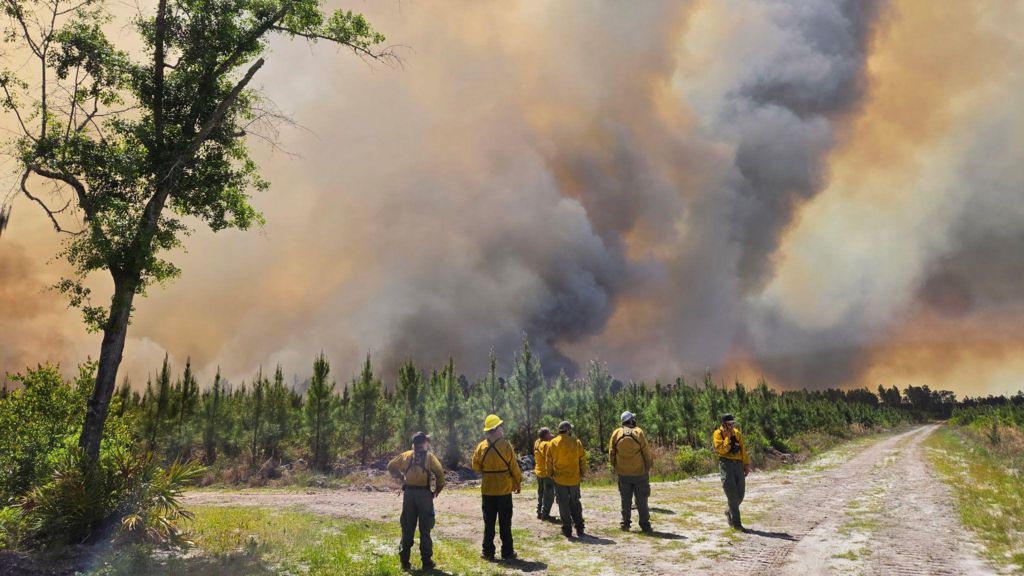
    A devastating outbreak of wildfires across the U.S. state of Georgia has left a trail of widespread destruction, with official data confirming more than 39,500 acres of land scorched and over 120 residential properties reduced to ash. As blazes continue to spread amid historically dry conditions, state leaders have activated emergency response protocols to mobilize resources and protect at-risk communities.

    The two largest and most destructive blazes, identified as the Pineland Road Fire and the Highway 82 Fire, are concentrated in the state’s southeastern region. Their rapid growth prompted Governor Brian Kemp to issue a 30-day state of emergency covering 91 of Georgia’s 159 counties, unlocking additional state funding and response assets to support local firefighting efforts.

    Georgia Forestry Commission Director Johnny Sabo emphasized the extreme risk facing the state in a recent public video address, noting that parched vegetation has created tinder-dry conditions where even the smallest spark can escalate into a life-threatening inferno in minutes. “We are in extreme drought conditions, and wildfire activity has already surpassed our five-year average,” Sabo added, underscoring that the current outbreak is far beyond what response teams typically handle this time of year.

    Beyond the two major blazes, emergency crews are simultaneously working to contain dozens of smaller fires across the state. On Saturday alone, officials documented 32 new wildfire ignitions that burned a combined 50 acres of land, stretching response resources thin across multiple regions. The outbreak first began on April 18, with Governor Kemp issuing the state of emergency declaration just four days later as blazes began to spread uncontrollably.

    Investigators with the Georgia Forestry Commission (GFC) have already identified likely ignition sources for the two major fires. The Highway 82 Fire, which has burned roughly 7,500 acres to date, is believed to have started when a metallic foil balloon made contact with an overhead power line, generating a spark that ignited surrounding dry vegetation. As of the latest update, the blaze was only 10% contained, leaving nearby communities at continued risk. The far larger Pineland Road Fire, which has scorched 32,000 acres, has been traced to an accidental stray spark generated by a routine welding operation, GFC investigators confirmed.

    In a Friday update posted to the GFC official website, response teams reported that at least 35 minor additional structures have been lost to the Pineland Road Fire, with 187 homes still under immediate threat from advancing flames. To reduce the risk of new ignitions, state officials have implemented a full outdoor burn ban across the 91 counties covered by the state of emergency. The ban prohibits all open burning of waste, agricultural debris, and other unregulated outdoor fires.

    For local families who have already lost their homes, the disaster has brought unimaginable loss. Anna Dudek, a resident whose property was destroyed by the blazes, shared her harrowing experience with CBS News, the BBC’s U.S. media partner. As the Dudek family spotted flames reaching their property line and began packing belongings to evacuate, they quickly moved their children and pets to safety before fleeing. From a distance, Anna monitored her home through a security camera feed connected to her phone, watching in real time as flames engulfed the structure. “When both of my devices went offline, and the screen went black and I couldn’t see anything more, it was so gut-wrenching because then I knew that what I call home was gone,” she told reporters.

    The current wildfire outbreak is not isolated to Georgia, with hundreds of concurrent blazes also burning across neighboring Florida, straining regional firefighting resources across the U.S. Southeast as the region grapples with ongoing severe drought.

  • Teenage motorcyclist dies after collision

    Teenage motorcyclist dies after collision

    A fatal road traffic collision in County Donegal, Republic of Ireland has claimed the life of a teenage male on Saturday afternoon, local law enforcement has confirmed. The crash unfolded at approximately 4:30 p.m. local time along the R252 roadway near the village of Cloghan, involving two vehicles: a private passenger car and a motorbike. The rider of the motorbike, who was a male in his teens, was pronounced dead instantly at the crash site following the incident. No other individuals involved in the collision suffered any injuries, according to initial statements from Gardaí, the national police service of Ireland. In the wake of the crash, investigating officers have issued a public appeal for information to help reconstruct the sequence of events that led to the tragedy. Gardaí are asking any members of the public who were travelling through the Cloghan area between 4:00 p.m. and 5:00 p.m. local time on Saturday – particularly anyone with dashcam footage from that window – to come forward and share their recordings or any relevant observations with police. As of the latest update, the R252 remains fully closed to through traffic to allow collision investigators to conduct a full forensic examination of the scene, with diversions in place for local and through traffic. The incident comes as road safety advocates continue to push for greater awareness of motorcyclist safety on rural Irish roads, which often feature narrow lanes and higher traffic volumes during weekend travel periods.

  • Harbin panda pavilion hosts birthday bash for twin pandas

    Harbin panda pavilion hosts birthday bash for twin pandas

    On a crisp Friday morning in northeast China’s Heilongjiang province, the Sun Island Giant Panda Pavilion in Harbin transformed into a joyful celebration venue, throwing a special birthday bash for its most popular residents: 9-year-old male twin giant pandas Zhi Shi and Zhi Ma.

    Named for their unique light-colored markings that resemble cheese and sesame respectively, the fluffy twins marked a milestone both in age and in their new life in northern China. The pair made their big move from the world-famous Chengdu Research Base of Giant Panda Breeding in southwest China’s Sichuan province to Harbin back on August 11, 2025, making Friday’s party their first major birthday celebration held in their new permanent home.

    Local zoo staff prepared custom birthday treats shaped like bamboo wreaths and frozen fruit cakes, designed to suit the pandas’ dietary preferences while beating the mild spring temperatures in Harbin. Dozens of visitors and panda enthusiasts gathered around the outdoor enclosure to watch the twins munch on their snacks, explore the celebration-themed enrichment displays, and capture photos of the playful pair.

    The relocation of the giant pandas to Harbin has already boosted local tourism, drawing thousands of visitors to the Sun Island pavilion since the twins opened to the public late last year. Friday’s birthday event further highlighted the growing public interest in giant panda conservation and unique wildlife tourism experiences in northern China.

  • Roommate charged with two counts of murder in death, disappearance of two USF students

    Roommate charged with two counts of murder in death, disappearance of two USF students

    TAMPA, Florida — Law enforcement officials announced Saturday that formal murder charges have been brought against the former roommate of a missing Bangladeshi doctoral student, nearly two weeks after the student and his girlfriend vanished from the University of South Florida (USF) campus.

    Twenty-six-year-old Hisham Abugharbieh, a U.S.-born ex-student at USF, now faces two counts of premeditated first-degree murder with a weapon connected to the disappearances of 27-year-old Zamil Limon and 27-year-old Nahida Bristy, both registered students at the institution, according to the Hillsborough County Sheriff’s Office.

    Hillsborough County Chief Deputy Joseph Maurer confirmed Friday that partial remains identified as Limon’s were recovered on the Howard Frankland Bridge early Friday. As of Saturday’s announcement, Bristy remains missing, and search operations to locate her are still ongoing across the region.

    Abugharbieh was first taken into police custody Friday following a hours-long standoff at his family’s residence, located just north of the USF campus. Officers initially responded to the property following a domestic violence report, and first moved all other family members to a secure location before Abugharbieh barricaded himself inside the home and refused to surrender. A specialized SWAT team, supported by unmanned aerial drones, tactical robots, and trained crisis negotiators, was deployed to the scene before Abugharbieh finally surrendered, walking out with his hands raised and clothed only in a blue towel.

    At the time of his initial arrest, Abugharbieh faced a string of preliminary charges including unlawful transportation of a dead body, failure to report a human death, evidence tampering, false imprisonment, and battery. The upgraded first-degree murder charges were filed following initial processing of evidence and identification of Limon’s remains.

    A family member of the missing couple shared that Limon and Bristy, both 27, had been planning to marry before their April 16 disappearance. Limon, who was pursuing a doctorate in geography, environmental science and policy, shared an off-campus apartment with Abugharbieh, and was last seen at that residence the day they vanished. Bristy, a graduate student in chemical engineering who lived in on-campus housing, was last spotted one hour later at a campus science building.

    An official autopsy to confirm the exact cause and manner of Limon’s death was scheduled for completion Saturday morning, per Maurer’s Friday statement.

    USF university spokespersons confirmed that while Abugharbieh was previously enrolled at the institution, he was not an active student at the time of the couple’s disappearance. Institutional records show he attended USF from the spring 2021 semester through spring 2023, working toward a Bachelor of Science degree in management.

    The Hillsborough County Sheriff’s Office added that Abugharbieh has a documented history of prior arrests in the county. Court records show he was charged with battery and burglary of an unoccupied residence in September 2023, plus an additional battery charge in May 2023 — all of which were classified as misdemeanor offenses.

    As a first-time offender, Abugharbieh was accepted into a court-supervised diversion program for misdemeanor charges. He completed the program in early 2024, and all prior charges against him were formally dismissed. Attempts by outlets to reach his attorney from that prior case Saturday went unanswered.

    Additional court records from 2023 show two domestic violence injunctions were filed against Abugharbieh by a family member. A county judge granted one of the requested protective injunctions and denied the second. He has also faced multiple minor charges for traffic violations over the years.

    Law enforcement is asking any member of the public with information related to Bristy’s disappearance or the case to contact the Hillsborough County Sheriff’s Office immediately to assist with the ongoing investigation.

  • Asian surnames fastest-growing in US

    Asian surnames fastest-growing in US

    Newly released demographic data from the US Census Bureau has uncovered a striking shift in the country’s surname landscape: between 2010 and 2020, three of the most common Chinese surnames claimed the top three spots on the ranking of fastest-growing last names among the 1,000 most frequent surnames across the United States.

    According to the census analysis, the population holding the surname Zhang grew by 74% over the decade, outpacing all other surnames. Liu followed with a 62% growth rate, and Wang rounded out the top three with a 54% increase. Beyond the top three, four additional common Chinese surnames secured spots in the top 12: Li, Lin, and Chen landed in the top 10, with growth rates ranging from 37% to 48%, while Wu and Huang claimed 11th and 12th place respectively, both with 36% growth.

    The census report notes that nearly all of the 15 fastest-growing surnames in the US over this period are primarily associated with people of Asian, Native Hawaiian, or Other Pacific Islander descent. The only exception is Ali, a name with broad diversity across Hispanic racial and origin groups. This concentrated growth pattern mirrors broader national demographic shifts recorded between 2010 and 2020, when the combined population of Asian, Native Hawaiian, and Other Pacific Islander communities expanded far more rapidly than the overall US population.

    Official census figures put the total growth of the Asian American population at 35.5% over the decade, pushing its share of the total US population from 4.8% in 2010 to 6% in 2020. This growth rate was higher than that of every other single racial group, outpaced only by the multiracial population category.

    Experts link the rapid rise of common Chinese surnames to the massive surge in Chinese student migration to the US during the 2010s. Data from the Open Doors report, a leading source of international student enrollment statistics, shows that the number of Chinese students studying in the US more than doubled over the decade, jumping from roughly 157,000 in 2010 to more than 372,500 in 2019. In total, more than half a million Chinese students arrived in the US to pursue education between 2010 and 2020, bringing with them the common surnames that dominate modern China’s population profile.

    Notably, the ranking of the fastest-growing Chinese surnames in the US closely aligns with the popularity ranking of surnames within China itself. Official Chinese demographic data lists Wang, Li, Zhang, and Liu as the four most common surnames in the country, with Chen, Wu, and Huang also ranking among the top 10 most frequent.

    Current US census data already reflects this dominance: eight of the top 10 most common surnames among people identifying as Asian, Native Hawaiian, or Other Pacific Islander in the US are ethnically Chinese surnames. The full top 10 list for this demographic group is Zhang, Huang, Kaur, Vang, Xiong, Xu, Zheng, Zhou, Zhao and Zhu, with only Kaur and Vang not being common Chinese surnames.

    Researchers do caution that direct headcount comparisons between older and newer Chinese surname entries are not straightforward, due to historic differences in romanization practices. Early waves of Chinese immigrants, the majority of whom originated from southern China, commonly spelled their surnames using regional dialect transliterations that differ from the standardized Mandarin pinyin system that has become the norm for new arrivals from mainland China over the past two decades.

    For example, the pinyin spelling Zhang is also commonly recorded as Chang in older records, while Chen may appear as Chan, Huang and Wang are often rendered as Wong, Zhou may be spelled Chou or Chow, Liu appears as Lau or Lew, and Wu can be recorded as Ng, Goh or Woo in historic data.

  • Dozens of sloths died before opening of Sloth World attraction in Florida

    Dozens of sloths died before opening of Sloth World attraction in Florida

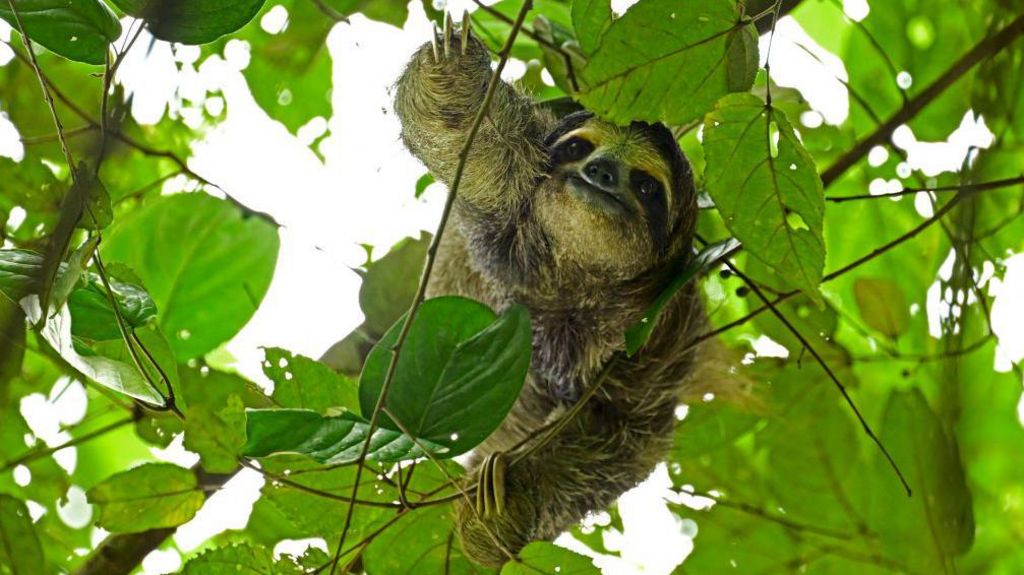
    A planned Orlando, Florida, sloth exhibit billed as the region’s only purpose-built “slothnarium” has been thrown into chaos after regulators confirmed 31 of the mammals imported for the attraction died months before its scheduled spring opening, triggering widespread scrutiny of animal welfare practices and regulatory gaps in the state’s wildlife permitting system.

    According to a report released Friday by the Florida Fish and Wildlife Conservation Commission (FWC), the bulk of the fatalities stemmed from dangerous, unfit living conditions at a private Florida warehouse where the imported sloths were held awaiting the attraction’s completion. The incident has already prompted additional investigations from multiple state and local regulators, as well as harsh criticism from animal conservation groups and elected officials.

    The 31 sloths were imported in two separate shipments to be displayed at Sloth World, a permanent public tourist attraction marketed as a rainforest-inspired sanctuary built specifically to prioritize sloth welfare, located along Orlando’s busy tourist corridor. The FWC’s investigation, obtained by the BBC, details two separate fatal incidents that unfolded between late 2024 and early 2025.

    The first shipment, carrying 21 sloths imported from Guyana, arrived in Florida in December 2024. Investigators found the animals were held in a disused warehouse that lacked basic running water and working electricity. Staff purchased portable space heaters to warm the temperature-sensitive tropical mammals, which naturally thrive in constant temperatures between 70°F and 86°F, but the heaters overloaded the building’s electrical system, tripping a circuit breaker that cut off power to the heaters. For at least one full night, the sloths were left without any heating during a week when outdoor low temperatures dropped to 46°F, according to regional historical weather data. All 21 sloths ultimately died from exposure to cold, a condition investigators labeled “cold stun.”

    A second shipment of 10 sloths imported from Peru arrived in February 2025. Two of the animals were already dead on arrival, and the remaining eight were found to be severely emaciated. All eight later died from complications linked to their poor pre-existing health, the report confirmed.

    When FWC investigators launched their probe, Peter Bandre, who is publicly listed as Sloth World’s vice president and promoted in the attraction’s marketing as “one of the most respected sloth experts in the world,” admitted the warehouse was never properly prepared to receive the animals. He told investigators the shipment could not be canceled after it was already en route, confirming the cold exposure killed the first group of sloths. The FWC also found that on two separate occasions, sloths under Bandre’s care were held in enclosures that failed to meet the state’s minimum captive wildlife welfare standards, resulting in a verbal warning at the time, but no formal citation.

    Ben Agresta, owner of Sloth World, has pushed back against the FWC’s findings, dismissing the official report as rife with misinformation. Agresta claims the sloths died from an undetectable virus that produced no visible symptoms and could not be identified even after post-mortem necropsies. The BBC has reached out to Agresta, Sloth World, and its listed representatives for additional comment, but has not received a formal response.

    The FWC closed its investigation without issuing any written warnings or formal citations, but an agency spokesperson confirmed that multiple other regulatory bodies are currently conducting separate probes into the incident. Last week, Orange County’s Building Safety Department posted a stop-work order at the warehouse where the sloths were held, citing alleged violations of state building codes and local county regulations.

    With regulatory investigations ongoing and the site shuttered by local officials, it remains unclear whether Sloth World will ever open to the public as planned. The 13 surviving sloths intended for the attraction are currently being cared for by another accredited zoo in Central Florida, according to local media reports. While Agresta holds a valid state wildlife permit that allows him to exhibit captive wildlife, the incident has exposed major gaps in Florida’s regulatory framework, according to critics.

    Democratic Florida State Representative Anna Eskamani, who has publicly criticized the handling of the case, noted that current rules do not require the FWC to be automatically notified when captive wildlife dies under a permit. She argued that the deaths would likely have never been uncovered without reports from concerned private citizens. “If it wasn’t for everyday people who care and reported these deaths it’s hard to know when FWC would have even learned about the deaths,” Eskamani said.

    Leading sloth conservation organizations had already raised red flags about Sloth World long before the deaths were revealed. The Sloth Institute and the Sloth Conservation Foundation both warned that capturing wild sloths and shipping them long distances for captive exhibits puts the animals at extreme risk of life-threatening health complications stemming from sudden diet changes, stress, and adaptation to artificial environments. Sam Trull, executive director of The Sloth Institute, noted that for many illegally or improperly captured sloths, the stress of transit and captivity proves fatal.

  • A nation built on pan-African principles faces questions about racism

    A nation built on pan-African principles faces questions about racism

    Zambia has long positioned itself as a continental leader in African nationalism and the anti-colonial struggle, yet 60 years after gaining full independence from British rule, dozens of Zambian citizens have spoken to the BBC about a persistent, underreported issue: subtle, systemic racism that continues to marginalize Black Zambians in daily life.

    While the discrimination is rarely open or explicit, those who shared their experiences describe feeling like second-class citizens in their own homeland. Accounts range from qualified Black candidates being sidelined for professional roles to being snubbed at hospitality venues and overlooked by rental property landlords. Even amid these accounts, however, many Zambians expressed cautious optimism, noting that open conversations about racial inequity are slowly becoming more mainstream across the country. The Zambian government has rejected claims that racism is a problem within its borders.

    Alexander Bwalya, a Black Zambian who requested a pseudonym to protect his privacy, told the BBC he finds it deeply jarring to experience anti-Black racism in a majority-Black African nation. He shared a firsthand account of discrimination at a wine bar in Lusaka, the country’s capital, where he and his friends were told specific high-end bottles of wine were out of stock. Moments later, the same bottles were offered to a white family that arrived after them, with waiters acting openly warm and accommodating to the new group.

    When Bwalya and his friends complained to the venue’s manager, they were told to leave if they were unhappy with the service. The argument escalated, and Bwalya claims the white manager used a racial slur against one of his Black friends. Like many others who experience these incidents, Bwalya chose not to file a police report, saying he lacked confidence that authorities would take the claim seriously.

    This conversation around race comes 60 years after Kenneth Kaunda, the iconic leader of Zambia’s independence movement, took office as the country’s first president in 1964. Before independence, colonial rule imposed harsh systemic racism: Black Zambians were forced to carry movement-restricting passes, schools and hospitals were legally segregated, and high-paying skilled mining jobs in Zambia’s copper-rich economy were exclusively reserved for white workers.

    As president, one of Kaunda’s core policy goals was to empower the Black majority. His signature “Zambianisation” program replaced white executive leaders in key industries with Black Zambian professionals, and he was a vocal international supporter of movements fighting to end white minority rule across southern Africa. Kaunda’s founding vision for the nation was unambiguous: Black Africans would no longer be subjugated, and Zambia would be built on a foundation of equal respect for people of all races, colors, and creeds.

    Yet a 2019 report from a United Nations human rights committee found that, like many other post-colonial societies, Zambia has failed to fully address the deep racial and class inequalities left by colonial rule. At the peak of colonial control, white residents made up less than 2% of Zambia’s population, and many left after independence. Today, no official population data tracks the current size of the white community, but all ethnic minorities combined, including Indians, Chinese and Arabs, make up roughly 9% of the total population.

    No official public data tracks racial disparities in modern Zambia, but anecdotal reports and grassroots conversations about the issue have exploded across social media in recent years. In one high-profile case earlier this year, a local recruiter from Zambian employment firm Recruitment Matters posted a sales and marketing manager opening that explicitly stated, “THIS ROLE IS CURRENTLY NOT OPEN TO ZAMBIAN NATIONALS; WE ARE LOOKING FOR EXPATS OR FOREIGN RESIDENTS IN ZAMBIA.”

    The post went viral across Zambian social media, sparking widespread public anger over its open discrimination. Omar Chanshi, a 37-year-old marketing professional based in Zambia, told the BBC that systemic exclusion from opportunities is a common experience for local workers. “There are contracts and systems and a lot of opportunities that we just don’t have access to as locals,” Chanshi said. “Forget trying to show whether you are the best or most qualified person, you just don’t have access.”

    Following the public backlash, the recruiter apologized and deleted the post. The company later issued a formal statement acknowledging the public concern, saying the wording of the post failed to meet the company’s standards and did not reflect its recruitment approach. “Recruitment Matters operates a non-discriminatory, skills-based recruitment policy,” the firm told the BBC.

    Victoria Phiri Chitungu, a historian and director of Livingstone Museum, argues that Kaunda’s zero-tolerance stance on overt discrimination simply pushed racism underground rather than eliminating it. “The obvious racist signs and acceptance of racism was no longer welcome and people were aware of that,” Chitungu explained. “But people started conforming to behave in ways that would not show racism. That doesn’t mean that it’s now absent.”

    Chitungu and fellow Zambian historian Chanda Penda note that while Zambia faces its own challenges with racism, it is not an outlier on the continent. Both point to far more severe discrimination they have observed in post-apartheid South Africa, where stark racial inequality remains rampant 30 years after the end of formal segregation.

    Malama Muleba, a Lusaka-based estate agent, told the BBC he does not see racism as a pervasive national crisis, but he confirms it is a widespread, open secret within the property rental sector. When landlords and property managers screen prospective tenants, Muleba says, white skin is still widely equated with financial stability. “If a person’s skin colour is white, people look at it, they see stability,” Muleba said. “They say: ‘OK, this person will be able to pay the rent or they will be able to not give me problems.’ Personally, it makes me feel a bit disappointed, but on the other side, it’s the reality.”

    Most of Zambia’s small white population, which includes both foreign expats and Zambian citizens, is concentrated in major urban centers and tourist hubs including Lusaka, Livingstone and Mkushi. Many white residents in Lusaka work for large multinational corporations, a demographic detail that has reinforced a widespread link between race and perceived wealth. Multiple Zambians who spoke to the BBC highlighted this intersection of race and class, noting that service providers often assume non-Black customers are wealthier and receive better treatment as a result.

    One common experience of discrimination came up repeatedly in the BBC’s interviews: preferential queue jumping for non-Black customers at public and private services. “When it comes to accessing certain services, you’ll find maybe there’s a queue and you’ve got some black Zambians, you’ve got some Indians and you’ve got a few white people there,” Muleba explained. “You’ll find in certain situations the white man will come first in getting attended to. The other Zambians will be looking among each other saying: ‘Look, we have been here long before this white man came here!’”

    Many observers note that it is often Black employees who provide this preferential treatment to non-Black customers in retail banks, coffee shops and retail stores. Some Zambians argue that this dynamic is not always rooted in personal prejudice: one Black citizen told the BBC that preferential treatment often tracks perceived wealth and class as much as race, with wealthy Black drivers in nice cars or with Western accents receiving the same elevated service.

    Zambia’s government has firmly denied that any form of racism exists in the country. Government spokesperson Cornelius Mweeta says anyone who claims racism is a problem is simply trying to sensationalize the issue for attention. “I’ll challenge any citizen out there to state that racism is a problem in Zambia. If there is somebody who has said that is a problem, I think perhaps they just wanted to sensationalise. Everyone is living harmoniously,” Mweeta said.

    Historian Penda agrees that racism in Zambia is almost entirely subtle, not overt, and traces its roots to cultural dynamics that predate modern independence. He argues that the deference to white people was culturally embedded long before colonial rule ended, rooted in the ancient regional legend of Luchele, a mystical white-appointed figure said to help ancestral communities found their kingdoms. When European colonialists and missionaries arrived in the late 19th century, many Zambian communities who had never seen white people before identified the newcomers as Luchele and treated them with reverence normally reserved for divine figures.

    “So from my perspective, it is not a big surprise that even up to now, we have this high esteem for white people – this racial imbalance has been passed down as from history,” Penda said.

    Adrian Scarlett, a white British man who has lived in Zambia for three years and is married to a Black Zambian woman, says he still struggles to comprehend how racial inequality can persist in a majority-Black African nation. Scarlett, who lives in Livingstone, says there are still exclusive private venues where Black Zambians are effectively unwelcome, forming all-white social cliques that gather for evening and weekend events.

    Scarlett originally built a large social media following under the alias Bye Bye Fatman documenting his weight loss journey, but today his content, which reaches more than 520,000 followers across Facebook and TikTok, focuses heavily on exposing and discussing racial inequality in Zambia. Some of his white friends have cut ties with him over his activism, but he says the response from Black Zambians has been overwhelmingly positive.

    Scarlett argues that these open conversations are long overdue, a sentiment echoed by Bwalya, who says Zambia desperately needs honest public dialogue about race. Bwalya says he is glad more people are willing to talk about the issue openly now, and he hopes the growing conversation will eventually lead to a national reckoning that revives the egalitarian, anti-racist vision of Zambia’s founding father.