分类: society

  • Dubai: 48 fireworks displays across 40 locations to light up New Year’s Eve 2026

    Dubai: 48 fireworks displays across 40 locations to light up New Year’s Eve 2026

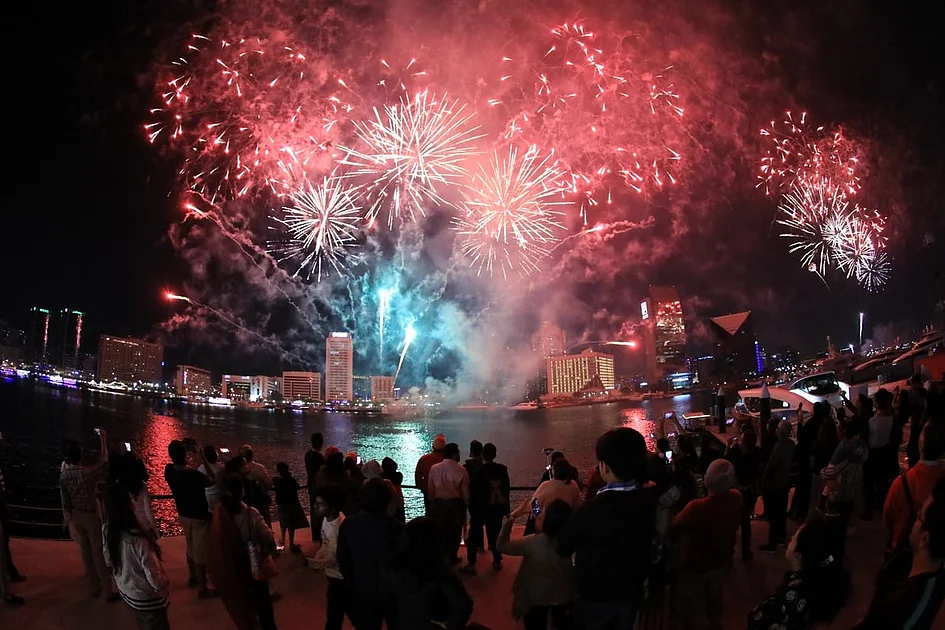
    Dubai is poised to host its most ambitious New Year’s Eve celebration to date, announcing a citywide extravaganza featuring 48 distinct fireworks displays across 40 strategic locations for December 31, 2025. This represents a significant 33% increase from the previous year’s 36 displays, setting a new benchmark for global New Year’s festivities.

    The scale of the event has necessitated an unparalleled security and logistical operation, officially declared the most comprehensive in the emirate’s history. A formidable force of over 23,000 security personnel will be deployed to ensure public safety. This coordinated effort brings together 55 government and private entities, meticulously planning for the influx of millions of residents and international tourists anticipated to descend upon the city.

    Leading the security front, Dubai Police will commit 9,884 officers, bolstered by an additional 13,502 private security staff. The multi-faceted surveillance strategy will encompass 1,625 security patrols, 36 bicycle units, 34 mounted patrols, and a fleet of 53 marine rescue boats for comprehensive land and sea coverage.

    Addressing the critical challenges of transportation and medical readiness, the Roads and Transport Authority (RTA) will mobilize an extensive network. This includes 14,000 taxis, 1,300 public buses, and 107 metro trains, all managed by 5,565 RTA employees to facilitate seamless public mobility. Concurrently, a robust medical response system will be on high alert, featuring 236 ambulances, 635 paramedics, and 1,900 medical professionals. Twelve hospitals and numerous outdoor clinics are prepped for potential incidents, supported by the Civil Defence’s contingent of 1,754 personnel and 165 emergency vehicles.

  • Dubai-based company AlHind set to begin airline operations soon

    Dubai-based company AlHind set to begin airline operations soon

    In a significant move to safeguard its youth in the digital age, the United Arab Emirates has formally enacted comprehensive legislation designed to protect children from online risks. The new law establishes a robust legal framework that mandates stringent measures for ensuring the secure use of technology by minors. It addresses a wide spectrum of digital threats, including cyberbullying, inappropriate content exposure, data privacy breaches, and online exploitation, positioning the UAE as a regional leader in cyber welfare policy.

    The legislation outlines clear responsibilities for parents, educational institutions, and technology service providers, creating a multi-layered defense system for child online safety. It also introduces stringent penalties for violations, signaling the government’s serious commitment to creating a safer digital environment for the younger generation.

    In a separate development, Dubai has announced an unprecedented spectacle to welcome the year 2026. The city revealed plans for a massive New Year’s Eve celebration featuring 48 synchronized fireworks displays across 40 different locations. This ambitious event, set to dwarf previous celebrations, is designed to transform the entire emirate into a canvas of light and color, offering residents and visitors alike a distributed, accessible, and breathtaking visual experience to mark the beginning of the new year.

  • World’s longest expressway tunnel opens to traffic in Xinjiang by year-end

    World’s longest expressway tunnel opens to traffic in Xinjiang by year-end

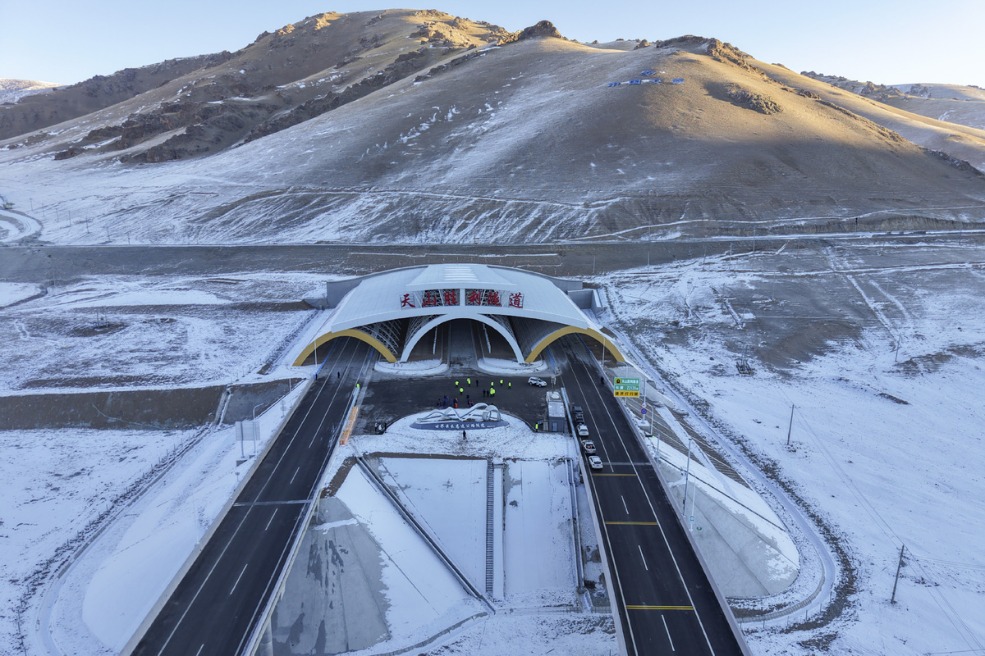
    In a monumental infrastructure achievement, China has officially opened the Tianshan Shengli Tunnel, now recognized as the world’s longest expressway tunnel. This engineering marvel commenced operations on December 26, 2025, creating a vital transportation corridor through the formidable Tianshan Mountains in Xinjiang Uygur Autonomous Region.

    The newly operational tunnel spans an impressive 22.13 kilometers, forming the centerpiece of the Urumqi-Yuli Expressway system. This strategic infrastructure project addresses a persistent transportation bottleneck that has historically impeded regional integration between northern and southern Xinjiang.

    Transportation efficiency has been dramatically transformed by this development. The tunnel reduces the crossing time through the central Tianshan Mountains from several hours to approximately 20 minutes. More significantly, travel duration between Urumqi, the regional capital north of the mountains, and Korla to the south has been slashed from seven hours to just three hours.

    Engineers overcame extraordinary geological challenges during construction, navigating complex mountain terrain and extreme weather conditions. The tunnel’s design incorporates state-of-the-art safety systems and ventilation technology to ensure secure passage for all vehicles.

    This infrastructure milestone promises to stimulate economic integration across Xinjiang, facilitating smoother movement of goods, services, and people while strengthening connectivity between previously isolated regions. The project represents a significant advancement in China’s ongoing efforts to modernize transportation networks in western regions.

  • Beijing’s Tongzhou Railway Station to open Dec 30

    Beijing’s Tongzhou Railway Station to open Dec 30

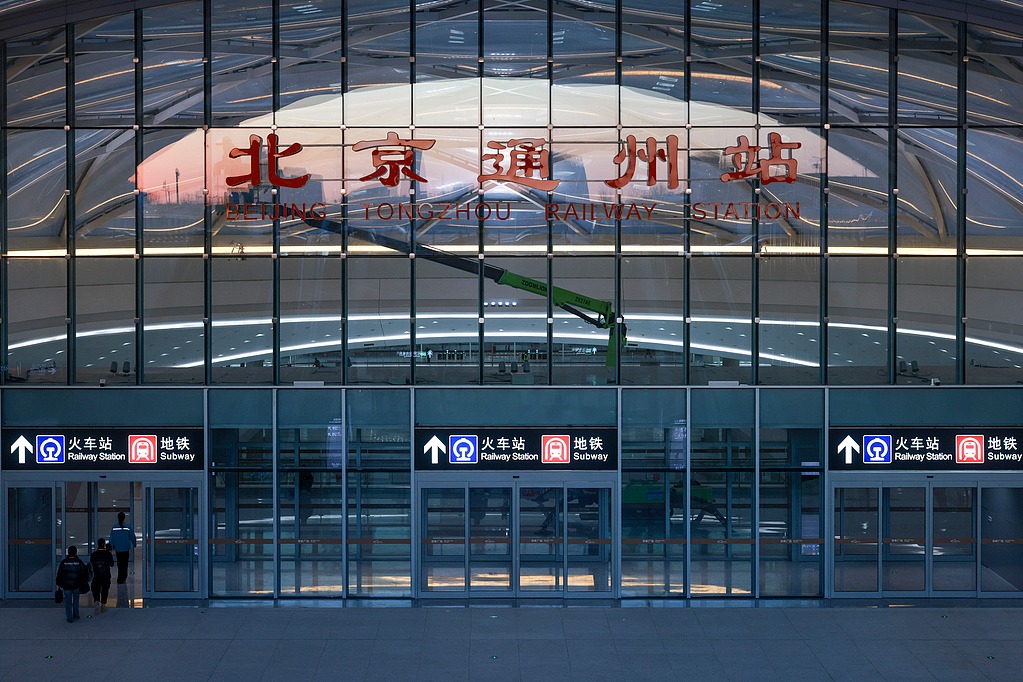
    Beijing’s highly anticipated Tongzhou Railway Station is scheduled to begin full operations on December 30, 2025, according to an official announcement from China Central Television. The state-of-the-art transportation complex, situated within the sub-center transport hub in Beijing’s eastern Tongzhou district, represents a significant advancement in the city’s infrastructure development.

    The five-story facility has been meticulously designed to integrate multiple transportation modalities while incorporating municipal administration and public service functions. Zhao Yinming, an official representative from the Beijing Major Railway Station Areas Administration, emphasized the station’s emphasis on seamless connectivity, featuring comprehensive railway networks, urban rail transit, bus services, and shuttle operations within a single complex.

    Initial operations will see the inauguration of the Beijing-Tangshan and Beijing-Tianjin intercity railway lines, establishing critical connections to multiple regional destinations. The network will extend to key stations including Tangshan, Qinhuangdao, Xianghe, Dachang, and Yanjiao in Hebei province, alongside Beichen in Tianjin municipality.

    Authorities have indicated that the transport hub will implement a phased operational approach, gradually expanding and optimizing its functional layout over time. Passenger flow management and transportation capacity will be dynamically adjusted according to actual travel demand patterns, ensuring efficient service delivery from the commencement date onward.

  • Frozen Yellow River waterfall captivates tourists

    Frozen Yellow River waterfall captivates tourists

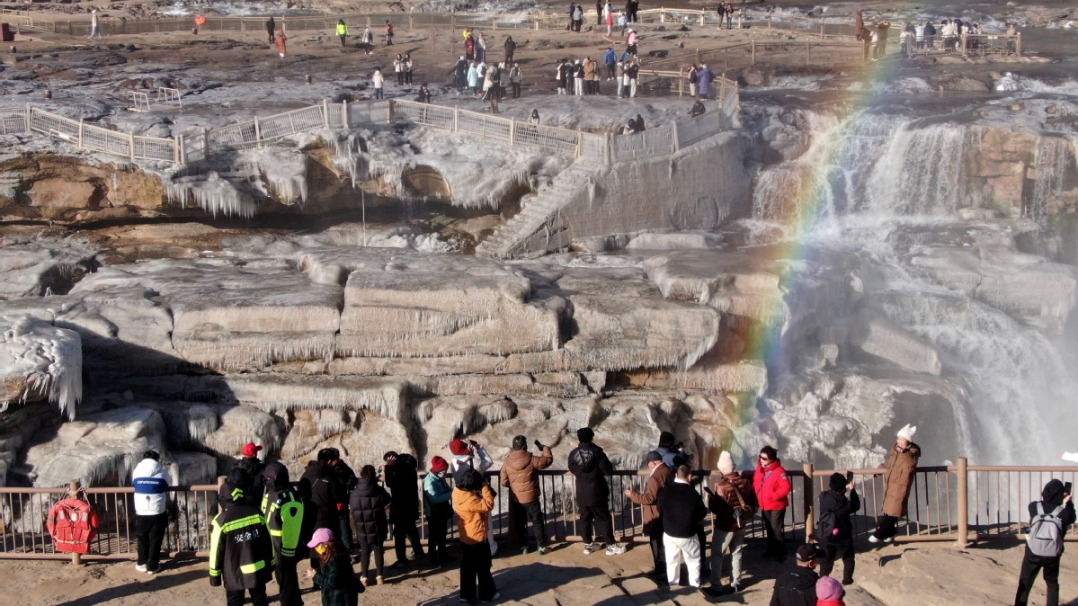
    Nature has unveiled one of its most magnificent winter spectacles at the Yellow River’s Hukou Waterfall, where sustained subzero temperatures have transformed the iconic landmark into a breathtaking frozen masterpiece. Situated along the provincial border between Shanxi’s Jixian county and Shaanxi’s Yichuan county, the waterfall now showcases magnificent layered ice formations that cascade like crystalline curtains.

    The geological marvel has become an unexpected tourist magnet as visitors flock to witness the rare natural phenomenon. Under the winter sun, the ice formations glisten with dazzling intensity, creating a prismatic effect that produces vibrant rainbows arching gracefully above the frozen cascade. This optical phenomenon occurs when sunlight refracts through ice crystals suspended in the misty atmosphere surrounding the waterfall.

    Photographers and nature enthusiasts have captured stunning images of the transformation, with the frozen waterfall providing a dramatic backdrop against the Yellow River’s rugged landscape. Local tourism authorities report significantly increased visitor numbers despite the chilly conditions, with many travelers specifically timing their visits to experience this seasonal wonder.

    The Hukou Waterfall, normally known for its powerful rushing waters during warmer months, demonstrates nature’s remarkable ability to create contrasting seasonal experiences. This winter transformation not only highlights the aesthetic beauty of China’s natural landscapes but also showcases the fascinating interplay between meteorological conditions and geological formations in creating unique tourist attractions.

  • Sixth-gen clay figurine heir focuses on spirit over color

    Sixth-gen clay figurine heir focuses on spirit over color

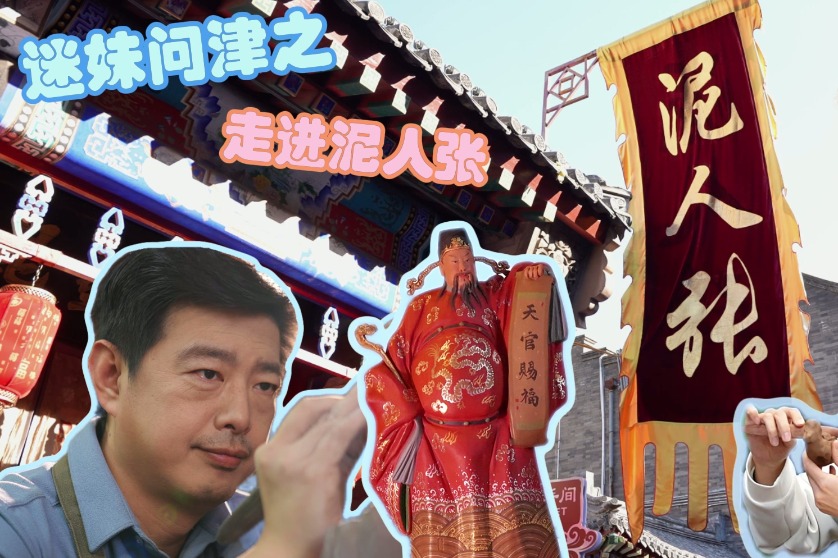
    In a Tianjin studio, sixth-generation inheritor Zhang Yu is revolutionizing the century-old Clay Figurine Zhang tradition by prioritizing spiritual essence over vibrant coloration. His monochromatic sculpture of writer Lu Xun stands in deliberate contrast to the brightly painted folkloric figures typically associated with this nationally recognized intangible cultural heritage.

    Zhang believes this minimalist approach better aligns with contemporary aesthetics. ‘Traditional clay figures are very colorful,’ he acknowledged, ‘but raw clay allows the form and spirit of the figure to stand out.’ This philosophical shift represents both personal artistic preference and response to evolving public tastes.

    The Clay Figurine Zhang school, dating to the late Qing dynasty (1644-1911), has historically been celebrated for its exquisitely painted, expressive figures drawn from historical, operatic, and mythological themes. Zhang Yu maintains this expressive tradition while refining its presentation. His creative process emphasizes capturing the subject’s inner essence, insisting that ‘every line must serve the spirit of the character.’

    This principle manifests in his Lu Xun sculpture through furrowed brows and penetrating gaze, achieved through simplified yet profoundly expressive lines. Alongside these serious portraits, Zhang creates playful pieces targeting younger audiences, including a horse carrying a gold ingot—a visual pun for ‘wealth arrives on horseback’ designed for the upcoming Year of the Horse.

    ‘We need to make young people feel clay sculpture is fun, not aloof and distant,’ Zhang explained. By introducing lighter, cuter designs, he aims to enhance accessibility for the traditional art form. He emphasizes that each generation of the Clay Figurine Zhang family has developed distinctive styles rather than rigidly replicating predecessors. While maintaining traditional subjects like Zhong Kui and Guan Yu, Zhang considers innovation essential for the craft’s survival. ‘Our task is to let ancient art continue to live in the present,’ he concluded.

  • At least 15 injured in a knife and chemical attack at a factory in Japan

    At least 15 injured in a knife and chemical attack at a factory in Japan

    A violent attack unfolded at a Yokohama Rubber Co. facility in Mishima, Japan, on Friday, resulting in multiple casualties. According to the Fujisan Nanto Fire Department, a 38-year-old assailant was apprehended by Shizuoka prefectural police on allegations of attempted murder.

    The incident involved a dual-pronged assault where the perpetrator reportedly stabbed eight individuals with a survival knife and hurled a corrosive substance, believed to be bleach, at seven others. Emergency services confirmed that all fifteen victims were transported to nearby hospitals for treatment. Five of those stabbed were reported to be in serious condition, though specific details on their injuries were not immediately disclosed.

    Citing investigative sources, the Asahi newspaper reported the suspect was equipped with a gas mask during the attack, suggesting possible premeditation. The motive behind the assault at the central Japanese factory remains unclear, as authorities have not provided an immediate explanation.

    This event highlights a concerning pattern of violent incidents in a nation celebrated for its stringent gun control measures and generally low crime rates. While Japan experiences rare occurrences of violent crime, this attack adds to a series of notable knife-related assaults that have occurred in recent years.

  • Trip reshapes Canadian students’ views on China

    Trip reshapes Canadian students’ views on China

    A group of Canadian university students returned from a transformative two-week cultural immersion program in Beijing with fundamentally altered perspectives on China, reporting experiences that directly contradicted Western media narratives. The program, organized through Beijing Normal University and facilitated by Li Yan, an associate professor of Chinese language and culture at Renison University College, provided firsthand exposure to Chinese society that participants described as eye-opening.

    Daniel William Ho, a University of Waterloo student, captured the consensus among participants: “Looking back, what impressed me most was the stark divergence between China’s media portrayal and its reality.” He characterized Beijing as “safe, secure, and the cleanest I’ve ever seen,” describing the public transit system as “in another world” and the experience as “the most freeing and transformative two weeks in my university career.”

    For political science major Conner Sherman Tye, the visit reshaped his understanding of Chinese political discourse. “Western media nearly always portray China negatively, citing its problems as an indictment of the whole society,” he observed. After direct engagement with Beijing residents, Tye concluded that Chinese citizens demonstrate greater political awareness than average Americans or Canadians.

    Students consistently noted the seamless integration of rapid development with historical preservation. Gia-Thanh Yvonne Ly described gaining a “far more nuanced and positive” understanding, noting how “ancient temples and preserved cultural sites coexist with innovative skyscrapers and carefully designed city layouts,” reflecting both rich history and modern ambition.

    Ly also highlighted exceptional systemic efficiency, noting that “delivery services, transportation systems, and digital payment methods were efficient, fast, and widely integrated into routines,” making everyday life “more streamlined than what I’m used to at home.”

    Safety perceptions stood out prominently, with Natalie Hermila Garcia Munoz—a traveler to 24 countries—remarking that Beijing’s subway was “incredibly advanced and efficient,” and the city felt “very safe, even late at night.” Mudupeola Aladetokunbo Caxton-Martins noted how “everything moved smoothly” in a city “busy at all hours,” where he felt comfortable going out at 3 AM.

    Pre-trip concerns about racial discrimination proved largely unfounded. Aliyah Novia-Georgia Alexander-Tinker, who had been warned about potential discrimination as a Black student, reported: “Fortunately, I had no reason to worry. I felt welcomed during my entire stay.” Caxton-Martins echoed this, noting locals initiated conversations, requested photos, and shop owners sometimes offered free food.

    The experience prompted broader media criticism among participants. Ly identified “fearmongering in Western discourse about China,” contrasting it with her direct experience of “a place full of warmth, innovation, history, and everyday beauty.”

    Professor Li Yan explained the program’s purpose: “I hope to provide a special opportunity for students who have learned basic Chinese but never visited China to enhance their learning in a real Chinese environment and experience China with their own eyes.” The initiative successfully demonstrated how firsthand exposure can challenge and reshape deeply entrenched media narratives.

  • Kunming police dog is now a natl all-rounder

    Kunming police dog is now a natl all-rounder

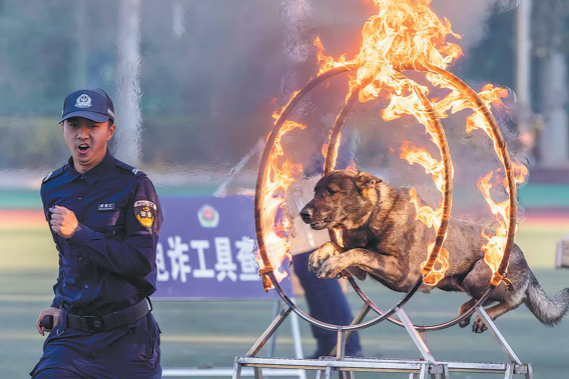
    In the high-altitude terrains of Yunnan province, a remarkable canine success story is unfolding. The Kunming dog, China’s first and only internationally recognized police dog breed with independent intellectual property rights, has evolved from regional specialty to national security asset.

    At the Kunming Police Dog Base, senior trainer Long Ling maintains a unique bond with demonstration dog Kun Kun—a relationship transcending professional duty. “This is not just my job, but also my way of life,” Long reveals, describing weekend visits and personally funded beef supplements for the two-year-old protégé.

    The breed’s development represents six decades of dedicated effort by multiple generations of canine professionals. Originating in the 1950s to address specific operational needs in plateau environments, systematic breeding programs employed group selection and scientific methodologies to create a stable working breed.

    Official recognition came through milestones: 1988 ministry-level verification established the ‘Kunming dog’ designation, while 2007 brought inclusion in the UN Food and Agriculture Organization’s World Watch List for Domestic Animal Diversity. The breed has subsequently earned multiple national science and technology awards.

    Characterized by what trainers describe as an ‘Eastern temperament’—reserved yet intensely loyal once trust is established—these dogs demonstrate exceptional adaptability to China’s diverse climates and operational environments. Their deployment now spans public security agencies, customs, fire services, and military units nationwide.

    The Ministry of Public Security is actively promoting broader implementation, seeking to enhance frontline capabilities and strengthen China’s autonomous police dog technology. As global competition in canine law enforcement intensifies, maintaining indigenous, high-quality working dog resources has become strategically crucial.

    Beyond domestic application, Kunming dogs have become ambassadors of international police cooperation, exported to over ten countries including Singapore, Vietnam and Pakistan—showcasing China’s growing expertise in specialized canine development.

  • Exhibition honors modernizing Qing official

    Exhibition honors modernizing Qing official

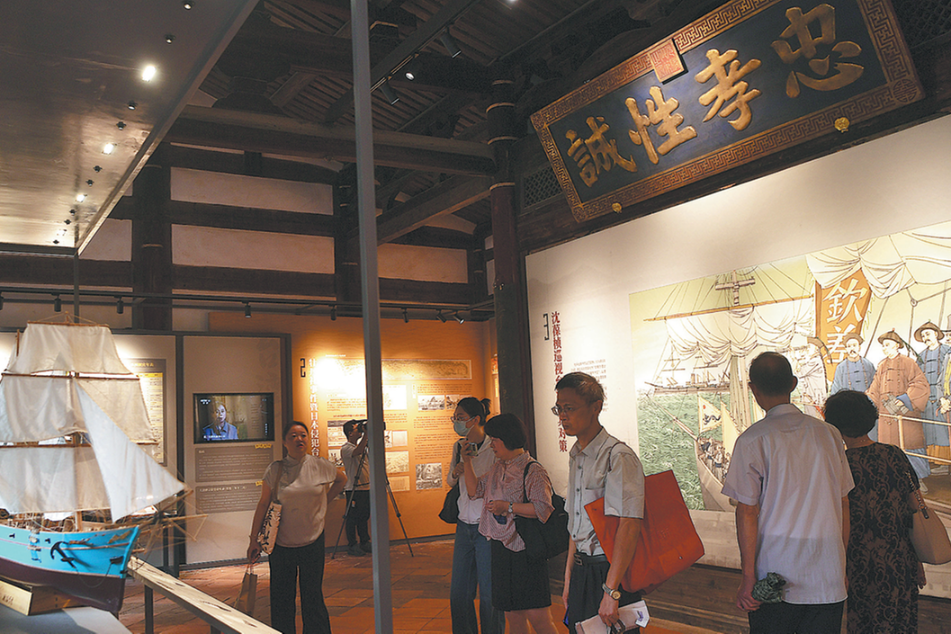
    In Tainan, Taiwan, a significant cultural exhibition recently honored the legacy of Shen Baozhen, a prominent Qing Dynasty (1644-1911) official renowned for modernizing the island’s coastal defenses. The 15-day event, organized by the Tainan Culture Association, commemorated the 150th anniversary of the Eternal Golden Castle—a formidable fortress constructed under Shen’s supervision between 1874 and 1876 to protect against Japanese invasions.

    The exhibition featured materials borrowed from mainland China, highlighting Shen’s critical role in strengthening Taiwan’s military infrastructure. The Eternal Golden Castle proved instrumental during the Sino-French War of 1884 and again in 1895 when local forces resisted Japanese naval attacks.

    Zhou Chih-ju, head of the Tainan Culture Association, voiced strong criticism against current Taiwan authorities for their apparent neglect of Qing-era historical figures while emphasizing colonial-era narratives. She specifically contrasted the official silence surrounding Shen’s contributions with the highly publicized commemoration of Japanese engineer Yoichi Hatta, which was attended by Taiwan leader Lai Ching-te in May.

    According to Zhou, educational materials have reduced Qing Dynasty history to mere paragraphs, creating what she describes as ‘cultural amnesia.’ In response, her organization distributed 1,000 illustrated manuals to local teachers to provide students with a more comprehensive historical perspective. The association additionally conducts regular educational tours at historical sites throughout Tainan, aiming to present what they consider a complete and accurate historical narrative to younger generations.

    ‘History must be upheld in its correctness; it cannot be fragmented,’ Zhou stated. ‘We shouldn’t decide which part of history the next generation chooses; we should present the entire historical context.’