分类: society

  • Mechelle Turvey, mum of murdered schoolboy Cassius Turvey, awarded OAM in 2026 King’s Birthday Honours

    Mechelle Turvey, mum of murdered schoolboy Cassius Turvey, awarded OAM in 2026 King’s Birthday Honours

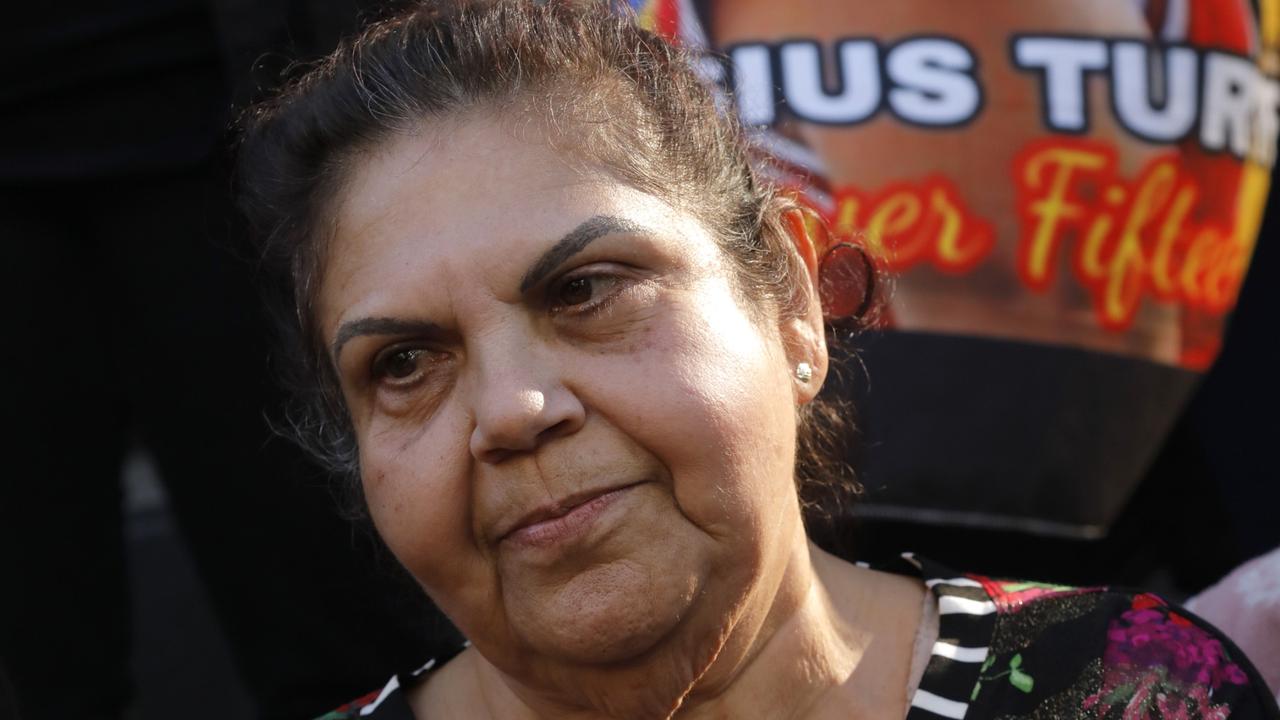
    In a moving recognition of extraordinary resilience and community leadership, Mechelle Turvey — the mother of 15-year-old Cassius Turvey, a Perth schoolboy murdered in a random, unprovoked attack in 2022 — has been awarded a Medal of the Order of Australia (OAM) as part of the 2026 King’s Birthday Honours. The honour celebrates her dedicated service to Western Australia’s Indigenous communities, where she has transformed personal grief into systemic change for victims of crime.

    The tragedy that reshaped Turvey’s life unfolded on an ordinary school afternoon, when Cassius and his friends were walking through Perth’s eastern suburbs. Unconnected to any prior conflict, the group was targeted, chased down and assaulted by a gang of older men. Cassius sustained life-threatening head injuries in the attack, and succumbed to his wounds 10 days later. After a high-profile investigation and trial, two men — 25-year-old Jack Brearley and 31-year-old Brodie Palmer — were convicted of his murder, bringing a close to the legal proceedings but opening a new chapter of advocacy for Turvey.

    In the immediate aftermath of Cassius’s death, as vigils drawing thousands of attendees were held across Australia to honour the teen and protest racial violence, Turvey made a deliberate public call for calm, a choice that earned widespread respect for her steady leadership amid national outrage. Just months after losing her son, she accepted an advisory role with the Western Australia Police Force, tasked with helping frontline officers better understand the unique needs of Indigenous crime victims. She has since risen to the role of Aboriginal Affairs Assistant Director within the force, and founded the innovative Take 5 program, which trains officers to prioritize intentional engagement, active listening, and empathetic support for victims and their grieving families.

    In an official statement celebrating Turvey’s OAM award, a Western Australia Police spokesperson highlighted her transformative impact on policing and community relations. “Her work has supported Aboriginal families through trauma, strengthened culturally safe practice, and promoted trust through listening and respectful engagement across the community,” the spokesperson said. “Her sustained contribution to safer and more inclusive practice, and her service to the Indigenous communities of Western Australia, make her highly deserving of recognition through the Order of Australia Medal.”

    This latest national honour adds to a growing list of recognitions for Turvey’s community work. In 2024, she was named Western Australian of the Year and City of Swan Citizen of the Year, and in 2023 she received the title of Midland NAIDOC’s Female Elder of the Year. As of this report, Turvey has not released a public comment on her OAM appointment.

  • SA consumer watchdog names and shames dodgy tradies

    SA consumer watchdog names and shames dodgy tradies

    A sweeping new compliance crackdown on unethical and unlicensed building work across South Australia has seen the state’s consumer regulator publicly name and penalize eight tradespeople and businesses, with total fines issued this year exceeding $200,000. South Australia’s Consumer and Business Services (CBS) launched a specialized, dedicated enforcement team earlier this year to target bad actors in the building industry, a sector that has long drawn complaints from homeowners over shoddy work, unfinished projects and unlicensed operation. As part of the crackdown, the regulator has published a public list of all businesses and individuals hit with enforcement penalties to warn consumers and deter future rogue practices. The highest-profile individual on the new list is 38-year-old home renovator Jase Henry, who operates under the business name SOS Home Renovations from Klemzig. Just last week, CBS issued a public warning about Henry after receiving 13 separate consumer complaints about the quality of his work. He has now been hit with $25,000 in expiation penalties for five counts of advertising and working as a licensed building contractor without holding the appropriate license. When approached by local outlet *The Advertiser*, Henry’s legal representatives declined to comment on the penalties, and CBS confirmed that investigations into additional potential violations by Henry remain ongoing. Other penalties handed down in the crackdown include a $75,000 fine against 49-year-old Khorshed Alam of Seacliff Park. Alam was penalized for three counts of operating without a license and three additional counts of completing building work without required builders indemnity insurance, after he claimed to be an owner-builder for three separate properties across Salisbury and Elizabeth East. Other small business operators received penalties ranging from $5,000 to $10,000: Anu Anand, 44 of Findon, trading as The Décor Planet SA, was fined $5,000 for unlicensed operation; Ras Pro Pty Ltd, led by director Hassan Ayoub, 25 of Hope Valley, received a $5,000 penalty for advertising building work without a license; Mohammed Konneh, 29 of Parafield Gardens who trades as MFK Roofing, was also fined $5,000 for unlicensed advertising following consumer complaints about incomplete and low-quality work; Michael Wheeler, 38 of Port Noarlunga, trading as Maintena Property Maintenance, received a $5,000 penalty for unlicensed operation; 24-year-old Brady Lachlan Moldenhauer of Gawler South was hit with $10,000 in penalties for failing to attend two mandatory consumer conciliation conferences; and Toby Brett Maple-Harradine, 31 of Aldinga Beach, received a $5,000 penalty for skipping a required conciliation conference. CBS emphasized that Moldenhauer and Maple-Harradine have not been accused of unlicensed operation. Speaking to the purpose of the public naming and crackdown, South Australia’s Consumer and Business Affairs Minister Michael Brown noted that for most local residents, a home construction or renovation project represents the largest single investment they will ever make. “Most tradies do the right thing by their customers and follow licensing rules, but we accept no excuses for unlicensed work, missing indemnity insurance or leaving homeowners stranded with half-finished projects,” Brown said. “We refuse to tolerate this behavior, and our dedicated compliance team is actively cracking down on these rogue operators.” Of the eight named individuals, only Konneh responded to requests for comment, telling *The Advertiser* he had recently relocated to South Australia from Brisbane and completed up to six jobs worth between $25,000 and $30,000 total before being asked to take down his advertising website. He added that he planned to reach out to CBS to resolve the issue. All other named parties did not respond to media inquiries.

  • Brutal assault in Byron Bay leaves Canadian man with skull fracture

    Brutal assault in Byron Bay leaves Canadian man with skull fracture

    A popular Australian coastal tourist hub in New South Wales has become the site of a violent random attack that left a young Canadian visitor fighting for recovery with life-altering injuries, prompting a public appeal for witnesses from local law enforcement.

    The incident unfolded late on a Sunday evening, shortly before 11:40 p.m., in central Byron Bay, a top travel destination famed for its beaches and laid-back travel culture. After escaping the attack, the 28-year-old victim managed to make his way to Butler Street, where he flagged down a passing patrol car to report the assault. First responders immediately administered on-scene first aid before rushing the man to the local Byron Bay Hospital in what medics described as a serious but clinically stable condition.

    In interviews with investigating officers, the victim shared that he had been socializing and drinking with a group of five unknown people in a public park on Jonson Street in the hours before the attack. Without warning, the group turned on him, launching a brutal group beating. The tourist managed to break free from his attackers and fled into nearby bushland to hide, eventually making his way out to the main road to get help from police.

    Following initial assessment at the local hospital, the severity of his injuries required a transfer to the larger Tweed Valley Hospital for advanced care. It was there that clinicians confirmed the full extent of the harm inflicted: a fractured skull, bleeding on the brain, and additional spinal injuries. Medical teams have not released an updated prognosis as of the latest police update.

    Local investigators have now launched a public appeal for any information that could help them identify and apprehend the attackers. Early investigative work has revealed that at least two of the male suspects are believed to be teenagers between 16 and 17 years old. Police are asking any residents or visitors who were in the area of the attack around the time of the incident to check their personal devices for any relevant dashcam footage or mobile phone recordings that could help the investigation. Anyone with information is urged to contact Byron Bay Police Station directly or reach out to the national Crime Stoppers hotline anonymously.

    The attack has shaken the small coastal town, which relies heavily on tourism and has a reputation as a safe welcoming destination for international travelers.

  • Five people injured in stabbing at New York City’s Penn Station

    Five people injured in stabbing at New York City’s Penn Station

    A violent stabbing incident at one of New York City’s busiest transit hubs has left five people hurt, just days before a high-profile visit from former U.S. President Donald Trump to attend the NBA Finals, law enforcement and emergency officials confirmed. The attack unfolded shortly after 7 p.m. Eastern Standard Time on an unspecified date at Penn Station, the major underground transit hub that sits directly beneath Madison Square Garden, the venue for Monday’s pivotal Game 3 between the New York Knicks and San Antonio Spurs.

  • ‘No dead ends’: What the Dutch can teach us about tackling youth unemployment

    ‘No dead ends’: What the Dutch can teach us about tackling youth unemployment

    A landmark recent report has laid bare a growing crisis across the United Kingdom: nearly one in eight 16 to 24-year-olds are classified as NEET – not in education, employment, or training – and that figure is projected to climb to one in six within five years without urgent systemic reform. That warning, delivered by former UK Health Secretary Alan Milburn, the report’s lead author, has opened a urgent national conversation: what structural changes can Britain make to reverse this worrying trend, and could the Netherlands – which boasts one of the world’s lowest NEET rates – hold the blueprint for success?

    The Netherlands’ youth education and employment policy is built around one simple, foundational philosophy: “no dead ends”. Every stage of a young person’s academic and professional journey is intentionally designed to lead to a next step, rather than leaving vulnerable young people adrift without support or options. This core principle shapes every layer of the nation’s system, starting with compulsory education: all children between 5 and 16 must attend school, and they are required to stay in education or training until they earn a recognized qualification or turn 18, regardless of their path.

    A central policy driving the Netherlands’ success is the kwalificatieplicht, or mandatory qualification requirement, which has cut national school dropout rates dramatically. At around age 12, Dutch students are sorted into one of three secondary education tracks based on primary school performance and teacher input: the practical VMBO track that feeds directly into vocational training, the mid-tier HAVO that prepares students for applied science universities, and the academic VWO track for students bound for traditional research universities. While early streaming remains controversial, with critics arguing it can harm vulnerable students’ confidence and limit social mobility, the system is built to accommodate flexible switches between tracks, eliminating permanent dead ends for young people who change their goals or outgrow their initial placement.

    Compare this framework to the fragmented system across the UK. While all young people can leave school at 16, rules for post-16 participation vary drastically by nation. England requires young people to stay in education or training until 18, whether through full-time study, an apprenticeship, or part-time learning alongside work. Scotland, Wales, and Northern Ireland have no equivalent legal mandate, even as public bodies encourage continued participation. This uneven structure leaves gaps that can push disconnected young people into NEET status.

    The human impact of the Dutch “no dead ends” model is clear in the experience of Amelie, a 20-year-old trainee teaching assistant from The Hague. Assigned to the vocational VMBO track at age 10, Amelie initially saw her confidence shaken by the stigma attached to non-academic paths. By age 12, when she began exploring hands-on training options, she regained optimism, but still hit a setback when she struggled to find an internship and left her fashion course at 17. After six months of working and traveling, she faced a crossroads: if she had lived in the UK, dropping out of education entirely would have been a legal option, and she might have taken it. But under Dutch law, she could not leave education without a qualifying credential, so she was pushed to find a new path.

    Amelie ultimately enrolled in the beroepsbegeleidende leerweg, the Dutch vocational training pathway that lets students over 16 combine part-time coursework – just one to two days per week – with paid part-time work in their chosen field. The Dutch system integrates employers deeply: businesses can partner with colleges to create custom training programs tailored to their staffing needs, and vocational graduates in high-demand trades often find multiple job offers waiting for them upon completion. Asja van der Helm, a secondary school teacher in The Hague, explains that the system frames skilled trades as valuable, aspirational careers: with electricians, carpenters, and technicians earning strong salaries and facing constant labor demand, young people can see clear, rewarding paths forward rather than viewing vocational training as a consolation prize.

    For young people who struggle to fit into formal pathways, the Netherlands has built a layered, proactive safety net to prevent disengagement. State funding allocated to schools for student health and well-being can be used to partner with specialist external organizations that support at-risk youth. One such group is Mooi Jong, a Hague-based non-profit that works with students referred by schools who face a high risk of dropping out and becoming NEET. Founder Alexander Koppelle describes the system as a web: every potential exit point for a struggling young person has a backup intervention, another organization, and another chance to stay engaged. Schools track every absence, intervene early for repeated lateness, and activate support before a young person drops out entirely. Even students who need to step back for mental health reasons remain connected: they are classified as thuis zitters (home-stayers), and schools retain their funding to pay for external support while they wait for specialized care. Unjustified truancy triggers progressive sanctions, from fines to community service, but the system prioritizes re-engagement over punishment.

    Migration to the Netherlands from low-opportunity regions further highlights the model’s strengths. Destiny, who moved to the Netherlands from the Caribbean island of Bonaire, found a clear path through a beauty therapy course, which turned an internship into paid full-time work at a local salon. Her seamless transition from education to full-time work is exactly what Dutch policymakers aim to achieve: keeping young people connected to opportunity before they become disconnected from the workforce entirely. For unemployed young people who do fall out of education, the government operates a one-stop support service through the Dutch Employee Insurance Agency (UWV), which administers benefits, connects job seekers with employers, and provides tailored guidance to help young people return to work or training.

    Even with these successful structures, the Dutch model is not perfect: youth unemployment has begun to rise in recent years, and policymakers continue to tweak the system to address emerging gaps. Still, national data tells a clear story: just 4.9% of 18 to 24-year-olds in the Netherlands are NEET, compared to 15.1% in the UK. That gap has led Milburn and other experts to argue that British policymakers have much to learn from the Dutch approach. For Amelie, who now trains to become a teaching assistant to support other young people facing the same challenges she overcame, the model’s greatest strength is its flexibility and its refusal to write off any young person. “Without the option to change path along the way, I would have dropped out altogether,” she says. For the UK, that lesson could be the key to reversing its growing NEET crisis.

  • ‘We don’t look at the sky anymore’: The Air India crash victims who were not on the plane

    ‘We don’t look at the sky anymore’: The Air India crash victims who were not on the plane

    Twelve months have passed since an Air India passenger jet bound for London slammed into the BJ Medical College hostel complex in Ahmedabad, leaving 260 people dead – 241 onboard the aircraft and 19 on the ground. For the local community that bore the brunt of the disaster, time has not erased the raw pain of loss, nor has it removed the mangled, burned wreckage that stands as a permanent reminder of that fateful June day.

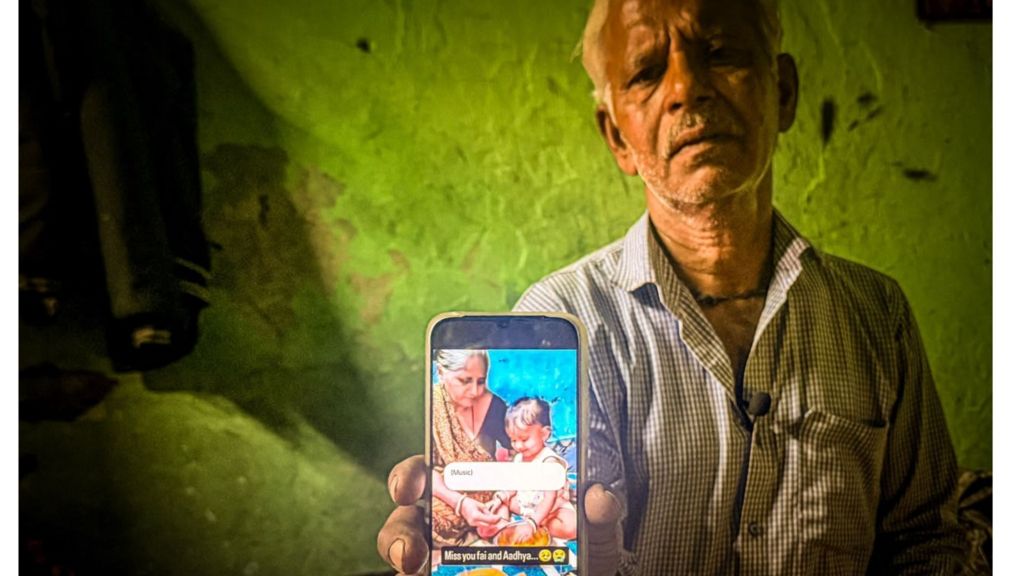
    The first thing Prahlod Thakur sees every morning when he opens his eyes are the framed photographs of his wife Sarlaben and two-year-old granddaughter Aadhya, hanging on the flaking bright green walls of his small home, tucked between religious symbols, tarnished brass cookware, and decades-old fading family portraits. Both were at the college on the day of the crash: for 15 years, Thakur’s family ran a popular tiffin meal service for trainee doctors and staff at the adjacent hospitals, and Sarlaben was working the lunch shift at the hostel mess when the plane hit. When Aadhya, who rarely left her grandmother’s side, needed to use the restroom, the pair climbed the stairs together. Seconds later, the aircraft crashed through the building’s roof.

    Thakur, working in another part of the campus that day, dropped everything and ran toward the thick black smoke rising from the wreckage. All he can recall now are fragmented, terrifying memories: the deafening explosion, searing heat, gas cylinders scattered across the destroyed kitchen, and his desperate, frantic search, calling Sarlaben’s name over and over through the rubble. For six days, Thakur and his family combed through every hospital, morgue, and relief camp across Ahmedabad, chasing unconfirmed leads and clinging to faint hope. It was only on the sixth day that they recovered the bodies of Sarlaben and Aadhya from a city mortuary.

    Today, the loss feels as sharp as it did the day after the crash. “I just miss them,” Thakur says softly. “I see the photos and feel like crying.” Whenever a plane passes overhead – a daily occurrence so close to Ahmedabad’s airport, once just a familiar part of the city’s background hum – the old pain rushes back. “Whenever a plane passes by, we feel the same pain. We don’t even look at the sky,” he says. The 72-year-old now copes by replaying a short video on his phone, recorded just one day before the crash: in it, a tiny Aadhya carefully lifts a morsel of food to feed her smiling grandmother. Outside his window, another jet crosses the pale Ahmedabad sky. Thakur does not look up.

    Unlike most disaster sites, where rubble is cleared and scars are smoothed over within months, the wrecked BJ Medical College hostel still stands, an open wound less than two kilometers from Ahmedabad’s airport. Its upper floors are ripped open to the sky, jagged slabs of exposed concrete hang loose, a smoke-blackened staircase vanishes into inky darkness, and soot streaks every concrete wall. Buried under the dust, broken concrete, and twisted steel beams, personal belongings – suitcases, textbooks, clothing – still remain, left untouched since the crash. Local officials have approved plans to raze the damaged structure and build a new hostel, but as the first anniversary approaches, the ruins still stand.

    For the trainee doctors who study and walk past the wreckage daily, the crash left psychological scars that have yet to fade. Arman Khan Pathan, a second-year student, had just sat down for lunch when the crash struck. A collapsing section of wall pinned his legs under a heavy table, and as secondary gas explosions filled the room with dust and smoke, rescuers were pushed back to safety. Trapped, suffocating in total darkness, Arman managed to break a window with his bare fist, buying himself enough oxygen to stay alive until rescue workers pulled him out.

    His best friend Aditya Dayal had been running late for lunch that day, and arrived at the scene just as Arman was freed. Aditya helped carry his injured friend out of the wreckage on a borrowed mattress to a waiting ambulance, but the images he saw that day have never left him. As trainee doctors, both young men had seen death before, but nothing prepared them for the scale of destruction they encountered that afternoon. Many victims were so badly burned they could not be identified, and the acrid smell of charred flesh and jet fuel still lingers in Aditya’s memory, sometimes rising unbidden a full year later. “It made me want to throw up,” he says. They still grieve for classmates who never made it out – young people who spent years working toward a medical career, their futures erased in seconds.

    Other survivors carry physical scars that will alter their lives permanently. Brijesh, another student who was riding his scooter to the mess when the plane came down, still undergoes regular physiotherapy for severe burn injuries. Even through Ahmedabad’s sweltering summer heat, he must wear constant pressure garments to manage his healing, and struggles with simple daily tasks like turning the pages of his medical textbooks. When asked about the crash, he simply shrugs: “It happened. What can be done?” Like many students who pass the ruined hostel on their way to class, he has fallen into the habit of looking away, as if ignoring the wreckage can make the pain of what happened there disappear.

    For local residents who live within meters of the campus, there is no choice but to live alongside the memory of the disaster. Vijay, who lives just 200 meters from the hostel, was at home when he heard the explosion. He jumped on his motorbike and rushed to the scene, joining hundreds of local residents who pulled survivors from the rubble, brought blankets and water to the injured, and assisted emergency services in the chaotic first hours after the crash. The images he saw that day still haunt his sleep. “Wherever I look, there is fire,” he says. “Someone’s head, someone’s hands.”

    In the weeks after the crash, media attention faded, ambulances and news crews departed, and the hard, quiet work of rebuilding began. Meenakshi Parikh, the college’s dean, bore the weight of keeping the institution running while the entire community grappled with overwhelming grief. She describes the aftermath as not one tragedy, but dozens layered into one: distraught parents searching for missing children, injured students recovering from physical and psychological trauma, overworked staff, and families waiting days for DNA identification results to claim their loved ones. One memory that has stayed with her is of a father who lost his son, daughter-in-law, and granddaughter, who refused to leave the morgue without seeing his family. When officials explained DNA testing was required to confirm identities, he told them, “My eyes are the DNA test.” Parikh says she understood exactly what he meant.

    Slowly, the rhythms of campus life returned: classes resumed, exams were held, and a new cohort of first-year students arrived. As the first anniversary of the June 12 crash approaches, the college has planned a quiet commemoration: a prayer service for the lost, a community blood donation drive, and the planting of memorial trees on campus. But Parikh is clear that moving forward with daily life is not the same as moving on from the disaster. “There wasn’t one moment when I felt I had processed it,” she says. “It was a gradual process of settling back into life.”

    Investigators are expected to release their final official report on the cause of the crash in the coming weeks. For the past year, public attention has focused largely on the passengers of the London-bound flight and the unanswered questions about the plane’s final moments. But in Ahmedabad, a quieter, more persistent question lingers: how do communities live with catastrophe when the wreckage stays, and the grief remains an unspoken part of daily life?

  • March in France for girl whose killing sparked outcry over lapses

    March in France for girl whose killing sparked outcry over lapses

    On a scorching Sunday afternoon in the small southwestern French town of Fleurance, a sea of 6,000 people dressed in white filled the streets, gathering for a silent march to honor the life of 11-year-old Lyhanna, whose suspected murder at the hands of a repeat accused child abuser has sparked nationwide outrage over systemic failures in France’s justice system.

    Lyhanna disappeared near Fleurance on May 29, and her body was recovered by investigators just last week. She was last seen climbing into a car driven by the prime suspect in the case, 41-year-old Jerome B. — the father of one of Lyhanna’s classmates, a man who had previously worked at local schools and faced four separate prior allegations of child rape and sexual abuse, none of which resulted in a conviction. Jerome B. was arrested and charged with abduction before Lyhanna’s body was found, and he remains in custody as investigations continue.

    The grieving family of the young victim led the procession through Fleurance, with Lyhanna’s father and local community members carrying a lead banner emblazoned with the words “Lyhanna. Never again! We love you, we miss you.” Lyhanna’s mother followed a few steps behind, accompanied by her son, while the crowd fell completely silent, many holding white flowers to honor the victim. Per the family’s explicit request, no national political figures participated in the march, though local elected representatives joined the gathering. The public anger over the case has already reached the highest levels of the French government: President Emmanuel Macron last week publicly condemned the “unacceptable” lapses that allowed Jerome B. to remain free despite multiple child abuse allegations, while Justice Minister Gerald Darmanin took the unusual step of issuing a formal apology to Lyhanna’s family, saying he was “furious” at the systemic failures in how the justice system handled prior complaints against the suspect.

    For many marchers, the tragedy hit close to home, and many shared that they joined to push for long-overdue changes to how France handles child sexual abuse cases. Karine Camus, a 41-year-old marcher who was a victim of sexual violence for a decade, said “It could have happened to my family, to my son, to my daughter,” adding that young victims must be encouraged to speak out about their abuse. Manola Martin, a pensioner who was raped when she was 17, said she attended the march to stand up for her daughters and granddaughters, echoing a widely shared sentiment when she said “Unfortunately, the justice system does nothing for these people.”

    Anger over the case spilled over outside the march as well: at the entrance to the nearby village of Montestruc-sur-Gers, where Jerome B. lived with his family, the village entry sign was covered Sunday with a white sheet marked with the slogan “death penalty for paedophiles.” The case has sent a deep shockwave through the tight-knit community of 6,000 residents, sparking renewed national calls for reform of how French authorities handle and investigate allegations of child sexual abuse.

  • Entertainers, business leaders and advocates recognised in King’s Birthday Honours list

    Entertainers, business leaders and advocates recognised in King’s Birthday Honours list

    The 2025 King’s Birthday Honours List for Australia has officially been published, shining a spotlight on 949 extraordinary individuals whose contributions span philanthropy, politics, science, business, media, the arts and community service. Five standout figures have been awarded the nation’s highest civic distinction, the Companion of the Order of Australia (AC), honoring their decades of transformative impact across multiple sectors.

    Among the five AC recipients is veteran philanthropist Janet Calvert-Jones, whose lifelong commitment to public good has shaped medical research, the arts, youth development and public green spaces across Australia. Raised by her mother Dame Elisabeth Murdoch, who instilled in her a core belief that giving requires both financial support and personal engagement, Calvert-Jones has championed causes from the Good Friday Appeal for the Royal Children’s Hospital to the Murdoch Children’s Research Institute, which her family helped found. After her son James developed permanent hearing impairment, she co-founded Taralye, an oral language center for deaf and hearing-impaired children in 1968. She has also led the Tapestry Foundation of Australia, supported the Royal Botanic Gardens and opened her family’s historic Cruden Farm to the public, all while maintaining that the greatest reward comes from seeing communities thrive. “I don’t deserve this award at all,” she said in response to the honor. “I have been so lucky in every part of my life.”

    Other AC recipients include former Tasmanian premier William Hodgman, virologist and infectious diseases expert Professor William Rawlinson, trailblazing gender equality advocate and former Democrats leader Natasha Stott Despoja, and world-renowned mathematician Terence Chi-Shen Tao. Stott Despoja, whose decades of work have centered on ending family and domestic violence and advancing women’s human rights globally, was recognized for her service to gender equity and human rights. Currently serving her second term on the United Nations Committee on the Elimination of Discrimination Against Women, she said she remains dedicated to building a future where gender equality is the norm, and all girls can count on a secure, bright future. Federal Minister for Women Katy Gallagher described Stott Despoja as a fierce, unwavering advocate for women’s representation and rights both in Australia and globally.

    Beyond the top tier of honorees, the list celebrates a broad spectrum of achievement, from the 34-year-old youngest recipient Sarah Ward to 106-year-old volunteer Florence Drury, the oldest acknowledged this year. One of the most high-profile honorees is prominent Australian business leader Christine Holgate, chief executive of Team Global Express, who was named a Member of the Order of Australia (AM) for her significant service to business through decades of senior executive roles. Holgate, who became a household name amid the 2021 Cartier watch controversy when she was Australia Post CEO—an investigation later cleared her of any wrongdoing—said the experience made her stronger. A diehard Collingwood Magpies supporter, she plans to celebrate her honor by watching her team play from a local pub. Reflecting on her non-traditional journey to the top, which began when she worked as an 18-year-old waitress and gained early mentorship from former Barbados Prime Minister Owen Arthur, Holgate said she hopes her recognition inspires others facing hardship to persevere. “I’m just a girl who came from the train station floor,” she said. “When you’ve had nothing it doesn’t really leave you, and I think that is a very strong motivation to change things.”

    Beloved comedian and broadcaster Rove McManus, also awarded an AM for his service to broadcast media, entertainment and community, said he was relieved to finally share the news after being sworn to secrecy following his notification last month. The three-time Gold Logie winner only told his wife Tasma Walton and 12-year-old daughter Ruby, accidentally leaving his mother waiting a full week for the announcement because he mixed up the holiday date in Western Australia. He plans to celebrate with a low-key family barbecue in Perth, and joked that he is still waiting to discover the unadvertised perks of the honor—hopefully including priority bathroom access and a secret handshake. McManus, whose current stand-up tour reflects on his decades as a iconic chat show host, said the recognition feels particularly meaningful as a validation of his life’s work: making audiences feel better at the end of a long day.

    A moving posthumous tribute also features on this year’s list, with late ABC broadcaster and musician James Valentine awarded an AM for his service to media, music and children’s literature. The nomination began as a playful offhand comment at Valentine’s “living wake” in February, held shortly after he announced a terminal cancer diagnosis. When a guest joked that the beloved saxophonist and ABC Local Radio host deserved an Order of Australia for lifting Sydney’s spirits, Governor-General Sam Mostyn—who was in attendance as a family friend—responded “Well, I’m here!” The joke quickly turned into a formal campaign by Valentine’s friends and colleagues, and the honor was conferred to his children just four days before he died in April, who delivered it to him at home. His wife Joanne Corrigan said Valentine had initially opposed the award, believing it should go to people who went above and beyond daily duty, but receiving the honor became “the last moment of sunshine in his brain.” He was touched that his lifelong commitment to kindness had been recognized, Corrigan said.

    Other notable honorees include Vogue Australia Editorial Director Edwina McCann, who received an AM for her service to journalism, arts governance and the fashion industry. McCann, who pioneered the STEM-focused Vogue Codes initiative and has chaired the Australian Ballet Foundation, almost missed the notification email and will celebrate with a glass of champagne while on a work trip in Paris. Former federal Liberal MP Katie Allen, who died last year from a rare form of cancer, was posthumously awarded an Officer of the Order of Australia (AO) for her pioneering medical research into pediatric allergies and gastroenterology, and her service to parliament. Allen, who crossed the floor in 2022 to vote with Labor to extend anti-discrimination protections to transgender students, was remembered by her husband Malcolm as a woman of integrity who prioritized her family above all other achievements, and mentored generations of women pursuing both family and careers. Legendary ABC journalist Fran Kelly also received an AO for her decades of groundbreaking journalism and advocacy for social justice and LGBTQIA+ equality. Kelly, who hosted RN Breakfast for 17 years, said she was completely surprised by the honor, and has long aimed to contribute to inclusive national conversation that helps Australia grow rather than shrink inward.

    As Australia celebrates the King’s Birthday, the 2025 honours list highlights the extraordinary impact ordinary Australians can make across every corner of national life, from boardrooms and research labs to community centers and airwaves.

  • 1 million turn out for pope’s Mass in Spain and iconic procession along flower-carpeted route

    1 million turn out for pope’s Mass in Spain and iconic procession along flower-carpeted route

    On a bright spring Sunday in central Madrid, more than 1.2 million worshippers and onlookers flooded Plaza Cibeles and the surrounding city streets to join Pope Leo XIV for a celebratory Mass marking the Catholic feast of Corpus Domini, the centerpiece of his week-long pastoral visit to Spain. The gathering highlighted one of the country’s most beloved expressions of popular Catholic devotion: the elaborate, hand-laid flower carpets that line the route of traditional Corpus Domini processions.

    When Pope Leo arrived at the plaza, navigating the perimeter in his popemobile past crowds stacked several rows deep behind security barricades, the throng erupted in cheers, shouting out “This is the pope’s youth!” in a warm display of support. The pope, who touched down in Madrid Saturday to kick off his first visit to the country in 15 years, has centered his trip on reviving Spain’s deep-rooted Catholic heritage and drawing younger generations back to faith, at a time when the country is increasingly marked by secularization.

    A day before the public Mass, an estimated 600,000 young Catholics gathered for a vigil with the pontiff, where attendees knelt in shared silent prayer for several minutes. The turnout served as a striking counterpoint to narratives of declining religious engagement among Spanish youth. During the event, Irati Valda and Javier Hormazal, a young couple who shared that they would marry on June 13, were escorted close to the pope to receive a personal blessing. “To see so many young people together, it’s incredible. Half a million people in silence, this is something you will only live once,” Valda shared with reporters after the encounter. In an address to the gathered crowd, Pope Leo encouraged young attendees to explore religious callings: “Let me take the opportunity to tell all of you: Don’t ever be afraid of thinking about a vocation to the priesthood or religious life, or other services in the church!”

    Sunday’s procession route, stretching half a kilometer through central Madrid, was lined with 16 handcrafted flower carpets prepared by a team of florists from Spain’s Galicia region. Organizers confirmed the displays used more than 30,000 blooms, most in the yellow and white of the Holy See flag, and featured iconic symbols including the keys of the Holy See.

    The tradition of laying flower carpets for Corpus Domini processions — which are intentionally trampled by the procession as an act of offering to the Eucharist — dates back more than 200 years in Spain, and similar practices have spread to Latin America, where artisans often pair floral designs with intricate sand artwork. Poland’s Corpus Domini flower carpet tradition already holds UNESCO intangible cultural heritage status, and Galicia is currently working to secure the same designation for Spain’s variation as part of a multinational nomination.

    Public religious celebrations remain a deeply embedded part of cultural life across most of Spain, drawing practicing Catholics, non-believers, and international tourists alike. Beyond Corpus Domini, the country’s most famous religious events include the dramatic Holy Week processions held in the final week of Lent, where robed penitents and brotherhoods parade ornate sacred statues through city streets accompanied by marching bands. Many regions also host annual fiestas honoring local patron saints, and popular pilgrimages like the Pentecost El Rocío pilgrimage in Andalusia draw more than a million attendees each year, who travel on horseback and in decorated wagons to venerate a revered icon of the Virgin Mary.

    Shortly after his arrival Saturday, Pope Leo opened his visit by urging the Spanish people to bridge growing political and social divides and work toward national unity. Following Sunday’s Mass and procession, the pontiff is scheduled to hold a private meeting with members of his Augustinian religious order and deliver an address to leading Spanish cultural figures.

    This coverage from the Associated Press was contributed to by visual journalist Helena Alves, with support for AP’s religion reporting provided through a collaboration with The Conversation US, funded by Lilly Endowment Inc. The AP retains full editorial responsibility for all content.

  • Father and daughter battle storms and health scare as they sail around the world

    Father and daughter battle storms and health scare as they sail around the world

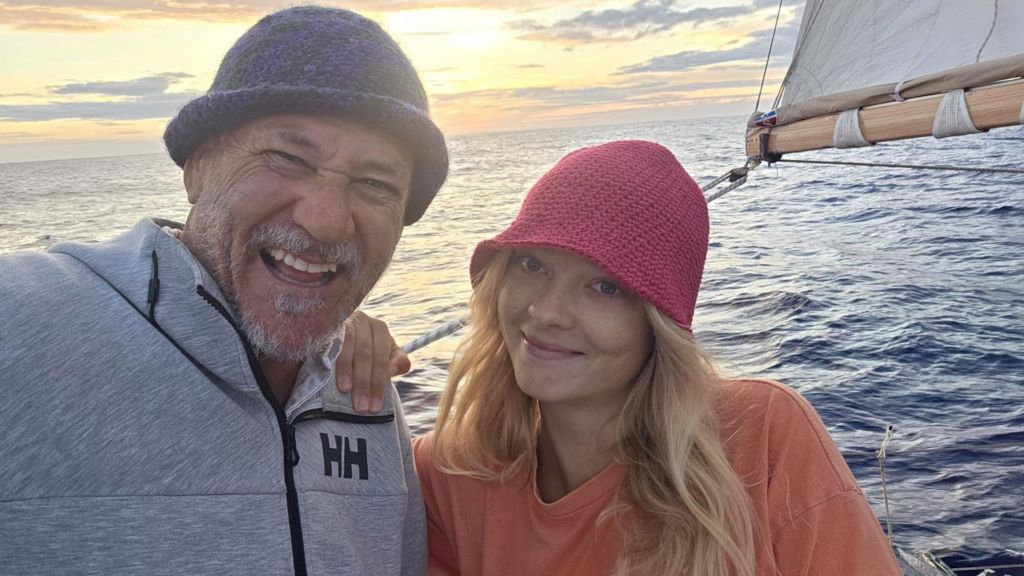
    What began as a long-held sailing dream for a veteran Australian captain has become the ultimate test of father-daughter bonding: a 15-month round-the-world voyage that has pushed both 59-year-old Rob Donald and his 19-year-old daughter Freya to their limits, with countless challenges and once-in-a-lifetime memories along the way. The pair departed from New South Wales, Australia, back in March 2025, with a final destination of Norway, and recently reached Penzance, Cornwall, where they paused to rest before kicking off the last leg of their epic journey.

    The voyage centers on Misha, a 9.8-meter all-wood yacht crafted by a renowned Dutch shipbuilder in 1937. Rob purchased the vintage vessel in France back in 1989, and after sailing it to Australia and making a return trip to France, he developed a decades-long dream: to sail Misha back to the Netherlands to prove the decades-old craft was still seaworthy. When his wife Hanne declined to join the expedition, Freya, who was just 18 at the time, stepped up to take her place. Many skeptics predicted the teenager would abandon the trip within a week, but 15 months later, the pair has logged an impressive 18,000 nautical miles across the world’s oceans.

    For Freya, the life aboard the small cramped yacht took some getting used to. She passed long days at sea crocheting hats, downloading movies, and adjusting to the isolation of open water. “It was really really weird for starters but I got used to it pretty quickly,” she shared, admitting there were points when she grew tired of the confined routine. But even through the hard days, she says she would never trade the experience. The 24-day rough crossing of the Indian Ocean ended with a stop in Madagascar, a trip that checked a top bucket-list item off her list: relaxing alongside wild lemurs in one of the world’s most biodiverse countries.

    The journey has been marked by far greater challenges than rough seas and cramped quarters. Along their route, which took them from Sydney to Darwin, Bali, Madagascar, Mozambique, South Africa and around the Cape of Good Hope to Cape Town, Rob received a devastating diagnosis: prostate cancer. He flew back to Australia for treatment, and became one of the first patients in the country to undergo single-port robotic surgery. Just weeks after the procedure, Rob insisted on returning to his yacht to finish the voyage, unwilling to miss the critical weather window that would allow them to sail from Cape Town to St. Helena. His surgeon cleared him to return to sea, and the pair resumed their journey.

    Even routine activities brought unexpected drama. To supplement their stores, the Donalds tow a fishing line behind Misha, and on one occasion they caught a yellowfin tuna — only for a tiger shark to seize half of their catch mid-pull. “For the next week we just had tuna every day, it was a bit like Forrest Gump and the shrimp, we had curried tuna, fried tuna, battered tuna, beer-battered tuna, raw tuna,” Rob laughed. To maintain their close bond through months of close quarters, the pair have prioritized respecting each other’s boundaries: separate bunks, personal space, and giving each other time to pursue their own hobbies, a system that has let them finish the voyage still as close as ever.

    After docking in Penzance, Freya immediately caught a train to London to reunite with her best friend — the bright lights and busy energy of a major city are what she missed most during months at sea, and the chance to socialize with people her own age was a long-awaited joy. While Freya explores London, Rob has been catching up with old friends in Cornwall. Soon, Freya will rejoin the trip in Falmouth, where Hanne will fly in to celebrate Rob’s upcoming 60th birthday. After the celebration, the intrepid pair will set sail once more, first for the Netherlands to fulfill Rob’s decades-old dream, then on to their final destination of Norway.