分类: society

  • Global mayors heat up Harbin’s ice culture

    Global mayors heat up Harbin’s ice culture

    Harbin’s frozen riverfront became an international stage for cultural exchange as mayors from around the world gathered for the Global Mayors Dialogue on January 7, 2026. The event showcased China’s northeastern city’s unique blend of winter traditions and technological innovation against the backdrop of its famous ice culture.

    Distinguished guests participated in traditional ice dragon boating competitions before witnessing spectacular demonstrations of short track speed skating and elegant figure skating performances by local athletes. The most striking integration of technology and tradition emerged as robotic canines demonstrated sled-pulling capabilities across the icy surface, symbolizing Harbin’s progressive approach to winter cultural preservation.

    Photographs captured by Wang Jian document the convergence of international diplomacy and local culture, with mayors actively engaging in winter activities that have defined the region for generations. The event highlighted how Harbin has successfully transformed its harsh winter climate into an economic and cultural asset through innovative programming.

    The demonstration occurred as part of broader efforts to position Harbin as a leading destination for winter tourism and international cultural exchange. The city’s administration has strategically developed its winter offerings to appeal to both traditional culture enthusiasts and technology innovators, creating a unique niche in the global tourism market.

    This international gathering served not only as a cultural showcase but also as a diplomatic platform for urban leaders to exchange ideas about seasonal city management, tourism development, and cultural preservation strategies in climate-challenged environments.

  • Tianmen grand bridge under construction in China’s Guizhou

    Tianmen grand bridge under construction in China’s Guizhou

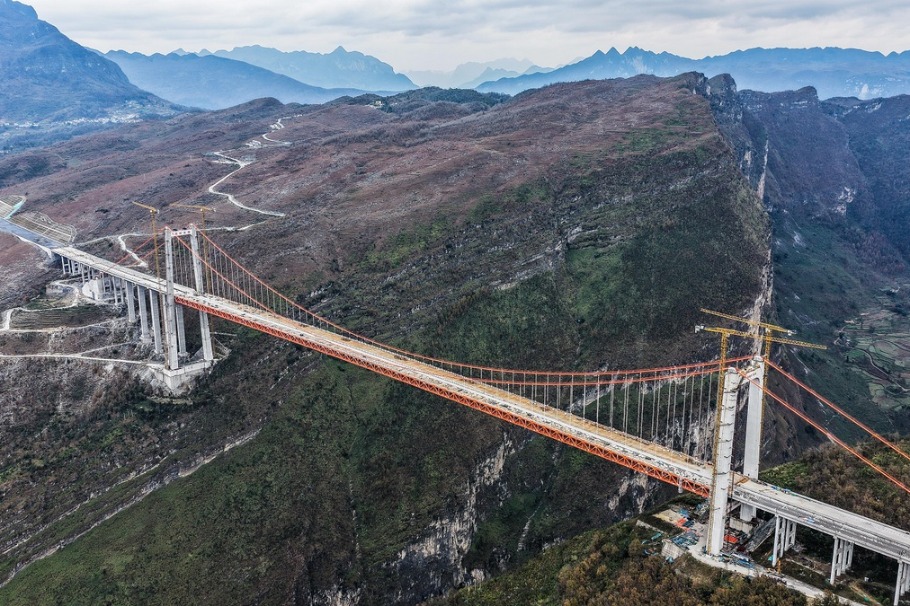
    Southwest China’s mountainous Guizhou province has reached a significant infrastructure achievement with the recent completion of the main structural framework for the Tianmen Grand Bridge. This engineering marvel, captured in aerial photography on January 6, 2026, stretches an impressive 1,553 meters in length while soaring approximately 560 meters above the terrain below.

    The bridge represents a critical component of the developing Anshun-Panzhou highway system, designed to enhance transportation connectivity through Guizhou’s challenging landscape. The region’s complex topography has historically presented substantial obstacles to infrastructure development, making this construction achievement particularly noteworthy.

    Engineering teams have employed advanced construction methodologies and cutting-edge materials to overcome the geographical challenges posed by the mountainous territory. The bridge’s design incorporates state-of-the-art seismic resistance features and wind stability technology, essential for the region’s environmental conditions.

    This transportation project forms part of China’s broader initiative to improve interregional connectivity and stimulate economic development in previously isolated areas. The enhanced infrastructure is expected to facilitate more efficient movement of goods and people, potentially boosting local economies and reducing travel times significantly.

    The completion of the main structure marks a pivotal phase in the overall project timeline, with subsequent work now focusing on deck finishing, safety installations, and connecting roadways. Transportation authorities anticipate the bridge will serve as a vital link in western China’s expanding highway network upon its scheduled opening.

  • Trumpet trees blanket district in Xiamen with purple blossoms

    Trumpet trees blanket district in Xiamen with purple blossoms

    The coastal city of Xiamen in Fujian province has been transformed into a breathtaking floral spectacle as thousands of purple trumpet trees (Tabebuia impetiginosa) reached full bloom in early January. This extraordinary natural display has turned Jimei district’s Xixi village into a major attraction for both local residents and tourists seeking respite in nature’s vibrant colors.

    The remarkable transformation occurred in Xiazhuangli, where approximately 7,000 trumpet trees have converted a previously dormant orchard into a magnificent floral landscape. The trees, known for their vibrant purple blossoms, create an astonishing visual effect when viewed from elevated perspectives—appearing as an expansive purple carpet covering the terrain.

    This annual flowering period typically extends from January through March, offering an extended window for visitors to experience the phenomenon. The timing provides a unique winter bloom spectacle that contrasts with the traditional spring flowering seasons common in other regions.

    Botanical experts note that the trumpet tree, native to South America but successfully cultivated in Xiamen’s subtropical climate, has adapted remarkably well to the local environment. The successful cultivation of such a substantial collection represents a significant achievement in horticultural planning and urban beautification efforts.

    The spectacle has generated substantial attention on social media platforms, with aerial photographs and videos circulating widely, showcasing the stunning transformation of the landscape. Local authorities have implemented additional visitor services to accommodate the increased tourism while ensuring the preservation of the natural display.

    This floral phenomenon not only enhances Xiamen’s reputation as an ecologically conscious city but also demonstrates successful urban planning that integrates natural beauty with community spaces. The event has become an important seasonal attraction, contributing to both local tourism and environmental appreciation.

  • Watchdog halts a Japanese nuclear plant’s safety review after seismic data found to be fabricated

    Watchdog halts a Japanese nuclear plant’s safety review after seismic data found to be fabricated

    Japan’s Nuclear Regulation Authority (NRA) has terminated the safety evaluation process for two reactors at the Hamaoka nuclear facility following revelations that the plant operator systematically manipulated seismic risk data. The decision marks a significant impediment to the nation’s efforts to expand nuclear energy utilization.

    Chubu Electric Power Company had submitted applications in 2014 and 2015 to resume operations at reactors No. 3 and 4 at the Hamaoka plant, situated approximately 200 kilometers west of Tokyo in a region historically vulnerable to massive Nankai Trough earthquakes. The facility’s two additional reactors are currently undergoing decommissioning while a fifth remains inactive.

    The regulatory investigation commenced in February after authorities received whistleblower information regarding data integrity issues. NRA Chairman Shinsuke Yamanaka confirmed the suspension of safety assessments after verifying the falsification, with Chubu Electric formally acknowledging the misconduct in mid-December. The regulatory body is now contemplating inspections at the utility’s corporate headquarters.

    Chubu Electric President Kingo Hayashi publicly admitted the improprieties on Monday, conceding that employees deliberately utilized inaccurate seismic measurements to minimize perceived earthquake risks. Hayashi offered formal apologies and committed to establishing an independent investigative panel.

    Chairman Yamanaka characterized the data manipulation as “an act of betrayal that fundamentally undermines nuclear safety principles,” emphasizing that operators bear primary responsibility for ensuring safety protocols. The NRA indicated that any future screening processes would necessitate completely restarting the evaluation procedure, with potential for outright rejection of applications.

    This development represents a substantial setback for Japan’s energy strategy, which has sought to accelerate nuclear reactor reactivation to address escalating energy expenses and carbon reduction commitments. Public sentiment remains polarized regarding nuclear power due to persistent safety apprehensions stemming from the 2011 Fukushima Daiichi nuclear disaster.

    According to NRA statistics, Japan currently operates 13 of its 57 commercial nuclear reactors, with 20 non-operational units and 24 undergoing decommissioning procedures.

  • Global guests discuss sustainable development in Harbin

    Global guests discuss sustainable development in Harbin

    Harbin’s unique fusion of winter artistry and technological innovation provided the backdrop for critical sustainability discussions as mayors from across the globe gathered for the Global Mayors Dialogue on January 7, 2026. The event, hosted at the prestigious Harbin Institute of Technology, saw city leaders explore the institution’s aerospace museum—a symbolic venue where frozen sculptures coexist with space exploration technology.

    The dialogue focused on developing practical strategies for urban centers to drive sustainable development initiatives. Against the striking contrast of Harbin’s famous ice artworks and cutting-edge technological displays, participants exchanged insights on addressing environmental challenges while maintaining economic growth. The location choice emphasized the importance of blending cultural heritage with innovation in creating sustainable urban futures.

    Delegates examined how cities can implement green technologies, reduce carbon footprints, and develop climate-resilient infrastructure. The discussions highlighted the role of educational institutions like Harbin Institute of Technology in providing research and technological solutions to urban sustainability challenges. The mayors also shared best practices from their respective cities, creating a framework for international cooperation on sustainable urban development.

    The event underscored the growing recognition that cities—as centers of population density and economic activity—must lead the transition toward more sustainable living models. Participants committed to establishing ongoing collaboration channels to continue sharing knowledge and implementing the strategies developed during the dialogue.

  • Families shocked Swiss ski bar was not inspected for years before deadly fire

    Families shocked Swiss ski bar was not inspected for years before deadly fire

    A devastating New Year’s Eve fire at Le Constellation bar in the Swiss resort town of Crans-Montana has revealed shocking regulatory failures, with local officials admitting the establishment hadn’t undergone mandatory safety inspections for five years. The tragedy claimed 40 lives and left 116 injured, many with severe burns requiring specialized treatment across European medical facilities.

    Prosecutors investigating the incident determined the blaze originated when champagne bottles adorned with sparklers ignited sound-insulating foam ceiling materials. The bar’s managers, French nationals Jacques and Jessica Moretti, now face criminal investigation for suspected manslaughter by negligence, bodily harm by negligence, and arson by negligence. In their first public statement since the disaster, the couple expressed being ‘devastated’ and promised ‘full co-operation’ with ongoing investigations.

    Legal representatives for victims’ families have demanded greater accountability, with attorney Romain Jordan noting the ‘staggering number of breaches and shortcomings in inspections raises the question of whether the municipality should be investigated with even greater urgency.’ The victims included eight children under age 16, one of whom, Ricardo Minghetti, was laid to rest during funeral services this week.

    Mayor Nicolas Feraud acknowledged the inspection failure without providing explanation, stating ‘We regret that – we owe it to the families and we will accept the responsibility.’ In response to the tragedy, local authorities have implemented an immediate ban on sparklers in all entertainment venues. The case highlights challenges in Switzerland’s decentralized regulatory system where federal safety standards are implemented at municipal levels across 2,131 communes.

  • Tiger Tower fire: 6 months on, owners get timeline for repairs, insurance payouts

    Tiger Tower fire: 6 months on, owners get timeline for repairs, insurance payouts

    After six months of uncertainty following a catastrophic fire that ravaged Dubai’s prominent 67-story Tiger Tower (officially named Marina Pinnacle Tower), displaced homeowners have finally received definitive timelines for restoration works and insurance compensation. The Dubai Land Department (DLD) has formally communicated that rehabilitation efforts are poised to commence, bringing substantial relief to affected property owners.

    According to an official DLD document dated December 26, 2025, a specialized contractor has been appointed to execute comprehensive structural repairs and rehabilitate building systems. The extensive restoration project, funded through an initial disbursement, is projected to require approximately eight months for completion before units can be officially returned to owners.

    The communication specifically addressed the critical insurance compensation process, confirming the appointment of an independent consultant to finalize damage assessments. Property owners can anticipate compensation disbursements to initiate within one to two months, pending completion of required documentation.

    The June 13, 2025 inferno necessitated the emergency evacuation of all 3,820 residents from 764 apartments in a remarkable six-hour operation by Dubai Civil Defence that resulted in no casualties. However, the subsequent months created significant hardship for owners like Muhammad, a three-bedroom apartment purchaser, who described experiencing ‘considerable emotional duress’ due to financial pressures and insufficient communication from authorities.

    The DLD has emphasized its ongoing coordination with building management to monitor rehabilitation progress and safeguard owner rights. Authorities additionally noted that temporary partial re-occupation of unaffected apartments may be permitted following approval from Dubai Municipality and Civil Defence, offering some residents earlier return possibilities before full project completion.

  • 7 million Australians face risk of wildfires

    7 million Australians face risk of wildfires

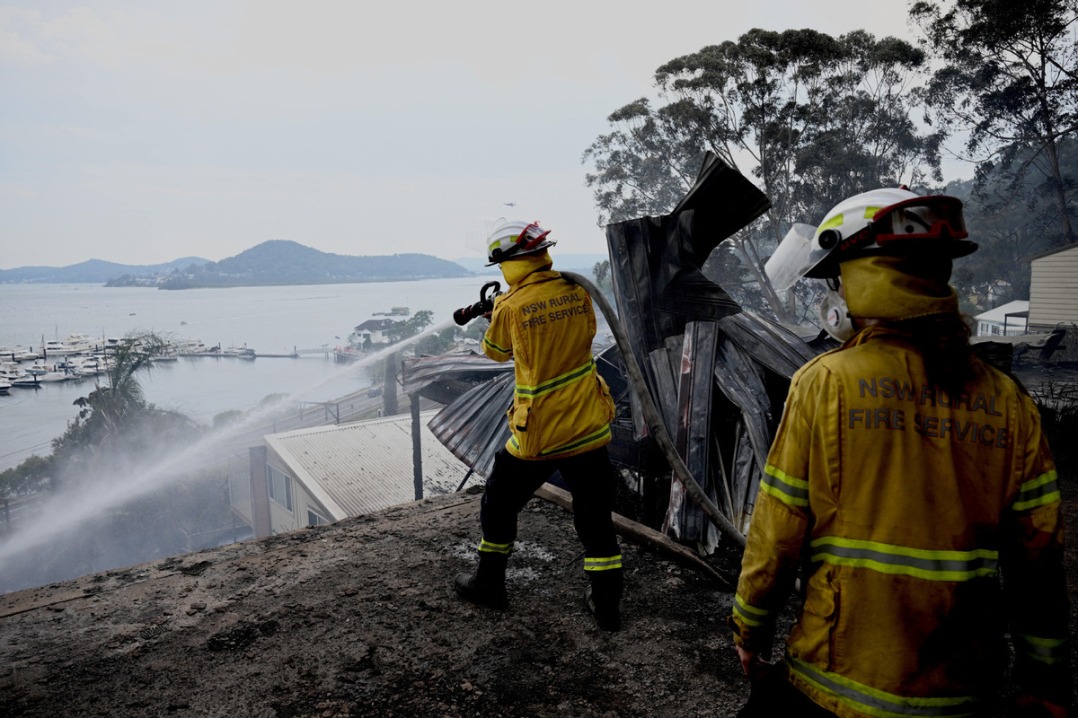
    A landmark collaborative study has revealed that nearly 7 million Australian residents face significant wildfire threats while living in suburban expanses surrounding major metropolitan centers. The comprehensive analysis, jointly published by the Climate Council and Emergency Leaders for Climate Action (ELCA), identifies these urban periphery zones as increasingly vulnerable to catastrophic fire events.

    The research highlights that the outer suburbs of Sydney, Melbourne, Perth, Adelaide, Hobart, and Canberra exhibit environmental and structural characteristics alarmingly similar to those that precipitated the devastating January 2025 Los Angeles wildfires. Demographic data shows a concerning 65.5% population increase in these high-risk areas since 2001, with current estimates exceeding 6.9 million inhabitants.

    A critical finding indicates that approximately 90% of Australian homes situated in these fire-prone regions were constructed prior to the implementation of contemporary bushfire-resilience building standards. The report further cites previous research demonstrating that while only 10% of fires account for 78% of fatalities, the majority of these deadly incidents occur in suburban settings.

    Greg Mullins, ELCA founder and former New South Wales fire commissioner, emphasized the dangerous convergence of environmental factors creating ideal conditions for catastrophic urban fires. ‘Nearly every Australian city now contends with the same hazardous preconditions witnessed in Los Angeles—extended dry periods, severe wind patterns, and historical precedents of destructive fires,’ Mullins stated. He specifically noted that climate change has intensified fire weather conditions to levels that sometimes surpass modern firefighting capabilities.

    The report urgently recommends both substantial reductions in climate pollution and prioritized enhancement of emergency services and land management capacities in these vulnerable urban fringe communities.

  • Flyers embrace ‘boomerang tickets’

    Flyers embrace ‘boomerang tickets’

    A novel travel phenomenon dubbed the ‘boomerang ticket’ strategy is rapidly gaining popularity across Chinese social media platforms, revolutionizing how young travelers approach domestic journeys. This innovative approach involves booking flights with extended layovers in third cities that ultimately prove cheaper than direct routes, effectively transforming transit stops into brief sightseeing opportunities.

    The trend exemplifies a growing consumer preference for value-driven travel experiences, particularly among younger demographics seeking to maximize limited vacation time. One notable case involves a couple from Jiangsu province who opted for a Beijing-connected flight to reach nearby Changzhou—despite the cities being merely 40 kilometers apart—simply to enjoy a 47-hour capital city exploration at just 579 yuan ($83) per person.

    Industry analyst Li Gaochao of Shanxi Baohua International Travel Service notes that enhanced price transparency through digital platforms has empowered travelers to identify such cost-effective itineraries. ‘As cities intensify cultural tourism promotions with social media-friendly attractions,’ Li observes, ‘young travelers are strategically selecting these multi-city routes to incorporate additional destinations within tight schedules.’

    Civil aviation reforms have significantly contributed to this trend’s viability. According to Lin Zhijie of the China Air Transport Association, airlines have optimized domestic transfer services by integrating regional routes with major hubs and redistributing spare capacity. This operational shift has generated more affordable flight combinations while improving overall seat occupancy rates.

    Online travel platforms report surging interest, with Fliggy documenting a 95% month-on-month increase in ‘boomerang ticket’ searches during December. The average one-way fare registered approximately 356 yuan—44% lower than conventional tickets during the same period.

    Despite the apparent advantages, travel experts advise caution regarding potential risks. Li recommends selecting flights operated by the same airline or partners covered by interline agreements, ensuring carrier responsibility for rebooking if initial leg delays affect connections.

    For participants like Lu (surname only), who celebrated her anniversary with nighttime cycling around Tian’anmen Square during her Beijing layover, the approach has unlocked new travel possibilities. Already planning future boomerang journeys, she anticipates using similar strategies to experience Chongqing’s hotpot, Dalian’s coastal scenery, and Lanzhou’s northwestern culture—all through creatively routed flight bookings.

  • Culture of reading codified into law

    Culture of reading codified into law

    China will implement its first nationwide reading promotion regulation on February 1, establishing comprehensive legal frameworks to transform reading from voluntary activity into fundamental cultural infrastructure. The groundbreaking legislation, approved by the State Council in December, mandates expanded library services, enhanced reading facilities, and systematic funding mechanisms to elevate public engagement with literature.

    The regulation designates the fourth week of April as National Reading Week, extending celebrations beyond World Book Day on April 23 into an extended nationwide campaign. This legislative move represents China’s inaugural national effort to codify reading promotion, transitioning from policy advocacy to legally guaranteed public right.

    Structured across six chapters containing 45 articles, the regulation establishes a collaborative governance model operating under Party leadership with government guidance, engaging publishers, distributors, libraries, bookstores, and social organizations. It creates comprehensive requirements for reading infrastructure, resource allocation, and promotional activities nationwide.

    Chen Mingliang, founder of Beijing’s Bright World Reading Club, hailed the regulation as “a pivotal moment in China’s commitment to promoting reading among the public, elevating it to a strategic priority.” He emphasized that the initiative transcends individual habit formation, serving crucial functions in “fostering shared understanding, strengthening social cohesion and enhancing social governance.”

    The legislation specifically addresses persistent challenges including regional disparities, uneven digital reading standards, and quality content shortages. It mandates state-level support for publishing industry development to enrich offerings and optimize catalog structures, while prioritizing assistance for underserved groups including minors, elderly citizens, people with disabilities, and rural communities.

    Writer-translator Li Yingdeng noted the legislation’s “equity core lies in its targeted reach,” explaining that “spontaneous initiatives and market forces often fail to reach rural areas and disadvantaged groups. Legislation is therefore essential to guarantee equitable access.”

    The regulation builds upon nearly two decades of progressive efforts, including Jiangsu province’s 2014 pioneering provincial regulation and reading’s inclusion in government work reports for twelve consecutive years since 2014. These sustained initiatives have elevated China’s overall reading rate from 51.7% in 2004 to 82.1% in 2024, supported by over 3,200 public libraries and 100,000 physical bookstores nationwide.

    Implementation success will depend on detailed execution, according to Zhu Bing, former director of the National People’s Congress’ Culture Office, who emphasized that “the vitality of laws and regulations lies in their implementation.” The regulation holds governments and relevant parties accountable for fulfilling specified duties to cultivate reading habits and foster a society-wide reading environment.