分类: society

  • Cross-border travel surge expected during Qingming Holiday

    Cross-border travel surge expected during Qingming Holiday

    China is set to experience a sharp uptick in cross-border travel during the upcoming Qingming Festival holiday, running from April 4 to 6, according to official projections released Wednesday by the National Immigration Administration. The agency forecasts that average daily cross-border trips will exceed 2.3 million, representing an 11.1 percent increase compared to the same holiday period in 2025.

    Beyond its deep cultural roots as a time for ancestral tomb sweeping and honoring family predecessors, the Qingming Festival has evolved into one of China’s most popular windows for spring leisure travel. This year’s anticipated travel boom has been amplified by two key complementary factors: multiple local regions have rolled out dedicated spring break arrangements for primary and secondary school students, expanding the pool of potential travelers, and the special administrative regions of Hong Kong and Macao are scheduled to observe a five-day holiday for the occasion, creating extended opportunities for cross-border movement.

    Official projections show that major international hubs across the country, including Shanghai Pudong International Airport, Beijing Capital International Airport, Chengdu Tianfu International Airport, Guangzhou Baiyun International Airport and Shenzhen Bao’an International Airport, will all see modest growth in passenger volumes compared to previous years. By contrast, land ports connecting the Chinese mainland with Hong Kong and Macao are on track to record far more robust growth, driven by two overlapping demand streams: rising numbers of Hong Kong, Macao and Taiwan residents returning to their ancestral hometowns for traditional rites, and growing inbound travel from overseas Chinese and international tourists.

    Among the busiest border crossings, Shenzhen’s key checkpoints are projected to see heavy daily traffic: Luohu is expected to handle roughly 250,000 crossings per day, followed by Futian at 230,000, Shenzhen Bay at 190,000, West Kowloon High-Speed Rail Station at 120,000, and Liantang at 110,000. In Zhuhai, which serves as the main mainland gateway to Macao, the Gongbei checkpoint alone is forecast to register 375,000 daily crossings, while the Hong Kong-Zhuhai-Macao Bridge checkpoint will see 152,000 daily trips, and both Qingmao and Hengqin checkpoints are projected to handle 113,000 daily cross-border trips each.

    The projected surge in cross-border travel comes as regional tourism and cross-border family ties continue to recover following years of restricted movement, with the combination of cultural tradition and extended holiday timelines creating ideal conditions for increased mobility across China’s borders this spring.

  • Rescuers give up hope for the humpback whale stranded in the Baltic Sea

    Rescuers give up hope for the humpback whale stranded in the Baltic Sea

    BERLIN — For nearly three weeks, a wayward humpback whale that wandered far from its natural Atlantic habitat into Germany’s Baltic Sea coast has captivated national attention, but rescue teams announced Wednesday they have ended all efforts to save the animal, concluding the exhausted mammal will not survive its current stranding.

    Nicknamed ‘Timmy’ by the public and media following weeks of repeated strandings and close calls, the whale became trapped for the second time in as many days on Tuesday, when it swam into a shallow inlet off Germany’s small Baltic island of Poel. Poel sits just off the coast near the northern port of Wismar, roughly 30 miles northeast of Timmendorfer Strand, where rescuers pulled Timmy free from even shallower waters just one week earlier using a heavy excavator. That successful rescue proved temporary, however: within days, the lost whale once again found itself stuck in low, unnavigable waters.

    In the days following the first successful rescue, authorities adopted a careful, low-intervention strategy aimed at letting the already exhausted animal rest and rebuild its strength. Teams occasionally used small boats to gently nudge the whale toward deeper open water, but prioritized minimizing stress to give Timmy the best chance to swim out to the North Sea and eventually back to the Atlantic on its own.

    That strategy has now been abandoned, lead scientific coordinator Burkard Baschek told reporters at a televised press conference Wednesday. Baschek, who also serves as scientific director of the Ocean Museum Germany, said monitoring on Wednesday revealed deeply concerning signs: the whale was breathing at highly irregular intervals, drone footage showed almost no movement of sediment beneath its 12-15 meter body, and it barely responded when rescue teams approached.

    Though Timmy showed a small uptick in activity after crews pulled back to give it space, Baschek noted that the change was not enough to signal any real chance of recovery. ‘It is not activity that gives us grounds for hope,’ he said. ‘We firmly believe that the animal will die there.’

    Two prior times during the whale’s three-week odyssey along the Baltic coast, Timmy managed to gather enough strength to free himself from shallow waters. But repeated strandings have left the whale severely weakened, and falling seasonal tides have only worsened the dangerous conditions in the inlet. ‘The prospects that it will free itself are very small,’ Baschek added. ‘The approach of maximum rest and respect for nature demands at some point that we let it go.’

    Timmy’s unplanned journey through the Baltic has been front-page news across Germany, with national media running constant updates on the whale’s status that turned the lost animal into a viral national sensation. The humpback was first spotted in the region on March 3, far outside its normal range: the Baltic Sea is not a natural habitat for the species, and its shallow, cooler waters do not support the large prey humpbacks rely on for long-term survival.

    Experts still do not know exactly what led the whale so far off course. The most common theories suggest Timmy may have followed a large shoal of herring into the Baltic, or lost his bearings during his annual northward migration. Even under the best conditions, the journey back to open Atlantic waters would have been a monumental challenge: the trip from the inlet to the North Sea, and then out to the Atlantic, stretches hundreds of kilometers, a taxing swim for even a healthy humpback.

  • China braces for cross-border travel surge during Qingming holiday

    China braces for cross-border travel surge during Qingming holiday

    As China prepares for the annual three-day Qingming Festival holiday starting April 4, national immigration officials are projecting a notable uptick in cross-border passenger movement across the country’s ports of entry and exit. New data released by the National Immigration Administration this Wednesday forecasts that daily cross-border traveler volumes will climb above 2.3 million on average throughout the holiday, marking an 11.1% year-on-year increase compared to the 2025 Qingming break. The Qingming Festival, a traditional Chinese holiday centered on ancestor veneration, tomb sweeping, and spring outings, has increasingly become a popular window for international and cross-border leisure and family travel in recent years. This projected growth reflects a steady rebound in global mobility and sustained demand for cross-border trips among Chinese residents and international visitors alike. The busiest cross-border hubs are concentrated among major international airports across China’s largest economic centers, including Beijing, Shanghai, Guangzhou, Chengdu, and Shenzhen. All of these facilities are anticipating a steady rise in passenger throughput compared to ordinary non-holiday periods. Leading the pack is Shanghai Pudong International Airport, China’s busiest aviation gateway for international travel, which is expected to process an average of roughly 95,000 inbound and outbound passenger trips each day over the holiday period. Immigration authorities have announced pre-emptive adjustments to operational arrangements to accommodate the surge, including adding extra inspection lanes, optimizing passenger clearance processes, and deploying additional staff to reduce wait times and avoid congestion at major ports. The projected growth in cross-border travel aligns with broader trends of rising domestic and international mobility in China, as more travelers take advantage of long holiday weekends to plan overseas trips, reunite with family members living abroad, or welcome international visitors to China.

  • Inclusive run brings together SEN students from Shanghai, HK, Macao

    Inclusive run brings together SEN students from Shanghai, HK, Macao

    On March 30, a landmark inclusive sporting event brought together 150 students with special educational needs (SEN) from Shanghai, Hong Kong, and Macao, marking the first time Macao has joined this cross-regional initiative. Accompanied by 300 supporting teachers and volunteers, the participants completed a 3.5-kilometer route through the scenic green spaces of Shanghai Expo Culture Park, crossing the finish line to cheers from crowds of attendees.

    The event was co-organized by three regional institutions: the Hong Kong and Macao Affairs Office of the Shanghai Municipal People’s Government, the Federation of Hong Kong-Shanghai Association, and the Hong Kong Special Education School Heads Association, with financial support from the Hong Kong Jockey Club. Built on the foundation of Shanghai Marathon charity programs held in 2023 and 2024, the gathering was designed to advance three core goals: deepen cross-regional cooperation in special education, support the social integration of SEN students, and strengthen youth exchanges across the three regions through the shared language of sport.

    Leung Wing-hung, founding chairman of the Hong Kong Special Education School Heads Association, emphasized that events like this run play a transformative role in shifting public perceptions of special needs young people. “They help people in Shanghai, Hong Kong, and Macao really see the potential of our special needs children and give them opportunities for growth and development in various fields,” Leung said. Looking ahead to future collaboration, he noted that Shanghai and Hong Kong share strong complementary strengths in special education, with significant untapped potential for closer cooperation in adaptive sports development to create more engagement opportunities for SEN students. Beyond sport, he added, regions can work together to improve teaching practices and career support, connecting Hong Kong SEN students with professional opportunities at Shanghai-based businesses and organizations.

    After the run concluded, participants gathered for an inclusive awards ceremony followed by a cross-regional carnival that offered a range of accessible activities. Attendees could join Special Olympics-themed games, interact with trained equine animals in a guided equestrian experience, and enjoy live performances by fellow SEN participants. A highlight of the post-race event was the world premiere of *You Make The World Shine*, an animated short film entirely created by SEN students using artificial intelligence tools. The project represents an innovative new approach to empowering special needs young people to express their own voices and build meaningful connections with the broader public through technology.

    Derek Anderson, a learning support teacher at Wellington College International Shanghai who accompanied students to the event, praised the gathering’s powerful core message of inclusion. “It is very important for students coming to Shanghai today who have taken part in the run to see that everybody is all the same and we can all do things,” Anderson explained. He added that accessible, community-focused events like this run are critical to raising public awareness of the needs of disabled people, helping the general public recognize that many people require additional support, accessible infrastructure, and tailored accommodations to fully participate in community life.

    For many participating students, the event offered a rare chance to build new cross-regional friendships and experience the joy of sport in a supportive environment. Kirsty Gu, an SEN student from Wellington College International Shanghai, shared that she greatly enjoyed the day, particularly the opportunity to meet new people and run alongside a new partner she connected with just before the event.

    Organizers noted that the first-time inclusion of Macao participants marks an important step forward in building a connected, inclusive support network for SEN students across all three regions, with plans to expand cross-regional collaboration in the coming years.

  • Qinhuangdao panda-themed healing base offers therapy for autistic kids

    Qinhuangdao panda-themed healing base offers therapy for autistic kids

    In the coastal city of Qinhuangdao, located in China’s northern Hebei Province, a groundbreaking new initiative is offering a fresh path to healing and development for autistic children. A one-of-a-kind panda-themed therapeutic base has opened its doors at Qinhuangdao Wildlife Park, centered on the idea that gentle, close interactions with giant pandas can create a calming, supportive environment that eases anxiety and nurtures emotional growth.

    The base was officially inaugurated on March 27 during a public event titled “Giant Panda Healing • Guarding the Stars”, held just days ahead of the 19th World Autism Awareness Day, marked on April 2. To mark the opening, 133 autistic children joined the event alongside their parents and trained volunteers, getting the chance to explore the park and meet its resident giant pandas firsthand.

    Witnesses reported that many children arrived at the venue feeling restless and overstimulated, but gradually softened and relaxed as they moved through the park’s open, green animal zones. At the dedicated panda pavilion, the quiet, playful presence of 6-year-old giant pandas Tao Su and Ya Nan — who were celebrating 100 days of residence in Qinhuangdao — drew quiet, unforced smiles from many of the young participants.

    Li Nan, deputy director of the rehabilitation center at Qinhuangdao’s Disabled Persons’ Federation, explained the core logic behind the innovative program. “Interaction with animals can effectively ease anxiety in children with autism and help them build inner security,” she said. “That is the heart of this nature-based healing initiative.”

    Unlike traditional indoor rehabilitation training, the new base combines regular open-air visits with structured themed activities, designed to leverage giant pandas’ naturally calm, non-threatening demeanor to create a low-pressure therapeutic space. Ma Zhiguo, president of the Disabled Persons’ Federation of Haigang District, noted that pandas’ steady, nonaggressive behavior perfectly matches the need autistic children have for predictable, safe social interactions. “They can reduce social anxiety and become icebreakers for emotional connection,” Ma added.

    For families raising autistic children, the new base fills a critical gap in accessible, supportive care. Song Liping, the mother of 31-year-old autistic adult Li Ruxian, has spent decades navigating the challenges of caring for her son, who did not speak until he turned 4. “Raising a child with autism requires far more patience and energy than most people can imagine,” Song explained, referencing the dual strain of financial pressure and emotional exhaustion that many families face. Since beginning intensive professional rehabilitation for her son in 2014, Song has dedicated herself to autism support work, becoming a volunteer and developing community music therapy programs. Today, her son has progressed from requiring constant full-time care to working as her teaching assistant — a transformation that speaks to the impact of consistent, targeted support.

    Liu Demin, Party branch secretary of the Qinhuangdao Psychological Health Association, which provides training and counseling for professionals working with special needs children, outlined the unique benefits of animal and nature-based therapy compared to conventional indoor interventions. “Animals are open and nonjudgmental. Being with them creates a low-pressure social environment and encourages children to initiate interaction,” Liu said. She added that outdoor, multisensory experiences in natural spaces promote healthy sensory development, while open environments inherently help reduce feelings of overwhelm and anxiety. “Observing panda behavior can also extend attention spans, providing strong support for daily rehabilitation,” she noted.

    To make the healing program accessible to as many families as possible, Qinhuangdao Wildlife Park has introduced a new preferential access policy: any visitor with a severe disability certificate can bring one family member as a companion for free, eliminating unnecessary financial barriers for participating families. Looking ahead, the base plans to roll out specialized tailored therapy sessions for autistic visitors and expand training for all personnel working with program participants to ensure safe, effective support.

    As the opening event drew to a close with a festive animal parade, children wandered freely under the warm spring sun. For these young participants, often referred to as “children of the stars” in China, the quiet encounter with the gentle giant pandas offered moments of uncomplicated, genuine joy — a powerful reminder that every life carries immeasurable value, and that inclusive, innovative support can open new doors for growth and connection.

  • Fire water tanks were dry during HK blaze

    Fire water tanks were dry during HK blaze

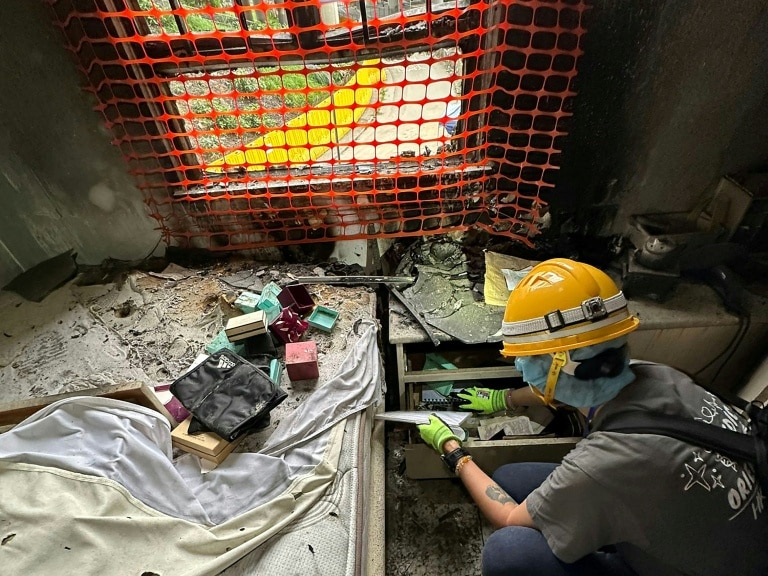
    An ongoing judge-led independent investigation into Hong Kong’s deadliest November residential blaze has uncovered a critical failure: all eight fire water tanks serving Tai Po district’s Wang Fuk Court were completely drained when the fire broke out, a consequence of unorthodox maintenance tiling works that dragged on for months. The tragedy, which claimed 168 lives, prompted Hong Kong Chief Executive John Lee Ka-chiu to convene the independent inquiry committee, which has held six weeks of public evidential hearings starting March 19, with testimony already heard from 20 residents of the affected public housing estate.

    One resident’s firsthand account, delivered to the committee Monday, laid bare the immediate danger created by the empty tanks. When he attempted to deploy a building fire hose to contain the spreading flames on November 26, he turned the valve to find no water emerged at all, leaving him unable to slow the blaze before emergency services arrived.

    Testimony from the industry professionals responsible for the estate’s fire safety inspections continued during Tuesday’s sixth hearing. Chung Kit-man, director of Victory Fire Engineering Ltd, the registered contractor that completed a mandatory fire safety inspection of Wang Fuk Court in March 2025, told the committee he was aware the tanks had been drained one month ahead of the blaze to accommodate the maintenance works.

    Chung explained that his team received reports from on-site workers that no water tank leaks were detected during the March 2025 inspection. However, official inspection forms bearing Chung’s signature explicitly flagged issues with the water tanks. Chung admitted that his employees likely made an error when completing the documentation, and that he had failed to catch the mistake before signing off.

    Li Chunyin, a frontline worker with Victory Fire who carried out the inspection, backed up that account, telling the committee he had directly inspected the interior of the concrete water tanks and confirmed no tiles were installed on their inner surfaces at the time of the check. He added that none of the eight blocks’ tanks showed any signs of leakage, so no repairs were recommended by his team.

    Committee counsel Lee Shu-wun presented a pricing document from the estate’s maintenance consultant, Will Power Architects Co, that confirmed the scope of works included applying white ceramic tiling to the interior of the fire water tanks — a practice Chung described as highly unusual for non-potable water storage used exclusively for firefighting.

    “To my knowledge, fire water tanks only exist to store water for emergency firefighting, so there is no requirement for the water to meet drinking water standards,” Chung told the inquiry. “I cannot understand why this tiling maintenance took three full months to complete.”

    To execute the tiling works, main contractor Prestige Construction and Engineering Co subcontracted the coordination of system shutdowns to another fire service installation firm, China Status Development and Engineering Co. This subcontractor was responsible for submitting applications to the Hong Kong Fire Services Department to approve temporary shutdowns of the building’s fire hydrant and hose network.

    Earlier hearings revealed a staggering procedural failure: China Status never sent any of its own personnel to inspect the system or verify whether a prolonged full-system shutdown was actually necessary for the works. Despite this, the firm submitted 16 separate shutdown applications, resulting in the entire firefighting water system being disabled for more than six months starting in April 2025.

    During that extended shutdown, Victory Fire workers conducting routine checks discovered the rooftop water tanks of three blocks were empty on October 16, 2025, and soon confirmed all eight blocks’ tanks had been drained for the ongoing tiling repairs. A week before the blaze, on November 19, inspection teams also found that the main power switch controlling the fire booster pump for all eight blocks had been switched off.

    When questioned about his firm’s response, Chung said he and his workers requested an official shutdown notice from the Wang Fuk Court building management team but never received one. He admitted that his team never issued a formal warning or formal safety advice to management about the risks of a prolonged shutdown, citing a long-unspoken norm across Hong Kong’s fire safety industry: “the mindset of not telling other industry players how to do their jobs.”

  • Work-life balance tips scales in Xiong’an’s favor

    Work-life balance tips scales in Xiong’an’s favor

    Nine years after China announced the establishment of Xiong’an New Area, this purpose-built city in Hebei province has emerged as a magnet for young professionals, luring talent away from overcrowded megacities with its enviable work-life balance, affordable housing and well-developed public services.

    On a mild March morning, 25-year-old Liu Suying wakes to sunlight spilling through the window of her 70-square-meter rented apartment in Xiongdong District, her pet cat curling against her hand to rouse her. After whipping up a quick breakfast of fried eggs and fresh coffee in her compact kitchen, she climbs into her car for the short commute to her role as a production planning engineer at a local commercial satellite firm. Just seven minutes after leaving home, she arrives at her desk, ready to start the workday.

    A 2024 graduate of Beijing Jiaotong University, Liu is far from alone in choosing to build her career and life in Xiong’an. Her current living arrangement would be out of reach for many young people working in nearby Beijing: she pays just 10,000 yuan ($1,450) annually for a spacious two-bedroom apartment, and receives an additional 1,000 yuan monthly living subsidy from the Xiong’an local government. When Liu told a friend working at a leading tech firm in Beijing about her housing, the friend – who pays 3,000 yuan a month just to share an apartment with others for a single small room – immediately expressed jealousy.

    That such a comfortable, convenient lifestyle is available in Xiong’an marks a dramatic transformation from the area’s origins. When China first unveiled plans for the new area in April 2017, the 100-square-kilometer planned development zone was little more than sprawling farmland and scattered rural villages. Built with a core mission to ease overcrowding in Beijing by relocating non-capital functions outside the city, Xiong’an was designed from the ground up to prioritize quality of life for residents, not just economic growth.

    That deliberate planning has paid substantial dividends. According to local government data, Xiong’an’s permanent resident population hit approximately 1.4 million by the end of 2025, growing by 200,000 over the previous five years as more workers and families moved in. To date, more than 400 branches of China’s central state-owned enterprises have set up operations in the new area, bringing thousands of skilled employees with them and cementing Xiong’an’s reputation as an up-and-coming hub for innovation and career opportunity that doesn’t force residents to sacrifice personal well-being.

  • Hiker’s dog lost in a wild New Zealand forest rescued by helicopter after strangers fund search

    Hiker’s dog lost in a wild New Zealand forest rescued by helicopter after strangers fund search

    On the rugged, untamed West Coast of New Zealand’s South Island, a dramatic story of community kindness and canine resilience has come to a heartwarming close, nearly a week after a hiking accident left an injured hiker separated from her beloved pet.

    The incident unfolded on March 24, when 34-year-old hiker Jessica Johnston slipped and fell 180 feet (55 meters) from a rocky waterfall along the Arahura River, while trekking through remote native bush with her 4-year-old border collie, Molly. Emergency rescuers were quickly dispatched to the hard-to-reach location, where they found Johnston alive but suffering extensive bruising and deep lacerations across her body. With the hiker’s condition requiring urgent medical care, crews airlifted her to a nearby hospital, but a frantic initial search for Molly turned up no trace of the dog, forcing rescuers to leave the missing canine behind in the unforgiving wilderness.

    For Matt Newton, owner and lead pilot of Hokitika-based Precision Helicopters Ltd — whose operating base sits just a short distance from the Arahura River — the story didn’t end there. After reaching out to Johnston while she recovered in hospital to offer his support, Newton committed to launching his own sustained search for Molly. He made multiple initial flights over the search area, but dense vegetation and tricky terrain blocked all efforts to locate the dog.

    Refusing to abandon the mission, Newton and his family launched a public fundraiser to cover the cost of additional flight time and specialized thermal imaging equipment required for a more thorough search. The appeal resonated deeply with the public, and within days, hundreds of strangers from across New Zealand and beyond contributed more than NZ$11,000 (US$6,300), far exceeding the fundraising goal.

    With funding secured, Newton launched a renewed search on March 31, bringing on board a veterinary nurse, trained volunteer searchers, and a tracking dog named Bingo to assist in the operation. Just an hour after the helicopter took to the skies, the team hit a breakthrough: thermal imaging picked up a heat signature matching a dog near the base of the waterfall, just meters from the spot where Johnston had fallen a week prior.

    The helicopter descended to a narrow ledge near the riverbank, allowing a volunteer and tracking dog Bingo to disembark and coax the scared, hungry Molly out of hiding. Rescuers described the border collie as thin, bedraggled, and hungry, but surprisingly steady; she did not run from the team, and allowed them to approach and secure her safely. Newton later shared that he believes Molly survived her seven days alone in the wild by preying on small feral animals that inhabit the river valley.

    After the successful extraction, Molly was brought back to the Precision Helicopters base, where waiting volunteers had planned to rotate into search crews. Instead, they scrapped the scheduled flight rotations, gathered for an impromptu celebratory barbecue, and took turns greeting and cuddling the rescued dog. Just hours later, Johnston — still recovering from her injuries — was able to travel to the base for an emotional, tearful reunion with her long-lost companion.

    Newton noted that the joy of being reunited with Molly is already giving Johnston a major emotional boost as she recovers. “Having your dog back, that’s for sure… that’ll speed up her healing process a whole lot,” he said. Images released by Precision Helicopters captured the tender reunion, as well as the moments of Molly’s extraction from the remote river edge.

    The story has captured hearts across New Zealand, a testament to the power of collective community goodwill to bring about a happy ending that no one expected after the original hiking accident.

  • Russian women decry plans to therapise them into having children

    Russian women decry plans to therapise them into having children

    Russia’s ongoing demographic decline, marked by the lowest birth rates in two centuries, has pushed the Kremlin to roll out a suite of increasingly coercive policies to push women into having children – but many of the country’s women are pushing back hard, calling these measures cruel, counterproductive, and disconnected from the real barriers to starting families.

    In February, Russia’s Ministry of Health greenlit new clinical guidelines that instruct medical providers to refer women who express no desire to have children to psychotherapists, with the explicit goal of cultivating a “positive attitude toward motherhood”. The policy comes on the heels of broader government restrictions that have already banned so-called “child-free propaganda” in media, outlawing public discussion of choosing to remain childless, and imposed heavy fines of up to 400,000 rubles (roughly $5,000) for violators. In recent years, authorities have also rolled back access to abortion, forcing private clinics across most of the country to stop offering the procedure.

    For decades, Russia has grappled with a persistent fertility gap: its current fertility rate sits at 1.4 children per woman, far below the 2.1 replacement threshold demographers identify as necessary to maintain a stable population size. The crisis has deepened dramatically since the full-scale invasion of Ukraine in 2022, which saw hundreds of thousands of young Russian men deployed to the front line, exacerbating population losses. President Vladimir Putin has repeatedly warned that sustained low birth rates could lead to “veritable extinction” for the country, framing the push for higher birth rates as a matter of national survival.

    But women interviewed by AFP say that instead of addressing the root economic and social barriers that lead many to delay or forgo having children, the government is leaning into coercion that will do nothing to reverse falling birth rates. All women interviewed requested to be identified only by their first names for privacy.

    “I don’t see myself as a mother and I don’t see any reasons why having children would make me happier,” said Maria, a 25-year-old IT professional. “I might change my point of view one day. But the state is doing everything possible to make sure that doesn’t happen.” She dismissed the government’s efforts to pull Russia out of its demographic decline as “pathetic”, adding: “Tightening the screws, making safe abortions inaccessible, brainwashing people, bragging about supposedly huge benefit payments, sending them to a psychologist. It’s cruel and completely ineffective. What women really want is social guarantees, a living wage, affordable housing, and most of all, peace and security.”

    Anastasia, a 29-year-old child rehabilitation specialist who has chosen not to have children due to financial instability, echoed those concerns. Her monthly salary sits at 100,000 rubles, a sum that makes saving for a home nearly impossible amid skyrocketing economic pressures. Since the invasion of Ukraine, sweeping international sanctions have spurred rampant inflation, and mortgage interest rates have jumped to as high as 20%, putting home ownership out of reach for many young Russians. Beyond economic hurdles, Anastasia pointed to a pervasive “lack of a fatherhood culture” in Russia, where few men take active roles in child rearing. The country has one of the highest divorce rates in the world, she noted, and after separation, men often leave women to raise children alone with little to no support. “First, you need to create conditions that make a woman actually want to have a child,” she said. “Not pressure her in every possible way.”

    Margarita, an English teacher who cannot have children for medical reasons, warned the new therapy mandate will cause lasting harm to women’s mental health by framing childless women as social outcasts. Even mothers who already have children are speaking out against the policy. “I believe that a woman has the right not to want to have children,” said Irina, a 45-year-old doctor and mother of two. “Why give birth if you don’t want to? Why force women to bear unwanted children?”

    Not all Russian residents interviewed shared this criticism. Maxim, a 49-year-old man, downplayed the policy, arguing it is only a recommendation, and added that he views the choice to remain childless as “unhealthy”.

  • Amsterdam celebrates 25 years since the world’s first same-sex weddings

    Amsterdam celebrates 25 years since the world’s first same-sex weddings

    AMSTERDAM — A quarter-century after the Netherlands made global history by becoming the first country to legalize same-sex marriage, the Dutch capital kicked off silver anniversary celebrations early Wednesday with a special midnight ceremony at Amsterdam City Hall, where three new same-sex couples exchanged wedding vows officiated by Mayor Femke Halsema.

    The moment echoed the landmark 2001 ceremony, when then-Mayor Job Cohen married the world’s first legally recognized same-sex couples. That groundbreaking step 25 years ago blazed a trail for equal marriage legislation that has since been adopted by nearly 40 nations across the globe. Today, same-sex weddings are a fully normalized part of life across the Netherlands: official Dutch statistics show more than 36,000 same-sex couples have tied the knot in the country since 2001.

    The anniversary comes as the Netherlands prepares for another milestone for LGBTQ+ representation: Prime Minister Rob Jetten, the nation’s first openly gay head of government, announced he will soon marry his partner Nicolás Keenan, an Argentine field hockey star who claimed bronze at the 2024 Paris Olympic Games. Speaking to reporters at the overnight Amsterdam celebration, Jetten reflected on how the 2001 legalization shaped his own journey. “As a prime minister, I’m very proud that we celebrate 25 years of universal marriage here in the Netherlands,” he said. “Also for me personally, I can still remember when I was 14 years old watching TV, seeing the first couples getting married here in Amsterdam. That was also very inspiring and emancipating for me, personally, as it has been for so many others.”

    While the Netherlands led the global push for equal marriage, progress and acceptance have spread unevenly across the world. The United States granted nationwide recognition of same-sex marriage via a 2015 U.S. Supreme Court ruling, after years of state-by-state legalization. A 2023 study estimates more than 800,000 same-sex couples are now married across the country.

    Amy Quinn, deputy mayor of Asbury Park, New Jersey, and her wife Heather Jensen were among the first same-sex couples to marry in New Jersey when the state legalized same-sex marriage in 2013. For the pair, legal marriage was not just symbolic: when they planned to start a family, their attorney confirmed marriage would grant both partners equal parental rights, allowing both names to appear on their child’s birth certificate, granting hospital visitation access, and enabling both to sign school documents. “It’s shocking to me in terms of really how recently we got it,” Quinn said of the right to marry.

    Even as more countries have embraced equal marriage, the past decade has brought growing backlash against LGBTQ+ rights in many regions. In the U.S., advocacy group Human Rights Campaign has tracked bills in at least nine state legislatures that seek to roll back federal recognition of same-sex marriage, most calling on the U.S. Supreme Court to overturn its 2015 landmark ruling. Though none of these measures have advanced to date, and could not force the high court to reverse its decision, the proposals have sparked concern among LGBTQ+ communities. “I don’t think it’s a time for people to be afraid,” said Kelley Robinson, president of the Human Rights Campaign. “It’s a time to be aware, to protect our families, to protect our kids and to protect our lives.”

    Last week alone brought two new signs of growing anti-LGBTQ+ pushback in the U.S. The U.S. Supreme Court ruled against a Colorado ban on conversion therapy for LGBTQ+ youth, siding with opponents who argued the ban violated free speech rights and sending the case back to a lower court for re-evaluation. Separately, the Chicago Bulls cut guard Jaden Ivey from the team roster following anti-LGBTQ+ comments he posted to Instagram alongside statements about his religious beliefs.

    Across much of the globe, particularly in parts of Asia and Africa, same-sex marriage remains illegal, and a growing number of countries have implemented harsher repressive policies targeting the LGBTQ+ community. Just one day before the Dutch anniversary celebration, Senegal’s president signed a new law that increases criminal penalties for same-sex relations, making it the latest African nation to enact harsh restrictions on LGBTQ+ people.

    Even in the Netherlands, which is widely seen as a global leader in LGBTQ+ equality, advocates warn progress has stalled. Philip Tijsma, spokesperson for COC Netherlands, the country’s oldest and largest LGBTQ+ advocacy organization, noted that while the 25th anniversary is a moment to celebrate the 2001 milestone, the Netherlands has fallen behind peer nations in advancing new protections for the community. “We have become a little bit lazy,” Tijsma said. He pointed out that many other European countries have enacted far stronger protections for transgender people, and that anti-LGBTQ+ harassment remains common in the Netherlands: LGBTQ+ people still face bullying in schools and verbal or physical harassment for public displays of affection like holding hands on the street.

    In the U.S., the backlash has been particularly sharp against transgender rights in recent years. A majority of U.S. states have now barred transgender girls and women from participating in some women’s sports, and restricted access to gender-affirming health care for transgender youth. Restrictions on puberty blockers, hormone therapy, and gender-affirming surgery for minors have also spread to other countries around the world. Former U.S. President Donald Trump and his administration have spearheaded many of these policy efforts, pushing aggressively for broad restrictions on rights and protections for transgender people.

    Despite these widespread challenges, the mood at Amsterdam’s anniversary celebration remained joyful and hopeful. Gert Kasteel and Dolf Pasker, one of the four original couples who married in the 2001 landmark ceremony, joined Wednesday’s event to mark their 25 years of marriage. “We’re very happy!” Kasteel said. “It’s unbelievable, 25 years,” added Pasker. “It’s so beautiful that there’s so much attention for it.”

    This report features contributions from Corder, reporting from The Hague, Netherlands, and Mulvihill, reporting from Haddonfield, New Jersey.