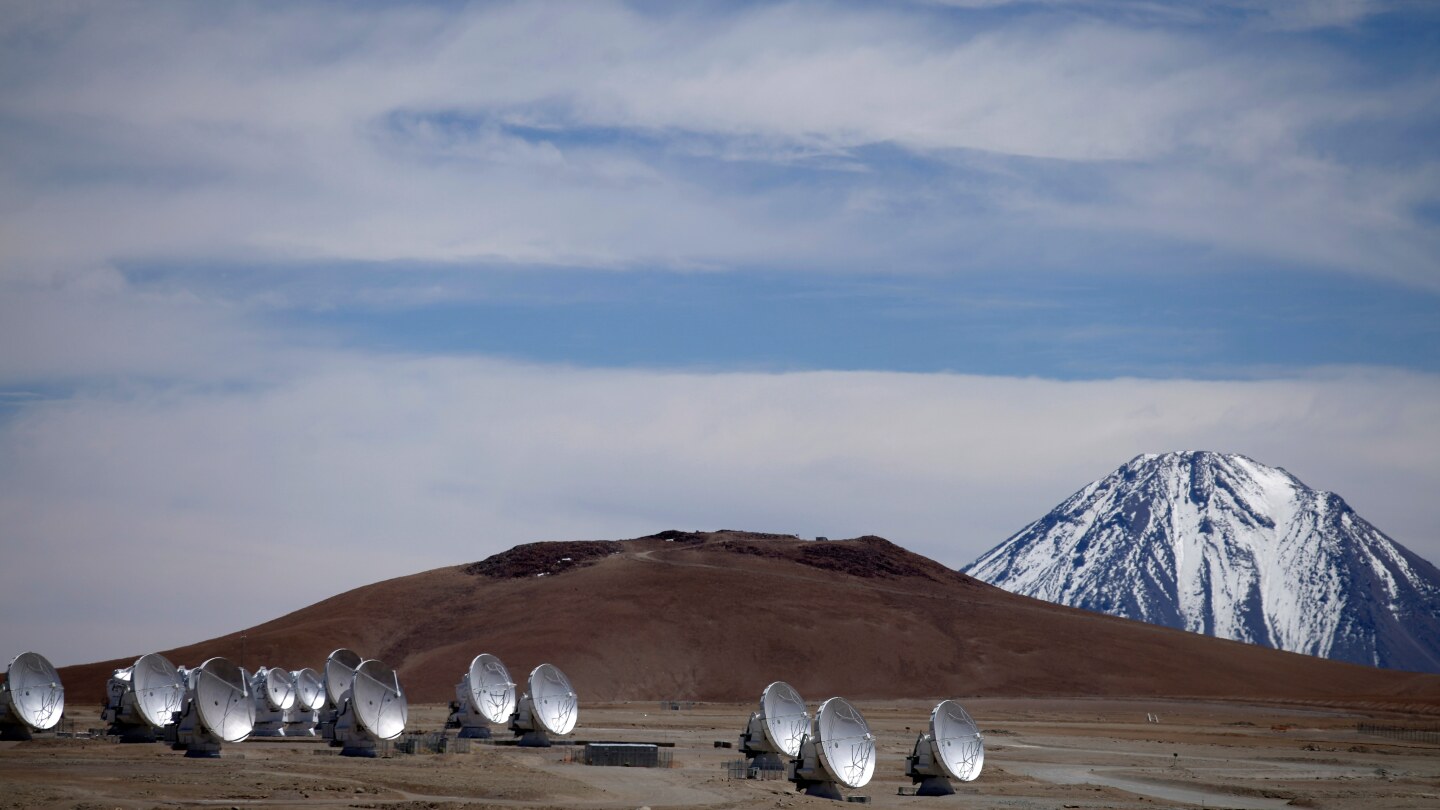
In a groundbreaking discovery, China’s Large High Altitude Air Shower Observatory (LHAASO) has unveiled a pivotal mechanism behind the formation of high-energy cosmic rays. The research, led by an international team of scientists, reveals that black holes, particularly those in binary systems, act as powerful particle accelerators, contributing significantly to the production of cosmic rays in the Milky Way. This finding not only addresses a long-standing mystery in astrophysics but also deepens our understanding of extreme physical processes in black hole systems. Cosmic rays, primarily composed of protons, are charged particles originating from outer space. Their origin has been a central question in modern astrophysics for decades. The LHAASO team focused on the ‘knee’ region of the cosmic ray energy spectrum, a critical turning point around 3 PeV (peta-electron volt), which has puzzled researchers for nearly 70 years. The study identified microquasars—black hole systems that accrete material from companion stars—as the likely sources of this phenomenon. These microquasars generate relativistic jets, which accelerate particles to ultra-high energies. For instance, the microquasar SS 433 was found to produce proton energies exceeding 1 PeV, equivalent to the energy released by 400 trillion hydrogen bombs per second. Similarly, gamma rays from the microquasar V4641 Sgr reached 0.8 PeV, suggesting parent particle energies surpassing 10 PeV. The findings, published in *National Science Review* and *Science Bulletin*, highlight the role of black holes as cosmic particle accelerators. Located in Sichuan Province at an elevation of 4,410 meters, LHAASO’s advanced equipment enabled precise measurements of cosmic ray energy spectra, revealing unexpected structures. This discovery not only resolves the ‘knee’ mystery but also provides crucial evidence for understanding the origins of cosmic rays. LHAASO, designed and operated by Chinese scientists, has positioned China at the forefront of high-energy cosmic ray research, contributing to global advancements in astrophysics.
分类: science
-

DNA study reveals East-West exchanges over 2,000 years ago
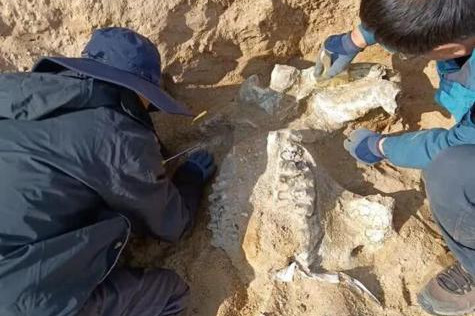
A groundbreaking DNA analysis of horse bones unearthed from the mausoleum of Emperor Wen of the Western Han Dynasty (206 BC-AD 24) has revealed significant evidence of cultural and trade exchanges between the dynasty and Central Asia over two millennia ago. The study, published in the journal Archaeology and Cultural Relics in September, identified two distinct mitochondrial haplogroups in the horses buried alongside the emperor. One belonged to haplogroup G, commonly found in Central Asia, while the other was of haplogroup Q, typical of East Asia, indicating different maternal origins. This discovery provides the first genetic confirmation of the presence of both Central Asian and local horse breeds in the imperial court during Emperor Wen’s reign. The mausoleum, known as the Baling Mausoleum, is located in Xi’an, Shaanxi province. Hu Songmei, a key contributor to the study, emphasized the importance of this finding, noting that it predates Zhang Qian’s official mission to the Western Regions and offers new insights into early Han Dynasty interactions with Eurasia. The horses, believed to be military steeds, were buried in pits symbolizing government institutions, reflecting the emperor’s emphasis on military preparedness and martial strength. The study also highlights the broader cultural and political significance of the mausoleum, which was designed to mirror the emperor’s governance and daily life.
-

Chinese scientists develop breakthrough method for aromatic amine applications
A groundbreaking advancement in chemical synthesis has been achieved by a Chinese research team, led by Zhang Xiaheng from the Hangzhou Institute for Advanced Study, University of Chinese Academy of Sciences. Their innovative method, recently published in the prestigious journal Nature, revolutionizes the application of aromatic amines, offering a safer and more efficient alternative to traditional industrial processes. Aromatic amines, essential components in pharmaceuticals, agrochemicals, and natural products, have long been underutilized due to the inherent risks and inefficiencies of conventional methods. For over a century, industries have relied on converting aromatic amines into diazonium salts, which are highly explosive and unstable. This process also suffers from excessive copper reagent consumption and limited substrate compatibility. To overcome these challenges, the team dedicated three years to developing a novel direct deaminative functionalization technology. This method utilizes common and inexpensive laboratory reagents, enabling the efficient conversion of inert aromatic carbon-nitrogen bonds into various crucial chemical bonds. The new approach is highly versatile, applicable to nearly all types of medicinal heteroaromatic amines and aniline derivatives, regardless of their electronic properties or amino group positions. It also supports kilogram-scale production through straightforward operations. Zhang emphasized that this breakthrough opens new pathways for rapidly constructing complex molecules from readily available starting materials, significantly advancing research and development in medicinal chemistry.
-

Preparations begin for new space mission
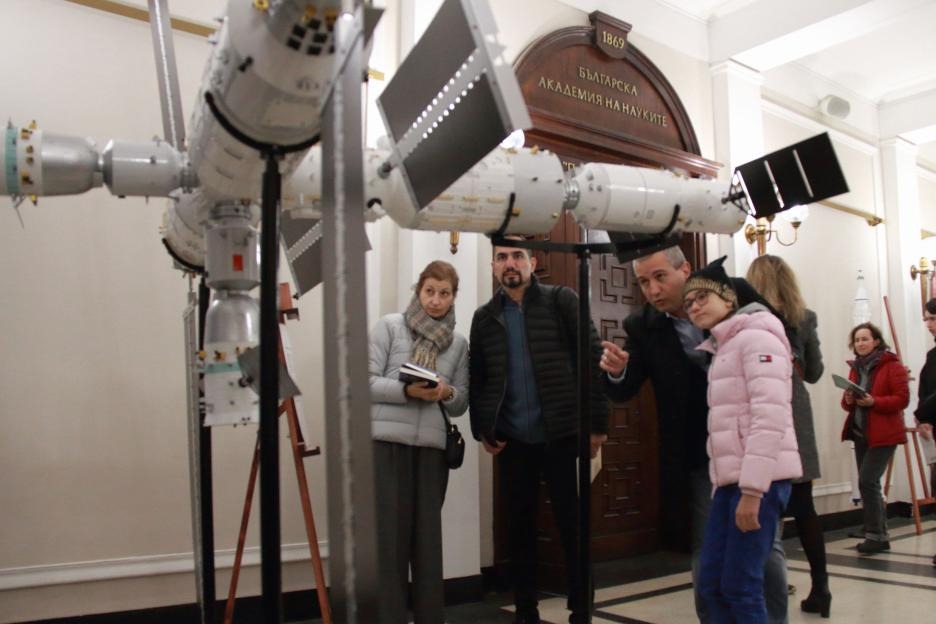
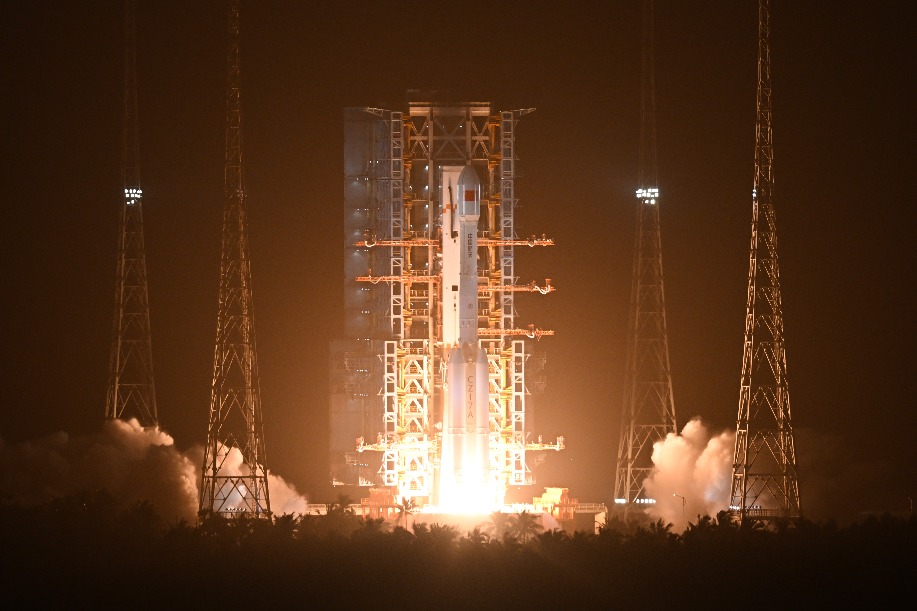
China has initiated preparations for the launch of the unmanned Shenzhou XXII spacecraft, which will deliver essential supplies and equipment to the Tiangong space station. Zhou Yaqiang, a senior engineer at the China Manned Space Agency, confirmed that all systems involved in the mission are undergoing rigorous testing and preparation. The spacecraft, originally intended to transport the Shenzhou XXII crew in April 2026, has been repurposed as a standby crew ship following the unexpected use of the Shenzhou XXI spacecraft for the return of the Shenzhou XX astronauts. The Shenzhou XX crew, who spent a record-breaking 204 days in orbit, returned safely to Earth despite minor damage to their capsule’s viewport window, likely caused by space debris. The astronauts are now in medical quarantine and will undergo comprehensive health evaluations before meeting the media. Additionally, four mice that accompanied the Shenzhou XXI mission to Tiangong have returned to Earth and are being studied by researchers at the Chinese Academy of Sciences. These studies aim to provide insights into the effects of space environments on living organisms. Other biological and scientific samples from the mission are also being analyzed to advance space research.
-

Chinese scientists discover lunar rust, revealing new oxidation process on the moon
In a groundbreaking discovery, Chinese scientists have identified micrometer-sized crystals of hematite and maghemite in lunar soil samples retrieved by the Chang’e 6 mission from the moon’s far side. Published in the journal Science Advances, this finding unveils a previously unknown oxidation process on the moon, challenging the long-held belief that the lunar surface is entirely in a reduced state with minimal oxidation. The research, conducted by Shandong University, the Institute of Geochemistry of the Chinese Academy of Sciences, and Yunnan University, analyzed samples from the South Pole-Aitken Basin, the largest and oldest known impact basin in the solar system. Using advanced techniques such as micro-area electron microscopy, electron energy loss spectroscopy, and Raman spectroscopy, the team confirmed the native origin of these iron oxides, ruling out contamination from Earth. Unlike Earth, where rust forms through water and oxygen interactions, the moon’s ‘rust’ originates from violent asteroid impacts. These impacts created transient high-oxygen-fugacity gas environments, oxidizing iron in troilite minerals and forming hematite through vapor-phase deposition at 700 to 1,000 degrees Celsius. This process also produced magnetic minerals like magnetite and maghemite, which may explain the magnetic anomalies observed around the SPA Basin. The findings not only enrich our understanding of the moon’s evolutionary history but also provide a scientific basis for future lunar studies. The Chang’e 6 mission, launched in May 2024, successfully retrieved 1,935.3 grams of samples from the moon’s far side, marking a significant milestone in lunar exploration.
-

Crew of Shenzhou XX returns
The Shenzhou XX mission crew, consisting of Senior Colonel Chen Dong, Colonel Chen Zhongrui, and Colonel Wang Jie, successfully returned to Earth on Friday afternoon after an extended stay aboard the Tiangong space station. The astronauts landed at the Dongfeng Landing Site in Inner Mongolia at 4:40 pm, following a five-hour journey from space. Their return was delayed by nine days due to suspected space debris damage to the Shenzhou XX spaceship’s viewport window. Upon landing, ground recovery personnel from the Jiuquan Satellite Launch Center conducted safety checks and a preliminary health assessment before assisting the crew out of the capsule. The astronauts shared their experiences in a live broadcast with China Central Television, expressing pride in their mission and gratitude for the support that ensured their safe return. Chen Dong emphasized the challenges of space exploration, while Wang Jie highlighted the importance of continued dedication to this endeavor. The Shenzhou XX crew, representing China’s 15th manned spaceflight, spent 204 days in space, completing four spacewalks and numerous scientific tasks. Their return was rescheduled after engineers conducted thorough safety assessments, ultimately deciding to use the Shenzhou XXI spaceship’s reentry capsule for their journey back. The China Manned Space Agency announced plans to launch the Shenzhou XXII spaceship to dock with the Tiangong space station in the near future.
-

Should Hitler’s DNA have been studied – or just left alone?
A groundbreaking DNA analysis of Adolf Hitler’s blood has unveiled remarkable insights into the dictator’s ancestry and potential genetic predispositions. Conducted by a team of international experts, the study utilized an 80-year-old blood-stained fabric swatch from Hitler’s bunker sofa, where he ended his life in 1945. The findings, now under peer review, debunked long-standing rumors of Jewish ancestry and revealed that Hitler had Kallmann syndrome, a genetic disorder affecting sexual organ development. Additionally, his DNA showed a high predisposition for autism, schizophrenia, and bipolar disorder, though experts emphasize these are not diagnoses but indicators of genetic risk. The research has sparked ethical debates about stigmatization and the appropriateness of studying Hitler’s DNA. Prof Turi King, a leading geneticist involved in the project, stressed the importance of academic rigor and the inclusion of caveats to avoid sensationalism. The documentary ‘Hitler’s DNA: Blueprint of a Dictator,’ airing on Channel 4, explores these findings while addressing concerns about oversimplification and the potential for reinforcing harmful stereotypes. Historians and geneticists alike caution against reducing complex historical figures to their genetic makeup, emphasizing the interplay of environment, upbringing, and societal factors in shaping behavior.
-

All Shenzhou-XX astronauts out of return capsule
In a historic moment for China’s space program, the three astronauts of the Shenzhou-XX mission—Chen Dong, Chen Zhongrui, and Wang Jie—successfully exited their return capsule on Friday, November 14, 2025, at 5:21 pm Beijing Time. The crew had completed a remarkable 204-day mission in orbit, marking another milestone in China’s manned space exploration efforts. The China Manned Space Agency confirmed that all three astronauts are in excellent health following their return to Earth. Chen Dong, the mission commander, was the first to emerge from the capsule, solidifying his status as the first Chinese astronaut to accumulate over 400 days in space. This achievement underscores China’s growing capabilities in space technology and its commitment to advancing human spaceflight. The successful return of the Shenzhou-XX crew highlights the nation’s progress in long-duration space missions and paves the way for future endeavors, including the planned construction of a permanent space station.
-

Stunning aurora borealis observed over farm in Heilongjiang
On the evening of November 12, 2025, the night sky over Changshuihe Farm in Heilongjiang province was transformed into a canvas of natural wonder as the aurora borealis made a rare and mesmerizing appearance. The phenomenon, characterized by vibrant red and purple hues, captivated both local residents and professional photographers alike. Located in Heihe city, the farm is a subsidiary of the State-owned Beian Company under the Beidahuang Group, making the event even more extraordinary given its geographical setting. The aurora’s ethereal glow provided a once-in-a-lifetime opportunity for stunning photography, leaving onlookers in awe of nature’s grandeur. This rare occurrence in Northeast China has sparked widespread interest and admiration, highlighting the region’s unique potential for witnessing such celestial displays.
-

Shenzhou XX mission crew returns after debris delays landing
The Shenzhou XX mission crew successfully returned to Earth on Friday afternoon, marking the end of an extended stay aboard the Tiangong space station. The landing, initially scheduled for November 5, was delayed by nine days due to a suspected space debris impact that caused a cracked window on their spacecraft. The re-entry capsule, carrying mission commander Senior Colonel Chen Dong and crew members Colonel Chen Zhongrui and Colonel Wang Jie, touched down at the Dongfeng Landing Site in Inner Mongolia at 4:40 pm. The astronauts had to use the Shenzhou XXI mission’s re-entry capsule after their own vessel was deemed unsafe. Ground recovery personnel from the Jiuquan Satellite Launch Center conducted initial safety checks and assessed the crew’s health. The Shenzhou XXI mission crew had already taken over the space station on November 4, ensuring a smooth transition. This incident highlights the challenges of space exploration and the importance of contingency planning.