分类: science

  • 4 scientists awarded Shaw Prize in Hong Kong

    4 scientists awarded Shaw Prize in Hong Kong

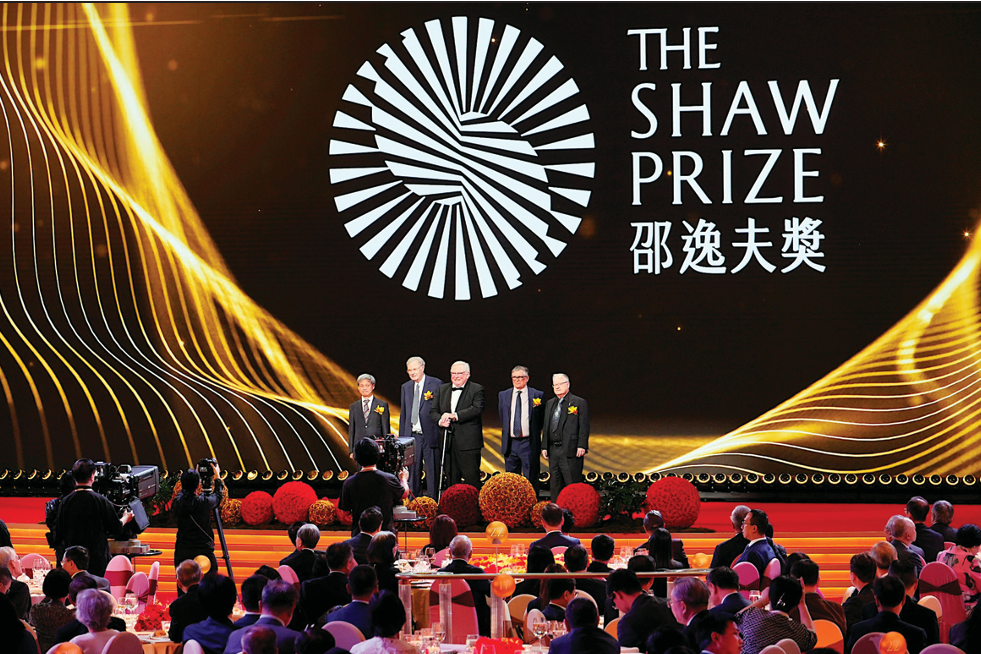
    On October 21, 2025, the prestigious Shaw Prize was awarded to four eminent scientists at a grand ceremony held at the Hong Kong Convention and Exhibition Centre. The laureates, recognized for their groundbreaking contributions across three categories, each received a cash award of $1.2 million. The event highlighted the global significance of their work and underscored Hong Kong’s commitment to fostering scientific innovation.

    In the field of Astronomy, the prize was jointly awarded to John Richard Bond, a professor at the Canadian Institute for Theoretical Astrophysics, and George Efstathiou, an astrophysics professor at the University of Cambridge. Their pioneering research in cosmology has led to precise determinations of the universe’s age, geometry, and mass-energy content.

    Wolfgang Baumeister, director emeritus and scientific member of the Max Planck Institute of Biochemistry, was honored in the Life Science and Medicine category. His development and application of cryogenic-electron tomography have revolutionized the three-dimensional visualization of biological samples in their natural cellular environments.

    Kenji Fukaya, a professor at the Beijing Institute of Mathematical Sciences and Applications and the Yau Mathematical Sciences Center of Tsinghua University, received the Mathematical Sciences prize. His innovative work on symplectic geometry, particularly the conceptualization of the Fukaya category, has had a profound impact on the field.

    Hong Kong’s Chief Executive, John Lee, lauded the laureates for their exceptional contributions to science and civilization. He emphasized the Hong Kong Special Administrative Region’s dedication to advancing innovation and technology through substantial investments in research and development. Lee also paid homage to the late physicist Chen Ning Yang, a Nobel laureate and founding member of the Shaw Prize, for his transformative influence on modern physics and his commitment to China’s scientific and educational progress.

    Established in 2002 and managed by the Shaw Prize Foundation, the Shaw Prize has been awarded annually since 2004, celebrating remarkable scientific achievements on an international scale.
  • Mosquitoes found in Iceland for first time after record heat

    Mosquitoes found in Iceland for first time after record heat

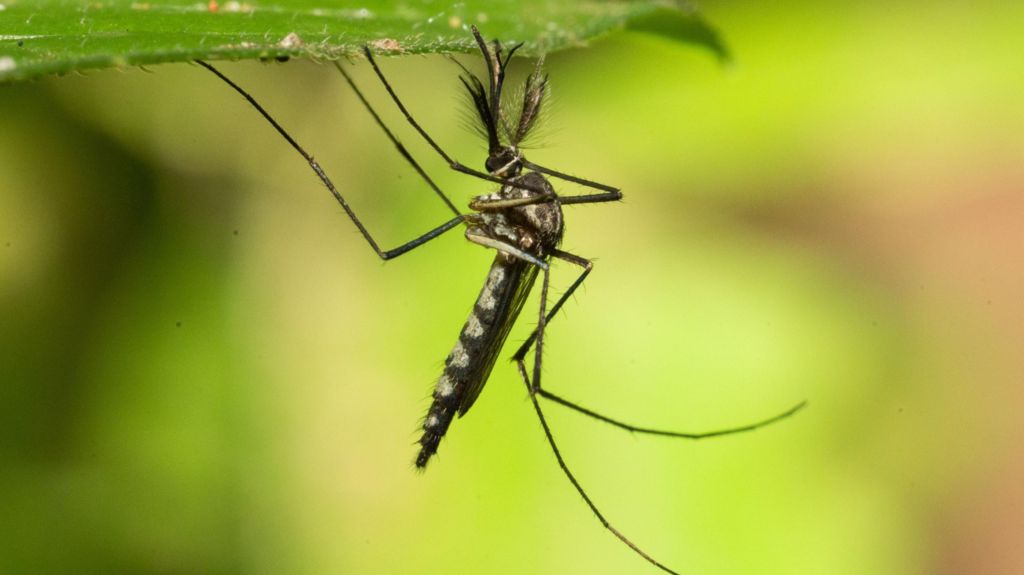
    For the first time in history, mosquitoes have been detected in Iceland, a country previously known as one of the world’s only mosquito-free zones alongside Antarctica. This unprecedented discovery comes after Iceland experienced record-breaking heat this spring, raising concerns about the impact of climate change on delicate ecosystems. The mosquitoes were found by Bjorn Hjaltason, an insect enthusiast, who encountered them while observing moths using wine-soaked ropes in Kjós, a glacial valley southwest of Reykjavik. Hjaltason identified two female mosquitoes and one male, later confirmed to be of the species *Culiseta annulata*, one of the few mosquito species capable of surviving winter. The Icelandic Institute of Natural History verified the discovery, with entomologist Matthías Alfreðsson noting that the species is common in parts of Europe and North Africa but its arrival in Iceland remains a mystery. Iceland’s cold climate and lack of stagnant water have historically prevented mosquito populations from thriving. However, this year’s extreme temperatures, including a record-breaking 26.6°C (79.8°F) in May, may have created favorable conditions for their survival. A June study by the Global Heat Health Information Network highlighted the potential for significant ecological impacts as ecosystems adapted to cold climates face unprecedented temperature shifts. Hjaltason speculated that the mosquitoes may have arrived via ships or containers, though further monitoring is needed to determine if the species has become established in Iceland. This discovery underscores the broader implications of climate change, with the UN’s climate body confirming that human activities have unequivocally contributed to global warming.

  • Soil sample study offers clues on lunar water evolution

    Soil sample study offers clues on lunar water evolution

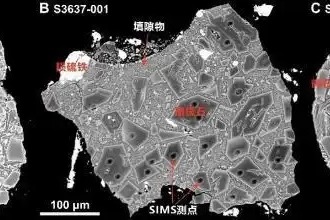
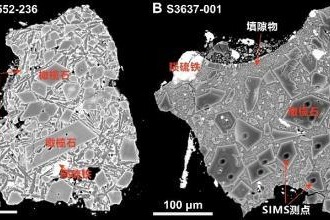
    A groundbreaking study conducted by Chinese scientists on a 2-gram lunar soil sample from the Chang’e 6 mission has uncovered rare CI chondrite impact residues, shedding light on the mass transfer processes within the inner solar system and offering fresh perspectives on the distribution and evolution of water on the moon. The research, spearheaded by a team from the Guangzhou Institute of Geochemistry under the Chinese Academy of Sciences, was published in the prestigious journal Proceedings of the National Academy of Sciences on October 21, 2025. CI chondrites, also known as Ivuna-type carbonaceous chondrites, are exceptionally rare meteorites with a primitive chemical composition akin to the sun’s nonvolatile elements. These meteorites, rich in water and volatiles, primarily formed in the outer solar system and migrated into the asteroid belt during the early stages of planetary formation. The discovery of CI chondrite residues in the lunar soil suggests that such materials can travel to the Earth-moon system. Furthermore, the research team posits that the water with positive oxygen isotope characteristics previously detected in lunar samples likely originated from impacts by these meteorites. This revelation opens new avenues for future studies on the sources and evolution of water on the lunar surface.

  • Chinese telescope for advanced solar research now operational

    Chinese telescope for advanced solar research now operational

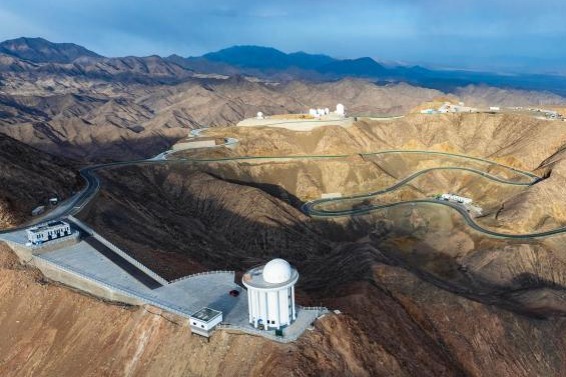
    China has achieved a groundbreaking milestone in solar research with the official commissioning of the world’s first mid-infrared solar magnetic-field telescope. Known as the Accurate Infrared Magnetic Field Measurements of the Sun (AIMS), this cutting-edge instrument has successfully passed national acceptance, marking its transition from construction to active scientific use. Developed under the leadership of the National Astronomical Observatories of the Chinese Academy of Sciences, the telescope boasts an innovative off-axis optical system design and is entirely composed of domestically produced components, underscoring China’s growing prowess in independent astronomical innovation. The AIMS telescope fills a critical gap in mid-infrared solar magnetic field observations, providing invaluable data for advanced studies in solar physics and space weather forecasting. Its operational status is expected to significantly enhance China’s capabilities in understanding solar phenomena and mitigating the impacts of space weather on Earth. This achievement not only represents a leap forward for Chinese astronomy but also positions the country as a global leader in solar research technology.

  • Scientists discover rare meteorite relics in Chang’e 6 lunar samples

    Scientists discover rare meteorite relics in Chang’e 6 lunar samples

    In a groundbreaking discovery, scientists analyzing lunar samples from China’s Chang’e 6 mission have uncovered rare meteorite relics that could revolutionize our understanding of mass transfer within the Solar System. The findings, published in the prestigious journal *Proceedings of the National Academy of Sciences*, were led by a research team from the Guangzhou Institute of Geochemistry under the Chinese Academy of Sciences.

  • Two Chinese scientists selected to lead disaster risk reduction project

    Two Chinese scientists selected to lead disaster risk reduction project

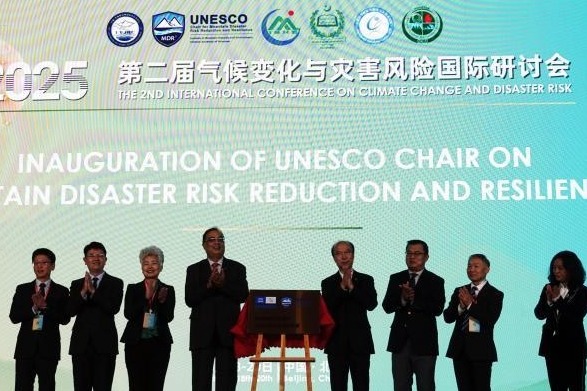
    Two distinguished Chinese scientists have been appointed to lead the UNESCO Chair for Mountain Disaster Risk Reduction and Resilience, a significant initiative aimed at addressing the escalating challenges posed by natural disasters in mountainous regions. The announcement was made during the unveiling ceremony held in Beijing on Sunday, coinciding with the opening of the 2nd International Conference on Climate Change and Disaster Risk.

    Cui Peng, an academician of the Chinese Academy of Sciences and chief scientist at the China-Pakistan Joint Research Center on Earth Sciences, has been named the chair of the project. Yang Saini, executive director of the Integrated Research on Disaster Risk program and a professor at Beijing Normal University, will serve as assistant chair.

    The initiative comes at a critical time when global climate change is exacerbating the frequency and intensity of natural disasters, particularly in mountainous areas. Liu Weidong, director-general of the international cooperation bureau of the Chinese Academy of Sciences, highlighted the growing complexity of these disasters, which are becoming harder to predict and mitigate.

    Cui Peng emphasized the vulnerability of mountainous regions, which account for 70% of China’s territory and 30% of the global land area. He stressed that these regions must not be overlooked in the pursuit of high-quality development. The UNESCO Chair aims to reduce the loss of life and property caused by disasters and explore ways to integrate disaster reduction with regional economic development.

    Yang Saini noted that China will leverage global resources and share its extensive experience in disaster risk reduction through the UNESCO platform, while also adopting effective international practices. Shahbaz Khan, director of the UNESCO Beijing Office, congratulated the scientists and underscored the importance of the UNESCO Chair program in advancing the United Nations Sustainable Development Goals and building capacity in the Global South.

    Wang Fawu, a professor at Tongji University and chairholder of the UNESCO Chair on Geoenvironmental Disaster Reduction, expressed confidence that the new chair would produce globally impactful deliverables, further enhancing China’s role in the global disaster risk community.

  • Almond-sized crab and tiny lantern shark discovered in Australia

    Almond-sized crab and tiny lantern shark discovered in Australia

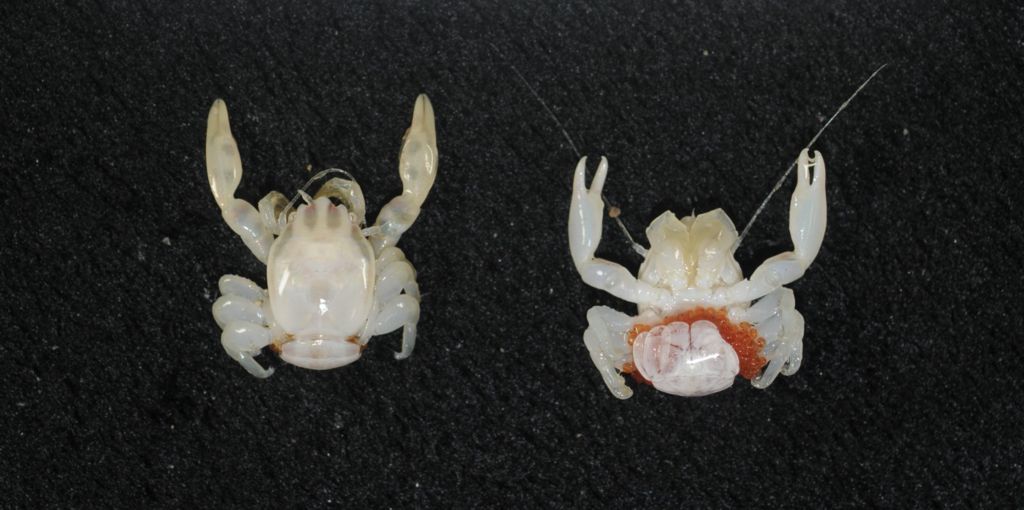
    In a groundbreaking expedition, Australian scientists have uncovered a treasure trove of new marine species in the uncharted depths of the Gascoyne Marine Park, located approximately 20 kilometers off the coast of Western Australia. The discoveries, made during a 2022 research voyage led by CSIRO, Australia’s national science agency, include a semi-transparent porcelain crab and a bioluminescent lantern shark, shedding light on the rich biodiversity of the region.

  • Nasa’s first female space commander: I didn’t want people to say ‘the woman made a mistake’

    Nasa’s first female space commander: I didn’t want people to say ‘the woman made a mistake’

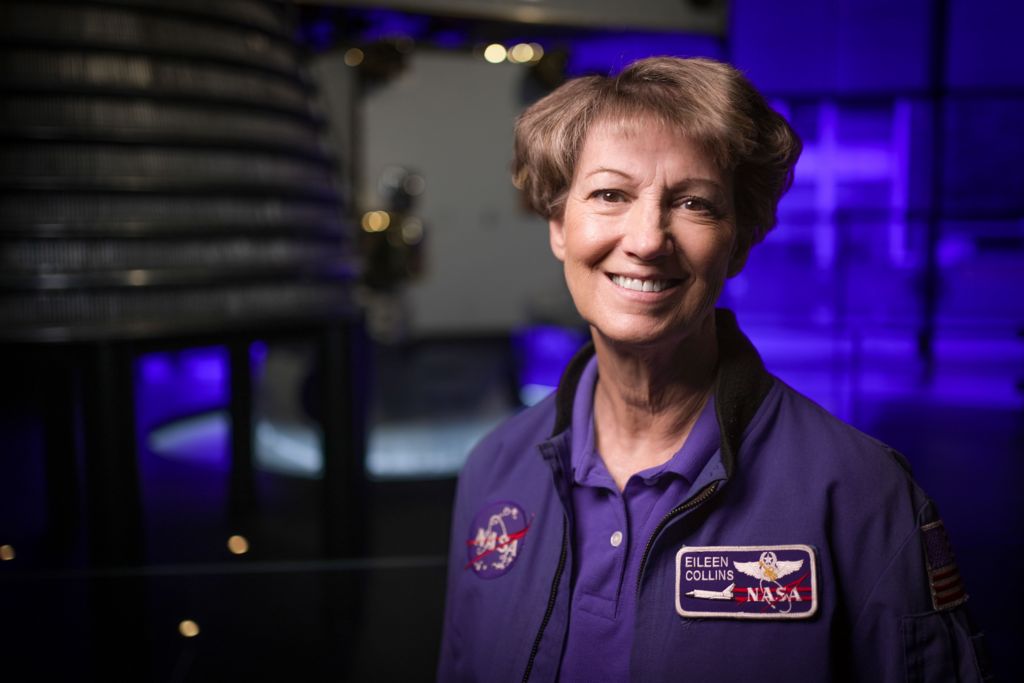
    Eileen Collins, a name synonymous with breaking barriers in space exploration, has etched her legacy as the first woman to pilot and command a spacecraft. Her journey, chronicled in the documentary *Spacewoman*, reveals the determination and resilience that propelled her to the stars. From a young age, Collins dreamt of becoming an astronaut, inspired by the Gemini astronauts. Despite the absence of female astronauts at the time, she vowed to become a ‘lady astronaut.’ Her path to NASA was unconventional: she joined the military, became a test pilot, and eventually earned her place in the astronaut program. Collins made history in 1995 as the first woman to pilot the Space Shuttle, a role she embraced with the weight of representing future generations of women in space. Her career was marked by groundbreaking achievements, including becoming the first female shuttle commander. Collins also navigated the challenges of balancing her career with motherhood, often highlighting that parenting was tougher than commanding a shuttle. Her leadership was tested during the aftermath of the Columbia disaster, where she took charge of the subsequent mission, demonstrating unwavering bravery. In 2005, during her final flight, Collins executed a daring maneuver to inspect and repair shuttle damage, ensuring her crew’s safe return. Now retired, Collins reflects on her career with pride, offering advice to aspiring astronauts: focus on education and determination. While she has no regrets about retiring, she admits she would seize the chance to return to space, even as an ‘old lady.’ Eileen Collins’ story is not just about space exploration but about shattering ceilings and inspiring generations to reach for the stars.

  • US soliciting new bids for Moon mission amid SpaceX delays: NASA chief

    US soliciting new bids for Moon mission amid SpaceX delays: NASA chief

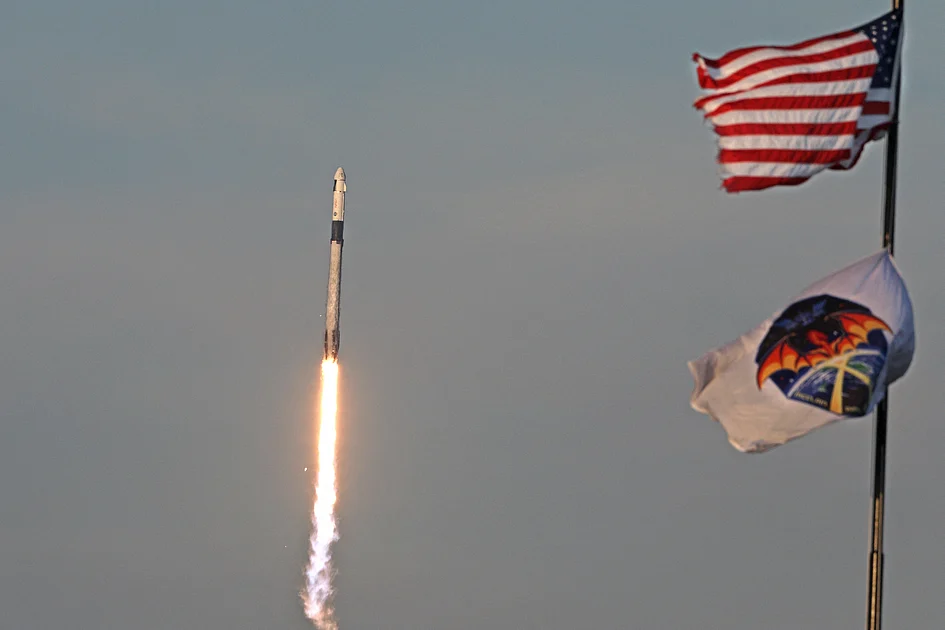
    NASA is intensifying its efforts to return humans to the Moon by soliciting new bids for its Artemis program, as SpaceX, Elon Musk’s aerospace company, faces delays. NASA Administrator Sean Duffy announced the move on Monday, emphasizing the urgency to compete against China’s advancing lunar ambitions. ‘We’re going to have a space race among American companies to see who can get us back to the Moon first,’ Duffy stated during an interview on Fox News. He revealed plans to open the contract to other competitors, including Jeff Bezos’ Blue Origin, to accelerate progress. SpaceX currently holds the contract for the fifth Artemis mission, but delays have prompted NASA to seek alternatives. Duffy, who also serves as the US Transportation Secretary, stressed the importance of innovation and competition in maintaining US dominance in space exploration. The Artemis program, initiated during President Donald Trump’s first term, aims to return astronauts to the Moon and eventually voyage to Mars. Despite setbacks, NASA remains committed to its timeline, with the Artemis 2 mission, featuring a crew of three US astronauts and one Canadian, scheduled for April 2026. This mission will mark the first crewed lunar flyby in over 50 years. NASA officials, including Lakiesha Hawkins, have reaffirmed their dedication to meeting these ambitious goals, even as they navigate challenges and rising global competition.

  • Chinese researchers make breakthrough in scanning the universe

    Chinese researchers make breakthrough in scanning the universe

    Chinese researchers have achieved a groundbreaking advancement in spectroscopic imaging, developing a technique that combines exceptional resolution with a panoramic view, revolutionizing the way the universe is scanned. Named RAFAEL (Yuheng in Chinese), this innovative technology, created by a team from Tsinghua University, is compact enough to fit on a chip the size of a mobile phone SIM card. The study, published in the prestigious journal Nature, highlights the chip’s ability to capture full spectral data with sub-angstrom resolution for approximately 10,000 stars per second. Professor Fang Lu, the lead researcher, emphasized that this technology could reduce the time required to compile complete spectra for all stars in the Milky Way from thousands of years to under a decade. The chip’s miniaturized design also makes it suitable for mounting on satellites or deep-space probes, paving the way for unprecedented spectral maps of the universe. The core innovation lies in resolving the long-standing trade-off between resolution and field breadth in spectral imaging. By employing advanced computational imaging methods and reconfigurable integrated photonics based on lithium niobate, the team achieved snapshot spectroscopy with ten-megapixel-level spatial resolution and sub-angstrom spectral resolution across visible and near-infrared wavelengths. This breakthrough significantly surpasses existing international counterparts, improving spectral resolution by two orders of magnitude. The technology’s practical applications extend beyond astronomy to fields such as material identification, plant health, autonomous driving, and atomic spectroscopy. Efforts are underway to implement the technique on giant telescopes at observatories in China and Spain. Professor Fang described the study as a beginning, showcasing how intelligent photonics can continue to push the boundaries of what light can reveal.