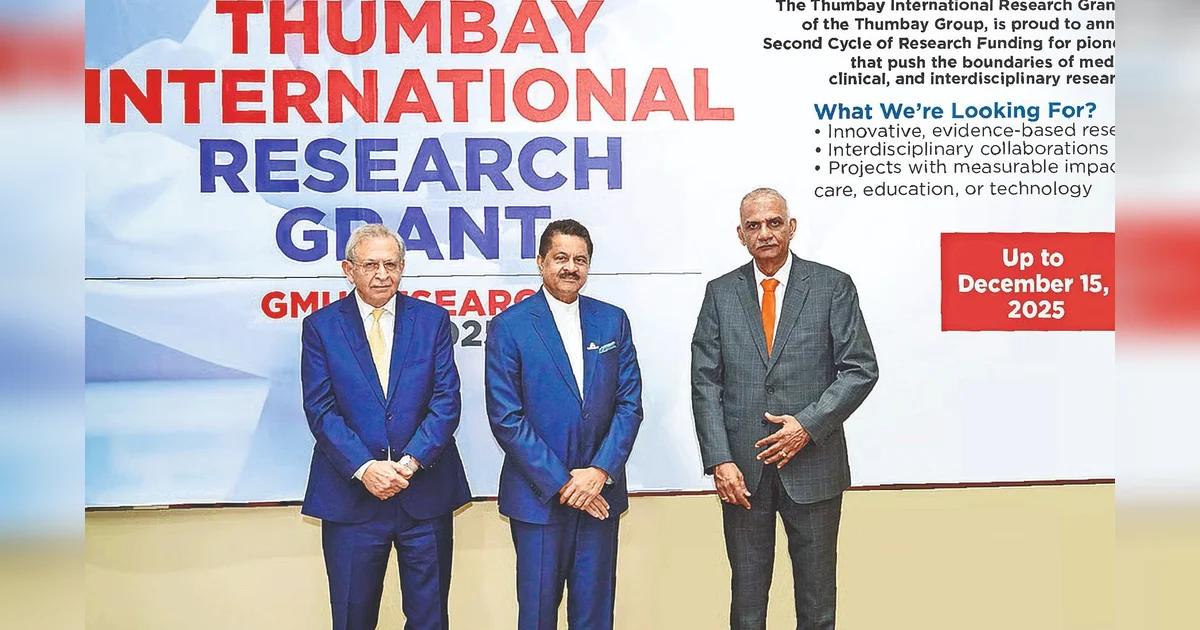
Gulf Medical University (GMU) and the Thumbay Group have announced an extension for the submission deadline of the Thumbay International Research Grant 2025-26, now set for December 15, 2025. This extension provides researchers, academicians, and healthcare innovators worldwide additional time to refine their proposals for one of the UAE’s most prestigious research funding initiatives. The grant, valued at Dh3 million, supports groundbreaking projects in medical, clinical, and interdisciplinary research, aiming to drive significant advancements in patient outcomes, healthcare systems, and medical education. Professor Dr. Manda Venkatramana, Chancellor of GMU, highlighted the grant’s role in fostering innovation and global collaboration, stating, ‘The Thumbay International Research Grant offers a platform for researchers to explore bold ideas and translate science into solutions that improve lives.’ The 2025-26 cycle focuses on high-impact areas such as precision oncology, AI in healthcare, drug discovery, and public health. The grant’s first cycle attracted 192 applications from 34 universities globally, with 14 projects selected for funding, including contributions from Harvard Medical School, the University of Arizona, and other renowned institutions. GMU’s initiative underscores its commitment to advancing healthcare research and innovation on a global scale.
分类: science
-
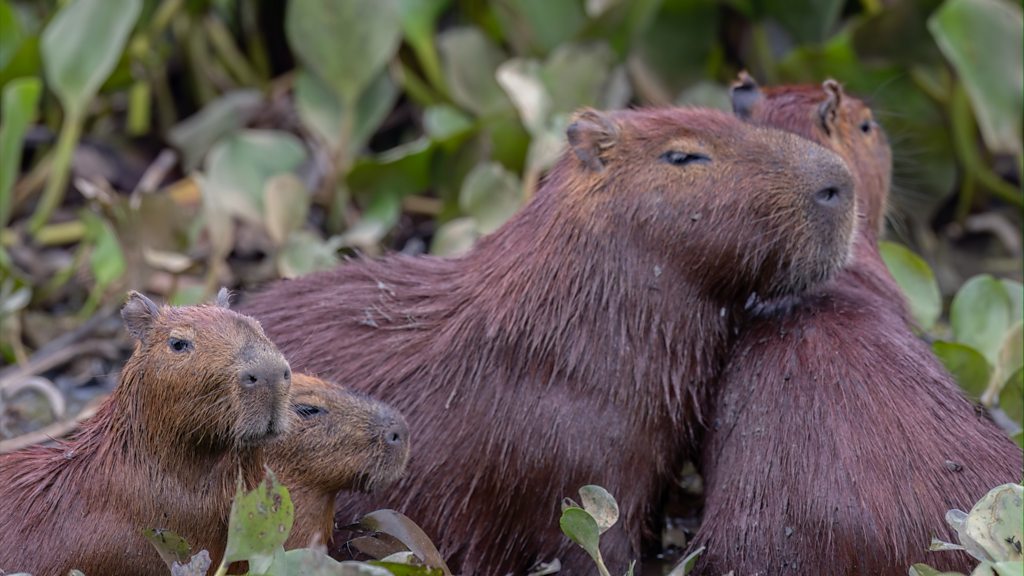
Why the Amazon rainforest is so important
In a compelling discussion on the significance of the Amazon rainforest, Hannah Gelbart, host of *What in the World*, engages with Graihagh Jackson, presenter of *The Climate Question*, to explore the profound impact of this ecological marvel on Earth. The Amazon, often referred to as the ‘lungs of the planet,’ plays a critical role in regulating global climate patterns. Spanning over 5.5 million square kilometers across nine countries, it is the largest tropical rainforest in the world. Its dense vegetation absorbs vast amounts of carbon dioxide, acting as a natural carbon sink and mitigating the effects of climate change. Beyond its environmental contributions, the Amazon is a biodiversity hotspot, home to millions of species, many of which are yet to be discovered. Indigenous communities also rely on the forest for their livelihoods and cultural heritage. However, deforestation, driven by agriculture, logging, and mining, poses a severe threat to this ecosystem. The conversation underscores the urgent need for global cooperation to protect the Amazon, emphasizing its irreplaceable role in sustaining life on Earth.
-
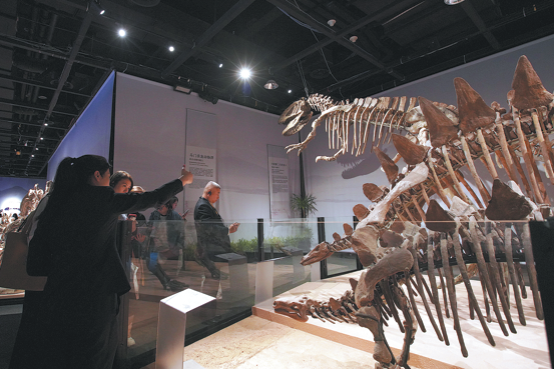
Down to the bones of the matter
The dream of resurrecting dinosaurs, once confined to the realms of science fiction, may become a reality within the next 100 to 200 years, thanks to advancements in artificial intelligence (AI) and genetic technologies. This groundbreaking perspective was shared by leading paleontologists at the international symposium ‘China’s Dinosaurs: From Research to Science Education,’ held in Shanghai from October 28 to 31. The event gathered over 20 top international experts to discuss the future of paleontology and China’s growing influence in the field. While the idea of dinosaur revival sparked lively debate, the symposium also highlighted China’s pivotal role in global dinosaur research, driven by its rich fossil discoveries and innovative public science initiatives. The ongoing ‘China Dinosaur World’ exhibition in Shanghai, featuring 118 representative dinosaur specimens from 12 national institutions, has drawn international acclaim. Experts like Xu Xing, a prominent Chinese paleontologist, emphasized that while current technology cannot resurrect dinosaurs using DNA, new methods involving bone proteins and AI offer promising avenues. British paleontologist Emily Rayfield highlighted AI’s transformative potential in understanding dinosaur biology. However, ethical considerations remain a significant hurdle. The symposium also underscored China’s contributions to paleontology, with nearly one-third of known dinosaur species discovered in the country. The event concluded with a focus on bridging scientific research with public education, as exemplified by the Shanghai exhibition, which has attracted nearly 400,000 visitors and garnered international interest for a global tour.
-
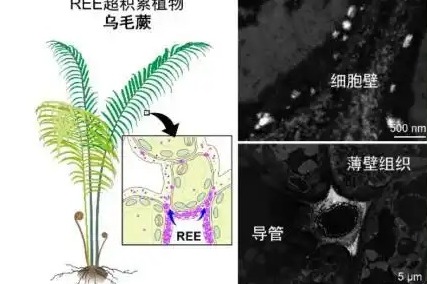
Scientists discover rare earth elements in ferns
In a groundbreaking scientific breakthrough, a team of Chinese researchers has uncovered the phenomenon of rare-earth mineralization in ferns, marking the first time such a discovery has been made in the plant kingdom. This finding, published in the prestigious international journal *Environmental Science & Technology*, could revolutionize the extraction of rare earth elements (REEs) by offering a cleaner and more sustainable alternative to traditional mining methods. The study, led by Zhu Jianxi of the Guangzhou Institute of Geochemistry under the Chinese Academy of Sciences, focused on *Blechnum orientale*, an evergreen fern known as a hyperaccumulator plant. The researchers discovered that this fern not only absorbs and concentrates REEs from the soil but also facilitates their self-assembly into a mineral called Monazite-(La) within its tissue cells. This biomineralization process, previously observed only in microorganisms and animals, represents a significant leap in understanding plant mechanisms. Unlike traditional rare-earth mining, which often causes severe environmental damage, this plant-based approach could enable the recovery of valuable REEs while simultaneously remediating contaminated soil and restoring ecosystems. The discovery also highlights the potential of nearly a thousand known hyperaccumulator plants for sustainable resource utilization. The ‘biomonazite’ formed by *Blechnum orientale* is pure and nonradioactive, making it a promising candidate for green extraction methods. This research not only advances scientific knowledge but also offers a practical solution to the global challenges of resource scarcity and environmental degradation.
-
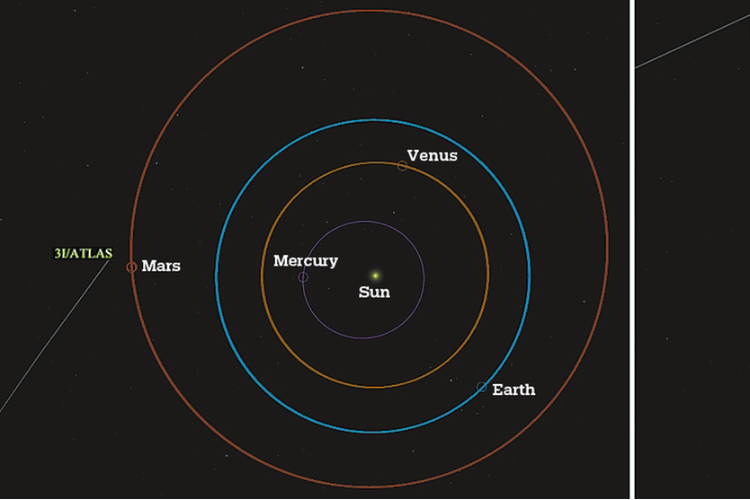
Nation’s Mars orbiter snaps images of interstellar object
In a groundbreaking achievement, China’s Mars orbiter, part of the Tianwen 1 mission, has successfully captured images of a rare interstellar comet, 3I/ATLAS, as it traversed the solar system. The China National Space Administration (CNSA) announced the milestone on Thursday, marking a significant advancement in space exploration. The comet, first discovered on July 1 by NASA-funded ATLAS telescopes, is the third confirmed interstellar object to pass through our solar system, following 1I/’Oumuamua and 2I/Borisov. The Tianwen 1 orbiter, positioned approximately 29 million kilometers from the comet, executed one of the closest observations of such a celestial body. Scientists and engineers meticulously planned the observation, conducting extensive calculations and simulations to optimize the imaging process. The comet, estimated to be between 3 to 11 billion years old, offers invaluable insights into the composition and evolution of exoplanets. Its unique characteristics, including a tail direction opposite to typical comets, have piqued scientific interest, providing a rare opportunity to study extraterrestrial icy objects. This observation also serves as a technical test for the upcoming Tianwen 2 asteroid exploration mission, launched in May. The discovery underscores China’s growing prowess in space exploration and its contribution to understanding the cosmos.
-

Large dolomite deposit discovered in Gansu
A significant discovery of a magnesium-rich dolomite deposit has been made in Pingliang city, Gansu province, marking a pivotal moment in China’s mineral exploration efforts. The Gansu Provincial Department of Natural Resources announced on Wednesday that the deposit, located in the Zhuanmatai area of Kongtong district, boasts an estimated resource of 700 million metric tons. This find is characterized by five layered ore bodies, each with an average magnesium oxide (MgO) content of 20.67%, indicating high-quality reserves suitable for magnesium smelting. The deposit’s attributes—large scale, shallow depth, gentle dip angle, and stable thickness—make it particularly conducive to open-pit mining. Beyond the 700 million tons of magnesium-smelting dolomite, an additional 300 million tons of construction-grade dolomite have been identified. Dolomite’s versatility extends to various industries, including refractories, metallurgy, glassmaking, and ceramics, promising substantial opportunities for integrated resource utilization and industrial advancement.
-

Newly launched intl alliance to safeguard plant biosafety, food security
In a significant step toward global agricultural sustainability, the BRI International Alliance of Science and Technology Innovation in Plant Protection was officially launched during the 2nd International Symposium on Plant Biosafety in Guangzhou, Guangdong province. The event, held from November 2 to 6, brought together over 250 experts and scholars from 18 countries and more than 40 domestic institutions. The alliance, a collaborative effort between the Chinese Academy of Agricultural Sciences’ Institute of Plant Protection and the Center for Agriculture and Bioscience International (CABI), aims to strengthen international cooperation in plant health and food security. Sun Tan, vice-president of the academy, emphasized the critical role of plant biosafety in addressing global food security and sustainable agricultural development. He highlighted that plant pests and diseases cause annual yield losses of 20 to 40 percent, resulting in over $220 billion in economic damage worldwide. The academy pledged to enhance international collaboration in biosafety research, improve cooperation mechanisms, and promote joint innovation platforms. Daniel Elger, CEO of CABI, underscored the fruitful partnership between China and CABI over the past three decades, expressing commitment to deepening collaboration for the global sharing and application of plant biosafety management technologies. The symposium also facilitated discussions on pest and disease outbreak patterns, integrated pest management, and innovative biosafety governance approaches.
-

Solar storms bring colorful northern lights to unexpected places
A series of powerful solar storms have painted the night skies with dazzling auroras, reaching regions far beyond their typical polar confines. On Tuesday night, vibrant northern lights were observed in unexpected locations across Europe, including Hungary and the United Kingdom, while in the U.S., the celestial display stretched as far south as Kansas, Colorado, and Texas. These geomagnetic disturbances, classified as severe by space weather forecasters, have also caused minor disruptions to GPS communications and power grids, according to Shawn Dahl of the National Oceanic and Atmospheric Administration (NOAA).
The surge in solar activity has prompted NASA to delay the launch of Blue Origin’s new rocket, which was set to carry Mars orbiters, until space weather conditions stabilize. Over the past few days, the sun has emitted multiple coronal mass ejections (CMEs), with two already reaching Earth and at least one more expected to arrive on Wednesday. Forecasters warn that this upcoming solar outburst could be the most intense of the trio, potentially amplifying the brightness and southern reach of the auroras depending on its interaction with Earth’s magnetic field and atmosphere.
This heightened solar activity is part of the sun’s 11-year cycle, currently at its peak phase, which has made auroras more frequent and widespread. The phenomenon occurs when charged particles from the sun collide with Earth’s atmosphere, creating the mesmerizing light displays known as the northern and southern lights. Last year, the strongest geomagnetic storm in two decades illuminated skies across the Northern Hemisphere, followed by another powerful solar storm that brought auroras to unexpected locations like Germany, the United Kingdom, and New York City.
While auroras are a breathtaking spectacle, solar storms can also pose significant risks. They have the potential to disrupt power grids, interfere with air traffic control, and scramble radio and GPS communications. Historical events, such as the 1859 solar storm that set telegraph lines on fire and the 1972 storm that detonated magnetic sea mines off Vietnam’s coast, underscore the unpredictable and occasionally hazardous nature of space weather. Despite advancements in forecasting, experts can only provide alerts days in advance, leaving limited time for preparation.
For those eager to witness the auroras, NOAA’s Space Weather Prediction Center website and aurora forecasting apps offer real-time updates. Skygazers are advised to seek out dark, quiet areas away from city lights, such as local or national parks, and to check weather forecasts to avoid cloud cover. Smartphone cameras can also capture subtle auroral details invisible to the naked eye, enhancing the experience of this natural wonder.
-

Tianwen 1 Mars orbiter captures rare images of interstellar comet 3I/ATLAS
In a groundbreaking achievement for China’s space exploration program, the Tianwen 1 Mars orbiter has successfully captured rare images of the interstellar comet 3I/ATLAS as it traversed the solar system. The China National Space Administration (CNSA) announced the discovery on November 6, 2025, marking a significant milestone in the ongoing Tianwen 1 mission. The comet, which passed near Mars on October 3, is only the third confirmed interstellar object ever observed, following 1I/’Oumuamua and 2I/Borisov. This remarkable feat underscores China’s growing capabilities in deep-space observation and its contributions to planetary science. The images provide valuable insights into the composition and behavior of interstellar comets, offering scientists a unique opportunity to study objects originating from beyond our solar system. The Tianwen 1 mission, launched in 2020, continues to deliver groundbreaking discoveries, solidifying China’s position as a key player in global space exploration.
-

China’s Mars orbiter observes interstellar object 3I/ATLAS
In a groundbreaking achievement, China’s Tianwen 1 Mars orbiter has successfully observed the interstellar object 3I/ATLAS using its advanced high-resolution camera. The China National Space Administration (CNSA) announced the milestone, highlighting that the spacecraft was approximately 30 million kilometers from the object during the observation, marking one of the closest encounters by a probe to date. The data captured by the orbiter revealed distinct cometary features, with researchers creating an animation from a series of images taken over 30 seconds to illustrate the object’s trajectory through space. These findings are now being analyzed for further scientific insights into 3I/ATLAS. This accomplishment not only underscores the extended mission success of Tianwen 1 but also serves as a critical technical test for the upcoming Tianwen 2 mission, launched in May 2025, which aims to collect samples from a near-Earth asteroid and explore a main-belt comet. The observation of such a faint celestial object demonstrates China’s growing capabilities in deep-space exploration and its commitment to advancing astronomical research.