分类: science

  • China’s 3 deep-sea manned submersibles have made over 1,700 dives to date

    China’s 3 deep-sea manned submersibles have made over 1,700 dives to date

    China’s fleet of three advanced manned submersibles has achieved a remarkable milestone by completing 1,746 deep-ocean dives, according to the Institute of Deep-sea Science and Engineering at the Chinese Academy of Sciences. The announcement made Wednesday in Sanya, Hainan Province, highlights the growing capabilities of China’s deep-sea exploration program.

    The three vessels—Fendouzhe (Striver), Shenhai Yongshi (Deep Sea Warrior), and Jiaolong—are projected to complete 314 dives during 2025 alone, demonstrating accelerated activity in underwater research. Each submersible has contributed unique achievements to marine science this year.

    Fendouzhe made history by conducting China’s inaugural manned scientific expedition beneath the ice-covered regions of the Arctic Ocean. The same vessel also facilitated an international collaborative mission to New Zealand’s Puysegur Trench, located off the southwestern coast of South Island, marking significant progress in global oceanographic cooperation.

    Meanwhile, Shenhai Yongshi has pioneered archaeological exploration in the deep sea, completing 18 dives along the northwest continental slope of the South China Sea. The submersible operated in coordination with unmanned underwater vehicles, leading to groundbreaking discoveries in deep-sea archaeology that reshape our understanding of maritime history.

    The cumulative achievements of these deep-sea vehicles represent China’s growing sophistication in underwater technology and oceanographic research, contributing valuable data to the global scientific community while pushing the boundaries of deep-sea exploration capabilities.

  • Human activity on Qinghai-Tibet Plateau dates back 100,000 years

    Human activity on Qinghai-Tibet Plateau dates back 100,000 years

    Groundbreaking archaeological research has fundamentally reshaped our understanding of human habitation on the Qinghai-Tibet Plateau, with new evidence pushing the timeline of human activity back to approximately 100,000 years ago. This revelation emerged from comprehensive findings presented by the Xizang Autonomous Region’s cultural heritage authorities during a recent press briefing in Lhasa.

    The discoveries form part of the ongoing national ‘Archaeological China’ initiative, which has conducted extensive fieldwork across the region since 2021. Archaeologists have executed 42 systematic excavations spanning 19 distinct locations, covering approximately 8,100 square meters of investigation. This methodological approach has enabled researchers to construct a continuous chronological narrative of human occupation across diverse geographical areas.

    The archaeological record now demonstrates eight significant Paleolithic sites, four Neolithic locations, six early metal age sites with burial complexes, and one major Tubo period settlement. Particularly noteworthy is the emergence of advanced blade technology in northern Xizang approximately 40,000 years ago, followed by the proliferation of microlithic tools around 10,000 years ago.

    Cultural development milestones indicate the region’s transition to Neolithic practices around 5,000 years ago, with copper implements appearing roughly 3,800 years ago and iron technology developing about 2,800 years ago. The rise of the Tubo Kingdom around 1,400 years ago represents the region’s entry into documented historical periods.

    Concurrently, Xizang has completed its fourth national cultural relics survey, revealing unprecedented growth in archaeological site identification. By May 31, researchers had re-examined over 4,200 previously recorded sites while adding 3,346 newly discovered locations. This brings the region’s total documented cultural heritage sites to 7,623, with particularly significant concentrations in Shigatse, Lhokha, and Ngari prefecture—each contributing over 500 new sites.

    According to Xu Shaoguo, deputy director of the regional cultural heritage bureau, Xizang now ranks among China’s most rapidly expanding regions for archaeological discovery while maintaining exceptionally low rates of cultural relic loss. The comprehensive survey has yielded new findings across all county-level administrative units, demonstrating the region’s extraordinary archaeological richness and preservation.

  • Dubai Ruler announces Great Arab Minds winner in medicine, hails research in heart health

    Dubai Ruler announces Great Arab Minds winner in medicine, hails research in heart health

    In a prestigious ceremony recognizing Arab intellectual achievement, His Highness Sheikh Mohammed bin Rashid Al Maktoum, Vice President and Prime Minister of the UAE and Ruler of Dubai, has announced Dr. Nabil Seidah as the 2025 Great Arab Minds laureate in medicine. The Egyptian-Canadian scientist, who serves as Director of the Neuroendocrine Research Unit at the Montreal Clinical Research Institute, received this honor for his groundbreaking work in cardiovascular health and cholesterol metabolism.

    Dr. Seidah’s pioneering research has fundamentally advanced our understanding of biological processes regulating cholesterol and fat metabolism within the human body. His decades of scientific investigation have directly contributed to the development of an entirely new class of cholesterol-lowering medications now widely prescribed globally to combat heart disease and reduce cardiovascular risks.

    The scope of Dr. Seidah’s scientific contribution is evidenced by his publication of over 820 research papers, which have garnered more than 71,000 citations within the scientific community—a testament to the significant impact of his work on medical science.

    Sheikh Mohammed emphasized the importance of recognizing Arab intellectual achievement, stating: ‘Medicine represents a humanitarian mission, and our region has historically played a profound role in developing medical sciences, practices, and research tools. The Great Arab Minds Award reorients the compass to its proper direction, celebrating the contributions of Arab individuals and presenting them as role models for future generations.’

    Now in its third edition, the Great Arab Minds initiative has established itself as the most prestigious recognition of intellectual achievement in the Arab world, often referred to as the ‘Arab Nobel.’ The program’s credibility received substantial validation when the 2024 award recipient in the same category, Professor Omar Yaghi, subsequently won the 2025 Nobel Prize in Chemistry.

  • Yearender-China Focus: China builds integrated, intelligent monitoring network to safeguard biodiversity

    Yearender-China Focus: China builds integrated, intelligent monitoring network to safeguard biodiversity

    A technological transformation is reshaping how China safeguards its natural heritage, replacing traditional manual surveys with an integrated network of advanced monitoring systems. Where researchers once carried heavy equipment through challenging terrain, a sophisticated ‘Five Platforms System’ now employs satellites, drones, monitoring towers, mobile patrols, and ground stations to conduct comprehensive biodiversity assessments.

    At the forefront of this revolution is the Satellite Application Center for Ecology and Environment (SACEE), where director Wu Jiyou explains the paradigm shift: ‘Previously, surveys were predominantly manual, limited in scope, slow and labor-intensive. Our integrated approach now covers larger areas, operates more efficiently, and is sustainable.’

    The system leverages China’s Gaofen satellite series, which provides frequent high-resolution data enhanced by hyperspectral imagery and lidar technology. Specialists like Wan Huawei have utilized these capabilities to address ecological challenges ranging from invasive Spartina alterniflora mapping to snow leopard conservation efforts through habitat connectivity analysis.

    On the grasslands of Inner Mongolia, engineers are building one of China’s most comprehensive biodiversity databases. Field engineer Wang Yongcai and his colleagues document grass species and ecosystem health during extensive summer fieldwork. ‘It’s demanding work, but we believe it’s extremely meaningful,’ says Wang, whose team has achieved over 80% accuracy in plant species identification in pilot areas.

    The technological advancement extends to specialized equipment including multifunctional ecological mobile patrol vehicles equipped with self-developed animal recognition models that automatically identify, count, and track wildlife populations. Innovation continues with four-legged robotic ‘dogs’ that autonomously navigate terrain, photograph vegetation, and transmit images in real-time for plant diversity surveys.

    According to SACEE chief scientist Gao Jixi, the system represents more than just monitoring tools: ‘It is a sophisticated, multidimensional network engineered specifically for ecological remote sensing needs. The integration of equipment, data and applications links every phase of the monitoring process, requiring extensive collaboration across regions and administrative levels.’

    This comprehensive approach supports China’s commitment to implementing the Kunming-Montreal Global Biodiversity Framework through sustained technological advancement in ecological monitoring capabilities.

  • Year-ender: China’s scientific achievements in 2025

    Year-ender: China’s scientific achievements in 2025

    China’s scientific landscape witnessed transformative breakthroughs throughout 2025, positioning the nation at the forefront of global technological advancement. The year’s achievements spanned multiple disciplines, demonstrating remarkable progress in both theoretical research and practical applications.

    In quantum technology, Chinese researchers achieved unprecedented computing stability, pushing the boundaries of qubit coherence and error correction. These developments have significant implications for cryptography, drug discovery, and complex system modeling. Parallel to these advances, China’s nuclear fusion program reached critical milestones, with experimental reactors sustaining plasma confinement for record durations, edging closer to viable commercial energy production.

    Space exploration efforts accelerated with multiple successful missions, including lunar sample-return operations and the deployment of next-generation orbital telescopes. The deep-sea exploration program simultaneously made groundbreaking discoveries, with manned submersibles documenting previously unknown marine ecosystems and geological formations at extreme depths.

    Interdisciplinary collaboration emerged as a defining characteristic of China’s 2025 scientific approach, with research institutions establishing unprecedented data-sharing protocols and international partnerships. The integration of artificial intelligence across research domains accelerated discovery timelines, particularly in materials science and biomedical engineering.

    These accomplishments reflect China’s strategic investment in research infrastructure and talent development, with particular emphasis on fostering young innovators and establishing world-class research facilities. The systematic approach to scientific advancement has created synergistic effects across industries, from renewable energy to telecommunications.

  • High-altitude discovery sheds light on early settlers of Qinghai-Tibet Plateau

    High-altitude discovery sheds light on early settlers of Qinghai-Tibet Plateau

    A groundbreaking archaeological discovery has reshaped our understanding of early human settlement patterns at extreme altitudes. Chinese researchers have unearthed a Paleolithic site dating back approximately 12,000 years near Tsochen Tso Lake in Daocheng county, located within Sichuan Province’s Garze Tibetan Autonomous Prefecture. This remarkable find sits at an elevation exceeding 4,300 meters—the highest-altitude evidence of ancient human activity ever documented on the Qinghai-Tibet Plateau.

    The excavation, led by the Sichuan Provincial Cultural Heritage Administration, has yielded more than 190 meticulously crafted stone artifacts. These tools predominantly consist of small flake implements and microblades, demonstrating sophisticated knapping techniques and precision retouching that produced razor-sharp edges capable of processing animal hides and meat efficiently.

    According to Zheng Zhexuan, head of the excavation team and director of the Paleolithic Archaeology Institute at the Sichuan Provincial Institute of Cultural Relics and Archaeology, this discovery forms a crucial component of the extensive Piluo site complex. This broader archaeological landscape, dating back over 200,000 years with an average altitude of 3,750 meters, represents the earliest, most expansive, and culturally richest known settlement on the plateau.

    “This finding indicates that ancient human communities strategically capitalized on warmer climatic intervals to establish settlements alongside plateau lakes more than ten millennia ago,” Zheng explained. “The site demonstrates characteristics of a repeatedly occupied habitat rather than a temporary campsite, suggesting these early populations had developed sustainable adaptive capabilities for high-altitude environments.”

    Ongoing multidisciplinary research at the Piluo site complex includes detailed chronology studies and environmental archaeology analyses. Scientists are working to reconstruct precise scenarios of daily life for these ancient plateau dwellers, potentially revealing new insights into human resilience and environmental adaptation strategies during the Paleolithic era.

  • China launches Long March 12A Y1 rocket, second stage enters planned orbit

    China launches Long March 12A Y1 rocket, second stage enters planned orbit

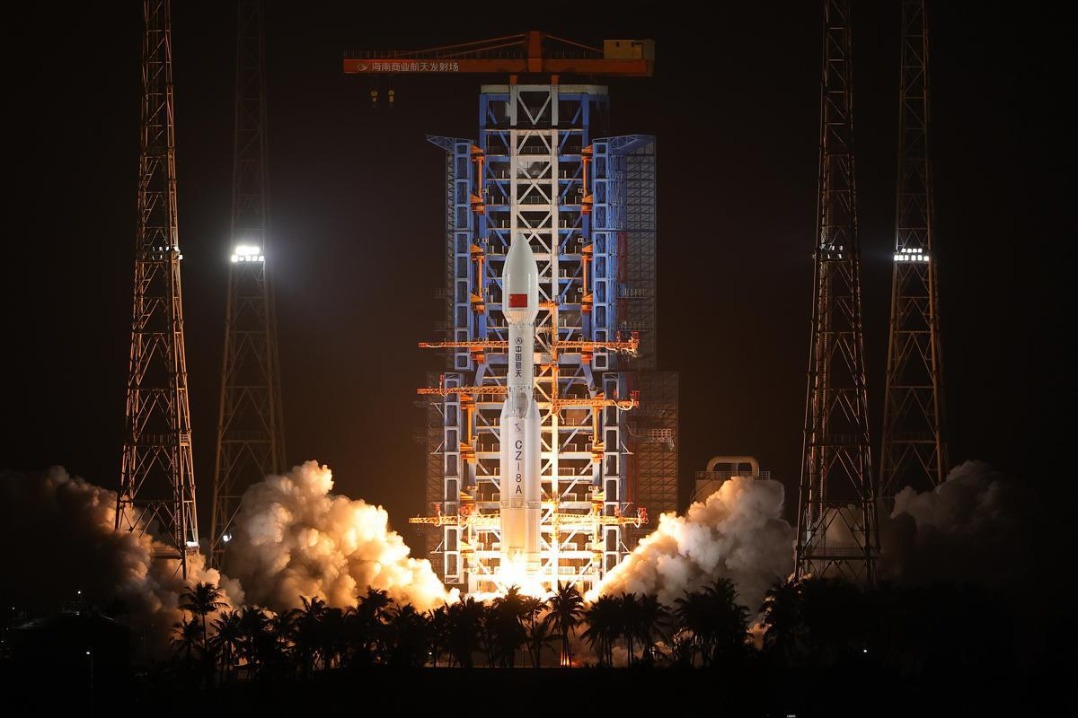
    China’s aerospace program marked another milestone on December 23, 2025, with the inaugural launch of the Long March 12A carrier rocket from the Jiuquan Satellite Launch Center in Northwest China. The mission demonstrated partial success as the rocket’s second stage successfully achieved its planned orbital insertion, while the first stage recovery attempt ended in failure.

    The Long March 12A represents China’s latest advancement in space launch technology, featuring reusable components designed to reduce mission costs and increase launch frequency. This launch was particularly significant as it tested critical technologies for rocket reusability – a key focus area for China’s ambitious space program.

    Despite the first stage recovery setback, mission controllers confirmed that the primary objective of delivering payloads to designated orbit was accomplished successfully. The rocket’s performance during ascent and second stage separation met all technical parameters, according to the China Aerospace Science and Technology Corporation (CASC).

    This launch occurs amid China’s accelerated space program that has recently included lunar missions, space station construction, and satellite constellation deployments. Aerospace engineers will analyze the first stage recovery failure data to improve future reusability attempts, with additional Long March 12A launches already scheduled for 2026.

  • US official time gets 4.8 microseconds slower over storm-triggered power outage

    US official time gets 4.8 microseconds slower over storm-triggered power outage

    A severe windstorm that battered Colorado last week has unexpectedly impacted the United States’ most precise timekeeping infrastructure, causing the national time standard to fall behind by 4.8 microseconds. The incident occurred when powerful winds knocked out power to the National Institute of Standards and Technology’s (NIST) Boulder campus, disrupting the operation of atomic clocks that maintain official US time.

    The disruption began on December 17, 2025, when utility power failed at NIST’s Colorado facility during the intense windstorm. Although backup generators were available, a subsequent failure in one of these critical backup systems caused approximately 16 atomic clocks to lose connection with NIST’s measurement and distribution systems. These clocks, including hydrogen masers and cesium beam instruments, normally maintain the nation’s time standard through a weighted average of their readings.

    According to NIST supervisory physicist Jeffrey Sherman, the lapse resulted in NIST’s Coordinated Universal Time (UTC) becoming 4.8 microseconds slower than the correct standard. To contextualize this deviation, NIST spokesperson Rebecca Jacobson noted that a human blink typically takes approximately 350,000 microseconds (0.35 seconds).

    While the time discrepancy would be imperceptible to the general public, experts warn that such deviations could have more serious implications for critical infrastructure systems. The official US time standard serves as a reference for telecommunications networks, GPS signals, financial transactions, and other time-sensitive applications where precision is paramount.

    As of December 22, utility power had been restored to NIST’s Boulder facilities, and assessment and repair activities are currently underway. The incident highlights the vulnerability of even the most sophisticated scientific infrastructure to extreme weather events and the importance of robust backup systems for maintaining critical national standards.

  • Chinese researchers pinpoint seed genes for enhancing food security

    Chinese researchers pinpoint seed genes for enhancing food security

    Chinese researchers have achieved a significant breakthrough in agricultural science by identifying crucial genetic markers that could revolutionize global food production. The Precision Seed Design and Breeding initiative, spearheaded by the Chinese Academy of Sciences, has successfully mapped key genes and regulatory networks essential for enhancing crop yields, improving quality, and strengthening resistance to environmental stresses.

    Since the program’s inception in 2019, scientists have conducted extensive genomic research targeting multiple agricultural challenges. The research team has specifically identified genetic components that contribute to increased nitrogen efficiency, reduced fertilizer dependency, and enhanced resilience against diseases and climate-related stressors. This comprehensive approach addresses both productivity and sustainability concerns in modern agriculture.

    The practical applications of this research are already underway across China. Researchers have developed 37 experimental crop varieties demonstrating superior yield characteristics and reduced environmental impact. These pilot varieties are currently undergoing large-scale field testing across 965,000 hectares of agricultural land, representing one of the most extensive agricultural research deployments in recent years.

    The scientific breakthrough holds particular significance for global food security initiatives. By identifying the genetic foundations of crop resilience and productivity, Chinese researchers have created a framework for developing climate-resistant agricultural systems. The research outcomes promise to reduce dependency on chemical fertilizers while maintaining high yield outputs, potentially transforming agricultural practices worldwide.

    The Precision Seed Design program represents China’s growing contribution to addressing global food challenges through advanced scientific research. The identified genetic markers could enable more precise breeding techniques, accelerating the development of crop varieties adapted to changing environmental conditions and increasing global food demands.

  • Yearender: China’s 2025 space endeavors have seen new milestones

    Yearender: China’s 2025 space endeavors have seen new milestones

    China’s space program concluded 2025 with unprecedented achievements, demonstrating remarkable capabilities in orbital operations and deep space exploration. The year witnessed two historic firsts: the successful execution of an emergency crew rescue mission and the launch of the nation’s inaugural asteroid sampling expedition.

    The Tianwen-2 probe embarked on its decade-long mission on May 29, marking China’s first venture to collect samples from asteroid 2016HO3 before proceeding to study main-belt comet 311P. This pioneering mission aims to analyze the physical properties, composition, and internal structures of these celestial bodies, potentially revolutionizing our understanding of small planetary formation and evolution.

    Orbital operations reached new heights of sophistication when the Shenzhou XX spacecraft developed critical viewport cracks from space debris impact shortly before its scheduled November return. In response, China executed two emergency procedures: the safe return of astronauts aboard the backup Shenzhou XXI spacecraft, and the rapid launch of unmanned Shenzhou XXII with repair equipment and supplies. This demonstrated unprecedented contingency response capabilities in human spaceflight history.

    Scientific research aboard the space station yielded extraordinary results, including the creation of spinor Bose-Einstein condensates using all-optical traps, establishment of quantum simulation platforms cooling atoms to picokelvin temperatures, and successful breeding of three generations of fruit flies in microgravity. The Shenzhou XX mission additionally produced high-quality protein crystals with potential cancer therapy applications, achieved record-high materials science temperatures exceeding 3,100°C, and conducted groundbreaking colloid crystallization studies.

    Lunar exploration advanced significantly with the return of experimental moon bricks after year-long space exposure, providing crucial data for future lunar construction. Analysis of Chang’e-6 far side samples revealed temperature differentials between the moon’s hemispheres, offering new insights into lunar geological evolution.

    International collaboration expanded through February’s agreement with Pakistan for astronaut training, reinforcing China’s commitment to global space cooperation. These achievements establish strong foundations for China’s ambitious plans: crewed lunar landings by 2030 and establishment of the International Lunar Research Station by 2035.