分类: science

  • China helps Indonesia restore its coral reefs

    China helps Indonesia restore its coral reefs

    A groundbreaking marine conservation initiative between China and Indonesia has achieved significant breakthroughs in coral reef restoration, demonstrating the power of international scientific collaboration in addressing oceanic environmental challenges. The joint research project on marine offshore ecological ranching technology, spearheaded by Shanghai Ocean University in partnership with Indonesian institutions, has transformed degraded marine areas into thriving underwater ecosystems.

    According to the latest survey data, coral coverage in the project area near Pulau Bonetambung island in Indonesia’s South Sulawesi province has shown extraordinary recovery. From October to December 2025, coral coverage surged from 10% to 22%, representing one of the most successful marine restoration efforts recorded in the region. Researchers have documented 132 distinct coral species, predominantly from the Acropora and Porites genera, establishing vibrant new habitats for marine biodiversity.

    The project’s success extends beyond coral regeneration to encompass the entire marine ecosystem. The research team, led by Professor Liu Bilin from Shanghai Ocean University, reports the return of high-trophic-level fish species including the eight-banded butterflyfish (Chaetodon octofasciatus) and bicolor parrotfish (Cetoscarus bicolor), indicating the establishment of a complete, self-sustaining food chain within the restored area.

    Advanced monitoring technologies have been deployed to ensure the project’s continued success. Underwater binocular cameras function as ‘ecological sentinels,’ providing real-time, high-definition monitoring of fish activity, biological distribution, and fouling organism growth without requiring frequent manual surveys. This technological innovation, as explained by Professor Zou Leilei, addresses the traditional limitations of marine environmental assessment.

    The project, currently in its second phase (2025-2027), is expanding both technically and geographically. Syiah Kuala University, another Indonesian institution with strong marine science expertise, has joined the collaboration, enhancing knowledge exchange and local capacity building. Training programs and joint research initiatives are being strengthened to cultivate Indonesian expertise in marine conservation, ensuring the long-term sustainability of these restoration efforts.

  • Nobel laureate inspires students in Beijing: the ‘Goldbach’s conjecture’ of life sciences

    Nobel laureate inspires students in Beijing: the ‘Goldbach’s conjecture’ of life sciences

    Nobel Prize-winning scientist Sir Paul Nurse presented a captivating analogy for one of biology’s greatest mysteries during an inspirational lecture to students in Beijing, framing a fundamental cellular question as life science’s equivalent of mathematics’ famous Goldbach Conjecture.

    The renowned geneticist and physiologist, who received the 2001 Nobel Prize in Physiology or Medicine for discoveries concerning cell cycle regulation, engaged young scholars with a thought-provoking hypothetical: what scientific question would he leave for prehistoric ancestors to accelerate life science development?

    Sir Paul identified the central mystery as understanding how a simple cell, the fundamental unit of life, coordinates thousands of simultaneous chemical reactions within its minimal structure. He described this cellular coordination puzzle as biology’s version of the Goldbach Conjecture – mathematics’ centuries-old unsolved problem regarding prime numbers that has challenged generations of mathematicians.

    ‘The cell is where all the processes of life come together,’ Nurse explained to the attentive audience. ‘How this extraordinarily complex chemistry is organized within such a simple structure remains one of our field’s deepest mysteries.’

    The event, held on January 26, 2026, provided Chinese students with rare access to one of contemporary science’s most distinguished voices. Nurse emphasized that solving biology’s equivalent of the Goldbach Conjecture would represent a transformative breakthrough in human understanding of life itself.

    His presentation blended scientific insight with philosophical reflection, encouraging students to pursue ambitious scientific questions despite their apparent difficulty. The lecture highlighted China’s growing role in global scientific education and its commitment to exposing students to world-leading scientific minds.

  • China to boost extreme weather forecasting capabilities in 2026

    China to boost extreme weather forecasting capabilities in 2026

    China has announced ambitious plans to revolutionize its meteorological capabilities by deploying advanced artificial intelligence systems to predict extreme weather phenomena. The initiative, unveiled at the National Meteorological Work Conference in Beijing, represents a significant technological leap in climate resilience planning.

    The China Meteorological Administration (CMA) will pilot a groundbreaking imminent warning system in 2026 that integrates machine learning algorithms to enhance typhoon trajectory projections and heavy rainfall forecasting accuracy. Under the leadership of Administrator Chen Zhenlin, the program will develop specialized prediction products specifically designed for extreme climate scenarios.

    This technological advancement builds upon recent achievements in disaster response, where China successfully minimized typhoon tracking errors and provided crucial early warnings during flood seasons. The meteorological authority has strengthened interdepartmental coordination mechanisms, creating more efficient resource allocation protocols and disaster preparedness frameworks.

    The 2026 roadmap additionally includes developing specialized agricultural meteorological services and conducting comprehensive surveys of agricultural climate resources. This dual approach addresses both immediate safety concerns and long-term food security considerations in the face of changing climate patterns.

    The new forecasting system represents China’s commitment to technological innovation in public safety, potentially establishing new global standards in meteorological science while protecting vulnerable communities from climate-related disasters.

  • ‘So little we know’: in submersibles revealing the deep sea

    ‘So little we know’: in submersibles revealing the deep sea

    Beneath the waves off Indonesia’s Sulawesi island, a state-of-the-art submersible descends into the abyss, carrying scientists on a mission to document unknown species and uncover potential medical breakthroughs from the deep. AFP recently joined OceanX’s research expedition aboard the advanced OceanXplorer vessel, funded by billionaire Ray Dalio and his son, which represents a new paradigm in marine exploration.

    The expedition focuses on a previously mapped seamount chain where Indonesian researchers are conducting biodiversity surveys using two specialized submersibles. The Neptune is equipped for scientific collection with hydraulic arms and suction tubes, while the Nadir features high-end cameras for media documentation—reflecting OceanX’s philosophy that compelling imagery makes scientific research more accessible and impactful.

    At 200 meters depth, sunlight vanishes completely, leaving only the submersible’s lights to illuminate the eternal darkness. Researchers like Husna Nugrahapraja of Institut Teknologi Bandung experience both anxiety and wonder during their first descent into this alien environment. The beams reveal ‘marine snow’—continuous showers of organic debris—and extraordinary bioluminescent displays triggered by the vessel’s lights.

    The team encounters fragile comb jellies with pulsating illuminations, translucent siphonophores resembling abstract art, and silver fish no larger than fingernails. On the seafloor, delicate sea stars and fronded soft corals thrive in complete darkness under immense pressure.

    For deeper exploration down to 6,000 meters, OceanX employs a remotely operated vehicle (ROV) controlled from a mission center resembling NASA mission control. Operators in gamer-style chairs maneuver hydraulic arms to collect specimens including a bone-white lobster, horned sea cucumber, and a hermit crab living inside a deceased sea star.

    The expedition operates under strict safety protocols, with submersibles regularly inspected according to industry standards—a pointed contrast to the tragic Titan submersible implosion of 2023. Each dive vehicle carries four days of emergency life support as backup systems.

    Despite technological advances, much of the deep ocean remains unmapped and unexplored. Researchers like crustacean specialist Pipit Pitriana discover potentially new species, including pearl-sized barnacles, highlighting how little humanity knows about deep-sea biodiversity even as threats from plastic pollution, rising temperatures, and acidification intensify.

  • Self-powering pacemaker could last a lifetime

    Self-powering pacemaker could last a lifetime

    A groundbreaking medical innovation emerging from China promises to transform cardiac care through the development of a self-sustaining pacemaker that harnesses the heart’s kinetic energy. Researchers from the University of Chinese Academy of Sciences have created a revolutionary device that generates electricity from natural heartbeats, potentially eliminating the need for battery replacement surgeries that currently burden millions of cardiac patients worldwide.

    The research team, led by Associate Professor Ouyang Han, introduced the concept of ‘symbiotic bioelectronics’ inspired by natural symbiotic relationships. This approach represents a paradigm shift in medical device engineering, focusing on creating implantable technology that coexists harmoniously with the human body while drawing power from biological processes.

    Through seven years of dedicated research, the team developed an electromagnetic induction system that converts the mechanical energy of heart contractions into electrical power. The device achieves an impressive average output of 120 microwatts—significantly exceeding the 10 microwatts required for stable pacemaker operation. This surplus energy ensures reliable performance even during periods of reduced cardiac activity.

    The technology incorporates an innovative magnetic levitation design that minimizes energy loss and internal friction. Laboratory testing demonstrated exceptional durability, with only 4% wear observed after simulating 300 million heartbeats—equivalent to a decade of continuous operation. This remarkable longevity suggests the device could potentially function throughout a patient’s lifetime without requiring replacement.

    Notably, the capsule-sized device is constructed from biocompatible materials that reduce rejection risks and prevent blood clotting complications. Its leadless design and minimally invasive implantation procedure via femoral vein catheterization represent significant advancements over conventional pacemakers, reducing surgical trauma and recovery time.

    In a critical validation study, the device successfully maintained normal heart rhythm in a pig suffering from severe bradycardia for one month, operating exclusively on power generated by the animal’s own heartbeats. This demonstration confirms both the technological feasibility and clinical potential of the self-powering system.

    Professor Ouyang emphasized the economic implications of this breakthrough, noting that current imported leadless pacemakers cost approximately $23,000. The research team aims to produce devices with two to three times the lifespan of existing models at just one-third to half the price, potentially making advanced cardiac care more accessible globally.

    The technology, recently detailed in Nature Biomedical Engineering, is scheduled for clinical trials before 2030. Researchers believe this symbiotic approach could revolutionize not only cardiac care but also other implantable medical devices for bone repair and neural regulation applications.

  • Four attacks in 48 hours: How east Australia’s beaches became a ‘perfect storm’ for sharks

    Four attacks in 48 hours: How east Australia’s beaches became a ‘perfect storm’ for sharks

    Marine researchers are providing crucial context following an unprecedented cluster of shark encounters along Australia’s eastern coastline, advocating for scientific understanding over knee-jerk conservation measures. Between January 18-20, four separate incidents occurred within a 48-hour window, three concentrated within a mere 15-kilometer radius near Sydney.

    The sequence began when a 12-year-old boy sustained critical injuries while swimming in Sydney Harbour. Within hours, an 11-year-old’s surfboard was bitten at Dee Why beach, followed by a serious attack on a man at Manly beach that required emergency hospitalization. A fourth incident occurred 300 kilometers north when a surfer received chest injuries after a shark bit his board.

    University of Sydney public policy expert Dr. Chris Pepin-Neff, with two decades of shark research experience, described the clustering as “extraordinary” in both temporal and geographical proximity. The incidents prompted widespread beach closures and renewed calls for shark culling programs from concerned communities.

    However, scientific evidence points to environmental factors rather than increased shark aggression. Researchers identify the exceptional rainfall preceding the incidents – 127 millimeters within 24 hours, representing Sydney’s wettest January day in 38 years – as creating ideal conditions for bull sharks, believed responsible for the Sydney incidents.

    Dr. Rebecca Olive, senior research fellow at RMIT University, explains: “Bull sharks thrive in warm, brackish water that most other sharks avoid. The freshwater runoff created perfect conditions for them, likely flushing nutrients and sewage into coastal waters that attracted bait fish and subsequently sharks.”

    Dr. Pepin-Neff characterizes this as a “perfect storm” scenario where low salinity water triggered a “biodiversity explosion” bringing bait fish and sharks closer to shore simultaneously.

    Statistical analysis reveals that while recorded shark encounters have gradually increased from 8-10 annually in the 1990s to mid-20s in recent decades, this reflects improved reporting systems and human behavioral factors rather than heightened shark aggression. Coastal population growth, increased water sports participation, and advanced wetsuit technology enabling longer ocean stays all contribute to higher encounter probabilities.

    Critically, researchers emphasize that the rate of shark bites hasn’t increased proportionally to human ocean activity. Dr. Olive notes that “given how many people use the ocean daily, incidents are relatively uncommon, and fatalities are even rarer.”

    The researchers identify problematic language around shark encounters, where sightings, encounters, and bites become conflated under the emotionally charged “attack” terminology, distorting public risk perception.

    Scientific consensus firmly rejects culling as an effective safety strategy. Dr. Pepin-Neff states unequivocally: “It just doesn’t work. It makes politicians feel better, but it makes nobody in the water any safer.” The variable isn’t shark populations but attractants drawing them near shore.

    Researchers recommend practical risk mitigation including avoiding water activities after heavy rainfall, creating designated shark enclosures for swimming, and adopting a more realistic understanding of marine environments.

    Dr. Pepin-Neff concludes with a crucial perspective shift: “We must treat beaches like bushland – Australians understand wilderness navigation. We need to reinforce that the ocean remains wild space. The ocean is never completely safe, and sharks aren’t always dangerous. We’re in their way, not on their menu.”

  • Geothermal energy keeps Shandong town toasty

    Geothermal energy keeps Shandong town toasty

    In the frosty climate of the Yellow River estuary, resident Xing Yan experiences unprecedented winter comfort without conventional heating systems. His home maintains ideal temperatures through pioneering geothermal technology tapping into energy sources nearly two kilometers beneath the Earth’s surface.

    Niuzhuang township in Dongying, Shandong province, sits above extraordinary geothermal reservoirs where subterranean waters reach 85°C. The town’s heating facility operates through massive plate heat exchangers that transform 82°C geothermal water into 60°C heating fluid distributed through municipal pipelines.

    This renewable energy system now serves all 13 urban residential compounds, three rural communities, and over 60 institutions throughout Niuzhuang. Covering 750,000 square meters—98% of the town’s heating needs—the geothermal network benefits approximately 22,000 residents across 7,000 households.

    The environmental impact proves substantial: annual savings of 34,000 metric tons of standard coal and reduction of carbon emissions by roughly 80,000 tons. Unlike weather-dependent renewables, geothermal energy provides consistent baseload power unaffected by seasonal or diurnal variations.

    Local businesses report significant benefits. Shandong Shuangfu Flowers Company utilizes geothermal heating across 100,000 square meters of greenhouses, maintaining optimal 26°C conditions for year-round orchid cultivation. General Manager Li Binghai confirms heating costs dropped by 15 yuan per square meter, creating 25 yuan per square meter savings compared to coal heating.

    “Beyond cost reduction, geothermal provides unprecedented temperature stability,” Li noted. “We now control greenhouse climates via smartphone, extending flowering periods and enabling new variety development.” The company exports orchids to Vietnam, Russia, and Uzbekistan.

    Shang Xinjian, director of Niuzhuang’s construction service center, explains the multi-tier utilization system: 80°C water extracted from 1,950-meter depths first heats residential areas, then circulates 50°C tailwater to agricultural greenhouses before being reinjected underground, creating a closed-loop conservation system.

    China possesses enormous geothermal potential, with hydrothermal resources equivalent to 1.25 trillion tons of standard coal and annual exploitable capacity matching 1.86 billion tons. The nation leads global geothermal utilization efforts.

    Future plans include expanding geothermal applications to agricultural product drying and aquaculture, establishing integrated industrial chains combining advanced farming, processing, and leisure industries. As Deputy Party Chief Song Ke stated: “This subterranean treasure will bring continued warmth and development opportunities to our community.”

  • Leopard matriarch builds four-generation dynasty

    Leopard matriarch builds four-generation dynasty

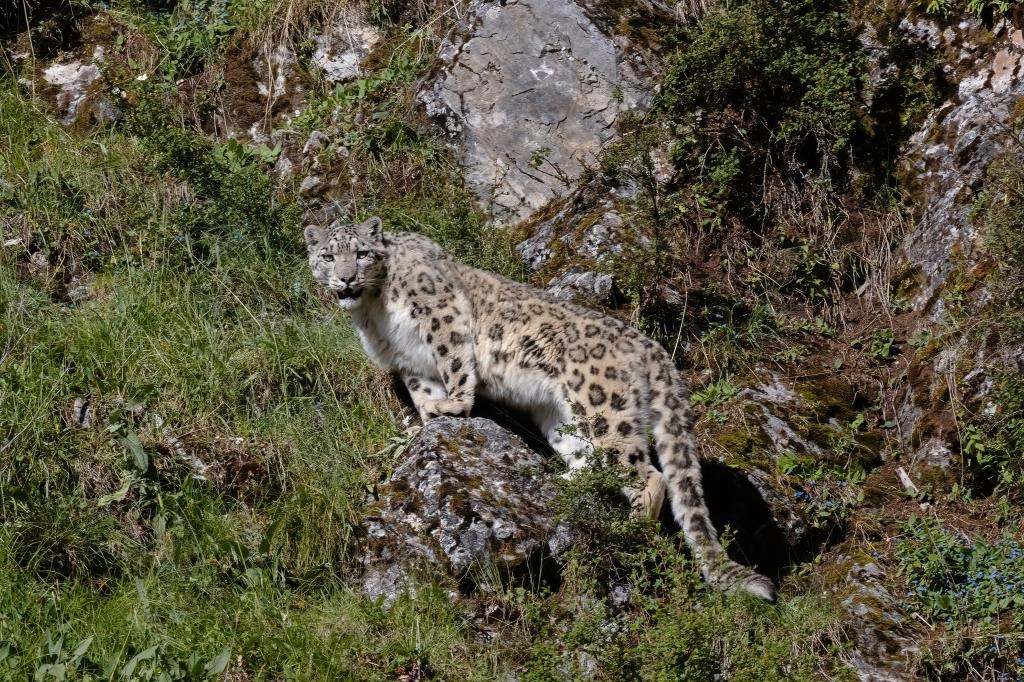
    In an extraordinary wildlife conservation breakthrough, a decade-old North China leopard designated F9 has defied biological expectations by establishing the nation’s first documented four-generation leopard dynasty. This remarkable matriarch, residing in the Taihang Mountains of Shanxi province, has not only become a great-grandmother but also successfully delivered three new cubs in 2025 despite her advanced age.

    The conservation organization Chinese Felid Conservation Alliance reported that F9’s story carries profound scientific significance as her thriving lineage exists primarily outside formal protected areas, spanning multiple villages in Heshun county. First identified in June 2016 through infrared camera footage that captured her distinctive curled tail tip, this feline has surpassed all expectations by building a multi-generational legacy in the wild.

    Her reproductive journey began in 2019 when infrared cameras captured her guiding three cubs—two females and one male—through their forest habitat. The dynasty expanded in 2022 when her eldest daughter, F26, was photographed with her own three cubs. The latest generational milestone occurred in late 2024 when F26’s daughter, nicknamed Pingping, was documented tenderly guiding her own offspring through moonlit forests.

    At approximately 10 years old (equivalent to human early 60s), F9 has produced six known litters totaling 11 cubs, with four already establishing independent territories within the Heshun mountains. Her descendants demonstrate remarkable expansion patterns: her eldest son M16 now dominates the nearby Qingcheng forest area, while granddaughter Pingping has crossed County Highway 337 to establish territory further east.

    This conservation success story stems from collaborative efforts between local authorities, research institutions, and community members. Since 2013, approximately 1,200 square kilometers in western Heshun have been designated as an ecological protection zone with stringent restrictions on polluting industries and large-scale development. The Laobaozi patrol team, established in 2015 with 20 local members, actively conducts biodiversity surveys, anti-poaching patrols, and community education.

    The North China leopard, a leopard subspecies native to China, receives top national-level protection and was included on the IUCN Red List of Threatened Species in 2012. Heshun county has been identified as a vital habitat, with 89 adult leopards documented between 2015-2020, though fewer than 400 are estimated to remain in the wild globally.

  • An ancient forest in Ecuador is the last stand for a tiny hummingbird facing extinction

    An ancient forest in Ecuador is the last stand for a tiny hummingbird facing extinction

    Nestled high in the Ecuadorian Andes, the Yanacocha Reserve represents a critical bastion of biodiversity conservation where scientists are fighting to prevent the extinction of one of Earth’s most imperiled avian species. This protected cloud forest serves as the exclusive habitat for the Black-breasted puffleg (Eriocnemis nigrivestis), a miniature hummingbird whose global population has plummeted to an alarming 150-200 individuals according to International Union for Conservation of Nature assessments.

    The Jocotoco Foundation established this sanctuary twenty-five years ago, initially focusing on the puffleg’s protection but soon recognizing they were preserving an entire ecosystem. Conservationist Paola Villalba explained to Associated Press reporters that their mission expanded beyond single-species preservation to comprehensive habitat conservation.

    This remarkable bird, measuring merely 9 centimeters and distinguished by distinctive white leg plumage contrasting with its metallic black chest and bronze-green wings, faces existential threats from agricultural expansion. The species occupies an exceptionally narrow ecological niche at elevations between 3,000-3,500 meters—precisely the altitude range most vulnerable to conversion into farmland and grazing pastures.

    Shirley Farinango of the Birds and Conservation Foundation emphasized the intensifying pressure on this specialized habitat, noting that the puffleg’s survival hinges entirely on preserving these high-altitude forests. Conservation teams are now engaged in urgent reforestation efforts on the slopes of the Pichincha volcano, approximately 45 kilometers northwest of Quito, where these ‘smallest fairies of the Andes’ make their final stand against human encroachment.

  • Radiopharmaceutical development alliance launched in Shanghai

    Radiopharmaceutical development alliance launched in Shanghai

    Shanghai has established a groundbreaking consortium to revolutionize radiopharmaceutical innovation through the newly formed Shanghai Radiopharmaceutical Concept Verification Alliance. The initiative, officially launched on January 19, 2026, at Zhangjiang High-Tech Park in Pudong New Area, represents a strategic collaboration between medical, academic, and industry stakeholders.

    Spearheaded by the Academy for Clinical Innovation and Translation of Shanghai, the alliance addresses critical challenges in early-stage radiopharmaceutical development. By consolidating fragmented verification resources and incomplete data systems that traditionally impede drug innovation, the consortium aims to create a centralized platform operating under market mechanisms.

    This innovative platform will provide comprehensive end-to-end services including target validation and production of high-quality, GMP-like samples for preclinical studies. The launch ceremony occurred during the 2026 Shanghai Radiopharmaceutical Concept Verification Ecosystem Seminar, part of the broader Zhangjiang Pharma Valley Radiopharmaceutical Industry International Exchange Conference.

    The event attracted international experts who presented on global advancements, while domestic specialists from Shanghai’s leading hospitals and research institutions contributed to panel discussions on cutting-edge areas including targeted alpha therapy and radiotheranostics—an emerging field combining diagnostic and therapeutic applications of radioactive drugs.

    Multiple project agreements were formalized during the launch, with participants establishing frameworks for concept verification services, collaborative models, and profit-sharing mechanisms to ensure sustainable development of the initiative.