分类: science

  • NASA to build $20 bn moon base, pause orbital lunar station plans

    NASA to build $20 bn moon base, pause orbital lunar station plans

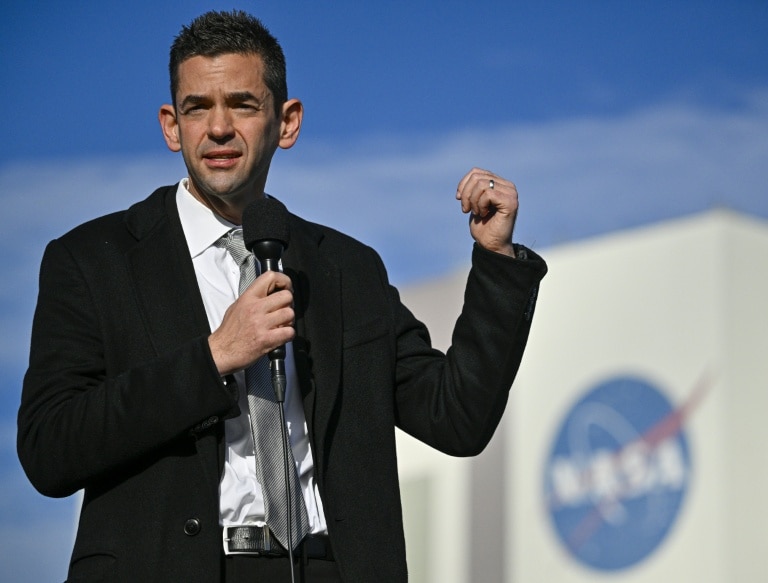
    In a significant strategic shift for America’s space exploration agenda, NASA Administrator Jared Isaacman announced the agency will suspend development of the Gateway lunar orbital station and instead channel approximately $20 billion toward establishing a permanent surface base on the Moon. The declaration came during a major policy address at NASA headquarters in Washington, D.C., marking a substantial reallocation of resources within the Artemis program.

    The revised approach prioritizes ‘infrastructure that enables sustained surface operations’ over the orbital transfer station concept. While existing Gateway hardware will be repurposed where feasible, and international partnerships will be redirected toward surface objectives, the orbital component has been effectively paused in its current form. This decision follows internal evaluations criticizing Gateway as potentially redundant and diverting resources from more critical lunar surface ambitions.

    NASA’s revised blueprint outlines an ambitious seven-year timeline involving dozens of missions conducted alongside commercial and international collaborators. This methodical approach aims to construct ‘humanity’s first permanent surface outpost beyond Earth,’ creating a foundational presence that would eventually support missions to Mars. The overall target of returning American astronauts to the lunar surface by 2028 remains unchanged despite these architectural changes.

    The strategic reassessment occurs alongside scheduling adjustments for the Artemis 2 mission. Originally slated for February, this crucial lunar flyby—the first in over fifty years—is now targeting an early April launch. This mission serves as a vital test flight to rebuild operational ‘muscle memory’ before attempting a subsequent landing. The U.S. effort maintains its competitive dimension, with China pursuing its own crewed lunar mission objectives by 2030, relying heavily on advancements from private sector partners like SpaceX and Blue Origin, who are developing the essential lunar landing systems.

  • China discovers world’s 2nd-largest light rare earth deposit in Sichuan

    China discovers world’s 2nd-largest light rare earth deposit in Sichuan

    China has announced a groundbreaking geological discovery with the identification of the world’s second-largest light rare earth deposit in Mianning County, Sichuan Province. The Ministry of Natural Resources revealed on Tuesday that the find adds a substantial 9.67 million metric tons of rare earth oxides to the nation’s reserves, representing a remarkable 300 percent increase in current inventory.

    The newly discovered deposit contains rare earth oxides that are critically important for modern industrial applications and advanced manufacturing sectors. These materials serve as essential components in the production of magnetic and fluorescent materials that power various high-technology devices and industrial equipment.

    Beyond the rare earth elements, geological surveys identified significant associated resources within the Maoniuping mining area. The discovery includes massive deposits of fluorite totaling 27.14 million tons and barite reserves measuring 37.23 million tons, both classified as ultra-large deposits according to international mining standards.

    Fluorite, a non-renewable mineral resource, represents the primary source of industrial fluorine that is indispensable for emerging and future-oriented industries. Barite, valued for its unique chemical properties including resistance to acids and alkalis, high density, and exceptional radiation absorption capabilities, serves as a critical raw material across multiple sectors including petroleum, chemical manufacturing, pharmaceutical production, and construction industries.

    This discovery significantly enhances China’s strategic mineral resources position globally while providing substantial raw material security for high-tech manufacturing sectors dependent on these specialized materials.

  • Zhejiang University researchers pioneer major protein breakthrough

    Zhejiang University researchers pioneer major protein breakthrough

    In a landmark study with profound implications for treating genetic disorders, scientists from Zhejiang University have developed a novel method to engineer artificial proteins capable of rectifying malfunctions in critical cellular receptors. The research, recently published in the prestigious journal Nature, represents a significant departure from conventional drug design paradigms.

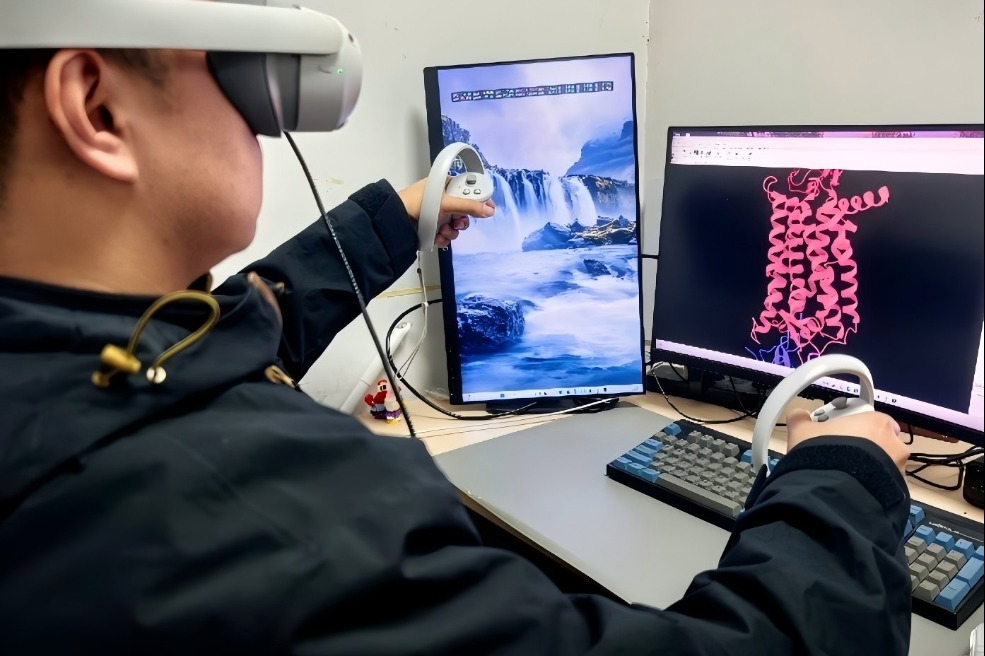
    The multidisciplinary team focused on G protein-coupled receptors (GPCRs), a large family of membrane proteins that facilitate cellular communication by transmitting external signals into cells. These receptors are targeted by approximately 30% of all approved pharmaceuticals worldwide, typically through interaction with their primary binding pocket, known as the orthosteric site.

    According to Professor Zhang Yan, Vice-Dean of Zhejiang University’s School of Medicine and a lead researcher on the project, genetic mutations in these receptors can impair their signaling functions, leading to hundreds of clinical conditions including Parkinson’s disease, obesity, and hypercalcemia. Traditional drugs designed to target the receptors’ ‘switches’ generally cannot repair these structural dysfunctions, often leaving patients with long-term chronic burdens.

    The innovative approach developed by the Zhejiang team involves creating artificial transmembrane proteins that function as customizable molecular ‘armor’ or exoskeletons. These modulators attach to malfunctioning receptors, enabling precise regulation of their functions. Professor Zhang likened the technology to ‘installing prosthetic limbs for persons with disabilities, or implanting medical devices supported by brain-computer interface technologies, only at the molecular level.’

    The research team selected the dopamine D1 receptor (D1R) as their prototype model, successfully engineering four modulators that could bind to the receptor and restore activities in various loss-of-function mutants. The complexity of this endeavor was immense—designing a modulator composed of 60 amino acids from 20 available types presents approximately 20^60 possible combinations.

    Critical to overcoming this challenge was the implementation of artificial intelligence. As explained by Professor Zhang Min from the University’s College of Computer Science and Technology, AI-driven protein design, particularly generative models for de novo design, provided tools to create entirely novel proteins with unprecedented speed and accuracy. The team developed an AI-guided probe to thoroughly profile targeted receptor structures and identify potential binding sites, using ‘structural prompts’ analogous to inputs for language models like ChatGPT but specifically for protein structures.

    The resulting technology not only enables precise switching of receptor functions but also offers programmability to a certain degree. More significantly, the team’s findings establish a platform for similar research, potentially revolutionizing treatment approaches for disorders stemming from genetic mutations in cellular receptors.

  • Geneva’s CERN hails delicate test on transporting antimatter as a scientific success

    Geneva’s CERN hails delicate test on transporting antimatter as a scientific success

    In a landmark scientific achievement, researchers at the European Organization for Nuclear Research (CERN) have successfully completed the world’s first road transport of antiprotons—a form of antimatter that annihilates upon contact with ordinary matter. The delicate operation, conducted on Tuesday, involved moving approximately 100 antiprotons in a specially designed container during a 30-minute truck journey from CERN’s Geneva facility.

    The antiprotons were contained within a 1,000-kilogram (2,200-pound) apparatus called a ‘transportable antiproton trap,’ which maintained the particles in suspension using superconducting magnets cooled to -269°C (-452°F). This sophisticated containment system prevented the antiprotons from contacting the inner walls of the chamber, which would have resulted in immediate annihilation.

    CERN spokeswoman Sophie Tesauri confirmed the experiment’s success, noting that approximately 91 of the original 100 antiprotons survived the transportation process. The minuscule mass of the transported antimatter—equivalent to less than 100 hydrogen atoms—meant that even in a worst-case scenario, any energy release would have been undetectable without specialized equipment.

    This breakthrough represents a critical step toward CERN’s broader objective of establishing antimatter transport to research facilities across Europe. The organization ultimately aims to deliver antiprotons to Heinrich Heine University in Düsseldorf, Germany—an eight-hour drive under normal conditions. However, technical challenges remain, as the current containment system can preserve antiprotons for only about four hours, half the required duration for the intended German journey.

    The successful transport demonstrates significant progress in antimatter handling, building upon CERN’s decades of experimentation with these elusive particles. The organization’s Antiproton Decelerator facility remains the world’s sole source of low-energy antiprotons available for scientific study.

  • Splendid auroras witnessed in NE China’s Heilongjiang

    Splendid auroras witnessed in NE China’s Heilongjiang

    Residents and skywatchers in Northeast China’s Heilongjiang province were treated to a spectacular natural light show as vibrant auroras painted the night sky from March 22 through the early hours of March 23, 2026. The celestial phenomenon, typically associated with polar regions, became visible across multiple locations in China’s northernmost province due to intensified geomagnetic activity.

    The auroral display was particularly prominent in Mohe city, China’s northernmost settlement, where photographers captured stunning images of the dancing lights. The phenomenon occurred as charged particles from solar winds interacted with Earth’s magnetosphere, creating the colorful patterns that shimmered across the heavens.

    Scientists note that such visible aurora displays at relatively low latitudes remain uncommon, making this event particularly noteworthy for both astronomical observers and the general public. The occurrence provides valuable research opportunities for space weather specialists studying the effects of solar activity on Earth’s magnetic field.

    The event attracted significant attention from photography enthusiasts and nature lovers who braved the cold nighttime temperatures to witness the rare atmospheric spectacle. Local tourism officials reported increased visitor interest in the region following the celestial event.

  • From forecasts to the future: a sci-fi journey on World Meteorological Day

    From forecasts to the future: a sci-fi journey on World Meteorological Day

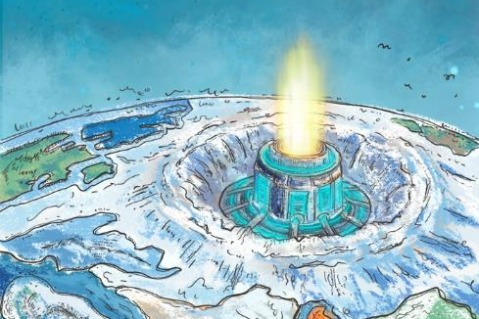
    In a groundbreaking fusion of science fiction and meteorological advocacy, Chinese authorities have launched an innovative educational campaign marking the 66th World Meteorological Day. The China Meteorological Administration, in collaboration with China Daily, has developed an extensive illustrated series inspired by the acclaimed sci-fi film “The Wandering Earth” to communicate the vital importance of weather observation.

    The narrative follows protagonist Liu Xiaoqiang, a maintenance technician stationed at Earth Engine C0323 in a dystopian future where planetary rotation has ceased and atmospheric phenomena have disappeared. Experiencing existential doubts about his repetitive duties, Liu’s perspective transforms when he encounters a mysterious communication directing him to the abandoned “Museum of Countless Weather.”

    This repository of meteorological history, constructed within a derelict observation station, contains preserved instruments and records documenting centuries of scientific dedication. Through interactive exhibits, Liu discovers the extensive legacy of human commitment to weather monitoring—from research stations in polar extremes to high-altitude observatories where generations of scientists meticulously documented climate patterns.

    The exhibition reveals how continuous meteorological observation protected civilizations through advanced warning systems and climate research. Liu emerges with profound understanding of this year’s World Meteorological Day theme: “Observing Today, Protecting Tomorrow.”

    The initiative represents a creative approach to public science education, using compelling storytelling to highlight how contemporary meteorological work safeguards future generations. By connecting current climate observation efforts with humanity’s long-term survival, the project underscores the critical role of sustained environmental monitoring in building climate resilience.

  • Study maps depression in chronic pain

    Study maps depression in chronic pain

    Neuroscientists at Fudan University have made a groundbreaking discovery in understanding the biological mechanism that connects chronic pain with clinical depression. Their research, published in the prestigious journal Science, reveals a specific neural gateway within the hippocampus that determines whether persistent physical pain transforms into debilitating mental health conditions.

    The comprehensive study, conducted at the university’s Institute of Science and Technology for Brain-inspired Intelligence, analyzed neuroimaging data from 30,000 human subjects alongside animal models. The research team identified that the hippocampus, traditionally known for memory and navigation functions, serves as a critical mood regulation center. During initial pain exposure, this brain region demonstrates enhanced functionality and temporary enlargement as a defensive mechanism.

    Dr. Xiao Xiao, co-corresponding author and executive director of the institute’s behavioral and cognitive neuroscience center, explained the transformative process: “As pain transitions from acute to chronic, we observe progressive hippocampal atrophy accompanied by diminished regulatory capacity. This deterioration coincides with the emergence of depressive symptoms.”

    The investigation pinpointed the dentate gyrus (DG) sub-region as the specific neurological gatekeeper. This area possesses unique neuroplasticity capabilities, generating new neurons to help the brain adapt to stress. However, chronic pain triggers microglia—the brain’s immune cells—to become hyperactive, disrupting electrical signal balance and causing the emotion gate to malfunction.

    The findings suggest revolutionary clinical applications. Rather than solely addressing pain symptoms, medical professionals could employ brain imaging to monitor hippocampal health and implement preventive interventions before structural deterioration occurs. The research team successfully tested an established clinical drug that regulates microglia activity, demonstrating its potential for rapid translation to patient treatment.

    Initiated in 2018, the research program now incorporates artificial intelligence to screen for novel small-molecule drugs targeting specific brain cells. The scientists believe genetic predispositions and environmental factors contribute to individual variations in emotional resilience among pain patients.

  • Planet trapped record heat in 2025: UN

    Planet trapped record heat in 2025: UN

    A dire warning has been issued by the United Nations World Meteorological Organization (WMO), confirming that Earth’s energy imbalance reached a record high in 2025, with consequences projected to persist for millennia. The agency’s annual State of the Global Climate report reveals that the eleven hottest years in recorded history all occurred between 2015 and 2025, with last year ranking as the second or third warmest at approximately 1.43°C above pre-industrial levels.

    UN Secretary-General Antonio Guterres characterized the situation as a ‘climate emergency,’ stating that ‘every key climate indicator is flashing red.’ For the first time, the WMO incorporated measurements of planetary energy imbalance—the disparity between incoming solar radiation and outgoing energy—revealing a dangerous disruption to Earth’s natural equilibrium. Concentrations of heat-trapping greenhouse gases, including carbon dioxide, methane, and nitrous oxide, have reached their highest levels in at least 800,000 years.

    Scientific advances have enabled improved understanding of this energy imbalance, which has particularly accelerated over the past two decades. WMO Chief Celeste Saulo emphasized that human activities are fundamentally disrupting planetary systems, with consequences that will endure for hundreds and thousands of years.

    The oceans have absorbed more than 91% of excess heat, reaching unprecedented temperatures in 2025. The rate of ocean warming has more than doubled since the 1960-2005 period, causing severe degradation of marine ecosystems, biodiversity loss, and reduced capacity for carbon absorption. This warming intensifies tropical and subtropical storms while accelerating polar ice loss.

    Both the Antarctic and Greenland ice sheets have experienced significant mass reduction, with Arctic sea ice extent in 2025 ranking among the lowest ever recorded. Global mean sea levels now stand approximately 11 centimeters higher than when satellite measurements began in 1993, with continued rise projected for centuries.

    While current weather patterns remain under the influence of cooling La Niña conditions, forecasts indicate a potential shift to warming El Niño conditions by late 2026. WMO scientific officer John Kennedy warned that this development could lead to elevated temperatures in 2027, potentially challenging records.

    WMO Deputy Chief Ko Barrett described the outlook as a ‘dire picture,’ acknowledging that climate indicators are moving in concerning directions. Guterres connected climate instability to global security concerns, noting that ‘our addiction to fossil fuels is destabilizing both the climate and global security.’ The report concludes with an urgent call to action, emphasizing that ‘climate chaos is accelerating and delay is deadly.’

  • China releases global high-quality journal list for medicine, life sciences

    China releases global high-quality journal list for medicine, life sciences

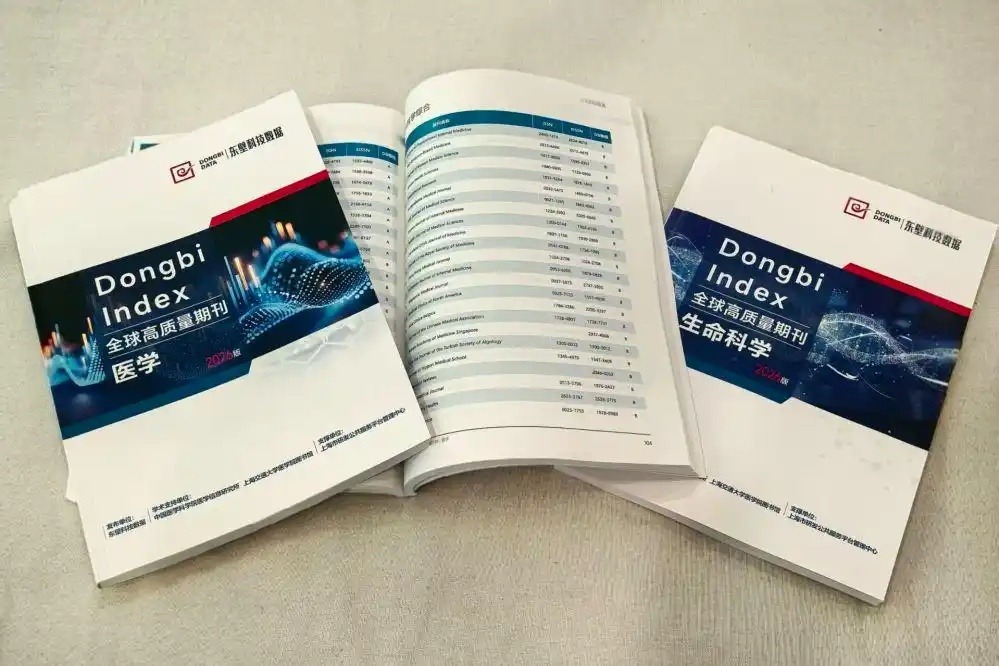
    China has introduced a groundbreaking academic evaluation framework with the release of its independently compiled Global High-Quality Journal List for medicine and life sciences. The comprehensive catalog, jointly developed by Dongbi Technology Data Co Ltd in partnership with the Chinese Academy of Medical Sciences and Shanghai Jiao Tong University, presents a distinctive Chinese perspective on scholarly journal assessment.

    The newly published inventory encompasses 4,027 medical journals and 3,064 life sciences publications worldwide, systematically organized into a four-tier pyramidal structure. Tier A represents the pinnacle of academic excellence, while Tiers B and C form the core academic foundation. Tier D incorporates emerging and specialized publications, creating a holistic representation of global research output.

    This innovative evaluation system was developed through rigorous analysis of global citation big data spanning from 2023 to 2025, utilizing authoritative seed journals as its foundation. The initiative aims to provide Chinese researchers with enhanced guidance for publication decisions while offering academic institutions and research management authorities a refined framework for journal assessment and tier optimization.

    Qiu Xiaochun, Deputy Director of the Medical Committee of the Library Society of China, emphasized the significance of this development, noting that it represents a substantial advancement in establishing China’s independent voice within international research evaluation systems. The project reflects China’s growing influence in global academic circles and its commitment to shaping scholarly communication standards in critical scientific domains.

  • China releases images from Fengyun 4C satellite

    China releases images from Fengyun 4C satellite

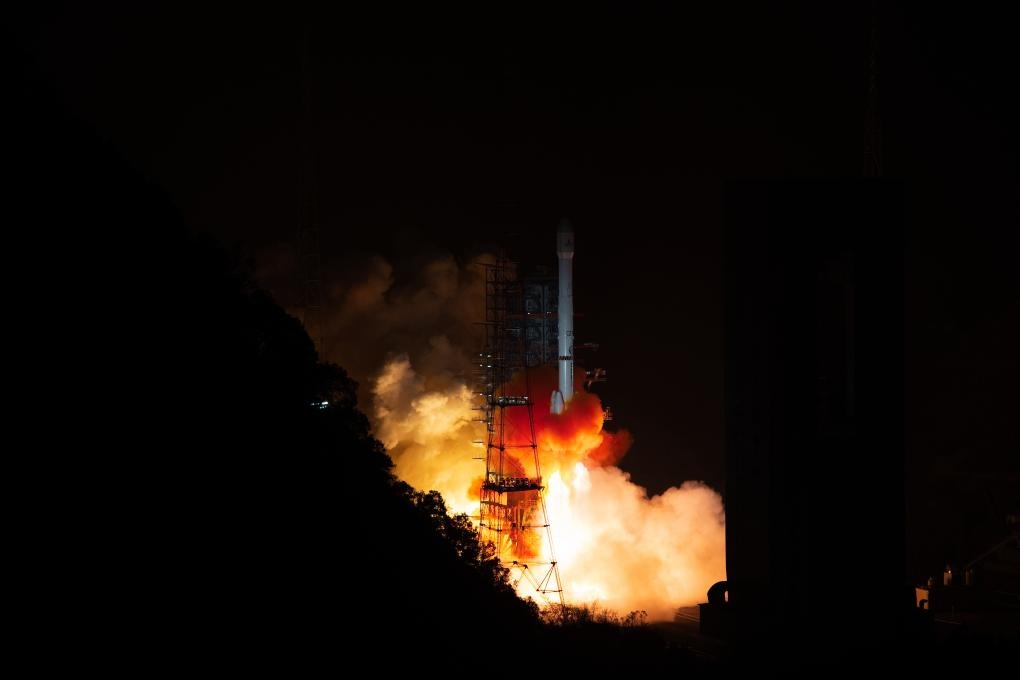
    China has unveiled the first operational imagery from its cutting-edge Fengyun-4C meteorological satellite, demonstrating unprecedented monitoring capabilities spanning from solar phenomena to terrestrial weather patterns. The China Meteorological Administration confirmed the satellite’s successful deployment following its December 27 launch from Xichang Satellite Launch Center in Sichuan Province.

    Equipped with six sophisticated payloads meeting international advanced standards, the Fengyun-4C represents the most comprehensive geostationary meteorological satellite currently operational worldwide. The newly released images showcase exceptional clarity and detailed atmospheric textures captured by the satellite’s advanced geostationary radiation imager.

    Among its breakthrough technologies, the satellite’s interferometric atmospheric vertical sounder delivers highly refined spectral data capable of mapping atmospheric vertical structures. This innovation promises to enhance numerical weather prediction models and significantly improve forecasting accuracy for meteorological events.

    The spacecraft’s lightning imager has already generated continuous observation animations that precisely track electrical activity during severe convective storms, providing crucial data for early warning systems and extreme weather monitoring. Simultaneously, the multiband ionospheric ultraviolet spectrometer has conducted sustained observations of airglow phenomena across the Eastern Hemisphere, mapping ionospheric changes that impact communication and navigation signals.

    Complementing these capabilities, the solar extreme ultraviolet imager—working in concert with solar X-ray and ultraviolet flux sensors—has successfully captured detailed sequences of solar flare eruptions and radiation variations. This enhances China’s capacity for solar activity tracking and space weather forecasting.

    With ten Fengyun satellites now operational across four distinct orbital types, China maintains the world’s most comprehensive meteorological satellite network, providing continuous global environmental monitoring capabilities.