分类: politics

  • Forget Musk. Russ Vought is the real power behind Trump

    Forget Musk. Russ Vought is the real power behind Trump

    While Elon Musk has been a prominent figure in the Trump administration, Russell Vought, the Director of the Office of Management and Budget (OMB), has emerged as a more influential yet less visible force. Vought is rumored to soon take over the Department of Government Efficiency (DOGE) from Musk, further solidifying his role in shaping the administration’s policies. Unlike Musk, Vought operates largely out of the media spotlight, driven by a deep commitment to radically transforming the U.S. presidency and embedding Christian values into government and public life. Vought has vowed to ‘crush the Deep State,’ a mission he began during Trump’s first term, where he served as OMB deputy director and briefly as director. He played a key role in Executive Order 13957, which aimed to reclassify thousands of federal policy jobs, allowing the White House to swiftly alter employment in these roles. Although this order was revoked by the Biden administration, Trump issued a similar order (14171) in January, potentially affecting 50,000 federal positions. Vought argues that such measures are essential for the White House to retain control over federal agencies, preventing ideological opponents from undermining its initiatives. During the Biden presidency, Vought was the key architect of the Heritage Foundation’s Project 2025, a 900-page blueprint widely seen as the foundation for Trump’s potential second term. Many of its recommendations, including high trade tariffs and DOGE’s cost-cutting initiatives, have already been implemented. Vought’s influence extends to his close relationship with Musk, with whom he has coordinated efforts to streamline government spending. Despite facing opposition from Democrats, who view him as a radical threat to constitutional norms, Vought remains steadfast in his belief in the unitary executive theory, which asserts the president’s authority over all executive branch operations. His continued push for reform could lead to significant legal battles, potentially reshaping the balance of power in the federal government.

  • A Trump administration playbook for the Pacific

    A Trump administration playbook for the Pacific

    As Secretary of State, Marco Rubio has outlined a robust framework for US foreign policy, emphasizing initiatives that strengthen America, secure its future, and enhance its prosperity. In the Pacific Islands, the US faces a strategic challenge: aligning the Trump administration’s priorities with the region’s unique circumstances and aspirations. By examining four key areas of statecraft—diplomatic, intelligence, military, and economic—a strategic playbook emerges that addresses both US interests and regional needs. The Trump administration’s foreign policy, often seen as unpredictable, reveals clear patterns: China is viewed as the primary global threat, hard power is prioritized over soft power, cost-cutting is emphasized, and allies are expected to share more of the burden. Diplomatically, the administration has focused on recalibrating trade relationships to address deficits and create favorable environments for American businesses. This shift has elevated the role of economic and financial agencies like the Department of Commerce. However, the US has struggled to establish a strong diplomatic presence in the Pacific, a region where personal relationships are crucial. Sending Commerce Department officials to key Pacific nations could enhance trade and reinforce US influence. Additionally, expediting the nomination and confirmation of US ambassadors to the Pacific Islands is essential. For instance, the US Embassy in Honiara reopened in January 2023, but the ambassador position remains vacant, leaving a gap that China has readily filled. The Quadrilateral Security Dialogue (Quad) remains a cornerstone of the US Indo-Pacific Strategy, fostering partnerships with Australia, India, and Japan to expand Pacific engagement and meet burden-sharing goals. In 2023, the Quad announced initiatives addressing climate change, maritime security, and economic development. Intelligence-sharing is also critical, particularly with the Freely Associated States (FAS)—Marshall Islands, Palau, and Micronesia—to counter China’s influence. Enhanced US support for local law enforcement and disaster preparedness can strengthen regional resilience. Maritime security is another priority, with illegal fishing and transnational crimes posing significant threats. The US has shiprider agreements with 12 Pacific Island countries, but limited capacity hinders their effectiveness. Cost-effective solutions, such as reallocating assets or prepositioning cutters, could improve outcomes. Militarily, the US maintains extensive defense rights in the FAS through the Compacts of Free Association. Recent security arrangements with Papua New Guinea and Fiji counter China’s presence while supporting regional development and disaster relief. Australia and New Zealand are also increasing their roles in the Pacific, necessitating close coordination to avoid overlap. Economically, the US faces challenges due to the freeze on foreign aid and the dismantling of USAID, which has damaged its credibility and allowed China to expand its influence. Restarting disaster relief and unexploded ordnance programs in the FAS and Papua New Guinea is a positive step, but a more mutually beneficial economic engagement strategy is needed. By prioritizing areas like economic development, environmental resilience, and small-scale infrastructure, the US can deepen relationships with Pacific Island Countries (PICs) while advancing its strategic interests. Leveraging diplomatic channels, enhancing intelligence sharing, and fostering economic partnerships will be crucial in countering Chinese expansion and ensuring a prosperous future for both the US and the Pacific Islands.

  • Bolton: Trump shouldn’t test Pyongyang before Seoul settles down

    Bolton: Trump shouldn’t test Pyongyang before Seoul settles down

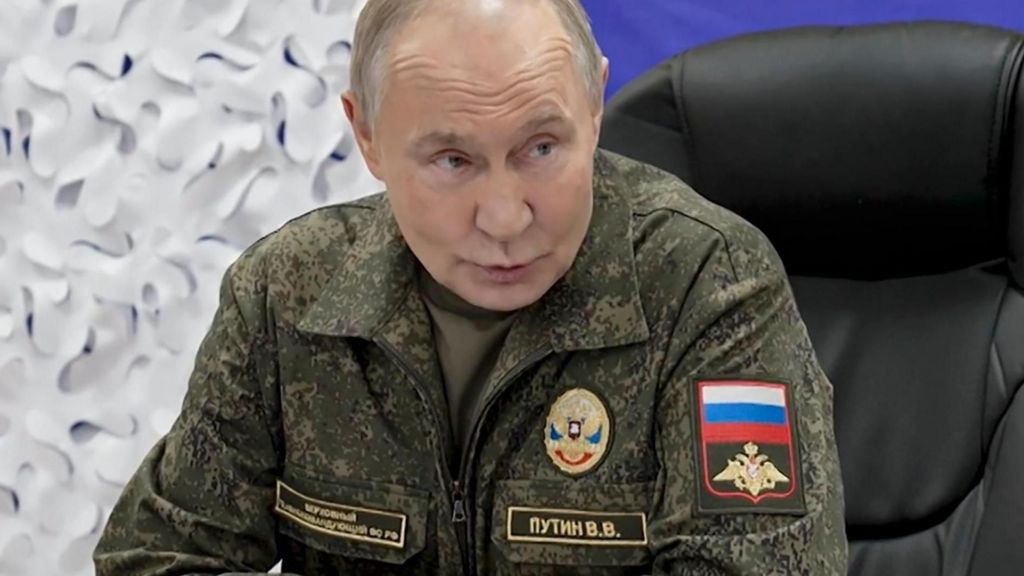
    President Donald Trump’s first 100 days back in the White House, marked on April 29, have been a whirlwind of bold initiatives and polarizing policies. Historically, this period serves as a litmus test for a leader’s priorities and governing style, offering a window into their political momentum. Trump has seized this opportunity with characteristic vigor, pushing forward on border enforcement, sweeping subsidy cuts, protectionist trade measures, and a radical overhaul of U.S. foreign policy. While his administration has secured early victories in some areas, global flashpoints like the war in Ukraine and the conflict in Gaza remain unresolved. If progress stalls, Trump may pivot to other arenas, such as re-engaging with North Korea, which has been largely dormant on Washington’s radar. In an interview with Asia Times, former U.S. National Security Advisor John Bolton critiqued Trump’s approach, highlighting failures in achieving a Ukraine ceasefire and the potential economic fallout from Trump’s tariffs. Bolton also expressed skepticism about the prospects of meaningful progress in Ukraine ceasefire talks, citing irreconcilable differences between the parties. He warned of Putin’s long-term ambitions to recreate the Russian Empire, emphasizing the need for robust security guarantees for Ukraine. On North Korea, Bolton cautioned against premature engagement, stressing the importance of aligning with South Korea’s political landscape. He also dismissed the notion of Trump accepting a nuclear North Korea, reaffirming the U.S. commitment to denuclearization. As Trump’s administration navigates these complex geopolitical challenges, the world watches closely to see how his policies will shape the future of international relations.

  • China rips Japan over aircraft’s intrusion

    China rips Japan over aircraft’s intrusion

    China has issued a stern protest to Japan following the unauthorized entry of a Japanese civilian aircraft into the airspace over the Diaoyu Islands. The incident, which occurred on Saturday, has prompted Beijing to demand an immediate halt to such provocative actions, warning that they could jeopardize the stability of bilateral relations. Liu Jinsong, Director-General of the Asian Affairs Department at China’s Foreign Ministry, conveyed the protest to Yokochi Akira, the Chief Minister of the Japanese Embassy in Beijing, emphasizing the gravity of the situation. The Chinese Coast Guard swiftly responded by deploying ship-based helicopters to warn and expel the intruding aircraft during a routine patrol in the area. Japan’s Ministry of Defense, however, accused Chinese helicopters of violating its territorial airspace—a claim vehemently denied by Zhang Xiaogang, a spokesman for China’s Ministry of National Defense. Zhang reiterated that the Diaoyu Islands and their affiliated islets are an inherent part of Chinese territory, and any unauthorized entry constitutes a serious breach of China’s sovereignty. He defended the Coast Guard’s actions as ‘completely legitimate and legal,’ urging Japan to restrain its citizens and avoid further provocations. Both Liu Jinsong and China Coast Guard spokesman Liu Dejun emphasized that China will continue to take all necessary measures to safeguard its territorial integrity and maritime rights. The incident underscores the ongoing tensions between the two nations over the disputed islands, with China calling for Japan to act responsibly to maintain regional stability.

  • US security policy in Asia shows some continuity in sea of change

    US security policy in Asia shows some continuity in sea of change

    The first 100 days of Donald Trump’s second administration have been marked by significant upheaval, yet one policy remains steadfast: the construction of a regional defense architecture aimed at deterring Chinese aggression. However, this strategy faces challenges due to collateral damage from the administration’s foreign policy shifts, particularly its embrace of tariffs and skepticism toward traditional alliances.

    During Trump’s first term (2017-2021), US policy toward China hardened as Washington concluded that deep economic engagement had failed to liberalize or pacify Beijing. Instead, China under Xi Jinping grew more authoritarian domestically and assertive internationally. The pandemic further highlighted America’s reliance on Chinese supply chains, prompting Trump to label China as an adversary rather than a partner. Tariffs were imposed on Chinese imports, and efforts began to reroute global supply chains away from China. Simultaneously, Trump criticized US alliances, arguing that allies benefited disproportionately from American protection.

    Trump’s foreign policy diverged sharply from post-war norms, rejecting American exceptionalism and liberal values while expressing admiration for authoritarian leaders like Xi Jinping, Vladimir Putin, and Kim Jong Un. He prioritized tariffs over free trade and questioned the value of US global commitments, particularly in Europe and Asia.

    President Joe Biden (2021-2025) extended some of Trump’s tariffs on China and restricted Chinese access to advanced technology. However, Biden reversed Trump’s alliance skepticism, reaffirming the strategic value of US partnerships. In contrast, Trump’s second administration has doubled down on tariffs and disdain for alliances, implementing these policies with unprecedented intensity.

    The global impact of Trump’s tariffs is significant, with most countries now facing a 10% tariff on US imports, up from an average of 2.5% in 2024. The threat of higher ‘reciprocal tariffs’ looms, potentially taking effect as early as May. Additionally, the US has effectively abandoned NATO, antagonizing Western Europe and Canada while accommodating Russia despite its aggression in Ukraine.

    In the Asia-Pacific region, the Pentagon’s agenda to counter China has continued largely uninterrupted. US Secretary of Defense Pete Hegseth’s March trip to Japan and the Philippines underscored efforts to strengthen military cooperation. In Japan, the US plans to enhance joint training and weapon development, while upgrading its military headquarters to a command post. In the Philippines, Hegseth reaffirmed the US-Philippine defense treaty’s coverage of the South China Sea, where Chinese harassment of Philippine vessels has escalated. The US also announced plans to co-produce military systems and deploy advanced sea drones and anti-ship missiles in the Philippines.

    The AUKUS agreement, which aims to provide Australia with nuclear-powered submarines, remains on track despite uncertainty over Trump’s support. While Australia has committed $3 billion to the initiative, Trump’s apparent unfamiliarity with the agreement raises doubts about its future.

    Meanwhile, Trump’s tariffs have strained relations with key allies like Japan and South Korea, both of which face additional tariffs and pressure to increase defense spending. Despite their contributions to US military bases, Trump has criticized these countries as ‘free-riders,’ further complicating alliances.

    In Australia, Trump’s policies have eroded confidence in US reliability. Tariffs on Australian exports, despite a US trade surplus with the country, have fueled disillusionment. While Australian leaders have resisted Chinese overtures to align against the US, the damage to the US-Australia relationship is evident.

    In summary, Trump’s second administration has intensified its focus on tariffs and alliance skepticism, creating friction with traditional partners while pursuing a counter-China strategy. The challenge lies in reconciling ‘America First’ policies with the need for a cohesive Asian security architecture. Until this balance is achieved, these conflicting priorities will continue to undermine US foreign policy objectives.

  • High-level exchanges seen as positive

    High-level exchanges seen as positive

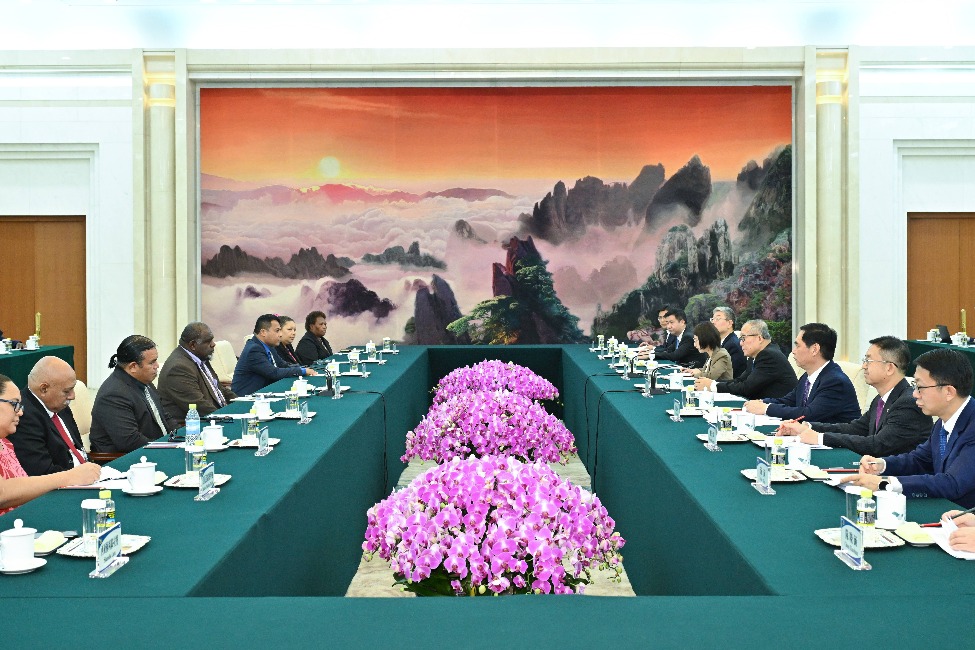
    Recent high-level visits by Japanese political figures to China have been interpreted as a strategic move to bolster economic cooperation and mitigate risks posed by Washington’s unilateral and protectionist policies, according to analysts. These visits, led by prominent figures such as Hiroshi Moriyama, chairman of the Japan-China Friendship Parliamentarians’ Union and secretary-general of Japan’s Liberal Democratic Party, underscore a shared commitment to enhancing bilateral relations. Moriyama, accompanied by a bipartisan delegation, met with Zhao Leji, chairman of China’s National People’s Congress Standing Committee, on April 29, 2025. During the meeting, Zhao emphasized the importance of win-win cooperation and long-term bilateral development. Moriyama echoed this sentiment, expressing a willingness to strengthen trade and cultural exchanges while addressing differences constructively. The visits follow a trip by Komeito party leader Tetsuo Saito and his delegation earlier in April, further highlighting Japan’s bipartisan consensus on fostering ties with China. Analysts, including Da Zhigang of the Heilongjiang Provincial Academy of Social Sciences, noted that these interactions aim to counterbalance the disruptive effects of US tariff policies and promote regional stability. Xiang Haoyu of the China Institute of International Studies added that while these visits signal a positive shift, underlying issues such as political mistrust and fragile public sentiment remain challenges. Both sides have pledged to uphold multilateralism and strengthen regional collaboration, particularly in Southeast Asia, to address global economic uncertainties.

  • Ex Japanese PM: Japan should properly handle the Taiwan question as an internal affair of China

    Ex Japanese PM: Japan should properly handle the Taiwan question as an internal affair of China

    In a recent exclusive interview with China Daily, former Japanese Prime Minister Yukio Hatoyama underscored the necessity of maintaining the foundational principles of China-Japan relations, particularly referencing agreements established in the 1970s. Hatoyama highlighted that the Chinese government’s stance on Taiwan, viewing it as an inseparable part of China, was acknowledged and respected by Japan at that time. He emphasized that Japan should continue to honor this consensus and manage the Taiwan issue appropriately, treating it as an internal matter of China. This approach, according to Hatoyama, is crucial for sustaining the stability and progress of bilateral relations between the two nations.

  • What is Turkey’s vision for the Kurds in Syria?

    What is Turkey’s vision for the Kurds in Syria?

    Regional observers are closely examining Turkey’s strategic objectives regarding the Kurdish-dominated Syrian Democratic Forces (SDF) that control substantial territories in northeastern Syria. Since the collapse of Bashar al-Assad’s regime in December, Ankara has emerged as a dominant power broker in Syria, cultivating strategic alliances with the interim government led by Hay’at Tahrir al-Sham (HTS).

    Both Turkish authorities and HTS leadership have consistently demanded the expulsion of Kurdistan Workers’ Party (PKK)-affiliated elements from SDF ranks and advocated for the group’s disarmament, potentially through integration into Syria’s formal defense structures. This position creates a complex diplomatic landscape given that Western powers, while classifying PKK as a terrorist organization, have simultaneously supported PKK-linked factions in Syria since 2014 to combat Islamic State extremists.

    Recent statements from de facto Syrian leader Ahmed al-Sharaa emphasize that the emerging administration will reject any form of federal division and insists on state monopoly over military capabilities. Despite President Erdogan’s vigorous rhetoric regarding eliminating security threats from Syrian territory, Ankara appears to favor diplomatic solutions over full-scale military intervention against Kurdish forces.

    The SETA think tank, maintaining close government ties, recently proposed a collaborative framework where American and Turkish officials could pursue non-violent resolution mechanisms. The proposal suggests the United States would acknowledge Turkey’s security concerns by limiting military and political support for SDF, while Turkey would refrain from large-scale operations in northeastern Syria.

    Turkish Foreign Minister Hakan Fidan has reiterated demands for SDF to expel PKK cadres and demobilize their forces. On Monday, Fidan claimed approximately 2,000 foreign fighters embedded within SDF ranks are under the command of senior PKK officials Sabri Ok and Fehman Huseyin, who allegedly influence SDF leadership.

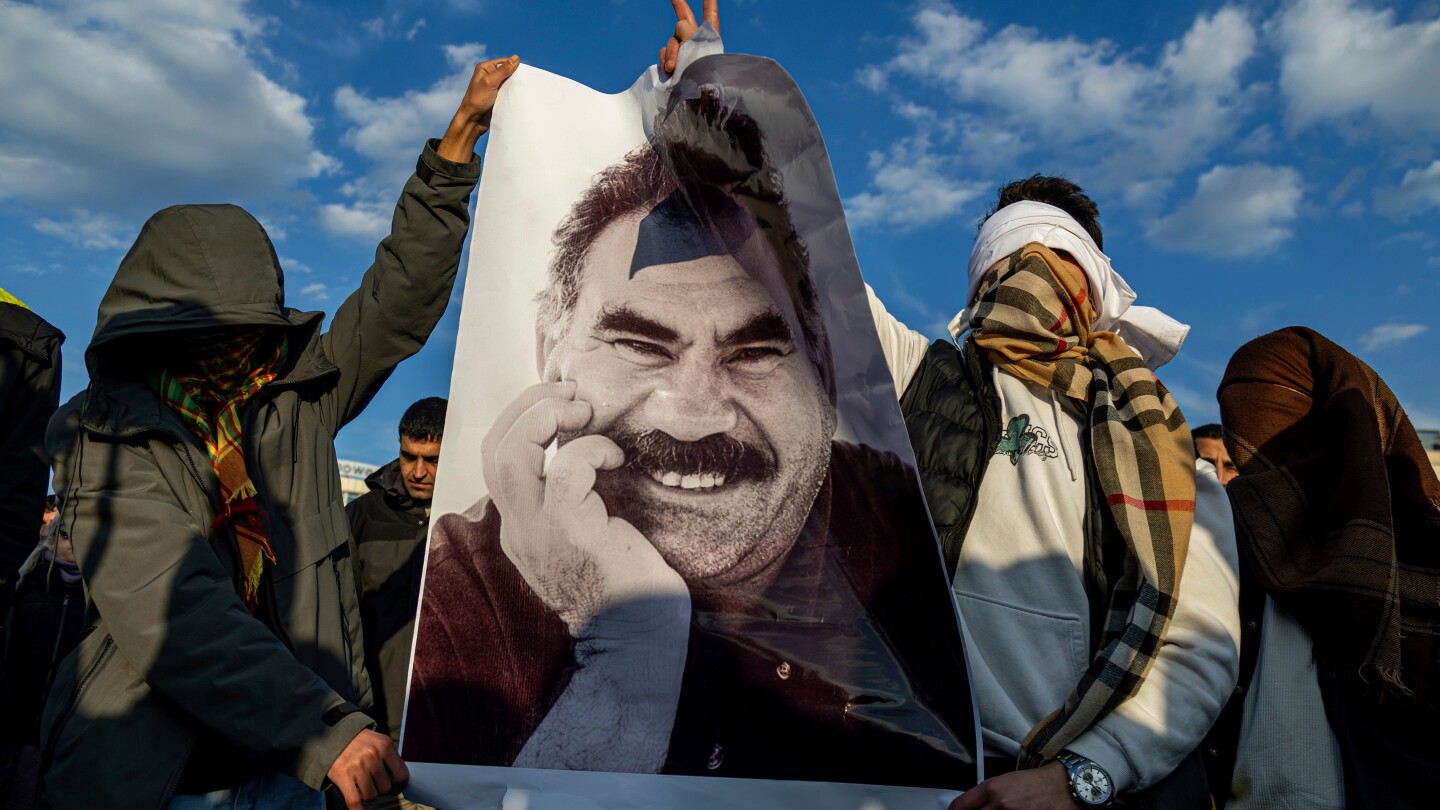
    A critical element in this diplomatic process involves ongoing negotiations between Turkish authorities and imprisoned PKK leader Abdullah Ocalan, initiated in October. Multiple Turkish sources indicate Ocalan may release a video statement in February urging PKK disarmament, which could significantly pressure SDF toward accepting a political compromise.

    Senior PKK official Bese Hozat confirmed they await Ocalan’s guidance regarding future steps, noting his intensive efforts toward democratic solutions for the Kurdish question and regional democratization.

    Turkish officials anticipate that with Ocalan’s potential intervention, non-PKK elements within SDF could be integrated into Damascus’ military administration. Additionally, they expect former President Donald Trump’s potential return to office might accelerate SDF’s positional reconsideration.

    Beyond disarmament, Ankara seeks the repatriation of Kurdish refugees to northeastern Syria and the reintegration of rival Kurdish political parties into the region. Turkey recently facilitated discussions between Masoud Barzani, former president of Iraqi Kurdistan and PKK rival, and SDF leader Mazloum Abdi, urging political reintegration and cooperation with Damascus.

    According to sources familiar with Ankara’s strategic thinking, Turkey essentially desires the Democratic Union Party (PYD) to transform into a national political entity participating in democratic elections and gaining representation in Damascus through constitutional processes.

    Al Jazeera Arabic recently reported that Damascus presented SDF with a draft agreement aligning with Turkish interests, offering constitutional recognition of Kurdish cultural rights and establishing decentralized administrative systems with substantial local powers. However, Damascus insists SDF must integrate into national military institutions as individuals rather than as independent units, and cannot maintain current deployments in non-Kurdish majority areas like Raqqa. SDF reportedly rejected these terms, citing Turkish security threats and demanding equitable oil revenue sharing.

    Despite ongoing diplomatic efforts, indications suggest Turkey continues military preparations. Yahya Bostan, a columnist with extensive military and intelligence connections, recently wrote that Ankara is intensifying efforts to eliminate PKK threats, anticipating increased diplomatic and intelligence operations at military levels in the near future.

  • BDS calls for boycott of Arabic channels serving as ‘mouthpieces’ for Israel

    BDS calls for boycott of Arabic channels serving as ‘mouthpieces’ for Israel

    The global Boycott, Divestment and Sanctions (BDS) movement has issued a public appeal via its Arabic-language social media account urging widespread boycotts of a slate of major Arabic-speaking media platforms it labels as “mouthpieces of the Israeli enemy”.

    The list of targeted outlets includes three prominent Saudi-owned networks: Al Arabiya, MBC, and Al Hadath, alongside the United Arab Emirates-based Sky News Arabia, popular regional streaming platform Shahid, and Lebanon-based domestic news network MTV. In its official statement, BDS accuses these outlets of far more than just advancing diplomatic detente between Arab nations and Israel. The movement argues the channels act as core tools of a colonial ideological campaign targeting Arab public consciousness, working systematically to plant despair and push pro-Israel framing across the region.

    BDS supports its accusations by pointing to coverage from these outlets that aligns with Israel’s official narrative amid its ongoing military conflicts in Gaza and southern Lebanon. Examples cited include reports repeating Israel’s claim that Hamas uses civilian hospitals for military operations, as well as broadcasts that include interviews with sitting Israeli government officials. Beyond calling on individual audiences to stop watching and subscribing to the named channels, BDS is also pressing regional journalist unions to cut formal ties with the outlets and anchor their professional commitments in opposition to normalization with Israel.

    This boycott call lands amid a sharp wave of already growing public anger toward many of the targeted networks across the Arab world. The most dramatic public backlash unfolded in Baghdad, Iraq, where protesters stormed and ransacked MBC’s Baghdad bureau after the network ran a report labeling Hamas, Hezbollah, and armed Iraqi factions as terrorist organizations. In the aftermath of the incident, Iraqi media regulators formally suspended MBC’s operating license in the country, justifying the move by saying the channel had violated national media rules by “assaulting the martyrs” and violating obligations to protect national values and public morality.

    The inclusion of MTV, a Lebanon-focused outlet that primarily covers domestic political debates tied to the Israel-Hezbollah conflict, has drawn particular pushback from media freedom advocates, who argue BDS has overlooked the complex local nuance of Lebanon’s political landscape.

    Hezbollah’s open military confrontation with Israel, launched on October 8, 2023 as a solidarity front with Gaza, has remained a deeply divisive issue in Lebanese domestic politics from the start. Tensions only escalated after Israel launched large-scale bombing campaigns across southern Lebanon last month, followed by a limited ground incursion into border areas weeks later. MTV has faced intense domestic criticism from Hezbollah supporters for its consistent critical coverage of the armed group’s decision to open the conflict front. Many Lebanese have deemed the network’s reporting on the issue dangerous and unethical.

    Scrutiny of MTV intensified to new heights following an Israeli airstrike on al-Qard al-Hassan, a Hezbollah-linked financial organization, in early 2024. Just days before the strike, MTV published a series of reports naming the group as a likely next target for Israeli attacks. In the aftermath of the bombing, Hezbollah’s head of media relations Mohammed Afif used a public press conference to address all Lebanese media outlets, declaring that “media freedom does not allow you to incite or be complicit in murder”.

    Even amid widespread criticism of MTV’s editorial choices, many regional analysts and media freedom advocates emphasize that debates over Hezbollah’s role in Lebanon and its decision to enter the conflict are core domestic conversations that Lebanese stakeholders have the right to hold among themselves. Jad Shahrour, spokesperson for the Samir Kassir Eyes Center for Media and Cultural Freedom, a Beirut-based freedom of press advocacy group, notes that while boycott campaigns can carry legitimate humanitarian goals, targeting a domestic Lebanese outlet in this context undermines BDS’s broader objectives. “When you drown in political corners, you lose sight of your influence on public opinion,” Shahrour explained.

    Shahrour warned that adding MTV to the boycott list puts the network’s already vulnerable staff at heightened risk of violence, harassment, and public accusations, all against the backdrop of extreme political polarization that has left Lebanon on the brink of internal collapse. “The Lebanese fabric is in danger, and we are nearing an explosion into what may look like a civil war,” he added.

    Founded on the model of the global anti-apartheid boycott movement that targeted segregation-era South Africa, BDS works to push for nonviolent international pressure to force Israel to end its occupation of Palestinian territories and address what the movement frames as ongoing violations of Palestinian human rights. This report was produced by Middle East Eye, an independent media outlet focused on original coverage and analysis of the Middle East and North Africa region.

  • US: Lieutenant criticises police report on clearing UCLA pro-Palestine encampment

    US: Lieutenant criticises police report on clearing UCLA pro-Palestine encampment

    On May 2, California Highway Patrol (CHP) cleared a pro-Palestine student encampment on the campus of the University of California, Los Angeles, launching one of the most high-profile police interventions at a U.S. university protest this year. This week, more than two months after the clearance operation, CHP released an official report defending the agency’s actions, arguing that the 57 so-called “less lethal” kinetic projectiles fired at encampment protesters were fully justified under state law.

    The CHP’s report outlines a confrontational narrative of the clearance operation. It claims responding officers faced sustained “assaultive resistance” from protesters, who allegedly hurled dangerous projectiles at law enforcement. These included frozen water bottles, containers of urine and other unidentifiable liquids, unopened 12-ounce soda cans, fragments of plywood, wooden poles, and both full and empty fire extinguishers of varying sizes. The report further alleges that protesters deployed fire extinguishers and unknown chemical irritants directly against officers, leaving some temporarily blinded and struggling to breathe. In response to what it frames as an imminent threat to officer safety, CHP defends its use of force, emphasizing that no kinetic projectiles were fired indiscriminately into the crowd. The report breaks down the ammunition used: 33 bean bag rounds fired from 12-gauge shotguns, and 24 sponge rounds launched from 40mm grenade launchers. On the topic of de-escalation protocol, the report adds that a police captain issued 29 repeated audible dispersal orders before the use of force, complying with legal requirements for advance notification.

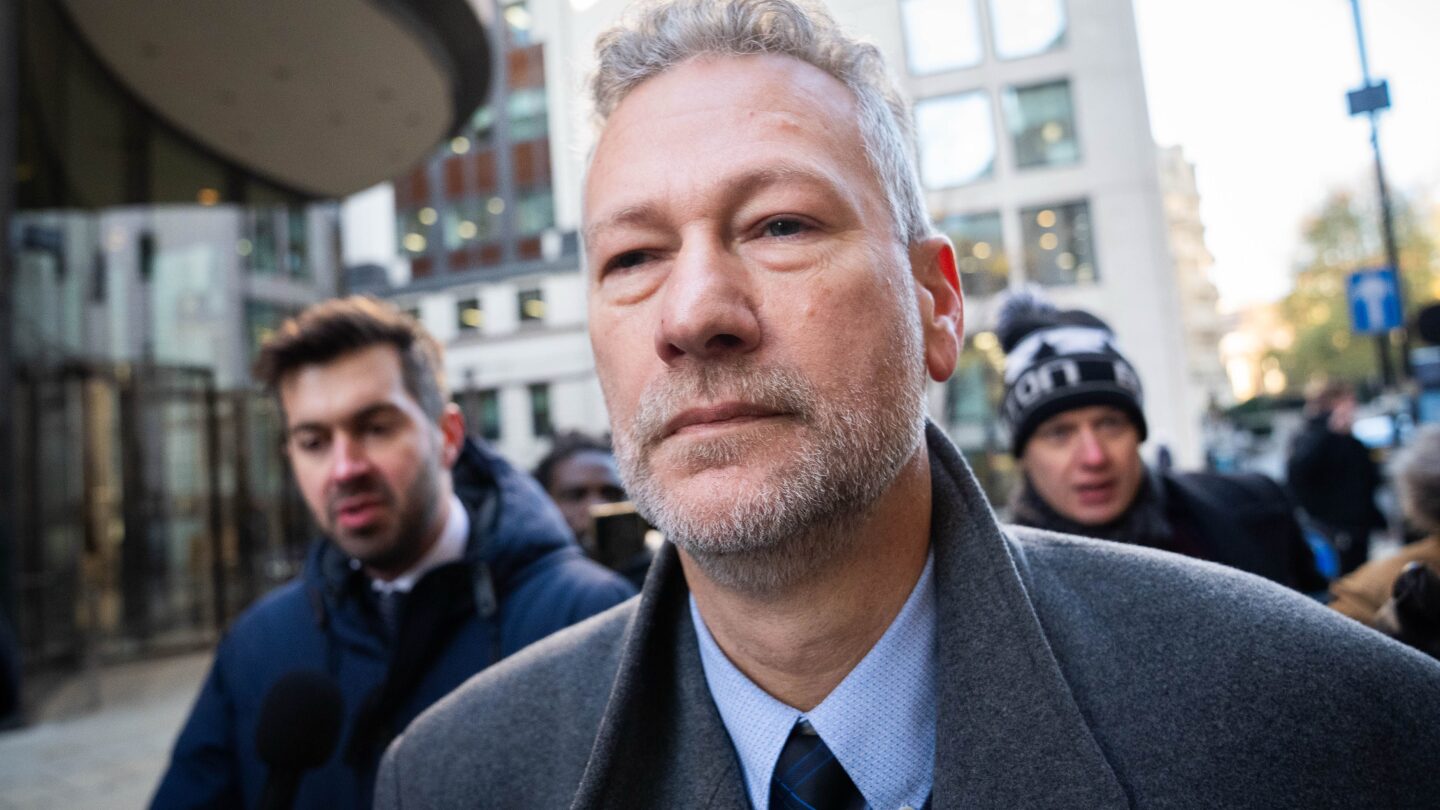
    This official justification has been immediately called into question by independent law enforcement experts who reviewed publicly available footage of the operation. Former police lieutenant Jeff Wenninger, a specialist in investigating officer use-of-force incidents, is one of two experts who examined video recorded by independent news outlet CalMatters. He argues CHP’s report lacks any tangible evidence to back up its claim that protesters posed an imminent threat to officers. Contrary to the report’s narrative, Wenninger’s review found no visual evidence that protesters attacked or threatened law enforcement before projectiles were fired.

    He further documented multiple clear violations of California state use-of-force law during the operation. Wenninger confirmed that one officer illegally fired a sequence of bean bag rounds directly into a dense crowd of protesters. A separate independent review of footage by the Los Angeles Times corroborated these findings, confirming that officers not only fired into large crowds of protesters, but also repeatedly aimed projectiles at protesters’ heads – a practice explicitly banned by state law. Current California regulations prohibit aiming kinetic projectiles at heads, necks, and other vital organs, and limit their use exclusively to situations where officers face an immediate threat of death or serious bodily harm. The CHP report verbatim cites this legal threshold to justify its actions, but Wenninger says the evidence simply does not support that claim.

    The CHP report was not a voluntary review: it was mandated by a state law passed after police used similar kinetic projectiles to severely wound multiple protesters during the 2020 George Floyd uprisings, which imposed strict new reporting requirements for the use of less-lethal ammunition. Public health research backs up critics’ concerns about these weapons: an analysis published by the Harvard University Health Law Journal confirms that while marketed as “less lethal,” these rounds are inherently inaccurate at long ranges and can cause fatal injury even at close range.

    The clearance operation that prompted this debate was the culmination of three days of escalating tension on the UCLA campus. Reporting from UCLA’s independent student newspaper the Daily Bruin has reconstructed the timeline of events that led up to the May 2 police intervention. Between the evening of April 30 and the early hours of May 1, the pro-Palestinian encampment was attacked by more than 100 counter-protesters and outside agitators, who used chemical sprays, fireworks, and wooden clubs to assault encampment residents. Dozens of protesters were injured in the attack, and many required hospital treatment. Despite the ongoing violence, police took more than three hours to intervene and disperse the attackers, drawing widespread criticism from pro-Palestine students who said law enforcement had failed to protect them. When CHP moved in to clear the encampment the following night, students confronted officers shouting, “Where were you yesterday?” referencing the unaddressed violence 24 hours prior.

    The confrontation at UCLA is part of a global wave of pro-Palestine student encampments that have taken place on university campuses since the outbreak of the 2023 Israel-Gaza war. Dozens of university administrations around the world have responded by calling in local and state law enforcement to clear protest sites, resulting in thousands of arrests and repeated incidents of police violence against demonstrators.