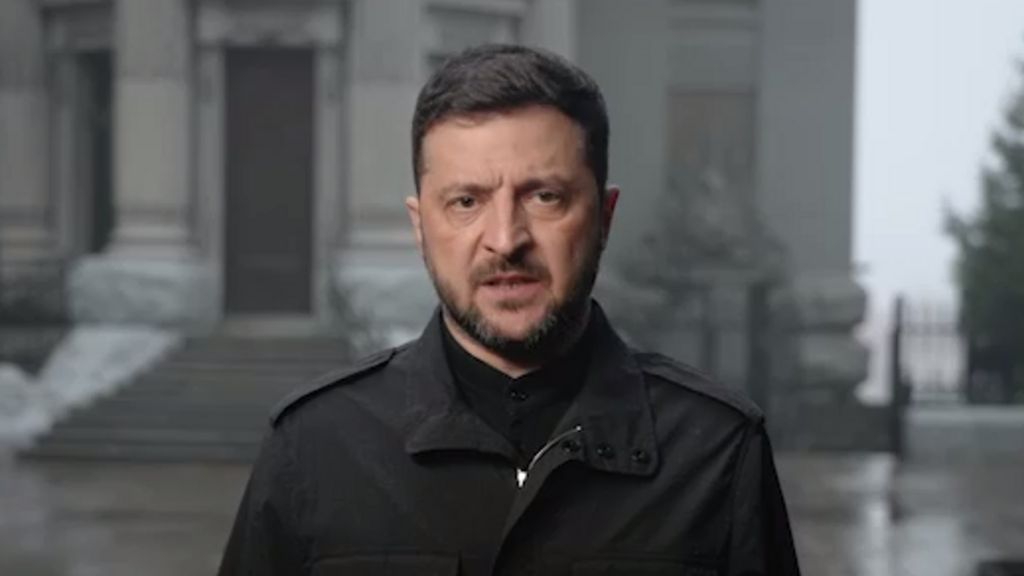
Ukrainian President Volodymyr Zelensky delivered a stark warning to the nation on Ukraine’s Dignity and Freedom Day, cautioning that Kyiv could lose crucial US support due to a contentious White House peace proposal aimed at ending the war with Russia. In a 10-minute address from Kyiv, Zelensky described the moment as ‘one of the most difficult in our history,’ emphasizing that Ukraine faces a ‘very difficult choice: either losing dignity, or risk losing a key partner.’ The leaked US plan, which includes ceding eastern territories, reducing Ukraine’s military, and pledging not to join NATO, has been criticized as favoring Russia. Russian President Vladimir Putin acknowledged the plan as a potential ‘basis’ for peace but reiterated Moscow’s readiness to continue fighting. US President Donald Trump, meanwhile, urged Zelensky to accept the plan, warning that Ukraine risks losing more territory if the conflict persists. Ukraine, heavily reliant on US military aid and intelligence, is under immense pressure to agree to the proposal. Zelensky assured the public that Kyiv would ‘calmly work with America and all partners’ to offer alternatives, while also securing reassurances of continued support from UK, French, and German leaders. The plan, which proposes freezing current battle lines and reintegrating Russia into the global economy, has sparked defiance among Ukrainians, with many viewing it as a continuation of the war rather than a path to peace.
分类: politics
-
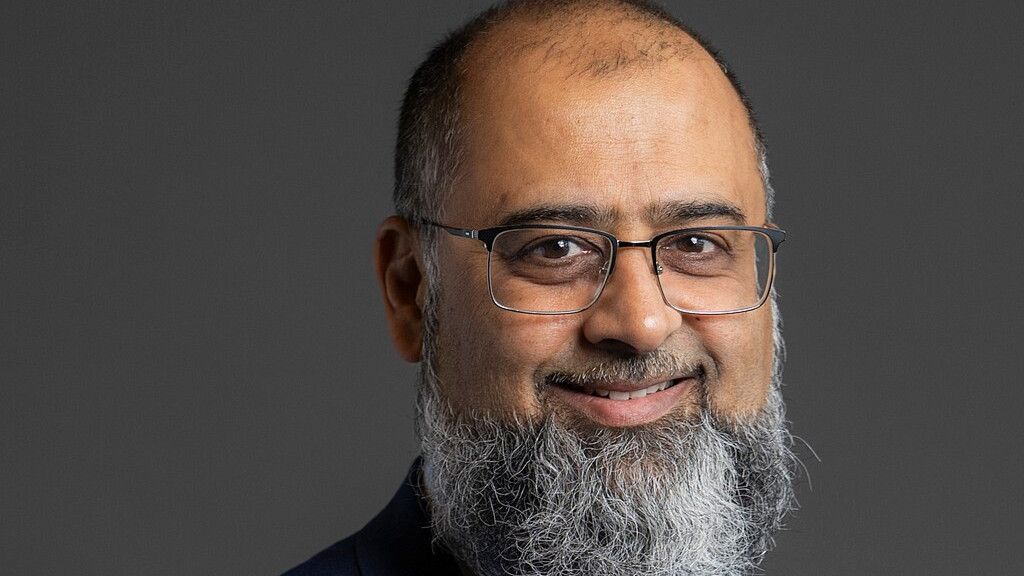
Iqbal Mohamed becomes second MP to leave Your Party
Your Party, a nascent left-wing political movement, is facing existential challenges even before its official launch. The party, still operating under a provisional name, has been plagued by a series of controversies and high-profile departures, casting doubt on its viability. Last Friday, Adnan Hussain, one of the six MPs in the party’s steering group, announced his departure. A week later, Iqbal Mohamed, MP for Batley and Dewsbury, followed suit, citing ‘false allegations and smears’ as the reason for his exit. Mohamed expressed disappointment over the lack of evidence supporting these accusations and emphasized his commitment to serving as an independent MP. The party’s internal discord has been exacerbated by public disagreements between co-leaders Zarah Sultana and Jeremy Corbyn. Sultana’s controversial statements and unilateral actions, such as launching a party website without consulting Corbyn and other independents, further deepened the rift. The Independent Alliance, a parliamentary group comprising former Labour leader Jeremy Corbyn and three other independents, has also distanced itself from Your Party. Adnan Hussain lamented the ‘toxic and exclusionary’ culture within the party, which he initially joined with hopes of fostering a pluralistic and inclusive political space. Despite early enthusiasm and significant public support, Your Party’s future now hangs in the balance, with the Green Party emerging as a stronger contender on the British left. The party’s inability to unite diverse voter bases and resolve internal conflicts has undermined its potential to become a significant political force.
-
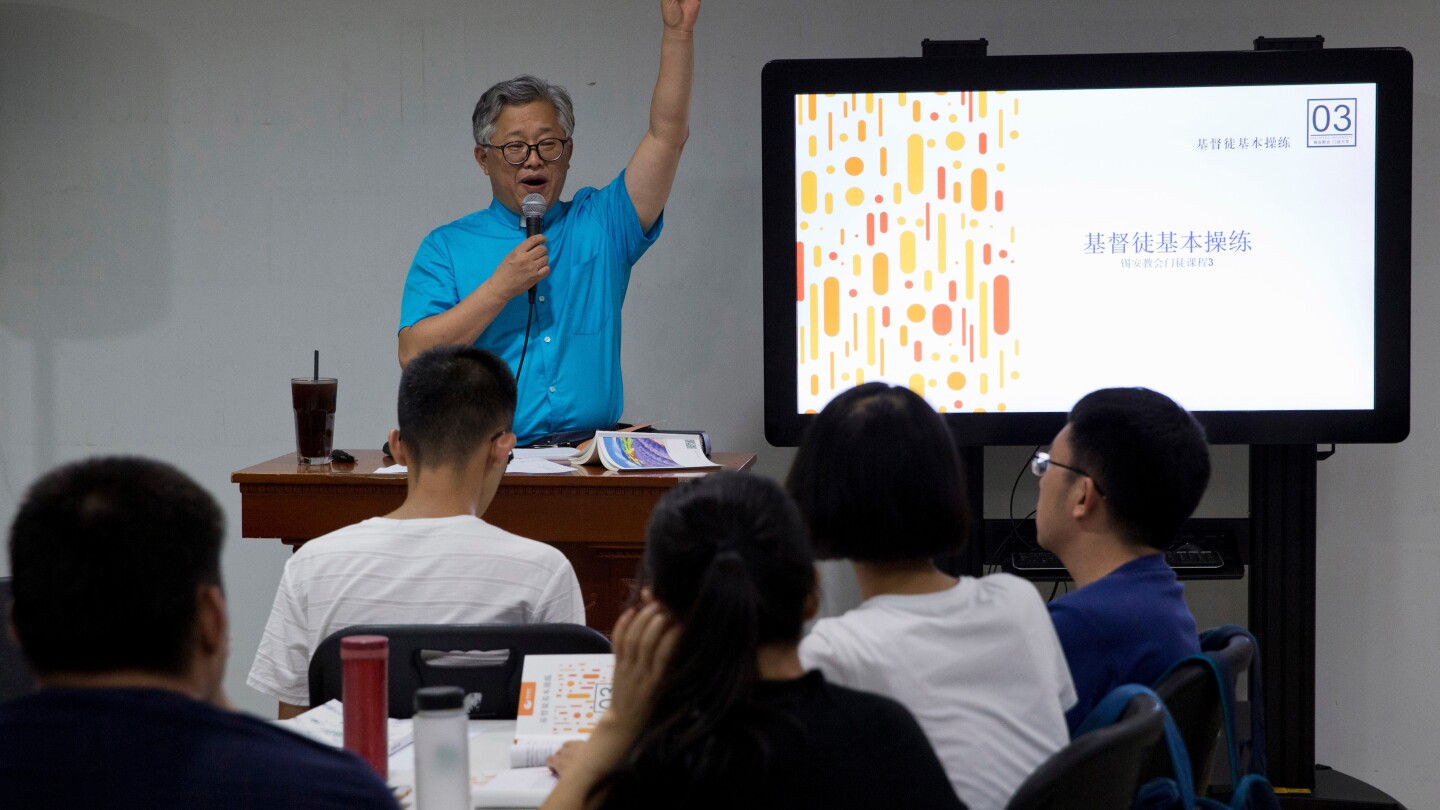
Christian pastor’s daughter urges US lawmakers to help free her father in China
In a compelling plea before a U.S. congressional panel, Grace Jin Drexel, the daughter of detained Chinese Christian pastor Ezra Jin Mingri, urged American lawmakers to intervene in securing her father’s release. This appeal comes as President Donald Trump reaffirms his commitment to protecting Christians worldwide, particularly in regions where they face persecution. Jin Drexel revealed that her father, along with 17 other leaders of the underground Zion Church, was formally charged this week following their detention in October. This crackdown marks one of China’s most significant actions against an unregistered church in decades, challenging the Communist Party’s strict regulations on religious practices. Zion Church, which operates independently of state control, has faced repeated harassment and threats from authorities. Jin Drexel emphasized her father’s mission to create a church free from government interference, where God is the sole authority. Meanwhile, U.S. lawmakers praised the Trump administration’s decision to designate Nigeria as a “country of particular concern” due to its failure to address the persecution of Christians. Trump has also threatened potential military action in Nigeria to curb violence against Christians. In China, the government maintains that it manages religious affairs lawfully and opposes U.S. interference. A White House official confirmed awareness of the detentions, reiterating Trump’s commitment to global religious freedom. The case highlights China’s broader crackdown on independent religious groups, particularly in regions like Xinjiang and Tibet, where authorities have destroyed churches, burned Bibles, and pressured followers to renounce their faith. Zion Church, founded in 2007, has grown significantly despite state opposition, adopting a hybrid online-offline model to reach thousands daily. Jin Drexel stressed that Chinese Christians seek only freedom from Communist Party control, not opposition to the state. Former U.S. Ambassador for International Religious Freedom Sam Brownback warned that China’s war on faith poses a national security threat, urging the U.S. to prioritize religious freedom in its foreign policy.
-
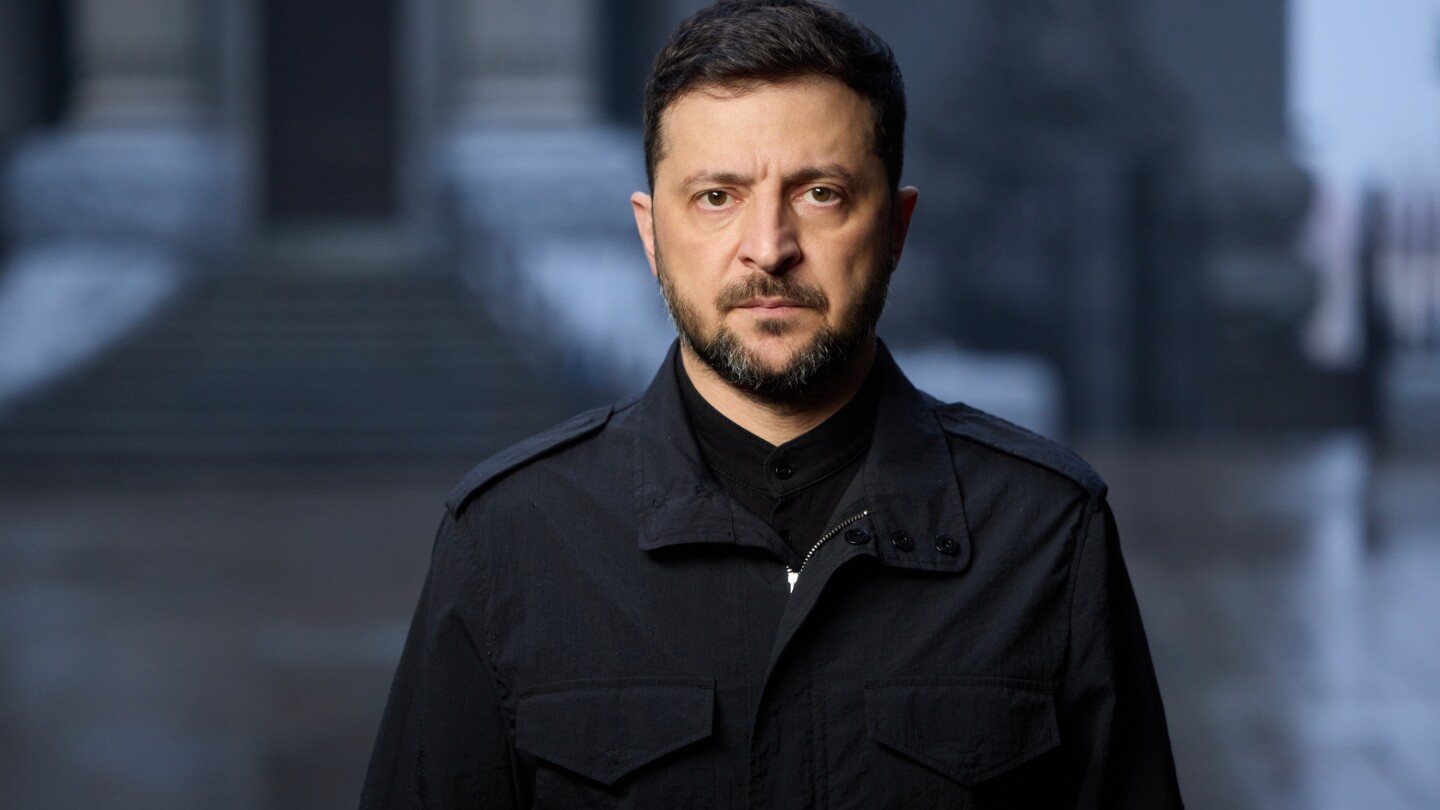
Proposed peace plan for Ukraine leaves country in a delicate position between US and Russia
The United States has proposed a 28-point peace plan aimed at ending the ongoing conflict in Ukraine, a move that has placed Kyiv in a precarious diplomatic position. Crafted by the Trump administration and the Kremlin without Ukraine’s involvement, the plan has drawn criticism for its concessions to Russian demands, including the recognition of Crimea, Luhansk, and Donetsk as de facto Russian territories. Ukrainian President Volodymyr Zelenskyy has repeatedly rejected such territorial compromises, emphasizing the need for a peace agreement that ensures Russia does not invade again. The proposal also includes provisions limiting Ukraine’s military capabilities, barring NATO membership, and requiring constitutional changes to enshrine neutrality. While Russian President Vladimir Putin has welcomed the plan, Ukrainian officials and analysts view it as a nonstarter, citing contradictions and potential violations of Ukraine’s sovereignty. The plan further calls for Russia to relinquish control of certain territories and proposes using frozen Russian assets to fund Ukraine’s reconstruction, a move Moscow has vehemently opposed. As Ukraine navigates this complex diplomatic landscape, the proposal underscores the challenges of balancing international alliances with national sovereignty.
-
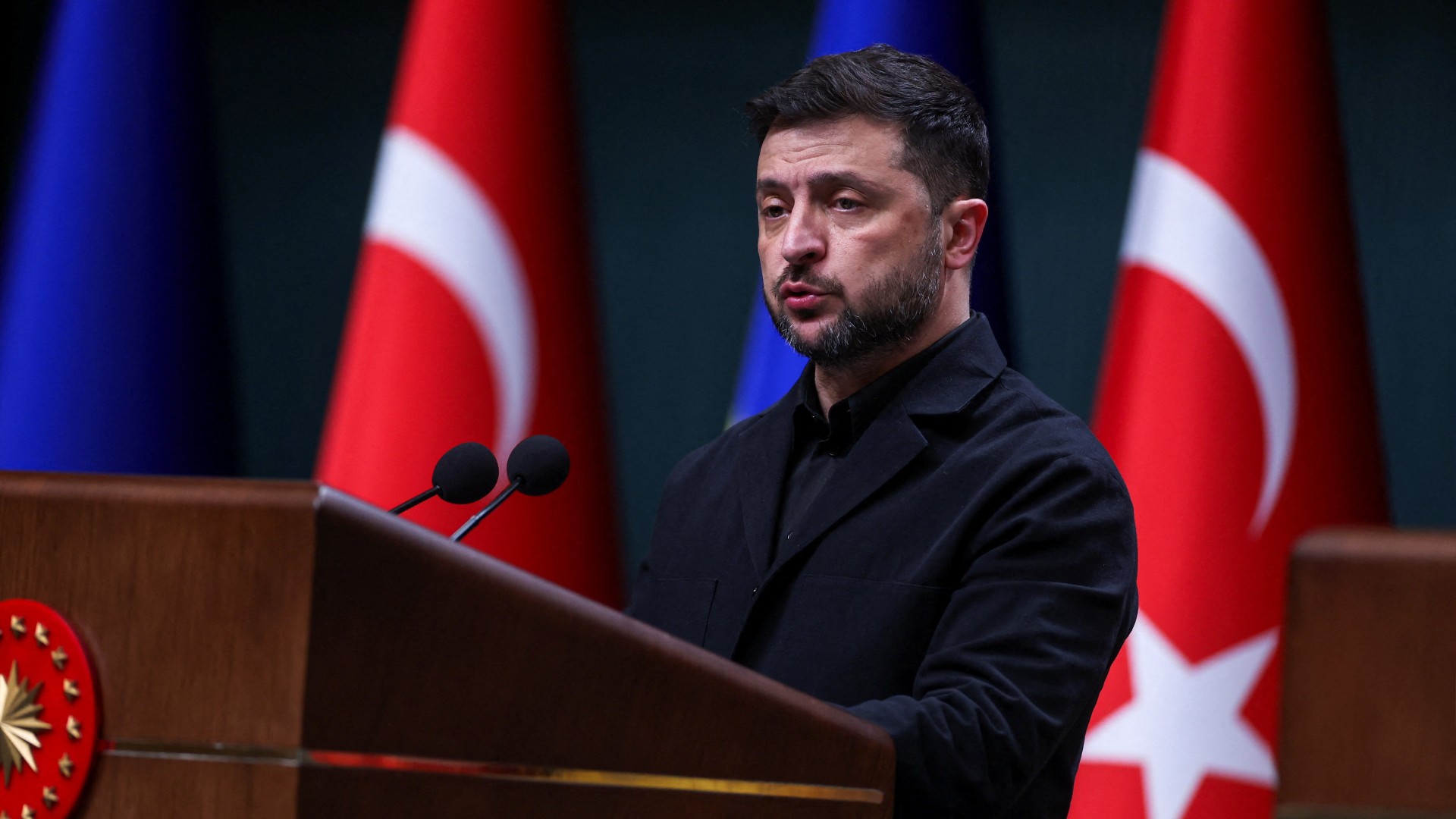
‘Up for grabs’: Russia pushes Ukraine deal as Zelensky is at his weakest
Ukrainian President Volodymyr Zelensky’s visit to Turkey on Wednesday coincided with the emergence of a contentious US-Russian peace plan aimed at ending the ongoing conflict in Ukraine. The proposal, reportedly crafted by US special envoy Steve Witkoff and Russian counterpart Kirill Dmitriev, demands significant concessions from Ukraine, including the complete withdrawal from the Donbas region and the formal cession of Crimea. Additionally, it would prevent Ukraine from joining NATO, reduce its military forces from 880,000 to 600,000, and establish a frozen line of contact in Kherson and Zaporizhzhia. While the plan offers US security guarantees, reconstruction aid, and preferential access to European markets, Ukrainian officials have dismissed it as a “Russian burger,” with one describing it as “bullshit.” Despite initial resistance, Zelensky expressed openness to discussions, emphasizing collaboration with the Trump administration. The proposal’s timing, amid corruption allegations against Zelensky’s inner circle and Russia’s battlefield gains, has raised suspicions of deliberate pressure. Western diplomats suggest the plan may be a negotiation tactic, with conditions subject to change. During his meeting with Turkish President Recep Tayyip Erdogan, Zelensky sought to revive Istanbul negotiations, potentially crafting an alternative to the Russian proposal. Turkey, while advocating for Ukraine’s sovereignty, privately acknowledges that territorial compromises may be necessary for peace.
-
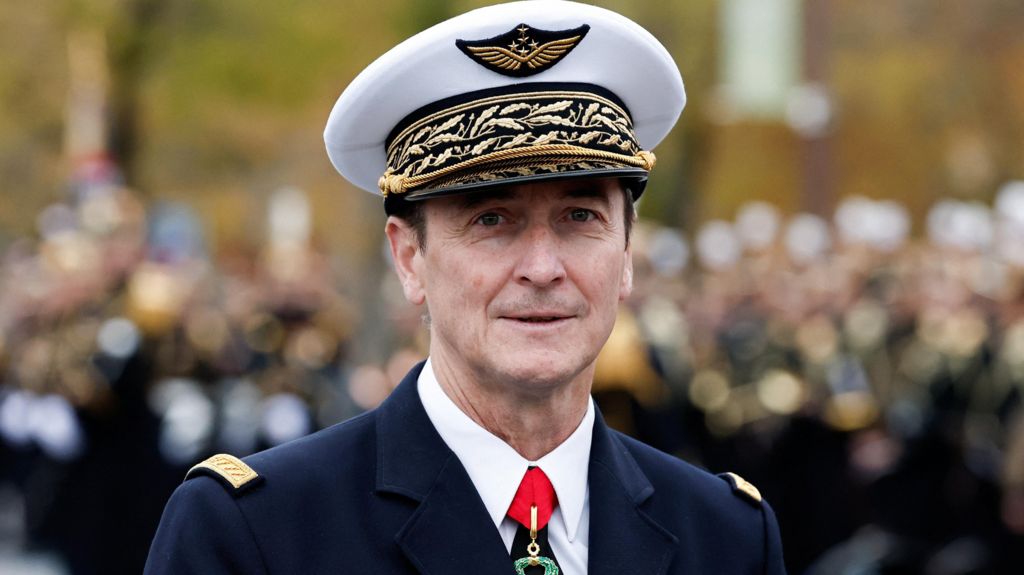
Outcry at army chief’s warning France must prepare to ‘lose children’ in war
France’s newly appointed army chief, General Fabien Mandon, has ignited a heated political debate with his stark warning about the nation’s readiness for a potential conflict with Russia. Speaking at a congress of mayors on Tuesday, Mandon emphasized that France’s greatest vulnerability lies not in its military or economic capabilities but in its lack of collective will to endure the sacrifices necessary for national defense. ‘We possess the expertise, economic strength, and demographic resources to deter Moscow,’ he stated. ‘However, what we lack is the spirit to accept suffering in defense of our values. If our nation falters because it is unwilling to lose its children or endure economic hardships for military production, we are truly at risk.’ Mandon urged mayors to foster this spirit within their communities. His remarks, consistent with previous warnings about a looming confrontation with Russia, were met with sharp criticism from both the left and nationalist right. Jean-Luc Mélenchon of the far-left France Unbowed party denounced the general’s comments as ‘warmongering,’ while Communist Party leader Fabien Roussel condemned the ‘intolerably belligerent’ rhetoric. In contrast, Raphael Glucksmann, a pro-Ukraine MEP, supported Mandon, accusing critics of being in ‘denial and capitulation.’ The far-right National Rally was divided, with Sébastien Chenu questioning Mandon’s legitimacy but Louis Aliot affirming the necessity of readiness for war. Defense Minister Catherine Vautrin and government spokeswoman Maud Bregeon defended Mandon, stressing the importance of preparation while striving to avoid conflict. Mandon’s warnings align with broader European concerns, as German Defense Minister Boris Pistorius recently suggested that Europe may have experienced its ‘last peacetime summer,’ with potential Russian aggression anticipated as early as 2028.
-

Lawmakers’ thousands of proposals receive responses
In a significant development for China’s legislative framework, all 9,160 proposals submitted by national lawmakers earlier this year have been fully addressed, as announced at a recent work conference in Beijing. These suggestions were put forward by deputies during the third session of the 14th National People’s Congress (NPC), China’s highest legislative body, held in March. Following a thorough review, the proposals were distributed to 211 organizations for implementation, with all actions completed on schedule and feedback provided to the respective deputies. The top areas of focus included ‘science, education, health, and sports,’ ‘development planning and comprehensive economy-related matters,’ and ‘social and public affairs,’ which collectively accounted for nearly half of all suggestions. This achievement underscores the efficiency and responsiveness of China’s legislative process in addressing critical national issues.
-
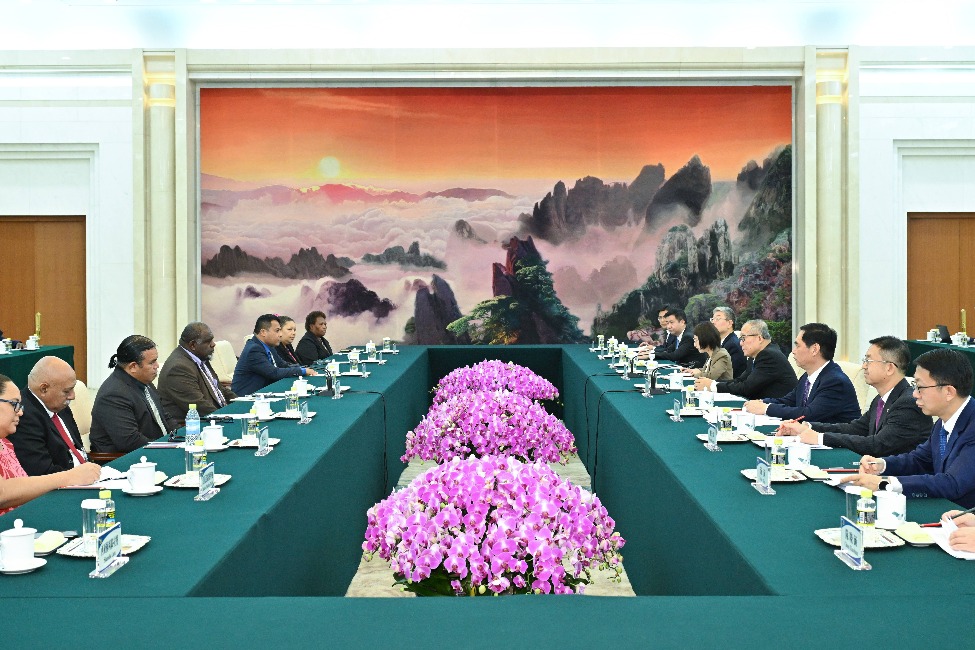
Senior Chinese legislator meets delegation of politicians from Pacific island countries
In a significant diplomatic engagement, Li Hongzhong, Vice-Chairman of the National People’s Congress Standing Committee and member of the Political Bureau of the Communist Party of China Central Committee, met with a delegation of politicians from Pacific island countries in Beijing on Friday. The delegation was led by Stephen Felix, Speaker of Vanuatu’s Parliament. The meeting underscored the growing bilateral relations between China and the Pacific island nations, which have been flourishing under the strategic guidance of their respective leaders. Li emphasized China’s commitment to fostering closer exchanges with these countries, particularly in the realms of political parties and legislative bodies. He expressed a shared vision of building a closer community with a shared future. Felix, on behalf of the Pacific island countries, reaffirmed their steadfast adherence to the one-China principle and their eagerness to deepen cooperation with China across various sectors. This meeting highlights the ongoing efforts to strengthen diplomatic and economic ties between China and the Pacific region, reflecting a mutual interest in sustainable development and regional stability.
-
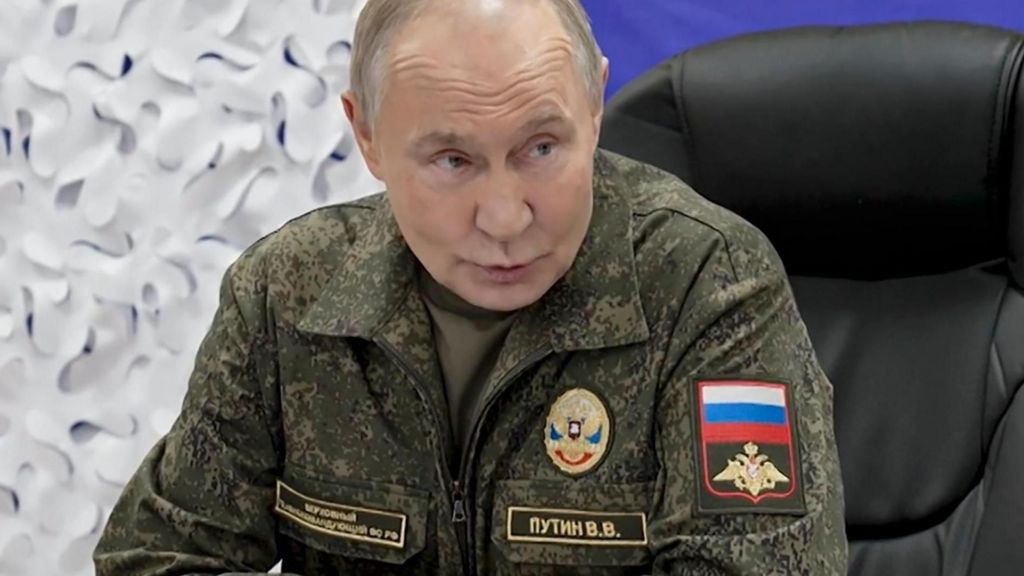
Steve Rosenberg: Kremlin tight-lipped on leaked plan – but advises Kyiv to accept
In a striking juxtaposition of diplomatic and military postures, the United States and Russia presented divergent approaches to the ongoing conflict in Ukraine on Thursday. While a US Pentagon delegation engaged in discussions with Ukrainian President Volodymyr Zelensky regarding a draft peace plan, Russian President Vladimir Putin, clad in military attire, reaffirmed his commitment to continuing the war during a meeting with army chiefs. Putin emphasized the ‘unconditional achievement’ of Russia’s objectives in what he termed the ‘special military operation.’
-
What we know about leaked US draft plan to end Russia’s Ukraine war
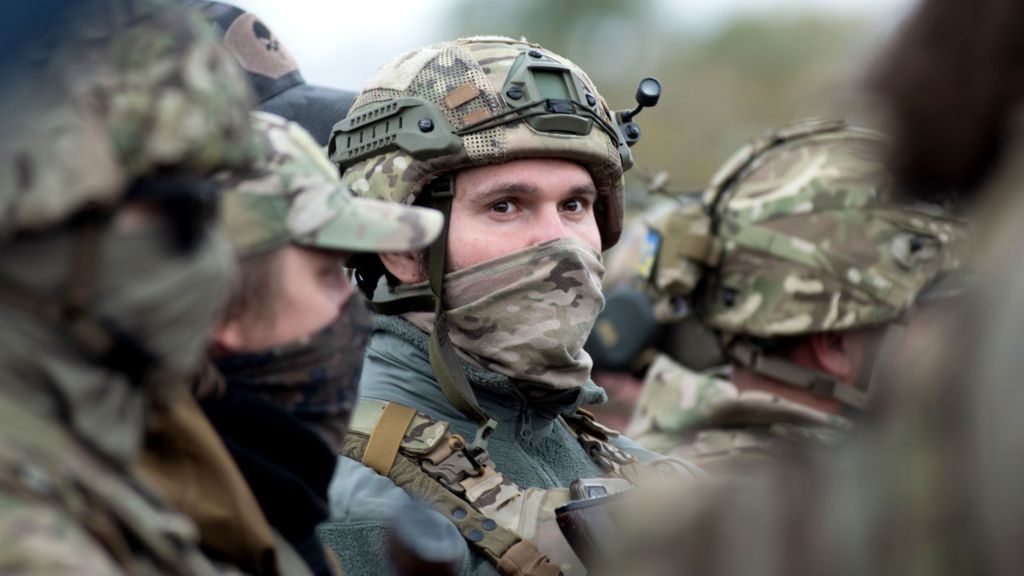
A leaked draft of a US-Russia peace plan has ignited widespread debate as it outlines significant concessions to Moscow, particularly regarding Ukraine’s sovereignty and territorial integrity. The proposal suggests transferring control of Ukraine’s industrial eastern Donbas region, still under Ukrainian authority, to de facto Russian control. Additionally, Ukraine would be required to reduce its armed forces to 600,000 personnel, a move that has drawn sharp criticism from Kyiv. The draft, comprising 28 key points, includes provisions for Ukraine’s sovereignty to be “confirmed” and a comprehensive non-aggression agreement between Russia, Ukraine, and Europe. However, the lack of detail on security guarantees and the proposal for snap elections within 100 days have raised concerns. The plan also calls for Ukraine to constitutionally renounce NATO membership, while offering short-term EU market access. Critics argue that the draft heavily favors Russia, particularly with provisions to reintegrate Moscow into the global economy and the G8. The proposal to invest $100 billion of frozen Russian assets in Ukraine’s reconstruction, with half the profits going to the US, has also been met with skepticism. While some points aim to address Russia’s grievances, such as halting NATO expansion and ensuring equal rights for Russian-speaking populations in Ukraine, the overall slant towards Moscow’s narrative has been widely criticized. The plan’s aggressive timeline, with Ukraine reportedly given until Thanksgiving to agree, has further fueled tensions. Both the European Union and Russia have stated they have not officially seen the draft, adding to the uncertainty surrounding its legitimacy and implementation.