分类: politics

  • Elon Musk says Doge was ‘somewhat successful’ but he would not do it again

    Elon Musk says Doge was ‘somewhat successful’ but he would not do it again

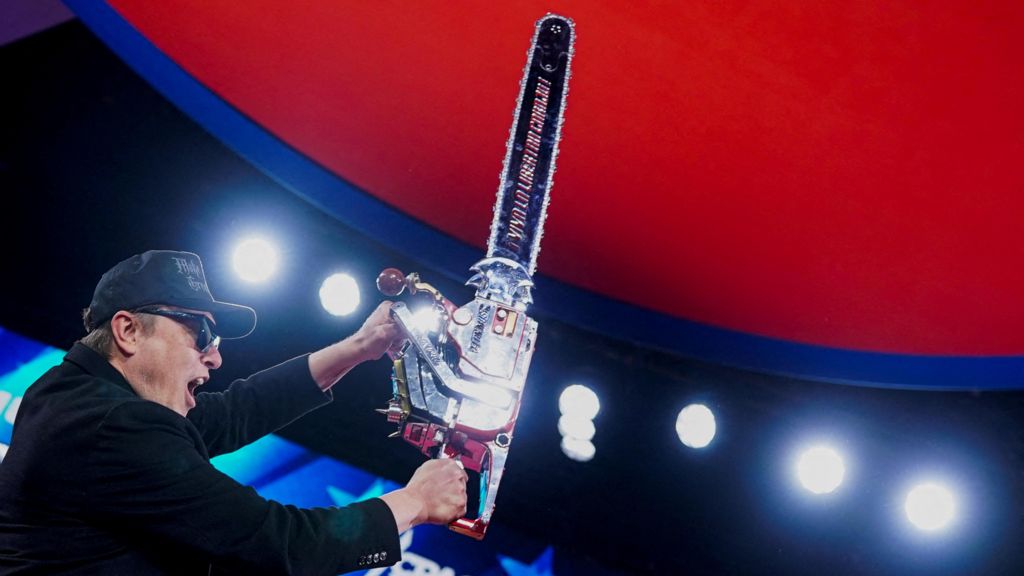
    In a revealing podcast interview, Elon Musk disclosed he would not reassume leadership of the Department of Government Efficiency (Doge) if given the opportunity, citing negative consequences for his corporate empire. The Tesla and SpaceX CEO made these remarks during an hour-long conversation on The Katie Miller Podcast, reflecting on his tumultuous tenure leading the Trump administration’s cost-cutting initiative.

    Musk departed Doge in May after initially pledging to save approximately $2 trillion annually through aggressive federal workforce reductions and program eliminations. The organization’s website claims $214 billion in savings this year, though Musk characterized the overall effort as only “a little bit successful” in achieving its objectives.

    When asked by host Katie Miller—a former White House adviser and Doge spokesperson—whether he would repeat his government service, Musk responded unequivocally: “I mean no, I don’t think so.” He indicated he would have preferred focusing exclusively on his companies, noting “they wouldn’t have been burning the cars” in reference to vandalism attacks targeting Tesla facilities and vehicles earlier this year.

    The billionaire’s high-profile political role sparked global protests and consumer boycotts against Tesla, contributing to the company’s sales plummeting to their lowest level in three years. Tesla warned investors that “changing political sentiment” continued to negatively impact demand.

    Despite his regrets, Musk defended Doge’s mission, stating: “You really want the least amount done by government as possible.” He asserted the advisory group—created through executive order on Trump’s first day back in office—had “stopped a lot of funding that really just made no sense,” including pushing for massive federal workforce reductions and attempting to shutter agencies like USAID.

    Musk revealed the unconventional name “Doge” originated from “internet suggestions,” acknowledging the group’s unofficial status within government. Several of its initiatives faced legal challenges or swift reversals, including the firing and subsequent rehiring of USDA bird flu officials.

    The Tesla CEO’s government service also strained his relationship with President Trump, culminating in a June falling-out when Musk criticized a Trump-backed spending bill. This triggered a public war of words on social media, with Trump threatening to investigate Musk’s government contracts.

    The relationship has since mended, with Musk attending a White House dinner in November and speaking positively of Trump’s “great sense of humor” during the podcast interview.
  • Ukraine to give revised peace plans to US as Kyiv readies for more talks with its coalition partners

    Ukraine to give revised peace plans to US as Kyiv readies for more talks with its coalition partners

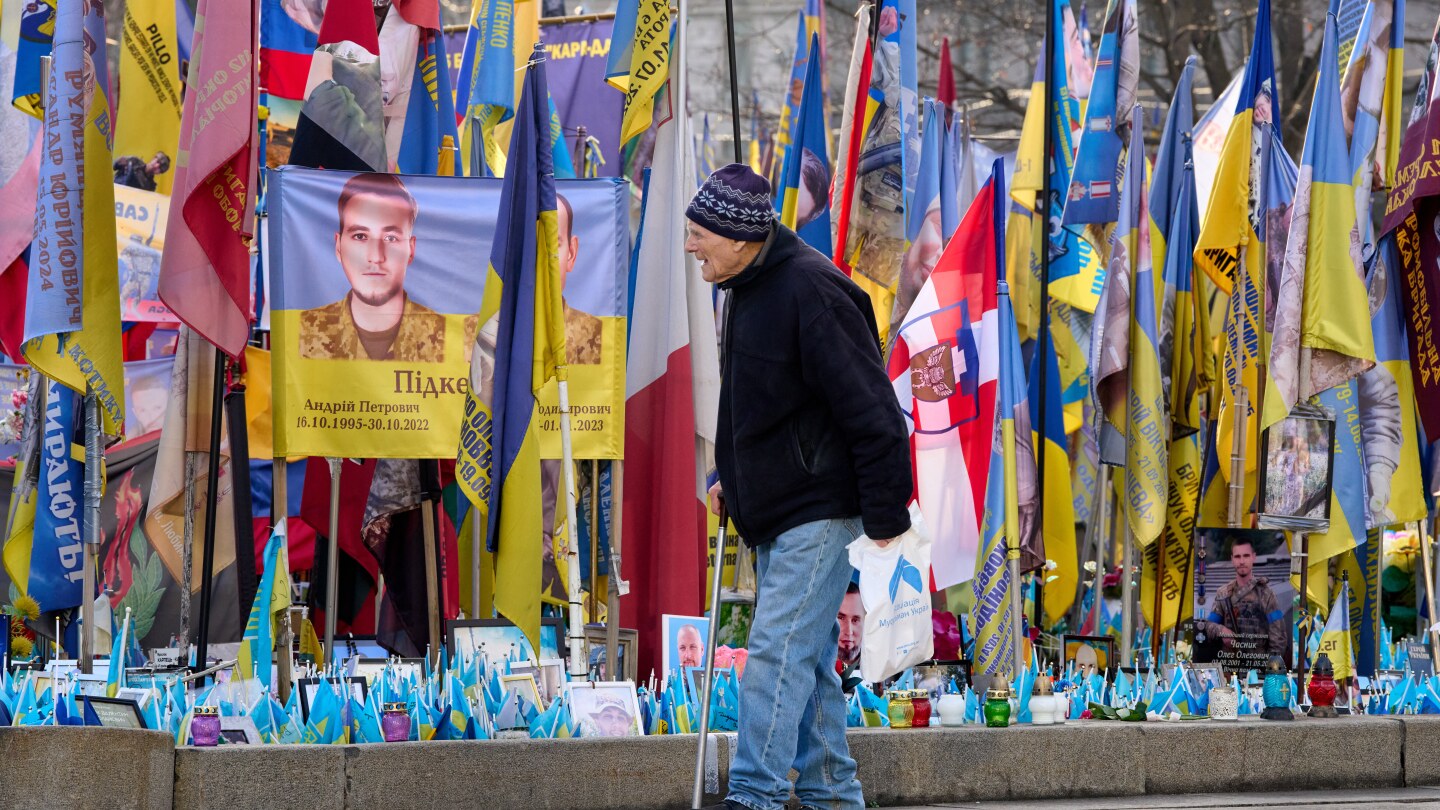
    In a significant diplomatic development, U.S. President Donald Trump revealed Wednesday that he had engaged in substantive discussions with European counterparts regarding potential pathways to end the Ukraine conflict. The phone consultation with German Chancellor Friedrich Merz, British Prime Minister Keir Starmer, and French President Emmanuel Macron addressed what Trump characterized as “pretty strong terms” for a settlement, with a proposed follow-up meeting this weekend involving U.S. and Ukrainian representatives.

    The negotiations have reached what European leaders describe as “a critical moment” as Washington pursues a swift compromise to conclude hostilities that began with Russia’s full-scale invasion in 2022. This American urgency has reportedly constrained Kyiv’s diplomatic flexibility, placing President Volodymyr Zelenskyy in a delicate position where he must simultaneously safeguard national interests while demonstrating willingness to compromise to the Trump administration.

    Zelenskyy confirmed that Ukraine was preparing to submit its latest peace framework to U.S. negotiators, coinciding with planned virtual discussions Thursday with approximately 30 supporting nations dubbed the “Coalition of the Willing.” These allies have reinforced Zelenskyy’s efforts to ensure any settlement both addresses Ukrainian sovereignty and deters future Russian aggression while accommodating European security concerns.

    The Ukrainian leader outlined two primary documents under development: a comprehensive plan for postwar reconstruction and economic development, plus a separate 20-point framework specifically addressing conflict resolution. In a notable shift, Zelenskyy expressed conditional openness to holding presidential elections within 60-90 days if international partners can guarantee security during wartime and necessary legislative adjustments are implemented. This responsiveness follows Trump’s previous questioning of Ukraine’s democratic processes, which echoed similar Russian criticisms.

    The diplomatic landscape is further complicated by the Trump administration’s recently released national security strategy, which explicitly seeks improved relations with Moscow and “reestablished strategic stability with Russia” while characterizing European allies as weak. Russian Foreign Minister Sergey Lavrov praised Trump as “the only Western leader” demonstrating “understanding of the reasons that made war in Ukraine inevitable.”

    Meanwhile, military assistance to Ukraine has declined significantly since the Trump administration mandated that NATO countries fund any further U.S. weapons transfers. According to data from Germany’s Kiel Institute, foreign military aid dropped sharply through 2025, with total support falling to €32.5 billion compared to the €41.6 billion annual average from 2022-2024. While Scandinavian nations and Germany substantially increased contributions, several European countries including Spain and Italy reduced or eliminated their military support.

  • China looks to strengthen LAC relations with release of policy paper

    China looks to strengthen LAC relations with release of policy paper

    In a significant diplomatic move, China has released its third comprehensive policy framework for engagement with Latin America and the Caribbean (LAC), marking the first update to its regional strategy in nine years. The document, unveiled on Wednesday by Assistant Foreign Minister Cai Wei, presents an ambitious roadmap for cooperation across more than 40 distinct areas.

    The newly published policy paper represents Beijing’s most detailed articulation of its approach to LAC relations to date, building upon previous frameworks established in 2008 and 2016. The comprehensive document addresses critical areas of mutual interest including trade expansion, investment facilitation, financial cooperation, technological innovation, and climate change mitigation.

    Foreign Ministry officials emphasized that the policy initiative demonstrates China’s commitment to fostering a community with a shared future between the nations. The strategy specifically responds to cooperation priorities and concerns expressed by LAC countries, positioning the document as a foundation for mutually beneficial development.

    Assistant Minister Cai characterized the release as a ‘springboard’ for enhanced collaboration, noting that the initiative aims to generate tangible benefits for citizens across all participating nations. The policy framework emerges amid growing economic ties between China and LAC countries, which have expanded significantly over the past decade through both trade agreements and infrastructure investment programs.

    The timing of this strategic document suggests China’s intention to further institutionalize its relationships throughout the Western Hemisphere, potentially influencing both economic and diplomatic dynamics across the region.

  • HKSAR’s 8th LegCo tasked with fostering Hong Kong’s development: LegCo president

    HKSAR’s 8th LegCo tasked with fostering Hong Kong’s development: LegCo president

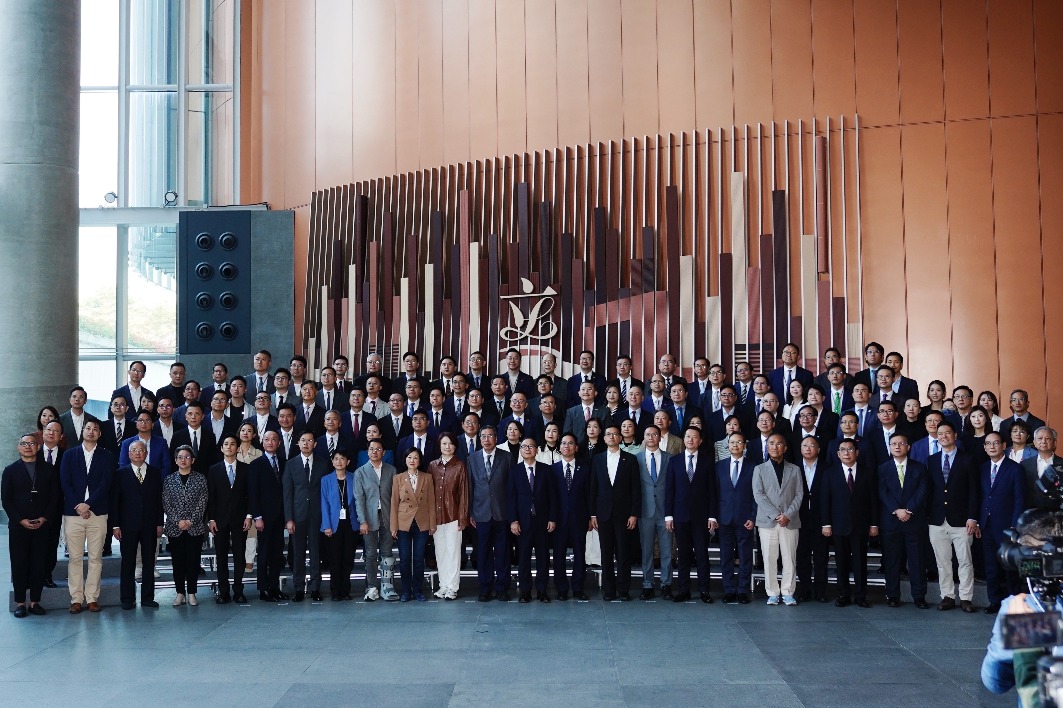
    Hong Kong’s political landscape enters a new chapter as the eighth-term Legislative Council (LegCo) prepares to assume office with a mandate to accelerate the region’s development. Outgoing LegCo President Andrew Leung Kwan-yuen articulated this vision during a transitional press briefing on December 9, 2025, attended by both incumbent legislators and newly elected members.

    The gathering followed Sunday’s electoral proceedings and Monday’s official results announcement, creating a forum for continuity and collaboration between outgoing and incoming representatives. Leung emphasized that the election outcomes demonstrate the successful implementation of the ‘patriots administering Hong Kong’ governance principle, which has established positive momentum for the region’s political development.

    With the new LegCo comprising 50 re-elected veterans and 40 first-time legislators, Leung specifically encouraged experienced members to mentor newcomers during their transition into legislative responsibilities. This knowledge transfer, he suggested, would be crucial for maintaining effective governance and advancing Hong Kong’s reform agenda.

    The eighth-term LegCo is scheduled to commence its four-year legislative term on January 1, 2026, marking the beginning of a new governance cycle for the Hong Kong Special Administrative Region. This transition represents not merely a change of personnel but an opportunity to inject renewed vitality into Hong Kong’s development through collaborative efforts between the legislative body and the HKSAR government.

  • The Group of Friends of Global Governance established at the UN

    The Group of Friends of Global Governance established at the UN

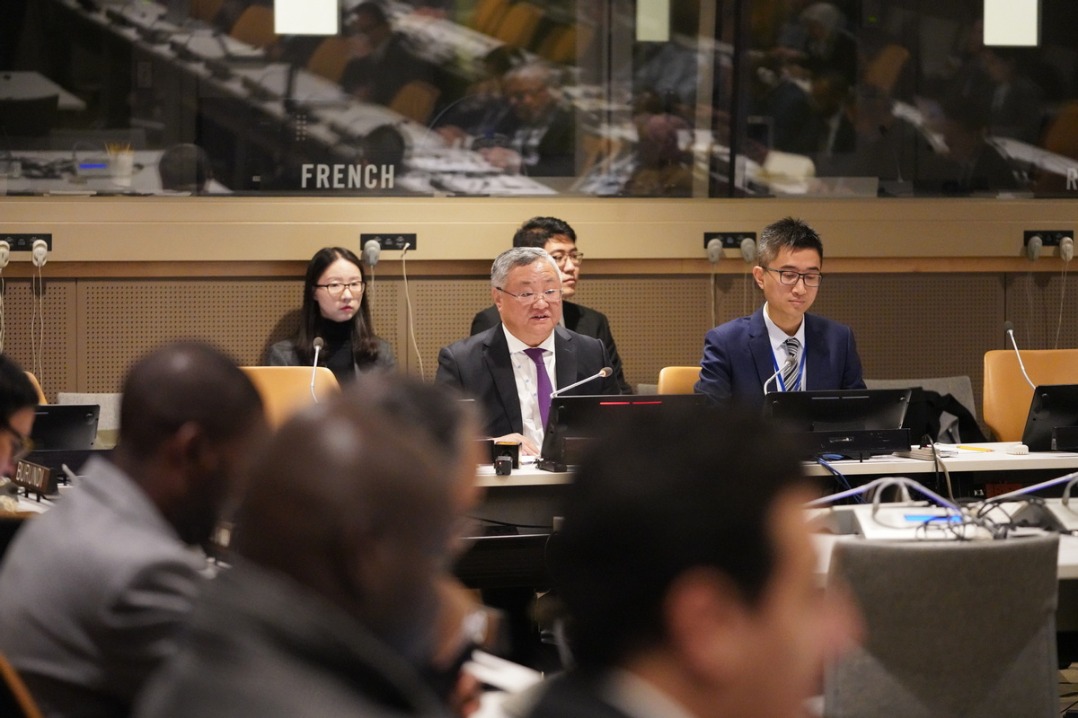
    In a significant move to strengthen multilateral cooperation, the Group of Friends of Global Governance was formally established at United Nations Headquarters in New York on December 9, 2025. The initiative brings together 43 founding member countries including Cuba, Iran, Kenya, Kazakhstan, Morocco, and Malaysia, representing a collective effort to address growing challenges in international governance.

    Chinese Ambassador Fu Cong, the nation’s permanent representative to the UN, announced that the group operates under the guidance of the Global Governance Initiative (GGI) proposed by Chinese President Xi Jinping. This marks the fourth major global initiative launched by President Xi, following previous frameworks focused on development, security, and civilization.

    Ambassador Fu emphasized the timely nature of this collaboration, noting that multilateralism and the UN’s role face unprecedented strain amid what he described as ‘a new period of turbulence.’ The initiative has already garnered support from more than 140 countries and international organizations since its introduction in September 2025.

    The Chinese diplomat framed the establishment within the context of the UN’s 80th anniversary, reminding attendees of the organization’s founding principles following the devastation of two world wars. He outlined five core principles anchoring the GGI: sovereign equality, international rule of law, multilateralism, a people-centered approach, and emphasis on tangible actions.

    Fu stressed the critical importance of preserving historical accuracy regarding World War II outcomes, warning against attempts to ‘whitewash aggression, distort history, or revive militarism.’ He called for strengthened commitment to the UN Charter’s foundational principles and emphasized the inseparable connection between security and development, particularly for developing nations seeking to bridge economic divides and achieve sustainable stability.

  • Events honor role of first provincial governor in modernizing Taiwan

    Events honor role of first provincial governor in modernizing Taiwan

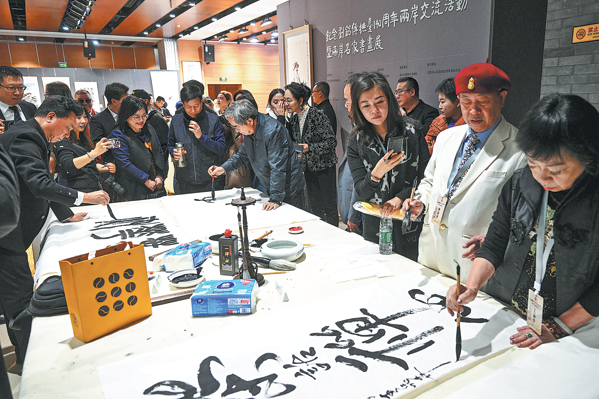
    Beijing hosted a significant cross-strait gathering on Tuesday to commemorate the 140th anniversary of Liu Mingchuan’s appointment as Taiwan’s first provincial governor during the Qing Dynasty. The event at Beijing’s Taiwan Guild Hall brought together representatives from both sides of the strait, highlighting the historical interconnectedness between Taiwan and mainland China.

    Liu Mingchuan, who led successful defenses against French invaders during the Sino-French War (1883-1885), was appointed in 1885 when Taiwan was formally elevated to provincial status. During his six-year tenure, Governor Liu transformed Taiwan into the most progressive province of late Qing China by introducing railway systems, telegraph technology, and modern infrastructure, earning him the title ‘father of Taiwan’s modernization.’

    Yang Yizhou, Vice-Chairman of the All-China Federation of Taiwan Compatriots, emphasized that Taiwan’s establishment as a province ‘institutionally reinforced Taiwan’s status as an inseparable part of Chinese territory.’ He noted that UN documents continue to designate Taiwan as ‘Taiwan, Province of China,’ reflecting contemporary reality.

    Yu Shu-chin, President of Taiwan’s Association of World Peace Promotion, addressed current cross-strait tensions, stating that separatist forces advocating ‘Taiwan independence’ are ‘destined to fail.’ She expressed concern about revised curriculum guidelines in Taiwan that obscure historical facts, making it harder for younger generations to learn their history.

    The commemoration included a calligraphy and painting exhibition featuring over 100 works by 91 artists from across the strait, depicting Liu’s life and character. Liu Xuexuan, president of the Liu Mingchuan Research Association and descendant of the governor, expressed hope that the event would build ‘a bridge of understanding across the Taiwan Strait.’

    Participants noted that many Taiwanese locations bear Liu’s name, including Ming Chuan University and the Liu Ming-Chuan Tunnel in Keelung, serving as shared cultural symbols between the mainland and Taiwan.

  • South Korea protests Chinese and Russian warplanes in its airspace

    South Korea protests Chinese and Russian warplanes in its airspace

    South Korea has formally registered a diplomatic protest with Chinese and Russian defense officials stationed in Seoul following the unauthorized entry of their military aircraft into Korea’s Air Defense Identification Zone (KADIZ). The incident occurred on Tuesday when seven Russian and two Chinese warplanes penetrated the designated airspace without prior notification.

    According to South Korea’s Joint Chiefs of Staff, the Russian aircraft entered KADIZ near the disputed Dokdo Islands (known as Takeshima in Japan) and Ulleung Island, while Chinese planes approached near Ieodo, a submerged rock claimed by both Seoul and Beijing. Following their separate entries, the aircraft converged in international airspace near Japan’s Tsushima Island.

    The South Korean military promptly deployed fighter jets to monitor the situation and implement tactical preparedness measures, though officials confirmed the aircraft never violated sovereign airspace. This marks the latest in a series of similar incidents since 2019, when Chinese and Russian aircraft began conducting joint patrols in the region.

    China’s Defense Ministry confirmed the operation, characterizing it as part of an “annual cooperation plan” with Russia aimed at “addressing regional challenges and maintaining regional peace and stability.” Meanwhile, Russia maintains its longstanding position that it does not recognize South Korea’s unilaterally declared air defense zone, arguing it creates no legal obligations for other nations.

    The incident highlights ongoing territorial tensions in Northeast Asia, where multiple nations maintain overlapping claims over islands and maritime boundaries. Both Japan and North Korea join South Korea in claiming sovereignty over the Dokdo Islands, while Ieodo remains a point of contention between China and South Korea.

  • Ukraine ‘ready for elections’ if partners guarantee security, Zelensky says

    Ukraine ‘ready for elections’ if partners guarantee security, Zelensky says

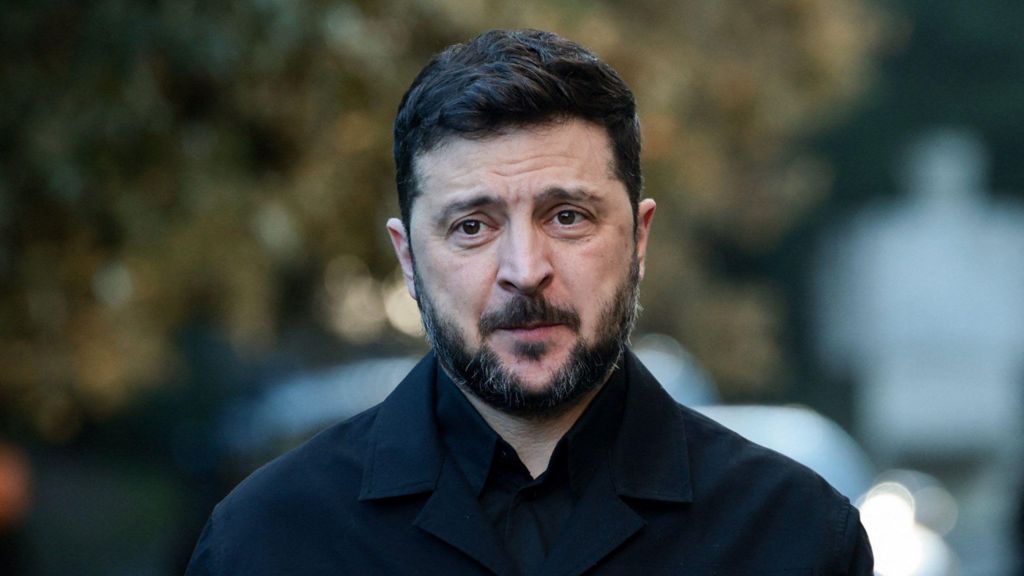
    Ukrainian President Volodymyr Zelensky has forcefully responded to international pressure regarding presidential elections, declaring Ukraine’s readiness to conduct a democratic vote within 60-90 days provided adequate security guarantees from Western allies materialize. This statement comes as a direct rebuttal to claims by former US President Donald Trump that Kyiv exploits ongoing hostilities to avoid electoral accountability.

    The constitutional dilemma stems from the suspension of normal electoral processes under martial law imposed after Russia’s full-scale invasion in 2022. While Zelensky’s five-year term technically concluded in May 2024, Ukrainian law prohibits elections during military emergency periods.

    In detailed remarks to journalists following Trump’s Politico interview, Zelensky announced he would request legislative proposals to enable exceptional wartime elections. He emphasized that electoral decisions remain Ukraine’s sovereign prerogative, stating: ‘The issue of elections in Ukraine depends first and foremost on our people, not the people of other countries.’

    The Ukrainian leader specifically addressed what he termed ‘completely unreasonable narratives’ suggesting his administration clings to power deliberately prolonging the conflict. These allegations mirror Kremlin propaganda positioning Zelensky as an illegitimate leader and demanding elections as a ceasefire precondition.

    Practical implementation challenges remain formidable according to opposition lawmakers and policy experts. Lesia Vasylenko, an opposition parliamentarian, emphasized that true electoral fairness requires inclusive participation of all citizens—including frontline military personnel and the approximately four million refugees dispersed across Europe.

    Security concerns present perhaps the most significant obstacle. Hanna Shelest of Ukrainian Prism think tank noted the impossibility of securing polling stations amid ongoing missile strikes and occupation of Ukrainian territory. Historical precedent also exists—Western democracies including Britain suspended elections during World War II.

    Public sentiment appears to reinforce governmental caution. A March survey by the Kyiv International Institute of Sociology revealed 78% of Ukrainians oppose elections even after conflict resolution, prioritizing national unity over political processes during existential warfare.

    The election discourse emerges as US-mediated peace negotiations continue, with Zelensky’s legitimacy becoming an unexpected bargaining point in diplomatic discussions.

  • Nobel laureate Machado appears for the first time in 11 months

    Nobel laureate Machado appears for the first time in 11 months

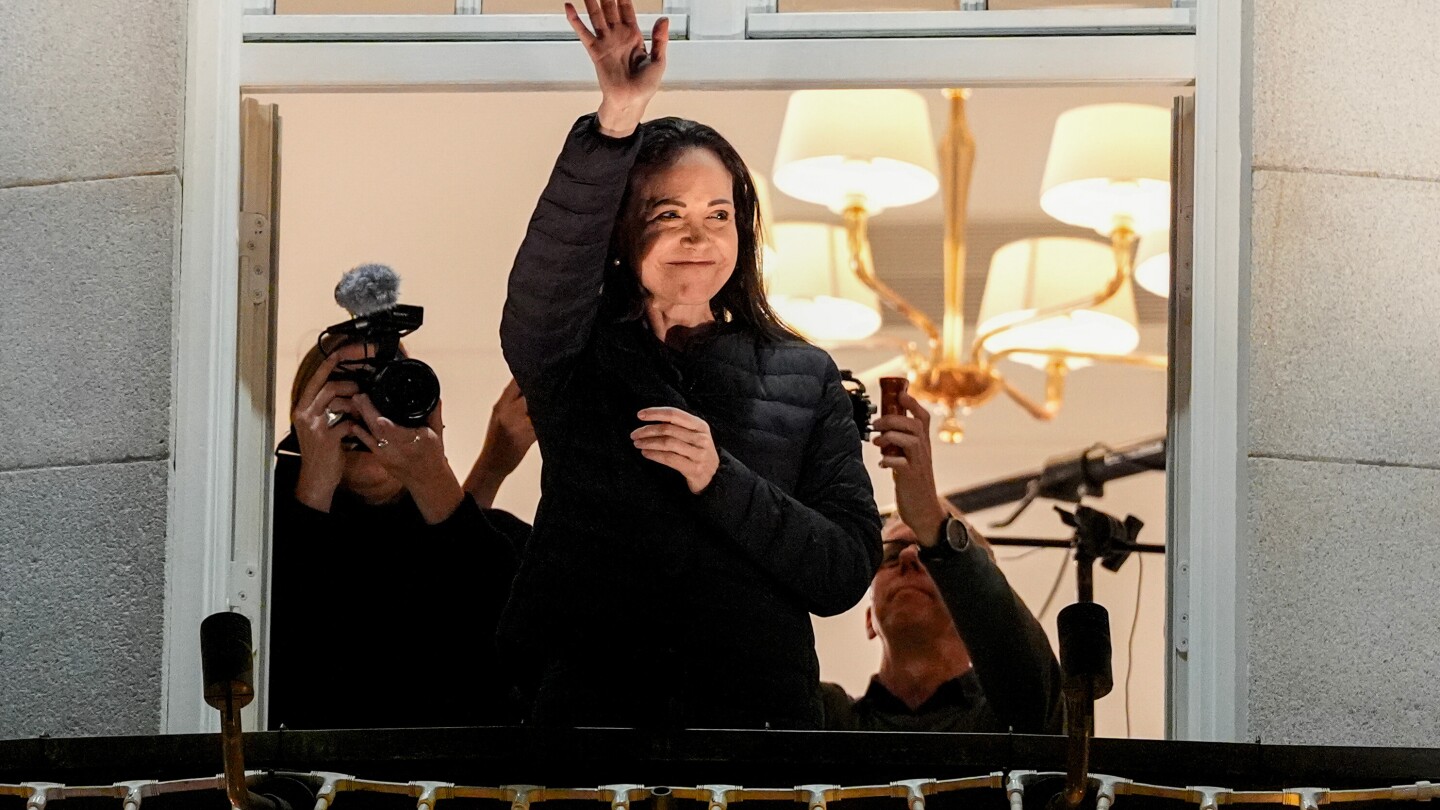
    OSLO, Norway — In a dramatic reappearance that captivated international attention, Venezuelan opposition leader María Corina Machado surfaced publicly for the first time in eleven months on Thursday. The Nobel Peace Prize laureate emerged onto a hotel balcony in Norway’s capital, greeting an emotional gathering of supporters who had assembled despite freezing temperatures.

    The momentous appearance followed her daughter Ana Corina Sosa accepting the prestigious Nobel award on her behalf just hours earlier. Machado received the honor for mounting the most significant peaceful challenge in years to President Nicolás Maduro’s authoritarian regime in Venezuela.

    Dressed casually in jeans and a puffer jacket, the 58-year-old leader spent several minutes outside Oslo’s Grand Hotel, embracing family members and close aides as the crowd erupted in chants of “Freedom!” and “President!”. The collective singing of Venezuela’s national anthem created a poignant moment of diaspora solidarity.

    “I want you all back in Venezuela,” Machado declared to supporters who raised cellphones to capture her first public appearance since January 9, when she was briefly detained after participating in a Caracas protest before vanishing into hiding.

    Her journey to Oslo involved extraordinary circumstances, with flight tracking data indicating her aircraft originated from Bangor, Maine. In an audio recording published on the Nobel website, Machado revealed that many individuals had “risked their lives” to facilitate her perilous journey, describing the recognition as “a measure of what this award means to the Venezuelan people.”

    The ceremony itself served as a powerful show of regional solidarity, with attendance from Argentine President Javier Milei, Ecuadorian President Daniel Noboa, Panamanian President José Raúl Mulino, and Paraguayan President Santiago Peña.

    Jørgen Watne Frydnes, chair of the Norwegian Nobel committee, delivered pointed remarks during the award presentation, stating that “Venezuela has evolved into a brutal authoritarian state” while praising Machado as “one of the most extraordinary examples of civilian courage in recent Latin American history.”

    Directly addressing Maduro, Frydnes issued a stark declaration: “Your power is not permanent. Your violence will not prevail over people who rise and resist. Mr. Maduro, accept the election result and step down.”

    The background to this recognition stems from Machado’s victory in an opposition primary election and her intended challenge to Maduro in the 2024 presidential race, before being barred from running by the government. Her replacement candidate, retired diplomat Edmundo González, subsequently sought asylum in Spain after Venezuelan courts issued an arrest warrant against him.

    Machado joins a distinguished group of Nobel Peace laureates who were detained or imprisoned at the time of their award, including Iran’s Narges Mohammadi (2023) and Belarusian advocate Ales Bialiatski (2022).

    In the Nobel lecture delivered by her daughter, Machado’s message emphasized that “to have democracy, we must be willing to fight for freedom”—a testament to the ongoing struggle faced by Venezuelan opposition forces despite international recognition.

  • Eileen Higgins elected as first Democratic mayor of Miami in three decades

    Eileen Higgins elected as first Democratic mayor of Miami in three decades

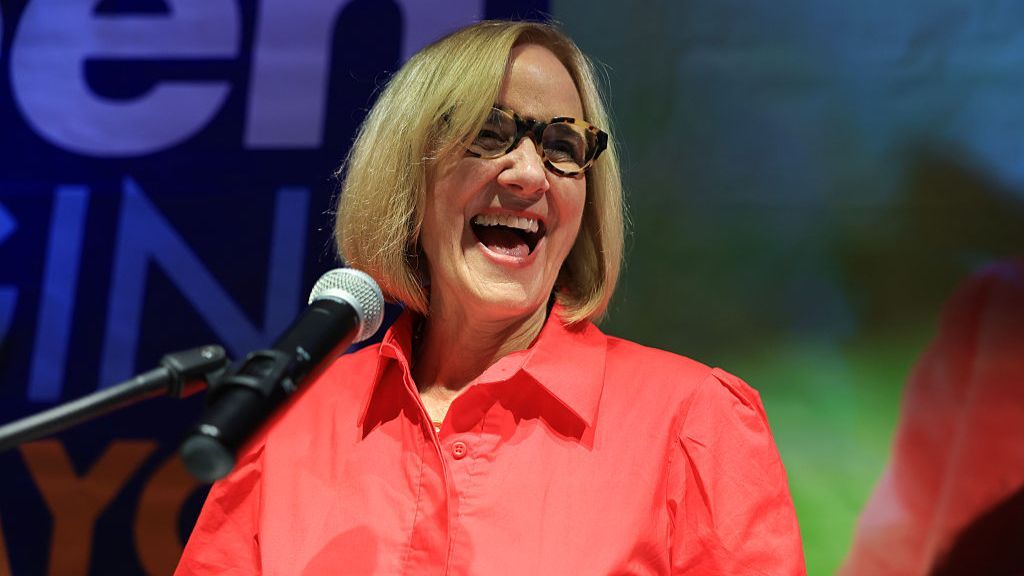
    In a landmark political realignment, Democrat Eileen Higgins has secured victory in Miami’s mayoral election, marking the first time in nearly three decades that a candidate from her party has captured this influential position. The former county commissioner decisively won the runoff election with 59% of the vote, overcoming Republican challenger Emilio Gonzalez who garnered approximately 41% despite receiving endorsements from both former President Donald Trump and Florida Governor Ron DeSantis.

    Addressing jubilant supporters at her victory celebration, Higgins proclaimed that ‘Miami chose a new direction… you chose competence over chaos.’ Her triumph not only breaks a 30-year Republican stronghold but also establishes her as the first woman ever elected to the mayoral office in Miami’s history, according to US media reports.

    The 61-year-old mayor-elect framed her victory as ‘the beginning of the work ahead,’ pledging to confront pressing urban challenges including immigration policy and affordable housing shortages. Higgins emphasized her commitment to leading ‘a city that belongs to everyone’ while drawing sharp contrasts with Trump’s governance approach. In recent interviews, she characterized the former president’s immigration enforcement tactics as ‘inhumane and cruel,’ though she expressed willingness to collaborate with the administration on areas of common interest.

    Despite the officially non-partisan nature of the race, Higgins garnered support from prominent Democratic figures including former Transportation Secretary Pete Buttigieg. Her victory extends a pattern of Democratic successes in recent elections, following significant wins in New York, Virginia, and New Jersey during the initial months of Trump’s second term.

    Higgins succeeds outgoing Republican mayor Francis Suarez, who previously mounted a brief campaign for the Republican presidential nomination. This political transition occurs against the backdrop of evolving urban politics in traditionally conservative strongholds, signaling potential shifts in voter priorities regarding municipal leadership and national political alignment.