分类: politics

  • Hamas demands end to Israeli violations before second ceasefire phase

    Hamas demands end to Israeli violations before second ceasefire phase

    Hamas declared on Tuesday that it would suspend advancement to the second phase of the ceasefire agreement until Israel ceases its alleged violations and military operations in Gaza. Senior Hamas official Husam Badran urged mediating nations—Qatar, the United States, and Egypt—to pressure Israel into adhering to the initial terms of the truce.

    Badran emphasized that the next phase of the agreement cannot proceed while Israel continues to breach the ceasefire terms and evade its commitments. Reports indicate that since the ceasefire began on October 10, Israel has violated the agreement at least 738 times.

    The first phase stipulated a cessation of hostilities, the exchange of Israeli captives for Palestinian prisoners, and increased humanitarian aid into Gaza. Badran highlighted that the agreement mandated the daily entry of 400 to 600 aid trucks and the reopening of the Rafah crossing for both goods and individuals. However, Israel has kept the crossing closed, leaving 6,000 aid trucks stranded, according to Gaza’s government media office director.

    Under international pressure, Israel reopened the Allenby Bridge Crossing for commercial traffic, though humanitarian shipments remained heavily restricted. The crossing had been closed since September following a security incident.

    A contentious aspect of the ceasefire involved the division of Gaza into Green and Red zones, separated by a Yellow Line. Israeli military chief Eyal Zamir stated that Israel would retain control over the Green zone, which encompasses most of Gaza’s agricultural land, the Rafah crossing, and over half of its territory. The UN condemned this move, with spokesperson Stephane Dujarric asserting that it contradicts the spirit of the Trump peace plan and called for the restoration of Gaza’s original borders.

    Further exacerbating tensions, Israeli forces reportedly killed two Palestinian children near the Yellow Line on November 29, claiming they posed a threat. Additionally, Israel continued demolishing homes in the Green zone, violating terms meant to halt such operations.

    The second phase of the agreement envisions a full Israeli withdrawal from Gaza, Hamas’s disarmament, and the deployment of an international stabilization force. Hamas expressed willingness to surrender its weapons to a future Palestinian government, contingent on an end to Israeli occupation. However, the proposed peace council, initially including figures like Tony Blair, faced setbacks following objections from Arab and Muslim leaders.

    Since the October ceasefire, the Palestinian Ministry of Health in Gaza reports that Israeli actions have resulted in over 380 fatalities and 987 injuries.
  • Venezuelans have mixed reactions to Nobel laureate Machado traveling abroad

    Venezuelans have mixed reactions to Nobel laureate Machado traveling abroad

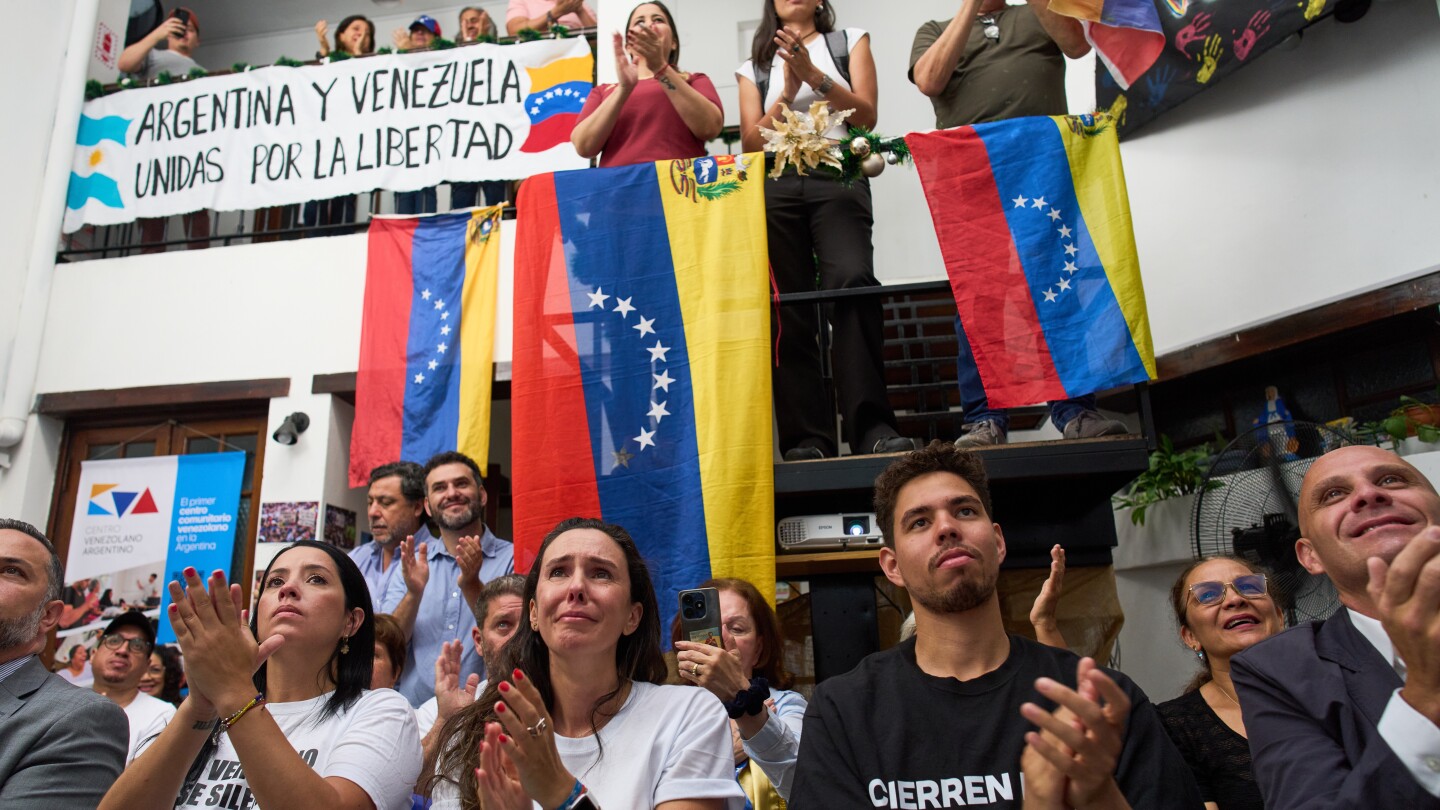
    OSLO, Norway – The Nobel Peace Prize ceremony honoring Venezuelan opposition leader María Corina Machado transformed into both a celebration of democratic principles and a stark condemnation of the Maduro regime’s human rights record. While Machado’s daughter accepted the award on her behalf in Oslo, the absence of the laureate herself underscored the ongoing political tensions in Venezuela.

    Ana Corina Sosa delivered her mother’s prepared remarks to an international audience, stating: “She wants to live in a free Venezuela, and she will never give up on that purpose. We all know she will return to Venezuela very soon.” The statement came as Machado made her first public appearance since January 9, when she was briefly detained following anti-government protests in Caracas.

    The award ceremony featured extensive documentation of human rights abuses under President Nicolás Maduro’s administration. Jørgen Watne Frydnes, chair of the Norwegian Nobel committee, detailed instances of torture including electric shocks to genitals, suffocation techniques using plastic bags, and systematic sexualized violence against detainees. He explicitly called on Maduro to “accept the election result and step down”—referencing the controversial 2024 presidential election that extended his term despite evidence of electoral irregularities.

    Back in Venezuela, reactions to Machado’s international recognition revealed deep political divisions. Some citizens, like office worker Josefina Páez, supported her decision: “That woman has made many sacrifices to fight for democracy. It’s time she reunites with her family and continues fighting from abroad.” Others expressed skepticism, with shopkeeper José Hurtado labeling Machado a “traitor” for her alignment with U.S. policies toward Venezuela.

    The geopolitical context surrounding the ceremony remains tense, with the United States maintaining military operations in the Caribbean that have resulted in Venezuelan casualties. Meanwhile, Machado’s political successor, Edmundo González, attended the ceremony after seeking asylum in Spain following an arrest warrant issued by Venezuelan authorities. His son-in-law remains among hundreds imprisoned for what human rights organizations classify as political reasons.

    United Nations-backed investigators and Venezuelan NGOs have extensively documented the government’s repression tactics throughout Maduro’s presidency. The opposition now faces logistical challenges regarding how and when both Machado and González might safely return to Venezuela, as their continued exile represents both a symbolic and practical challenge to Maduro’s authority.

  • Sarkozy releases prison diaries about his 20 days behind bars

    Sarkozy releases prison diaries about his 20 days behind bars

    In a remarkably candid memoir penned just weeks after his release, former French President Nicolas Sarkozy offers unprecedented insights into his 20-day incarceration at Paris’s La Santé prison. “A Prisoner’s Diary,” spanning 216 pages, documents Sarkozy’s experience as inmate number 320535 while serving a five-year sentence for campaign finance conspiracy involving alleged Libyan funding during his 2007 presidential bid.

    The memoir vividly describes Sarkozy’s 12-square-meter isolation cell, which he compares to a “bottom-of-the-range hotel” despite its reinforced door with guard eye-hole. The former head of state details his decision to forgo daily yard walks—which he deemed “more like a cage than a place of promenade”—opting instead for exercise on a running machine in what became his “veritable oasis.”

    Beyond the physical descriptions, Sarkozy reveals touching moments: being kept awake by a fellow inmate singing Lion King songs, receiving overwhelming support through postcards covering his walls, and experiencing unexpected kindness from prison staff who consistently addressed him as “Président.”

    The book transforms into political commentary as Sarkozy vehemently denies the charges, claiming victimhood in a “politically-motivated cabal” within France’s justice system. He draws striking parallels between his case and the historic Dreyfus affair, noting both involved “fake documents” and similar humiliations—including his dismissal from the Legion of Honor.

    This dismissal becomes the platform for Sarkozy’s critique of current President Emmanuel Macron, whom he accuses of insincerity for not personally explaining the decision. More significantly, Sarkozy expresses unprecedented warmth toward former rival Marine Le Pen, praising her “brave and unambiguous” support following his conviction. He notably renounces future participation in any “Republican Front” against her National Rally party, arguing that excluding RN voters from the political mainstream constitutes a strategic error for the right.

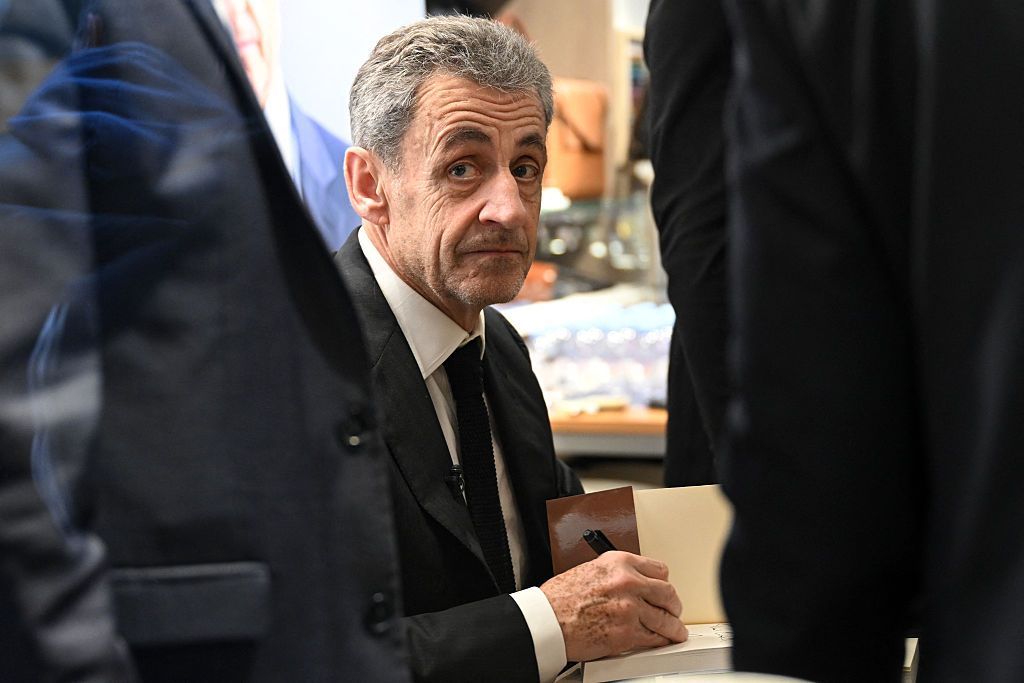
    The memoir, launched with substantial media attention at a Paris book signing, represents both personal catharsis and political repositioning, potentially reshaping alliances within French conservative politics as Sarkozy maintains considerable influence despite his legal troubles.

  • Former senior customs official sentenced to 13 years for bribery

    Former senior customs official sentenced to 13 years for bribery

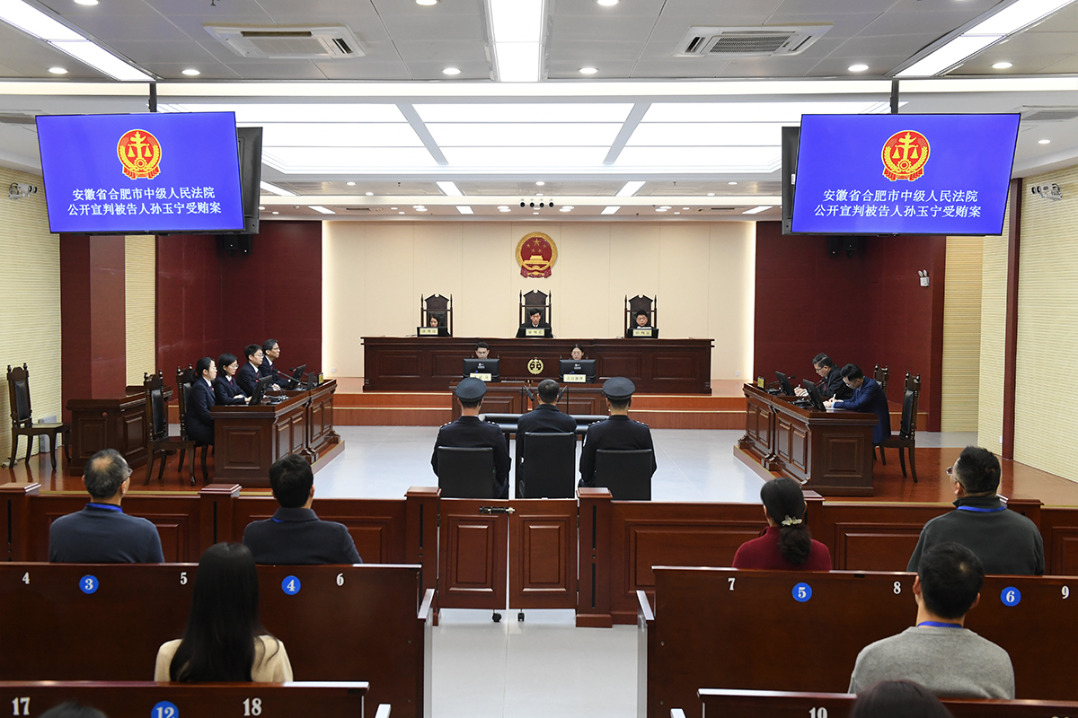
    In a significant ruling against corruption, the Hefei Intermediate People’s Court has sentenced Sun Yuning, former deputy director of China’s General Administration of Customs, to 13 years imprisonment for bribery offenses. The verdict delivered on Wednesday includes an additional fine of 4 million yuan ($566,300) and mandates that all illicit assets be confiscated by the state treasury.

    The court established that between 2005 and 2024, Sun systematically exploited his influential positions across multiple customs administrations to provide unlawful advantages to various corporations and individuals. His corrupt activities spanned business operations, project contracts, and personnel promotions during his tenures as senior official in Changchun, Manzhouli, Zhengzhou, and Dalian Customs before his promotion to the national administration.

    Evidence presented during the September 2024 trial revealed Sun accepted bribes exceeding 50.72 million yuan, either directly or through intermediaries. The court characterized the case as involving “an extraordinarily large sum” but acknowledged several mitigating factors including partial restitution of illegal gains, voluntary disclosure of previously unknown offenses, and cooperative conduct throughout judicial proceedings.

    Sun, 60, who joined the Communist Party of China in 1988, spent his entire career in customs services before his dramatic fall from grace. His investigation began in September 2024 for “serious violations of Party discipline and national laws,” resulting in immediate dismissal from office. By March 2025, he faced formal expulsion from the Party and subsequent arrest approval by the Supreme People’s Procuratorate.

  • Trump veers off-script and does little to calm Republican nerves

    Trump veers off-script and does little to calm Republican nerves

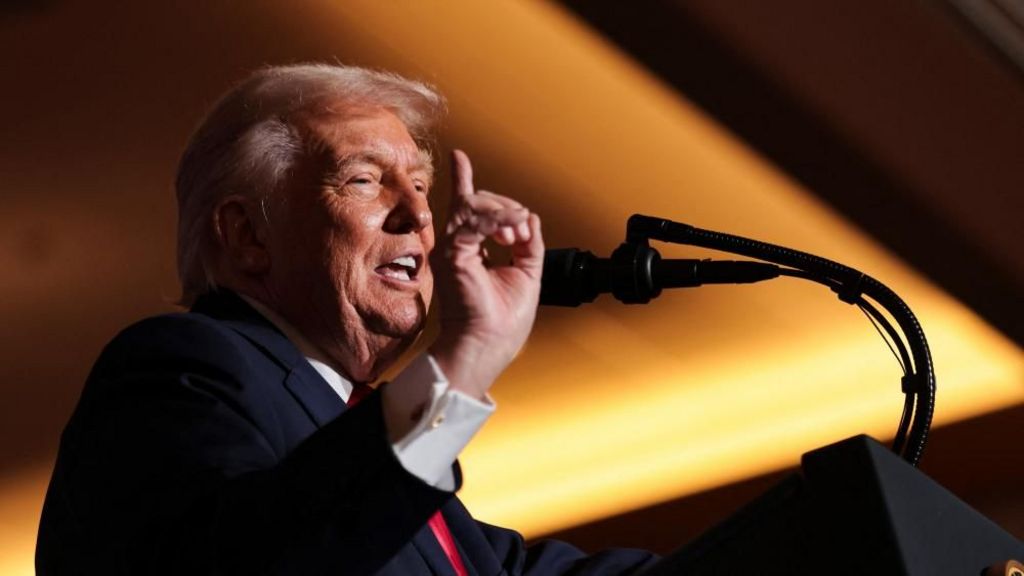
    In a highly anticipated campaign rally in Pennsylvania on Tuesday evening, former President Donald Trump delivered a characteristically wide-ranging 90-minute address that notably diverged from his advisors’ intended economic focus. Despite expectations from Republican officials and White House aides for a disciplined message countering Democratic attacks on economic issues, Trump embarked on extensive rhetorical tangents covering immigration, wind energy, golfing, and foreign policy concerns.

    The event, marking Trump’s return to the campaign trail in a crucial battleground state, was strategically planned to address voter concerns about affordability and living costs. Trump did present economic data comparing current indicators with those during the Biden administration, highlighting reductions in gas prices, interest rates, and inflation alongside increased wage growth. However, these economic points were overshadowed by inflammatory remarks about immigration and foreign nations.

    Trump openly defied his advisors’ instructions, acknowledging that Chief of Staff Susie Wiles (whom he referred to as ‘Susie Trump’) had urged him to maintain economic focus. ‘I haven’t read practically anything off the stupid teleprompter,’ Trump declared approximately one hour into his speech.

    The former president’s most controversial comments targeted immigration from specific nations, including explicit confirmation of previously reported 2018 remarks describing Haiti and African countries as ‘shithole countries.’ He specifically criticized Somalia as ‘about the worst country in the world’ and directed derogatory comments toward Democratic Congresswoman Ilhan Omar, a naturalized U.S. citizen of Somali descent, mocking her traditional headwear and calling for her expulsion from the country.

    These remarks, combined with renewed threats of military action against Venezuela, effectively shifted attention from economic messaging to inflammatory rhetoric that provided fresh ammunition to Democratic critics. Polling data suggests Trump’s optimistic economic assessment may not align with public perception, with approximately half of voters reporting the cost of living represents the worst financial pressure they’ve experienced.

    Political analysts note that Trump’s diversion from scripted economic messaging presents challenges for Republican candidates in upcoming midterm elections, potentially undermining efforts to address voter concerns about economic issues directly. The rally demonstrated Trump’s continued preference for improvisational speaking style and controversial statements, despite advisors’ attempts to maintain message discipline.

  • Ukraine at critical moment, European leaders say after Trump call

    Ukraine at critical moment, European leaders say after Trump call

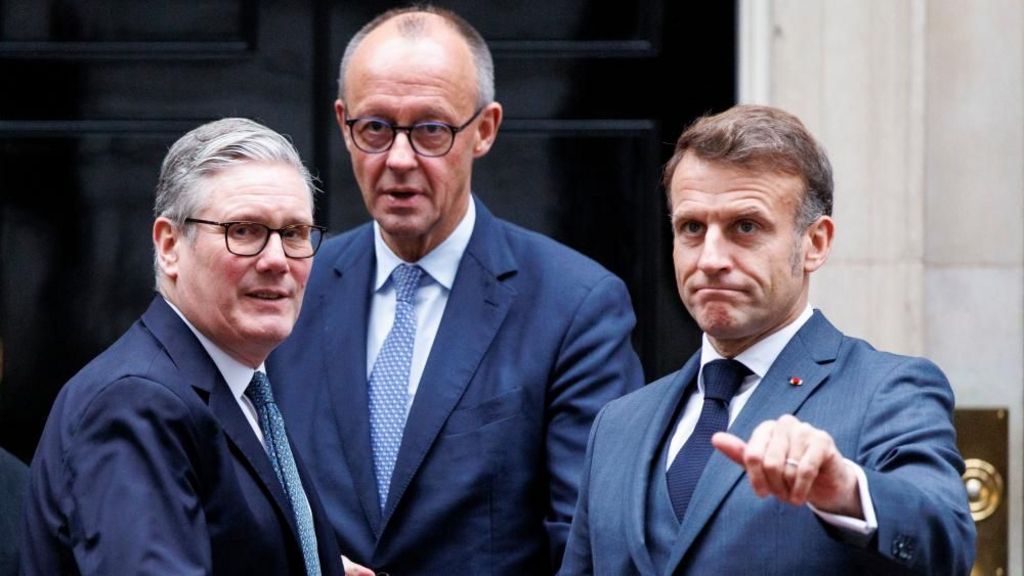
    Top European leaders have committed to intensifying diplomatic efforts following a pivotal 45-minute phone conversation with U.S. President Donald Trump regarding a proposed peace plan for the Russia-Ukraine conflict. The discussion, initiated by American officials on Wednesday, brought together UK Prime Minister Keir Starmer, French President Emmanuel Macron, and German Chancellor Friedrich Merz, who collectively characterized this juncture as critical for Ukraine’s future and Euro-Atlantic security.

    The dialogue occurred amidst heightened tensions following Trump’s recent comments criticizing European allies as ‘weak’ and suggesting potential reductions in U.S. support for Ukraine. In a Politico interview published Tuesday, the American president further claimed Ukraine was ‘using war’ to avoid elections—a statement that prompted President Volodymyr Zelensky to publicly declare his readiness for electoral processes.

    According to sources familiar with the negotiations, progress is gradually being made toward a potential agreement, though significant complexities remain. The most contentious issue centers on territorial concessions, particularly whether Kyiv could reasonably be expected to surrender land currently occupied by Russian forces. This aligns with the longstanding British position that decisions about Ukraine must ultimately be made by Ukraine itself.

    European governments are reportedly conveying this perspective to Washington while simultaneously acknowledging Trump’s commitment to ending the conflict. Behind the scenes, National Security Advisers from across Europe, including the UK’s Jonathan Powell, are maintaining regular contact with Ukrainian officials, with summaries of these discussions being shared with American counterparts.

    The diplomatic push comes as Russian forces continue their gradual advance in southeastern Ukraine despite sustaining heavy casualties. Kremlin spokesman Dmitry Peskov noted that Trump’s statements regarding Ukraine’s need to concede territory and NATO membership restrictions ‘align with our understanding,’ highlighting the geopolitical divisions complicating negotiations.

    Zelensky, currently engaged in a European diplomatic tour, faces mounting pressure from the U.S. administration to accept a peace deal that would involve territorial compromises. The Ukrainian leader has consistently rejected such concessions, instead advocating for an immediate ceasefire and robust security guarantees against future Russian aggression. His government is simultaneously working to prevent European allies from supporting an agreement that might leave Ukraine vulnerable to subsequent attacks.

    Meanwhile, Putin has reiterated demands for complete Ukrainian withdrawal from the Donbas region, dismissing any potential compromises. As diplomatic efforts intensify, all parties acknowledge the delicate balance between achieving peace and preserving Ukrainian sovereignty in any potential settlement.

  • US State Department changes official font in latest anti-diversity move

    US State Department changes official font in latest anti-diversity move

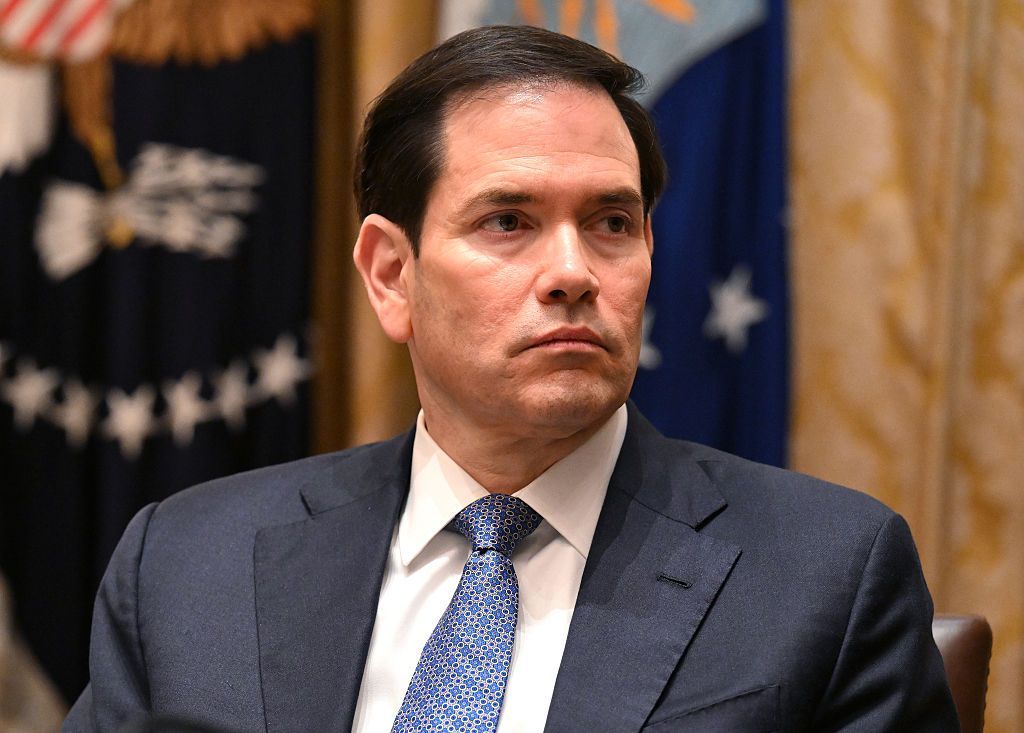
    In a significant policy reversal, U.S. Secretary of State Marco Rubio has mandated the State Department to abandon the Calibri font and return to using Times New Roman for all official documents. This decision overturns a previous directive implemented during the Biden administration under Secretary Antony Blinken, who had introduced Calibri to enhance accessibility for individuals with disabilities.

    The new font policy, effective December 10th, applies to both internal communications and external documents. Secretary Rubio justified the reversal as necessary to maintain ‘formality and professionalism’ in governmental correspondence. This change aligns with the Trump administration’s broader objective to present a unified, professional voice across all federal communications.

    Times New Roman, a traditional serif font characterized by small lines extending from letters, has long been standard in legal, legislative, and official government documents. In contrast, Calibri is a sans serif font without these embellishments, specifically designed for improved digital screen legibility, particularly benefiting those with visual impairments or reading difficulties.

    Dutch typeface designer Lucas de Groot, creator of Calibri, expressed mixed reactions to the policy shift, describing it as both ‘sad and hilarious.’ He noted that Calibri was originally developed to replace Times New Roman specifically for its superior performance on modern computer screens.

    According to an internal department cable obtained by Reuters, Secretary Rubio characterized the previous administration’s font choice as part of ‘wasteful’ diversity initiatives. This font policy change represents the latest in a series of actions by the Trump administration to eliminate diversity, equity, and inclusion programs across federal agencies, including recent decisions to alter free admission days at national parks.

  • EU enlargement chief says Ukraine’s membership ‘inevitable’ despite Hungary’s objections

    EU enlargement chief says Ukraine’s membership ‘inevitable’ despite Hungary’s objections

    KYIV, Ukraine — European Union Enlargement Commissioner Marta Kos expressed unwavering confidence during a visit to war-torn Ukraine that the nation’s accession to the bloc remains unstoppable, despite objections from Hungarian Prime Minister Viktor Orbán.

    Speaking at a severely damaged thermal power plant in western Ukraine, the Slovenian diplomat dismissed concerns about Hungary potentially derailing Ukraine’s EU membership path. “I’m not worried,” Kos told reporters amidst the wreckage of critical energy infrastructure targeted by Russia’s systematic campaign. “I would be concerned only if there were legitimate substantive reservations.”

    Kos characterized Ukraine’s eventual EU integration as “inevitable” and described it as a “political anchor of security guarantees,” emphasizing that “There has never been a war on the territory of the European Union.” Her remarks came as she convened an informal meeting of European affairs ministers to prepare for the next phase of accession negotiations.

    While Ukraine aspires to join the bloc by 2030, Prime Minister Orbán has opposed initiating membership talks during ongoing hostilities. Kos directly addressed these objections, stating, “We do not require Orbán’s approval to implement the reforms essential for Ukraine’s EU membership.”

    The Commissioner suggested the accession process could accelerate based on reform implementation, noting, “The pace of this journey depends entirely on Ukraine’s progress with necessary transformations.”

    Her visit included an inspection of a devastated power facility operated by private utility DTEK, where heavy machinery stood blackened, control panels melted, and structural damage revealed gaping openings to the sky. Turbine operator Andrii, who requested partial anonymity for security reasons, recounted the chaos of recent attacks: “The initial sensation is an overwhelming adrenaline surge. Thick smoke, deafening noise, and intense pressure create disorientation amid escaping steam and high-temperature feedwater.”

    Kos praised the extraordinary resilience of Ukrainian energy workers and citizens, declaring, “No nation worldwide demonstrates greater fortitude than Ukrainians. Putin anticipated a week-long conquest, yet nearly four years later, you stand as victors.”

  • US judge blocks Trump’s National Guard deployment in Los Angeles

    US judge blocks Trump’s National Guard deployment in Los Angeles

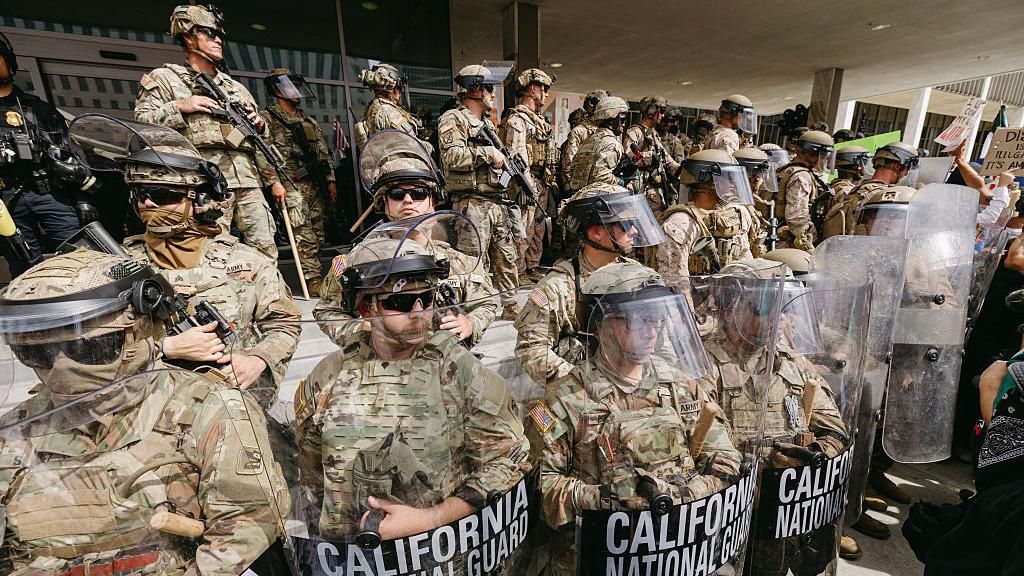
    A federal court has delivered a significant legal setback to the Trump administration’s domestic military deployment strategy. U.S. District Judge Charles Breyer issued a ruling on Wednesday prohibiting President Trump’s continued federal control of National Guard troops in Los Angeles and mandating their return to California Governor Gavin Newsom’s authority.

    The judicial decision addresses the contentious deployment initiated in June 2020 when thousands of National Guard personnel were federalized and dispatched to Los Angeles following protests against intensified immigration enforcement operations. Judge Breyer determined the administration failed to demonstrate that ongoing protest activities justified maintaining federal command over state guard units six months after their initial mobilization.

    In a robust defense of constitutional principles, Judge Breyer rejected the administration’s position that courts should refrain from reviewing presidential emergency authority over state guard units. “The Founders designed our government to be a system of checks and balances,” Breyer stated in his ruling. “Defendants, however, make clear that the only check they want is a blank one.”

    The implementation of the order has been stayed until December 15 to allow the administration opportunity to appeal. This ruling represents the latest development in an ongoing legal confrontation between federal and state authorities that has unfolded across multiple jurisdictions.

    The Los Angeles deployment forms part of a broader pattern that has seen National Guard units deployed to various cities including Portland, Oregon and Washington D.C., with similar legal challenges emerging nationwide. While an earlier appellate decision had sided with the administration in June, Governor Newsom renewed legal efforts in November arguing that diminished protest activity eliminated the justification for continued military presence.

    Administration lawyers contended during recent hearings that troops remained necessary due to ongoing targeting of federal immigration officials, but Judge Breyer questioned the persistence of emergency conditions months after initial unrest. “I think experience teaches us that crises come and crises go,” the judge remarked during proceedings.

    The ruling further criticized the administration’s practice of deploying California National Guard personnel to other states, characterizing it as “effectively creating a national police force made up of state troops.” This marks the second judicial finding that the administration’s deployment methodology violated legal standards, following Breyer’s earlier determination that summer deployments were conducted illegally.

  • DPP’s RedNote ban undermines democracy and youth freedom

    DPP’s RedNote ban undermines democracy and youth freedom

    Mainland Chinese officials have issued strong condemnation against Taiwan’s Democratic Progressive Party (DPP) administration for implementing a comprehensive ban on the popular social media application RedNote (Xiaohongshu). The controversial prohibition, enacted on December 4th, 2025, mandates a full-year restriction on the platform that reportedly serves over 3 million Taiwanese users, with approximately 70% belonging to the millennial demographic.

    Chen Binhua, spokesperson for China’s State Council Taiwan Affairs Office, characterized the prohibition as politically motivated rather than security-driven during a Wednesday press briefing. While Taiwanese authorities justified the measure as necessary for combating cyber fraud and addressing security vulnerabilities, Chen dismissed these explanations as pretextual.

    “The DPP’s administrative measures represent a deliberate assault on democratic principles and digital freedoms,” Chen stated. “This action effectively denies Taiwanese citizens, particularly younger generations, their fundamental right to information access and cross-strait cultural exchange.”

    Chen emphasized the platform’s significant role in facilitating genuine understanding between mainland Chinese citizens and Taiwanese users. According to his assessment, RedNote has served as a vital channel through which Taiwanese youth could bypass what he described as government-curated information ecosystems and engage directly with mainland perspectives.

    The spokesperson further highlighted the economic repercussions of the ban, noting that numerous Taiwanese content creators and businesses reliant on RedNote for livelihood purposes now face substantial financial uncertainty.

    In a comparative analysis, Chen referenced statistical data indicating that established platforms like Facebook have documented significantly higher instances of fraudulent activity than those attributed to RedNote, questioning the consistency of the DPP’s regulatory approach.

    The spokesman concluded with a warning about the inevitable consequences of such restrictive policies, suggesting they would ultimately fail to suppress the growing desire among Taiwanese youth for meaningful connections with mainland compatriots.