分类: politics

  • In stunning reversal for Europe, Greek finance minister elected as Eurogroup president

    In stunning reversal for Europe, Greek finance minister elected as Eurogroup president

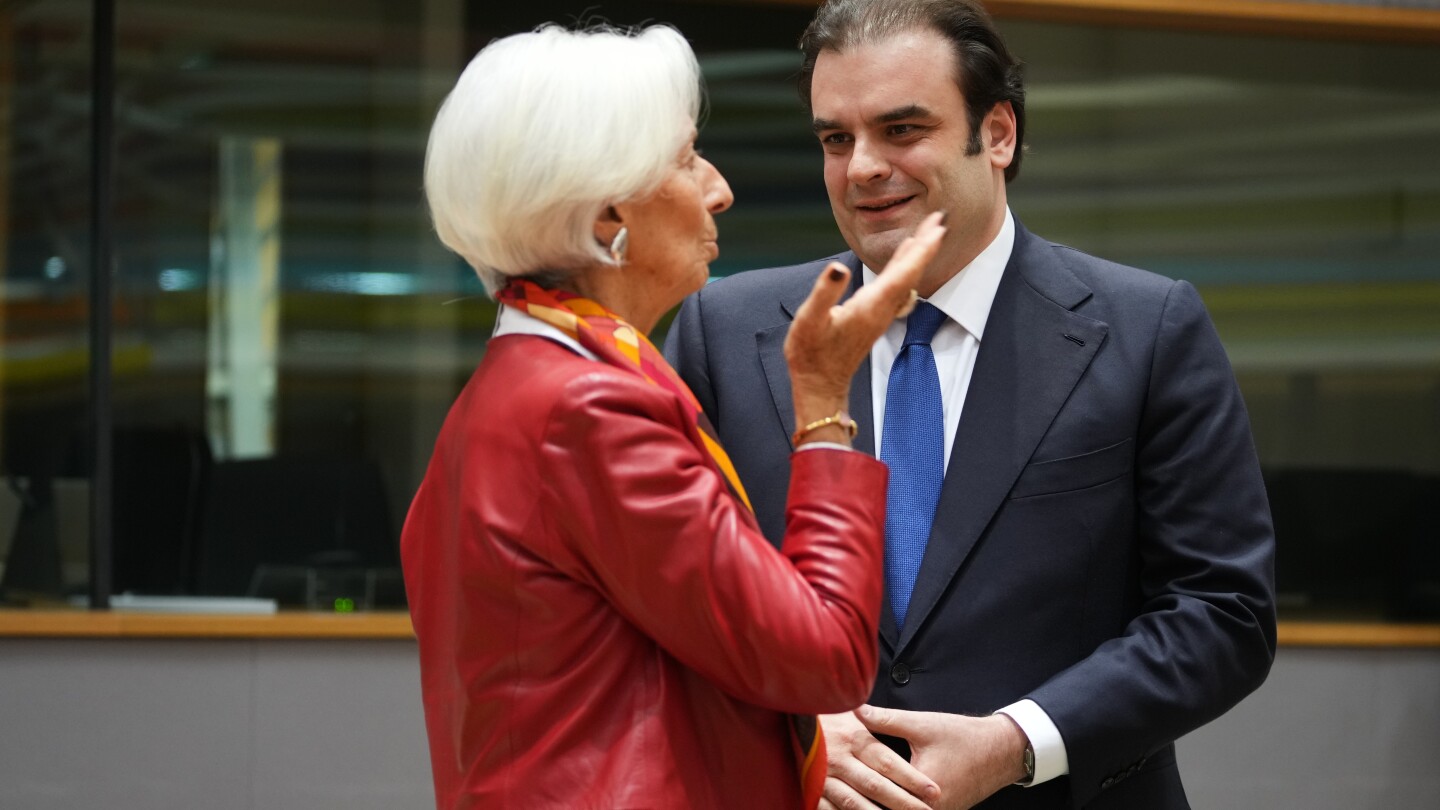
    In a stunning reversal of fortune that underscores one of Europe’s most dramatic economic transformations, Greek Finance Minister Kyriakos Pierrakakis has been elected to lead the powerful Eurogroup forum. This development marks a symbolic full-circle moment for a nation that just a decade ago teetered on the brink of eurozone expulsion during its devastating financial crisis.

    The Eurogroup, comprising finance ministers from the 20 European Union member states utilizing the euro currency, serves as the principal coordinating body for economic policy across the euro area. Its president wields considerable influence in shaping financial policies across member nations, with their pronouncements carrying significant weight in international markets.

    Greek Prime Minister Kyriakos Mitsotakis hailed the appointment as “a day of pride for the country, for the government and for all the citizens,” characterizing it as “the most emphatic recognition of our country’s positive course.” He notably referenced the nation’s precarious position exactly ten years prior, when shuttered banks and potential euro exit loomed large.

    At 42, Pierrakakis represents a new generation of European leadership and is widely regarded as a rising star within Greece’s center-right New Democracy party. Before assuming the finance portfolio in March, he served as education minister and previously as digital governance minister from 2019-2023, where he implemented sweeping bureaucratic reforms and digitized numerous public services.

    Reflecting on Greece’s journey, Pierrakakis acknowledged during his Brussels press conference that debates a decade ago centered on potential Greek exit from the eurozone. “And yet, Greece withstood,” he stated, attributing this resilience to “the collective strength of the people” and “European solidarity, of receiving help at the most dire of times.”

    The newly elected president committed to maintaining the Eurogroup as “a body of unity and shared purpose,” focusing on common currency stability, shared economic interests, and the broader European project grounded in core EU values.

    Greece’s ascent from fiscal pariah to economic model represents one of modern Europe’s most remarkable turnarounds. During the crisis years beginning in late 2009, successive Eurogroup presidents made regular visits to Athens, with every carefully scrutinized utterance potentially signaling the nation’s fate. Tense encounters, particularly the infamous 2015 exchange between then-president Jeroen Dijsselbloem and flamboyant Greek Finance Minister Yanis Varoufakis, highlighted the country’s strained relations with creditors.

    The crisis years brought profound hardship: years of fiscal mismanagement led to exclusion from international bond markets, necessitating three international bailouts totaling billions of euros from the so-called ‘troika’ (International Monetary Fund, European Central Bank, and European Commission). Austerity measures triggered a economic contraction of 25%, unemployment peaking at 28% (nearly 60% among youth), slashed wages and pensions, increased homelessness, and widespread social unrest.

    The situation deteriorated to such an extent that by June 2015, Greece implemented capital controls to prevent bank runs, rationing ATM withdrawals and restricting financial flows. Days later, the nation became the first developed country to default on IMF debts, with banking restrictions remaining until 2019.

    Today, Europe’s former financial outcast has emerged as one of its best budget performers. Major ratings agencies have restored Greek bonds to investment grade, with the country among only six EU members recording a 2024 budget surplus. Government revenues have exceeded targets through August, enabling a recently announced €1.6 billion tax relief package.

    Despite this progress, challenges persist. Many citizens grapple with rising living costs, while protesting farmers currently block highways nationwide, angered by production expenses, low wholesale prices, and delayed EU subsidy payments following a corruption scandal.

    Pierrakakis secured the presidency over Belgian Finance Minister Vincent Van Peteghem, commencing his two-and-a-half-year term with his first scheduled Eurogroup meeting on January 19.


  • US launches Trump Gold Card for expedited visas; price starts from $1 million

    US launches Trump Gold Card for expedited visas; price starts from $1 million

    The Trump administration has officially unveiled its controversial ‘Trump Gold Card’ immigration initiative, creating an expedited pathway for wealthy foreign nationals to obtain U.S. residency privileges. The program, launched through the dedicated portal Trumpcard.gov, requires applicants to make a substantial $1 million contribution to the United States Treasury in addition to a $15,000 processing fee paid to the Department of Homeland Security for accelerated review.

    President Trump characterized the initiative as a superior alternative to traditional Green Cards, emphasizing its ‘more powerful and stronger path’ during a White House briefing. Commerce Secretary Howard Lutnick revealed that approximately 10,000 individuals had already pre-registered for the program, projecting that the initiative could generate billions in revenue for the federal government over time.

    The Gold Card program represents a paradoxical approach within the administration’s broader immigration framework, which has simultaneously implemented stringent measures against both illegal immigration and conventional legal pathways. Lutnick defended the program as an economic benefit mechanism, asserting it would attract high-value immigrants who would contribute substantially to the U.S. economy, though he provided no empirical evidence to support claims about traditional Green Card holders’ economic performance.

    Notably, the program includes a corporate variant permitting businesses to secure expedited visas for key employees through a $2 million contribution per individual. This premium immigration strategy aligns with President Trump’s frequently stated preference for revenue-generating policies that mirror business principles, drawing parallels to his administration’s tariff initiatives.

  • From hiding to Nobel laureate: María Corina Machado’s continues fight for Venezuela’s democracy

    From hiding to Nobel laureate: María Corina Machado’s continues fight for Venezuela’s democracy

    In a dramatic public reappearance, Venezuelan opposition leader María Corina Machado addressed supporters in Norway on Thursday after eleven months in hiding. The event marked her first public appearance since receiving the Nobel Peace Prize, which was accepted on her behalf by her daughter the previous day for her relentless pursuit of democratic transition in Venezuela.

    Machado, who has become the symbolic face of resistance against Venezuela’s 26-year ruling party, had been evading authorities since January 9th when she was briefly detained during anti-government protests in Caracas. From her hotel balcony, she waved to cheering crowds before delivering a determined message to reporters: “My return will be when we believe the security conditions are right, and it won’t depend on whether or not the regime leaves. It will be as soon as possible.”

    The industrial engineer turned politician began challenging the establishment in 2004 when she co-founded Súmate, an organization that promoted a referendum to recall then-President Hugo Chávez. Her political trajectory intensified in 2010 when she was elected to the National Assembly with record-breaking votes, using her platform to boldly confront Chávez about his economic policies.

    Despite winning the opposition’s presidential primary with over 90% of the vote in 2023, Machado was barred from appearing on the ballot by the ruling party-controlled judiciary. She subsequently threw her support behind former diplomat Edmundo González, campaigning extensively across Venezuela while facing government persecution that resulted in the arrest of numerous collaborators.

    The July 2024 election saw González defeat President Nicolás Maduro by a two-to-one margin according to opposition records, but the National Electoral Council declared Maduro the winner. The government responded to nationwide protests with brutal repression, arresting over 2,000 people allegedly involved in plots to oust Maduro.

    While Machado’s unquestioning support for Trump administration policies has created some divisions within the opposition, she remains steadfast in her mission. On Thursday, she called for concrete action from international democracies, stating: “The one who has declared war on Venezuelans is the Maduro regime. In criminal systems, we need the world’s democracies to support our citizens.”

  • US judge orders Kilmar Abrego Garcia’s release from ICE custody

    US judge orders Kilmar Abrego Garcia’s release from ICE custody

    In a significant judicial ruling, U.S. District Judge Paula Xinis has mandated the immediate release of Kilmar Abrego Garcia from immigration detention, declaring his continued confinement without legal authority. The decision marks a dramatic development in a case involving mistaken deportation and subsequent repatriation.

    Mr. Abrego Garcia was initially deported to El Salvador in March and incarcerated in CECOT prison under the Trump administration’s immigration enforcement operations. The U.S. government subsequently acknowledged this deportation as erroneous and returned him to the United States to face human smuggling charges in Tennessee, where he has remained detained pending trial.

    Judge Xinis’s ruling emphatically stated that since Abrego Garcia’s return from wrongful detention in El Salvador, he has been ‘re-detained, again without lawful authority.’ The court found that the government lacks a valid removal order, thereby preventing any potential deportation proceedings at this time.

    The case intersects with broader immigration policy controversies, as the Trump administration contends Abrego Garcia maintains affiliations with the MS-13 criminal organization—an allegation he consistently denies. This spring, administration officials transported numerous migrants accused of gang affiliations to Salvadoran prisons, despite existing court orders specifically prohibiting Abrego Garcia’s transfer to El Salvador.

    While separate criminal proceedings regarding human smuggling charges continue in Tennessee—where Abrego Garcia has pleaded not guilty—Judge Xinis determined that his immigration detention lacked legal justification. The federal court in Maryland handling his deportation challenge has ordered his release under conditions set by the Tennessee court overseeing his criminal case.

  • Ukraine hands US revised peace plan proposal, Germany says

    Ukraine hands US revised peace plan proposal, Germany says

    German Chancellor Friedrich Merz has confirmed that European leaders have submitted a comprehensive peace plan for Ukraine to U.S. President Donald Trump, containing potential territorial concessions that Kyiv might consider. Merz emphasized that ultimate decisions regarding territory “must be answered primarily by the Ukrainian president, and the Ukrainian people,” a position explicitly communicated to the American administration.

    The diplomatic initiative comes after weeks of intensive coordination between European capitals and Kyiv to develop a negotiated framework addressing Ukraine’s security interests. Concerns persist among European allies regarding Trump’s potential alignment with Russian objectives, given his administration’s previous engagement with Moscow. Chancellor Merz cautioned against imposing an unsustainable peace, stating it “would be a mistake to force the Ukrainian president into a peace that his people will not accept after four years of suffering and death.”

    During a Wednesday phone conversation described as constructive, Merz, alongside French President Emmanuel Macron and UK Prime Minister Keir Starmer, asserted that European interests must be integral to any settlement. President Trump acknowledged discussing Ukraine “in pretty strong words” but remained noncommittal about attending proposed European negotiations, noting “we don’t want to be wasting time.”

    The territorial status of occupied eastern regions represents a critical obstacle. Russia demands complete Ukrainian withdrawal from contested areas in Luhansk and Donetsk—a condition Kyiv rejects both constitutionally and morally. President Volodymyr Zelensky has consistently stated Ukraine lacks “legal right or moral right” to cede territory under national and international law.

    As Zelensky convenes further talks with the coalition of allied leaders, Moscow maintains strategic silence while promoting narratives of Russo-American alignment. Russian Foreign Minister Sergei Lavrov praised Trump’s diplomatic efforts, claiming recent Kremlin meetings with U.S. envoy Steve Witkoff resolved misunderstandings stemming from last summer’s Alaska summit. Lavrov reiterated Moscow’s opposition to international security guarantees for Ukraine, instead proposing Russian legal assurances against attacking NATO or EU nations—offers met with skepticism given historical violations of previous agreements.

    With Ukraine’s electoral status suspended under martial law, Zelensky has conditioned elections on security guarantees from Western partners. NATO Secretary General Mark Rutte concurrently warned of insufficient alliance preparedness, emphasizing that “Russia’s next target” requires urgent preventive measures to avoid continental conflict on a historical scale.

  • The US threatens to cut aid to South Sudan, citing its treatment of humanitarian groups

    The US threatens to cut aid to South Sudan, citing its treatment of humanitarian groups

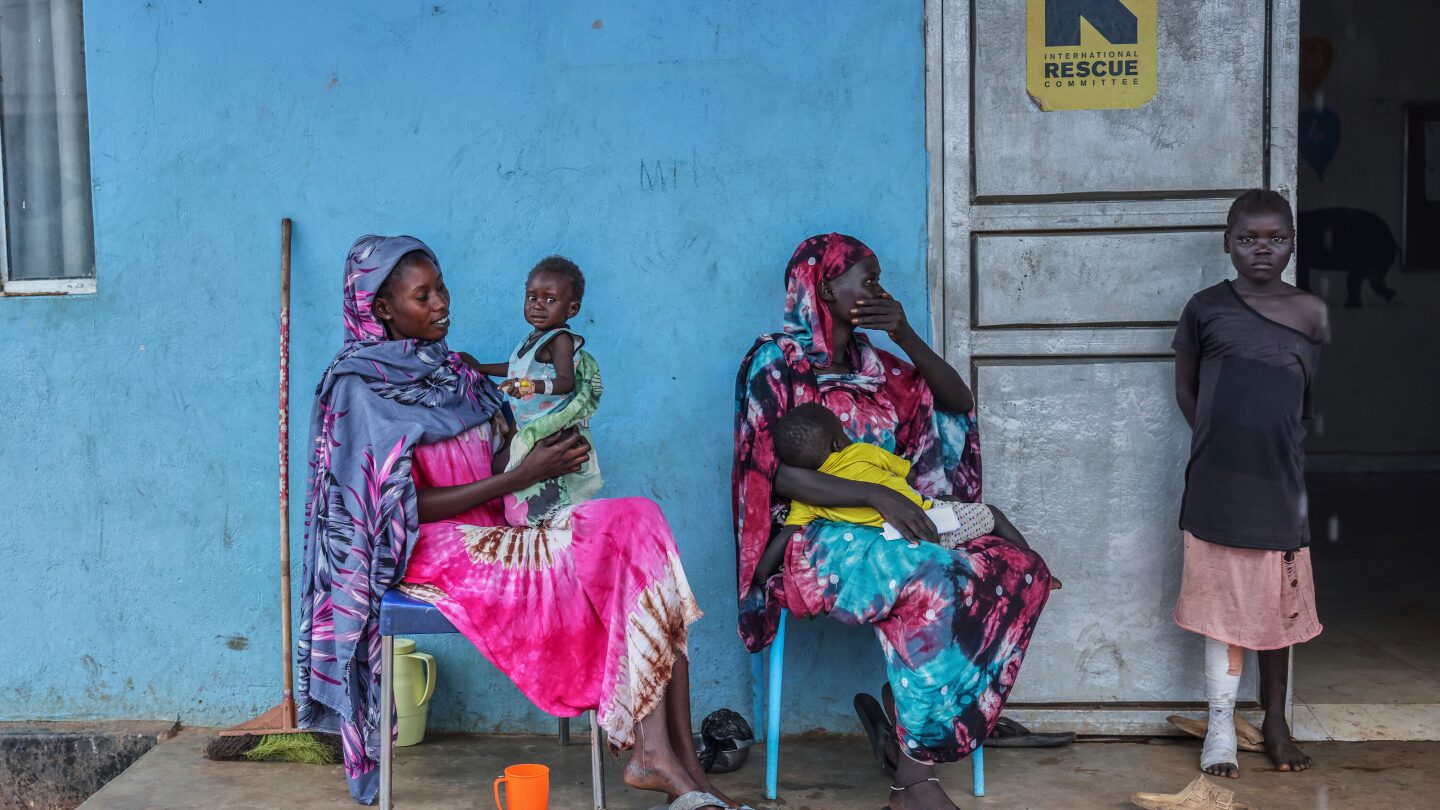
    The United States has issued a stern warning to South Sudan’s government, indicating potential significant reductions in foreign assistance due to alleged obstruction of humanitarian operations. In an official statement released Thursday by the State Department’s Bureau for African Affairs, American officials accused Juba of imposing prohibitive fees on aid organizations and creating operational barriers that violate international obligations.

    Washington revealed it has channeled over $9.5 billion in assistance to South Sudan since the nation gained independence in 2011. This substantial support contrasts sharply with the approximately $25 billion in oil revenues collected by the South Sudanese government, which has reportedly failed to translate into meaningful public service development.

    The humanitarian situation remains critical, with United Nations data indicating more than 70% of South Sudan’s 11 million citizens depend on external aid for basic survival needs including food and healthcare. The U.S. statement attributed this crisis directly to systemic governance failures, misappropriation of public funds, security instability fostered by national leadership, and what it termed ‘predatory rent-seeking’ behavior targeting humanitarian resources.

    This diplomatic confrontation marks the latest strain in bilateral relations between the two nations. Earlier this year, the U.S. suspended visa issuances to South Sudanese citizens following a deportation-related diplomatic dispute. The South Sudanese government had not issued an immediate response to the latest allegations at the time of reporting.

  • Bulgarian PM and government resign after mass protests

    Bulgarian PM and government resign after mass protests

    Bulgaria’s political landscape underwent a seismic shift as Prime Minister Rosen Zhelyazkov announced the resignation of his minority government following massive nationwide demonstrations against alleged corruption. The dramatic decision came just hours before a scheduled parliamentary no-confidence vote and mere weeks before Bulgaria’s planned adoption of the euro currency on January 1st.

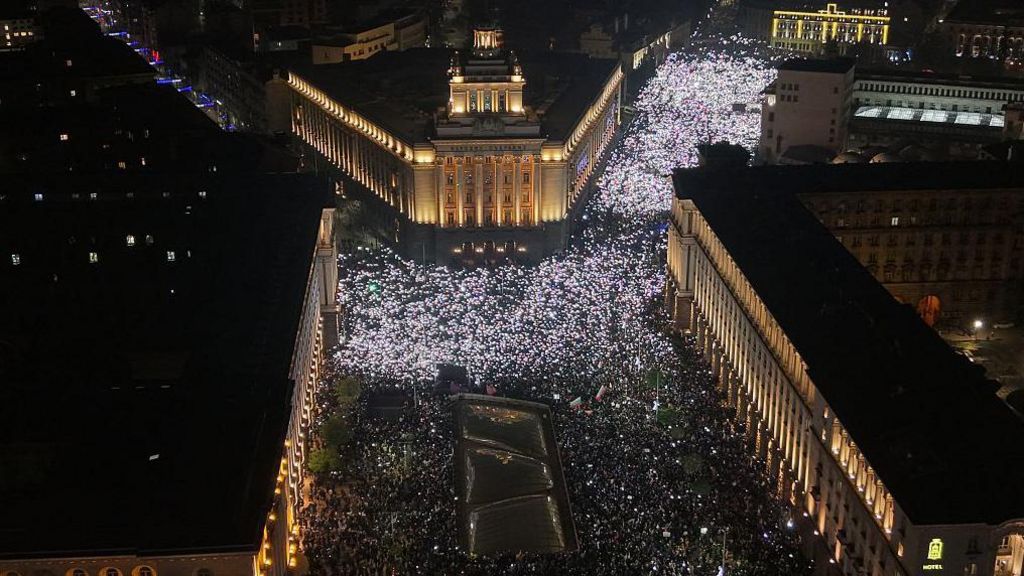
    Central Sofia witnessed an extraordinary display of public discontent as between 50,000 to 100,000 protesters flooded the Triangle of Power and Independence Square on Wednesday evening. The parliament building itself became a canvas for dissent with projections reading ‘Resignation’ and ‘Mafia Out’ illuminating its facade. These demonstrations, organized under the banner ‘Resignation! Peevski and Borissov Out of Power,’ targeted two controversial political figures: oligarch Delyan Peevski, who faces international sanctions for alleged corruption, and former Prime Minister Boyko Borissov.

    The government’s collapse marks the culmination of months of political tension. Despite surviving five previous no-confidence votes since taking power in January, Zhelyazkov’s administration could not withstand the growing public outrage. Last week, the government had already withdrawn a controversial budget proposal in response to initial protests, but this concession failed to quell the movement.

    In a televised address, Zhelyazkov acknowledged the public’s demands: ‘We hear the voice of citizens protesting against the government. Both young and old have raised their voices for our resignation. This civic energy must be supported and encouraged.’ The government website confirmed ministers would maintain their positions temporarily until a new cabinet forms.

    The political turmoil occurs against the backdrop of Bulgaria’s persistently low ranking on Transparency International’s corruption index, where it trails behind most European nations. Despite the governmental crisis, financial analysts suggest Bulgaria’s transition to the eurozone remains on track, with the central bank confirming the changeover schedule remains unaffected.

    President Rumen Radev, who had previously endorsed the protesters’ demands, now faces the challenge of facilitating a smooth political transition during this critical period for the Balkan nation.

  • EU pushes Ukraine membership bid forward despite Hungary’s objections

    EU pushes Ukraine membership bid forward despite Hungary’s objections

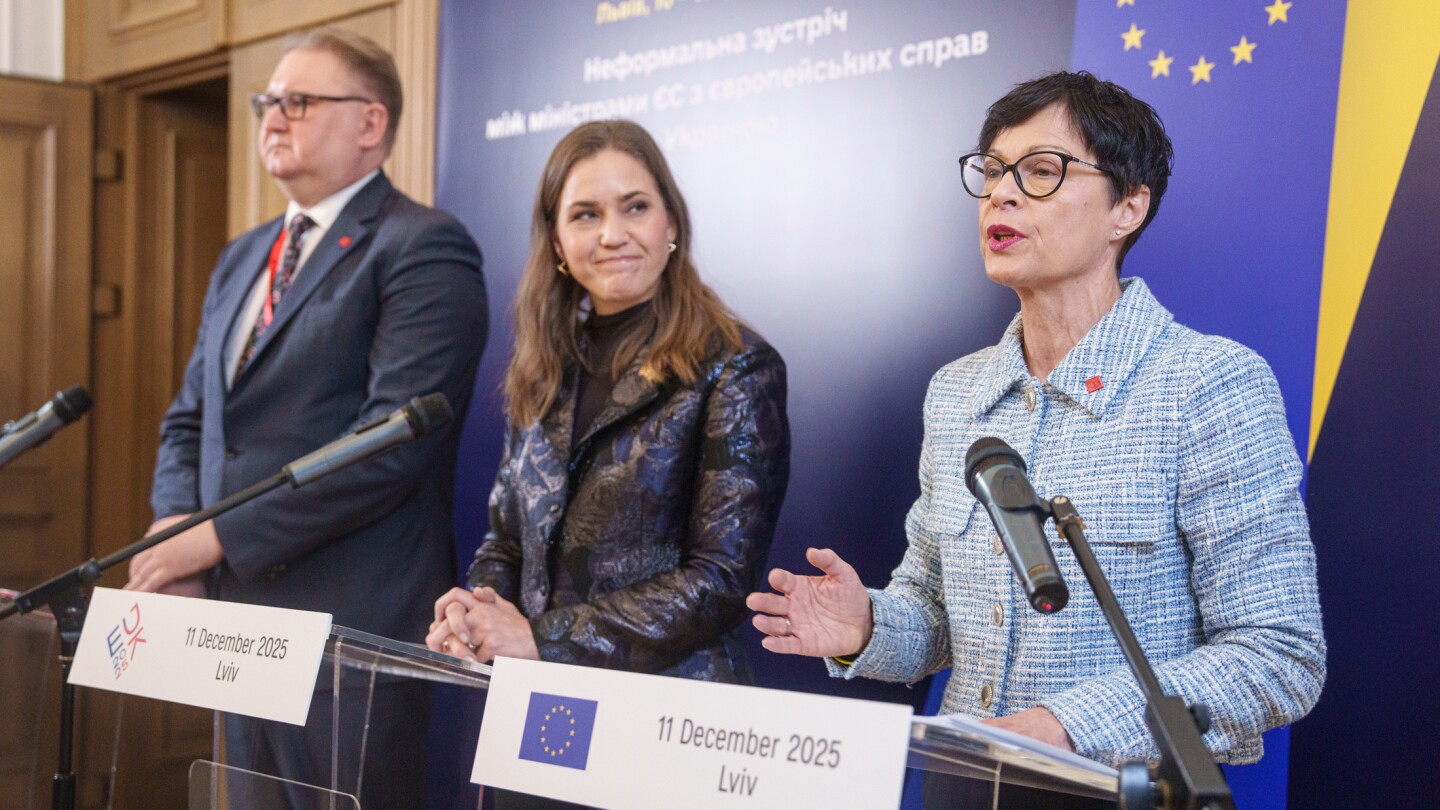
    In a significant move demonstrating continued support for Ukraine, the European Union presented Kyiv with a comprehensive reform roadmap during high-level talks in Lviv on Thursday. This development comes despite Hungary’s persistent objections to advancing Ukraine’s membership aspirations during ongoing hostilities.

    EU diplomats and officials, meeting in western Ukraine, established detailed requirements covering approximately half of the necessary reform clusters needed for accession. This approach allows substantive progress while formal negotiations remain stalled due to Budapest’s opposition. Hungarian Prime Minister Viktor Orbán maintains that accession talks should not proceed during wartime, citing concerns about Ukraine’s Hungarian minority and potential economic risks. Hungary notably abstained from sending representation to the Lviv meeting.

    Denmark’s European Affairs Minister Marie Bjerre emphasized the broader EU consensus, stating, ‘Twenty-six member countries envision Ukraine’s future within the EU. The question is not if, but when this will happen.’

    Cyprus, which joined the EU in 2004 as a divided nation, emerges as a potential model for Ukraine’s accession path. As Cyprus prepares to assume the EU’s rotating presidency in January, its officials have pledged to maintain momentum on Ukraine’s bid. Cypriot Deputy Minister for European Affairs Marilena Raouna commended Kyiv’s ‘extraordinary political will’ to implement crucial reforms despite Russia’s ongoing aggression.

    Ukraine’s reform requirements are organized into six comprehensive clusters, with Thursday’s agreement covering three critical areas: rule of law and democratic institutions, internal market regulations, and external relations. Ukrainian Deputy Prime Minister Taras Kachka acknowledged that recent corruption scandals have elevated judicial and anti-corruption reforms as immediate priorities, noting that implementation pace now rests primarily with Kyiv.

    Should Ukraine eventually join the EU, it would become the bloc’s largest member by land area, surpassing France. Its accession would significantly enhance the union’s agricultural capacity, energy security, and geopolitical influence while countering Russian dominance in the region. EU Enlargement Commissioner Marta Kos affirmed that providing Kyiv with a clear roadmap would accelerate transformative changes, asserting that ‘nobody can veto Ukraine from implementing these reforms’ or ultimately block its membership.

  • Kenyan court suspends ‘landmark’ US health aid deal over data privacy concerns

    Kenyan court suspends ‘landmark’ US health aid deal over data privacy concerns

    A Kenyan high court has issued an interim injunction suspending the implementation of a major $2.5 billion health assistance agreement between Kenya and the United States, citing serious data privacy concerns. The ruling comes in response to a legal challenge filed by consumer rights advocates who argue the pact could enable unauthorized transfer of sensitive medical information.

    The court’s decision specifically prohibits Kenyan authorities from taking any action to implement the agreement insofar as it facilitates “the transfer, sharing or dissemination of medical, epidemiological or sensitive personal health data.” This suspension will remain in effect until the case receives full judicial review, scheduled for February 12.

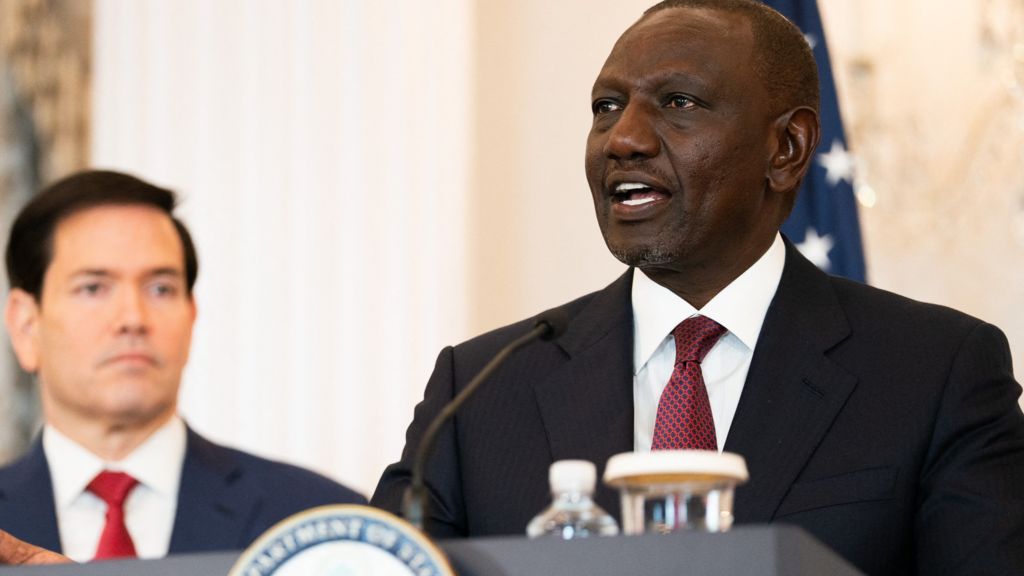
    The health agreement, hailed as “landmark” by US Secretary of State Marco Rubio during last week’s signing ceremony, represents a significant shift in American foreign aid strategy. The Trump administration has been pursuing direct government-to-government health partnerships across Africa, moving away from traditional aid agency channels. Under this new approach, recipient countries must increase their own health spending commitments. In the Kenya arrangement, the US pledged $1.7 billion while Kenya committed $850 million with plans to gradually assume greater financial responsibility.

    Despite government assurances, many Kenyans have expressed apprehension that the deal could grant US authorities access to highly personal medical records, including HIV status, tuberculosis treatment history, and vaccination data. The Consumer Federation of Kenya (Cofek), one of the petitioners, warned that external control over pharmaceuticals for emerging diseases and digital health infrastructure—including cloud storage of raw data—could compromise Kenya’s strategic control of its health systems.

    President William Ruto attempted to reassure citizens, stating that the attorney-general had meticulously reviewed the agreement to ensure Kenyan data protection laws would prevail. The US government has not publicly addressed the data privacy concerns raised by the court case. Similar health agreements have been signed with Rwanda, Lesotho, Liberia, and Uganda as part of the US global health strategy overhaul.

  • Bangladesh to hold national elections in February, the first since 2024 mass uprising

    Bangladesh to hold national elections in February, the first since 2024 mass uprising

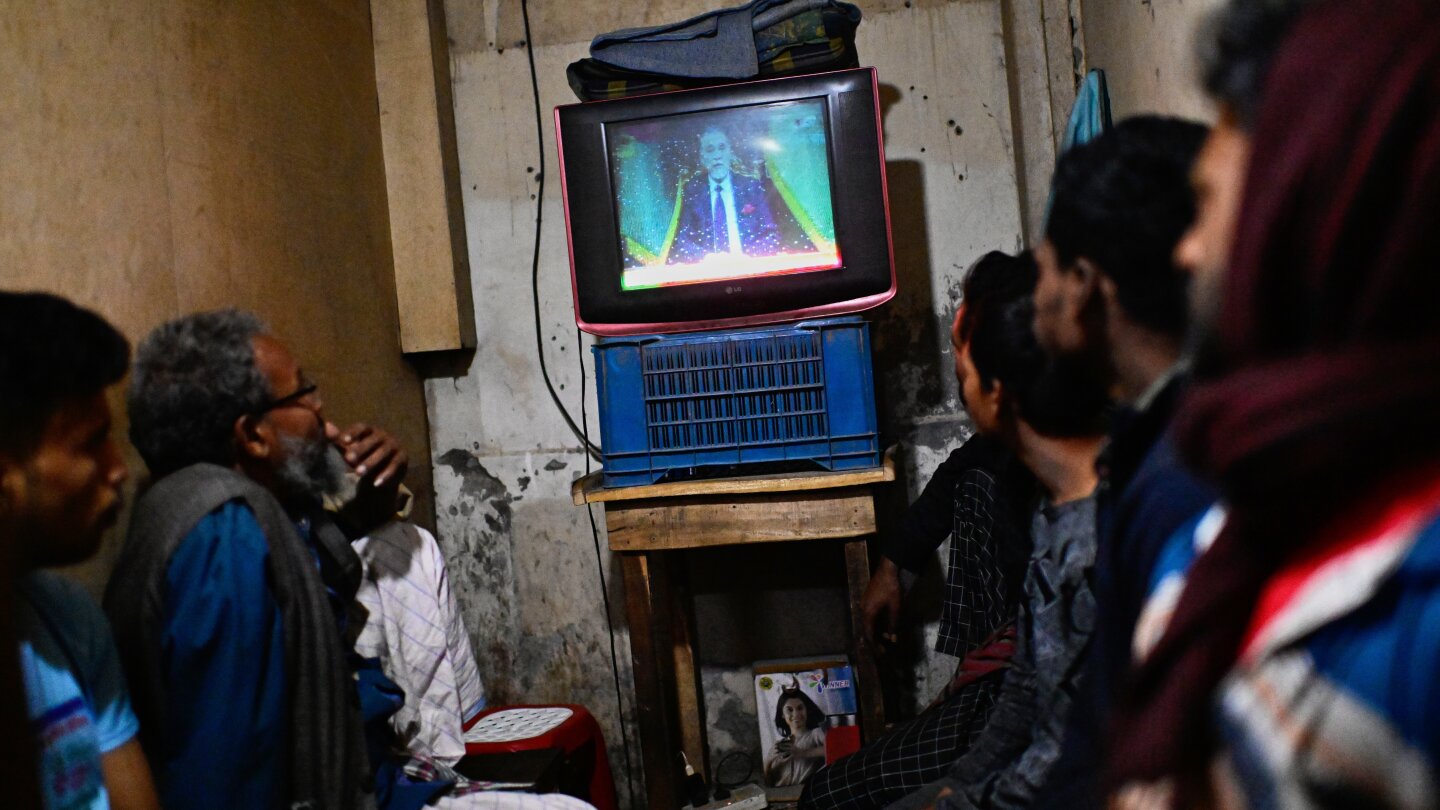
    Bangladesh’s Chief Election Commissioner A.M.M. Nasir Uddin announced Thursday that the nation’s next general elections will take place on February 12, marking a pivotal moment in the country’s political landscape eighteen months after the ousting of former Prime Minister Sheikh Hasina. The electoral timetable was formally disclosed during a nationally televised address, revealing that citizens will simultaneously participate in a referendum concerning proposed political reforms while electing 300 parliamentary representatives.

    The electoral process will commence with nomination filings from December 12-29, followed by a six-day review period. January 20 has been designated as the final date for candidate withdrawals. This election represents the thirteenth national vote since Bangladesh achieved independence from Pakistan in 1971 following a bloody liberation war.

    The political environment remains deeply fractured since the massive protests of July-August 2024 that precipitated Hasina’s removal from power. The former leader, now residing in exile in India, received a death sentence in November from a Bangladeshi court for crimes against humanity related to the unrest. Since August 8, 2024, an interim government led by Nobel Peace Prize laureate Muhammad Yunus has governed the nation, implementing a ban on all activities of Hasina’s Awami League party that effectively excludes the former ruling party from electoral participation.

    Reactions to the election announcement have revealed stark political divisions. The Bangladesh Nationalist Party (BNP), along with Islamist party Jamaat-e-Islami and the newly formed National Citizen Party, welcomed the electoral timeline. BNP Secretary General Mirza Fakhrul Islam Alamgir characterized the announcement as ‘a day of joy,’ expressing confidence that the election commission and government were committed to implementing the people’s democratic rights.

    Conversely, Hasina’s Awami League condemned the election as illegitimate, asserting that excluding the party that led Bangladesh’s independence movement would plunge the nation into profound crisis. The interim government under Yunus congratulated the election commission, describing the upcoming vote as consolidating Bangladesh’s ‘new trajectory’ following last year’s historic uprising.

    International human rights organizations have raised concerns about Bangladesh’s democratic transition, with Human Rights Watch and Amnesty International questioning the rule of law under the interim government and the fairness of Hasina’s trial. The nation remains polarized as it attempts to break from the dominance of two dynastic political camps—Hasina’s Awami League and the BNP led by ailing former Prime Minister Khaleda Zia—while addressing concerns about rising Islamist influence.

    The concurrent referendum addresses demands by political parties to legitimize the ‘July National Charter’ of political reforms, which currently lacks binding legal status. In Bangladesh’s parliamentary democracy of 170 million people, only parliament can amend the constitution, making the referendum’s outcome potentially significant for the country’s governance framework. Over 127.6 million registered voters are eligible to participate in both the electoral and referendum processes.