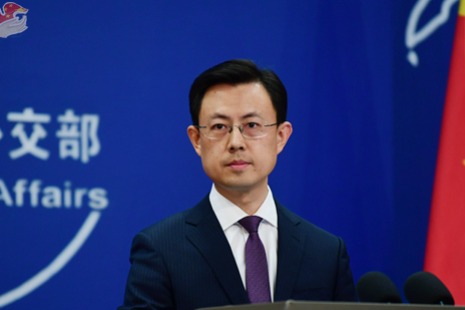
In a firm diplomatic statement from Beijing, Chinese Foreign Ministry spokesman Guo Jiakun declared Japanese militarism a universal adversary to people worldwide. The spokesperson’s remarks came during a regular press briefing on Friday, December 12, 2025, emphasizing China’s commitment to collaborating with peace-loving nations and citizens to protect the achievements of the World War II victory and maintain the post-war international framework. Guo explicitly called upon Japan to engage in profound historical reflection, extract meaningful lessons from its past, and completely dissociate from militaristic ideologies. He further insisted that Japan must demonstrate tangible actions to eradicate the lingering effects of militarism, highlighting concerns about its persistent influence in contemporary times. The statement reflects ongoing tensions in East Asian relations and China’s persistent vigilance regarding Japan’s military posture and historical accountability. This diplomatic position aligns with China’s longstanding approach to regional security matters and its view on preserving the historical legacy of the Second World War in the Pacific theater. The spokesperson’s wording indicates China’s continued emphasis on historical issues as central to its bilateral relationship with Japan and its broader regional security strategy.
分类: politics
-
China to host 33rd APEC Economic Leaders’ Meeting in Nov
China has formally announced its ambitious roadmap for the 2026 APEC chairmanship, designating Shenzhen as the host city for the premier 33rd APEC Economic Leaders’ Meeting scheduled for November 18-19. The revelation came during Friday’s Foreign Ministry briefing where spokesman Guo Jiakun outlined China’s extensive plans for its leadership year.
The coastal metropolis of Shenzhen, renowned as China’s technological innovation hub, will welcome leaders from across the Asia-Pacific region for the flagship event. China’s APEC agenda encompasses approximately 300 events spanning multiple cities throughout 2026, representing one of the most comprehensive hosting schedules in the forum’s history.
Beyond the Leaders’ Meeting, China will convene the APEC CEO Summit and joint ministerial meetings involving foreign and trade ministers. Three Senior Officials’ Meetings are scheduled for February in Guangzhou, May in Shanghai, and August in Dalian, creating a continuous engagement framework throughout the year.
Starting May 2026, China will host approximately 10 ministerial-level gatherings addressing critical areas including digital economy transformation, sustainable trade practices, transportation infrastructure, tourism development, human resources optimization, SME support mechanisms, energy security, food sustainability, financial cooperation, and women’s economic participation.
China has introduced “Building an Asia-Pacific Community to Prosper Together” as the official theme for its APEC chairmanship, a concept that received unanimous endorsement during the recent Informal Senior Officials’ Meeting. The thematic framework prioritizes three core pillars: enhanced regional openness, technological innovation, and deepened cooperative mechanisms—elements that align with member economies’ strategic priorities and development objectives.
This comprehensive approach demonstrates China’s commitment to revitalizing APEC’s role in addressing contemporary economic challenges while fostering inclusive growth across the Asia-Pacific region.
-
World Insights: How global readers understand Chinese modernization via new volume of ‘Xi Jinping: The Governance of China’
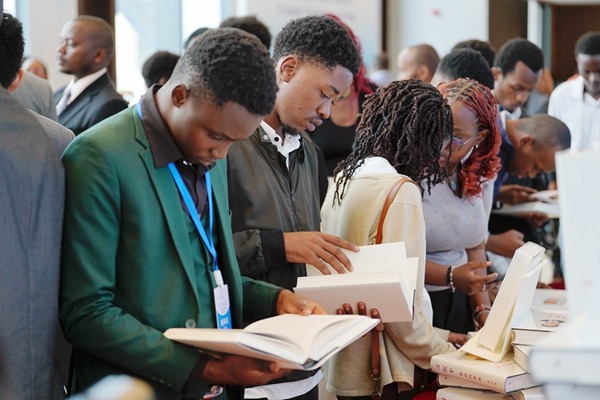
NAIROBI – International scholars and political figures gathered in Kenya’s capital this month for a symposium examining the English edition of the fifth volume of “Xi Jinping: The Governance of China,” with attendees hailing the publication as both a theoretical framework for socioeconomic transformation and a practical guide to understanding China’s development model.
The December event attracted approximately 200 participants who engaged in detailed analysis of the compilation, which contains 91 works by President Xi Jinping across 18 thematic areas spanning from May 2022 to December 2024. The collection includes reports, speeches, talks, addresses, articles, and instructions that collectively provide unprecedented insight into China’s governance approach.
Hassan Omar Hassan, Secretary-General of Kenya’s United Democratic Alliance, characterized the volume as “an extraordinary foundation” for socioeconomic transformation based on “an experiment on governance that actually worked.” He suggested the Chinese model presented in the text offers “a template that many countries can adapt into their national contexts.”
Academic perspectives highlighted the theoretical contributions of the work. Luis Paulino, Professor at São Paulo State University, noted the volume represents China’s “development of Marxist theory” while characterizing Chinese Communists under Xi’s leadership as “the most creative practitioners of Marxist theory.”
Helga Zepp-LaRouche, Chairperson of Germany’s Schiller Institute, identified the Communist Party’s distinctive approach as its “adherence to integrating the basic principles of Marxism with China’s specific realities and with the fine traditional Chinese culture.”
Several analysts pointed to the practical applications of China’s development experience. Colin Cruywagen, a senior official in South Africa’s Presidency for Planning, Monitoring and Evaluation, observed that Xi’s works demonstrate “consistent, systematic and forward-looking nature of China’s policies and concepts” that help explain the country’s maintained growth momentum despite complex international conditions.
Asian perspectives emphasized the volume’s relevance to regional development. Wirun Phichaiwongphakdee, Director of Thailand’s China Research Center for the Belt and Road Initiative, described the book as containing “valuable experience gained from the practice of 1.4 billion people” while noting China’s actions in pursuing “common interests of all humankind” amid global challenges.
The symposium also examined China’s recent Global Governance Initiative (GGI) proposed by Xi during the Shanghai Cooperation Organization Tianjin Summit in September. Robert Lawrence Kuhn, Chairman of the Kuhn Foundation, characterized China’s global initiatives – including GGI, Global Development Initiative, Global Security Initiative, and Global Civilization Initiative – as “a complete architecture that embodies Xi’s vision of building a community with a shared future for humanity.”
Italian analyst Vito Petrocelli, President of the Italy BRICS Institute, noted that China-proposed initiatives advocate for “a more inclusive international system through dialogue, cooperation and mutual benefit,” bringing diverse perspectives into global governance structures.
Marta Montoro, Vice Chairwoman of Spain’s Catedra China Foundation, concluded that China now plays “a key role in global governance” by promoting “a fair, stable, just, and sustainable international system” that offers humanity the possibility of collective progress.
-
A second Conservative MP crosses the floor to Canada’s Liberals
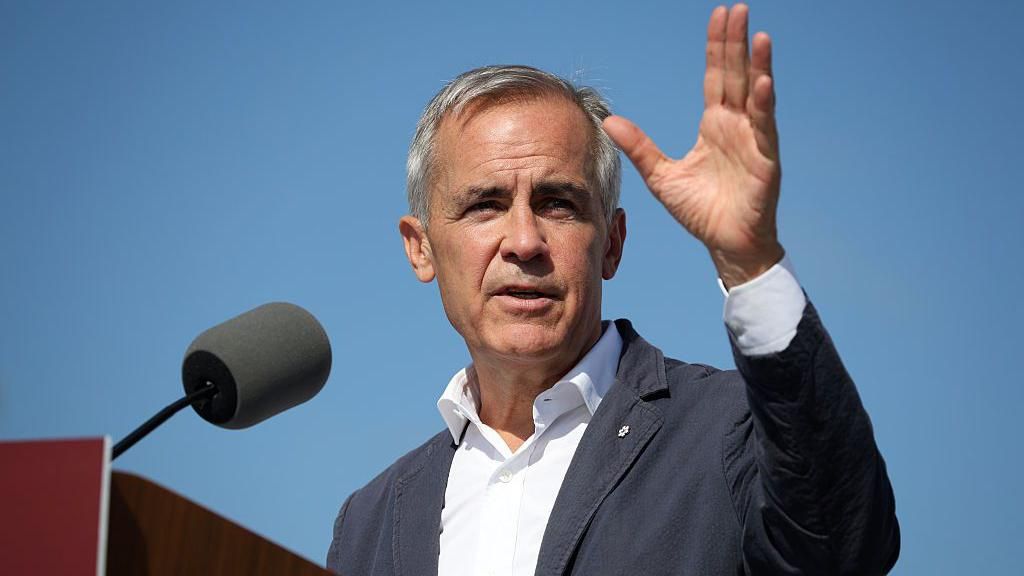
In a significant political realignment, Conservative Member of Parliament Michael Ma has announced his departure from the opposition benches to join Prime Minister Mark Carney’s Liberal Party. The Ontario representative made his surprising declaration Thursday evening, emphasizing his belief that “the time for unity and decisive action” had arrived.
This defection represents the second such party switch within a month, following Nova Scotia MP Chris d’Entremont’s similar move to the governing Liberals in November. The political shift leaves Carney’s government merely one seat short of securing a parliamentary majority, substantially strengthening the Prime Minister’s legislative position while dealing a considerable blow to Conservative opposition forces.
Ma justified his decision by praising Carney’s “steady, practical approach” that he believes aligns with constituent priorities he encounters daily. The Prime Minister enthusiastically welcomed his new colleague during Ottawa’s Liberal holiday gathering, inviting him on stage and celebrating the expansion of what he termed the “big, broad, and growing Liberal tent.”
Conservative leader Pierre Poilievre responded sharply, accusing Ma of betraying voters who had elected him specifically to oppose Liberal policies. “He has let down those who supported him and will have to answer to them,” Poilievre stated.
The timing proves particularly sensitive for Poilievre, occurring just weeks before his scheduled leadership review. The Conservative party has experienced considerable turbulence since their election defeat earlier this year, which many attribute to Poilievre’s combative political style. The leader himself lost his Ottawa seat during the general election, requiring a safe Alberta riding to be vacated by a Conservative colleague to enable his return to Parliament in August.
Ma originally secured his Markham-Unionville constituency north of Toronto by defeating the Liberal candidate by approximately 2,000 votes earlier this year. The riding has historically alternated between Conservative and Liberal representation, reflecting its competitive nature.
The recent defections signal growing internal challenges for Poilievre’s leadership. d’Entremont previously cited a lack of representation under Poilievre’s direction as his reason for crossing the floor, particularly following Carney’s first fiscal plan presentation. The Conservatives dismissed that move as motivated by “personal grievances” rather than principle.
Additional Conservative resignations have further weakened the opposition bench, including Alberta MP Matt Jeneroux’s November departure citing family considerations.
-
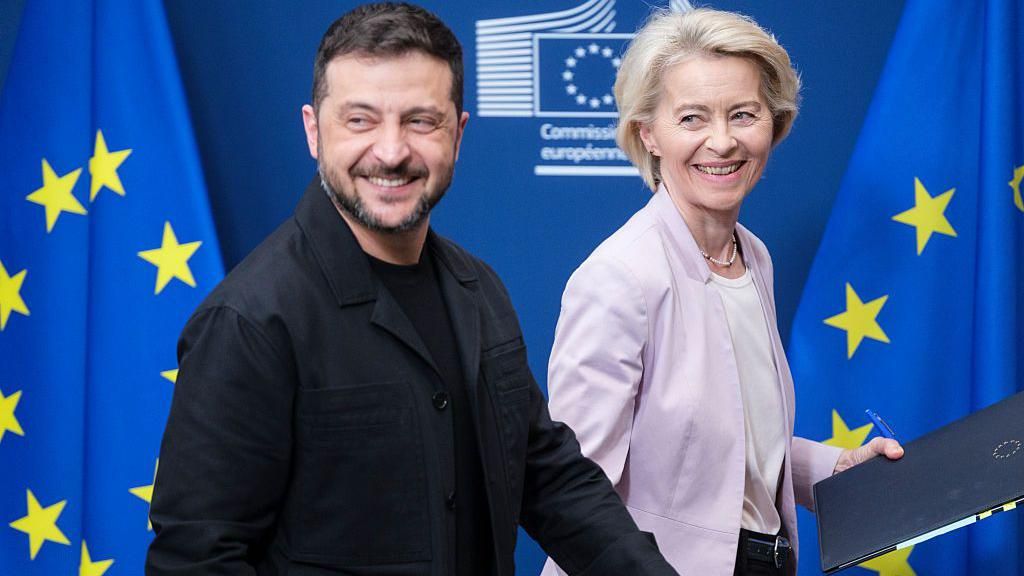
Russia hits back at Europe’s big plan to loan Moscow’s frozen cash to Ukraine
European Union leaders are racing against time to finalize a groundbreaking plan to utilize Russia’s frozen assets for Ukraine’s reconstruction ahead of next week’s Brussels summit. With Ukraine facing a critical budget shortfall of €135.7 billion amid ongoing military conflict, the proposed solution involves accessing €210 billion of immobilized Russian funds held within EU jurisdiction.
The contentious proposal has sparked significant diplomatic tensions, with Moscow already initiating legal proceedings against Euroclear, the Belgian financial institution holding €185 billion of the frozen assets. Russian officials have condemned the EU’s plan as outright theft, while the Kremlin’s central bank filed a preemptive lawsuit in a Moscow court last Friday.
European leaders, including German Chancellor Friedrich Merz, argue that utilizing these assets represents both moral justice and practical necessity. “It’s only fair that Russia’s frozen assets should be used to rebuild what Russia has destroyed,” Ukrainian President Volodymyr Zelensky stated, echoing the position of many EU member states.
However, Belgium has emerged as a cautious voice, expressing serious concerns about potential financial repercussions. Prime Minister Bart de Wever has demanded comprehensive guarantees before endorsing the plan, fearing his nation could bear unsustainable liability given that Euroclear’s holdings represent nearly one-third of Belgium’s GDP. Financial law expert Professor Veerle Colaert warns that concentrating such massive exposure violates fundamental banking principles and could destabilize the entire financial system.
The EU has developed a two-pronged approach: either raising capital markets funds backed by EU budget guarantees or directly loaning cash from matured Russian assets held at Euroclear. The latter option has gained traction as international military aid to Ukraine has dramatically decreased in 2025, particularly after the United States substantially reduced funding under the Trump administration.
In a significant development, EU ambassadors are expected to approve indefinite freezing of Russian central bank assets using emergency powers under Article 122 of the EU Treaties. This move would eliminate the previous requirement for unanimous six-month renewals and create a more stable legal foundation for the reconstruction plan.
Meanwhile, concerns persist about competing proposals from the United States regarding how to utilize the frozen assets, with early drafts of US peace plans suggesting different allocation formulas that could reduce European control over the funds.
-

Danish intelligence report warns of US military threat under Trump
COPENHAGEN (AP) — Denmark’s Defense Intelligence Service has issued a stark assessment of shifting global power dynamics in its latest annual report, highlighting the United States’ increasingly assertive use of economic leverage and military threats under the Trump administration. The comprehensive analysis details how Washington’s unilateral approach is reshaping international relations with both allies and adversaries.
The report identifies growing great power competition in the Arctic as particularly concerning for Denmark, a NATO and EU member. This regional tension has intensified since President Trump expressed interest in acquiring Greenland, Denmark’s mineral-rich semi-autonomous territory—a proposition strongly opposed by Russia and European nations. The assessment notes that Russia is simultaneously strengthening its military capabilities in response to NATO’s Arctic activities.
This analysis aligns with the Trump administration’s recently released national security strategy, which characterizes European allies as weak while emphasizing America’s renewed dominance in the Western Hemisphere. The Danish intelligence service observes that this approach has created uncertainty among global partners, with many nations now considering strategic agreements with China as a viable alternative to American partnerships.
The report further notes that the United States has demonstrated willingness to employ military force against allies, citing Trump’s refusal to rule out military action in Greenland despite the existing U.S. military presence there. Additionally, the administration’s deadly strikes against alleged drug-smuggling vessels in the Caribbean and Pacific have raised concerns about adherence to international law.
This strategic shift has created opportunities for regional powers to maneuver between American and Chinese influence, fundamentally altering the global balance of power and challenging Western hegemony.
-
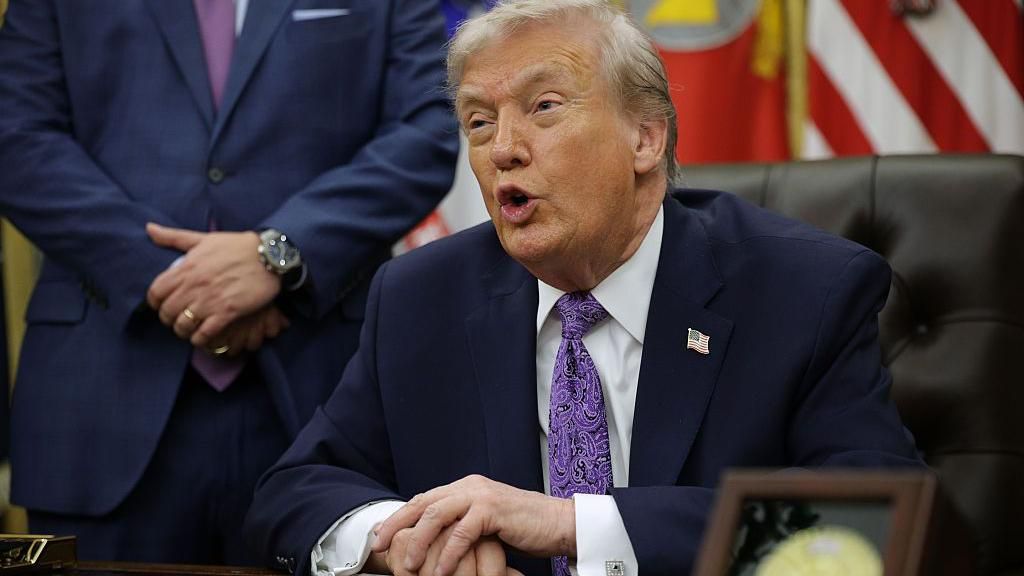
Trump says he will pardon jailed elections clerk, but state officials say he cannot
In a controversial move testing constitutional boundaries, President Donald Trump has extended a presidential pardon to Tina Peters, the former Mesa County, Colorado elections clerk currently serving a nine-year prison sentence. Peters was convicted in 2024 on seven state-level charges, including three counts of attempting to influence a public servant and one count of conspiracy to commit criminal impersonation related to unauthorized access to voting systems during the 2020 presidential election.
The pardon declaration, announced via Trump’s Truth Social platform, immediately triggered strong constitutional challenges from Colorado officials. State Attorney General Phil Weiser asserted that the presidential pardon power, widely understood to apply exclusively to federal crimes, holds no legal precedent for state-level convictions and ‘will not hold up’ under judicial scrutiny.
Trump defended his action by characterizing Peters as ‘a Patriot who simply wanted to make sure that our Elections were Fair and Honest’—echoing his longstanding but unsubstantiated claims of widespread voter fraud in the 2020 election. The case has become a rallying point within election conspiracy circles, with numerous campaigns advocating for Peters’ release.
Colorado Secretary of State Jena Griswold condemned the move as ‘an assault not just on our democracy, but on states’ rights and the American constitution.’ Legal experts note this represents another expansion of Trump’s pardon authority since he returned to office in January 2025, following previous controversial pardons for associates including former chief of staff Mark Meadows and former personal attorney Rudy Giuliani.
The constitutional confrontation highlights tensions between state sovereignty and federal executive power, with Colorado officials emphasizing that states maintain independent authority over their criminal justice systems without federal interference—a principle they argue is fundamental to America’s constitutional framework.
-

Germany accuses Russia of 2024 cyber-attack and disinformation
The German government has formally accused Russian military intelligence of orchestrating a sophisticated cyber-attack against the nation’s air traffic control systems while simultaneously conducting a disinformation campaign to undermine its democratic processes. In an unprecedented diplomatic move, German officials summoned the Russian ambassador to address what they term “hybrid actions” requiring substantial countermeasures.
According to a foreign ministry spokesperson, the August 2024 cyber-incident targeting Germany’s aviation infrastructure has been conclusively attributed to the GRU, Russia’s military intelligence service. The sophisticated attack, allegedly executed by the notorious hacker collective Fancy Bear, represents one of the most serious digital assaults on critical German infrastructure to date.
Beyond the aviation sector breach, German authorities presented evidence of a coordinated Russian influence operation dubbed “Storm 1516” designed to destabilize both the February federal election and ongoing internal affairs. The campaign specifically targeted leading political figures including Green Party’s Robert Habeck and CDU’s Friedrich Merz, who currently serves as chancellor.
Security agencies identified fabricated videos circulating days before the election that falsely alleged systematic ballot manipulation. These materials formed part of a broader psychological operation intended to erode public trust in Germany’s electoral integrity.
The Fancy Bear group, previously implicated in the World Anti-Doping Agency data breach and the 2016 cyber-attack on the US Democratic National Committee, continues to operate as a persistent threat to Western democracies. German officials emphasized their commitment to coordinated European response measures intended to make Russia “pay a price” for its destabilizing activities.
These allegations emerge amidst escalating concerns across Europe regarding suspected Russian cyber-operations, particularly since the full-scale invasion of Ukraine in 2022. While Moscow has consistently denied previous European allegations of sabotage and hybrid warfare, the current charges represent one of the most specific and well-documented accusations to date.
-
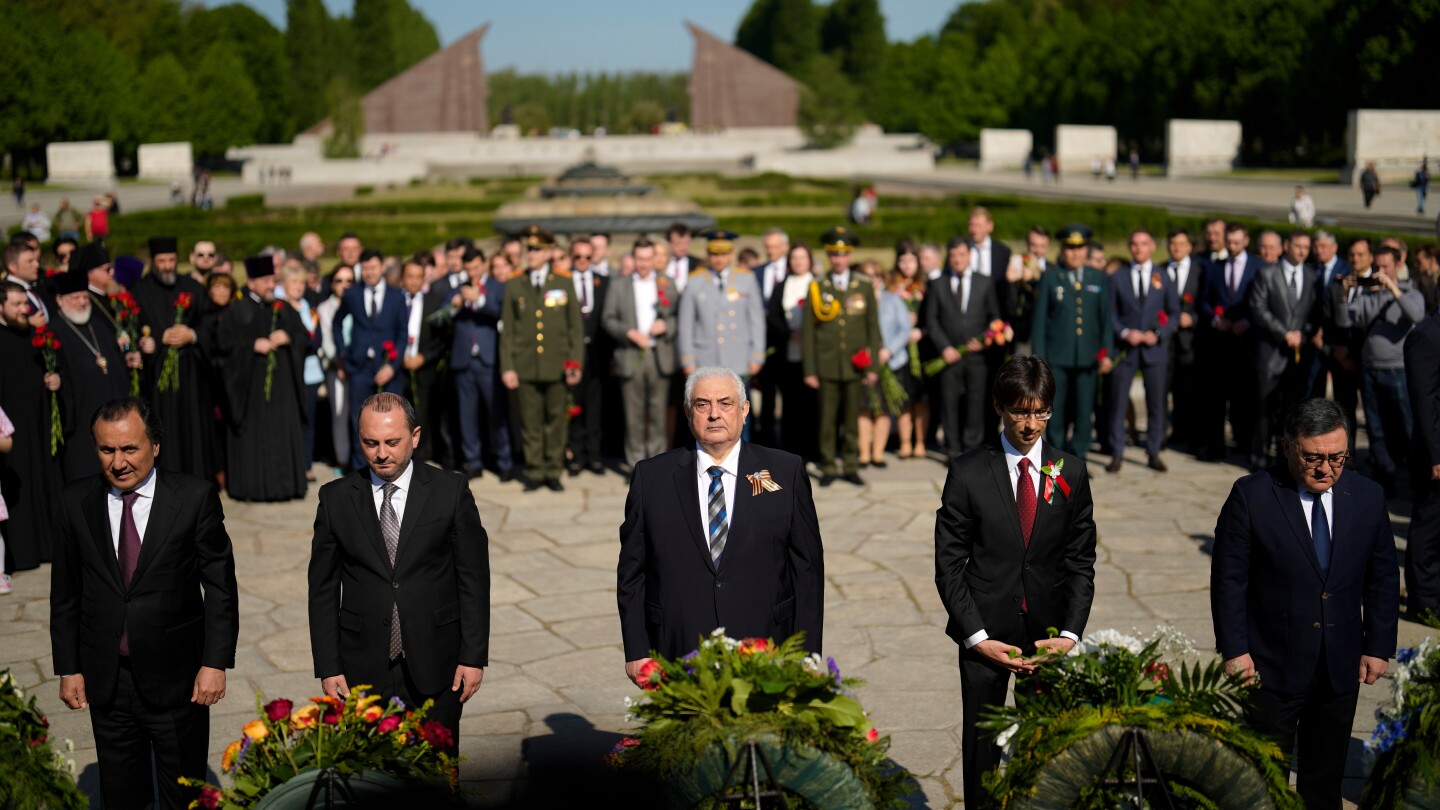
Germany summons Russian ambassador over alleged sabotage, cyberattacks and election interference
Germany has formally summoned Russia’s ambassador in Berlin following concrete evidence of state-sponsored hybrid warfare operations targeting German infrastructure and democratic processes. The German Foreign Ministry presented detailed allegations of cyberattacks, disinformation campaigns, and election interference orchestrated by Moscow.
Foreign Ministry spokesperson Martin Giese identified GRU, Russia’s military intelligence agency, as the primary actor behind these coordinated attacks. The agency has been directly linked to a sophisticated 2024 cyber intrusion against German air traffic control systems, allegedly executed through the hacker collective APT28, also known as Fancy Bear.
Investigative findings reveal that GRU operatives attempted to manipulate Germany’s recent federal election through ‘Storm 1516,’ a comprehensive influence operation deploying artificially generated content, deepfake imagery, and fabricated witness statements across multiple platforms. This campaign represents the latest in a series of Russian efforts to undermine European democratic institutions, building upon previous interference operations including those targeting the 2016 U.S. presidential election.
The German government has announced it will implement countermeasures against Russian hybrid warfare tactics. These developments coincide with the European Union’s decision to indefinitely freeze Russian state assets within its jurisdiction, ensuring these resources can be directed toward supporting Ukraine’s defense efforts against Russian aggression.
Giese emphasized that these attacks aim to fracture social cohesion, erode public trust, and weaken confidence in democratic governance. Germany remains committed to strengthening its cybersecurity infrastructure while continuing military and financial support for Ukraine amidst the ongoing conflict.
-
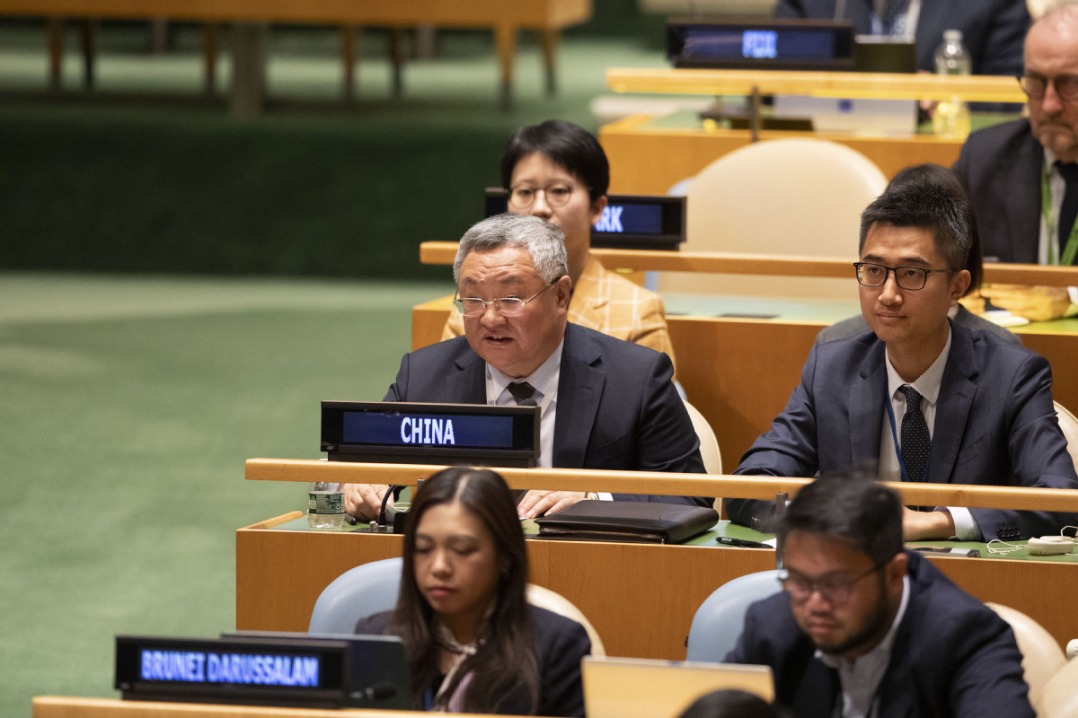
Group of Friends calls for stronger, more inclusive UN
In a significant diplomatic development, the newly formed Group of Friends of Global Governance has issued its inaugural collective statement calling for comprehensive reforms to strengthen the United Nations. The declaration came during a UN General Assembly briefing on Thursday regarding the UN80 Initiative, a sweeping reform program launched by Secretary-General António Guterres.
Ambassador Fu Cong, China’s Permanent Representative to the UN, delivered the joint statement on behalf of 43 member nations, emphasizing the urgent need for a more effective, agile, and inclusive international organization. The statement highlighted that the UN80 reforms must reflect the collective expectations of the majority of member states, particularly focusing on reinforcing multilateralism, safeguarding international rule of law, and enhancing global governance mechanisms.
The coalition, which formally established itself on Tuesday with founding members including China, Cuba, Iran, Palestine, Kenya, Kazakhstan, Morocco, and Venezuela, argued that after eight decades of service, the UN must prioritize both operational effectiveness and efficiency. The group specifically emphasized the need for the world body to develop greater responsiveness and resilience in addressing contemporary global challenges.
A central theme of the statement addressed the concerns of developing nations, which constitute two-thirds of the UN membership. The alliance called for substantive reforms within the development pillar, expanded capacity-building support for the 2030 Agenda, and rectification of the under-representation of developing countries in the UN secretariat. The group stressed that equitable geographical representation remains fundamental to both the UN80 Initiative and the broader Pact for the Future.
The Group of Friends further insisted that negotiation processes must maintain transparency and inclusivity, ensuring equal participation opportunities for all member states across every workstream. The coalition expressed its commitment to collaborate with all stakeholders in steering the UN80 Initiative toward establishing a more just global governance system that serves the common interests of the international community.