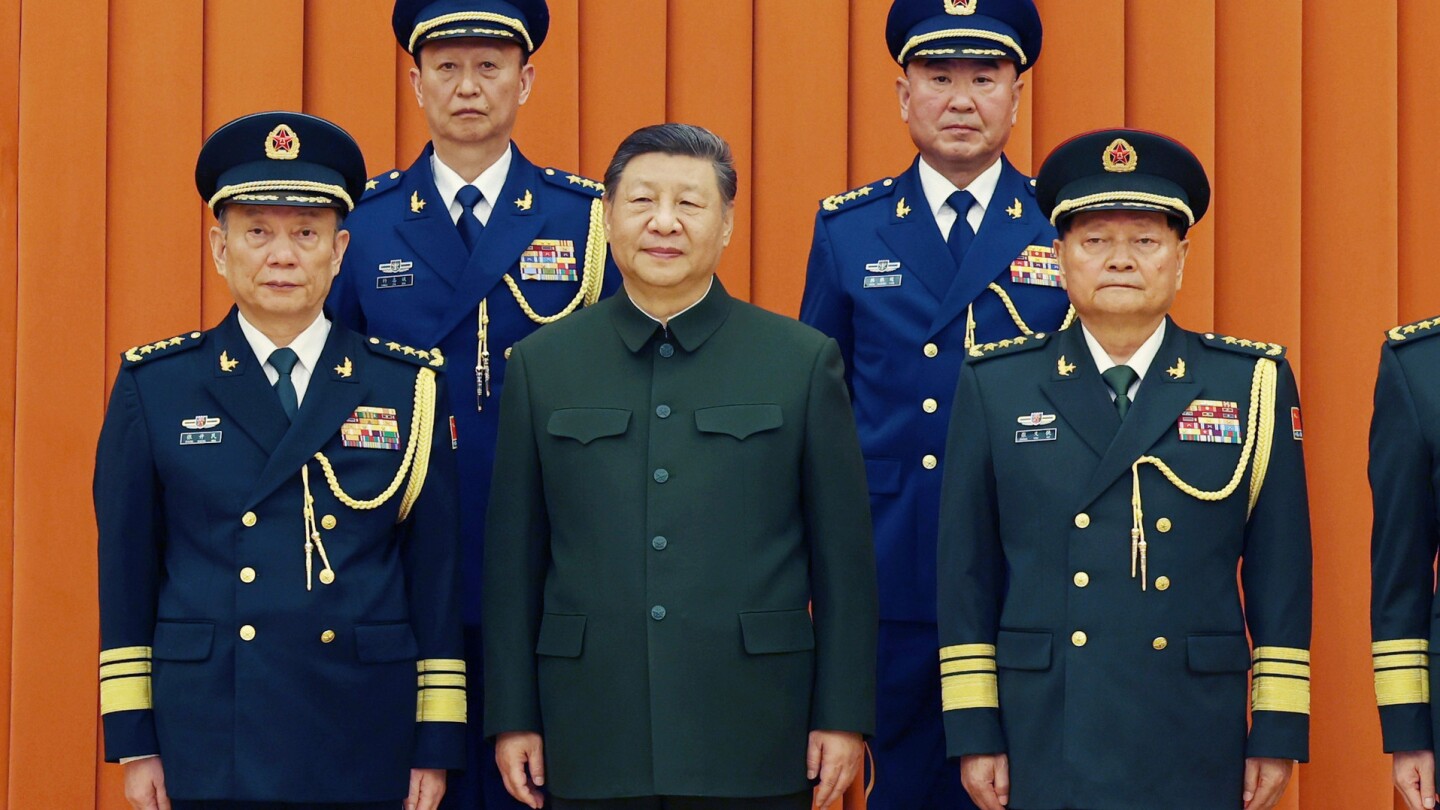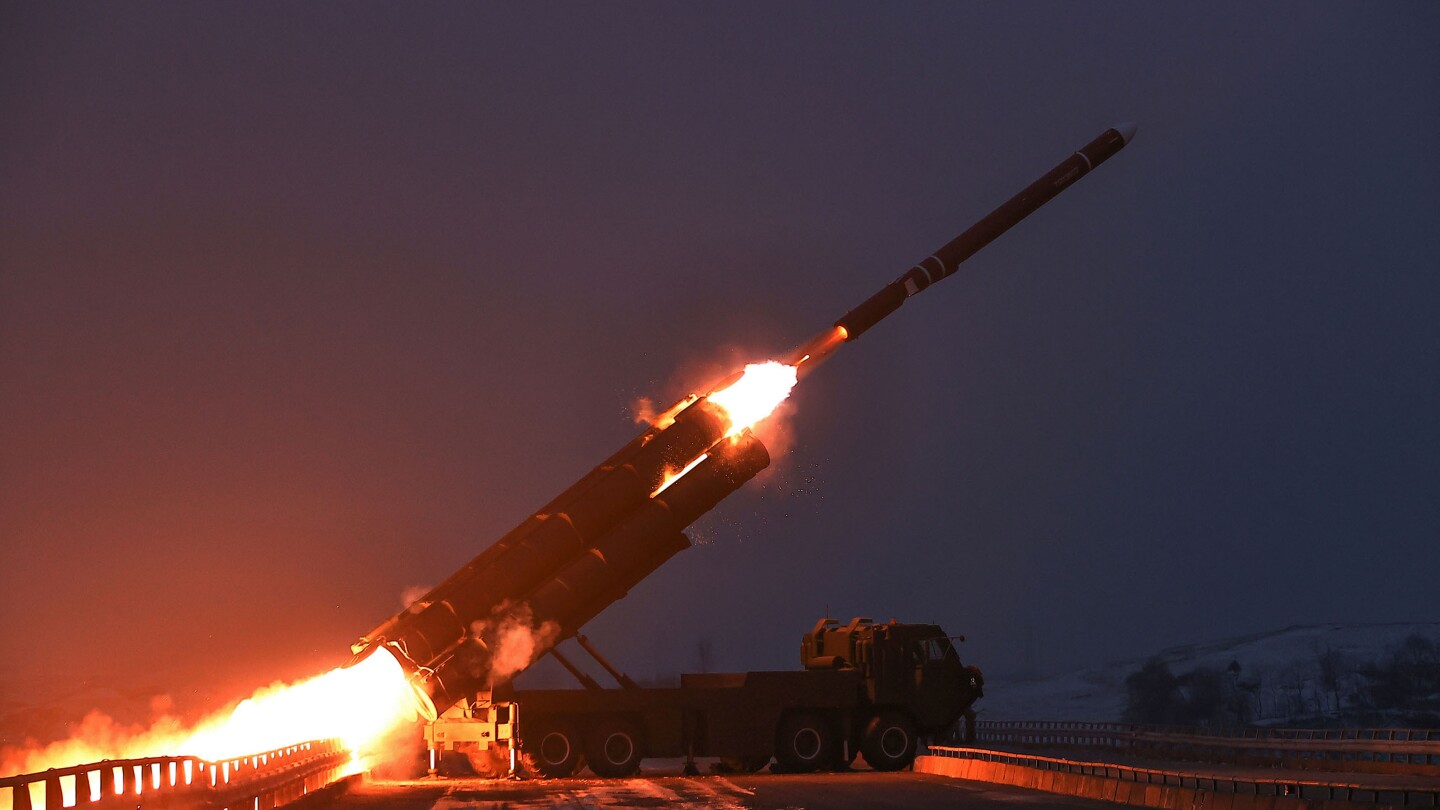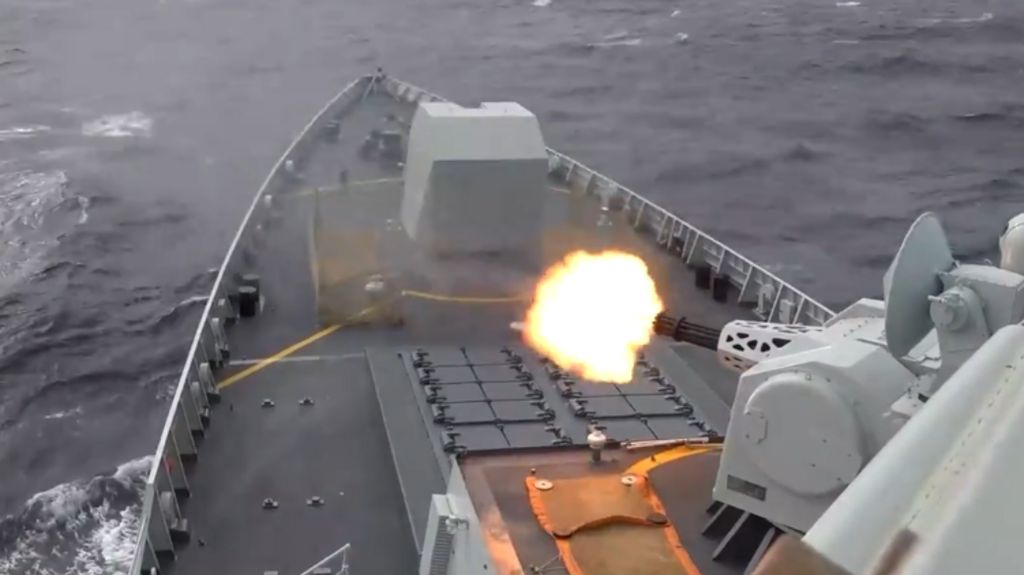
The global community, particularly the United States, is grappling with two pressing questions regarding China: the extent of its military industrial production capacity and the true cost of its weaponry. China’s industrial prowess is unparalleled, boasting an independent and self-sufficient production line that outpaces global competitors in both speed and volume. However, the cost of Chinese weapons remains a contentious issue. While some experts argue that China’s expenses are a fraction of those in the U.S., others remain skeptical, pointing to the complexities of cost calculations, including incentives and operational details. If China’s costs are significantly lower, it could pose a substantial challenge to the U.S.; if they are comparable or higher, China might face its own set of difficulties. The stakes are high, as these factors could influence the trajectory of an arms race reminiscent of the Cold War era. China’s strategy appears to leverage low production costs and technological advancements to gain market share and create trade surpluses. This approach, coupled with a potential reverse Reagan-like strategy, aims to deter U.S. confrontation. However, this could also incite backlash from Americans and other nations. The dynamics of this new Cold War differ from the Soviet era, as China’s ideology does not inherently threaten private wealth, instead promising to enrich capitalists. This subtle distinction has garnered support from global financiers, who operate under the protective wing of the Chinese leadership. The U.S., meanwhile, seems unprepared for a full-scale confrontation, as evidenced by its tepid responses and strategic retreats. The absence of American leadership could lead to increased regional tensions, particularly in Asia, where countries may need to manage their relations with China independently. The evolving geopolitical landscape underscores the potential for a significant shift in global power dynamics, with China poised to capitalize on America’s perceived vulnerabilities.
分类: politics
-

Belarus and Russia’s show of firepower appears to be a message to Europe
In a dramatic display of military might, Belarus and Russia have launched their joint military exercises, codenamed ‘Zapad-2025’ (West 2025), at the Borisovsky training ground, located 45 miles from Minsk. The drills, which occur every four years, feature a series of simulated combat scenarios, including guided bomb drops by Sukhoi-34 bombers, artillery shelling, and helicopter gunship attacks. Surveillance drones hover overhead, capturing the intensity of the maneuvers. Despite the spectacle, Belarusian and Russian officials insist the exercises are purely defensive, aimed at bolstering the security of both nations against potential external threats. However, the timing of the drills has raised eyebrows, coinciding with heightened tensions in Eastern Europe. Poland, in particular, has expressed concern, with Prime Minister Donald Tusk labeling the exercises as ‘very aggressive.’ The drills also come amid ongoing conflict in Ukraine, where Russia continues its military operations. In a bid for transparency, Belarus invited international media and military attachés from 23 countries, including the US, Turkey, and Hungary, to observe the exercises. Major General Valery Revenko, assistant to the Belarusian defense minister, emphasized the unprecedented openness of the event, stating, ‘We are not threatening anyone. We are for constructive and pragmatic dialogue.’ Yet, recent incidents, such as Russian drone incursions into Polish and Romanian airspace, have fueled fears that these exercises may be part of a broader strategy to test NATO’s resolve. While both Russia and Belarus have sought to improve relations with Washington, their ties with Europe remain strained. The ‘Zapad-2025’ drills serve as a stark reminder of the military capabilities on Europe’s doorstep, sending a clear message to the West: confrontation with Moscow may not be in their best interest.
-

Spanish PM calls for Israel to be barred from international sport
Spanish Prime Minister Pedro Sánchez has urged the international community to exclude Israel from global sports competitions and cultural events, citing its actions in Gaza. Speaking to members of his Socialist Workers’ Party, Sánchez argued that Israel should not be allowed to use international platforms to ‘whitewash its image,’ drawing parallels to Russia’s exclusion following its invasion of Ukraine in 2022. Sánchez’s remarks have sparked a heated diplomatic row, with Israel’s Foreign Minister Gideon Saar labeling the Spanish leader ‘a disgrace’ and accusing him of inciting pro-Palestinian protests in Madrid. These protests led to the cancellation of the final stage of the Vuelta a España cycling race, which included an Israeli team. Sánchez defended the protests, stating that Spain ‘shines as an example, with pride’ on the Gaza issue. Several Spanish ministers echoed his sentiments, with Digital Transformation Minister Óscar López describing Israel’s actions as ‘genocide,’ a claim Israel vehemently denies, asserting its actions are acts of self-defense. Culture Minister Ernest Urtasun also called for Israel’s exclusion from the next Eurovision Song Contest, a stance supported by public broadcasters in Ireland and the Netherlands, who cited the ‘appalling’ loss of life in Gaza. The strained relationship between Spain and Israel has worsened since late 2023, when Sánchez expressed concerns over civilian deaths in Gaza. In 2024, Spain joined Norway and Ireland in recognizing a Palestinian state, and Sánchez recently accused Israel of genocide, announcing measures including an arms embargo. Israel has countered by accusing Sánchez’s administration of antisemitism and using ‘wild and hateful rhetoric.’ A recent poll by the Elcano Royal Institute found that 82% of Spaniards believe genocide is occurring in Gaza. European Commission President Ursula von der Leyen has also called for a suspension of free trade and bilateral support with Israel, citing a ‘man-made famine’ in Gaza. Israel, however, denies causing famine, blaming aid agencies and Hamas for delays in aid distribution. The UN-backed IPC confirmed famine in parts of Gaza in August, attributing it to Israel’s restrictions on food and medical aid. Israel launched its military campaign in Gaza in response to Hamas’s October 7, 2023, attack, which killed 1,200 Israelis and took 251 hostages. Since then, over 64,871 Palestinians have been killed, according to Gaza’s Hamas-run health ministry.
-

Conor McGregor ends bid to be Irish president
Mixed martial arts star Conor McGregor has announced his withdrawal from the upcoming Irish presidential election, just hours before he was scheduled to address key council meetings in Dublin and Kildare. McGregor, who had been vying for the nominations required to appear on the ballot, cited “careful reflection and family consultations” as the reasons behind his decision. The 37-year-old former UFC champion expressed gratitude for the “support and encouragement” he received but criticized the election’s eligibility rules, calling them a “straitjacket” that hinders a truly democratic process. McGregor’s withdrawal comes after months of social media campaigning, during which he urged his followers to lobby local councillors for his nomination. However, his absence from early candidate presentations raised doubts about his commitment to the race. McGregor’s potential candidacy had already faced scrutiny due to his legal troubles, including a recent civil case in which he was ordered to pay £206,000 in damages for sexual assault allegations, which he denies. With McGregor out of the running, the focus now shifts to the three confirmed candidates: Catherine Connolly, Jim Gavin, and Heather Humphreys, each backed by major political parties. The Irish presidential election is set for October 24, with nominations closing on September 24.
-

Brazil’s Lula hits back at Trump over Bolsonaro trial and tariffs
Brazilian President Luiz Inácio Lula da Silva has publicly defended the trial and subsequent sentencing of his predecessor, Jair Bolsonaro, to over 27 years in prison for orchestrating a coup attempt. In a strongly-worded opinion piece published in the New York Times, Lula refuted claims by former U.S. President Donald Trump that the trial was a ‘witch hunt,’ describing it instead as a ‘historic decision that safeguards Brazil’s institutions and democratic rule of law.’ Lula emphasized that the trial was conducted in strict adherence to Brazil’s 1988 Constitution, which was established after decades of struggle against military dictatorship. He also addressed the strained relations between the U.S. and Brazil, criticizing Trump’s imposition of 50% tariffs on Brazilian imports as ‘misguided and illogical.’ Lula argued that the U.S. had accumulated a $410 billion trade surplus with Brazil over the past 15 years, suggesting that the tariffs were politically motivated. He further accused the U.S. government of using tariffs and the Magnitsky Act to shield Bolsonaro from accountability. Lula concluded by asserting Brazil’s commitment to dialogue with the U.S. but made it clear that ‘Brazil’s democracy and sovereignty are not on the table.’ The trial, which concluded last Thursday, saw four out of five Supreme Court justices convict Bolsonaro on all charges. Bolsonaro’s legal team has announced plans to appeal the verdict.
-

Malawi – where the petrol queue might overshadow the queue to vote
As Malawi approaches its general election on Tuesday, the pressing concerns for many citizens are not the candidates or their promises, but the dire economic conditions that have gripped the nation. Prolonged fuel shortages, frequent power outages, skyrocketing living costs, widespread hunger, and rampant youth unemployment have created a palpable sense of frustration among the populace. Against this backdrop, the presidential, parliamentary, and local council candidates are vying for votes, but the usual fervor of election campaigns has been noticeably subdued. The presidential race, a rematch between incumbent Lazarus Chakwera and former President Peter Mutharika, has been marked by a lack of the traditional campaign fanfare, with fewer billboards and limited distribution of free T-shirts. The economic strain has also led to tensions, with fistfights breaking out in long queues for petrol. Chakwera has attempted to address the fuel crisis, blaming corrupt officials for sabotaging the oil market, but the issue remains unresolved. The economic challenges are particularly significant for young voters, who make up around half of the electorate. Many express disillusionment with the political process, citing years of unfulfilled promises. Despite the cynicism, candidates like Chakwera, Mutharika, and former President Joyce Banda continue to campaign, each pledging to bring about radical change. However, the real test will be whether the eventual winner can deliver on their promises and alleviate the economic hardships faced by the majority of Malawians.
-

If Donald Trump gets his disaster capitalism way in Gaza
Gaza, a region devastated by conflict, lies in ruins with entire neighborhoods destroyed and hundreds of thousands of residents crammed into tents, struggling for basic necessities like food, water, and power. Amid this humanitarian crisis, a leaked 38-page document from the Trump administration, titled the Gaza Reconstitution, Economic Acceleration and Transformation (Great) Trust, proposes a radical plan to “fundamentally transform Gaza” by integrating it into the India–Middle East–Europe Economic Corridor (Imec).
The plan, framed as a reconstruction effort, emphasizes “massive US gains” and the acceleration of Imec, while consolidating an “Abrahamic regional architecture”—a reference to the 2020 Abraham Accords that normalized relations between Israel, the UAE, and Bahrain. This vision aligns closely with Israeli Prime Minister Benjamin Netanyahu’s “Gaza 2035” proposal, which envisions Gaza as a sanitized logistics hub linked to Saudi Arabia’s Neom mega-project, devoid of meaningful Palestinian presence.
Imec, launched at the 2023 G20 summit in New Delhi, is a transformative infrastructure project signed by the US, EU, India, Saudi Arabia, and the UAE. It includes railways, ports, pipelines, and digital cables connecting South Asia to Europe via the Arabian Peninsula. While Israel is not a formal signatory, its role is implicit, with the corridor running through Haifa Port.
The plan casts Gaza as both an obstacle and a gateway, presenting it as a historic crossroads of trade routes. It proposes extending Gaza’s port, integrating its industries into regional supply chains, and reorganizing its land into “planned cities” and digital economies. However, the vision is not one of recovery for Gaza’s residents but rather its conversion into a logistics center serving Imec.
The Great Trust’s most radical element is its model of direct trusteeship, envisioning a US-led custodianship that would govern Gaza, oversee security, manage aid, and control redevelopment. Even after establishing a “Palestinian polity,” the trust would retain powers through a Compact of Free Association. The plan also includes provisions for “voluntary relocation,” offering financial incentives for Palestinians to leave Gaza, a move critics argue sanctions ethnic cleansing.
The document is laden with “Abrahamic” branding, from logistics hubs to infrastructure corridors, and envisions a techno-futurist Gaza with smart manufacturing zones, AI-regulated data centers, and luxury resorts. It aims to channel Gulf capital into Gaza’s redevelopment, forecasting $70–100 billion in public investment and $35–65 billion from private investors.
While Saudi Arabia has not formally joined the Abraham Accords, its backing of Imec signals acceptance of the framework. For Washington, Gaza’s reconstruction is seen as a final step in persuading Riyadh to normalize relations with Israel. However, the plan’s focus on Gaza as a distressed asset to be flipped raises ethical concerns, with critics labeling it disaster capitalism at its sharpest.
Despite the grand visions of free-trade zones and futuristic cities, Palestinians have consistently rejected such schemes. The leaked document underscores that Gaza’s future is being framed within a broader US effort to reshape the region, raising questions about whose interests are truly being served.
-

Neo-Nazi Golden Dawn leader released from prison early
Nikos Michaloliakos, the notorious leader of the Greek neo-Nazi party Golden Dawn, has been granted early release from prison, igniting widespread condemnation. The 67-year-old far-right politician, known for his admiration of Nazism and Holocaust denial, was permitted to serve the remainder of his 13-year sentence under house arrest due to health concerns, as reported by state media on Friday. Michaloliakos had been convicted in 2020 for orchestrating a series of violent attacks on immigrants and political opponents carried out by Golden Dawn supporters. This marks the second time he has been released early; a previous attempt in May 2024 was revoked after he failed to demonstrate satisfactory behavior. Golden Dawn, which Michaloliakos founded and led, was declared a criminal organization linked to the murder of an anti-fascist musician and attempted murders of Egyptian fishermen and communist activists. The party gained significant traction during Greece’s financial crisis, securing third place in the 2012 elections with its anti-immigrant and nationalist rhetoric. Despite officially denying its neo-Nazi identity, Golden Dawn adopted Nazi-inspired symbols and ideologies. Michaloliakos and former party MPs were convicted of leading or participating in the criminal group. The decision to release him has drawn sharp criticism from left-wing parties, with Greece’s New Left party calling it a ‘serious blow to the collective memory and the struggle for democracy and justice.’ The communist party KKE has demanded the decision be overturned, emphasizing that Golden Dawn’s crimes remain unforgotten by the public and younger generations.
-

New Nato mission to bolster eastern flank after Russia drone incursion
In a dramatic escalation of tensions, Poland has accused Russia of a deliberate incursion after more than a dozen drones breached Polish airspace on Wednesday. The incident, described as the most serious of its kind since Russia’s full-scale invasion of Ukraine began in February 2022, has prompted a swift response from Nato allies. Denmark, France, and Germany have pledged military support, including fighter jets and warships, to strengthen the alliance’s eastern flank. Other Nato members are expected to follow suit in the coming days.
-

Ivory Coast’s ‘iron lady’ – from hiding in a bunker to presidential hopeful
In a dramatic political resurgence, former Ivory Coast First Lady Simone Gbagbo has announced her candidacy for the upcoming presidential election, marking a significant turn in her tumultuous career. Once a fugitive hiding in a bunker to evade arrest, Gbagbo, now 76, has emerged as a defiant contender, promising to modernize and revitalize the nation. Her journey from the shadows of her ex-husband Laurent Gbagbo’s presidency to the forefront of Ivorian politics is a testament to her resilience and ambition. Known as the ‘Iron Lady’ for her steely demeanor, Gbagbo has long been a polarizing figure in Ivory Coast’s political landscape. Her tenure as first lady from 2000 to 2011 was marked by her influential role in her husband’s administration, where she was both revered and feared. Despite a criminal conviction and a highly publicized divorce, Gbagbo has methodically rebuilt her political base, founding the leftist Movement of Capable Generations (MGC) and positioning herself as a formidable challenger to incumbent President Alassane Ouattara. Her candidacy is not only a political milestone but also a symbolic one, as she seeks to become Ivory Coast’s first female president. Gbagbo’s campaign, fueled by her powerful rhetoric and extensive political experience, has garnered significant attention, particularly among her ex-husband’s supporters, who have been barred from backing Laurent due to his ineligibility. As the election approaches, all eyes are on Simone Gbagbo, whose potential victory would mark a historic chapter in Ivory Coast’s turbulent political history.