分类: politics

  • Li calls on US lawmakers to enhance exchanges, ties

    Li calls on US lawmakers to enhance exchanges, ties

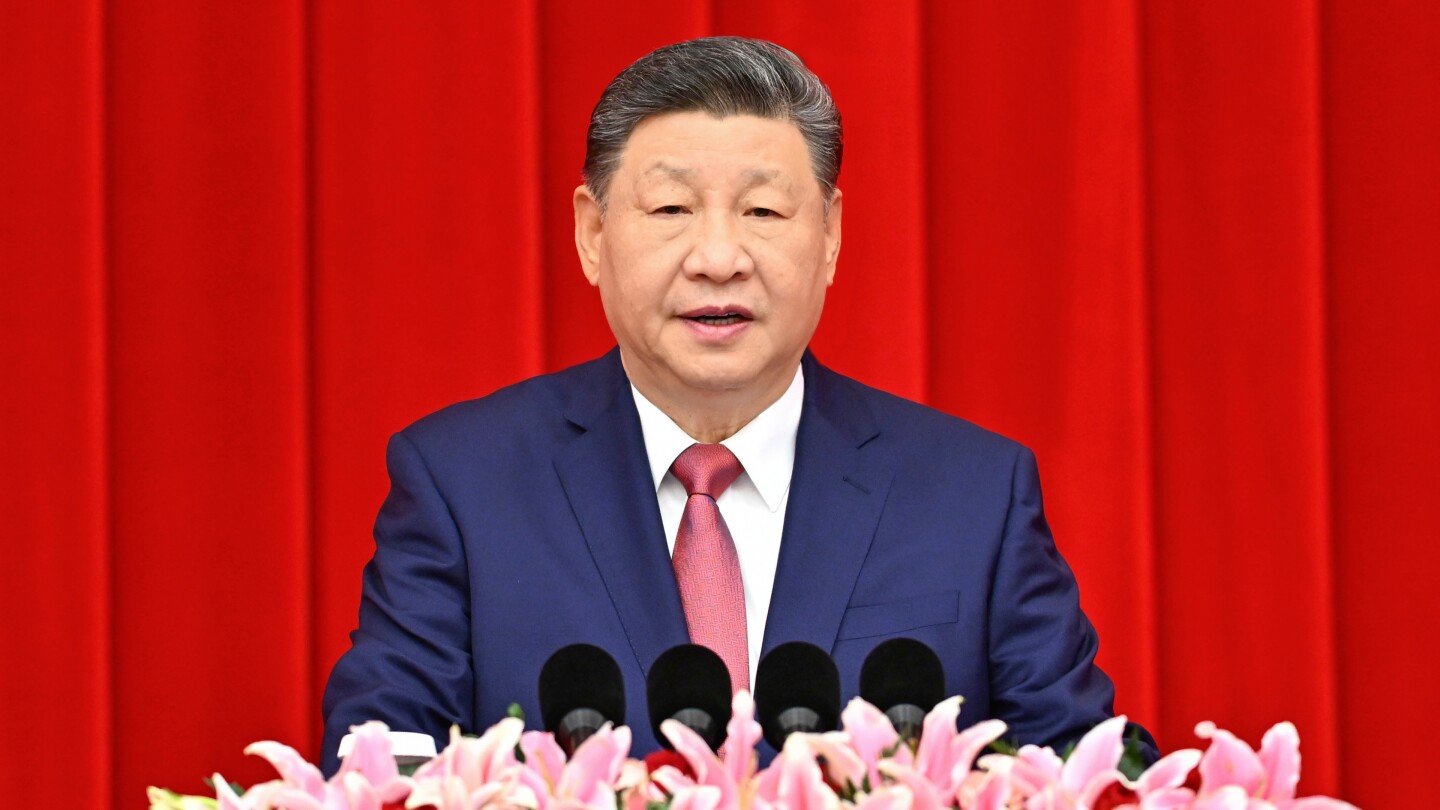
    In a significant diplomatic engagement, Chinese Premier Li Qiang met with a delegation of US congressmen at the Great Hall of the People in Beijing on September 21, 2025. The delegation, led by Adam Smith, the Democratic leader of the House Armed Services Committee, marked the first visit by US House representatives to Beijing since 2019. Premier Li emphasized that fostering stable, sound, and sustainable relations between China and the United States aligns with the shared interests of both nations and the broader international community. He highlighted the importance of mutual respect, peaceful coexistence, and win-win cooperation as foundational principles for bilateral relations. Li expressed optimism that both countries could address their respective concerns through dialogue grounded in equality, respect, and reciprocity. He urged the US Congress to play a constructive role in advancing friendship and shared development, reinforcing the notion that China and the US should be partners in development, empowering each other for mutual success.

  • Exclusive: Egypt’s Nato-style Arab defence force proposal rejected at Doha summit

    Exclusive: Egypt’s Nato-style Arab defence force proposal rejected at Doha summit

    Egypt’s ambitious plan to establish a NATO-style Arab defense force faced significant opposition at the recent Doha summit, with Qatar and the United Arab Emirates (UAE) leading the resistance. The proposal, aimed at creating a rapid-response alliance under the 1950 Joint Defence and Economic Cooperation Treaty, sought to shield member states from external threats, particularly Israel. However, deep-seated disagreements over leadership and regional security priorities derailed the initiative, according to senior Egyptian diplomats.

    Egyptian Foreign Minister Badr Abdelatty presented the plan as a defensive measure to protect the region without relying on foreign powers. However, the proposal was met with resistance, primarily due to disputes over leadership. Saudi Arabia sought command of the force, while Egypt argued that its extensive military experience made it the most suitable leader. The impasse highlighted the broader divisions within the Arab world over how to address regional security challenges.

    The summit, held on September 15 and attended by leaders from the Arab League and the Organisation of Islamic Cooperation (OIC), failed to produce a unified stance on Israel’s actions in Gaza. Despite Egypt’s push for concrete measures, including a demand to end Israel’s military operations and reject the forced displacement of Palestinians into North Sinai, the gathering concluded with only statements of support for Gaza and condemnation of Israel. The outcome underscored the influence of the United States, which reportedly pressured Arab states to avoid taking decisive action against Israel.

    Egyptian President Abdel Fattah el-Sisi left the summit deeply frustrated, as Gulf states rejected his proposal and opted to confine discussions to their own defense council. The rejection marked a significant setback for Egypt, which had hoped to position itself as a leader of Arab and Islamic defense. Sisi’s characterization of Israel as ‘an enemy’ during the summit reflected Cairo’s growing concerns over Israeli threats, including potential operations targeting Hamas leaders on Egyptian soil.

    The failure to revive the 1950 treaty is emblematic of the long-standing challenges in achieving Arab military cohesion. Political rivalries, conflicting national priorities, and reliance on bilateral security agreements have repeatedly undermined collective defense efforts. Egypt’s latest attempt to unify Arab states against external threats has once again exposed the fractures within the region, leaving Cairo isolated in its defensive ambitions.

  • Key parts of Trump’s economic agenda now in Supreme Court’s hands

    Key parts of Trump’s economic agenda now in Supreme Court’s hands

    The U.S. Supreme Court is poised to make landmark decisions on two critical cases involving President Donald Trump’s economic policies: his global tariffs and his unprecedented attempt to remove Federal Reserve Governor Lisa Cook. These cases, which could significantly reshape executive power, are set to be heard in the coming months, with arguments on the tariffs case scheduled for November 5.

  • Washington’s immigrant neighborhoods push back against ICE arrests

    Washington’s immigrant neighborhoods push back against ICE arrests

    In Washington D.C., heightened Immigration and Customs Enforcement (ICE) activities have sparked widespread fear and resistance within immigrant communities. Reports from the Migrant Solidarity Mutual Aid Network indicate a surge in detentions, often accompanied by allegations of racial profiling. Amy Fischer, an organizer with the network, emphasized that individuals perceived as Black or brown are disproportionately targeted, regardless of their immigration status. Recent incidents in neighborhoods like Mount Pleasant and Petworth, known for their Hispanic populations, have seen residents rallying against ICE operations, chanting slogans and documenting arrests on their phones. President Donald Trump’s aggressive immigration enforcement policies, initiated in January 2025, have intensified these raids, despite waning public support. The Supreme Court’s recent decision to lift restrictions on race-based immigration arrests has further emboldened ICE’s tactics. White House spokeswoman Abigail Jackson defended the operations, stating they target individuals with criminal records, though critics argue the approach fosters distrust and fear. Local businesses in immigrant-heavy areas report declining foot traffic as residents remain indoors, apprehensive of potential arrests. Community leaders and activists continue to organize, using chat groups to alert neighbors of ICE presence and advocating for immigrant rights. The Department of Homeland Security maintains that only undocumented individuals are at risk, urging others to comply with the law. However, the emotional toll on families and the economic impact on neighborhoods underscore the broader implications of these enforcement measures.

  • US lawmakers plan to introduce bipartisan bill to kill coffee tariffs, Washington Post reports

    US lawmakers plan to introduce bipartisan bill to kill coffee tariffs, Washington Post reports

    In a significant bipartisan move, U.S. Representatives Don Bacon (R-NE) and Ro Khanna (D-CA) are set to introduce legislation aimed at exempting coffee products from tariffs starting January 19, 2025. The proposed bill, as reported by the Washington Post, would cover roasted and decaffeinated coffee, coffee husks, skins, and other coffee-based beverages or substitutes. The initiative seeks to alleviate the financial burden on American consumers by preventing additional costs on a daily essential. ‘Why are we tariffing American citizens on something that we don’t even grow? It doesn’t make sense,’ Bacon remarked in an interview with the newspaper. The move comes in response to the persistent high prices of coffee in the U.S., a situation exacerbated by the 50% tariff on Brazilian green coffee imports imposed during the Trump administration. Since the tariff’s implementation, arabica coffee prices have surged by approximately 50% on the Intercontinental Exchange in New York, and Brazil, which previously supplied a third of the U.S. coffee market, has significantly reduced its shipments. The proposed legislation highlights the ongoing efforts to address the economic impact of trade policies on everyday goods.

  • Saudi pact puts Pakistan’s nuclear umbrella into Middle East security picture

    Saudi pact puts Pakistan’s nuclear umbrella into Middle East security picture

    In a significant geopolitical move, Saudi Arabia and Pakistan have solidified their alliance through a landmark defense agreement, signed on September 17, 2025, in Riyadh. The pact, termed the ‘Strategic Mutual Defense Agreement,’ underscores a deepening partnership between the two nations, particularly in the face of escalating regional tensions. While the specifics of the agreement remain undisclosed, analysts suggest it effectively combines Saudi Arabia’s financial resources with Pakistan’s formidable military capabilities, including its nuclear arsenal. Pakistan, the sole nuclear-armed Muslim-majority nation, has historically maintained its nuclear doctrine focused on deterring India, its long-standing adversary. However, the agreement has sparked speculation about Riyadh’s potential access to a nuclear shield, a development that could significantly alter the security dynamics of the Middle East. Saudi Arabia, increasingly wary of Israel’s military actions and Iran’s nuclear ambitions, appears to be seeking alternative security assurances beyond its traditional reliance on the United States. The pact also reflects a broader trend of Gulf states diversifying their defense partnerships amid waning confidence in U.S. commitments to the region. Pakistan’s Prime Minister Shehbaz Sharif expressed gratitude to Saudi Crown Prince Mohammed bin Salman for fostering stronger economic and strategic ties. Meanwhile, the agreement has drawn attention from neighboring countries, including India and Iran, who are likely to assess its implications for regional stability. As the Middle East navigates a complex security landscape, the Saudi-Pakistan defense pact marks a pivotal moment in the region’s evolving geopolitical alliances.

  • Germany open to ideas on frozen Russian assets, finance minister says

    Germany open to ideas on frozen Russian assets, finance minister says

    In a significant development, German Finance Minister and Vice Chancellor Lars Klingbeil has expressed Berlin’s willingness to explore productive ideas regarding the use of Russian assets frozen in the European Union. Speaking in Copenhagen on Friday, Klingbeil emphasized the need for careful examination of the issue, which remains legally complex and sensitive. ‘Germany will take on a role in which we want to make things possible and not one in which we block things,’ he stated, signaling a cooperative approach ahead of discussions with EU counterparts. The EU has been cautious about seizing the assets outright, a move considered a red line by some member states. Instead, the bloc is exploring ways to utilize these assets more intensively to support Ukraine, particularly amid uncertainties surrounding U.S. commitment under President Donald Trump. Since Russia’s invasion of Ukraine in February 2022, the EU has only accessed the interest generated from the frozen assets. Germany has historically raised legal concerns over proposals to seize the assets entirely. However, Klingbeil affirmed his coalition government’s commitment to intensifying their use to meet Ukraine’s financial needs. ‘There is a financial need there. We want to fulfill our responsibility for Ukraine,’ he told reporters. This stance underscores Germany’s evolving position on a contentious issue that continues to shape Europe’s response to the ongoing conflict.

  • South Korea aims to resolve US visa issues before executing $350 bln investment

    South Korea aims to resolve US visa issues before executing $350 bln investment

    South Korean Foreign Minister Cho Hyun announced on Friday that the government is prioritizing the resolution of visa-related challenges faced by Korean workers in the United States before moving forward with a $350 billion investment package tied to a bilateral trade agreement. This decision follows a recent U.S. immigration raid at a Hyundai Motor battery plant in Georgia, which led to the arrest of hundreds of South Korean workers. While most workers have since returned to South Korea, the incident has sparked calls from businesses for a new visa category to facilitate the entry of skilled Korean workers to assist in setting up factories and training U.S. employees. Minister Cho emphasized that visa policy adjustments are not a ‘precondition’ for the U.S. investments in strategic industries. Separately, Cho expressed optimism that Chinese President Xi Jinping will attend the Asia-Pacific Economic Cooperation (APEC) leaders’ summit, hosted by South Korea in late October. During his recent visit to Beijing, Cho conveyed South Korea’s interest in discussing cultural cooperation with China at the APEC meetings. This comes amid China’s decade-long restrictions on Korean entertainment content, such as K-pop, in response to the deployment of the U.S.-led Terminal High Altitude Area Defense (THAAD) system in South Korea. Beijing has argued that THAAD’s radar capabilities could compromise its airspace security, further straining bilateral relations.

  • Spain backs EU efforts to use frozen Russian assets, cuts gas imports from Russia

    Spain backs EU efforts to use frozen Russian assets, cuts gas imports from Russia

    In a significant development, Spanish Economy Minister Carlos Cuerpo has publicly endorsed the European Commission’s initiative to monetize frozen Russian assets within the EU to support Ukraine’s financial needs. Speaking in an interview with Bloomberg TV on Friday, Cuerpo emphasized Spain’s commitment to maximizing financial assistance for Ukraine. ‘We’ve been advocating for increasing as much as possible the financing for Ukraine,’ he stated, adding that Spain supports exploring ‘creative ways’ to utilize these immobilized assets. This move aligns with broader EU efforts to bolster Ukraine’s economy amidst ongoing geopolitical tensions. Additionally, Cuerpo highlighted Spain’s ongoing efforts to reduce its reliance on Russian liquefied natural gas (LNG) by diversifying energy imports, particularly from the United States. This strategic shift underscores Spain’s alignment with EU energy policies aimed at reducing dependency on Russian resources. The announcement comes as the EU continues to explore innovative financial mechanisms to support Ukraine while addressing energy security concerns within the bloc.

  • Trump says US seeks control of Afghanistan’s Bagram air base given up in withdrawal

    Trump says US seeks control of Afghanistan’s Bagram air base given up in withdrawal

    In a significant geopolitical development, the United States has expressed its intention to regain control of the Bagram air base in Afghanistan. President Donald Trump announced this ambition during a joint press conference with British Prime Minister Keir Starmer in London on Thursday. Trump emphasized the strategic importance of the base, particularly its proximity to China, stating, “We want that base back.”

    Bagram air base, originally constructed by the Soviet Union, served as the primary hub for U.S. military operations in Afghanistan following the September 11, 2001, attacks. It remained operational until the U.S. withdrawal in 2021, which led to the Taliban’s resurgence and control over the country. The base has since been vacated, leaving behind a symbol of America’s two-decade-long military presence in the region.

    However, the Afghan government has dismissed the possibility of a U.S. return. Zakir Jalal, an official from Afghanistan’s foreign ministry, stated on social media platform X that Afghanistan and the U.S. should engage without any American military presence. He advocated for bilateral relations grounded in mutual respect and shared interests.

    Meanwhile, U.S. officials have been engaging with Afghan authorities to address the issue of American citizens detained in Afghanistan. Adam Boehler, the Trump administration’s special hostage envoy, and Zalmay Khalilzad, a former U.S. special envoy for Afghanistan, met with the Taliban’s foreign minister, Amir Khan Muttaqi, to discuss these matters. Notably, the U.S. does not officially recognize the Taliban government, which assumed power after the 2021 withdrawal.

    The push to reclaim Bagram underscores the complex and evolving dynamics between the U.S. and Afghanistan, as both nations navigate their post-withdrawal relationship. While the U.S. views the base as a strategic asset, Afghanistan remains firm in its stance against foreign military presence on its soil.