分类: politics

  • Farmers block highways across Greece in protest over rising costs and EU trade deal

    Farmers block highways across Greece in protest over rising costs and EU trade deal

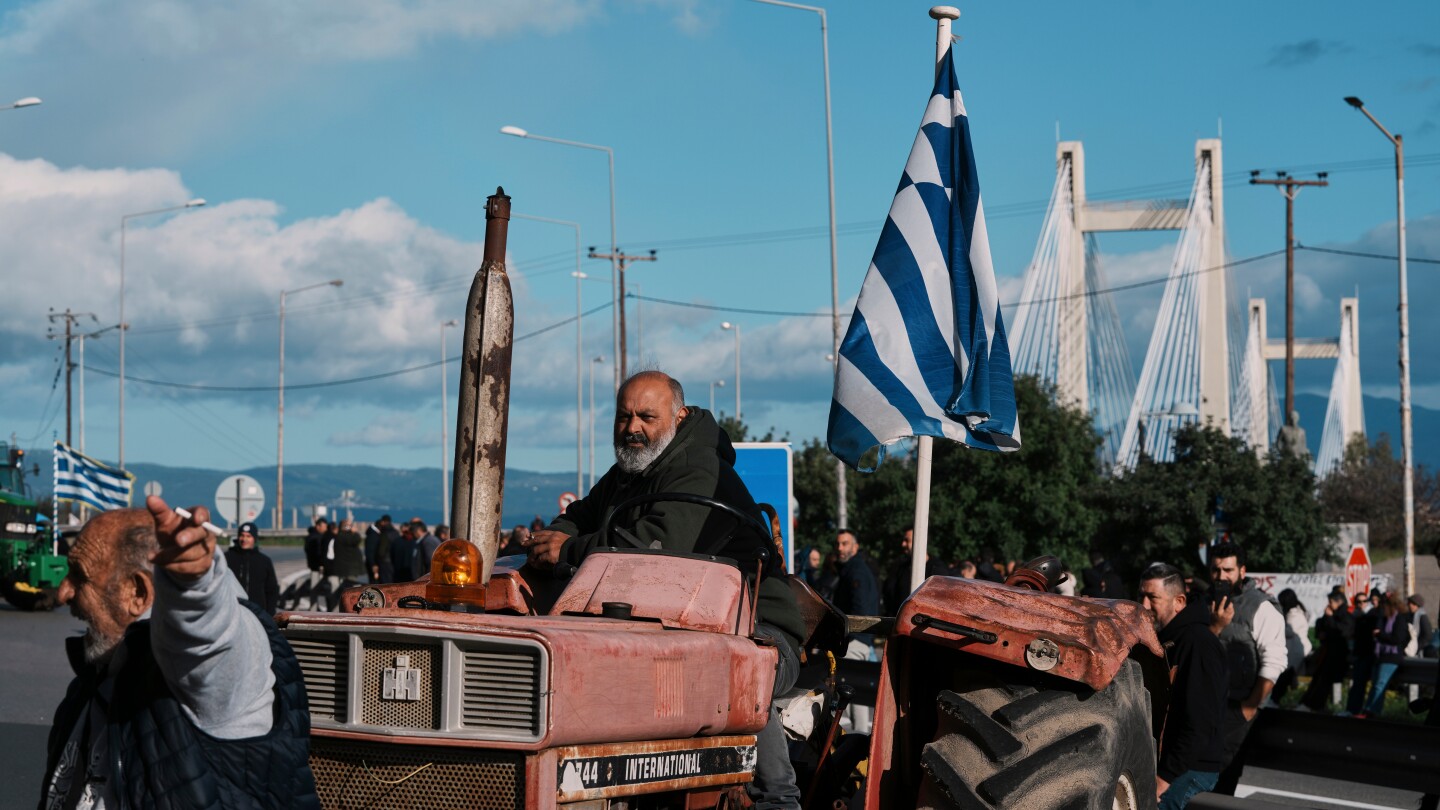
    KASTRO, Greece — Greek agricultural workers intensified their nationwide demonstrations on Thursday by initiating a comprehensive 48-hour blockade of critical highways, major intersections, and toll collection points. This dramatic escalation responds to mounting production expenses and a controversial European Union trade agreement with South American countries under the Mercosur bloc.

    Agricultural machinery formed impenetrable barriers along primary transportation corridors, bringing all vehicular movement to a complete standstill while permitting exclusive passage for emergency services. Law enforcement personnel redirected civilian traffic to alternative roadways without attempting to dismantle the protest formations.

    The conservative administration in Athens has issued formal warnings against prolonged disruptions of public infrastructure. Multiple segments of Greece’s principal north-south highway linking the capital Athens with Thessaloniki experienced complete bilateral closure as cultivators demanded enhanced governmental assistance and outright rejection of the EU-Mercosur pact.

    Yiannis Baritas, a cabbage producer supporting five children, articulated the collective desperation at a southern Greek blockade point: “We’ve encountered an absolute breaking threshold. Our presence here will persist indefinitely to secure our families’ survival. Official policies have driven us to utter despair.”

    These agricultural demonstrations originating in November initially focused on inflated operational costs exacerbated by sequential crises: a fraudulent subsidy scheme delaying legitimate compensations and a contagious outbreak of sheep and goat pox.

    The government proposed eleventh-hour concessions on Wednesday including reduced electricity tariffs for agricultural consumers and fuel tax reimbursements. Nevertheless, producers deemed these measures insufficient to address structural challenges.

    The contested trade agreement would establish an extensive free commerce zone between European and South American economies including Brazil and Argentina. European agriculturalists anticipate market inundation with cheaper imported commodities, sparking parallel protests across multiple EU nations including concurrent demonstrations in France.

    Vangelis Roubis, a protest coordinator near Halkida, warned The Associated Press: “Greek agriculture faces extinction if this ratification proceeds. Our national economy relies fundamentally on cultivation and tourism, lacking the industrial capacity of Germany or France. Our production expenditures exceed Latin American costs by 300%.”

    Roubis cited potato cultivation as representative: Greek producers require 35-40 cents per kilogram for breakeven operations compared to approximately 10 cents in Brazil. The coordinator concluded: “We demand Greece align with EU member states opposing this agreement.”
  • China urges international community to prevent revival of Japanese militarism

    China urges international community to prevent revival of Japanese militarism

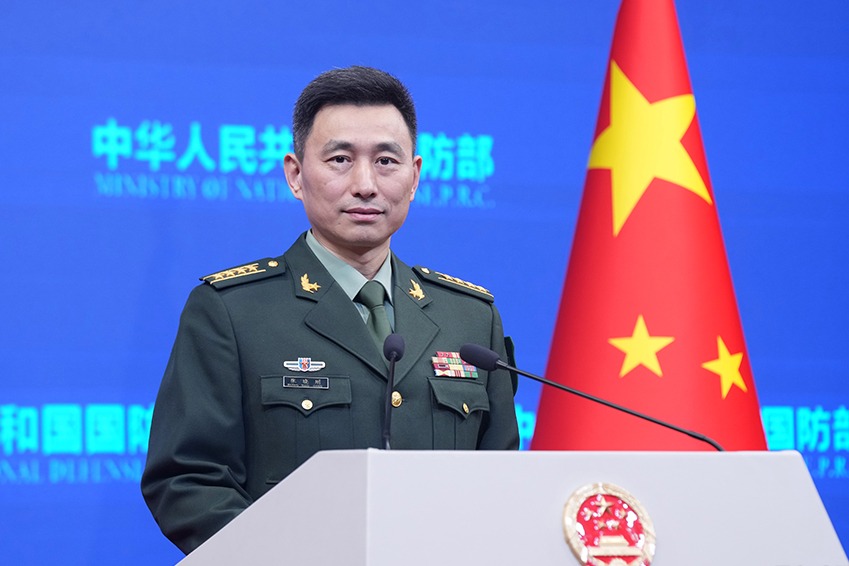
    In a significant diplomatic statement, China has issued a forceful appeal to the international community to jointly counter what it characterizes as Japan’s accelerating militarization. The call came from Chinese Defense Ministry spokesperson Zhang Xiaogang during a press briefing in Beijing on Thursday.

    Zhang articulated deep concerns regarding Japan’s recent security policies and military positioning, asserting that Tokyo has been advancing its defense capabilities under various pretexts while disregarding international opposition. The spokesperson emphasized that Japan’s actions demonstrate a concerning pattern rather than showing contrition for historical transgressions.

    According to the Chinese military representative, Japan has engaged in brazen weapons exports and even floated discussions about nuclear armament possibilities. Zhang contended that these developments reveal the underlying agenda of right-wing elements within Japan who seek to restore militarism and reshape the nation’s security posture.

    The spokesperson highlighted that criticism of Japan’s military policies has been consistently voiced by multiple nations, particularly Southeast Asian countries. Zhang urged all peace-seeking nations and populations to recognize what China perceives as Japan’s hidden motivations and collaborate to preserve the post-World War II international framework.

    The Chinese defense official concluded that collective international effort is essential to maintain regional and global stability while preventing the resurgence of Japanese militaristic tendencies that could undermine the existing world order.

  • Chinese vice-premier stresses importance of wheat field management

    Chinese vice-premier stresses importance of wheat field management

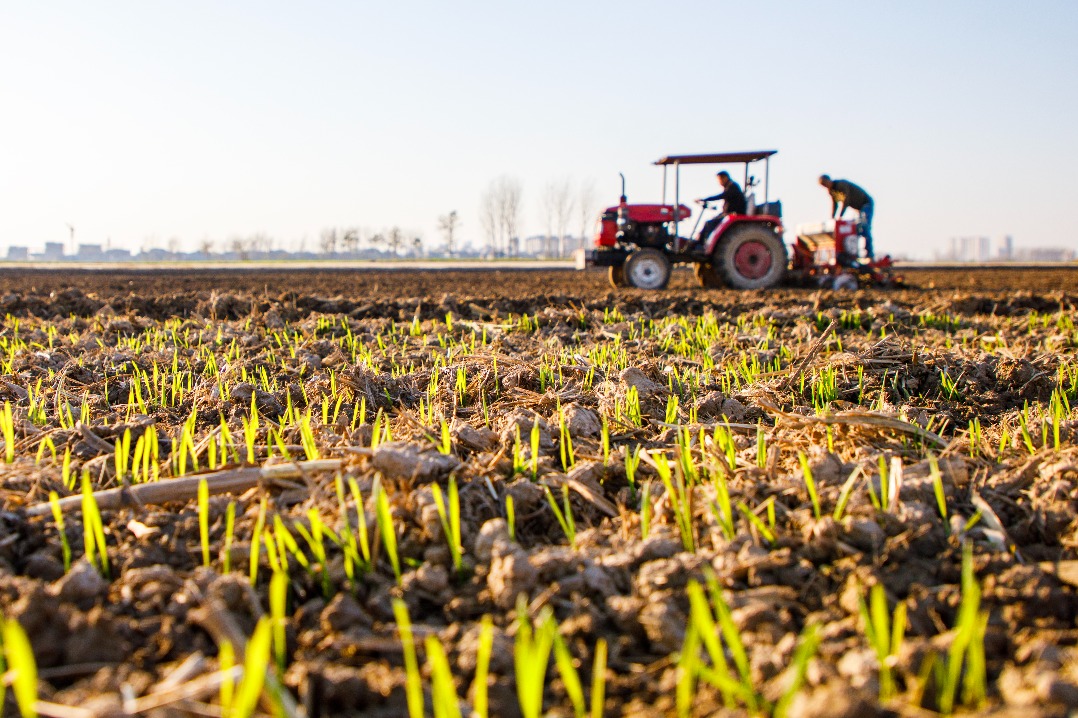
    During a comprehensive inspection tour of Central China’s Henan province from Tuesday to Wednesday, Chinese Vice-Premier Liu Guozhong underscored the critical importance of enhanced wheat field management to safeguard agricultural product stability. The high-ranking official, who also serves on the Political Bureau of the Communist Party of China Central Committee, conducted field visits to Anyang and Neihuang counties to evaluate winter wheat conditions firsthand.

    Vice-Premier Liu personally assessed crop fields and agricultural service centers, examining winter wheat seedling development, cold and drought prevention measures, and agricultural supply availability. While acknowledging that the national winter wheat sowing area has maintained stability, Liu identified concerning weaknesses in seedling conditions across certain regions, urging immediate and continuous monitoring of crop health and soil moisture levels.

    The agricultural inspection extended to vegetable cultivation bases and wholesale markets, where Liu investigated the supply chain stability of essential ‘vegetable basket’ products. With the approaching Spring Festival creating peak seasonal demand, the Vice-Premier emphasized the necessity of enhanced price surveillance and information transparency for vegetables, fruits, meat, eggs, dairy products, and aquatic supplies.

    This agricultural mobilization forms part of broader strategic preparations to ensure food security foundations align with the impending launch of China’s 15th Five-Year Plan (2026-2030), representing a crucial initiative to stabilize domestic food supplies during a period of significant economic planning.

  • Lee’s visit deepens Sino-ROK relations

    Lee’s visit deepens Sino-ROK relations

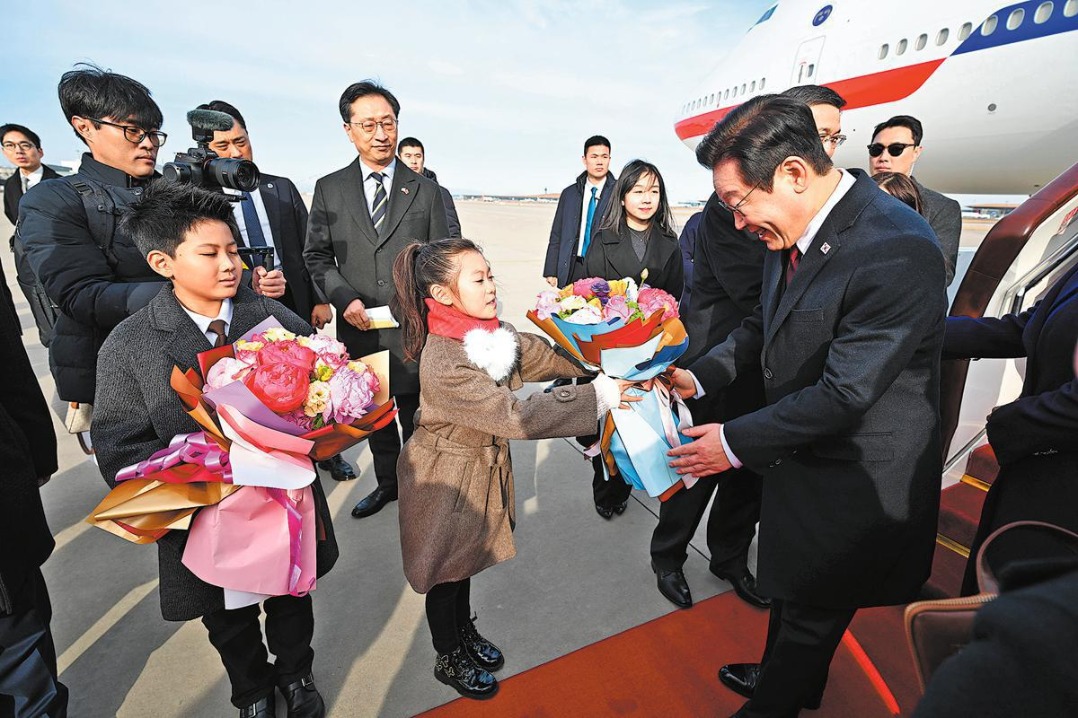
    In a significant diplomatic breakthrough, South Korean President Lee Jae-myung concluded a transformative four-day state visit to China on Wednesday, marking the first such presidential visit since 2019 and signaling a major shift toward stabilized Sino-ROK relations. The visit, which included high-level meetings with Chinese President Xi Jinping in Beijing and historical commemorations in Shanghai, produced substantial economic agreements and demonstrated both nations’ commitment to pragmatic diplomacy.

    The journey yielded unprecedented outcomes, with leaders witnessing the signing of 15 bilateral cooperation documents and numerous additional corporate agreements across technology, manufacturing, and automotive sectors. President Lee’s delegation included approximately 200 business executives from South Korea’s corporate giants including Samsung, SK Group, Hyundai, and LG, underscoring the economic dimension of the renewed partnership.

    A particularly noteworthy development emerged from the mobility sector, where South Korea’s SWM reached a preliminary agreement with Chinese technology conglomerate Lenovo to collaboratively develop computing platforms for Level 4 autonomous vehicle commercialization. This high-tech collaboration represents a milestone in bilateral technological cooperation.

    The visit’s impact extended beyond diplomacy to financial markets, with the Korea Composite Stock Price Index reaching historic highs during the presidential mission. The benchmark index surged past 4,400 points during the leadership meetings, climbing to 4,500 on Tuesday and briefly exceeding 4,600 the following day, reflecting investor optimism about improved relations.

    President Lee characterized the outcomes as exceeding expectations, noting in Shanghai that both nations had established broad mutual understanding and developed solutions to potentially contentious issues. ‘South Korea-China relations are truly essential for both sides,’ Lee stated. ‘There is no need to unnecessarily provoke, reject or confront each other.’

    The diplomatic thaw was further symbolized through personal diplomacy when President Lee shared a viral selfie with President Xi and their spouses, captured with a Xiaomi smartphone gifted during their November meeting. The image, which Lee described as ‘the shot of a lifetime,’ garnered millions of engagements on social media platforms, with one observer noting that such personal moments advance international relations more effectively than formal communications.

    Experts interpreted the visit as demonstrating President Lee’s commitment to sustainable bilateral relations rather than short-term diplomatic gains. Woo Su-keun, head of the Institute of East Asian Studies of Korea, emphasized that the restoration of stable leader-to-leader communication represents the most significant achievement, creating foundations for regular dialogue and crisis management.

    Kyung Hee University professor Choo Jae-woo noted that Lee’s pragmatic approach toward comprehensive regional relationships could significantly contribute to Northeast Asian stability, mitigate tariff challenges, and enhance supply chain resilience for both economies.

  • Israeli FM’s Somaliland visit draws criticism

    Israeli FM’s Somaliland visit draws criticism

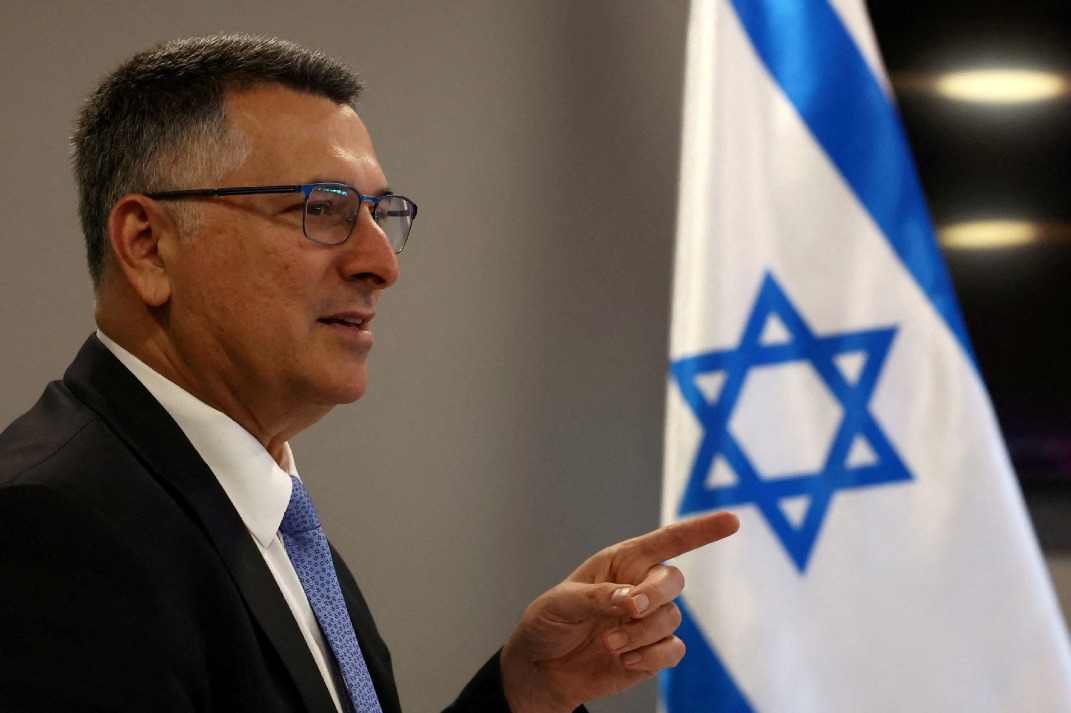
    A recent diplomatic visit by Israeli Foreign Minister Gideon Saar to the self-declared republic of Somaliland has ignited a fierce international dispute, drawing vehement condemnation from Somalia and raising concerns among regional powers. The trip, which occurred on January 6th, 2026, follows Israel’s official recognition of Somaliland’s independence on December 26th, 2025—a move not recognized by the vast majority of the international community, including the African Union and the United Nations.

    Somalia’s Ministry of Foreign Affairs and International Cooperation issued a forceful statement denouncing the visit as an ‘unauthorized incursion’ and a ‘serious violation of Somalia’s sovereignty, territorial integrity, and political unity.’ The Somali government maintains that Hargeisa, Somaliland’s capital, is an inseparable part of its sovereign territory and that any foreign engagement there without explicit federal consent is ‘illegal, null, and void.’

    Regional experts interpret Israel’s overture as a strategic maneuver born of increasing isolation. Abdul Wahed Jalal Nori, a lecturer at the International Islamic University Malaysia, characterized the move as an ‘act of desperation,’ stating, ‘Israel is fueling regional resentment and diplomatic backlash. This move reinforces perceptions that Israel is willing to deepen geopolitical fault lines to secure strategic allies.’

    The controversy has escalated to the highest levels of regional governance. The African Union Peace and Security Council convened an emergency virtual session to address the threat to Somalia’s sovereignty. Furthermore, the Organization of Islamic Cooperation (OIC) has announced an extraordinary meeting of its Council of Foreign Ministers in Jeddah, Saudi Arabia, to formulate a unified response and reaffirm support for Somalia’s territorial integrity.

    Israeli Foreign Minister Saar, in a post on the social media platform X, defended the visit, asserting that the mutual recognition ‘are not directed against anyone’ and that ‘Only Israel will decide whom it recognizes.’ The development underscores the complex and volatile interplay of diplomacy, sovereignty, and regional power dynamics in the Horn of Africa.

  • Colombian president speaks with Trump on phone

    Colombian president speaks with Trump on phone

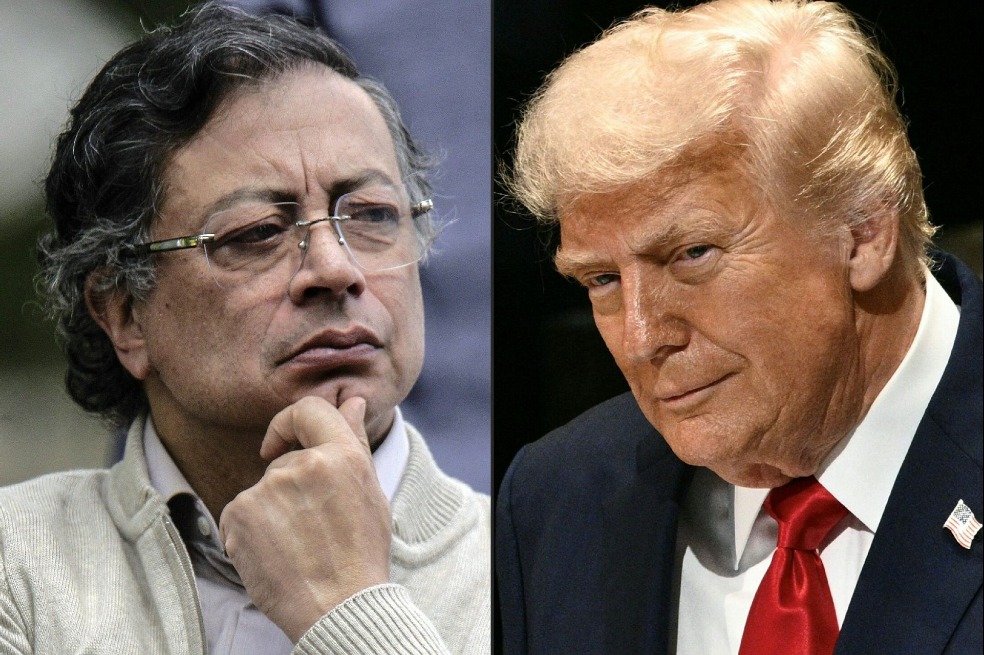
    In a significant diplomatic development, Colombian President Gustavo Petro held a substantive telephone conversation with United States President Donald Trump on Wednesday afternoon. The high-level exchange, confirmed by sources within Colombia’s Foreign Ministry and reported by local media outlets, marks a pivotal moment in bilateral relations between the two nations.

    The dialogue occurs against a backdrop of recent tensions, as President Trump has reportedly issued multiple threats directed at the Colombian leader in preceding weeks. While the precise content and tone of their discussion remain confidential, the mere occurrence of direct communication suggests potential de-escalation efforts between the two administrations.

    This diplomatic engagement represents President Petro’s continued navigation of complex international relationships while maintaining Colombia’s strategic interests. The conversation likely addressed critical issues including trade agreements, security cooperation, and regional stability in Latin America.

    The phone call demonstrates both leaders’ recognition of the importance of maintaining functional diplomatic channels despite apparent disagreements, underscoring the enduring significance of the Colombia-US partnership in hemispheric affairs.

  • US to indefinitely control Venezuelan oil sales, says US energy secretary

    US to indefinitely control Venezuelan oil sales, says US energy secretary

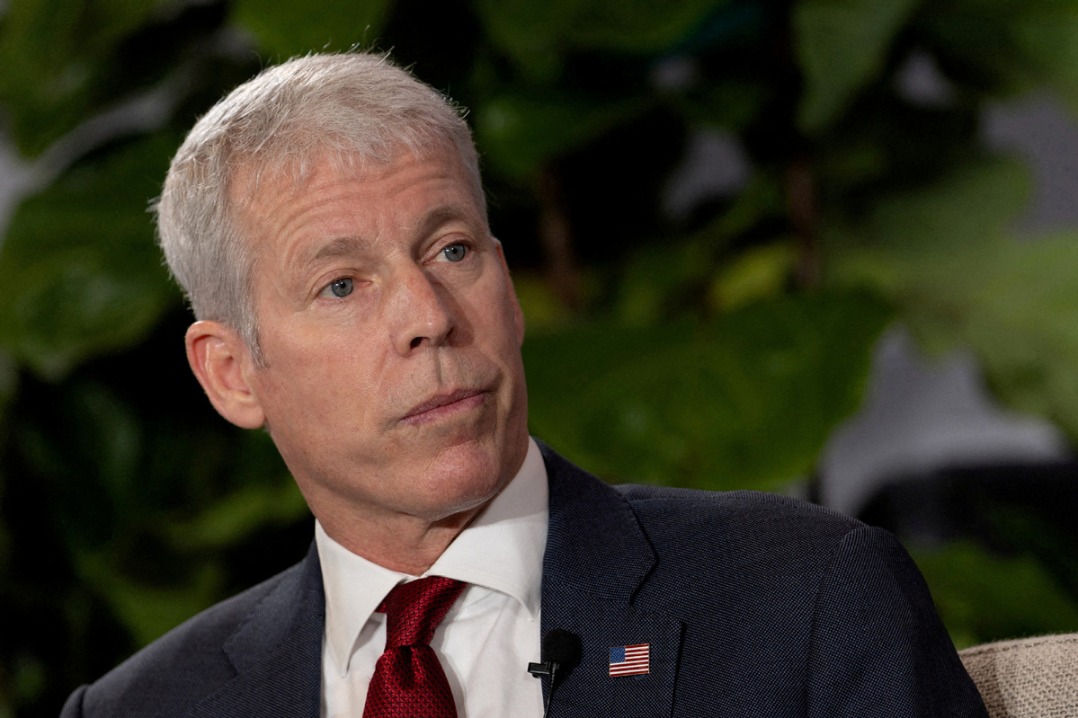
    In a significant development concerning international energy politics, U.S. Energy Secretary Chris Wright declared on Wednesday that the United States will maintain indefinite control over the marketing and sales of Venezuela’s oil production. The announcement was made during an industry conference in Miami, Florida.

    Secretary Wright outlined the comprehensive plan, stating that the U.S. government will initially market approximately 30-50 million barrels of Venezuelan oil that had been previously stored under sanctions. Subsequently, the arrangement will extend indefinitely to include all future production from the South American nation’s oil fields.

    The mechanism established will see all oil sales “conducted by the U.S. government with proceeds deposited into accounts controlled by the U.S. government,” according to Wright’s statements. The Energy Secretary framed this control as necessary leverage to drive political and social changes within Venezuela, while simultaneously claiming that proceeds from these sales would eventually benefit the Venezuelan people.

    The policy emerges amid ongoing diplomatic engagements between the Trump administration and Venezuelan leadership, as well as consultations with U.S. petroleum corporations. This development follows recent military actions against Venezuela that have drawn international criticism, with many observers characterizing the intervention as primarily motivated by Venezuela’s substantial oil reserves rather than humanitarian concerns.

    The indefinite control of Venezuela’s primary economic resource represents an unprecedented extension of U.S. influence over another nation’s sovereign assets, setting a notable precedent in international relations and energy politics.

  • China defends curbs on dual-use goods exports

    China defends curbs on dual-use goods exports

    China has formally implemented stringent export controls on dual-use goods to Japan, a move that Foreign Ministry spokeswoman Mao Ning characterized as “completely legitimate and reasonable” in response to what Beijing perceives as provocative statements from Japanese Prime Minister Sanae Takaichi regarding Taiwan.

    The diplomatic friction emerged following Prime Minister Takaichi’s November parliamentary comments suggesting that a “Taiwan contingency” could constitute a “survival-threatening situation” for Japan, language interpreted by Chinese officials as implying potential military intervention in the Taiwan Strait. Mao Ning asserted that these remarks represented both an infringement on China’s sovereignty and a blatant interference in internal affairs.

    China’s Ministry of Commerce announced the strengthened export controls effective immediately, explicitly prohibiting “the export of all dual-use items to Japanese military users, for Japan’s military use, and for any other end-users and end-use purposes that help enhance Japan’s military capabilities.” Dual-use items encompass products and technologies with both civilian and military applications.

    Economic analysts warn of significant repercussions for Japanese industry. Takahide Kiuchi, executive economist at Nomura Research Institute, identified potential restricted categories including semiconductors, electronic components, precision machinery, EV-related lithium compounds, rare earths, telecommunications equipment, and personal computers. Japanese trade data indicates these categories collectively represent approximately 42% of Japan’s total imports from China, valued at roughly 10.7 trillion yen ($49.2 billion) in 2024.

    Hidetoshi Tashiro, chief economist at Japan’s Infinity LLC, highlighted particular concern regarding rare earth elements, noting that automotive and electronics industries could face production disruptions if these materials are included in restrictions. Nomura Research Institute projections suggest three months of rare earth export restrictions could cost Japan approximately 660 billion yen, reducing GDP by an annualized 0.11%.

    The uncertainty surrounding specific controlled items has already created trade hesitancy, with Japanese firms reportedly reluctant to place or accept orders without clear definitional parameters. Tokyo’s stock market responded negatively, with the benchmark Nikkei index closing down 1.06% following the announcement.

  • Highs and lows mark China-US ties in 2025

    Highs and lows mark China-US ties in 2025

    The geopolitical landscape between the United States and China experienced significant volatility throughout 2025, characterized by dramatic fluctuations in diplomatic relations and trade policies. According to experts monitoring the bilateral relationship, the year presented a complex tapestry of escalating tensions followed by cautious diplomatic engagements.

    Gary Hufbauer, senior fellow at the Peterson Institute for International Economics, described the relationship as experiencing a ‘rollercoaster’ dynamic rather than the gradual decline witnessed in previous years. The turbulence stemmed primarily from calculated political maneuvers by the U.S. administration rather than accidental developments, creating periods of intense confrontation followed by gradual cooling-off phases.

    The relationship reached a critical juncture in April 2025 when the Trump administration implemented triple-digit tariff rates on Chinese imports, representing one of the most aggressive trade measures in recent history. China responded with immediate retaliatory measures, bringing both nations to the brink of a full-scale trade war. These reciprocal actions rendered cross-border trade economically challenging for numerous product categories, generating substantial market instability and creating significant uncertainty for businesses operating in both countries.

    China maintained a consistent strategic position throughout these developments, encapsulated by the widely circulated phrase: ‘Talk, our door is open; fight, we’ll respond till the end.’ This principle guided Beijing’s approach to the escalating tensions while leaving room for diplomatic resolution.

    Several factors ultimately prompted the White House to reassess its aggressive stance. Soaring consumer prices within the United States, particularly affecting middle-class households, combined with substantial losses in agricultural exports to China—especially soybean shipments—created mounting economic pressure. Additionally, China’s implementation of rare-earth export controls demonstrated Beijing’s strategic leverage in the technological supply chain, forcing a recalculation of American trade strategy.

    The latter part of 2025 saw renewed high-level trade discussions and head-of-state diplomacy, suggesting both nations recognize the mutual benefits of stability. Experts indicate that sustained dialogue remains crucial for establishing predictable relations moving into 2026, though the underlying structural tensions continue to require careful management.

  • French farmers force their way through Paris with tractors to protest free trade deal

    French farmers force their way through Paris with tractors to protest free trade deal

    PARIS — In a dramatic display of agricultural dissent, approximately one hundred tractors converged upon the French capital on Thursday as farmers launched a major protest against the European Union’s proposed free trade agreement with Mercosur nations. The demonstration, organized by the Rural Coordination union, saw farmers defy government bans by positioning agricultural vehicles at iconic locations including the Arc de Triomphe and Eiffel Tower neighborhoods.

    The protest targets the EU’s renewed negotiations with five South American countries—Brazil, Argentina, Uruguay, Paraguay, and Bolivia—amid speculation that a deal could be finalized during a January 12 meeting in Paraguay. French agricultural representatives argue the agreement would devastate local farming sectors by exposing them to unfair competition from countries with less stringent production standards.

    José Perez, president of the Rural Coordination in southwestern France’s Lot-et-Garonne region, stated the mobilization aimed to bring farmers’ concerns directly to policymakers. ‘The goal today is to come to Paris to express our demands closer to those who have the power,’ Perez told The Associated Press, describing the tractor procession as ‘a strong symbol’ of agricultural discontent.

    Despite government efforts to restrict tractor access to central Paris, protestors managed to bypass security barriers, though most vehicles were ultimately contained at major traffic arteries marking the city’s perimeter. The French Interior Ministry confirmed approximately 20 tractors reached central Paris despite an official prohibition.

    The demonstration combines longstanding opposition to the Mercosur agreement with recent frustrations over government sanitary measures addressing bovine disease outbreaks. French Agriculture Minister Annie Genevard reiterated the nation’s firm opposition to the trade deal on Wednesday, warning it threatens numerous agricultural sectors including beef, chicken, sugar, ethanol, and honey production.

    While Germany leads supporter nations pushing for the agreement’s adoption, France and Poland remain its most vocal opponents within the EU. Previous French opposition successfully stalled the agreement last month, though renewed negotiations have intensified concerns among farming communities about the deal’s potential implementation.