Venezuela’s Attorney General Tarik William Saab has declared that opposition leader María Corina Machado will be labeled a ‘fugitive’ if she travels to Norway to accept her Nobel Peace Prize. Machado, who has been in hiding since the beginning of the year to evade arrest, is accused of ‘acts of conspiracy, incitement of hatred, and terrorism.’ The 58-year-old was awarded the prestigious prize in October for her relentless efforts toward a ‘peaceful transition from dictatorship to democracy.’ She has consistently criticized President Nicolás Maduro’s government as ‘criminal’ and urged Venezuelans to unite to overthrow it. Many nations consider Maduro’s rule illegitimate. Machado, a prominent figure in Venezuela’s opposition, was barred from running in last year’s presidential elections, which were widely condemned internationally as neither free nor fair. Despite this, she united the opposition behind her surrogate, Edmundo González, who reportedly won by a landslide according to polling station tallies. However, the government-controlled National Electoral Council declared Maduro the winner, leading to widespread protests. González later fled to Spain, fearing repression, followed by attempts to detain other opposition officials. The Nobel Committee praised Machado as ‘one of the most extraordinary examples of civilian courage in Latin America in recent times.’ Nobel chairman Jørgen Watne Frydnes expressed hope that she could attend the award ceremony on December 10 but acknowledged the severe security risks she faces. Machado, expressing shock at the honor, stated, ‘I am just one person. I certainly do not deserve this,’ adding that it was the ‘achievement of a whole society.’ Meanwhile, Attorney General Saab revealed that Machado is under investigation for her support of U.S. military operations in the Caribbean, which have resulted in over 80 deaths, mostly Venezuelans. U.S. President Donald Trump, who congratulated Machado, has accused Maduro of leading a drug cartel, a claim Maduro denies. Maduro, in turn, has accused Trump of attempting to incite war to control Venezuela’s oil reserves but recently expressed willingness to hold talks with Trump’s administration. Machado continues to advocate for a post-Maduro Venezuela, urging the military to switch sides and outlining her vision in a ‘freedom manifesto.’ ‘We stand at the edge of a new era – one where our natural rights will prevail,’ she declared.
分类: politics
-

Russian envoy Kirill Dmitriev: Putin propagandist or key to peace with Ukraine?
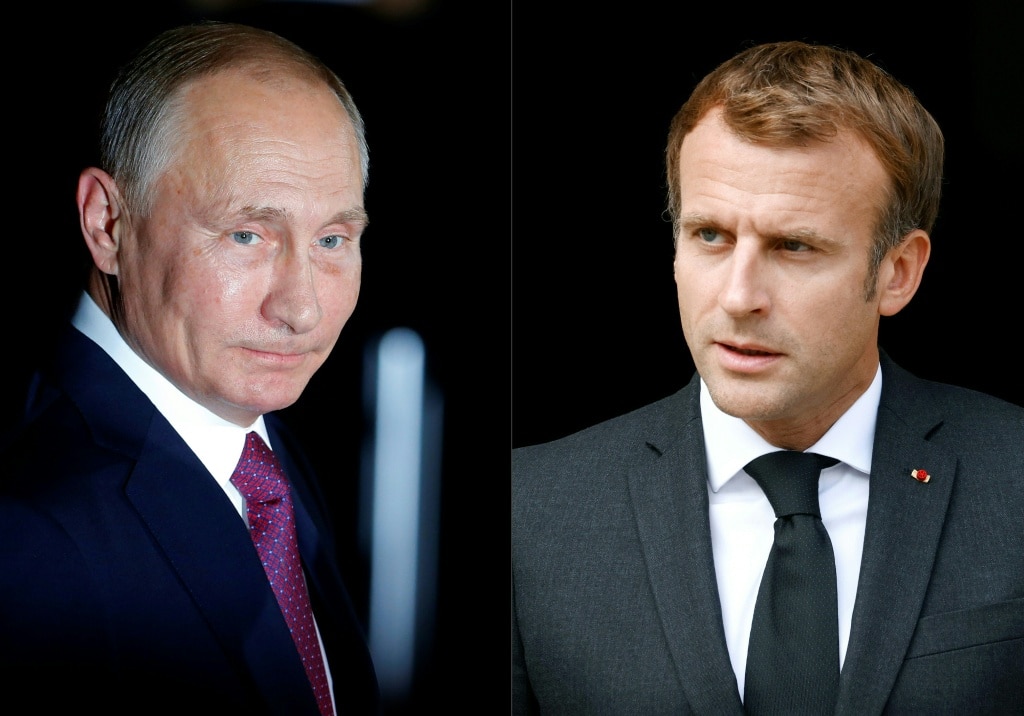
Kirill Dmitriev, a prominent Russian diplomat and head of the Russian Direct Investment Fund (RDIF), has emerged as a key figure in Russia’s efforts to end its diplomatic isolation in the West. At 50, Dmitriev stands out among Russian officials for his deep understanding of the United States, having studied and worked there for years. His unique blend of diplomatic acumen and commercial expertise has made him a pivotal player in U.S.-Russia relations, particularly during the Trump administration.
-

US revokes visa of former South African minister who initiated genocide case against Israel
The United States has revoked the visa of Naledi Pandor, South Africa’s former Minister of International Relations, in a move widely perceived as retaliation for Pretoria’s decision to bring Israel before the International Court of Justice (ICJ) on charges of genocide. Pandor, who led South Africa’s Department of International Relations and Cooperation from 2019 to 2024, confirmed the revocation on Thursday, just days before Johannesburg hosts the G20 Leaders’ Summit. The US decision to send a low-level delegation to the summit, rather than Secretary of State Marco Rubio, has already strained relations. Pandor, a key figure in South Africa’s ICJ case against Israel, received an email from the US Consulate stating her visa was canceled immediately. She expressed confusion over the decision but suggested it was linked to her advocacy for Palestine. ‘I understand that it has happened to other South Africans, too,’ she told Middle East Eye. The visa revocation follows years of diplomatic, financial, and political pressure from both the Biden and Trump administrations. In January 2024, the Biden administration dismissed South Africa’s ICJ case as ‘meritless,’ while the Trump administration suspended aid and expelled South Africa’s ambassador to the US. Pandor, a vocal critic of US and Israeli policies, has faced accusations of being a ‘lackey of Iran’ and has been the target of character assassination in conservative media. Despite the backlash, she remains steadfast in her support for Palestinian self-determination. ‘These are issues of principle, not convenience,’ she asserted. The Heritage Foundation, a right-wing US think tank, has called for cutting aid to South Africa, arguing that Pretoria’s foreign policy undermines US interests. Meanwhile, 160 lawyers accused South Africa of taking the ICJ case in exchange for bribes, a claim dismissed by Pandor and her supporters. The US State Department has yet to comment on the visa revocation.
-

Poland’s struggle to fix its justice system holds lessons for other countries
WARSAW, Poland — Two years into Donald Tusk’s government, Poland’s ambitious plans to reverse the judicial overhaul by its nationalist predecessor, Law and Justice (PiS), have encountered significant obstacles. PiS, which ruled from 2015 to 2023, consolidated political control over key judicial institutions by appointing sympathetic judges and punishing critics. These changes, condemned by European courts, have left Poland’s legal system in disarray. Despite Tusk’s promises to restore judicial independence, progress has been hindered by PiS-aligned presidents and deep political polarization. Tusk’s first justice minister, Adam Bodnar, was replaced in July due to perceived inaction. His successor, Waldemar Żurek, has adopted a more aggressive stance, pursuing legal action against PiS figures, including former Justice Minister Zbigniew Ziobro, accused of misusing funds for surveillance software. However, Żurek’s efforts face potential vetoes from President Andrzej Duda, a PiS ally. The government’s inability to pass reforms has led to a focus on prosecuting PiS allies, aiming to expose alleged abuses of power. Analysts warn that Poland’s judicial crisis is part of a broader democratic challenge, exacerbated by political polarization. Żurek emphasizes the need to engage with all citizens, not just legal experts, to safeguard democracy. Despite incremental progress, the path to restoring judicial independence remains fraught with challenges, as PiS remains a formidable political force.
-

New indictment accuses Yoon of manipulating investigation of South Korean marine’s drowning
SEOUL, South Korea — Former South Korean President Yoon Suk Yeol has been indicted on Friday for allegedly attempting to manipulate the investigation into the drowning of Marine Corporal Chae Su-geun, marking another legal blow to the ousted leader. This indictment adds to a series of criminal cases against Yoon, who was removed from office earlier this year following a rebellion charge tied to his controversial martial law decree on December 3, which triggered widespread political unrest. After assuming office in June, President Lee Jae Myung appointed three independent counsels to probe Yoon’s actions, including the imposition of martial law and other allegations involving his associates and family. The latest charges accuse Yoon, his former defense minister, and 10 others of abuse of power, specifically for attempting to alter the investigation report on Chae’s death. Chae died during a search-and-rescue operation for flood victims in 2023. The initial report by the Marine Corps held a division commander and seven others accountable, but Yoon reportedly expressed outrage over the commander’s inclusion. This led to pressure from top presidential and Defense Ministry officials to revise the report, excluding the commander. Assistant Special Counsel Choung Min-young revealed that Park Jung-hun, the head of the Marine Corps’ investigation team, resisted the pressure and forwarded the report to the police. However, Yoon allegedly ordered officials to retrieve the report, dismiss Park, and investigate him for insubordination. Choung emphasized that Park’s investigation adhered to legal principles, while Yoon and his associates systematically abused their power, undermining the fairness and independence of the Marine Corps’ investigation. Yoon, currently in jail, has not commented on the latest indictment but has previously denied all allegations. His ongoing trial for masterminding a rebellion could result in a verdict early next year, with potential penalties ranging from life imprisonment to capital punishment. Earlier this month, Yoon was also indicted for allegedly ordering drone flights over North Korea to provoke military tensions and justify martial law.
-

New US rules say countries with diversity policies are infringing human rights
The Trump administration has introduced a controversial shift in its approach to global human rights, now classifying countries that enforce diversity, equity, and inclusion (DEI) policies, subsidize abortion, or facilitate mass migration as violators of human rights. The State Department has issued new guidelines to U.S. embassies and consulates, instructing them to include these practices in the annual report on global human rights abuses. These changes, described as a tool to ‘change the behavior of governments,’ have drawn sharp criticism from human rights advocates, who argue that the administration is redefining long-standing principles to advance its ideological agenda.
-

Mike Huckabee hosts US citizen who spied for Israel: Report
In a move that has raised eyebrows across diplomatic and intelligence circles, US Ambassador to Israel Mike Huckabee reportedly hosted Jonathan Pollard, a former US Navy intelligence analyst convicted of espionage for Israel, at the American embassy in Jerusalem this July. The meeting, which was kept off Huckabee’s official schedule, has drawn criticism, particularly from the Central Intelligence Agency (CIA), whose station chief in Israel expressed alarm over the encounter. Pollard, now 71, was accompanied by David Milstein, Huckabee’s top advisor at the embassy. Pollard’s espionage activities, which spanned 1984 to 1985, involved the transfer of hundreds of classified documents and over 1,000 intelligence cables to Israel’s Mossad. His actions, which jeopardized the lives of US soldiers globally, led to a life sentence in 1987. Pollard, who is Jewish, had long expressed a desire to emigrate to Israel, a sentiment that reportedly fueled his espionage. Released on parole in 2015, Pollard moved to Israel in 2020 after the Justice Department lifted his travel restrictions. He was granted Israeli citizenship while in prison and received a hero’s welcome upon his arrival. Huckabee, a staunch evangelical Christian Zionist, has been a vocal supporter of Israel, even advocating for the annexation of the occupied West Bank—a stance at odds with US President Donald Trump’s policies. The purpose of Pollard’s visit remains unclear, though he reportedly thanked Huckabee for supporting his release a decade ago. The meeting has reignited debates over US-Israel relations, particularly in light of Pollard’s subsequent criticism of Trump, whom he labeled a ‘madman’ for his dealings with Saudi Arabia. This incident underscores the complex and often contentious dynamics of US foreign policy in the Middle East.
-

UAE prisoner convicted in mass trial dies in prison
A UAE national, Ali Abdullah Fateh Ali Al-Khaja, who spent over a decade in prison due to his political affiliations, has died in custody, according to the Emirates Detainees Advocacy Centre. The centre reported that Khaja, a long-term detainee, passed away in his cell at Al-Razeen Prison on Wednesday, leaving behind a family that had awaited his release for more than 13 years. Born in 1966, Khaja faced persistent ‘security harassment’ in the UAE for his social activities and association with Al-Islah, an Islamist political group linked to the Muslim Brotherhood, which is banned in the country. The UAE’s ruling Al Nahyan family perceives the Muslim Brotherhood as a threat and has aggressively suppressed its supporters for decades. Khaja was arrested in August 2012 at his home and subjected to enforced disappearance until his court appearance. During his detention, he endured solitary confinement, intimidation, and other forms of torture. In 2013, he was charged alongside 56 others with affiliation to a ‘secret illegal organization’ and sentenced to 10 years in prison, followed by three years of probation. Despite being scheduled for release in August 2022, Emirati authorities detained him further and initiated another trial in 2024. Khaja was part of the ‘UAE 94,’ a group of 94 activists prosecuted in 2013 for allegedly conspiring to overthrow the government during the Arab Spring. The trial, widely criticized by human rights groups as unfair, targeted lawyers, professors, activists, and students advocating for democratic reforms. Many detainees, including Khaja, were affiliated with Al-Islah, a non-violent political reform party. However, the UAE extended sentences for several high-profile dissidents under its 2014 anti-terror law, continuing its crackdown on political dissent.
-

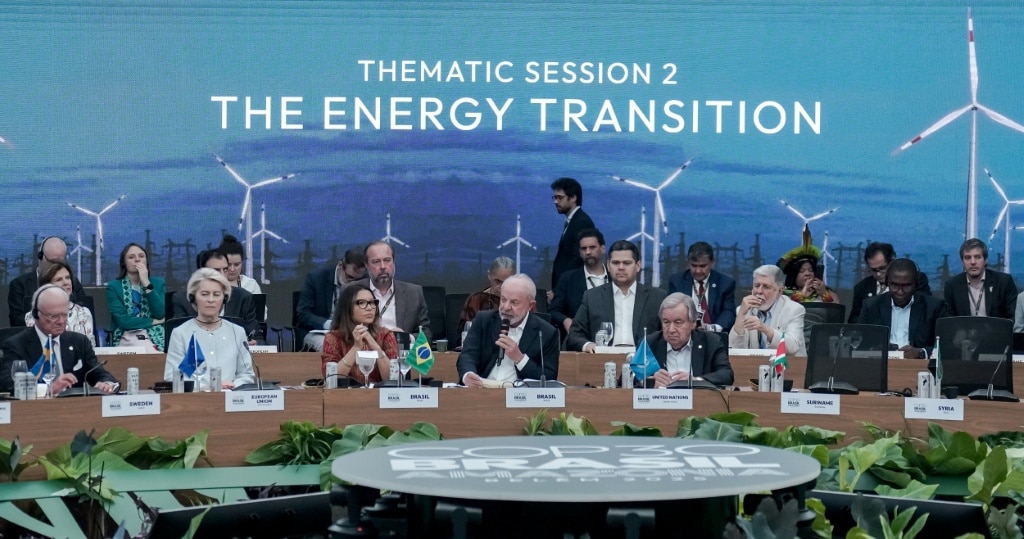
Starmer defends G20 trip to South Africa despite Trump’s absence
UK Prime Minister Sir Keir Starmer is set to attend the G20 summit in Johannesburg, South Africa, where he will advocate for British businesses on the global stage. The summit, which convenes leaders from the world’s 20 largest economies, will proceed without former US President Donald Trump, who has opted to boycott the event. Trump’s decision stems from his controversial and widely discredited claims of white persecution in South Africa, which he reiterated in a social media post labeling the summit a ‘total disgrace.’
Sir Keir, often criticized for his frequent international travels, will use the summit to highlight the strategic importance of the UK’s global presence. During his visit, he will tour a Johannesburg depot showcasing trains manufactured in Derby, UK, and announce a new partnership where Crossrail International, a UK government-owned entity, will provide consultancy services to South Africa’s railway sector. This follows a similar agreement recently signed with Vietnam.
Downing Street has emphasized Africa’s potential as a key market for UK businesses, citing demographic trends such as half of Africa’s population being under 20 and projections that over a quarter of the global population will reside in Africa by 2050. Sir Keir underscored the importance of face-to-face diplomacy, stating, ‘I will focus on the deals we can do, the business we can do, with our partner countries and make sure that the work we do internationally is impacting directly at home.’
South African President Cyril Ramaphosa dismissed Trump’s boycott as ‘their loss,’ asserting that such tactics are ineffective. He also refuted claims of white genocide in South Africa, calling them ‘widely discredited and unsupported by reliable evidence.’ Despite Trump’s absence, the summit remains a critical platform for fostering international collaboration and economic growth.
-

Will Trump emulate Thailand, Cambodia by punishing lèse-majesté?
Former President Donald Trump’s recent clash with comedian Seth Meyers has reignited discussions about the boundaries of free speech in the United States. Trump, known for his hypersensitivity to criticism, took to Truth Social to label Meyers’ monologue as “100% ANTI TRUMP, WHICH IS PROBABLY ILLEGAL!!!” He later called for NBC to fire Meyers, a move that was reposted by the chair of the Federal Communications Commission. This incident is part of a broader pattern of Trump’s confrontations with entertainers and comedians, including Taylor Swift, Bruce Springsteen, Jimmy Kimmel, and Stephen Colbert, who have criticized his administration. The situation has raised concerns about the erosion of one of the fundamental tenets of American democracy: freedom of speech. Democrat Senator Edward Markey introduced a resolution rebuking Trump for suggesting that criticism of the president could be illegal, emphasizing that such criticism is a constitutional right and a democratic duty. Republicans blocked the resolution, and Trump’s actions have drawn comparisons to the ancient law of “crimen maiestatis,” which protected Roman emperors from insults, and its later incarnation as “lèse-majesté,” which shielded European monarchs. The debate over free speech has historical precedents, including the Sedition Act of 1798, which criminalized criticism of the president and government, and was so unpopular that it contributed to John Adams’ loss in the 1800 presidential election. The principle of free speech, enshrined in the First Amendment, remains a cornerstone of American democracy, but its preservation requires vigilance. As Lyndon Johnson once remarked, being the target of satire is “part of the price of leadership” in a free nation.