分类: politics

  • China Coast Guard patrols waters around Huangyan Island

    China Coast Guard patrols waters around Huangyan Island

    The China Coast Guard (CCG) has intensified its presence in the waters surrounding Huangyan Island, reaffirming China’s territorial claims in the South China Sea. On November 14, 2025, aerial drone footage captured CCG vessels conducting law enforcement patrols in the area, underscoring Beijing’s commitment to safeguarding its maritime sovereignty. Huangyan Island, a strategic outpost in the region, has been a focal point of geopolitical tensions, with neighboring countries also laying claim to parts of the South China Sea. The patrols come amid heightened regional scrutiny and international debates over maritime rights and freedom of navigation. China’s actions highlight its assertive stance in maintaining control over disputed territories, while also ensuring adherence to domestic and international maritime laws. The CCG’s operations are part of a broader strategy to bolster national security and assert China’s influence in the region.

  • Same-sex marriage must be respected throughout EU, top court tells Poland

    Same-sex marriage must be respected throughout EU, top court tells Poland

    In a landmark decision, the European Court of Justice (ECJ) has ruled that Poland must recognize same-sex marriages legally conducted in other European Union member states. This judgment addresses the case of a Polish couple who married in Berlin in 2018 but faced rejection of their marriage certificate upon returning to Poland, where same-sex unions are not recognized. The ECJ emphasized that while individual EU countries retain the authority to define marriage, they must adhere to EU laws, including the recognition of marriages lawfully performed in other member states. The court highlighted that denying recognition infringes on the rights of EU citizens to freedom of movement and family life. This ruling does not compel Poland to alter its domestic marriage laws but ensures that same-sex marriages conducted abroad are acknowledged. The decision has been lauded by advocates for LGBTQ+ rights, viewing it as a pivotal step towards marriage equality in Europe. However, Poland’s conservative political landscape, including the potential veto by President Karol Nawrocki, poses challenges to the implementation of this ruling.

  • German ‘hammer gang’ trial for seven accused of extreme-left violence

    German ‘hammer gang’ trial for seven accused of extreme-left violence

    In a high-profile trial in Dresden, eastern Germany, seven individuals are facing charges related to their alleged involvement in the militant left-wing extremist group Antifa Ost, also known as the “hammer gang.” The group, which the United States recently designated as a terrorist organization, is accused of orchestrating violent attacks against individuals associated with right-wing ideologies. The defendants, identified only as Henry A, Tobias E, Johann G, Thomas J, Melissa K, Paul M, and Julian W due to German privacy laws, are charged with attempted murder, aggravated assault, and property damage. German prosecutors claim that the group, founded in late 2017 or early 2018, meticulously planned and executed attacks in Germany and Budapest, Hungary, often using hammers and batons to inflict severe injuries. Johann G, one of the accused, is alleged to have played a leadership role, planning attacks and recruiting members, while Paul M reportedly organized combat training for the group. Notable incidents include a 2019 attack at Dessau-Rosslau train station and a series of assaults in Budapest in 2023 during a right-wing gathering. The U.S. designation of Antifa Ost as a terrorist organization has led to calls from Germany’s far-right AfD party for similar action domestically. The German government has acknowledged the U.S. decision but has yet to announce any corresponding measures.

  • Macron to present new French national service plan

    Macron to present new French national service plan

    French President Emmanuel Macron is set to unveil a new voluntary military service initiative later this week, aimed at bolstering the nation’s armed forces. While specific details remain undisclosed, French media reports suggest the program will span 10 months, offer remuneration, and be entirely voluntary. Macron emphasized that the initiative is not intended to deploy young people to conflict zones like Ukraine but rather to address the growing ‘desire for service’ among the youth and counter the ‘hybrid confrontation’ posed by Russia. ‘If we French want to protect ourselves, we must demonstrate resilience against the powers that threaten us most,’ Macron stated. He further stressed the importance of public understanding of the armed forces’ role and operations. The proposal is expected to be elaborated during Macron’s visit to an army base on Thursday. The revamped service, as reported by La Tribune Dimanche, will offer volunteers a monthly stipend ranging from €900 to €1000. This move comes amid broader European efforts to strengthen military readiness, with countries like Germany, Latvia, Sweden, and Lithuania reintroducing various forms of military service. Macron’s announcement follows his earlier warnings about a ‘turning point in history’ and the need for France and Europe to prepare for potential shifts in global alliances, particularly in light of Russia’s ongoing aggression in Ukraine.

  • Xi holds welcome ceremony for Tonga’s king

    Xi holds welcome ceremony for Tonga’s king

    On Tuesday, November 25, 2025, President Xi Jinping of China hosted a grand welcome ceremony in Beijing for King Tupou VI of the Kingdom of Tonga, who is currently on a state visit to China. The event underscored the strengthening diplomatic ties between the two nations. The ceremony, held at a prominent venue in the capital, was marked by traditional displays of respect and camaraderie, reflecting the mutual commitment to fostering bilateral relations. This visit is seen as a significant step in enhancing cooperation in various sectors, including trade, culture, and regional security. Both leaders are expected to engage in discussions aimed at deepening their strategic partnership and addressing global challenges. The visit also highlights China’s growing influence in the Pacific region and its efforts to build stronger alliances with island nations.

  • The European Union proposes deepening defense industry ties with Ukraine

    The European Union proposes deepening defense industry ties with Ukraine

    In a significant move to bolster European security, the European Union’s Defense Commissioner, Andrius Kubilius, has called for enhanced integration of Ukraine’s defense industry with the EU’s defense framework. This proposal comes as the U.S. peace plan for Ukraine remains uncertain and Russia’s unconventional warfare tactics continue to unsettle the 27-nation bloc. During a session with EU lawmakers in Strasbourg, Kubilius emphasized the mutual benefits of this collaboration, stating, ‘Ukraine’s defense industry needs us, but we need Ukraine’s defense innovations even more.’ He highlighted that granting Ukraine access to the EU’s Defence Investment Program would facilitate joint procurement of defense equipment. The EU is set to vote on a 1.5-billion euro ($1.7 billion) initiative, with 300 million euros ($345 million) earmarked for the Ukraine Support Instrument. Defense spending across the EU is projected to reach 392 billion euros ($450 billion) this year, nearly double the pre-invasion levels of 2022. The European Commission also plans to propose a significant increase in the EU’s long-term defense and space budget to 131 billion euros ($153 billion), urging member states to prioritize European suppliers for military equipment. Kubilius further outlined incentives for EU-based defense companies to collaborate on large-scale projects, such as the Eastern Flank Watch and Drone Defense Initiative, which would benefit from Ukrainian innovation. Last week, the European Commission introduced a new defense package aimed at accelerating the deployment of troops and tanks across Europe, alongside the EU Defense Industry Transformation Roadmap, which seeks to streamline regulations and boost domestic production of military assets.

  • Royal visit sets new milestone in relations

    Royal visit sets new milestone in relations

    The recent state visit by Thailand’s King Maha Vajiralongkorn and Queen Suthida to China has marked a historic milestone in Sino-Thai relations, according to Chinese Ambassador to Thailand Zhang Jianwei. This visit, the first of its kind since the establishment of diplomatic ties between the two nations, underscores the deepening bilateral relationship and sets a robust foundation for future collaboration. During their five-day visit, the royal couple explored key institutions in Beijing, including the China Academy of Space Technology and the Beijing Aerospace City, where they engaged with cutting-edge advancements in space technology and held a groundbreaking conversation with Chinese astronauts aboard the Tiangong space station. Ambassador Zhang emphasized that this visit highlights the significant priority Thailand places on strengthening ties with China. Both nations have committed to expanding cooperation across various sectors, including the Belt and Road Initiative, digital economy, green industry, and agricultural trade. The visit has also sparked renewed enthusiasm for cultural and people-to-people exchanges, fostering mutual understanding and trust. As the two countries celebrate the 50th anniversary of their diplomatic relations, China and Thailand are poised to chart a new chapter in their partnership, aiming for a shared future of prosperity and peace.

  • Japan PM’s Taiwan remarks draw ire

    Japan PM’s Taiwan remarks draw ire

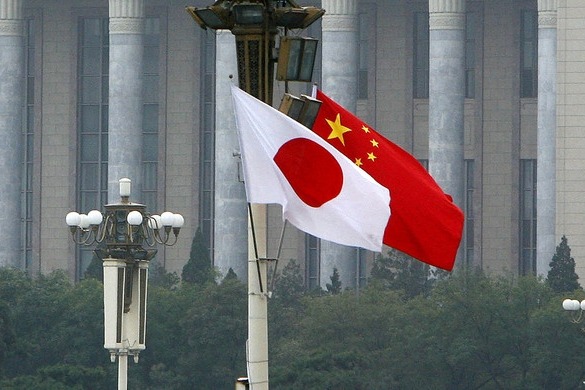
    Japanese Prime Minister Sanae Takaichi’s recent remarks suggesting potential military intervention in the Taiwan Strait have ignited widespread condemnation and economic repercussions. Speaking in parliament earlier this month, Takaichi labeled any Chinese military action against Taiwan as a ‘survival-threatening situation’ for Japan, marking the first time a Japanese leader has publicly entertained such a possibility. Her comments, made during the 80th anniversary of the end of World War II, have drawn sharp criticism from U.S. peace activists and Chinese officials alike. Julie Tang, co-founder of Pivot to Peace and a retired judge, accused Takaichi of reviving militarism and fascism, stating, ‘She’s clearly not ready for the world stage.’ The backlash has already impacted Japan’s tourism sector, with major Chinese airlines offering full refunds for flights to Japan following Beijing’s advisory against travel to the country. Chinese tourists, a vital component of Japan’s tourism economy, have been urged to reconsider their plans. Economically, Japan is already grappling with a 1.8% contraction in third-quarter GDP and a staggering debt-to-GDP ratio of 230-260%, raising questions about the feasibility of Takaichi’s stance. Retired judge Lillian Sing, co-founder of the ‘Comfort Women’ Justice Coalition, criticized Takaichi’s judgment, noting Japan’s weak economic position and declining population. China’s permanent representative to the UN, Fu Cong, emphasized that any Japanese military involvement in the Taiwan Strait would be deemed an act of aggression. The timing of Takaichi’s remarks, coinciding with the 80th anniversary of the end of World War II, has intensified the backlash, with critics accusing her of ignorance about Japan’s wartime history and its implications for regional stability.

  • Rights groups slam Trump administration for ending Myanmar deportation protection as civil war rages

    Rights groups slam Trump administration for ending Myanmar deportation protection as civil war rages

    The Trump administration’s decision to revoke Temporary Protected Status (TPS) for Myanmar citizens has drawn sharp criticism from human rights groups, who argue that the move disregards the ongoing civil war and widespread human rights abuses in the country. Homeland Security Secretary Kristi Noem justified the decision by citing Myanmar’s “notable progress in governance and stability,” including plans for “free and fair elections” and “successful ceasefire agreements.” However, critics have dismissed these claims as baseless, given the military junta’s brutal crackdown on dissent and the imprisonment of democratically-elected leader Aung San Suu Kyi. Phil Robertson of Asia Human Rights and Labor Advocates likened the decision to Noem’s infamous act of shooting her family’s dog, stating that it would send Myanmar citizens back to “prisons, brutal torture, and death.” The military, led by Senior Gen. Min Aung Hlaing, seized power in 2021 and has since been accused of war crimes, including the indiscriminate use of landmines, targeting of civilians, and forced conscription. The upcoming elections, which exclude Suu Kyi’s party, have been widely condemned as a sham. The National Unity Government (NUG), formed by ousted lawmakers, expressed dismay at the decision, emphasizing that the reasons for revoking TPS do not reflect the dire reality in Myanmar. The State Department’s own human rights report and travel advisory highlight the country’s ongoing violence and instability, further undermining Noem’s claims. Human Rights Watch’s John Sifton called the decision “egregious,” noting that it could affect up to 4,000 people and is based on assertions contradicted by extensive reporting.

  • Tanzania cancels independence day celebrations after election unrest

    Tanzania cancels independence day celebrations after election unrest

    Tanzania has decided to cancel its upcoming independence celebrations, redirecting funds to rebuild infrastructure damaged during recent election-related unrest. Prime Minister Mwigulu Nchemba announced the decision amidst growing calls from opposition groups for mass demonstrations on December 9, the country’s independence day, to protest alleged killings following last month’s disputed election. The opposition claims hundreds died in a government crackdown, though no official death toll has been released. A commission of inquiry has been established to investigate the incidents. President Samia Suluhu Hassan secured a landslide victory with 98% of the vote, a result the opposition has labeled a ‘mockery of democracy.’ Key opposition leaders, Tundu Lissu and Luhaga Mpina, were barred from contesting the election—Lissu remains detained on treason charges, while Mpina’s candidacy was rejected on technical grounds. Election observers have raised concerns about vote manipulation and the election’s failure to meet democratic standards. The government imposed a five-day internet blackout starting on election day, October 29, and warned against sharing protest-related images. Despite this, graphic footage of the unrest has circulated widely online, with international media verifying its authenticity. The government has dismissed these portrayals as attempts to tarnish Tanzania’s image, maintaining that the country remains safe. Government spokesman Gerson Msigwa stated that the inquiry commission would clarify the events, though concerns about its independence persist. Over 240 individuals were charged with treason following the protests, but President Samia later urged prosecutors to show leniency, leading to some releases. In his announcement, Nchemba appealed for unity and dialogue, urging Tanzanians to avoid violence. President Samia, Tanzania’s first female president, initially gained praise for easing political repression, but critics argue that the political environment has since tightened.