分类: politics

  • What to know about French ex-President Sarkozy’s latest legal matters

    What to know about French ex-President Sarkozy’s latest legal matters

    Nicolas Sarkozy, the former President of France, awaits a pivotal ruling from the Court of Cassation on Wednesday regarding his conviction for illegal campaign financing during his 2012 reelection bid. The court will determine whether to uphold or overturn his one-year prison sentence, half of which is suspended, for exceeding the legal spending limit by nearly double the allowed €22.5 million ($25.5 million). This decision follows his recent release from a 20-day incarceration in Paris’ La Santé prison, stemming from a separate case involving alleged secret financing from Libya during his 2007 presidential campaign. Sarkozy, 70, has consistently denied any wrongdoing. If the Court of Cassation confirms the conviction, it will mark a definitive legal conclusion, barring further appeals. The court’s role is to ensure proper application of legal procedures rather than re-examining the case’s merits. Additionally, Sarkozy faces an upcoming appeal trial in the Libya case, scheduled from March 16 to June 3, where he was previously sentenced to five years for criminal association related to campaign financing. Amid these legal battles, Sarkozy is set to release a memoir titled “Diary of a Prisoner,” reflecting on his recent incarceration. The former president’s legal woes also include preliminary charges for alleged witness tampering in the Libya case, with his wife, Carla Bruni-Sarkozy, similarly implicated. Sarkozy’s legacy continues to be marred by these controversies, including a prior conviction for corruption and influence peddling, which led to the revocation of his Legion of Honor medal.

  • UK’s Treasury chief set to raise taxes once again in her second budget

    UK’s Treasury chief set to raise taxes once again in her second budget

    LONDON — Amid mounting economic pressures, Britain’s Labour government, led by Chancellor of the Exchequer Rachel Reeves, is poised to unveil its second budget since its landslide election victory in July 2024. The announcement, scheduled for Wednesday, comes as the government grapples with a strained public finances and a faltering economy. Reeves, the first woman to hold the prestigious Treasury role, is expected to introduce additional tax-raising measures to address a significant fiscal shortfall. This marks a departure from her earlier assurance that her first budget would be the sole major tax-raising effort of the current parliamentary term, which extends to 2029. The British economy, the world’s sixth-largest, has struggled to meet expectations, with critics attributing the downturn to last year’s business tax hikes. Despite a brief recovery in the first half of 2024, when the UK led the Group of Seven in growth, the economy has since stumbled. Peter Arnold, chief economist at EY U.K., noted that Reeves must navigate a ‘delicate balancing act’ between ensuring fiscal stability and fostering economic growth. The UK’s financial woes are compounded by long-term challenges stemming from the 2008 global financial crisis, the COVID-19 pandemic, the Russia-Ukraine war, and the lingering effects of Brexit. These factors have collectively eroded the nation’s economic resilience and tax revenue. Reeves also faces substantial spending commitments, including reversing planned welfare cuts and addressing the cost-of-living crisis amid persistent inflation. Economists estimate she will need to secure £20-30 billion ($26-39 billion) to meet these demands. While a straightforward income tax hike has been ruled out, Reeves is likely to implement smaller, more complex tax measures. Key expectations include freezing tax thresholds, which would push more earners into higher brackets as wages rise, and introducing a mansion tax on high-value properties. Changes to capital gains tax and private pension provisions are also under consideration.

  • Trump administration plans to reinterview refugees admitted under Biden: Report

    Trump administration plans to reinterview refugees admitted under Biden: Report

    The Trump administration is reportedly preparing to reinterview tens of thousands of refugees admitted to the United States during President Joe Biden’s tenure, according to a CNN report published on Monday. A leaked memo dated November 21 reveals that the U.S. Citizenship and Immigration Services (USCIS) will initiate a comprehensive “review and reinterview process” to assess whether these refugees pose any national security or public safety risks. Approximately 235,000 refugees were admitted between fiscal years 2021 and 2025 under Biden’s policies, though the memo does not specify which individuals or countries of origin will be targeted. Notably, the USCIS has the authority to revoke refugee status without providing an appeal mechanism if deemed necessary. This move is part of a broader effort by the Trump administration to overhaul the U.S. refugee system, which has historically been governed by the Refugee Act of 1980. Last month, the administration announced plans to drastically reduce the annual refugee admission cap to a historic low of 7,500 in fiscal year 2026, a stark contrast to the over 100,000 refugees admitted annually under Biden. The majority of these slots are reportedly reserved for white South Africans, a decision that has sparked controversy. While the Biden administration expanded refugee admissions, it fell short of its annual caps, admitting 25,465 in 2022, 60,014 in 2023, 100,034 in 2024, and 27,308 in 2025, according to the Migration Policy Institute. Trump’s earlier suspension of the refugee resettlement program left thousands in limbo, including 12,000 individuals with approved flights and nearly 90,000 others awaiting resettlement. The U.S. refugee vetting process typically takes 18 to 24 months, though white South African farmers have been an exception, with their cases expedited. South African President Cyril Ramaphosa and other officials have denied allegations of “white genocide,” calling them unfounded.

  • Taiwan announces special budget of $40 billion for arms purchases to bolster defense

    Taiwan announces special budget of $40 billion for arms purchases to bolster defense

    TAIPEI, Taiwan — In a significant move to bolster its defense capabilities, Taiwan’s President Lai Ching-te unveiled plans on Wednesday for a $40 billion special budget dedicated to arms purchases and the development of advanced defense systems. The budget, spanning eight years from 2026 to 2033, includes the creation of the Taiwan Dome, a cutting-edge air defense system designed to enhance detection and interception capabilities. This announcement follows Lai’s earlier commitment to increase defense spending to 5% of the island’s GDP, up from the current 3.3% allocation for 2026, which amounts to $949.5 billion New Taiwan Dollars ($31.18 billion).

    In an op-ed published in The Washington Post, Lai emphasized that the special budget would primarily fund arms procurement from the United States, reflecting Taiwan’s strategic alignment with its key ally. Wellington Koo, Taiwan’s Minister of National Defense, clarified that the $40 billion figure represents the upper limit of the budget. The funds will be allocated toward acquiring precision-strike missiles and fostering joint development and procurement initiatives between Taiwan and the U.S. for advanced military equipment and systems.

    This decision comes amid escalating geopolitical tensions in the region and mounting pressure from the U.S. for Taiwan to strengthen its self-defense capabilities. The proposed budget underscores Taiwan’s proactive stance in addressing security challenges and safeguarding its sovereignty.

  • India intensifies crackdown in disputed Kashmir after New Delhi bombing

    India intensifies crackdown in disputed Kashmir after New Delhi bombing

    In a tragic turn of events, Bilal Ahmed Wani, a 55-year-old shopkeeper from Indian-controlled Kashmir, set himself on fire and later succumbed to his injuries. This occurred shortly after his release from police custody, where he was detained in connection with the investigation into the deadly November 10 explosion near New Delhi’s Red Fort, which claimed at least 10 lives and injured 32 others. Wani’s son remains in custody, and his family, speaking anonymously due to fear of reprisals, attributed his desperate act to the stress and humiliation stemming from the detentions.

    The blast, described by authorities as a ‘heinous terror incident,’ triggered a sweeping security crackdown in Kashmir. Police conducted extensive raids, detained numerous suspects, and questioned thousands, with hundreds still in custody. The investigation quickly focused on Kashmir, where authorities dismantled a suspected militant cell operating from the region to the outskirts of New Delhi. During the raids, police seized bomb-making materials and arrested at least seven individuals, including two Kashmiri doctors.

    On November 14, a separate explosion at a police station in Srinagar, Kashmir, killed at least nine people. Authorities ruled out sabotage, suggesting mishandling of explosives as the likely cause. The ongoing crackdown in Kashmir has been described as notably severe, reminiscent of the restrictions imposed in 2019 when India revoked the region’s special autonomous status.

    Wani’s family insists on his innocence, accusing authorities of using him and his relatives as scapegoats. His eldest son, Jasir Bilal Wani, remains detained, with authorities alleging his involvement in planning the attack by providing technical support to the suspected suicide bomber, Umar Un Nabi, a Kashmiri doctor. The crackdown has extended to what police term a ‘white-collar terror ecosystem,’ intensifying scrutiny of Kashmiri professionals, particularly doctors, and fueling fear within the medical community.

    Analysts warn that the political disenfranchisement and heavy-handed security measures following India’s 2019 decision are exacerbating anger and alienation in Kashmir. Praveen Donthi of the International Crisis Group emphasized that a moderate approach by New Delhi would be more effective in preventing further cycles of violence. The situation underscores the deep-seated tensions and the human cost of the ongoing conflict in the region.

  • China’s pressure on Japan is a familiar tactic that could last for some time

    China’s pressure on Japan is a familiar tactic that could last for some time

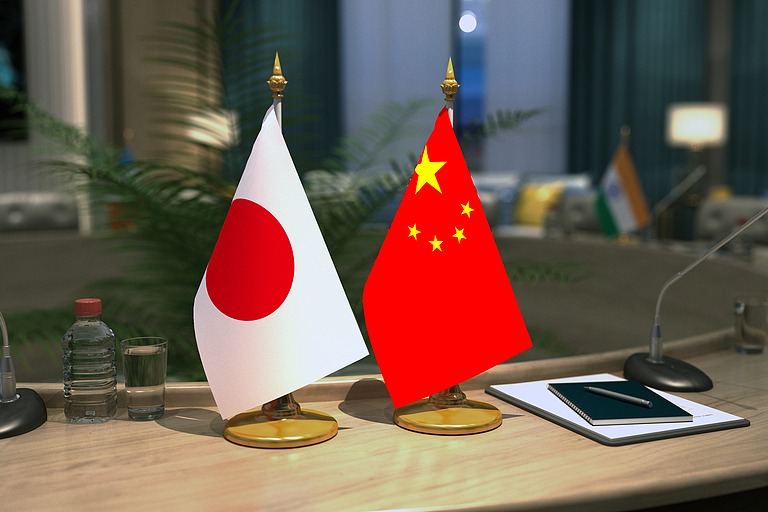
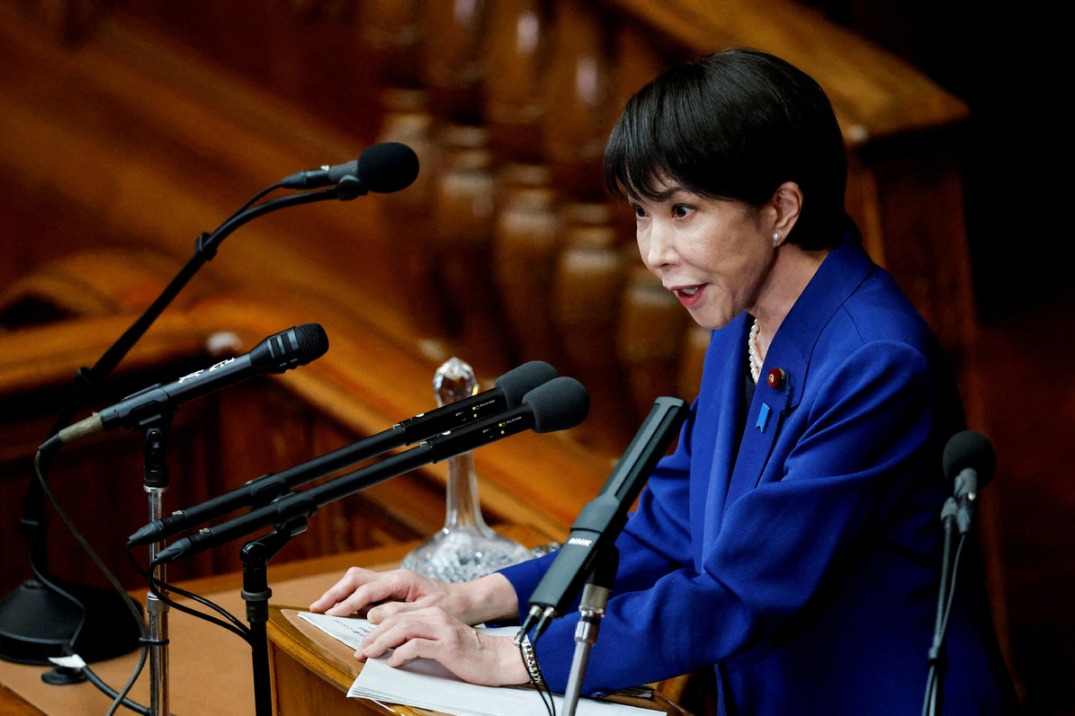
    Tensions between China and Japan have intensified following a controversial statement by Japan’s Prime Minister Sanae Takaichi regarding Taiwan, prompting Beijing to issue a travel advisory against visiting Japan. The advisory has already led to significant cancellations, with businesses like Rie Takeda’s Tokyo tearoom losing hundreds of bookings. China’s response mirrors its past economic strategies, such as tariffs on Australian wines and restrictions on Philippine bananas, as it leverages its economic influence to pressure Japan. Experts suggest this dispute could persist for over a year, with both nations reluctant to back down due to domestic political pressures. The travel advisory is expected to cost Japan up to 1.8 trillion yen ($11.5 billion), further straining its economy. Meanwhile, some Chinese tourists remain hesitant, while others continue their plans, reflecting the uncertainty. China has also hinted at further measures, including potential restrictions on Japanese seafood and rare earth exports, signaling a deepening rift in bilateral relations.

  • Report: US envoy coached Putin aide on how Russian leader should pitch Trump on Ukraine peace plan

    Report: US envoy coached Putin aide on how Russian leader should pitch Trump on Ukraine peace plan

    In a revealing development, President Donald Trump’s key intermediary with Russia, Steve Witkoff, reportedly advised a senior aide to Russian President Vladimir Putin on how to approach Trump with a peace proposal aimed at ending the ongoing conflict in Ukraine. According to a transcript published by Bloomberg News, Witkoff suggested during an October 14 call that Putin congratulate Trump on the Gaza ceasefire deal, express support for it, and emphasize Trump’s role as a peacemaker. This conversation occurred just before Trump announced that Witkoff would meet with Putin to discuss a ‘fine-tuned’ peace plan for Ukraine. The White House did not dispute the transcript’s authenticity, with Trump describing Witkoff’s approach as standard negotiation tactics. However, the report has drawn criticism from some U.S. lawmakers, including Republican Representative Don Bacon, who accused Witkoff of favoring Russian interests and called for his removal from the negotiations. The transcript also revealed that Witkoff proposed arranging a call between Trump and Putin before Ukrainian President Volodymyr Zelenskyy’s White House visit, with Putin congratulating Trump on the Gaza agreement as a starting point. The discussions come amid a broader debate over a leaked 28-point peace plan, which critics argue heavily favors Russian demands, including Ukraine ceding the Donbas region and reducing its military size. While the State Department declined to comment on the Bloomberg report, Secretary of State Marco Rubio emphasized that the proposal was a U.S.-led effort with input from both Russia and Ukraine. As negotiations continue, Trump has hinted at a potential meeting with Putin and Zelenskyy, but only after further progress is made.

  • The looming election Trump can’t afford to lose

    The looming election Trump can’t afford to lose

    Tennessee has become a focal point in American politics as a special election on December 2nd to fill an open congressional seat draws national attention. Despite the district’s historically conservative leanings, both Republicans and Democrats are treating the race as highly competitive, with significant resources being poured into the state. The Democratic Party, led by former Vice-President Kamala Harris, has been actively campaigning, emphasizing the South’s growing political power. Meanwhile, Republicans, including President Donald Trump, are grappling with internal challenges and a shifting political landscape. The election comes at a time when Trump’s grip on the Republican Party appears to be weakening, highlighted by the recent resignation of conservative firebrand Marjorie Taylor Greene. The outcome of this election could signal broader changes within the GOP and the political climate in traditionally red states. Democratic nominee Aftyn Behn has centered her campaign on affordability and local quality of life issues, while her Republican opponent, Matt Van Epps, has focused on economic concerns, reflecting a departure from the cultural issues that have dominated recent Republican campaigns. The election’s results could have significant implications for the future of both parties, particularly as Republicans begin to consider a post-Trump era.

  • Washington DC mayor Muriel Bowser won’t seek re-election

    Washington DC mayor Muriel Bowser won’t seek re-election

    Washington DC Mayor Muriel Bowser declared on Tuesday that she will not pursue a fourth term in office, marking the end of a significant chapter in the city’s political landscape. Bowser, who has served as mayor since 2015, expressed gratitude for her tenure and emphasized that her administration has established a foundation for future leaders to build upon. In a heartfelt video announcement, she stated, ‘It has been the honour of my life to be your mayor. But today, with a grateful heart, I am announcing that I will not seek a fourth term.’ Bowser highlighted key achievements during her decade-long leadership, including expanding housing, navigating the city through the COVID-19 pandemic, and securing substantial infrastructure investments for low-income neighborhoods. Her tenure was marked by notable clashes with former President Donald Trump, particularly over the deployment of National Guard troops and the city’s response to racial justice protests. Bowser’s decision is expected to trigger a competitive race among candidates vying to lead the Democratic stronghold. At least four contenders have already signaled their intent to run in the upcoming mayoral elections, with two city council members also anticipated to join the race.

  • Can Canada wait out the trade war with the US?

    Can Canada wait out the trade war with the US?

    Canadian Prime Minister Mark Carney has shown no urgency in resuming trade negotiations with the United States, despite mounting pressure and criticism. Over the weekend, Carney dismissed questions about his last conversation with US President Donald Trump, stating, ‘Who cares? It’s a detail. I’ll speak to him again when it matters.’ He emphasized that there is no pressing issue requiring immediate attention from his US counterpart. This stance has sparked debate over whether Canada is recalibrating its strategy in trade discussions with the US. Carney is reportedly considering a trip to Washington next week for the FIFA World Cup draw, an event Canada is co-hosting with Mexico and the US in 2026. While sources suggest a potential meeting with Trump, no official plans have been confirmed. Chris Sands, director of the Center for Canadian Studies at Johns Hopkins University, noted that both leaders are engaged in a ‘game of posturing,’ with neither wanting to appear overly eager. Trade talks stalled last month after Trump took offense at an anti-tariff ad featuring former US President Ronald Reagan, commissioned by Ontario and aired in the US. Despite the pause, Canadian officials continue to advocate for their country’s interests on Capitol Hill. Carney has been actively promoting foreign investment in Canada during recent global trips, including to the United Arab Emirates. Meanwhile, the Canadian government has pledged financial relief to sectors impacted by US tariffs, particularly aluminium producers. Jean Simard of the Aluminium Association of Canada remarked that ‘time is on our side,’ as US stockpiles dwindle. However, opposition parties have criticized Carney’s approach, accusing him of neglecting job losses and failing to secure a ‘win’ for Canada. With US midterm elections and a review of the USMCA trade agreement looming in 2026, some analysts remain hopeful for a resolution.