分类: politics

  • Stone-hurling anger unnerves Zambia’s ‘fix-it’ president

    Stone-hurling anger unnerves Zambia’s ‘fix-it’ president

    Zambian President Hakainde Hichilema is navigating a turbulent political landscape as he approaches the 2026 elections, facing both public discontent and criticism from opposition leaders. Recent incidents, including an attack by stone-throwers during a rally in the Copperbelt province, have highlighted the growing frustration among Zambians. Despite his administration’s efforts to stabilize the economy and address the nation’s debt crisis, many citizens feel disconnected from his leadership. Hichilema, in his first press conference in 18 months, defended his record, emphasizing achievements in debt renegotiation, inflation reduction, and attracting foreign investment. However, challenges such as persistent power shortages, high living costs, and unemployment continue to overshadow these successes. Critics, including opposition candidate Simon Mwila and academic Sishuwa Sishuwa, accuse Hichilema of abandoning his democratic principles and adopting oppressive measures, such as the controversial Cybersecurity Law. Hichilema has also faced backlash for supporting a constitutional review process that critics argue contradicts his previous stance. As the election looms, the president has called for patience, asserting that long-term investments and development programs require time to yield results. However, the recent unrest suggests that public patience may be wearing thin.

  • Georgia’s pro-EU protesters defiant year after accession process was halted

    Georgia’s pro-EU protesters defiant year after accession process was halted

    For over a year, Georgia has been gripped by nightly protests as citizens rally against the government’s perceived shift away from European integration and democratic values. The demonstrations, which began in November 2024 after Prime Minister Irakli Kobakhidze announced a four-year pause in EU accession efforts, have evolved into a protracted battle between protesters and authorities. Despite violent police crackdowns, heavy fines, and new laws imposing severe penalties for blocking roads, the movement persists, driven by a deep-seated fear of returning to Russia’s sphere of influence. Protesters like Giorgi Arabuli, who lived through the tumultuous 1990s, see the struggle as a fight for Georgia’s future. The government, led by the Georgian Dream party, has faced accusations of authoritarianism, with critics pointing to legislation mirroring Russian laws, the imprisonment of opposition figures, and restrictive measures targeting civil society and media. The EU’s recent assessment of Georgia as a candidate ‘in name only’ has further fueled discontent. Amidst this turmoil, Georgia’s democratic decline has intensified, with sweeping education reforms and increasing hostility toward Western critics. The protests, though smaller, continue to symbolize a resilient hope for a European future.

  • Israel passed 30 laws ‘deepening apartheid’ since 7 October, legal centre says

    Israel passed 30 laws ‘deepening apartheid’ since 7 October, legal centre says

    Since October 2023, Israel has enacted over 30 laws that deepen systemic apartheid and repression against Palestinians, according to a new report by the legal center Adalah. These laws, passed between October 7, 2023, and July 27, 2025, target a wide range of political and civil rights, including freedom of expression, protest, citizenship, family life, equality, and the rights of detainees and prisoners. Adalah asserts that these measures fundamentally violate Palestinian human rights. The report highlights several legislative trends, including the expanded use of counterterrorism laws, which are disproportionately applied to Palestinian citizens of Israel and residents of occupied East Jerusalem. The vague definitions of ‘terrorist act’ and ‘terror organisation’ in the 2016 Counter-Terrorism Law have become tools to suppress Palestinian freedom of expression. Another trend involves channeling state resources to Jewish Israeli reservists, explicitly excluding Palestinian citizens from benefits such as tax relief, welfare, higher education, and employment support. The report also notes the institutionalization of temporary emergency measures, which have been repeatedly renewed or made permanent, enabling widespread violations of detainees’ rights and punitive conditions for Palestinian prisoners. Adalah links these laws to Israel’s constitutional framework, which prioritizes ‘Jewish ethno-national supremacy,’ as reflected in the 2018 ‘Nation State’ Basic Law. The government’s guiding principles, adopted in December 2022, assert exclusive Jewish rights over all areas between the Mediterranean Sea and the Jordan River. The report examines five key themes: denial of freedom of expression, thought, criticism, and protest; denial of citizenship, family life, and community ties; systematic denial of fair trial guarantees and assaults on prisoners’ rights; denial of social rights and deepening inequalities in resource allocation; and the termination of UNRWA operations in occupied Palestine. Laws criminalize the consumption of media produced by designated ‘terrorist organizations,’ ban statements denying the events of October 7, 2023, and allow the education ministry to dismiss teachers and defund schools for alleged support of terrorism. Foreign nationals can be barred from entering Israel for critical speech or appeals to international courts, and critical media broadcasts may be restricted on claims of ‘harm to state security.’ Palestinian lawyer Amal Orabi argues that these laws aim to ‘silence and suppress’ Palestinian citizens of Israel, preventing them from participating in global discourse or exposing violations. Adalah has documented a total of 100 discriminatory laws, which criminalize political expression, authorize deportations of Palestinian families, block family unification, permit the dismissal of Palestinian teachers, revoke social welfare benefits for families of children convicted of ‘security offences,’ expand detention powers, restrict access to legal counsel, and close independent media outlets. Miriam Azem, Adalah’s international advocacy coordinator, states that these laws ‘overwhelmingly and systematically’ target Palestinians, using counterterrorism and security frameworks as a proxy. She notes that the legislative campaign against Palestinians shows no signs of slowing, with multiple bills advanced in the current parliamentary session, including the death penalty bill and the extension of the offence of consuming ‘terrorist publications.’

  • Trump rages at report that he is increasingly frail

    Trump rages at report that he is increasingly frail

    US President Donald Trump has vehemently criticized a New York Times article that highlighted his age and apparent signs of fatigue, labeling the publication as an ‘enemy of the people’ and personally attacking the female author of the report. In a lengthy post on his Truth Social platform, the 79-year-old Republican leader dismissed the claims, asserting that he is in peak physical and cognitive condition. Trump emphasized his recent ‘perfect physical exam’ and a cognitive test he claims to have ‘aced,’ while also listing his accomplishments, including last year’s election victory and a robust US stock market. Despite his vigorous defense, the Times report noted a reduction in Trump’s public events and domestic travel compared to his first term, alongside instances where he appeared to fall asleep during official duties. The article also raised questions about his health, citing an October MRI scan and visible physical ailments. Trump’s aggressive response included derogatory remarks about the reporter, continuing a pattern of personal attacks on journalists. The Times stood by its reporting, stating that its coverage is based on factual, firsthand reporting and will not be deterred by intimidation tactics.

  • China, US can transcend differences, write new chapter in friendly cooperation: ambassador

    China, US can transcend differences, write new chapter in friendly cooperation: ambassador

    Chinese Ambassador to the United States Xie Feng emphasized the potential for China and the US to transcend their differences and forge a new era of friendly cooperation during his video keynote speech at the 2025 Kuliang Forum in New York on November 25, 2025. Ambassador Xie underscored the importance of people-to-people ties, societal foundations, youth engagement, and subnational exchanges as the cornerstone of the bilateral relationship. He highlighted the historical significance of Kuliang, a century-old site in Fuzhou, Fujian Province, where American families once resided, and noted the recent efforts by their descendants to reconnect with their heritage. Events like the Bond with Kuliang: 2025 China-US Youth Choir Festival and the Kuliang Forum have revitalized this shared history, symbolizing the enduring bonds between the two nations. Xie stressed that despite differences in history, culture, and development paths, both countries share a common pursuit of friendship. He called for adherence to the principles of non-conflict and non-confrontation, urging China and the US to uphold their responsibilities as major global powers. Xie also emphasized the need for collaboration on international issues, including counter-terrorism and global governance, particularly as both nations prepare to host the APEC Economic Leaders’ Meeting and the G20 summit in 2026. He concluded by advocating for mutual support and concrete actions to benefit both countries and the world at large.

  • Thousands rally to protest Bulgaria’s 2026 budget

    Thousands rally to protest Bulgaria’s 2026 budget

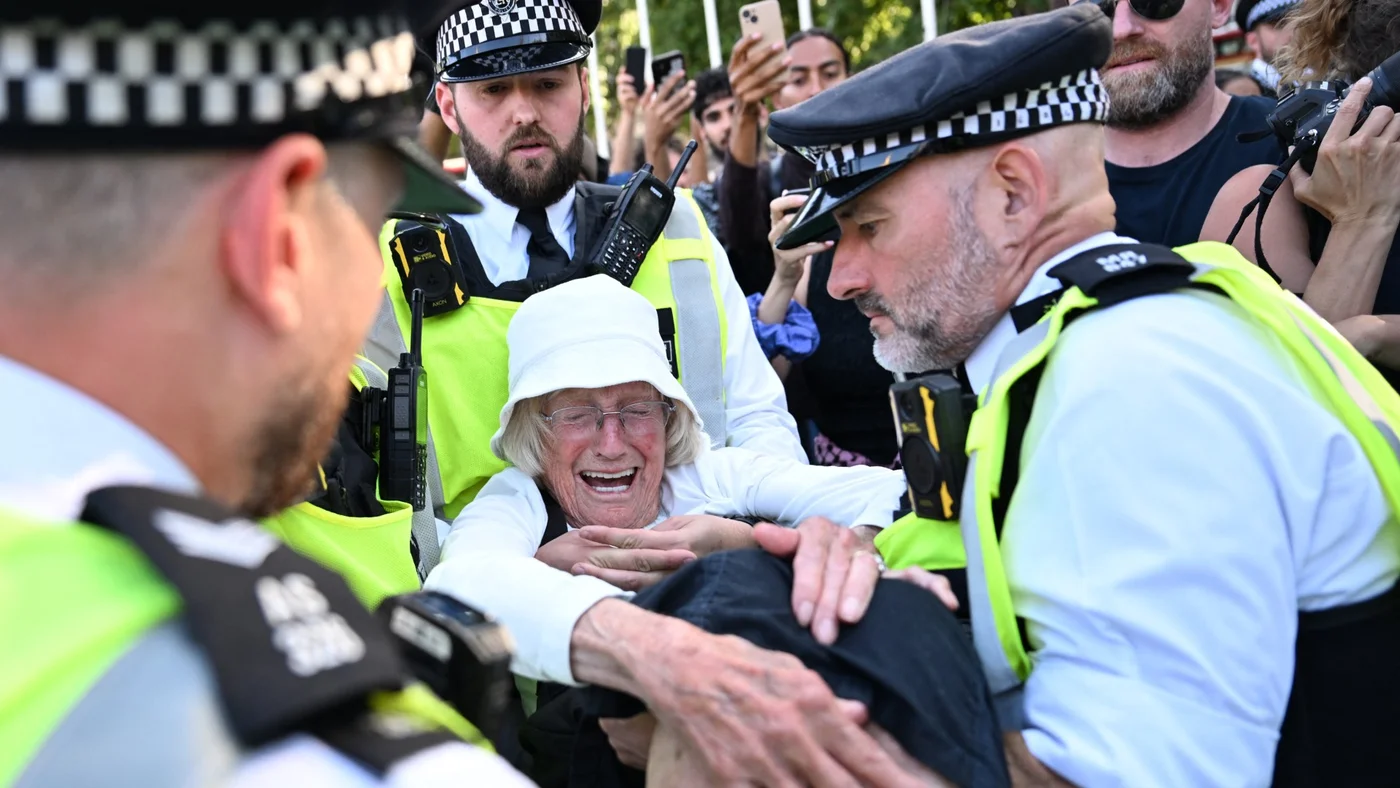
    In a significant display of public dissent, thousands of citizens flooded the streets of Sofia, Bulgaria’s capital, on Wednesday to protest against substantial tax increases outlined in the draft budget for the upcoming year. The demonstration, orchestrated by the opposition coalition We Continue the Change – Democratic Bulgaria, attracted an estimated 20,000 participants. This protest coincides with Bulgaria’s impending entry into the eurozone at the start of next year, highlighting the nation’s economic crossroads. The proposed budget, which includes a hike in social security contributions and a doubling of the dividend tax, has sparked widespread concern over its potential adverse effects on individuals and businesses alike. Protesters formed a human chain around the parliament building and attempted to obstruct lawmakers’ vehicles, leading to police intervention to maintain order. Authorities reported that demonstrators hurled bottles and firecrackers at officers, resulting in injuries to three police personnel. Despite mounting opposition from various social groups and economists’ warnings about the budget’s significant risks, the draft is expected to pass, given the coalition government’s strong parliamentary majority. The budget, which allocates a record 46% of GDP to government spending, will be financed through increased taxes on businesses and workers, coupled with a sharp rise in public debt.

  • Russia’s frozen assets at center of negotiations over Ukraine peace deal

    Russia’s frozen assets at center of negotiations over Ukraine peace deal

    The European Union (EU) faces a critical juncture in its financial support for Ukraine, with the bloc’s most viable funding mechanism hinging on the seizure of billions of dollars in frozen Russian assets. This approach has gained urgency as U.S. President Donald Trump’s 28-point peace plan proposed a $100 billion investment scheme for Ukraine’s reconstruction, financed by Russian assets matched by an equal contribution from the EU. The plan, which surprised European leaders, has sparked intense debate over the fate of Russia’s frozen fortune and its role in maintaining pressure on Moscow while bolstering Ukraine’s defense. European Commission President Ursula von der Leyen emphasized that European taxpayers alone cannot bear the financial burden, as the EU has already provided nearly $197 billion in aid since Russia’s invasion of Ukraine. The bloc is now exploring options to utilize $225 billion in Russian assets frozen at Euroclear, a Brussels-based financial institution, to cover Ukraine’s estimated $153 billion budget and military needs for 2026 and 2027. However, Trump’s proposal has raised concerns in Europe, with analysts viewing it as an attempt to secure a quick deal that benefits the U.S. at the EU’s expense. Despite initial skepticism, some European policymakers suggest that accepting the U.S. proposal might be necessary for a broader peace agreement. Meanwhile, Belgium’s reluctance to approve the use of Russian assets as collateral due to fears of Russian retaliation has added complexity to the issue. With the clock ticking, EU leaders are set to convene in Brussels on December 18 to finalize their stance on seizing Russian assets, a move that could send a strong message to Moscow and secure Ukraine’s financial future.

  • Ulster MP’s claim police caved to Muslim ‘pressure’ over Maccabi row ‘disgraceful and divisive’

    Ulster MP’s claim police caved to Muslim ‘pressure’ over Maccabi row ‘disgraceful and divisive’

    A Member of Parliament has been reported to the parliamentary standards commissioner following controversial remarks alleging that West Midlands Police banned Israeli football fans from a match due to pressure from Muslim politicians and activists. The incident, which occurred during a parliamentary session on Monday, involved Democratic Unionist Party MP Sammy Wilson, who claimed that the police decision to bar Maccabi Tel Aviv supporters from a November 6 fixture at Villa Park was influenced by “Muslim politicians and Muslim thugs.

    The ban, which sparked significant political backlash and was labeled as antisemitic by the British government last month, has been a contentious issue. Middle East Eye previously reported that a confidential West Midlands Police document cited Dutch police warnings about Maccabi Tel Aviv fans being “experienced fighters” and “intent on causing serious violence” during a 2024 incident in Amsterdam. However, a Sunday Times report later contradicted this, alleging that West Midlands Police exaggerated the threat, a claim the force denies.

    During the parliamentary session, Wilson questioned Home Office minister Sarah Jones, accusing the police of fabricating their assessment. He argued that the decision left the Jewish community feeling marginalized and demanded an inquiry into potential political pressure on the police. Despite Wilson’s claims, there is no evidence to suggest that West Midlands Police were influenced by external political forces. Numerous MPs, including Muslim and non-Muslim representatives, supported the ban, emphasizing public safety concerns.

    Independent Alliance MP Ayoub Khan, a vocal supporter of the ban, condemned Wilson’s remarks as “disgraceful, inflammatory, and deeply irresponsible” and announced plans to file a formal complaint with the standards commissioner. Former Labour leader Jeremy Corbyn echoed these sentiments, stating that the ban was not about targeting Jewish individuals but addressing extremist behavior among football fans.

    In response, Home Office minister Jones emphasized the importance of public confidence in policing but refrained from commenting on the specifics of Wilson’s allegations. Labour MP Kim Johnson criticized Wilson’s comments as “reckless, baseless, and deeply divisive,” stressing that the police decision was based on evidence and public safety, not sectarian pressure.

    West Midlands Police reiterated their stance, asserting that their evaluation was informed by credible intelligence and aimed at ensuring public safety. The controversy highlights broader concerns about Islamophobia and the use of divisive language in political discourse.

  • Trump says he’s barring South Africa from participating in next year’s G20 summit in Miami

    Trump says he’s barring South Africa from participating in next year’s G20 summit in Miami

    In a decisive move, President Donald Trump announced on Wednesday that South Africa would be excluded from participating in the 2026 Group of 20 (G20) summit, scheduled to be held in Miami, Florida. Trump also declared an immediate halt to all U.S. payments and subsidies to the country. The decision stems from allegations that South Africa mishandled a U.S. government representative during the recent G20 summit it hosted. Trump claimed that South Africa refused to transfer its hosting responsibilities to a senior U.S. Embassy official after the summit concluded over the weekend. In a post on Truth Social, Trump stated, ‘Therefore, at my direction, South Africa will NOT be receiving an invitation to the 2026 G20, which will be hosted in the Great City of Miami, Florida next year.’ He further criticized South Africa, asserting, ‘South Africa has demonstrated to the World they are not a country worthy of Membership anywhere.’ The U.S. president also accused South Africa of violently persecuting white Afrikaners, a claim that the South African government has dismissed as unfounded. This move marks a significant escalation in diplomatic tensions between the two nations.

  • Mainland slams recent Japanese govt statement on Taiwan

    Mainland slams recent Japanese govt statement on Taiwan

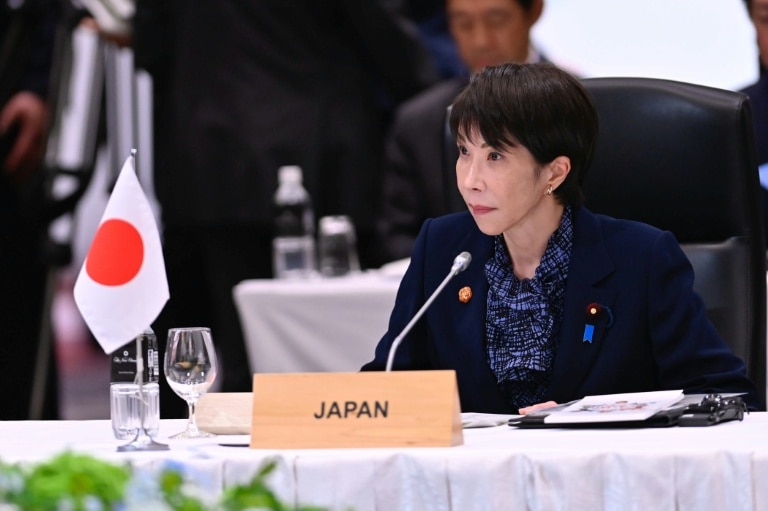
    The Chinese mainland has issued a stern rebuke against a recent statement by the Japanese government regarding the Taiwan issue. On Wednesday, Chinese officials called on Tokyo to provide a clear and honest explanation of its position, warning that ambiguous claims and attempts to obscure the matter would not be tolerated. The controversy stems from a written response prepared by the Japanese Cabinet on Tuesday, addressing a lawmaker’s inquiry about Prime Minister Sanae Takaichi’s remarks on Taiwan. The response asserted that Takaichi’s comments ‘do not change the government’s consistent position,’ emphasizing that no review or reconsideration was necessary. Foreign Ministry spokeswoman Mao Ning reiterated China’s firm opposition to Takaichi’s statements, urging Japan to address Beijing’s concerns, correct its mistakes, and retract any erroneous remarks promptly. Mao stressed that Japan must clarify its ‘consistent position’ and confirm its adherence to the one-China principle. She emphasized that Taiwan is an integral part of China and that its reunification is a purely internal affair, warning Japan against making irresponsible comments or interfering in the matter.