分类: politics

  • Boat strike briefings help Hegseth – but shipwreck video release may hurt

    Boat strike briefings help Hegseth – but shipwreck video release may hurt

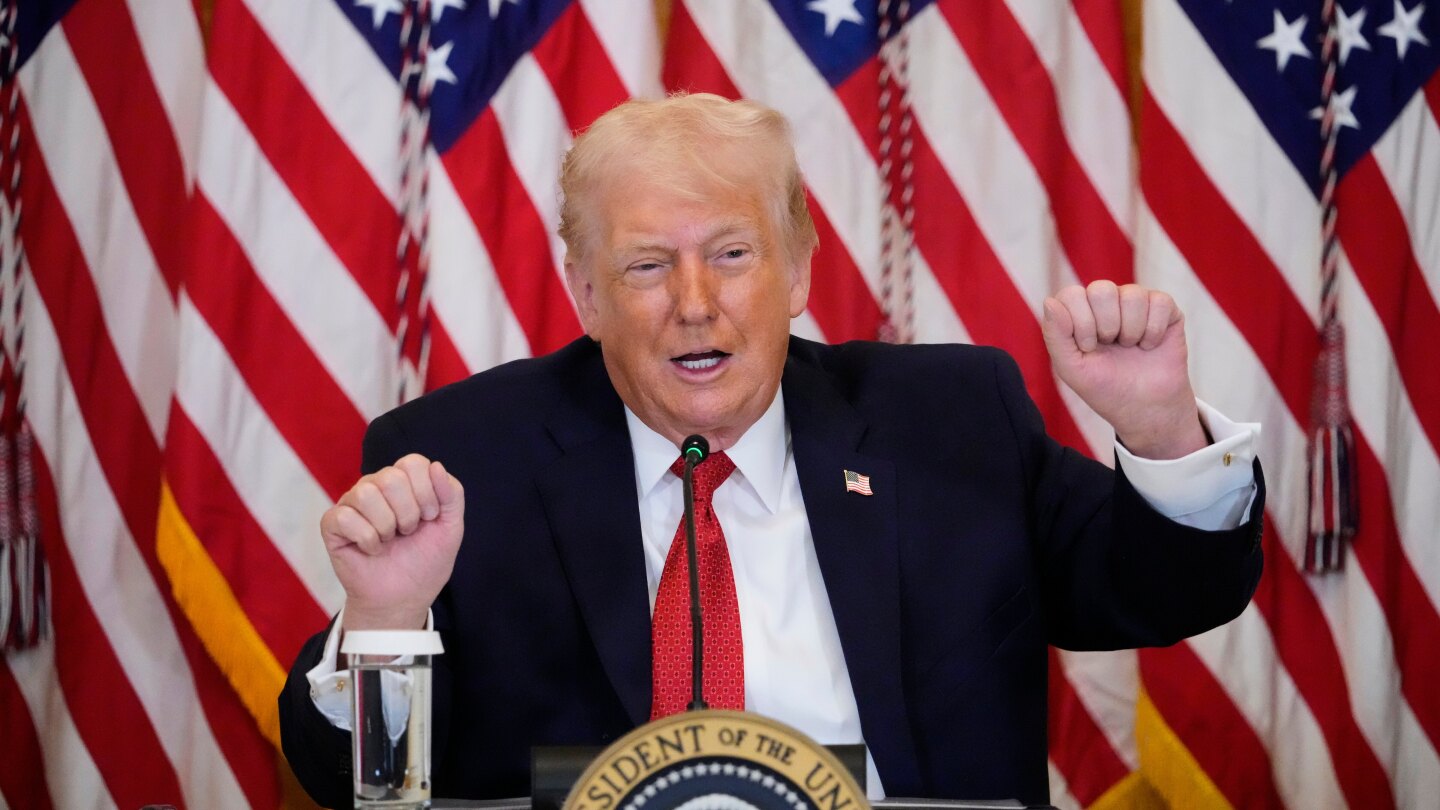
    A Washington Post investigation into a September U.S. military strike on a suspected drug trafficking vessel in the Caribbean has triggered a fierce congressional debate, exposing deep partisan fractures over the legality and morality of the Trump administration’s anti-narcotics campaign. The report, which questioned the circumstances of the operation, initially sparked rare bipartisan concern and placed Defense Secretary Pete Hegseth’s position under scrutiny.

    Lawmakers received classified briefings from General Dan Caine, Chairman of the Joint Chiefs of Staff, and Admiral Frank Bradley, who commanded the operation. While congressional reviews found no evidence to support the Post’s claim that Hegseth issued an explicit ‘kill them all’ order, consensus ended there. Democratic representatives emerged from viewing operation footage describing the content as ‘deeply troubling,’ particularly the second strike that killed two survivors clinging to wreckage. Republicans uniformly defended the action as ‘entirely lawful and needful’ in combating drug trafficking.

    The fundamental disagreement centers on the administration’s designation of narcotics traffickers as terrorist organizations and its authorization of lethal force against civilian targets without external legal oversight. Since the initial September incident, the U.S. has conducted 21 similar strikes resulting in over 80 fatalities.

    Secretary Hegseth’s position appears stabilized following an inspector general report that largely cleared him of wrongdoing in the separate ‘Signalgate’ controversy involving discussions of classified information on unsecured platforms. The report concluded that while he created security risks, he did not transmit classified material as he claims to have declassified it beforehand.

    With former President Trump supporting the release of operation footage, public opinion may shift as visual evidence becomes available. For now, the American public must reconcile conflicting narratives from partisan lawmakers and investigative journalism regarding this controversial chapter of military engagement.

  • GCC leaders reaffirm support for Palestine and Gaza truce at Bahrain meeting

    GCC leaders reaffirm support for Palestine and Gaza truce at Bahrain meeting

    At the 46th session of the Gulf Cooperation Council’s Supreme Council, regional leaders delivered a powerful collective stance on the Israeli-Palestinian conflict during their December 3 meeting in Bahrain. Convened at Al Sakhir Palace under the presidency of Bahrain’s King Hamad bin Isa Al Khalifa, the high-level gathering produced a strongly worded communique that condemned Israel’s military actions while reaffirming support for Palestinian self-determination.

    The Council explicitly held Israel ‘fully responsible for its ongoing violations and attacks against the Gaza Strip,’ citing the devastating civilian death toll that has disproportionately affected women and children. The statement rejected any justification portraying Israeli operations as self-defense and demanded immediate troop withdrawal from occupied territories.

    Beyond condemnation, the GCC leadership articulated a clear vision for Palestinian rights, emphasizing the ‘legitimate rights of the Palestinian people to establish their independent state’ and warning against any attempts to undermine these inalienable rights. The communique specifically rejected displacement efforts in Gaza and expressed concern over demographic changes in Jerusalem, calling for protection of Islamic holy sites.

    The timing of the summit proved strategically significant, occurring just one day after the UN General Assembly adopted resolutions demanding Israeli withdrawal from occupied Palestinian territories and Syria’s Golan Heights. The GCC explicitly endorsed US-brokered ceasefire efforts and outcomes from the Sharm El Sheikh Peace Summit while maintaining criticism of specific Israeli policies.

    Regional security concerns also featured prominently in discussions. GCC Secretary-General Jasem Mohamed Albudaiwi referenced two ‘painful incidents’ that demonstrated Gulf unity: Iranian missile attacks targeting a US base in Qatar in June, and what he described as ‘brutal Israeli aggression’ during Qatari mediation efforts in September that resulted in casualties.

    The Council further condemned Israeli attacks on Iranian nuclear facilities, noting the potential regional endangerment. Former Bahraini parliament member Jasim Husain observed that this condemnation would likely please Iranian officials while reaffirming the GCC’s commitment to peaceful conflict resolution.

    The meeting occurred amid heightened tensions surrounding the Rafah Crossing, with Israel announcing plans for limited openings exclusively for Gaza resident exits to Egypt—a move that raised depopulation concerns. Egyptian officials subsequently denied coordination with Israel on this matter, highlighting the complex diplomatic landscape surrounding humanitarian access issues.

  • Watch: Russia’s Putin gets red-carpet welcome from Modi as he lands in India

    Watch: Russia’s Putin gets red-carpet welcome from Modi as he lands in India

    Russian President Vladimir Putin received a ceremonial welcome from Indian Prime Minister Narendra Modi upon arriving in New Delhi for a pivotal two-day summit. The visit, occurring against the backdrop of intensified US pressure on India regarding Russian oil imports, marks Putin’s first journey to India since the commencement of the Ukraine conflict.

    Modi personally greeted the Russian leader at the airport with an embrace on the red carpet, subsequently escorting him in the same vehicle—a display of diplomatic warmth between the two nations. The Russian delegation included Defense Minister Andrei Belousov, with anticipated discussions focusing on enhanced defense cooperation, including potential agreements on Su-57 fighter jet co-production and expanded S-400 air defense system supplies.

    In pre-summit remarks broadcast by India Today, Putin expressed enthusiasm about meeting “my friend” Modi, highlighting the extensive scope of bilateral collaboration spanning aircraft manufacturing, nuclear energy, and space exploration. The agenda includes a private dinner hosted by Modi on Thursday evening followed by formal negotiations on Friday.

    This diplomatic engagement occurs as India navigates complex geopolitical pressures, particularly from the United States where President Donald Trump imposed 50% tariffs on Indian goods in August, directly citing India’s continued Russian oil purchases. Despite recently reducing crude imports due to sanctions on Russian energy giants Rosneft and Lukoil, India remains a significant consumer of Russian petroleum, creating economic savings while providing Moscow with crucial export revenues.

    Kremlin spokesman Dmitry Peskov emphasized Russia’s commitment to strengthening bilateral trade without external interference, noting that two-way commerce reached $68.7 billion in 2024-25—though with a substantial imbalance favoring Russia. Indian officials are seeking greater market access for pharmaceuticals, automobiles, and service industries to address this disparity.

    International relations experts characterize the summit as a strategic recalibration at a critical juncture. Professor Harsh V Pant of King’s College London noted that Modi’s reception demonstrates India’s assertion of “strategic autonomy,” while Putin’s rare international travel underscores the relationship’s importance to Moscow. An anonymous Indian foreign ministry official described Russia-India ties as “the most stable relationship in modern times,” though downplayed the meeting as routine annual diplomacy.

  • Senior Irish government figures briefed on drone presence during Zelensky visit

    Senior Irish government figures briefed on drone presence during Zelensky visit

    DUBLIN — Ukrainian President Volodymyr Zelensky and First Lady Olena Zelenska concluded a high-profile official visit to Ireland on Monday amid reports of unauthorized drone activity in Irish airspace during their stay. The couple arrived in Dublin late Monday for a tightly scheduled one-day diplomatic engagement.

    BBC News NI has learned that senior Irish government officials received briefings concerning the presence of drones detected over Irish skies coinciding with President Zelensky’s arrival. While specifics of the incident remain undisclosed, the revelation points to potential security challenges during the visit of the wartime leader.

    The Irish Defence Forces, when contacted for commentary, declined to elaborate on operational details. A military spokesperson stated: ‘Defence Forces support to the security operation, led by An Garda Síochána, was successfully deployed in multiple means ultimately leading to a safe and successful visit by President Zelensky to Ireland.’

    In a parallel statement, a representative for An Garda Síochána, Ireland’s national police service, indicated that no formal investigation into the drone incident is currently underway. The spokesperson clarified jurisdictional protocols, noting that ‘any such incident occurring on Irish waters is a matter for the Defence Forces.’

    The visit underscores Ireland’s ongoing diplomatic support for Ukraine amid continued regional tensions, while the reported aerial activity highlights evolving security concerns for European leaders. The successful execution of the security operation demonstrates strengthened interagency coordination in handling high-risk diplomatic events.

  • Israeli collaborator Yasser Abu Shabab reportedly killed in Gaza

    Israeli collaborator Yasser Abu Shabab reportedly killed in Gaza

    Yasser Abu Shabab, the most-wanted Hamas target and leader of the controversial Popular Forces militia, was reportedly killed in Gaza on Thursday amid conflicting accounts surrounding his death. Multiple Israeli media outlets confirmed the demise of the notorious figure, though precise details regarding the perpetrators and methodology remain undisclosed.

    The incident allegedly occurred in Rafah, a southern Gaza region currently under comprehensive Israeli military control. Abu Shabab had maintained extensive collaboration with Israeli forces throughout the two-year conflict, engaging in activities that included humanitarian aid looting, civilian kidnappings, and targeted operations against Hamas personnel.

    Israeli Channel 12 reported that Abu Shabab was transported to Soroka Hospital following the attack but was declared dead upon arrival—a claim subsequently denied by hospital authorities. Prominent Israeli political commentator Amit Segal characterized the elimination as a “bad development for Israel,” highlighting the strategic complications arising from the death of a key collaborator.

    Following news of his death, Palestinian crowds flooded Gaza streets in spontaneous celebration, distributing sweets and firing celebratory gunshots into the air. Hamas security forces had previously vowed to track down the militia leader during the ongoing conflict.

    The Popular Forces group, which Abu Shabab led, has faced condemnation from multiple Palestinian factions for its traitorous activities, including coordinated attacks on civilians, systematic aid diversion, and alleged connections to both Israeli forces and the Islamic State organization. While Abu Shabab publicly framed his militia as a legitimate opposition movement to Hamas governance, internal United Nations reports from 2024 identified the group as “the most influential stakeholders behind the systematic and massive looting of convoys.”

    Israeli Prime Minister Benjamin Netanyahu had previously acknowledged providing weaponry to Abu Shabab’s forces. The militia enjoyed unprecedented access to humanitarian resources in areas under its control—primarily through systematic theft—while the broader Gaza population faced severe starvation conditions.

    The development occurs against the backdrop of a nominally agreed ceasefire that has witnessed nearly 600 violations by Israeli forces, resulting in over 360 fatalities and 900 injuries since October. Israel continues to block patient transit through the Rafah crossing with Egypt and restricts aid deliveries to approximately 200 trucks daily, significantly below the agreed 600-truck threshold.

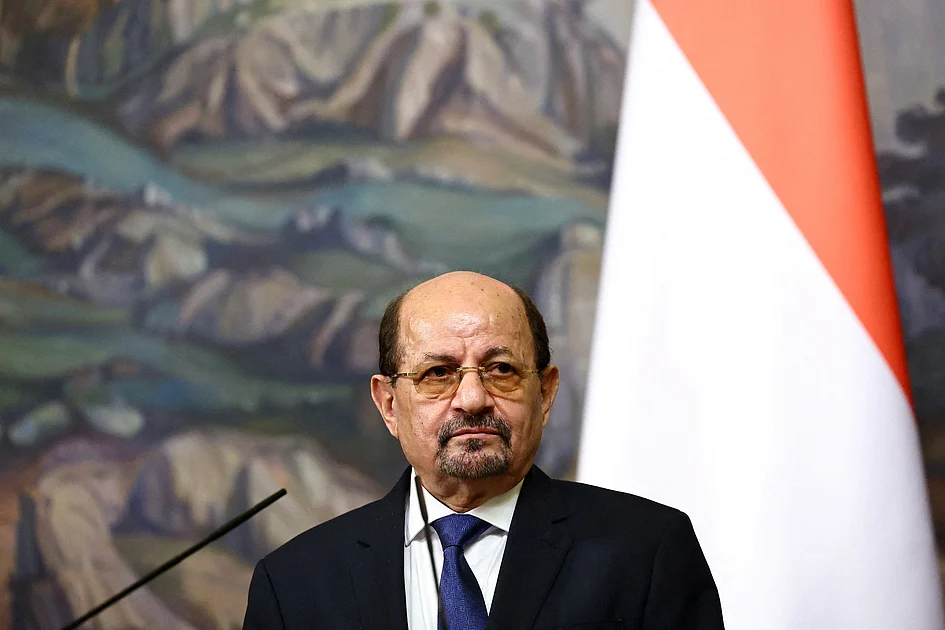
  • UAE-backed forces raise South Yemen flag as they seize control in east

    UAE-backed forces raise South Yemen flag as they seize control in east

    A significant geopolitical shift is underway in southeastern Yemen as forces aligned with the Southern Transitional Council (STC) have successfully captured extensive territories, including the strategically vital Hadhramaut province. The military operation, codenamed “The Promising Future,” has resulted in the hoisting of the historic South Yemen flag across administrative buildings and critical infrastructure points throughout the region.

    The STC’s military wing, known as the Hadrami Elite Forces, executed a rapid offensive that secured control of Seiyun, one of Hadhramaut’s largest urban centers, along with its presidential palace and international airport. This development effectively places approximately one-third of Yemen’s territory under STC authority, including regions containing 80 percent of the nation’s modest oil reserves.

    The campaign encountered initial resistance from the Saudi-backed Hadramout Tribal Alliance, which briefly seized PetroMasila, Yemen’s largest oil company facility, in a preemptive maneuver. However, STC forces subsequently reclaimed the installation, compelling tribal forces to withdraw following Saudi-mediated negotiations that prevented direct confrontation between Saudi and UAE-backed factions.

    Symbolically significant actions have accompanied the territorial gains, with armed personnel replacing Yemeni national flags with the South Yemen banner at strategic locations including the Shahn border crossing with Oman. This flag, featuring a light blue chevron and red star representing the former Yemeni Socialist Party, hadn’t flown officially since Yemeni unification in 1990.

    Analysts indicate these developments substantially enhance the STC’s position within Yemen’s complex political landscape. The council now commands crucial supply routes and logistical corridors connecting to anti-Houthi forces in Marib, potentially altering the balance of power within the Presidential Leadership Council that has governed southern Yemen amid internal divisions.

    The STC’s foreign ministry justified its military campaign by characterizing Hadhramaut as a “haven for terrorism” and breeding ground for extremist organizations including ISIS and al-Qaeda. Open-source intelligence reports indicate the separatists employed UAE-supplied military equipment during their offensive, including Chinese-manufactured artillery systems and Emirati-produced armored vehicles, underscoring the complex international dimensions of Yemen’s multilayered conflict.

  • Our countries are tied with a solid, time-proven friendship, says Russian Defence Minister

    Our countries are tied with a solid, time-proven friendship, says Russian Defence Minister

    Russian Defense Minister Andrei Belousov affirmed the enduring strategic alliance between Russia and India during the 22nd India-Russia Inter-Governmental Commission on Military and Military Technical Cooperation meeting in New Delhi. Speaking alongside Indian Defense Minister Rajnath Singh on December 4, 2025, Belousov characterized the bilateral relationship as “a solid, time-proven friendship grounded in mutual respect.”

    The minister emphasized the partnership’s critical role in maintaining regional equilibrium, stating that cooperation with India serves as “a key factor for balance in the South Asian region and global stability in general.” This declaration comes amid evolving geopolitical dynamics that have prompted India to diversify its defense partnerships while maintaining historical ties with Russia.

    Belousov specifically acknowledged India’s participation in May 2025 commemorations marking the 80th anniversary of Victory in the Great Patriotic War (1941-1945), expressing personal gratitude for the Indian delegation’s presence in Moscow. The Russian minister also extended congratulations to the Indian Navy on National Navy Day, highlighting comprehensive military cooperation spanning army, air force, and naval development.

    Indian Defense Minister Rajnath Singh reciprocated the positive sentiments, confirming that Russia remains India’s strategic partner in technology and defense despite recent global developments. Singh noted that the ongoing relationship operates within the framework of the “special privileged partnership” between the nations, which he believes will be further strengthened through upcoming engagements between Prime Minister Narendra Modi and President Vladimir Putin.

    The intergovernmental commission, which both ministers praised for producing “effective and mutually beneficial decisions in the military domain,” serves as the primary institutional mechanism governing defense cooperation. Both parties committed to building upon existing achievements while identifying new collaborative objectives for future bilateral defense initiatives.

  • What legal experts say about second US strike on Venezuela boat

    What legal experts say about second US strike on Venezuela boat

    International law experts have concluded that a controversial second missile strike by the U.S. military on a suspected Venezuelan narcotics vessel likely constituted an illegal extrajudicial killing under international law. The operation, which occurred on September 2nd and resulted in eleven total fatalities, has drawn sharp criticism from legal scholars across the political spectrum.

    According to verified reports, the initial strike killed nine individuals aboard the vessel, leaving two survivors clinging to the burning wreckage. The subsequent follow-up attack—ordered by US Navy Admiral Frank Bradley under authorization from War Secretary Pete Hegseth—eliminated both survivors. The Washington Post first revealed that Hegseth had directed military personnel to ‘kill everybody’ on board during the operation, though officials later denied this characterization.

    The Trump administration has defended the strikes as legally justified under the ‘law of armed conflict,’ with White House Press Secretary Karoline Leavitt stating the operation was necessary to ‘ensure the boat was destroyed and the threat of narco terrorists to the United States was completely eliminated.’

    Legal experts from multiple institutions have challenged this interpretation. Jessica Peake, Director of the International and Comparative Law Program at UCLA, stated unequivocally that ‘the US is not in an international armed conflict with Venezuela, nor is the US in a non-international armed conflict with any criminal gang or drug cartels.’ She emphasized that even if the first strike were legal, the second attack violated customary international law prohibitions against ‘denial of quarter.’

    Professor Luke Moffett of Queen’s University Belfast added that while the strikes don’t qualify as war crimes due to the absence of recognized armed conflict, ordering ‘no quarter’ would constitute a war crime if such conflict existed.

    Notably, conservative legal scholar John Yoo—a former Bush administration official—also condemned the operation, citing explicit prohibitions in the US Law of War Manual against conducting hostilities ‘on the basis that there shall be no survivors.’

    The administration’s characterization of Caribbean anti-drug operations as a ‘non-international armed conflict’ represents a significant legal framing that experts challenge. Historical precedents from the Obama administration’s drone program, which similarly employed double-tap strikes, were also deemed illegal by legal analysts despite previous presidential assertions of their legality and effectiveness.

  • German president compares UK ties post-Brexit to Oasis

    German president compares UK ties post-Brexit to Oasis

    In a landmark address to Parliament during the first German head of state visit in 27 years, President Frank-Walter Steinmeier masterfully blended diplomatic messaging with British pop culture references. Drawing parallels to Oasis’s recent reconciliation after years of fraternal discord, Steinmeier declared that Germany and the UK have moved beyond the initial “disappointment and uncertainty” of Brexit.

    Addressing MPs and peers in the Royal Gallery on Thursday, the German leader quoted the Manchester band’s anthem ‘Don’t Look Back in Anger’ to underscore his message of forward-looking cooperation. “I think that is typically British, keep calm and carry on – look ahead pragmatically, move on,” Steinmeier remarked, praising Britain’s pragmatic approach to post-EU relations.

    The presidential visit, which began with a ceremonial welcome by King Charles III and Queen Camilla at Windsor Castle, has been carefully choreographed to highlight evolving bilateral ties. Historical symbolism permeated the itinerary, from viewing Queen Victoria’s sleigh (designed by her German-born husband Prince Albert) to laying a wreath at Westminster Abbey’s Grave of the Unknown Warrior.

    Cultural diplomacy featured prominently as Steinmeier and his wife Elke Budenbender toured the V&A Museum’s archives, including David Bowie’s costumes—a nod to the musician’s deep connections with Berlin. The President’s schedule also included meetings with German footballers in the Premier League and plans to receive an honorary degree from Oxford University.

    The visit culminates symbolically on Friday with a trip to Coventry Cathedral, bombed by the Luftwaffe during World War II, mirroring King Charles’s earlier wreath-laying in Hamburg for civilian bombing victims. This reciprocal acknowledgment of historical wounds underscores both nations’ commitment to what Steinmeier called enduring affection: “Our relations may have changed, but, my dear Britons, our love remains.”

  • Investigation ordered after Iraq appears to designate Hezbollah and Houthis terrorists

    Investigation ordered after Iraq appears to designate Hezbollah and Houthis terrorists

    A significant diplomatic incident erupted in Iraq on Thursday following the apparent, and subsequently retracted, designation of Lebanon’s Hezbollah and Yemen’s Houthi movement (Ansar Allah) as terrorist organizations by the government in Baghdad. The controversial move, published in the official state gazette by the Justice Ministry on November 17, initially placed the Iran-aligned groups on a sanctions list alongside ISIS and al-Qaeda, sparking immediate confusion and fierce internal criticism.

    The decision was met with astonishment, given the Iraqi government’s close ties to numerous powerful political parties and armed factions that are themselves allies of both Hezbollah and the Houthis. Initial interpretations suggested Prime Minister Mohammed Shia al-Sudani might be succumbing to intense pressure from the United States to curb Iranian influence across the region.

    However, attention only swelled on Thursday when news outlets reported the listing. Later that day, the Iraqi government issued an official clarification through its state news agency, declaring the inclusion a grave administrative error. The published document was described as an ‘unrevised version’ that should never have been released. Acting on instructions, the Central Bank’s acting deputy governor formally requested the Committee for the Freezing of Terrorists’ Funds to delete the clause containing the groups’ names. Prime Minister al-Sudani announced an investigation to identify and hold accountable those responsible for the blunder.

    Analysts were quick to highlight the profound risks such a designation would entail. Iraqi expert Ali al-Mikdam warned that labeling these groups as terrorist organizations ‘carries significant risks and could provoke serious internal tensions with allied factions,’ particularly within the Iran-backed Popular Mobilisation Forces. The controversy raised pressing questions among observers: was this a genuine mistake, or a hasty government backtrack to quell fury from its core allies?

    The incident underscores the immense pressure Baghdad faces as it attempts a delicate balancing act. The government strives to maintain positive relations with Washington while honoring its deep commercial, military, and political ties with neighboring Iran. As Israel’s war in Gaza inflames regional tensions, al-Sudani has been praised for largely keeping Iraq out of a wider conflict. Nevertheless, increasing pressure from U.S. officials, including new envoy Mark Savaya, demands a crackdown on Iran-linked armed groups.

    The timing is particularly sensitive as al-Sudani seeks a new term following recent elections, a process requiring the crucial consent of Iran-aligned parties. The erroneous listing, therefore, represents a severe political misstep that threatens to undermine his leadership aspirations and reveals the government’s vulnerability to influential internal actors tied to regional powers. As Mikdam concluded, the episode was an ‘inadequately considered’ step that generated political confusion, leaving the administration exposed.