分类: politics

  • Pentagon readies 1,500 troops for potential Minnesota deployment, US officials say

    Pentagon readies 1,500 troops for potential Minnesota deployment, US officials say

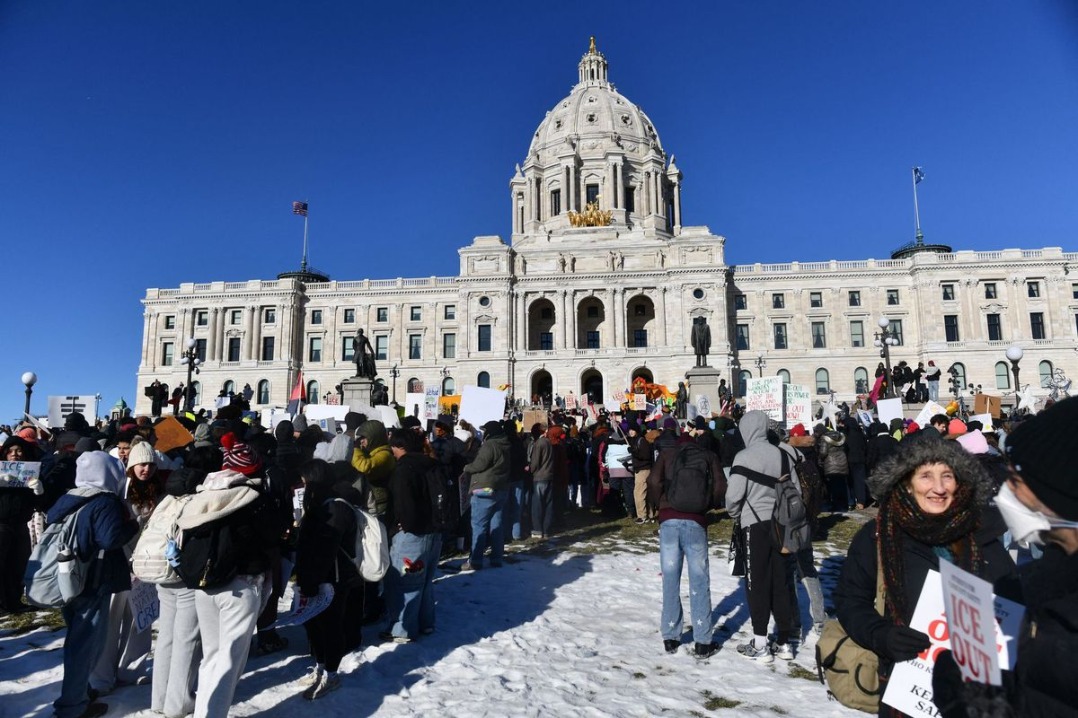
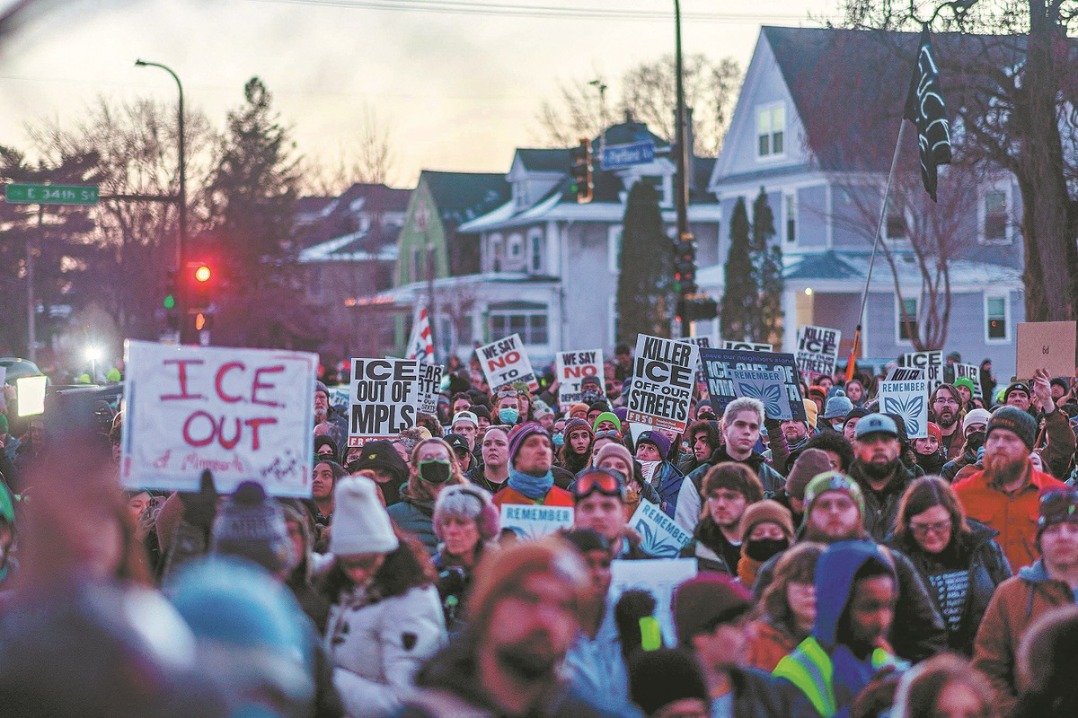
    The Pentagon has initiated preparations to deploy approximately 1,500 active-duty soldiers from Alaska to Minnesota, according to U.S. officials who spoke to Reuters on Sunday. This military mobilization comes in response to escalating tensions in the midwestern state, where widespread protests have erupted against intensified Immigration and Customs Enforcement (ICE) operations.

    The development follows President Donald Trump’s Thursday threat to invoke the Insurrection Act, which would authorize military deployment if state officials fail to contain demonstrations targeting immigration authorities. While the Army has placed units on prepare-to-deploy status, officials emphasized that actual deployment remains uncertain and contingent on potential violence escalation.

    Tensions in Minneapolis intensified dramatically after the January 7th fatal shooting of Renee Good, a 37-year-old mother of three, by ICE officer Jonathan Ross during a vehicle encounter. The administration has already dispatched 3,000 immigration and Border Patrol officers to the region, despite local officials characterizing the protests as largely peaceful.

    Minneapolis Mayor Jacob Frey expressed strong opposition to military intervention, stating on NBC’s ‘Meet the Press’ that ‘We don’t need more federal agents to keep people safe. We are safe.’ He warned that military deployment would further exacerbate tensions in the city.

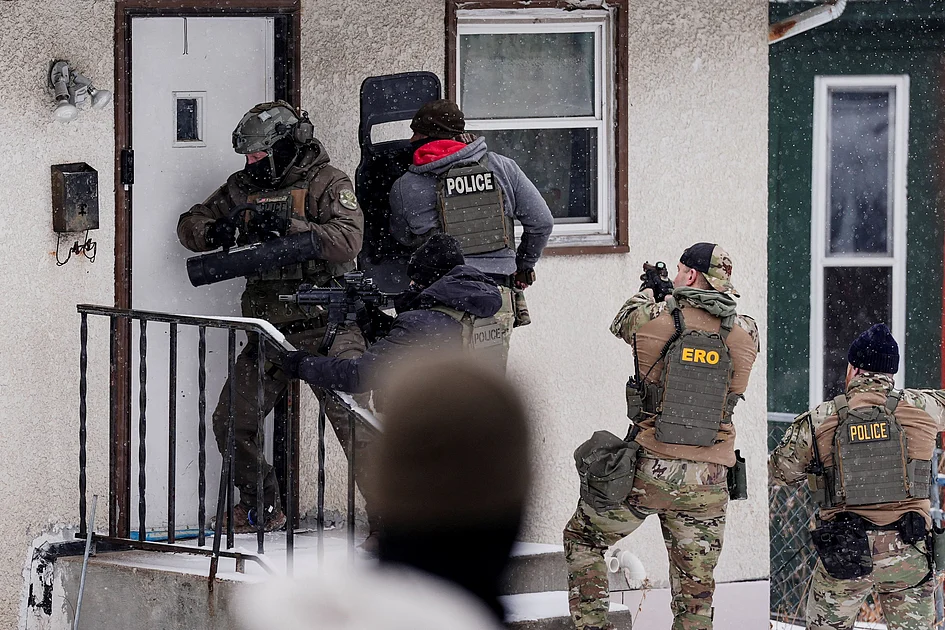
    The situation has grown increasingly complex with multiple incidents drawing national attention. The Justice Department has launched an investigation into a protest at a St. Paul church where demonstrators disrupted a service to protest a pastor’s alleged ICE affiliations. Meanwhile, ICE agents conducted a Sunday operation in St. Paul, removing a Hmong community member from his home while facing vocal opposition from neighbors.

    President Trump has justified the increased federal presence by referencing a social welfare funds scandal in Minnesota, specifically targeting the state’s Somali immigrant community. However, enforcement actions have expanded to include other immigrant groups, including the recent arrest of three workers from a family-run Mexican restaurant in Willmar.

    The potential deployment involves soldiers from two infantry battalions under the 11th Airborne Division, specializing in cold-weather operations. Pentagon spokesperson Sean Parnell stated that the Department of War ‘is always prepared to execute the orders of the commander-in-chief if called upon,’ using the administration’s preferred terminology for the Defense Department.

    This development represents the latest chapter in the administration’s pattern of federal interventions, primarily targeting cities governed by Democratic officials. While the president maintains these actions are necessary to combat crime and protect federal property, local leaders accuse the administration of federal overreach and exaggerating isolated violence incidents to justify military deployment.
  • Trump to charge $1bn for permanent ‘peace board’ membership: reports

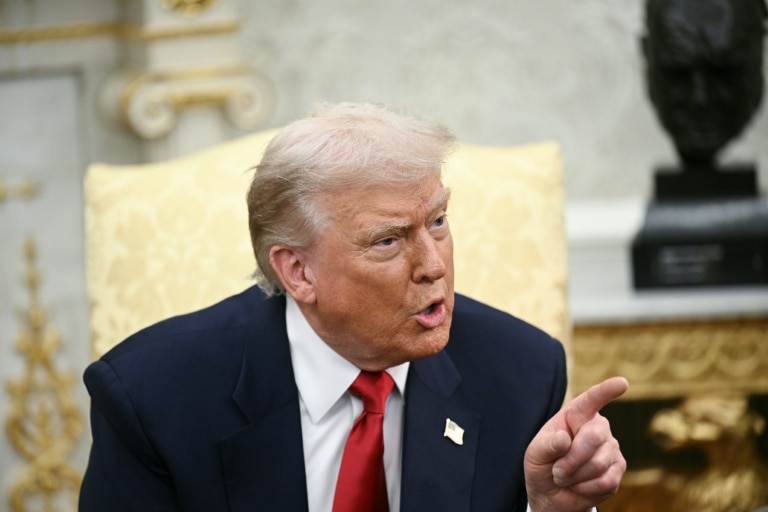
    Trump to charge $1bn for permanent ‘peace board’ membership: reports

    Former President Donald Trump’s administration has reportedly approached multiple nations with a unprecedented proposition: contribute $1 billion to secure permanent membership on a newly conceived ‘Board of Peace.’ According to documents obtained by Bloomberg and other media outlets, the initiative would be chaired by Trump himself and include invited heads of state such as Russia’s Vladimir Putin, Hungary’s Viktor Orban, and Canada’s Mark Carney.

    The board’s draft charter reveals a tiered membership structure where standard three-year terms could be extended indefinitely for nations contributing over $1 billion within the first year of operation. While initially presented as overseeing Gaza’s reconstruction, the charter broadly defines the board’s mission as promoting ‘stability, restore dependable and lawful governance, and secure enduring peace in areas affected or threatened by conflict’ without specific geographical limitations.

    The proposal notably criticizes existing international institutions, suggesting the board would possess ‘the courage to depart from approaches and institutions that have too often failed’—a clear reference to Trump’s longstanding skepticism toward organizations like the United Nations. The White House framework outlines a main board, a Palestinian technocratic committee, and an executive board with advisory functions.

    Membership would be exclusively by invitation from the chairman (Trump), who would retain authority to remove member states subject to a two-thirds veto. The emerging board composition has already drawn criticism from Israel regarding proposed Gaza committee representatives from Turkey and Qatar.

  • Trump says world ‘not secure’ until US has Greenland

    Trump says world ‘not secure’ until US has Greenland

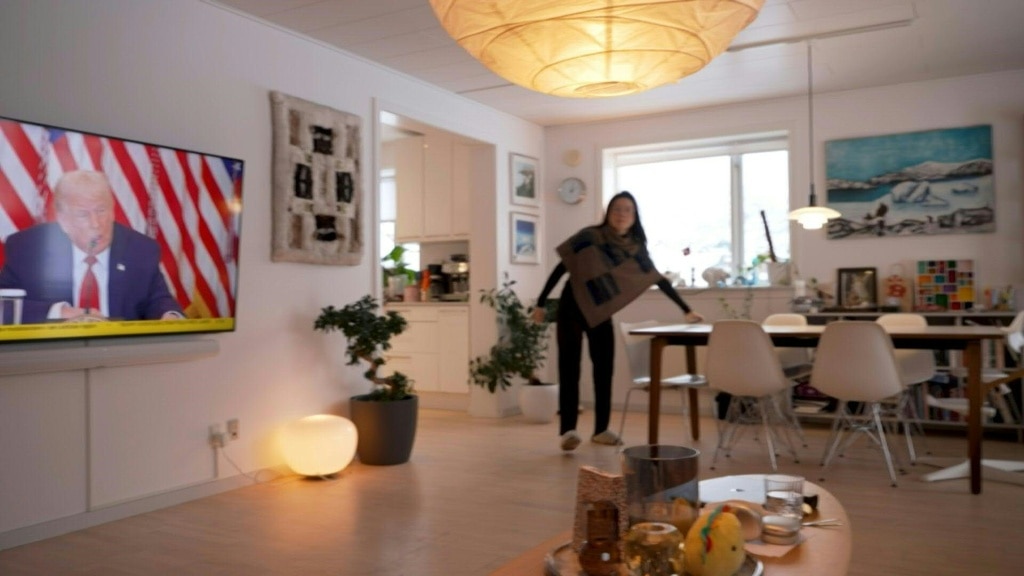
    A severe diplomatic crisis is unfolding across the Atlantic as former U.S. President Donald Trump intensifies his campaign to acquire Greenland, declaring that global security is contingent on Washington exercising ‘Complete and Total Control’ over the vast Arctic territory. The escalating situation has prompted European leaders to close ranks and prepare economic countermeasures against what they condemn as outright ‘blackmail.’

    In a message to Norwegian Prime Minister Jonas Gahr Store, published Monday and authenticated by his office, Trump asserted that the world ‘is not secure unless we have Complete and Total Control of Greenland.’ He further revealed a shift in his geopolitical philosophy, stating, ‘I no longer feel an obligation to think purely of Peace,’ a sentiment he attributed to his failure to win the Nobel Peace Prize. While peace would remain ‘predominant,’ he declared his priority is now ‘what is good and proper for the United States of America.’

    The confrontation deepened over the weekend when Trump threatened to impose a 10 percent tariff—with potential for escalation—on all goods from Denmark, Norway, Sweden, France, Germany, the UK, the Netherlands, and Finland starting February 1, targeting nations opposing his Arctic designs. German Vice Chancellor Lars Klingbeil and French Finance Minister Roland Lescure jointly denounced the tactic as ‘unacceptable blackmail between allies of 250 years.’

    In response, the European Union has called an emergency summit for Thursday to coordinate its strategy. Although the bloc’s stated priority is to ‘engage not escalate,’ it is preparing a three-pronged retaliatory strategy: pausing the current U.S.-EU tariff deal, reinstating suspended EU tariffs on American imports, and deploying legal instruments against ‘economic blackmail.’ The announcement rattled European stock markets as British Prime Minister Keir Starmer warned a ‘trade war is in no one’s interest.’

    On the ground, Greenland’s population of 57,000 is asserting its sovereignty. Prime Minister Jens-Frederik Nielsen stated on Facebook, ‘We will not be pressured… Greenland is a democratic society with the right to make its own decisions.’ In a symbolic rebuke, the island’s dogsled federation disinvited the new U.S. Arctic envoy, Jeff Landry, from its annual race.

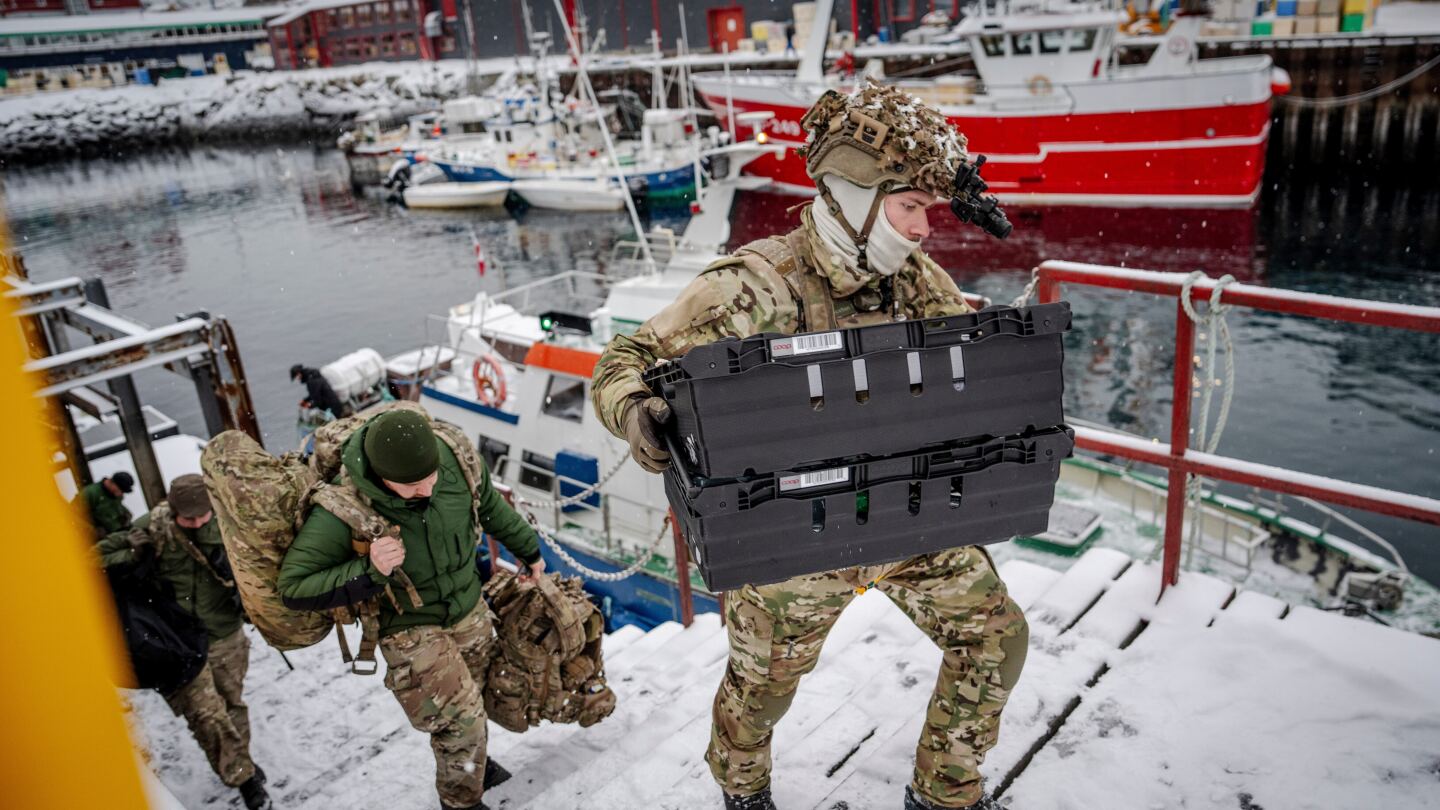
    Meanwhile, the strategic justification for the acquisition continues. Trump claims the mineral-rich island is vital for ‘national security,’ arguing that Denmark cannot protect it from rivals like Russia or China—a claim Denmark disputes, noting ongoing efforts with NATO allies to ‘increase military presence and training activity in the Arctic and the North Atlantic.’

  • Trump links Greenland dispute to not getting Nobel Peace Prize

    Trump links Greenland dispute to not getting Nobel Peace Prize

    In a remarkable diplomatic escalation, former US President Donald Trump has issued threats against NATO allies while explicitly linking his foreign policy decisions to his failure to receive the Nobel Peace Prize. The controversy emerged through a text message exchange with Norwegian Prime Minister Jonas Gahr Støre, where Trump declared he no longer feels “obliged to think purely of Peace” after Norway’s Nobel committee awarded the prize to Venezuelan opposition leader María Corina Machado instead of him.

    The message, obtained and verified by major US media outlets, reveals Trump’s renewed insistence on US control of Greenland, which he claims is essential for global security. “The World is not secure unless we have Complete and Total Control of Greenland,” Trump stated in his communication with the Norwegian leader.

    Prime Minister Støre confirmed receiving the message on Sunday in response to a joint communication he had sent with Finland’s president expressing concern over proposed tariff increases related to the Greenland dispute. Støre emphasized that the Norwegian government plays no role in Nobel Prize selections, which are determined by an independent committee.

    Trump has threatened to impose escalating tariffs—starting at 10% in February and potentially rising to 25% by June—on eight NATO allies unless they support his proposed takeover of the strategically significant Arctic territory. The sparsely populated but resource-rich island has become a focal point in Trump’s national security strategy due to its value for early warning systems and regional monitoring.

    The former president has not ruled out military action against a NATO member to acquire Greenland and has questioned Denmark’s historical claim to the territory, suggesting American explorers had equal historical presence. Trump framed his demands within the context of NATO reciprocity, stating, “I have done more for NATO than any other person since its founding, and now, NATO should do something for the United States.”

    International response has been swift, with UK Prime Minister Sir Keir Starmer asserting that Greenland’s status “belongs to the people of Greenland and the Kingdom of Denmark alone” and condemning the use of tariffs against allies as “wrong.” Danish and Greenlandic officials are scheduled to meet with NATO Secretary General Mark Rutte to address the escalating situation.

    The Nobel Foundation has clarified that Peace Prize medals cannot be “passed on or further distributed,” despite Machado’s recent meeting with Trump at the White House where she reportedly gave her medal to him. This development follows Trump’s non-endorsement of Machado after US forces removed Venezuelan president Nicolás Maduro, instead backing Maduro’s vice-president as interim leader.

  • White House expands power, raises concern

    White House expands power, raises concern

    Political analysts are raising alarms about the substantial expansion of presidential authority in the United States, warning that the current administration’s unprecedented use of executive actions threatens the foundational system of checks and balances. With 228 executive orders issued within the first year—a significant increase over previous administrations—concerns are mounting about the long-term implications for American democracy.

    The American Presidency Project database reveals that many of these orders invoke national emergency declarations or national security justifications to implement sweeping policies across immigration, trade, and foreign affairs. Notably, the administration declared a national emergency at the southern border on its first day in office, followed by April’s invocation of the International Emergency Economic Powers Act to impose comprehensive ‘reciprocal tariffs’ on all trading partners without congressional consultation.

    According to Zhang Guoqing, associate researcher at the Chinese Academy of Social Sciences’ Institute of American Studies, ‘This explosion of orders and routine use of national emergency declarations have significantly expanded executive power beyond traditional boundaries.’

    Experts identify multiple factors enabling this power shift, including legislative gridlock and heightened partisan polarization. Diao Daming, professor of US studies at Renmin University of China, notes that ‘executive orders allow the administration to bypass legislative constraints on controversial policies’ when congressional cooperation proves unattainable.

    Zhang Tengjun, deputy director of the China Institute of International Studies’ Department for American Studies, observes that the current administration operates within legal gray areas where constitutional boundaries remain ambiguous. ‘The power to levy taxes is constitutionally granted to Congress, not the president. Yet massive tariffs were imposed without congressional consultation through emergency powers,’ he noted.

    The legislative branch’s weakened response reflects both partisan alignment and institutional limitations. With Republicans controlling both chambers, few party members challenge presidential actions from their own party. Meanwhile, the judicial system shows increasing signs of politicization, with appellate judges appointed by Democratic presidents ruling against administration policies 73% of the time compared to 32% for Republican-appointed judges.

    Diao warns that ‘the independence of the US judicial system has clearly been significantly eroded,’ as evidenced by divergent rulings on identical legal questions along partisan lines. This erosion of traditional safeguards creates long-term risks for institutional stability and social cohesion.

    Experts conclude that while executive power expansion offers short-term policy implementation efficiency, it potentially inflicts profound damage on constitutional separation of powers. The precedent established could enable future presidents—regardless of party—to govern through executive action rather than legislative process, potentially triggering systemic crisis in America’s constitutional order.

  • US-led Gaza board triggers backlash

    US-led Gaza board triggers backlash

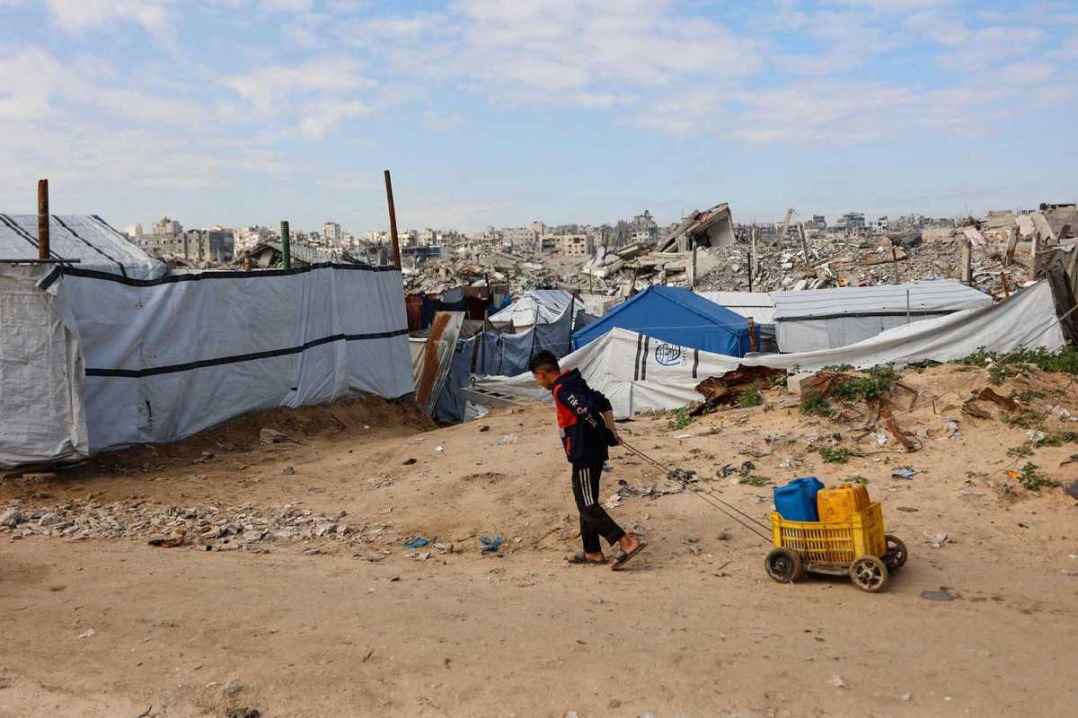
    The Trump administration’s newly announced “Board of Peace” for Gaza has ignited significant criticism from multiple stakeholders, raising questions about its legitimacy and operational transparency. President Donald Trump unveiled the initiative as part of his comprehensive 20-point plan to resolve the ongoing conflict in the Palestinian territory, establishing both a broader Board of Peace that he will personally chair and a specialized “Gaza Executive Board” to implement specific stabilization measures.

    The White House revealed that the executive board includes prominent figures such as US Secretary of State Marco Rubio, Special Envoy Steve Witkoff, former British Prime Minister Tony Blair, Trump’s son-in-law Jared Kushner, World Bank Group President Ajay Banga, Apollo Global Management CEO Marc Rowan, and Deputy National Security Adviser Robert Gabriel. According to official statements, these members will oversee critical portfolios including governance capacity-building, regional relations, reconstruction efforts, investment attraction, and large-scale funding mobilization.

    However, the announcement encountered immediate resistance. Israeli Prime Minister Benjamin Netanyahu’s office stated that the board membership “was not coordinated with Israel and runs contrary to its policy,” with instructions given for the Foreign Affairs Minister to contact the US Secretary of State regarding the matter.

    Palestinian factions expressed stronger objections. The Islamic Jihad Movement condemned the initiative as serving “Israeli interests” and aligning with “occupation specifications,” viewing it as indicative of negative intentions regarding ceasefire implementation. Meanwhile, the parallel formation of a 15-member Palestinian technocrat committee led by Ali Shaath, hailed by the US as a “vital step forward,” failed to alleviate concerns.

    Critics highlighted fundamental flaws in the approach. Ashish Prashar, former aide to Tony Blair, criticized board members for having a “strong track record of endorsing and arming Israel’s project of genocide” and emphasized that “the future of Palestine should only be decided by Palestinians.” Academic expert Abdul Wahed Jalal Nori of the International Islamic University Malaysia questioned the mechanism’s credibility, legitimacy, and intent, stating that any peace initiative “while excluding Palestinians from meaningful consultation is fundamentally flawed.”

    The emerging consensus among critics suggests the board is perceived less as a genuine peace mechanism and more as an administrative tool designed to manage the consequences of destruction rather than address root causes of the conflict, with particular concern about the documented history of military intervention and political cover for Israel’s actions among proposed board members.

  • Starmer says Trump’s Greenland tariff threat ‘completely wrong’ and a trade war in no one’s interest

    Starmer says Trump’s Greenland tariff threat ‘completely wrong’ and a trade war in no one’s interest

    LONDON — British Prime Minister Keir Starmer has publicly denounced former U.S. President Donald Trump’s proposed tariff measures against European allies as “completely wrong,” warning that such protectionist policies would harm global economic interests. The diplomatic friction emerged following Trump’s announcement of impending 10% import duties on goods from eight European nations, including the United Kingdom, scheduled to take effect in February.

    The controversial tariff threat represents retaliation against European countries’ symbolic military deployment to Greenland, a semi-autonomous territory under Denmark’s administration. Trump characterized these troop movements as essential for maintaining the U.S. “Golden Dome” missile defense infrastructure while expressing concerns about potential territorial ambitions from Russia and China regarding the strategic Arctic island.

    During a London press conference, Starmer emphasized Britain’s unwavering support for Greenland and Denmark’s sovereign rights to determine the island’s future. While acknowledging the critical importance of maintaining strong U.K.-U.S. relations, the British leader clarified that “being pragmatic does not mean being passive and partnership does not mean abandoning principles.”

    The Prime Minister indicated that Britain currently has no plans for retaliatory trade measures, stating his administration’s priority is preventing further escalation through continued dialogue with European partners, NATO allies, and American officials. Starmer characterized the transatlantic relationship as vital but noted that strength comes from acknowledging differences rather than ignoring them.

  • Ukrainian team arrives in Miami for peace talks

    Ukrainian team arrives in Miami for peace talks

    A high-level Ukrainian delegation has arrived in Miami, Florida, for crucial peace negotiations with representatives of the Trump administration, aiming to find a resolution to the four-year conflict with Russia. The talks, scheduled for this weekend, will center on security assurances and postwar reconstruction efforts.

    Leading the Ukrainian contingent is Kyrylo Budanov, recently appointed Chief of Staff to President Volodymyr Zelensky. The delegation includes Security Chief Rustem Umerov and lead negotiator David Arakhamia. They are set to meet with key US figures including Jared Kushner, special envoy Steve Witkoff, and US Army Secretary Daniel Driscoll.

    The negotiations occur against a backdrop of severe humanitarian challenges in Ukraine. President Zelensky reported that approximately 400,000 residents in Kharkiv, Ukraine’s second-largest city, are experiencing significant electricity shortages following nighttime Russian strikes. Additionally, 56,000 families in the Bucha region near Kyiv remain without power, prompting authorities to extend school closures until next month due to health concerns.

    Ukraine’s Energy Ministry has declared a state of emergency across the nation’s energy sector, implementing power restrictions in most regions due to sustained infrastructure attacks. Zelensky has ordered the accelerated import of electricity and additional power equipment to address the crisis.

    The peace process faces significant challenges as President Trump has expressed frustration with both conflict parties and has advocated for peace terms that Kyiv considers tantamount to surrender. Meanwhile, Russia’s Defense Ministry reported continued territorial advances, claiming control of five populated settlements in the past week, including two additional locations in the Donetsk and Zaporizhzhia regions captured on Saturday.

    Zelensky emphasized the importance of providing accurate information about Ukraine’s current situation, noting that the ongoing attacks have undermined public faith in diplomatic solutions. The Miami talks represent a critical effort to bridge differences between Washington and Kyiv on security guarantees, with Zelensky hoping to finalize relevant documents with the US next week.

  • Aggressive actions of ICE deepen cracks in US society

    Aggressive actions of ICE deepen cracks in US society

    The United States faces deepening societal fractures as Immigration and Customs Enforcement (ICE) operations intensify under the current administration. Recent military-style tactics employed by masked agents in unmarked vehicles have ignited nationwide debate about enforcement methods and their implications for civil liberties.

    The controversy reached a critical point on January 7 when ICE agents in Minneapolis, Minnesota, shot and killed 37-year-old Renee Good during a neighborhood monitoring operation. Video evidence captured the moment when Officer Jonathan Ross discharged multiple rounds into Good’s vehicle as it began moving away, resulting in her death.

    Official responses revealed starkly contrasting narratives. Homeland Security Secretary Kristi Noem characterized Good’s actions as ‘domestic terrorism,’ alleging she used her vehicle as a weapon against officers. President Donald Trump subsequently described Good as ‘a professional agitator’ who acted ‘violently, willfully, and viciously’ against law enforcement.

    These characterizations faced immediate challenge from local and federal officials. Minneapolis Mayor Jacob Frey condemned the shooting as federal overreach, while Democratic Representative Steve Cohen declared the incident ‘clearly unjustified homicide’ during Senate proceedings. The incident has transcended typical political discourse, with prominent podcaster Joe Rogan—formerly a Trump supporter—expressing horror at the footage.

    Recent polling indicates significant national division: approximately 53% of Americans view the shooting as unjustified, while 35% support the officers’ actions. This polarization follows stark partisan lines, with 77% of Republicans justifying the shooting compared to 92% of Democrats condemning it.

    The Minneapolis operation has expanded dramatically since its inception over two weeks ago. What began as a 2,000-agent enforcement initiative targeting alleged fraud within Somali communities has grown to nearly 3,000 federal personnel—outnumbering local law enforcement in the region and raising questions about jurisdictional boundaries and proportional response.

  • Japan PM Takaichi set to call snap election

    Japan PM Takaichi set to call snap election

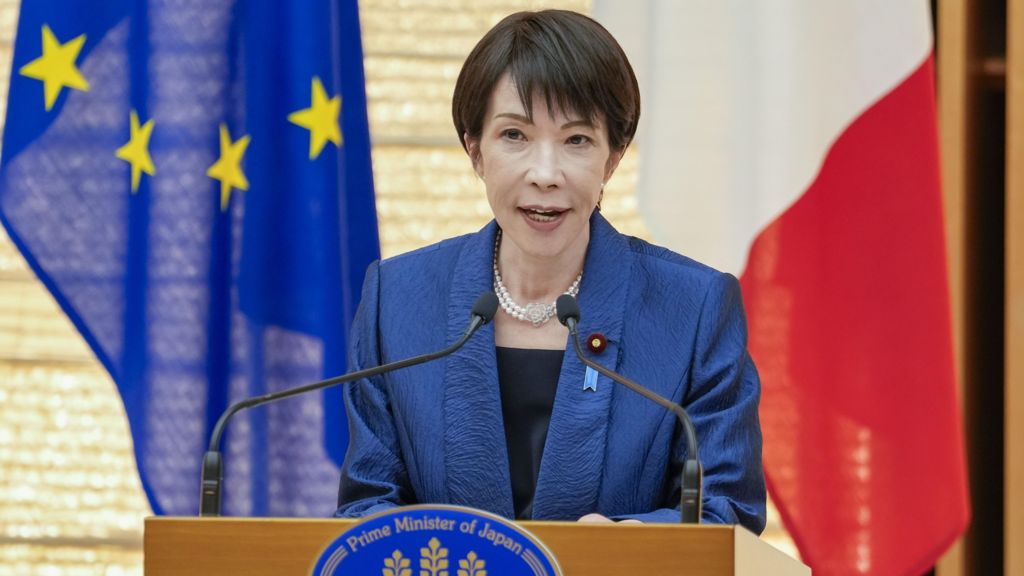
    Japanese Prime Minister Sanae Takaichi is poised to announce a snap parliamentary election less than three months after assuming office, according to government officials speaking anonymously to local media outlets. The anticipated announcement, scheduled for Monday afternoon, would set in motion the process for electing all 465 members of Japan’s powerful House of Representatives.

    Takaichi, Japan’s first female prime minister and a protégée of the late Shinzo Abe, has maintained remarkably high approval ratings between 60-80% since her October inauguration. Her conservative Liberal Democratic Party (LDP) currently holds 199 seats in the lower house, with its coalition partner Japan Innovation Party providing just enough additional seats to maintain a slim majority.

    The prime minister, often compared to Margaret Thatcher for her staunch conservative stance, has pursued an assertive foreign policy agenda that has significantly strained relations with China. Her November remarks suggesting Japan could deploy self-defense forces in response to potential Chinese aggression toward Taiwan triggered a diplomatic crisis, sending bilateral ties to their lowest point in over a decade.

    Concurrently, Takaichi has strengthened Japan’s alliance with the United States, culminating in a rare earths agreement and a joint declaration heralding a new ‘golden age’ in US-Japan relations during President Donald Trump’s October visit. Domestically, she has championed substantial government-led spending initiatives reminiscent of Abe’s economic stimulus policies, while securing a record ¥9 trillion defense budget amid growing regional security concerns.

    Despite her personal popularity, Takaichi’s electoral gamble carries significant risks. The LDP has experienced considerable instability, with Takaichi representing Japan’s fourth prime minister in five years. Her immediate predecessor, Shigeru Ishiba, suffered one of the LDP’s worst electoral performances after calling a snap election that cost the party its parliamentary majority.

    Adding to the challenge, Japan’s opposition forces have recently consolidated with the formation of the Centrist Reform Alliance, a merger between the Constitutional Democratic Party of Japan and Komeito, the LDP’s former coalition partner. This new political entity poses a substantial threat to the ruling coalition’s majority in the upcoming election.