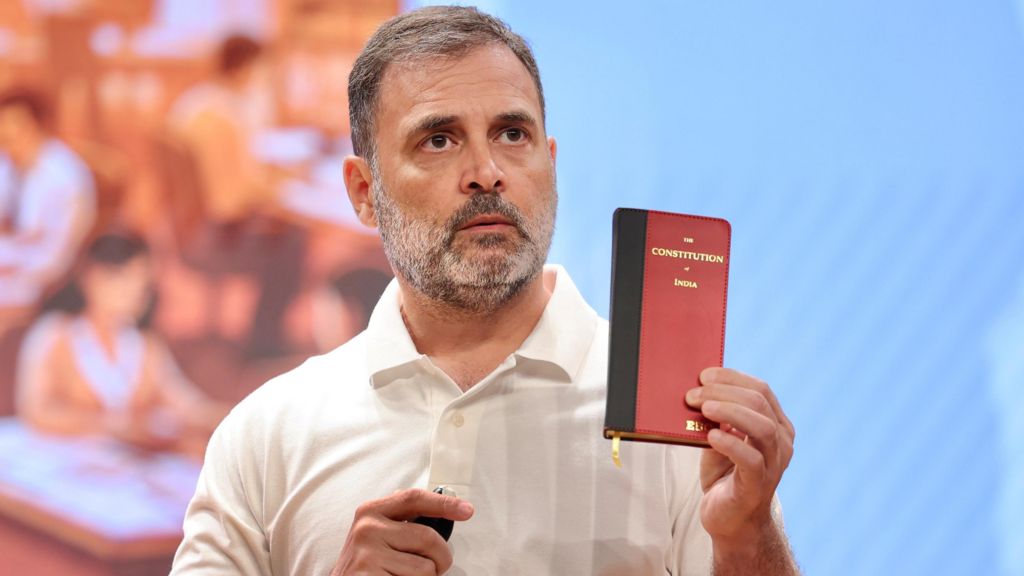
Indian opposition leader Rahul Gandhi has intensified his criticism of India’s Election Commission (ECI), accusing its chief, Gyanesh Kumar, of shielding those who are ‘murdering democracy.’ Speaking at a press conference in Delhi on Thursday, Gandhi alleged that voter rolls had been manipulated to favor the ruling Bharatiya Janata Party (BJP) in key state elections. He claimed to possess ‘100% proof’ of electoral rigging and criticized the ECI for ignoring repeated complaints from his Congress party. The ECI dismissed the allegations as ‘incorrect and baseless,’ while the BJP also rejected the claims. This marks the latest in a series of accusations Gandhi has leveled against the ECI since August, when he first alleged widespread voter manipulation during last year’s parliamentary elections. Gandhi cited specific instances, including the deletion of over 6,000 voter names in Karnataka’s Aland constituency, predominantly affecting minority and disadvantaged groups known to support Congress. He also highlighted the addition of 6,850 allegedly fake names in Maharashtra’s Rajura constituency. Despite the ECI’s rebuttal, Gandhi’s claims have garnered support from opposition parties and some former election commissioners, who argue that the ECI must address concerns about the credibility of India’s electoral process.
分类: politics
-
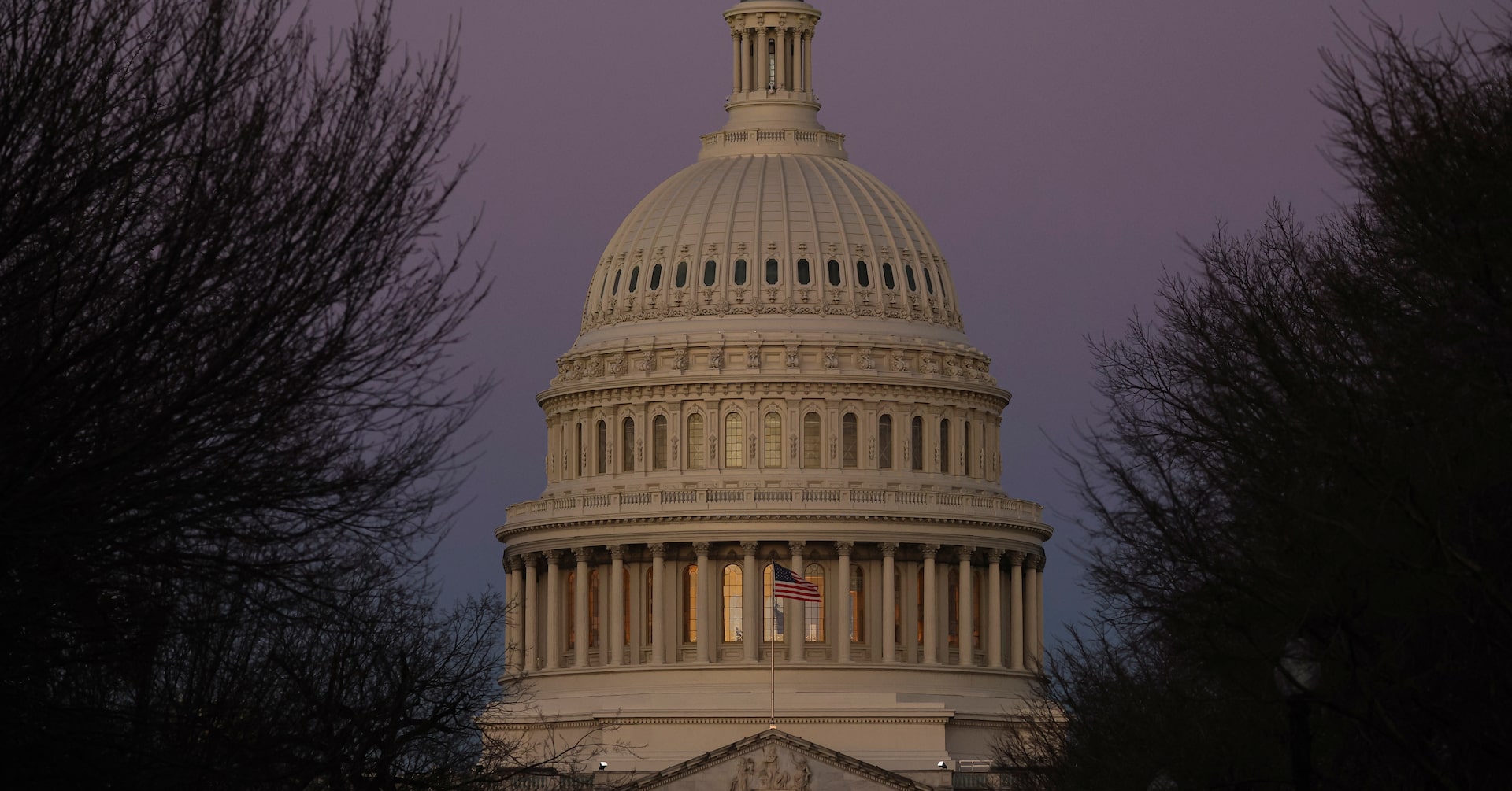
US House advances stopgap bill to avert government shutdown
The U.S. House of Representatives, under Republican control, has taken a critical step toward averting a partial federal government shutdown by approving a procedural measure to debate a stopgap funding bill. The vote, which passed 216-210 on Wednesday, sets the stage for a final decision later this week. The proposed continuing resolution (CR) aims to fund federal agencies through November 21, providing Congress additional time to negotiate comprehensive appropriations for fiscal year 2026, which begins on October 1. The CR also allocates $88 million to enhance security for members of Congress, the Supreme Court, and the executive branch, a response to the recent assassination of conservative activist Charlie Kirk. House Republicans aim to pass the CR by Friday and send it to the Senate, where bipartisan support will be essential for approval. The White House has endorsed the resolution, while Democrats have criticized it as partisan. In response, Democrats introduced an alternative bill to extend government funding through October 31, which includes provisions to restore Medicaid funding and extend healthcare tax credits under the Affordable Care Act. However, the Democratic proposal is unlikely to pass. Senate Democratic leader Chuck Schumer emphasized the need for bipartisan collaboration, stating, ‘We have two weeks. They should sit down and talk to us, and we maybe can get a good proposal.’ The annual funding debate addresses approximately one-quarter of the federal government’s $7 trillion budget, excluding mandatory programs like Social Security and Medicare. The outcome of this legislative battle will have significant implications for government operations and public services.
-
Republican lawmaker raises concerns about TikTok divestiture deal
The Republican chair of the House Select Committee on the Chinese Communist Party, Representative John Moolenaar, has expressed significant concerns regarding a proposed U.S.-China framework deal that would transfer TikTok’s U.S. assets to American ownership. Moolenaar highlighted that the deal might still allow Beijing to exert influence over the app’s users through ByteDance’s algorithm and application. This development comes amidst ongoing debates about national security and data privacy concerns associated with the popular social media platform.
-
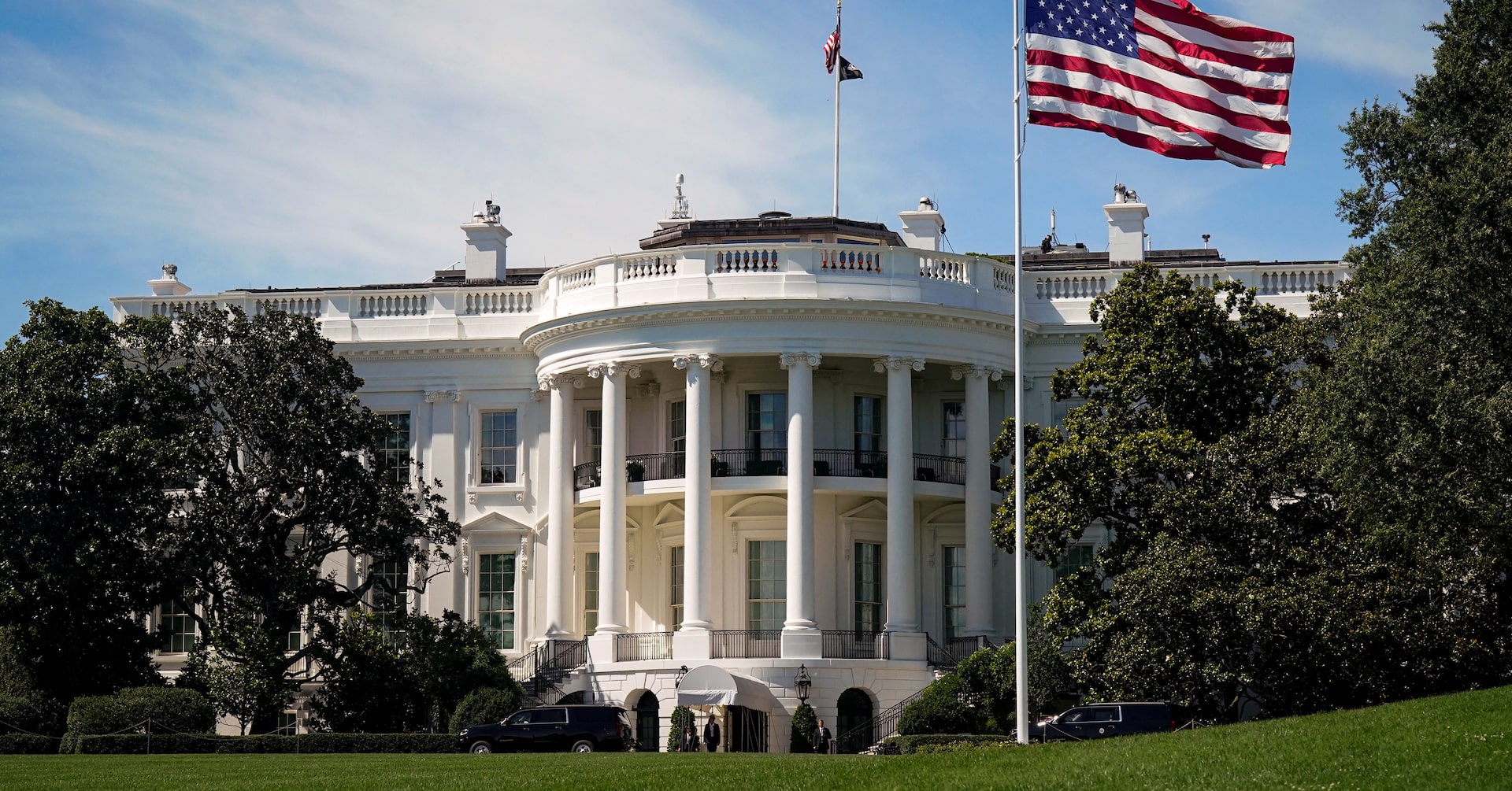
White House readies executive order on political violence as liberal groups sound warning
The White House is reportedly drafting an executive order aimed at addressing political violence and hate speech, according to a Trump administration official. This move comes in the wake of heightened scrutiny of left-leaning organizations following the assassination of conservative activist Charlie Kirk, a prominent Trump ally. The administration has accused liberal groups of exacerbating societal divisions and inciting violence, while critics argue that the focus on left-wing organizations overlooks the administration’s own controversial actions, including the pardoning of individuals involved in the January 6, 2021, Capitol attack. President Trump has suggested using federal racketeering laws to prosecute groups he claims fund left-wing violence and has even floated the idea of designating some as terrorist organizations. Over 120 nonprofits, including the Ford Foundation and Open Society Foundations, have publicly opposed these efforts, asserting that their charitable work is being mischaracterized. The executive order, which could be unveiled soon, is being finalized by Trump’s top advisers, including White House Deputy Chief of Staff Stephen Miller. This development marks the latest escalation in the Trump administration’s broader campaign to challenge institutions it perceives as adversarial, including withholding federal funds from universities like Harvard and Columbia and investigating Democratic fundraising platforms like ActBlue.
-
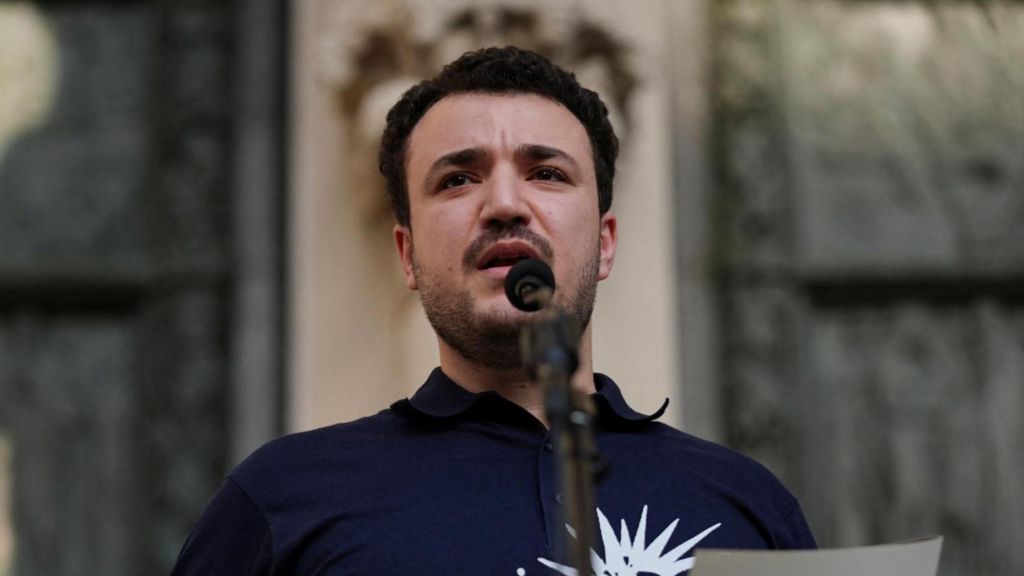
US judge orders deportation of Palestinian activist Mahmoud Khalil
A US immigration judge has mandated the deportation of Mahmoud Khalil, a pro-Palestinian activist, to either Algeria or Syria, citing alleged omissions in his green card application. Judge Jamee Comans of Louisiana asserted that Khalil intentionally misrepresented facts to bypass immigration procedures. Khalil, a permanent US resident of Palestinian descent, gained prominence during the 2024 Gaza war protests at Columbia University, where he was a student. His legal team has announced plans to appeal the decision, emphasizing that existing federal court orders prevent his deportation or detention. Khalil was previously detained by Immigration and Customs Enforcement (ICE) in March as part of the Trump administration’s crackdown on universities accused of failing to address antisemitism. After three months in a Louisiana immigration facility, a federal judge ruled his release, citing no flight risk or community threat. During his detention, Khalil’s wife, a US citizen, gave birth to their son. The US government has also accused Khalil of omitting details about his past affiliations, including his work with UNRWA and the British Embassy in Beirut. Khalil has condemned the deportation order as a retaliatory measure for his activism, stating, ‘They resorted to fabricating baseless allegations to silence me.’ In June, his lawyers filed a $20 million damages claim for false imprisonment and malicious prosecution. Trump has labeled pro-Palestinian activists, including Khalil, as Hamas supporters, advocating for their deportation. Khalil played a significant role in Columbia University’s 2024 protests, mediating between activists and university officials. While accused of leading the Columbia University Apartheid Divest (CUAD) group, Khalil denies the claim, stating he merely served as a spokesperson and mediator.
-
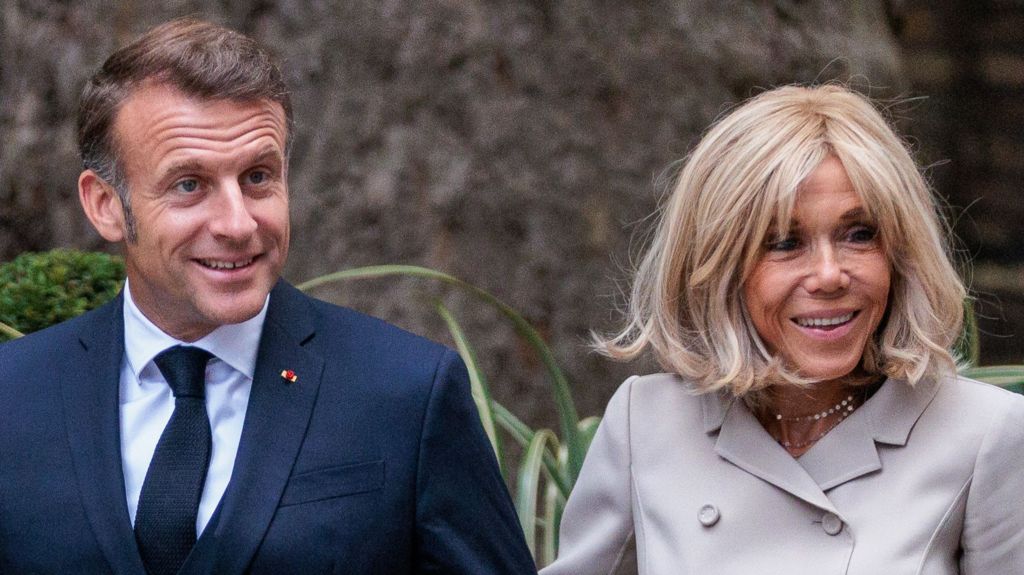
Macrons to offer ‘scientific evidence’ to US court to prove Brigitte is a woman, lawyer says
French President Emmanuel Macron and his wife, Brigitte Macron, are preparing to present photographic and scientific evidence in a US court to refute claims that Brigitte was born male. The couple has filed a defamation lawsuit against right-wing influencer Candace Owens, who has repeatedly asserted this controversial belief. Owens’ legal team has responded with a motion to dismiss the case. The Macrons’ lawyer, Tom Clare, emphasized that the allegations have been deeply distressing for Brigitte and have served as a significant distraction for the president. Clare stated that the couple is determined to disprove the claims through expert testimony and scientific evidence, though the specifics of the evidence remain undisclosed at this stage. Clare also mentioned that the Macrons possess photographs of Brigitte during her pregnancies and raising her children, which will be presented in court. Owens, a former commentator for the conservative outlet Daily Wire, has millions of social media followers and has staked her professional reputation on the allegation. The claim originated in fringe online spaces, notably through a 2021 YouTube video by French bloggers Amandine Roy and Natacha Rey. Although the Macrons initially won a defamation case in France against Roy and Rey in 2024, the ruling was overturned on appeal in 2025 on freedom of expression grounds. The Macrons are appealing this decision. In July 2024, they filed a lawsuit against Owens in the US, accusing her of knowingly spreading false information. Owens’ lawyers argue that the case should not be heard in Delaware, claiming it would cause her significant financial and operational hardship. Emmanuel Macron has defended the legal action, stating it is about defending his honor and countering harmful, ideologically driven misinformation.
-
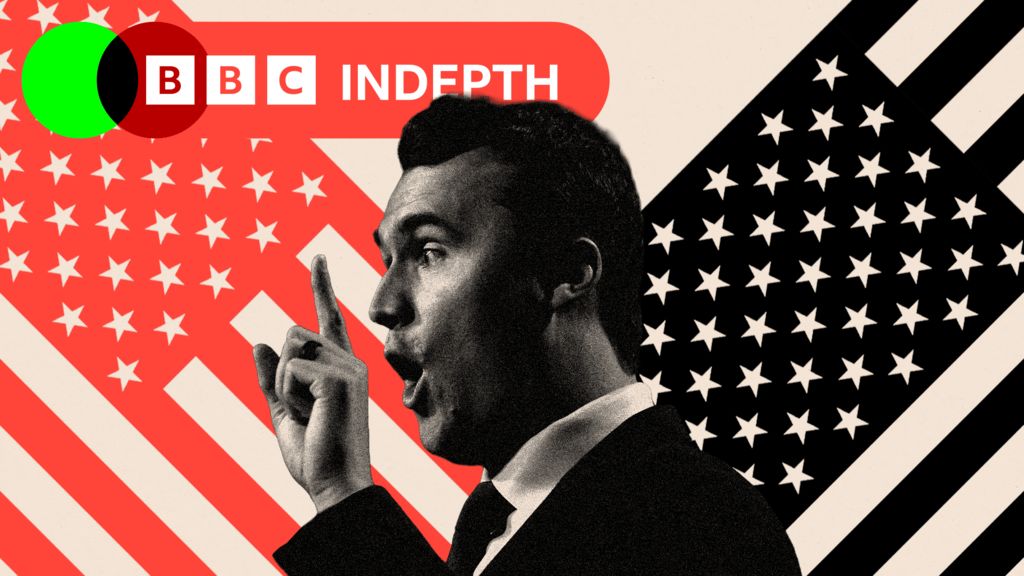
Katty Kay: Why America is at a dangerous crossroads following the Charlie Kirk shooting
The United States finds itself in a tumultuous period, grappling with a surge in political violence and deepening societal divisions. The recent assassination of Charlie Kirk, a prominent conservative figure, has only exacerbated the nation’s fractured state. Utah Governor Spencer Cox has called for calm, urging Americans to ‘log off, turn off, touch grass, hug a family member, go out and do good in the community.’ However, his plea for unity seems unlikely to be heeded, as the country’s political camps have already retreated to opposing narratives. The incentives driving American political life reward those who escalate tensions rather than those who seek to bridge divides. This dynamic is further fueled by social media, which amplifies extreme voices and stokes outrage. Governor Cox has pointedly criticized social media platforms, attributing them to the rise in political violence. ‘I believe that social media has played a direct role in every single assassination and assassination attempt that we have seen over the last five, six years,’ he stated. The situation is reminiscent of past eras of political violence, such as the 1960s and 1970s, but the current climate is uniquely shaped by the pervasive influence of digital platforms. Despite the grim outlook, some remain hopeful. Democratic Senator Raphael Warnock of Georgia, one of the country’s most senior black officials, condemned political violence but also highlighted the progress America has made on issues like race. ‘The story of any family is always more complicated than the stories we tell ourselves at the family reunion,’ he remarked. Yet, the path to reconciliation remains unclear. As historian Ken Burns noted, ‘History doesn’t repeat itself, but it often rhymes.’ This moment of tension feels like it rhymes with so many other periods of discord in American history, but it isn’t quite repeating them. The United States’ internal divisions are not just a domestic issue; they are a national security concern. Former Defence Secretary Bob Gates once identified the three greatest threats to America’s national security as a rising China, a declining Russia, and the country’s own internal divisions. As America’s adversaries exploit these divisions online, the nation’s ability to heal and unite remains in question.
-
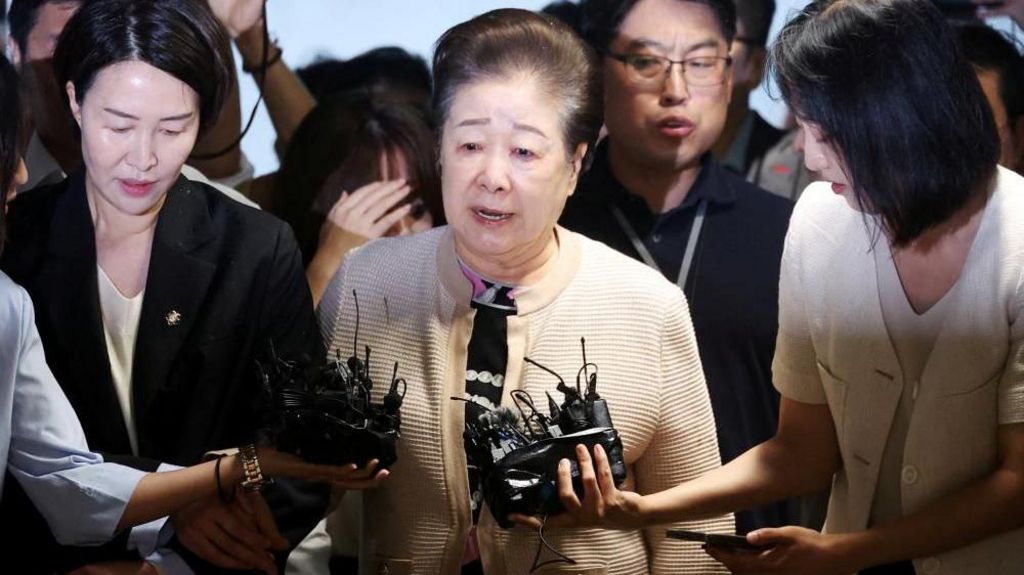
Controversial church leader denies bribing ex-South Korea first lady
Han Hak-ja, the 82-year-old leader of the controversial Unification Church, has vehemently denied allegations that her organization bribed South Korea’s former first lady, Kim Keon Hee, with luxury gifts in exchange for business favors. The accusations surfaced as Han emerged from a grueling nine-hour interrogation at the prosecutor’s office, where she was questioned about the alleged bribery. Supported by assistants due to her frail health, Han dismissed the claims, stating, ‘No… Why would I do that?’
The former first lady, wife of ousted President Yoon Suk Yeol, is accused of accepting two Chanel bags and a diamond necklace, collectively valued at 80 million won ($57,900), from the church. Kim, who was indicted last month on charges including bribery and stock manipulation, denies all allegations. Her arrest marks a historic moment in South Korea, as it is the first time both a former president and first lady have been jailed.
Yoon, detained in January, faces trial over a failed martial law bid last year that plunged the nation into chaos. Meanwhile, Han shifted blame to a former church official, claiming he acted independently in offering the gifts. The official has since been arrested. Han’s appearance followed her refusal to comply with three prior summonses, citing post-heart surgery pain. An ambulance was reportedly on standby during her interrogation.
In a related development, conservative lawmaker Kweon Seong-dong was arrested on Wednesday for allegedly receiving 100 million won in bribes from the church. Kweon, once a close ally of Yoon, denies the charges.
The Unification Church, formally known as The Family Federation for World Peace and Unification, was founded in the 1950s by Moon Sun-myung, who declared himself the messiah. The church is infamous for its mass weddings, often involving thousands of couples matched by the organization. Critics have labeled it as ‘cult-like,’ with accusations of coercing members, known as ‘Moonies,’ into donating substantial sums.
The church gained international attention following the assassination of Japan’s former Prime Minister Shinzo Abe. The alleged assassin blamed the group for his family’s financial ruin and held a grudge against Abe for allegedly promoting the church. The organization is banned in several countries, including Singapore and, more recently, Japan.
-
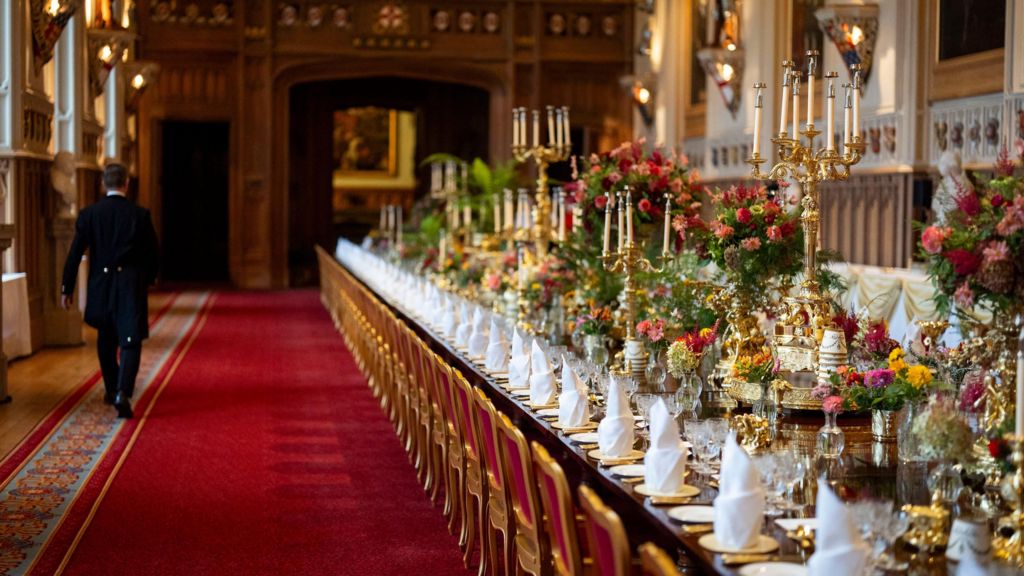
What was on the menu and who was on guest list at state banquet?
President Donald Trump’s state visit to Windsor Castle was a spectacle of grandeur, blending royal tradition with diplomatic nuance. The state banquet, held in the opulent St George’s Hall, was a meticulously orchestrated affair, designed to impress and honor the visiting leader. The setting, reminiscent of a medieval feast with a touch of cinematic flair, featured elaborately uniformed staff, immaculate table settings, and a menu crafted to perfection. Each course, from the Hampshire Watercress Panna Cotta to the Vanilla Ice Cream Bombe, was paired with a curated selection of fine wines, including a symbolic 1945 vintage port to commemorate Trump’s presidency. Despite the absence of Hollywood celebrities, the guest list was a who’s who of political and tech elites, including Apple CEO Tim Cook, press magnate Rupert Murdoch, and OpenAI’s Sam Altman. The seating arrangement sparked intrigue, with Trump placed between King Charles III and the Princess of Wales, while other notable figures like Prime Minister Sir Keir Starmer and US Secretary of State Marco Rubio mingled with royalty and business leaders. The event, a mix of tradition and modernity, underscored the enduring significance of royal diplomacy in global politics.
-
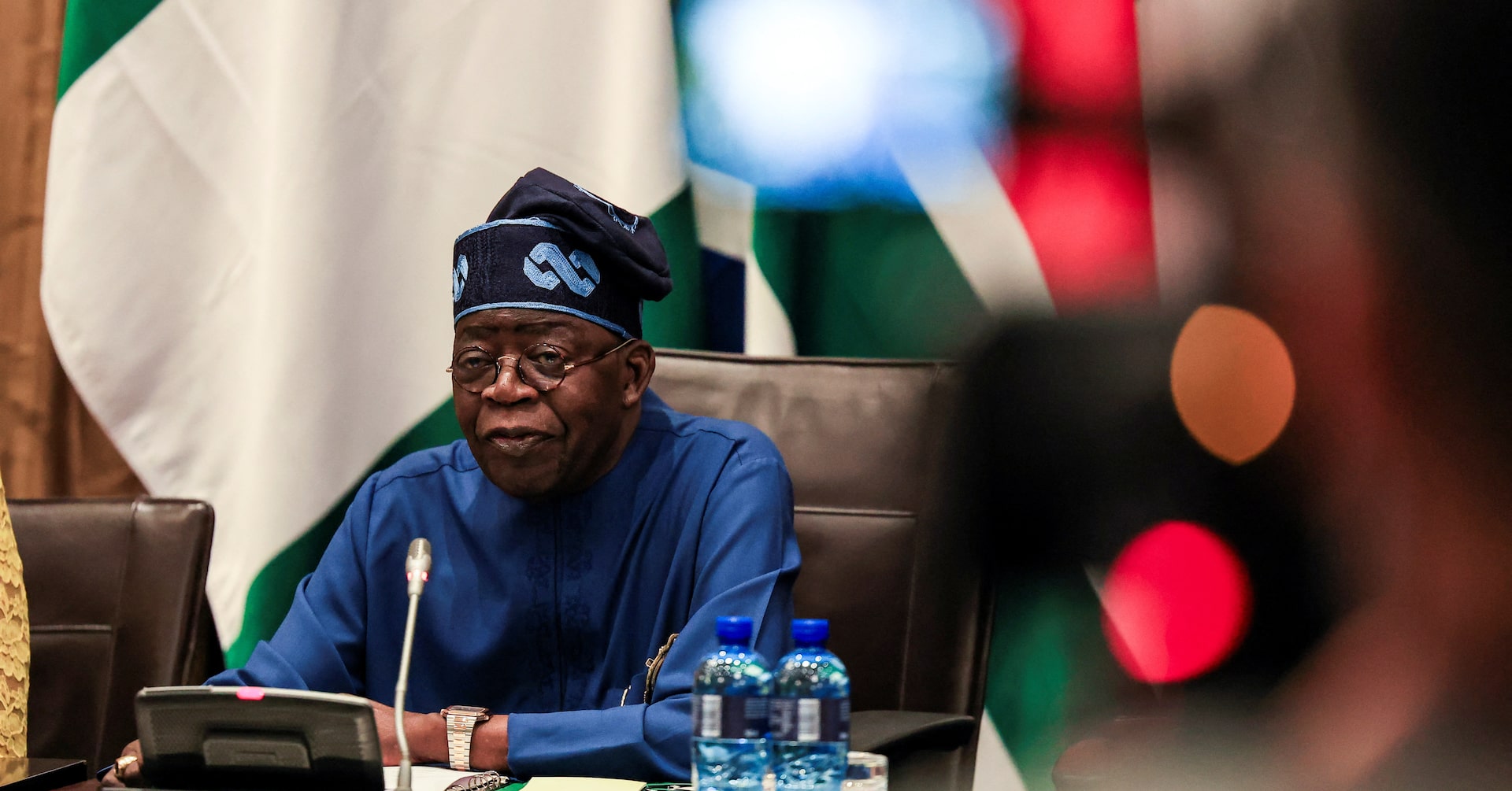
Nigeria’s Tinubu lifts emergency rule in oil-rich Rivers State
In a significant move to restore democratic governance, Nigerian President Bola Tinubu has officially ended the six-month emergency rule in Rivers State. The decision, announced on Wednesday, reinstates Governor Siminalayi Fubara and other state officials, marking the resolution of a constitutional crisis that had brought governance to a standstill. The emergency rule was initially imposed on March 18 following a political standoff between Governor Fubara and the state legislature, which had disrupted budget approvals and left the government in a state of paralysis. President Tinubu emphasized that the measure was crucial to prevent anarchy and restore order. Rivers State, a key hub in Nigeria’s oil-rich Niger Delta, plays a vital role in the country’s crude exports. The region has previously faced security challenges, including pipeline attacks by militants, which have impacted oil output and revenue. Tinubu cited intelligence reports indicating a newfound spirit of cooperation among political stakeholders, which facilitated the return to normal governance. Governor Fubara, his deputy, and the 31-member House of Assembly are set to resume their duties on September 18. The emergency declaration had sparked over 40 legal challenges across courts in Abuja, Port Harcourt, and Yenagoa. Tinubu defended the use of emergency powers as a constitutional mechanism to restore stability, while acknowledging that dissent remains an integral part of democratic processes.