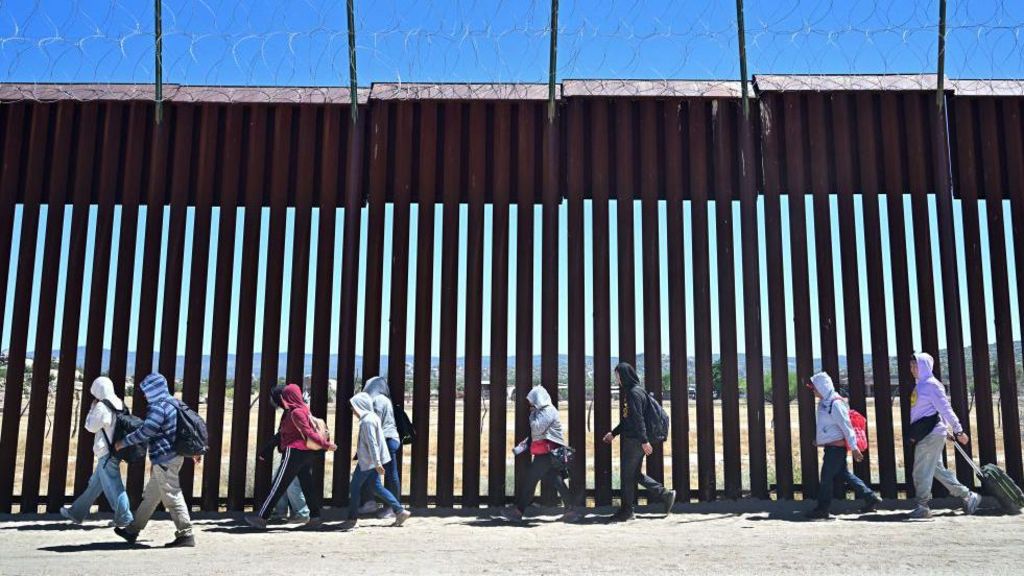
In a significant move under President Donald Trump’s stringent immigration policies, the United States has initiated the deportation of 120 Iranian nationals. Hossein Noushabadi, an official from Iran’s foreign ministry, confirmed the development in a statement to the Tasnim state news agency. He revealed that the individuals, many of whom entered the US illegally via Mexico, are set to return to Iran within the next one to two days, with their repatriation facilitated through Qatar. Notably, some of the deportees held valid US residency permits, and US authorities reportedly sought their consent for the process. Noushabadi emphasized the need for the US to respect the rights of Iranian migrants under international law. This deportation marks the first phase of a broader agreement between Iran and the US, which aims to repatriate approximately 400 Iranian nationals. The collaboration is particularly noteworthy given the absence of formal diplomatic ties between the two nations, with negotiations conducted through the US Interests Section at the Pakistani embassy in Tehran. The Trump administration has been actively pursuing deportation agreements with various countries, including recent deals with Panama and Costa Rica to accept hundreds of African and Asian migrants. President Trump has consistently vowed to curb immigration and deport individuals residing in the US without legal status, including those from countries with contentious human rights records. However, the deportation of Iranian nationals has sparked criticism from human rights organizations, which argue that migrants face potential harm upon return. Iran’s human rights record has also come under scrutiny, with UN experts highlighting a sharp increase in the use of the death penalty this year. While the Iranian government defends its practices as targeting only severe crimes, human rights groups dispute this claim, further complicating the ethical implications of the deportation program.
分类: politics
-
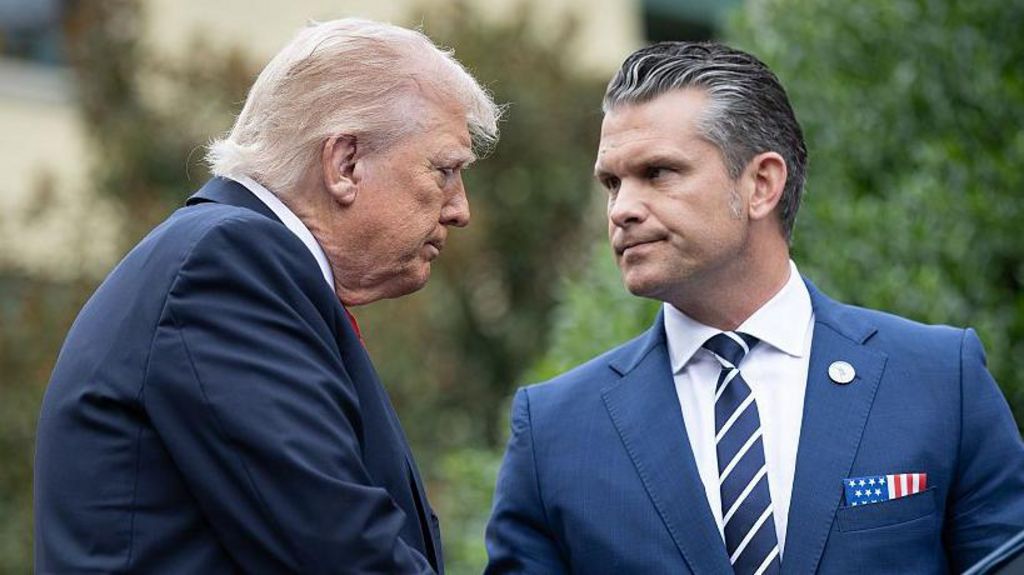
Trump and Hegseth to address top US generals in unusual military gathering
In an unprecedented gathering, U.S. President Donald Trump and Defense Secretary Pete Hegseth are set to address hundreds of top military officials at Marine Corps Base Quantico near Washington, D.C. The event, scheduled for Tuesday, has drawn significant attention due to its unusual scale and the sudden summoning of military leaders from across the globe. While no official reason has been disclosed, Vice-President JD Vance has dismissed the event as routine, despite widespread speculation. Security measures at the 55,000-acre base are exceptionally stringent, reflecting the high-profile nature of the summit. The stage for the address is adorned with a large American flag and banners emblazoned with the words ‘strength, service, America,’ alongside the flags of various armed services. In a statement on Sunday, Trump described the meeting as an opportunity to discuss the military’s achievements and foster a sense of unity among the troops. He emphasized the positive nature of the discussions, aiming to boost morale and reinforce the military’s readiness. However, some experts, including Mark Cancian of the Center for Strategic and International Studies, questioned the necessity of an in-person gathering, suggesting virtual alternatives could have been more efficient. Hegseth, known for advocating a ‘warrior ethos’ and rebranding the Department of Defense as the Department of War, likely views the event as a critical moment to strengthen his message. The summit is expected to draw over 800 attendees, including senior officers from Europe, South Korea, and the Middle East, many of whom have served in key conflicts such as Afghanistan and Iraq. The audience also includes senior enlisted officers, who play a pivotal role as advisers to commanding officers. This rare assembly underscores the administration’s focus on military strength and unity, even as it raises questions about its broader implications.
-
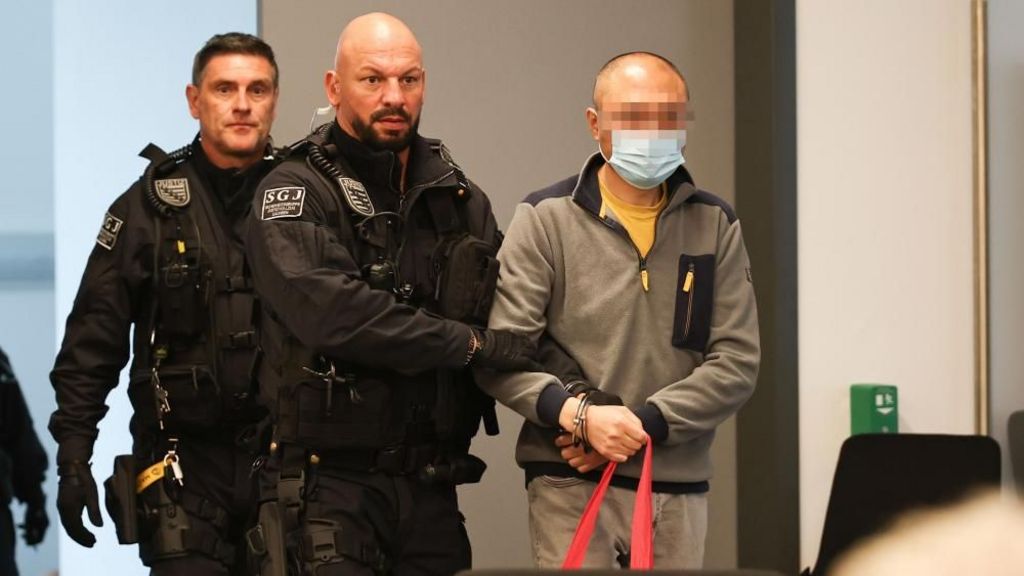
Former aide to far-right German politician jailed for spying for China
A former aide to a prominent member of Germany’s far-right Alternative for Germany (AfD) party has been sentenced to four years and nine months in prison for espionage activities on behalf of China. Jian Guo, who worked in Brussels for Maximilian Krah, a member of the European Parliament, was convicted by a court in Dresden for gathering and transmitting confidential information to Chinese authorities. Krah, now a member of the German parliament, claimed he only became aware of the allegations against Guo through media reports. Prosecutors alleged that Guo had been working for Chinese intelligence since 2002, raising concerns about China’s espionage activities within the European Union. Guo, a German national, was also accused of monitoring Chinese dissidents and opposition figures in Germany. Despite maintaining his innocence throughout the trial, the court deemed the case particularly severe. In a related case, a Chinese national working at Leipzig airport was given a suspended sentence for providing data on cargo, flights, and passengers. Krah stated that he had enhanced security measures in his office following Guo’s arrest.
-
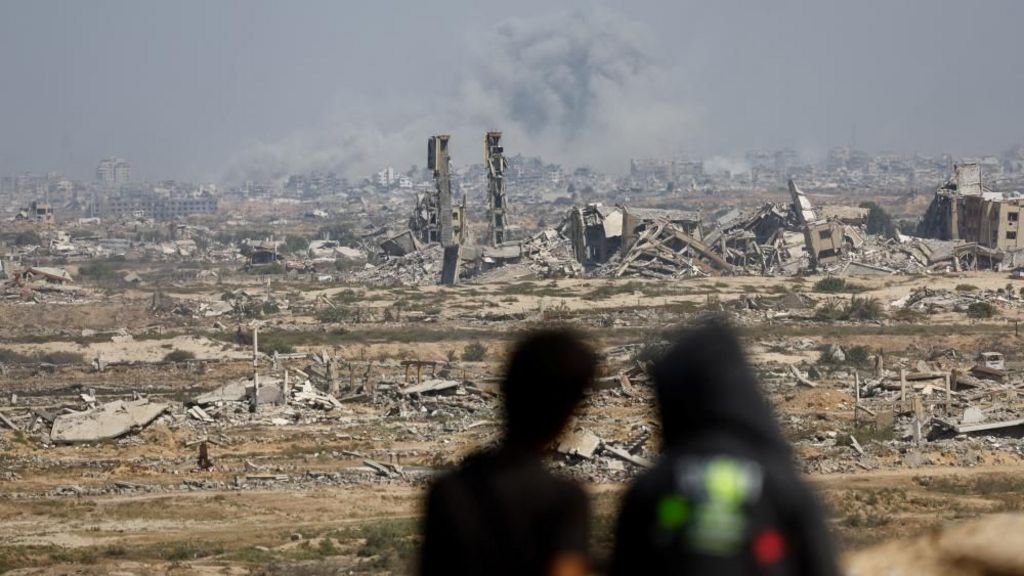
Trump’s Gaza plan is a significant step – but faces fundamental obstacles
In a high-profile announcement at the White House, U.S. President Donald Trump and Israeli Prime Minister Benjamin Netanyahu unveiled a 20-point peace plan aimed at ending the protracted war in Gaza. Trump hailed the proposal as a historic milestone, potentially ushering in “eternal peace in the Middle East.” However, the plan, while ambitious, remains a framework for further negotiations rather than a detailed roadmap to resolution. The proposal marks a significant shift in the Trump administration’s stance on Gaza’s post-war future and increases pressure on Netanyahu to accept a deal. Key elements include a ceasefire, limited Israeli withdrawal, the release of hostages and Palestinian prisoners, and the establishment of a technocratic administration in Gaza overseen by a U.S.-led “Board of Peace.” The plan also vaguely references Palestinian statehood, contingent on reforms within the Palestinian Authority. While Arab nations view the proposal as a breakthrough, Hamas remains skeptical, with one figure criticizing its failure to safeguard Palestinian interests. Netanyahu’s domestic opponents also question his commitment, citing his history of derailing deals for political gain. The plan’s success hinges on overcoming longstanding obstacles, including Hamas’s demands for Israeli withdrawal and Netanyahu’s coalition’s resistance to concessions. The proposal, crafted by Trump’s envoy Steve Witkoff and Jared Kushner, draws on previous diplomatic efforts, including the Saudi-French plan and Tony Blair’s involvement. Despite its lofty goals, the plan’s ambiguity leaves room for both sides to exploit negotiations, potentially stalling progress. As the world watches, the path to peace remains fraught with challenges, with the response from Hamas and Netanyahu’s government likely to determine the plan’s fate.
-
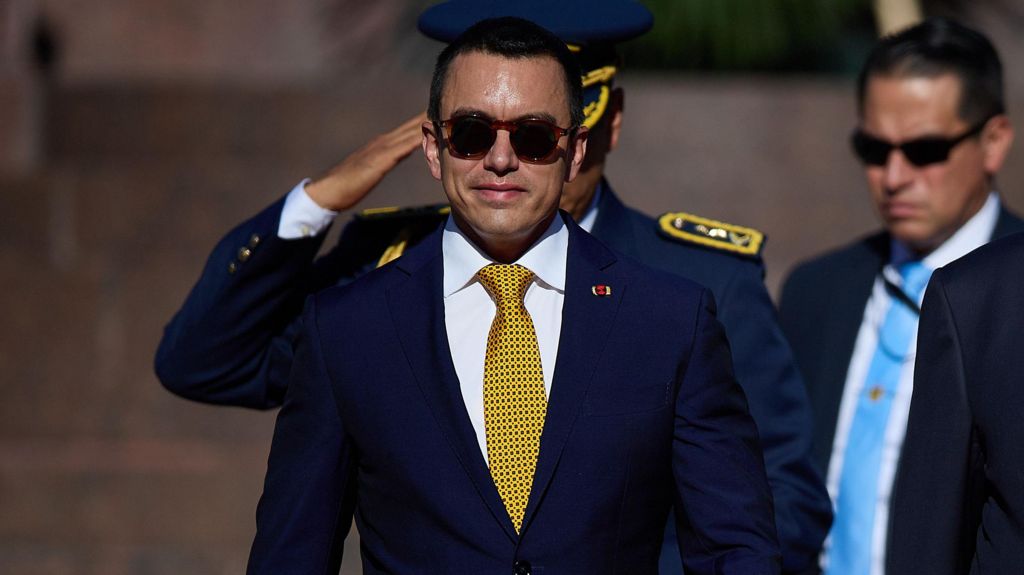
Ecuador president’s aid convoy attacked, officials say
A humanitarian convoy led by Ecuadorian President Daniel Noboa was violently ambushed on Sunday night, resulting in 17 soldiers being taken hostage, according to government spokeswoman Carolina Jaramillo. The convoy, which included UN and European diplomats, was attacked by approximately 350 individuals armed with Molotov cocktails in Cotacachi, Imbabura province. The incident occurred during a national strike organized by Conaie, Ecuador’s largest Indigenous rights organization, in protest against the government’s decision to cut fuel subsidies. President Noboa, who was accompanied by the Italian ambassador and Vatican diplomats, condemned the attack, stating, ‘They resist Ecuador’s progress and chose violence. Ecuador cannot go backward.’ He shared images of the damaged vehicles on social media, emphasizing the severity of the assault. The Ecuadorian armed forces accused the attackers of being ‘terrorist groups’ and reported that 12 soldiers were injured in the clash. Meanwhile, Conaie claimed that one of its members, Efrain Fuerez, was shot three times and died in hospital, describing his death as a ‘state crime’ ordered by President Noboa. The organization denied any involvement in terrorism, asserting that ‘the true terror is imposed by the government with its repression.’ The UN Human Rights Council’s regional representative, Jan Jarab, called for an ‘urgent dialogue’ and a thorough investigation into the violence. Ecuador’s prosecutors’ office has announced it will probe the alleged death of Fuerez. In response to the escalating unrest, a state of emergency has been declared in eight provinces, with a nighttime curfew imposed in five. President Noboa has accused the Venezuelan cartel Tren de Aragua of orchestrating the demonstrations and warned that protesters breaking the law could face 30-year prison sentences for terrorism. This incident marks a significant escalation in the ongoing protests, which have already led to violent clashes across the country.
-

Irish presidential hopefuls go head to head in first TV debate
The first televised debate of the Irish presidential election campaign saw candidates Catherine Connolly, Jim Gavin, and Heather Humphreys engage in heated discussions on pressing national and international issues. Held on Virgin Media One’s ‘The Tonight Show,’ the debate covered topics ranging from the use of the Irish tricolour by anti-immigration groups to the conflict in Gaza and the vision for a united Ireland.
Independent TD Catherine Connolly, supported by left-wing parties including Sinn Féin, emphasized her commitment to fostering unity across communities. She expressed hope for a united Ireland during her potential presidency and condemned the rhetoric of anti-immigration campaigners as ‘abhorrent.’ Former Fine Gael Minister Heather Humphreys, a ‘proud Ulsterwoman,’ advocated for cross-border cooperation to achieve unity, while Jim Gavin, the Fianna Fáil candidate and former Dublin GAA manager, highlighted his republican values and praised the Good Friday Agreement.
On immigration, all candidates defended the Irish flag as a symbol of unity, with Gavin expressing pride in the tricolour and Humphreys stressing the president’s role in dispelling myths. Connolly pledged to use her voice to bridge divides, particularly in Northern Ireland.
The candidates also addressed the Gaza conflict, with Connolly calling for peace and expressing concerns about humanitarian consequences. Gavin accused the Israeli government of daily war crimes, while Humphreys supported legislation to ban goods from occupied territories, despite potential risks to international investment.
Regarding their presidential salaries, Connolly promised to donate a ‘substantial’ portion to projects, and Humphreys committed to returning her ministerial pension. The debate concluded with each candidate vowing to represent all sections of society and work toward a united republic.
The Irish presidential election, using the Single Transferable Vote system, will take place on October 25, with the winner serving a seven-year term until 2032.
-
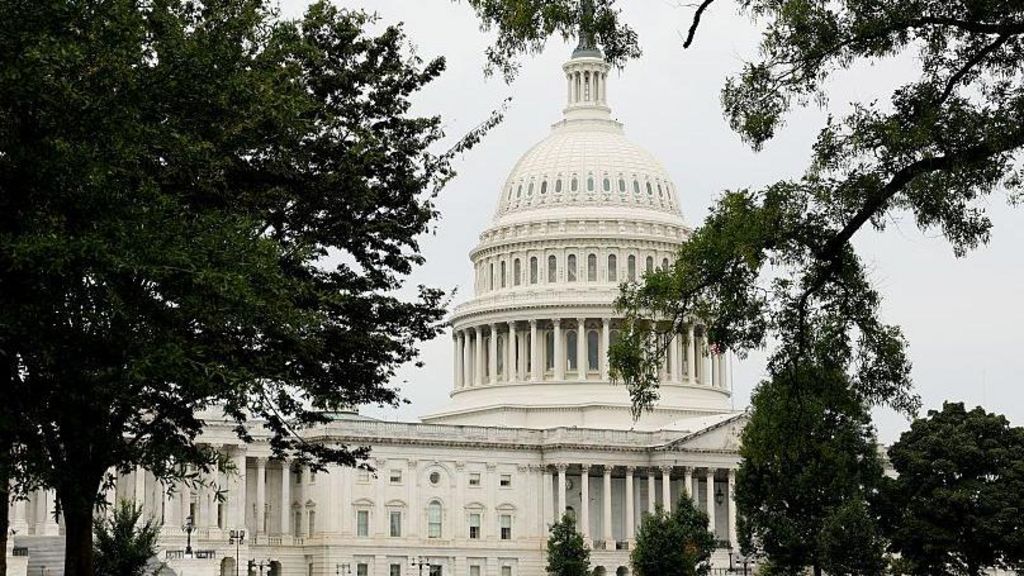
Trump and Democrats end meeting without a deal as US shutdown looms
The United States is on the brink of a government shutdown as bipartisan negotiations have reached a stalemate, with neither Republicans nor Democrats showing willingness to compromise. A recent meeting between President Donald Trump and Democratic congressional leaders yielded no progress, further entrenching both sides in their positions. Republican Senate Majority Leader John Thune accused Democrats of ‘hostage-taking,’ while Democratic Senate Leader Chuck Schumer emphasized the ‘very large differences’ between the parties. Republicans advocate for a short-term extension of current spending levels, while Democrats demand an end to unilateral spending cuts by the Trump administration and a renewal of health-insurance subsidies for low-income individuals. The impasse reflects deeper political strategies, with Republicans positioning themselves as the reasonable party and Democrats leveraging healthcare as a key issue. Complicating matters, some Republicans appear unfazed by the prospect of a prolonged shutdown, viewing it as an opportunity to implement long-term spending reductions. Democratic leaders, however, see this as a bluff and remain steadfast under pressure from their base. The looming shutdown is a test of political will, with both sides weighing the potential fallout. The last major shutdown during Trump’s first term lasted 35 days, setting a record and causing widespread disruption. As tensions escalate, the outcome remains uncertain, with both parties seemingly prepared for a protracted battle.
-
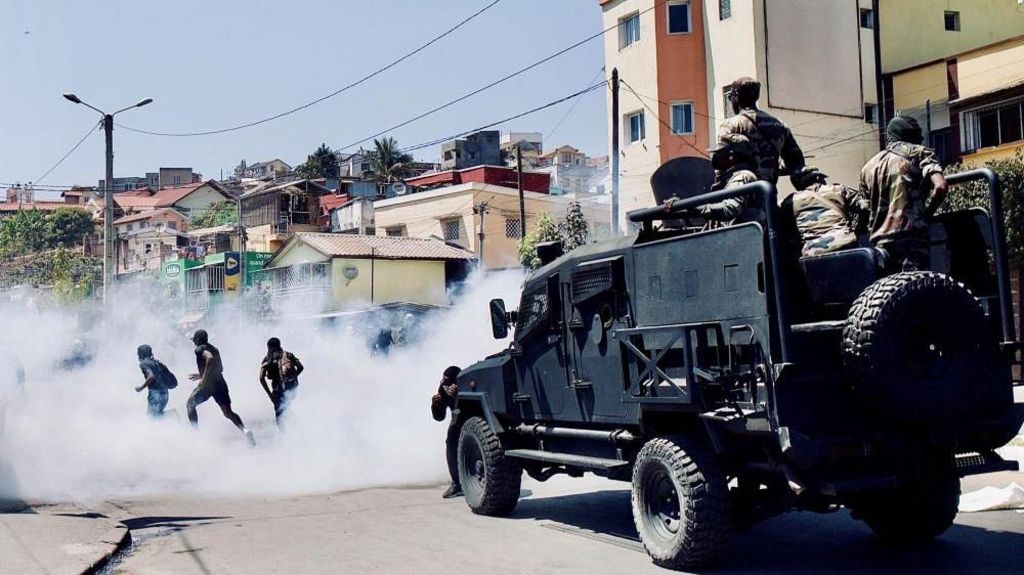
Madagascar’s president dissolves government after ‘Gen Z’ protests
Madagascar’s President Andry Rajoelina announced the dissolution of his government on Monday, following days of intense youth-led protests over persistent water and power shortages. The demonstrations, which began on Thursday in the capital Antananarivo, quickly spread to eight cities across the country, with thousands of predominantly Gen Z protesters rallying under the slogan, ‘We want to live, not survive.’
In a televised national address, Rajoelina acknowledged the government’s shortcomings, stating, ‘We apologize if members of the government have not carried out the tasks assigned to them.’ He revealed that the prime minister and the entire cabinet had been dismissed, and applications for a new premier would be accepted within three days. Rajoelina also expressed his willingness to engage in dialogue with young people to address their grievances.
The protests, initially peaceful, turned violent, prompting the imposition of a dusk-to-dawn curfew in Antananarivo. Security forces were accused of using excessive force, resulting in at least 22 deaths and over 100 injuries. UN Human Rights Chief Volker Türk condemned the ‘unnecessary and disproportionate force’ and called for the immediate release of arbitrarily detained protesters. However, Madagascar’s foreign ministry disputed the UN’s casualty figures, claiming they were based on ‘rumours or misinformation.’
The unrest marks the most significant challenge to Rajoelina’s leadership since his re-election in 2023. Madagascar has a history of political upheaval, including the 2009 protests that ousted former President Marc Ravalomanana and brought Rajoelina to power. The current crisis underscores deep-seated frustrations over the government’s inability to address basic infrastructure issues, fueling widespread discontent among the nation’s youth.
-
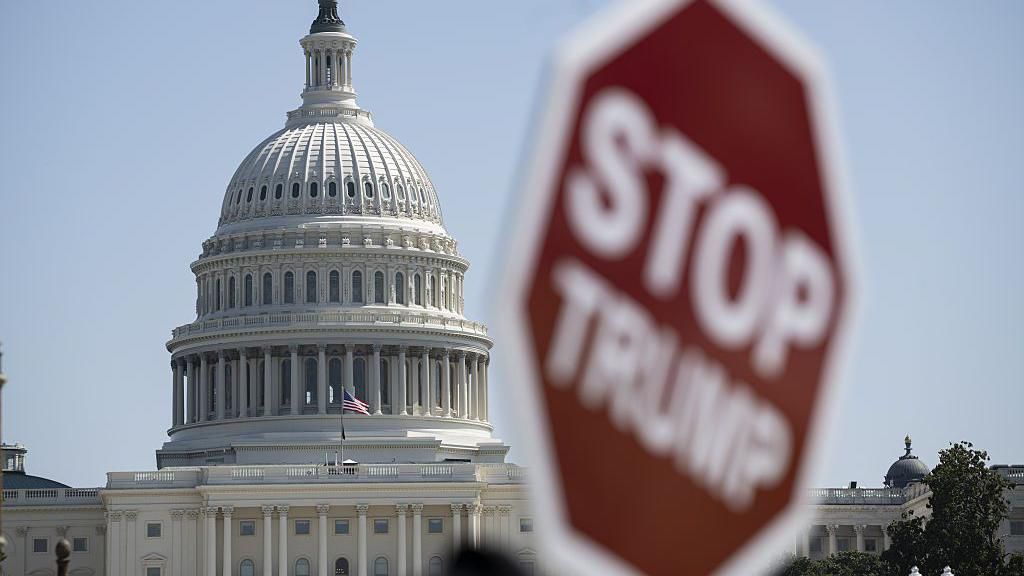
Why the US government might shut down and what to know
The United States is on the brink of a government shutdown as President Donald Trump’s Republican Party and opposition Democrats remain deadlocked over a critical spending bill. If an agreement is not reached by the end of Tuesday, federal funding will expire, leading to a partial halt in government services. This impending crisis underscores the deepening political divide in Washington, exacerbated by Trump’s aggressive efforts to reduce the size of the federal government over the past nine months. The Republicans, who control both chambers of Congress, lack the necessary 60 votes in the Senate to pass the bill unilaterally, giving Democrats significant leverage. Democrats are refusing to support the Republican-proposed bill, which they argue would undermine healthcare affordability for millions of Americans. Instead, they are pushing for an extension of health insurance tax credits and a reversal of Medicaid cuts enacted by the Trump administration. A stopgap bill has already passed the House but remains stalled in the Senate. If no resolution is found by 00:01 EDT on Wednesday, the US will experience its first government shutdown in nearly seven years. The last shutdown occurred in late 2018 during Trump’s first term, lasting 36 days and costing the economy an estimated $11 billion. This time, the Trump administration appears less concerned about the political fallout, with officials even suggesting that a shutdown could help identify and eliminate ‘non-essential’ federal workers. While essential services like border protection, law enforcement, and air-traffic control would continue, programs such as food assistance, federally-funded pre-schools, and national park operations would be severely impacted. The standoff highlights the unique nature of US budget politics, where divided government branches often lead to such impasses. As both sides make last-ditch efforts to avoid a shutdown, the stakes for the nation’s economy and public services remain high.
-
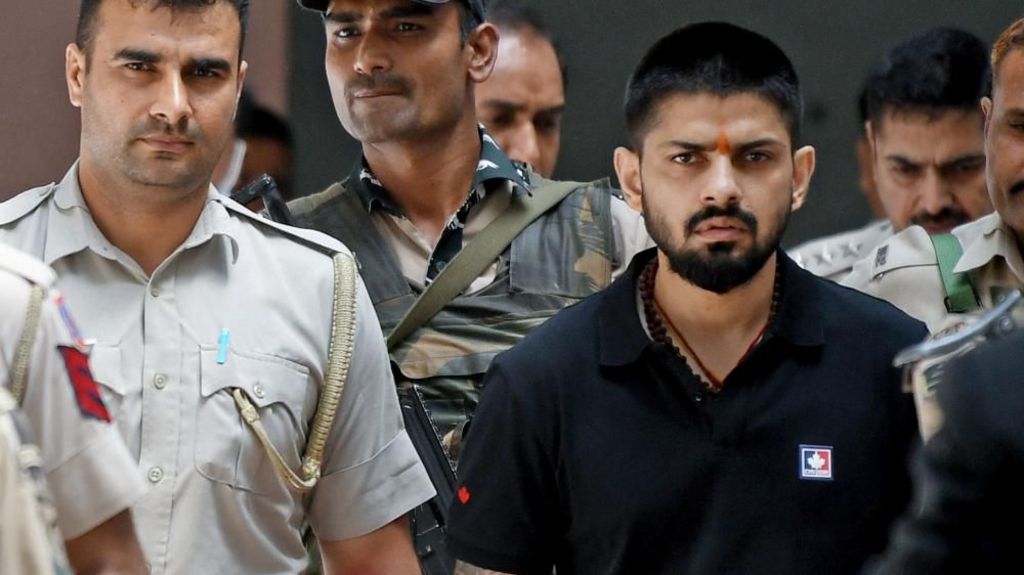
Canada lists India’s Bishnoi gang as terrorist entity
In a significant move, Canada has officially classified India’s Bishnoi gang as a terrorist organization, granting the federal government authority to confiscate the group’s assets and freeze its financial holdings within the country. The announcement was made by Public Safety Minister Gary Anandasangaree on Monday, who emphasized that the gang has fostered an environment of fear and intimidation within Canadian diaspora communities. The decision follows allegations by Canadian police last year that members of the Bishnoi gang, allegedly linked to the Indian government, were involved in homicides, extortion, and violent acts targeting supporters of the pro-Khalistan movement. India has consistently denied these claims, citing a lack of evidence provided by Canada. The new designation empowers Canadian law enforcement to prosecute terrorist activities such as financing, recruitment, and travel. Minister Anandasangaree stated, ‘Specific communities have been subjected to terror, violence, and intimidation by the Bishnoi gang. This listing equips us with stronger tools to combat and halt their criminal operations.’ The Bishnoi gang, led by Lawrence Bishnoi, a 32-year-old incarcerated Indian gangster, is described as a transnational criminal organization primarily based in India but with significant operations in Canada, particularly in areas with large diaspora populations. In India, Bishnoi is accused of controlling a 700-member gang involved in extortion, drug and weapon smuggling, and targeted assassinations. The designation follows pressure from opposition parties and provincial leaders in Alberta and British Columbia, who argued that such a move would enable the government to impose sanctions and counter the gang’s activities more effectively.