分类: politics

  • Israel PM Netanyahu among partygoers at Trump’s New Year’s Eve fete

    Israel PM Netanyahu among partygoers at Trump’s New Year’s Eve fete

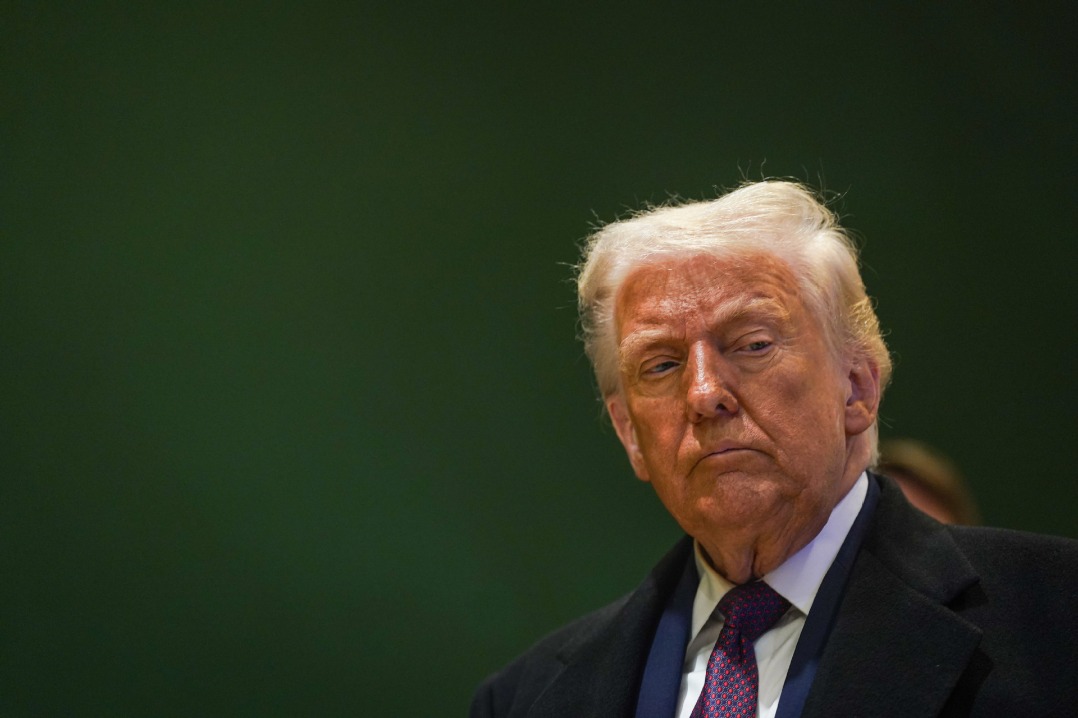
    Israeli Prime Minister Benjamin Netanyahu made a notable appearance at former U.S. President Donald Trump’s exclusive New Year’s Eve celebration at the Mar-a-Lago estate in Palm Beach, Florida. The social gathering followed substantive diplomatic discussions between the two leaders regarding Middle Eastern geopolitical stability and the fragile ceasefire in Gaza.

    The presence of Netanyahu at the glittering event was captured in social media posts by conservative influencer Michael Solakiewicz, showing both leaders in formal evening attire. This occurrence materialized after Trump’s lighthearted suggestion during their Monday meetings that the Israeli statesman might join the festivities.

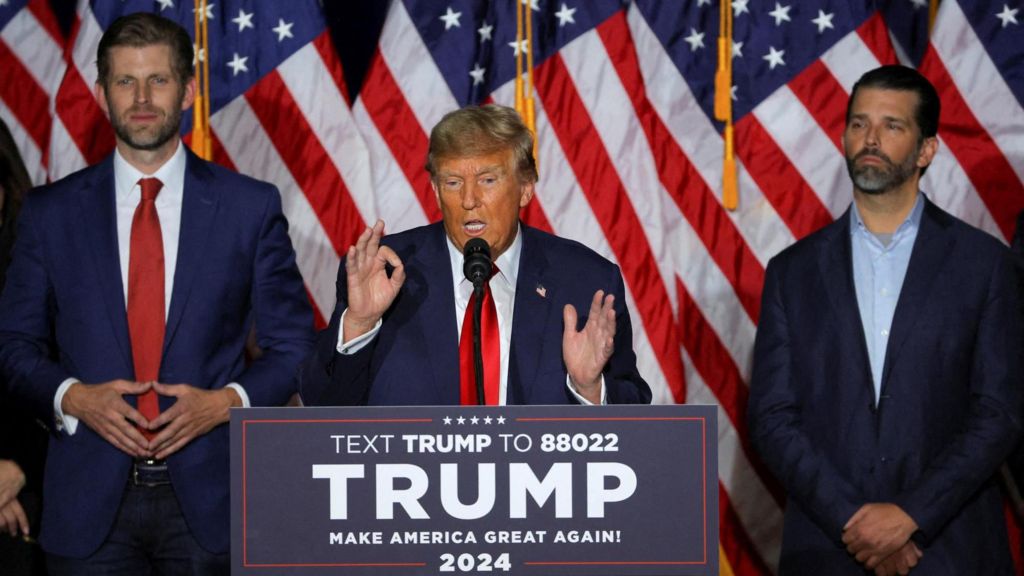
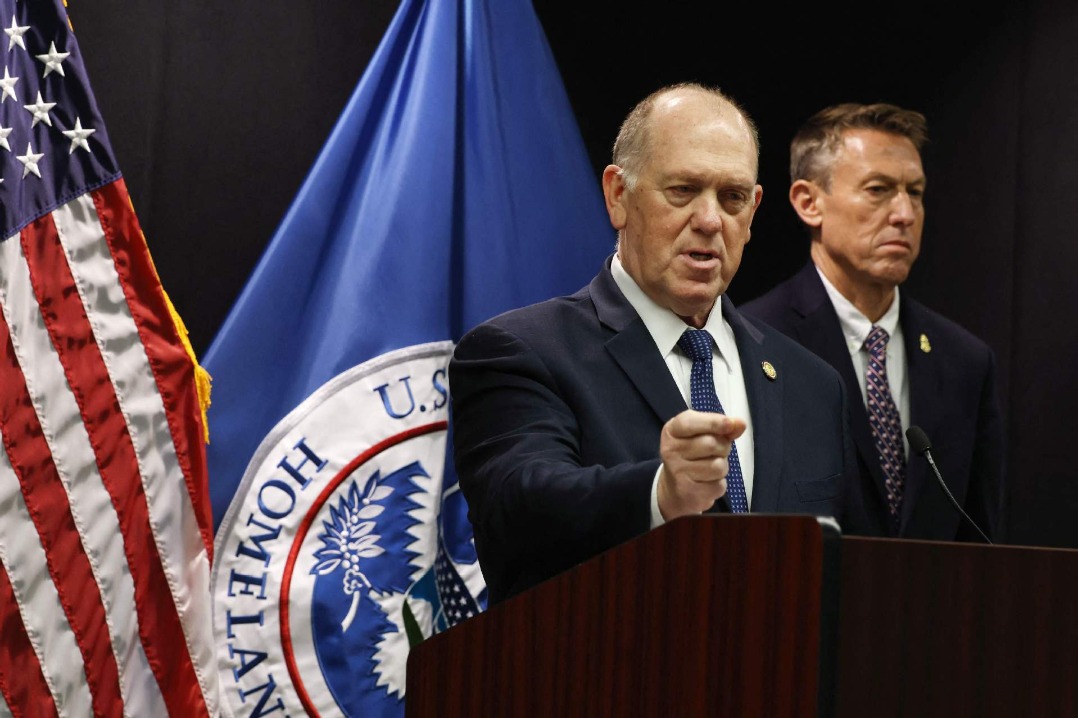
    Trump’s inner circle formed the core of the guest list, featuring former New York Mayor Rudy Giuliani, the former president’s sons Eric and Don Jr., alongside key administration figures such as Department of Homeland Security Secretary Kristi Noem and White House deputy chief of staff Dan Scavino.

    The diplomatic context surrounding this social interaction remains significant. The October Gaza ceasefire represents a cornerstone achievement during Trump’s renewed presidential term, though some administration officials have expressed concerns about perceived delays in implementation from the Israeli side.

    Addressing reports of diplomatic friction, Trump publicly defended Netanyahu’s approach to the ceasefire process, stating Israel had fulfilled its commitments and emphasizing that responsibility now rests with Hamas. The former president explicitly noted he had no concerns regarding Israel’s actions in the matter.

    This week’s discussions marked the fifth high-level meeting between the two leaders since Trump’s return to executive power earlier this year, underscoring the continued close coordination between the United States and Israel on regional security matters.

  • Social media fuelled Mamdani’s rise. Can he keep the momentum as New York mayor?

    Social media fuelled Mamdani’s rise. Can he keep the momentum as New York mayor?

    Zohran Mamdani has officially been inaugurated as New York City’s 110th mayor, marking a historic moment as the first Muslim to hold the office. The 34-year-old democratic socialist achieved an unexpected electoral victory through an unconventional social media strategy that resonated powerfully with younger demographics.

    His campaign captivated voters through viral content demonstrating unorthodox engagement tactics—from plunging into Coney Island’s winter waters to illustrate his “rent freezing” policies to examining food truck permitting processes causing “Halalflation.” These carefully crafted moments presented Mamdani as an accessible, authentic figure contrasting with traditional political candidates.

    According to Associated Press data, approximately 75% of voters under age 30 supported Mamdani. American University communications professor Jane Hall noted this success stemmed from presenting “an image of a political candidate that young people—frustrated with older, more established candidates—craved.” Rutgers University’s Professor Jack Bratich observed Mamdani’s unique ability to “combine lightheartedness with serious conversations.”

    The new mayor faces immediate challenges in transitioning from viral campaigning to effective governance. Columbia University’s Ioana Literat warned that without honestly addressing governmental constraints, “the same young people who made him go viral can just as quickly turn that energy into disillusionment.”

    Mamdani’s relationship with the Trump administration remains particularly consequential. Despite an unexpectedly cordial November meeting where they discussed shared concerns about New York’s affordability crisis, President Trump had previously labeled Mamdani an extremist “lunatic” and threatened to withhold federal funding. Their dynamic will significantly impact Mamdani’s ability to implement his progressive agenda.

    NYU’s Jonathan Nagler noted the difficulty in maintaining engagement: “It’s easy to mobilize people to oppose Trump. What’s much harder is to go on social media and say: ‘Hey, the New York City Council is in my way.’”

    The incoming administration seeks to sustain momentum through Our Time for an Affordable NYC, an independent advocacy group founded by former volunteers that aims to advance Mamdani’s affordability agenda through grassroots organizing. This structure hopes to transform his 100,000+ volunteer network into enduring political capital.

    Mamdani took his oath of office in the abandoned City Hall subway station—a symbolic location connecting New York’s historical infrastructure with his forward-looking vision. “This is truly the honor and the privilege of a lifetime,” he declared, ready to confront the complexities of governing America’s largest city.

  • Zohran Mamdani becomes first New York mayor to use Holy Quran at swearing in ceremony

    Zohran Mamdani becomes first New York mayor to use Holy Quran at swearing in ceremony

    In an unprecedented inauguration ceremony marking the start of 2026, Zohran Mamdani assumed leadership of America’s largest city as New York’s first Muslim mayor. The 34-year-old Democrat chose a symbolically significant venue for his midnight oath-taking—an abandoned subway station beneath City Hall—to underscore his commitment to addressing urban inequality and soaring living costs.

    The historic ceremony, administered by New York Attorney General Letitia James, featured another groundbreaking element: Mamdani became the first mayor to use the Quran during the official swearing-in. According to The New York Times, multiple Qurans were employed, including family copies and one previously owned by Puerto Rico-born Black writer Arturo Schomburg.

    Mamdani’s ascent to power represents a remarkable political trajectory for a figure virtually unknown just one year prior. Born in Uganda to Indian-origin parents, he moved to New York at age seven and enjoyed an elite upbringing before entering politics through the New York State Assembly.

    The new mayor’s ambitious progressive agenda includes rent freezes, universal childcare, and free public bus services—platforms that resonated with working-class voters but alarmed some business leaders. Despite earlier predictions of wealthy resident exodus, real estate representatives have since dismissed such concerns.

    All eyes now turn to Mamdani’s relationship with President Donald Trump, who previously labeled the mayor a ‘communist lunatic’ and threatened funding cuts to New York. Though the two held surprisingly cordial White House talks in November, potential flashpoints loom, particularly regarding immigration enforcement and federal-local jurisdiction conflicts.

    Mamdani faces immediate challenges in balancing his progressive ideals with pragmatic governance. He must reassure Jewish communities about his inclusive leadership amid concerns over his Palestinian rights advocacy, while simultaneously implementing policies addressing the affordability crisis that propelled his campaign.

    The mayor has compensated for his political inexperience by recruiting seasoned aides from previous mayoral administrations and the Biden White House. A larger ceremonial inauguration featuring Senator Bernie Sanders and Congresswoman Alexandria Ocasio-Cortez was scheduled for later Thursday, expected to draw thousands of attendees to City Hall and surrounding block parties.

  • PLA wraps up military drills around Taiwan

    PLA wraps up military drills around Taiwan

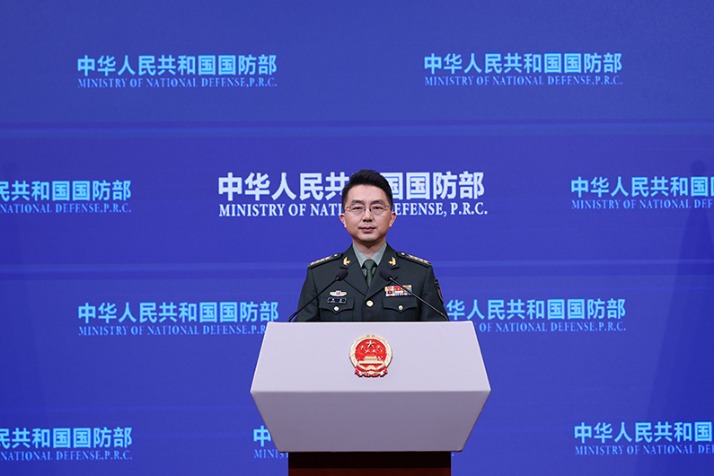
    The People’s Liberation Army Eastern Theater Command has successfully concluded its large-scale ‘Justice Mission 2025’ military exercises surrounding Taiwan, marking a significant demonstration of China’s integrated joint operational capabilities. Senior Captain Li Xi, spokesperson for the command, confirmed the completion of the drills that involved coordinated operations across army, naval, air force, and rocket force units, featuring comprehensive encirclement maneuvers and live-fire exercises.

    The exercises, which commenced earlier this week, were characterized by military officials as a necessary response to what they termed ‘provocative actions’ by Taiwan’s leadership and external interfering forces. The drills were designed to test and enhance the PLA’s combat readiness while sending a clear message regarding China’s determination to protect its territorial integrity.

    Simultaneously, Zhang Han, spokeswoman for the State Council Taiwan Affairs Office, emphasized that these military operations served as a stern warning against both separatist elements within Taiwan and foreign powers seeking to intervene in regional affairs. She specifically criticized the Democratic Progressive Party authorities for their persistent pursuit of independence agendas and their alleged squandering of Taiwan’s resources on foreign military acquisitions.

    The Foreign Ministry also addressed international concerns regarding the exercises, with spokesman Lin Jian stating that several countries including Japan, Australia, and some European nations had received diplomatic representations from China. Lin reiterated that Taiwan matters constitute purely internal Chinese affairs that permit no external interference, while expressing appreciation for nations that reaffirmed their commitment to the One-China principle.

    Recent polling data from Taiwanese media indicates growing dissatisfaction with the current administration’s approach to cross-strait relations, suggesting public concern over escalating tensions and economic decoupling efforts that could potentially undermine regional stability and prosperity.

  • Strong start emphasized for 2026-30 plan period

    Strong start emphasized for 2026-30 plan period

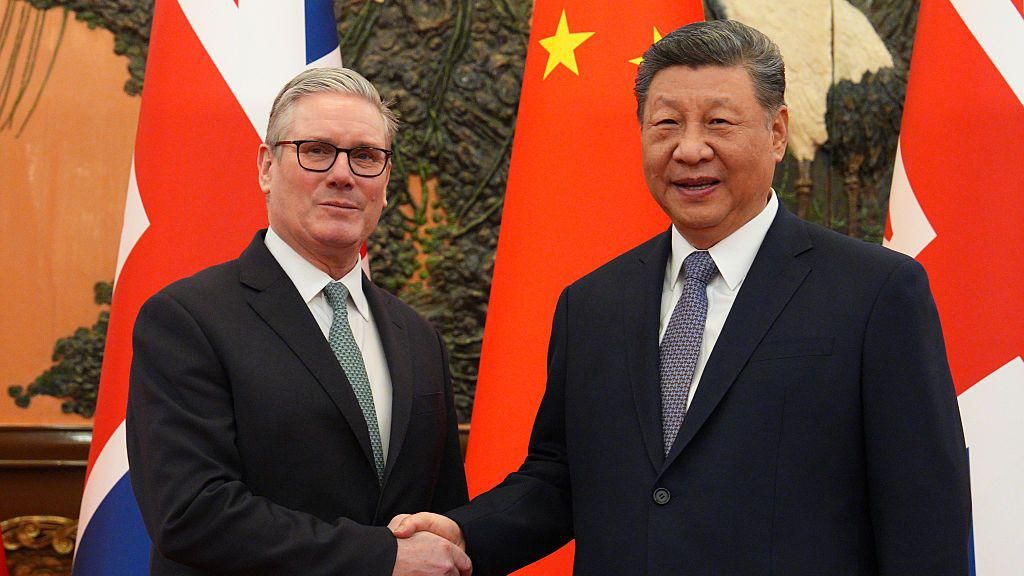
    Chinese President Xi Jinping has announced that China’s economy is projected to have grown by approximately 5% in 2025, with total GDP reaching about 140 trillion yuan ($20 trillion). The announcement came during his address at the annual gathering organized by the Chinese People’s Political Consultative Conference (CPPCC) National Committee, marking both the new year and the conclusion of the 14th Five-Year Plan period (2021-2025).

    President Xi emphasized that despite significant global economic pressures, China demonstrated remarkable resilience and vitality throughout 2025 by pursuing innovation-driven, high-quality development. He noted that the country has successfully accomplished its primary economic and social development objectives during what he described as an ‘extraordinary year.’

    With the 15th Five-Year Plan period (2026-2030) now commencing, President Xi called for comprehensive efforts to ensure a robust start to this critical development phase. He outlined several key focus areas including the implementation of more proactive and impactful macroeconomic policies, enhancing economic quality while maintaining reasonable expansion scale, and preserving social harmony.

    Xi highlighted that China’s economic strength, technological capabilities, defense capacity, and comprehensive national power have reached unprecedented levels through five years of determined effort. This progress has fostered greater national purpose, resilience, and self-confidence in pursuing China’s modernization goals and national rejuvenation.

    The President specifically urged the CPPCC, China’s paramount political advisory body and a crucial mechanism for multiparty cooperation, to concentrate its consultative work on the formulation and execution of the 15th Five-Year Plan. This coordinated effort aims to mobilize widespread support and collective strength for advancing Chinese modernization objectives throughout the new planning period.

  • Zohran Mamdani sworn in as first Muslim New York City Mayor

    Zohran Mamdani sworn in as first Muslim New York City Mayor

    In a ceremony symbolizing both historical significance and progressive change, Zohran Mamdani has been officially inaugurated as New York City’s chief executive, becoming the first Muslim to hold this prestigious office. The swearing-in event, held at the decommissioned Old City Hall subway station—a landmark known for its architectural grandeur and historical importance—featured Mamdani taking his oath of office on the Quran. This location choice underscores a commitment to honoring the city’s past while embracing its diverse future. Mamdani, a prominent figure within the Democratic Party, has built his political career on advocacy for social justice and economic equality. His election marks a watershed moment for religious representation in American urban governance, reflecting New York’s evolving demographic landscape and its status as a melting pot of cultures and faiths. Political analysts suggest this development could signal broader shifts in municipal politics across major U.S. metropolitan areas, potentially inspiring greater religious diversity in civic leadership positions nationwide.

  • Zelensky says peace deal is 90% ready in New Year address

    Zelensky says peace deal is 90% ready in New Year address

    Ukrainian President Volodymyr Zelensky announced in his New Year’s address that a comprehensive peace agreement to conclude nearly four years of conflict with Russia stands at 90% completion. The Ukrainian leader emphasized that the remaining 10% of negotiations would “determine the fate of peace, the fate of Ukraine and Europe,” while asserting that Ukraine seeks “the end of the war – not the end of Ukraine.”

    The diplomatic progress faces renewed challenges following Moscow’s allegations of a Ukrainian drone attack targeting President Vladimir Putin’s private residence at Lake Valdai. Russian authorities released purported evidence including flight path maps indicating drone launches from Ukraine’s Sumy and Chernihiv regions, along with footage of wreckage identified as a Ukrainian Chaklun drone. The Kremlin announced it would reassess its negotiation stance due to these allegations, which Ukrainian officials and EU diplomat Kaja Kallas have dismissed as a “deliberate distraction” from peace efforts.

    Central to the negotiation stalemate remains the status of Donbas, where Russia currently controls approximately 75% of Donetsk and 99% of Luhansk regions. Zelensky explicitly stated that Ukrainian withdrawal from the eastern industrial heartland would mean “everything will be over,” referencing Moscow’s persistent demand for full control of the territory.

    International involvement continues to intensify, with French President Emmanuel Macron announcing concrete commitments from European states and allies meeting in Paris on January 6. This follows high-level discussions between Zelensky and Trump administration advisers regarding proposed 15-year security guarantees for Ukraine. US special envoy Steve Witkoff confirmed ongoing talks with UK, French, and German security counterparts about “strengthening security guarantees and developing effective deconfliction mechanisms.”

    Meanwhile, Putin’s considerably shorter New Year message praised Russian troops participating in what Moscow terms a “special military operation,” asserting that “we believe in you and our victory.” In a concerning development, North Korean leader Kim Jong Un praised his country’s “invincible alliance” with Moscow, with South Korean officials confirming Pyongyang has sent thousands of troops, missiles, and long-range weapons to support Russian operations, suffering an estimated 600 casualties.

  • Taiwan’s president pledges to defend island’s sovereignty after China’s military drills

    Taiwan’s president pledges to defend island’s sovereignty after China’s military drills

    TAIPEI, Taiwan — Taiwanese President Lai Ching-te has issued a resolute commitment to protect the island’s sovereignty in response to what he characterized as China’s “expansionist ambitions.” The declaration came during his New Year’s address, delivered shortly after Beijing concluded extensive live-fire military exercises encircling Taiwan.

    President Lai emphasized the international community’s scrutiny of Taiwan’s determination to maintain self-defense capabilities. “As president, my stance has always been clear: to firmly safeguard national sovereignty, strengthen national defense and the resilience of the whole society, and comprehensively construct an effective deterrence and democratic defense mechanism,” he stated.

    The address followed China’s demonstration of military prowess, which included rocket launches, aircraft sorties, and naval deployments. Beijing’s exercises were conducted in response to two primary provocations: a planned U.S. arms sale to Taiwan valued at over $11 billion—the largest such transaction to date—and comments from Japan’s new leader suggesting potential intervention in the event of a Chinese attack.

    The substantial American arms package includes advanced missiles, drone systems, artillery platforms, and military software. This transfer occurs under U.S. legal obligations to provide Taiwan with defensive capabilities, despite China’s persistent claims over the self-governed island.

    Chinese President Xi Jinping reinforced Beijing’s position in his own New Year’s address, describing eventual reunification as “unstoppable.” In preparation for continued tensions, Taiwan has approved a landmark $40 billion defense budget spanning 2026 to 2033. This allocation will fund the development of the ‘Taiwan Dome’—a comprehensive air defense network with advanced detection and interception capabilities—and supports President Lai’s pledge to increase defense spending to 5% of GDP.

    “Facing China’s serious military ambitions, Taiwan has no time to wait,” President Lai concluded, underscoring the urgency of these defensive measures.

  • How Saudi-UAE tensions could reshape regional alignments in 2026

    How Saudi-UAE tensions could reshape regional alignments in 2026

    A profound geopolitical shift is unfolding across the Arabian Peninsula as Saudi Arabia and the United Arab Emirates transition from strategic allies to overt adversaries, marking a significant deterioration in regional relations. This transformation, previously concealed behind diplomatic formalities, has now erupted into public view with tangible military actions and unprecedented diplomatic accusations.

    The rupture became starkly evident when Saudi forces conducted airstrikes on the Yemeni port of al-Mukalla, targeting what Riyadh identified as Emirati-linked weapons shipments destined for separatist factions. This direct military action against UAE-associated interests represents an unprecedented escalation, with Saudi officials publicly condemning Abu Dhabi’s activities as ‘highly dangerous’ threats to national security. The UAE promptly countered these allegations, dismissing them as containing ‘fundamental inaccuracies.’

    Regional analysts identify multiple conflict zones where the two powers’ strategies diverge fundamentally. In Sudan, Saudi Arabia supports the official army while the UAE backs the Rapid Support Forces paramilitary group. In Yemen, despite nominal cooperation against Houthi rebels, the UAE maintains longstanding support for secessionist Southern Transitional Council forces, which recently seized substantial territories in southeastern Yemen, prompting the Saudi military response.

    Further divisions emerge in Somalia, where the UAE pursues close cooperation with the breakaway region of Somaliland, including military base construction, while Saudi Arabia joined international consensus opposing recognition of the region’s independence. This pattern reveals emerging fault lines: the UAE frequently supports paramilitary and secessionist movements across the region, while Saudi Arabia builds coalitions to preserve existing state boundaries throughout the Middle East and Horn of Africa.

    Experts note this confrontation differs fundamentally from previous Gulf disputes, including the 2017 Qatar blockade where Riyadh and Abu Dhabi maintained unified positions. Kristian Ulrichsen of the Baker Institute observes the UAE may be ‘approaching a tipping point’ in balancing regional relationships with support for non-state actors. The normalization of UAE-Israel relations through the Abraham Accords further distinguishes Emirati and Saudi approaches to regional diplomacy, particularly following Israel’s military actions in Gaza.

    While some analysts suggest economic interdependence and shared Gulf Cooperation Council frameworks might eventually facilitate reconciliation, the current crisis reflects deeper strategic divergences that may reshape Middle Eastern geopolitics throughout 2026 and beyond, potentially creating new regional alignments and power structures.

  • Bangladesh’s Islamist party open to unity government after February vote

    Bangladesh’s Islamist party open to unity government after February vote

    In a significant development within Bangladesh’s political landscape, the historically banned Jamaat-e-Islami party has expressed willingness to participate in a unity government following February’s parliamentary elections. Party President Shafiqur Rahman confirmed in an exclusive Reuters interview that his organization has engaged in preliminary discussions with multiple political factions ahead of the February 12 vote.

    Current polling data indicates Jamaat-e-Islami is positioned to achieve its strongest electoral performance in nearly two decades, potentially finishing as runner-up to the Bangladesh Nationalist Party (BNP). This represents a remarkable political resurgence for the Islamist party, which regained electoral eligibility in August 2024 when an interim government led by Nobel laureate Muhammad Yunus lifted long-standing restrictions.

    The party’s political rehabilitation follows the dramatic ousting of former Prime Minister Sheikh Hasina during youth-led demonstrations in August 2024. Hasina’s Awami League party, which had maintained a consistently adversarial relationship with Jamaat-e-Islami, remains barred from participating in the upcoming election.

    Rahman emphasized that any unity government must prioritize anti-corruption measures as a shared objective. While advocating for Islamic governance under sharia law, the party leadership has simultaneously sought to broaden its appeal beyond traditional conservative constituencies. The Jamaat president clarified that the prime ministerial position would naturally be claimed by whichever party secures the most parliamentary seats.

    Regarding international relations, Rahman addressed Bangladesh’s complex diplomatic landscape. He expressed concerns about former Prime Minister Hasina’s continued residence in India since her departure from Dhaka, noting that bilateral relations have deteriorated significantly since her administration’s collapse. The party leader confirmed a confidential meeting with an Indian diplomat earlier this year, contrasting this discreet engagement with more transparent interactions with other international representatives.

    When questioned about historical ties to Pakistan, Rahman asserted Jamaat-e-Islami’s commitment to balanced international relations: “We maintain relations in a balanced way with all. We are never interested in leaning toward any one country.”

    The party leader further indicated that any government including Jamaat-e-Islami would experience discomfort with current President Mohammed Shahabuddin, who was elected unopposed with Awami League support in 2023. The ceremonial head of state previously told Reuters he would consider stepping down before completing his term.