分类: politics

  • Guinea’s junta leader is confirmed president-elect after first vote since a 2021 coup

    Guinea’s junta leader is confirmed president-elect after first vote since a 2021 coup

    CONAKRY, Guinea — Guinea’s Supreme Court has officially validated the presidential election victory of General Mamadi Doumbouya, formally transitioning the military junta leader into a democratically elected head of state. The court’s Sunday ruling confirmed Doumbouya’s overwhelming mandate, with official results showing he secured 86.7% of votes cast in the December 28 election—the nation’s first presidential contest since the 2021 coup.

    The judicial endorsement comes despite earlier challenges from opposition candidate Yero Baldé, who had alleged electoral manipulation before unexpectedly withdrawing his petition just prior to the court’s decision. Baldé finished as runner-up with 6.59% of the vote.

    In a nationally televised address following the verdict, President Doumbouya struck a conciliatory tone, declaring: “Today, there are neither winners nor losers. There is only one Guinea, united and indivisible.” He called upon citizens to collaborate in building “a new Guinea, a Guinea of peace, justice, shared prosperity, and fully assumed political and economic sovereignty.”

    The electoral process occurred under a newly implemented constitution that notably eliminated previous restrictions prohibiting military leaders from seeking presidential office while simultaneously extending the presidential term from five to seven years.

    Political analysts note that Doumbouya faced minimal opposition during the campaign, with critics alleging his administration has systematically suppressed political dissent since seizing power in 2021. N’Faly Guilavogui, a Guinean political analyst, observed that the weakened opposition landscape focused attention exclusively on Doumbouya as “the only key figure capable of ensuring the continuity of the state.”

    The newly confirmed president inherits significant economic challenges despite Guinea’s substantial mineral wealth. As the world’s largest exporter of bauxite—a crucial component in aluminum production—the nation paradoxically struggles with pervasive poverty. World Food Program data indicates over half of Guinea’s 15 million citizens experience record levels of food insecurity and economic hardship.

    Among the junta’s most significant economic initiatives is the Simandou iron ore project, representing the world’s largest untapped deposit of its kind. The mining venture, 75% Chinese-owned, commenced operations in December following decades of developmental delays, potentially offering future economic revitalization.

  • US capture of Maduro divides a changed region, thrilling Trump’s allies and threatening his foes

    US capture of Maduro divides a changed region, thrilling Trump’s allies and threatening his foes

    WASHINGTON — The capture of Venezuelan leader Nicolás Maduro has unveiled a radical transformation in U.S. foreign policy toward Latin America, with President Donald Trump declaring unprecedented American dominance in the Western Hemisphere. The operation, which culminated in Maduro’s perp-walk through DEA headquarters, represents the most aggressive application of what Trump now terms the ‘Donroe Doctrine’—a modern interpretation of the Monroe Doctrine emphasizing overt interventionism.

    This doctrine has been implemented through multifaceted strategies including naval blockades against Venezuelan oil, military strikes against alleged drug traffickers, election meddling in Honduras and Argentina, and extensive use of tariffs and sanctions. The administration’s stated objectives include combating drug trafficking, halting immigration, securing strategic natural resources, and countering Russian and Chinese influence.

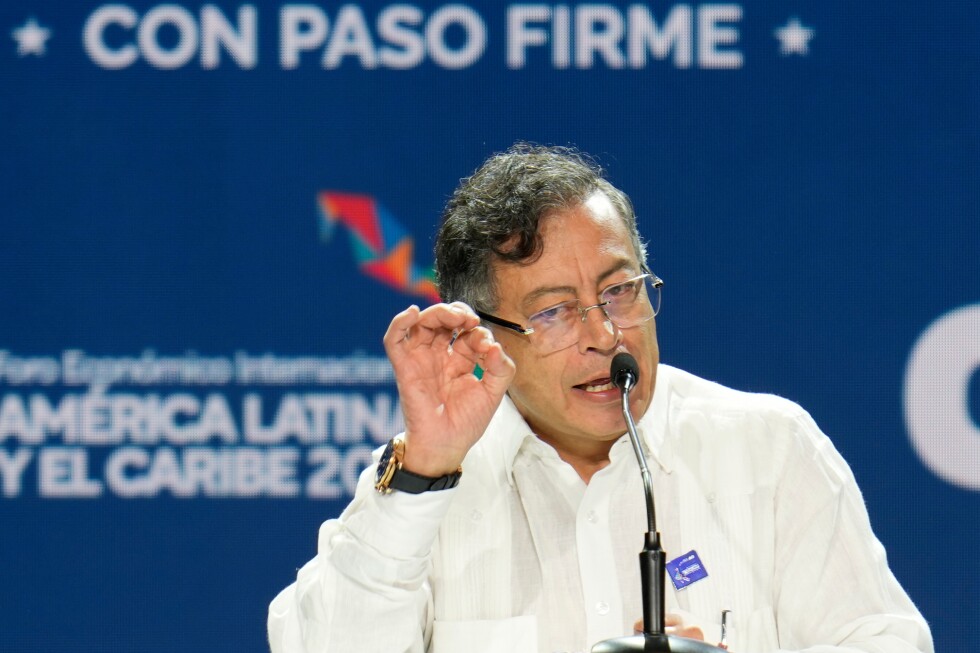
    The policy has sharply divided Latin American leaders along ideological lines. Right-wing presidents including Argentina’s Javier Milei, Ecuador’s Daniel Noboa, and Chile’s José Antonio Kast hailed Maduro’s capture as a victory for democracy and regional security. Conversely, left-wing leaders—Brazil’s Lula da Silva, Mexico’s Claudia Sheinbaum, Chile’s Gabriel Boric, and Colombia’s Gustavo Petro—condemned the action as dangerous bullying that violates international law and sovereignty.

    Historical parallels to early 20th-century U.S. interventions have emerged, recalling periods when American troops occupied Central American nations to protect corporate interests and supported repressive military dictatorships during the Cold War. The operation has sparked street protests and uneasy reactions even among some U.S. allies, with El Salvador’s Nayib Bukele remaining uncharacteristically quiet.

    The administration’s broader strategy appears focused on assembling a coalition of ideologically aligned governments across Latin America, leveraging the recent rise of Trump-like leaders who oppose immigration, prioritize security, and reject globalization. Trump explicitly warned uncooperative leaders, suggesting Cuba’s government ‘looks ready to fall,’ criticizing Mexico’s cartel policies, and personally attacking Colombia’s president.

  • North Korea tests hypersonic missiles, says nuclear forces ready for war

    North Korea tests hypersonic missiles, says nuclear forces ready for war

    In a significant escalation of military posturing, North Korean leader Kim Jong Un has personally supervised the test-firing of advanced hypersonic missiles, state media confirmed Monday. The demonstration comes amid growing regional tensions and follows recent U.S. military operations against Venezuela, which Pyongyang has characterized as evidence of American aggression.

    The Korean Central News Agency (KCNA) reported that Kim emphasized the test underscored the ‘readiness of the DPRK’s nuclear forces’ for actual combat scenarios. ‘Important achievements have been made in putting our nuclear forces on a practical basis and preparing them for real warfare,’ Kim stated during the inspection of the launch exercise near Pyongyang.

    Photographs released by state media depicted Kim observing the early morning missile launch while accompanied by senior military officials. The North Korean leader explicitly connected the test’s timing to what he termed ‘recent geopolitical crisis and complicated international events’—an apparent reference to Washington’s capture of Venezuelan President Nicolas Maduro.

    South Korean and Japanese defense authorities detected the launch of two ballistic missiles on Sunday, marking North Korea’s first weapons test of the year. The incident occurred just hours before South Korean leader Lee Jae Myung departed for Beijing, where he hopes to leverage China’s influence over Pyongyang to improve inter-Korean relations.

    Military analysts interpret the hypersonic missile test as both a technological demonstration and political statement. Hong Min, an analyst at the Korea Institute for National Unification, noted that the launch signals Pyongyang’s possession of advanced war deterrent capabilities that other nations targeted by Washington, like Venezuela, lack.

    Hypersonic weapons represent a significant advancement in missile technology, capable of traveling at speeds exceeding Mach 5 while maintaining maneuverability during flight. These characteristics make them substantially more difficult to track and intercept compared to conventional ballistic missiles. North Korea initially tested its hypersonic weapon system in October, joining a small group of nations including Russia and Iran that have deployed such advanced systems in recent conflicts.

  • ACCC should be empowered to shut down supermarkets over breaches of pricing laws, David Littleproud says

    ACCC should be empowered to shut down supermarkets over breaches of pricing laws, David Littleproud says

    In a significant escalation of Australia’s supermarket pricing reform debate, Nationals Leader David Littleproud has called for substantially stronger enforcement mechanisms against major retailers. The political figure advocates empowering the Australian Competition and Consumer Commission (ACCC) with authority to impose multimillion-dollar infringement notices and ultimately force divestiture for repeated violations of unfair pricing regulations.

    Mr. Littleproud characterized the current penalty structure—featuring infringement notices up to $198,000—as insufficient deterrents that retailers simply treat as “cost of doing business.” He proposed elevating infringement penalties to $2 million alongside implementing divestiture powers to fundamentally transform supermarket culture regarding farmer and consumer protections.

    The criticism comes despite Treasurer Jim Chalmers’ December announcement establishing new legal provisions set to take effect July 1, 2026. These regulations will prohibit excessive pricing relative to supply costs plus reasonable margins, targeting very large retailers including Coles and Woolworths with potential fines reaching $10 million for serious violations.

    Mr. Littleproud simultaneously accused the Labor government of delaying implementation of two specific ACCC recommendations from March 2025’s supermarket sector inquiry. These include requirements for dynamic pricing transparency and a ‘shrinkflation’ registry—measures designed to enhance consumer information and regulatory oversight capabilities.

    The political confrontation occurs against Australia’s ongoing cost-of-living crisis, with Mr. Littleproud emphasizing that “tonight, there’ll be Australians that can’t afford to put dinner on the table.” The government maintains its regulatory approach fulfills election commitments and addresses affordability pressures, with Mr. Chalmers previously stating the reforms ensure “families and pensioners get a fairer go at the checkout.”

  • UAE-backed separatists withdraw from key Yemeni city after Saudi strikes

    UAE-backed separatists withdraw from key Yemeni city after Saudi strikes

    In a significant reversal of territorial control, Yemeni government forces have fully reclaimed the strategic eastern province of Hadhramaut from UAE-backed Southern Transitional Council (STC) separatists. The development follows coordinated military operations by Saudi-supported Nation’s Shield Forces (NSF), which included targeted airstrikes on STC positions throughout the region.

    Hadhramaut Governor Salem al-Khanbashi confirmed complete government control, stating: “We have regained full control of all Hadhramaut territory, expelled STC forces, and begun administering duties and normalizing life.” The NSF provided safe passage for withdrawing STC fighters toward Aden, permitting them to carry only personal weapons.

    The territorial shift represents a dramatic turnaround from December, when STC forces capitalized on Saudi troop withdrawals to seize control of Hadhramaut and al-Mahra provinces—territories comprising nearly half of Yemen’s landmass and sharing critical borders with Saudi Arabia.

    This conflict exposes deepening fractures within the anti-Houthi coalition, pitting Saudi-backed government forces against UAE-supported separatists. The STC, which advocates for reestablishing an independent South Yemen, has received substantial military and financial backing from the United Arab Emirates.

    Tensions escalated further when Saudi Arabia bombed Emirati shipments in the port of Mukalla and publicly criticized UAE involvement in pressuring STC forces to operate along Saudi Arabia’s southern border. The Saudi foreign ministry expressed disappointment with Emirati actions that threatened regional stability.

    The geopolitical implications extend beyond the Arabian Peninsula, with both the UAE and Israel establishing military presence on the strategic Socotra archipelago under STC control. Israeli monitoring systems deployed there help counter Houthi threats, while the STC has signaled willingness to normalize relations with Israel—a position contrasting with broader Arab consensus.

    The STC’s recent announcement of planning an independence referendum followed Israel’s unilateral recognition of Somaliland’s independence, another UAE-aligned territory, highlighting emerging alliances reshaping regional power dynamics.

  • Trump warns new Venezuelan leader as Maduro set to appear in court

    Trump warns new Venezuelan leader as Maduro set to appear in court

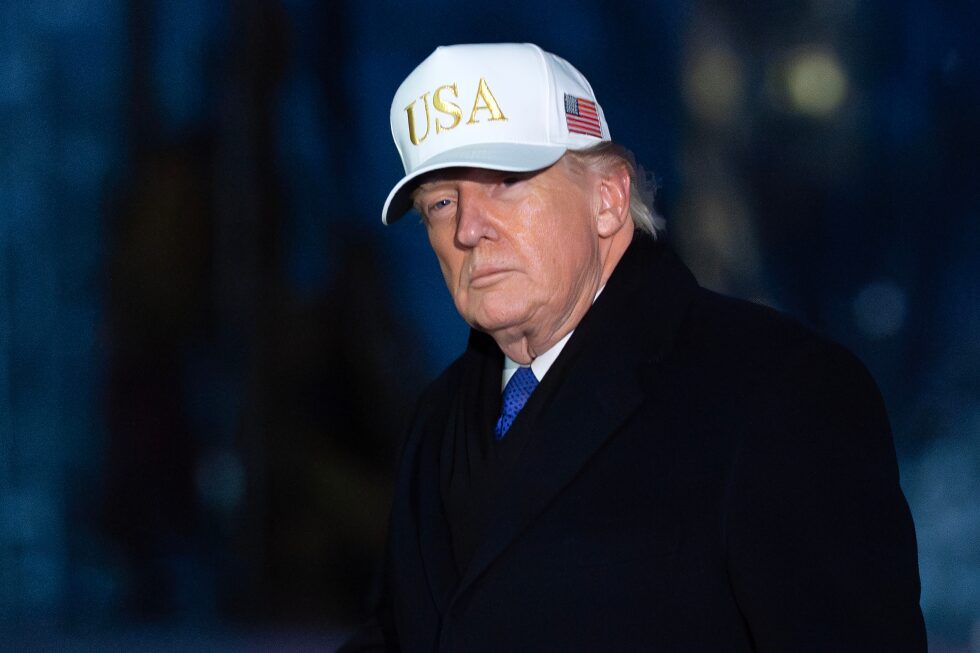
    Former US President Donald Trump has issued a stark warning to Venezuela’s newly appointed interim leader Delcy Rodríguez, cautioning that she could face consequences “probably bigger than Maduro” if she fails to align with US expectations. The threat came as ousted president Nicolás Maduro, captured in a dramatic US military operation, prepared to face New York court proceedings on drug trafficking and weapons charges.

    The extraordinary capture operation unfolded early Saturday when US special forces stormed Maduro’s compound in Caracas, resulting in the detention and transportation of both Maduro and his wife, Cilia Flores, to American soil. The operation involved strikes on military installations including Fuerte Tiuna, one of Venezuela’s largest military bases, and resulted in significant casualties according to Venezuelan officials.

    US Secretary of State Marco Rubio vigorously defended the operation, characterizing it as a “law enforcement action” rather than an act of war. “We are at war against drug trafficking organizations. That’s not a war against Venezuela,” Rubio emphasized during multiple Sunday news program appearances. He asserted that congressional authorization was unnecessary since the operation involved FBI agents making arrests rather than military invasion.

    The political transition in Venezuela saw Rodríguez sworn in as interim president by the nation’s Supreme Court, with full backing from the military establishment. She is scheduled to be formally inaugurated Monday in Caracas. However, the US maintains it does not recognize the legitimacy of the current regime structure.

    International reaction has been sharply critical, with several nations including Brazil, Chile, Colombia, Mexico, Uruguay and Spain condemning the US military action as “an extremely dangerous precedent for peace and regional security.” They expressed particular concern about external control that threatens regional stability and violates international law.

    Domestically, Democratic lawmakers have denounced the operation as an unauthorized act of war. House Minority Leader Hakeem Jeffries and Senate Minority Leader Chuck Schumer have vowed to support legislation prohibiting further presidential action in Venezuela without congressional approval, arguing that such regime change operations historically cost American lives and treasure.

    The Cuban government, a longstanding socialist ally of Maduro, announced two days of national mourning for 32 “brave Cuban combatants” killed during the operation, further escalating regional tensions surrounding this unprecedented intervention.

  • US not seeking to govern Venezuela, aims to work with new authorities, Marco Rubio says

    US not seeking to govern Venezuela, aims to work with new authorities, Marco Rubio says

    In the aftermath of a dramatic military operation that resulted in the capture of Venezuelan President Nicolás Maduro, top U.S. officials have moved to clarify Washington’s position regarding the South American nation’s future governance. Secretary of State Marco Rubio appeared on multiple Sunday news programs to emphasize that the United States does not seek to directly govern Venezuela, but rather intends to collaborate with existing authorities under specific conditions.

    The operation, which unfolded on Saturday, involved U.S. commandos conducting a helicopter assault on Caracas with support from attack aircraft and naval assets. The successful extraction of Maduro and his wife culminated in the deposed leader’s transport to New York, where he now awaits arraignment on narcotrafficking charges. Video evidence released by the White House shows Maduro in custody at a Manhattan DEA facility, handcuffed and offering a subdued ‘Good night, happy new year’ in English.

    Despite the vacuum created by Maduro’s capture, relative calm prevailed in Venezuela’s capital. Citizens formed queues at grocery stores, while the previously visible heavily armed police presence diminished significantly. The Venezuelan military has officially recognized Vice President Delcy Rodríguez as acting president and encouraged citizens to resume normal activities.

    Secretary Rubio’s comments served to contextualize President Trump’s earlier statement about the U.S. intending to ‘run the country’ until a transition could be effected. Rubio specified that Washington would assess the existing Venezuelan leadership based on actions rather than rhetoric, indicating readiness to work with Rodríguez and other cabinet members contingent upon their adherence to U.S. demands.

    The administration faces mounting questions regarding its long-term strategy, particularly concerning Venezuela’s massive oil reserves—the world’s largest. Rubio indicated that Western companies would likely show ‘dramatic interest’ in revitalizing Venezuela’s crippled oil industry, provided appropriate guarantees and conditions were established. Simultaneously, the U.S. maintains significant leverage through an oil export embargo enforced by Navy vessels in the Caribbean.

    Political opposition emerged from Democratic leaders, with Senate leader Chuck Schumer expressing that Americans were left ‘scratching their heads in wonderment and in fear,’ while House leader Hakeem Jeffries characterized the raid as an unauthorized act of war. The operation represents the culmination of an escalating pressure campaign that began with interdictions of suspected drug trafficking vessels near Venezuelan waters.

  • Trump warns Venezuela VP Delcy Rodriguez could face harsher fate than Maduro

    Trump warns Venezuela VP Delcy Rodriguez could face harsher fate than Maduro

    In a recent interview with The Atlantic magazine, former U.S. President Donald Trump issued a direct threat to Venezuelan Vice President Delcy Rodríguez, suggesting she could face more severe consequences than ousted leader Nicolás Maduro if she fails to align with U.S. interests. The statement, made on January 4, 2026, represents a significant escalation in the ongoing political confrontation between the United States and Venezuela’s leadership.

    The remarks follow reports of a U.S. military operation that reportedly resulted in the elimination of much of Maduro’s security team and claims that the Venezuelan president had been captured and transported out of the country. Trump’s specific targeting of Rodríguez, who serves as Venezuela’s first female vice president and a key figure in Maduro’s government, indicates a strategic shift in U.S. pressure tactics toward Venezuelan officials.

    This development occurs within the broader context of heightened tensions between the two nations, with the U.S. expressing intentions to manage Venezuela’s oil reserves during a transitional period following Maduro’s alleged capture. The explicit nature of Trump’s warning underscores the increasingly direct approach being employed by U.S. officials in dealing with the Venezuelan government, moving beyond diplomatic channels to overt threats against specific individuals in leadership positions.

  • ‘Free our president’, Maduro supporters demand at rally

    ‘Free our president’, Maduro supporters demand at rally

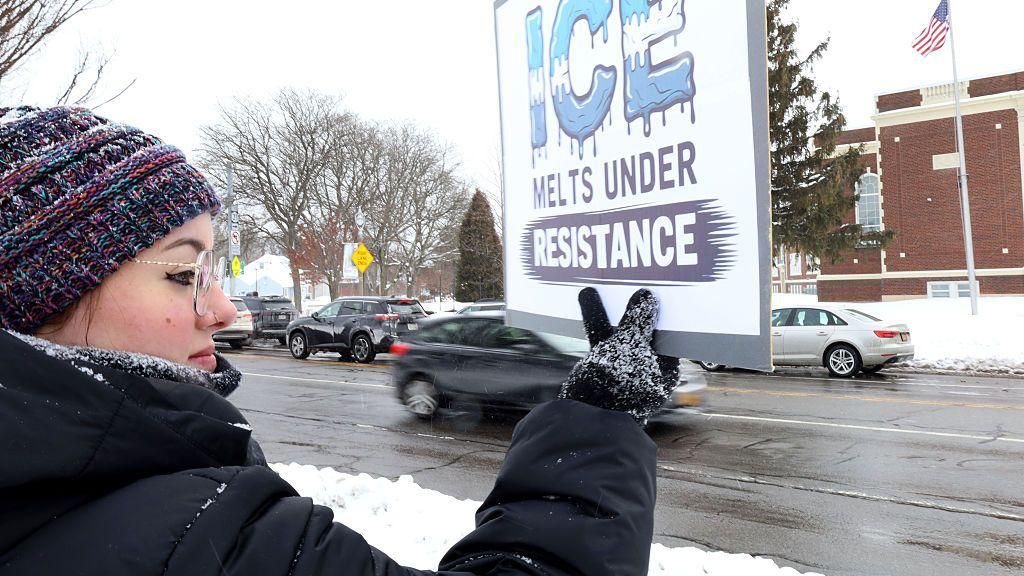
    Thousands of demonstrators flooded the streets of Caracas on Sunday in a passionate display of support for ousted Venezuelan president Nicolás Maduro, demanding his immediate release from U.S. custody following his dramatic capture by American forces. The rally, organized by Maduro loyalists, featured paramilitary groups and motorcycle brigades accompanying protesters waving the distinctive yellow, blue and red Venezuelan flags.

    Protesters carried emotionally charged signs reading ‘Free our president’ and ‘Venezuela is no-one’s colony’—the latter directly referencing President Donald Trump’s controversial statement that Washington would ‘run’ Venezuela during a transitional period. The gathering occurred just one day after U.S. forces conducted airstrikes on Caracas that reportedly neutralized Venezuelan defenses during the operation to apprehend Maduro.

    The ousted leader faces serious charges of ‘narcoterrorism’ related to alleged cocaine trafficking into the United States and is scheduled to appear in a New York courtroom on Monday. Meanwhile, Venezuelan officials have reported significant casualties from the military operation, with Defense Minister Vladimir Padrino López stating that a ‘large part’ of Maduro’s security team was killed ‘in cold blood,’ along with military personnel and civilians.

    Medical sources speaking anonymously suggested approximately 70 fatalities and 90 injuries from the pre-dawn strikes, though Venezuelan hospitals have declined to provide official casualty figures. The circumstances of Maduro’s capture have sparked widespread speculation about possible betrayal within his inner circle, particularly given the failure of air defense systems at the country’s largest military base where the arrest occurred.

    Maduro’s son, Nicolás Maduro Guerra, amplified these suspicions in an audio message circulated on social media, declaring that ‘history will tell who the traitors were.’ The emotional response from supporters like Nairda Itriago, 56, who angrily told AFP that ‘the narcotrafficker and terrorist is Trump,’ underscores the deep divisions and heightened tensions between the two nations.

  • Trump says that Ukraine didn’t target Putin residence in a drone strike as Kremlin claims

    Trump says that Ukraine didn’t target Putin residence in a drone strike as Kremlin claims

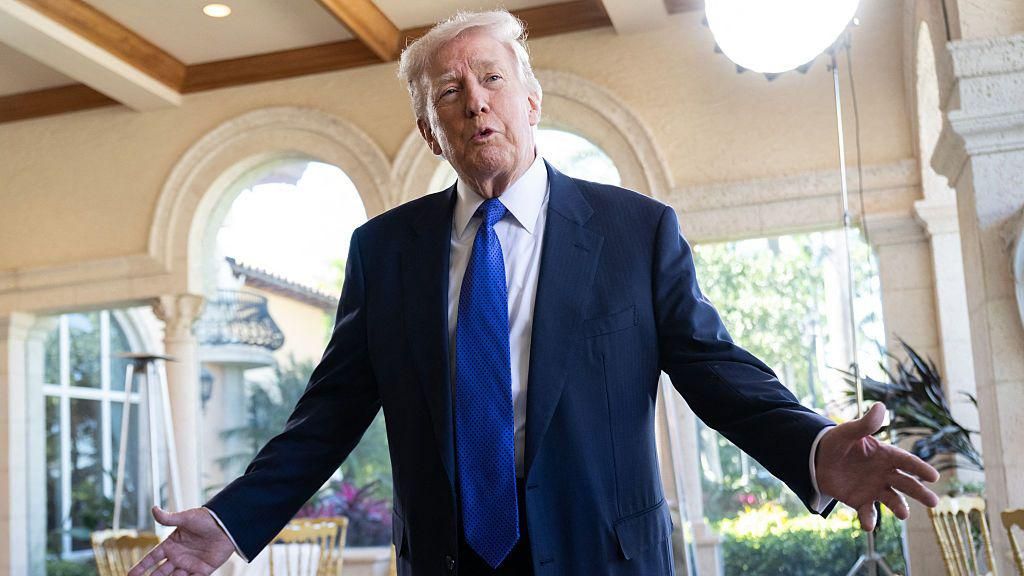
    Aboard Air Force One — President Donald Trump revealed on Sunday that United States intelligence agencies have concluded Ukraine was not responsible for targeting Russian President Vladimir Putin’s official residence in a recent alleged drone strike. This assessment directly contradicts assertions made by the Kremlin, which Trump had initially treated with serious concern.

    The controversy emerged after Russian Foreign Minister Sergey Lavrov asserted last week that Ukrainian forces launched multiple drones toward Putin’s Novgorod region compound, claiming Russian defense systems successfully neutralized the attack. Lavrov further criticized Kyiv for timing this alleged offensive during sensitive negotiations aimed at resolving the ongoing conflict.

    Trump provided clarification to journalists while returning to Washington after a two-week stay at his Florida residence. ‘Our analysis indicates something occurred in the vicinity, but we have verified that President Putin’s residence was not the intended target,’ the President stated. ‘Based on our comprehensive review, we do not believe this strike transpired as described.’

    This development occurred shortly after Ukrainian President Volodymyr Zelenskyy’s diplomatic visit to Florida, where he engaged in substantive discussions with Trump regarding a proposed 20-point peace plan to end hostilities. Zelenskyy immediately denied Russia’s allegations when they surfaced.

    European officials had previously characterized Moscow’s claims as a deliberate attempt to sabotage peace efforts. Initially, however, Trump appeared to credit the Russian narrative, expressing anger during a Monday conversation with Putin regarding the alleged incident. By Wednesday, the President’s position evolved as he shared skeptical commentary from media sources questioning the Kremlin’s account.

    The administration continues to pursue its commitment to broker a resolution to the Ukraine conflict, despite facing challenges in reconciling the divergent demands of both nations. While Trump and Zelenskyy reported constructive dialogue during their Mar-a-Lago meeting, Putin maintains Russia will not engage in peace talks until achieving its strategic objectives, including full control of the Donbas region and significant restrictions on Ukraine’s military capabilities.